











Mini Macrame Wreath Ornament: Free 3D Leaf Pattern

FREE CHRISTMAS MACRAME PATTERN · BY NICOLE WOO
Picture a small wrapped gift with this little wreath tied to the ribbon. Before the paper even comes off, there’s something handmade to keep. That’s the idea behind this mini macrame wreath ornament: six raised leaves, a tiny bow, and a little Christmas greenery made entirely from cord.
We’ll begin with just one leaf. You’ll shape its sides, close the tip, and see how a few rows of knots give it that lovely dimension. Then we’ll make five more and arrange them around a wooden ring. Seeing those separate pieces become a wreath is the satisfying part!
I’ll walk you through the shaping and finishing, with step photos and video timestamps for the fiddly bits. Start with the colors you’d enjoy seeing on your tree—or choose them with someone special in mind.
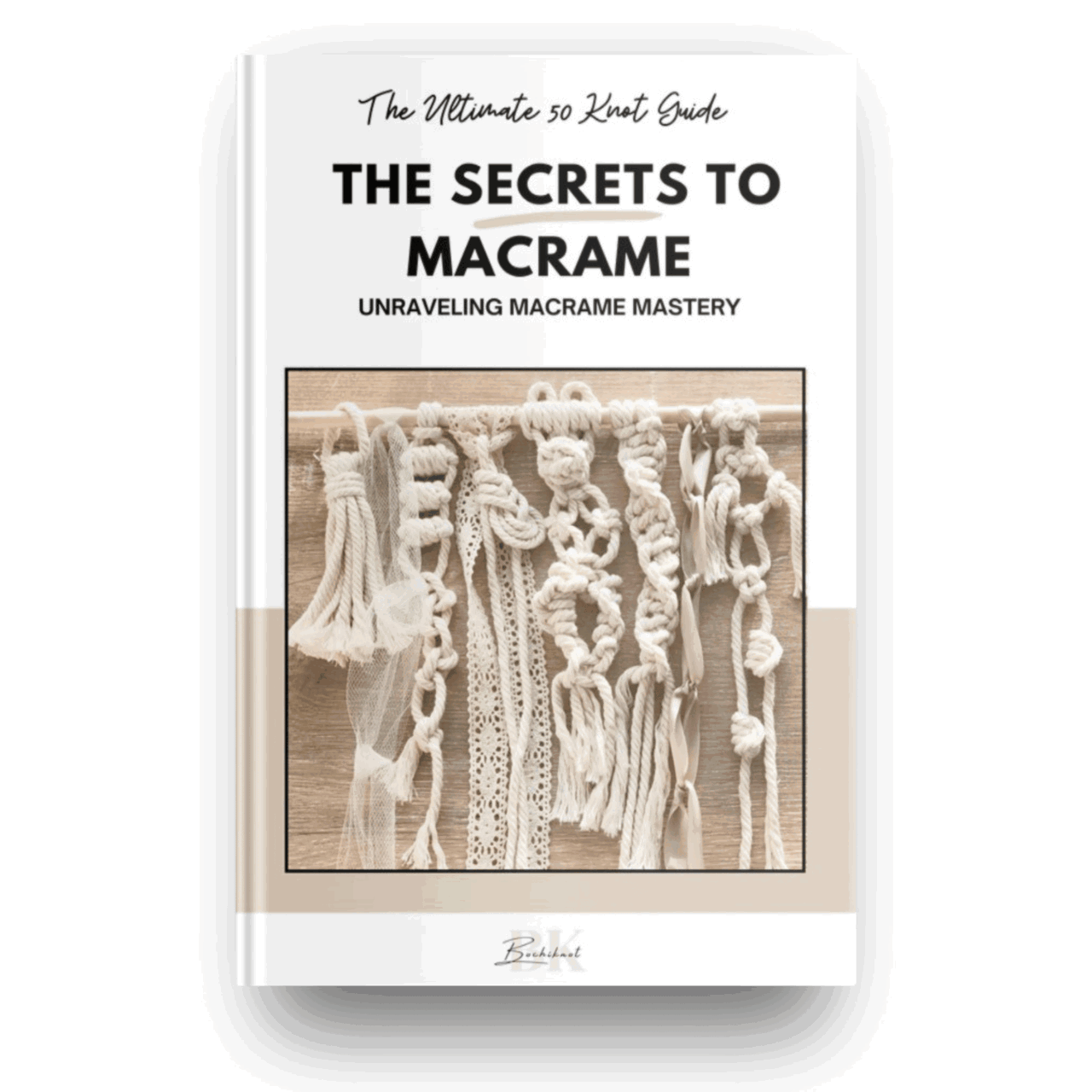
New to the knots? Keep our free 50 Macrame Knots & Sennits guide nearby while you follow the video.
The Project at a Glance
Finished measurements are approximate and depend on cord and tension. Allow extra time if you are learning the knots.
Cord and Materials for Your 3D Leaf Wreath
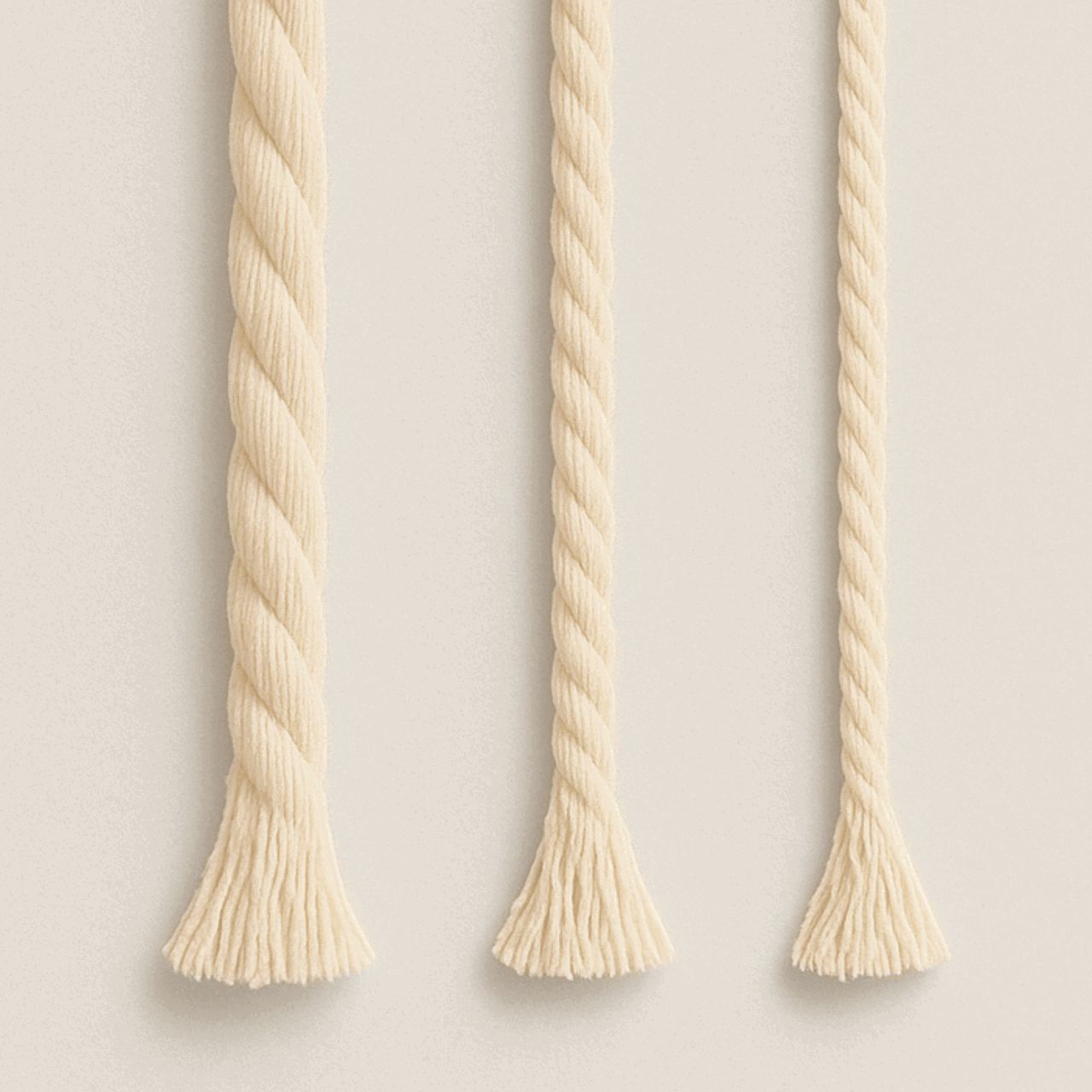
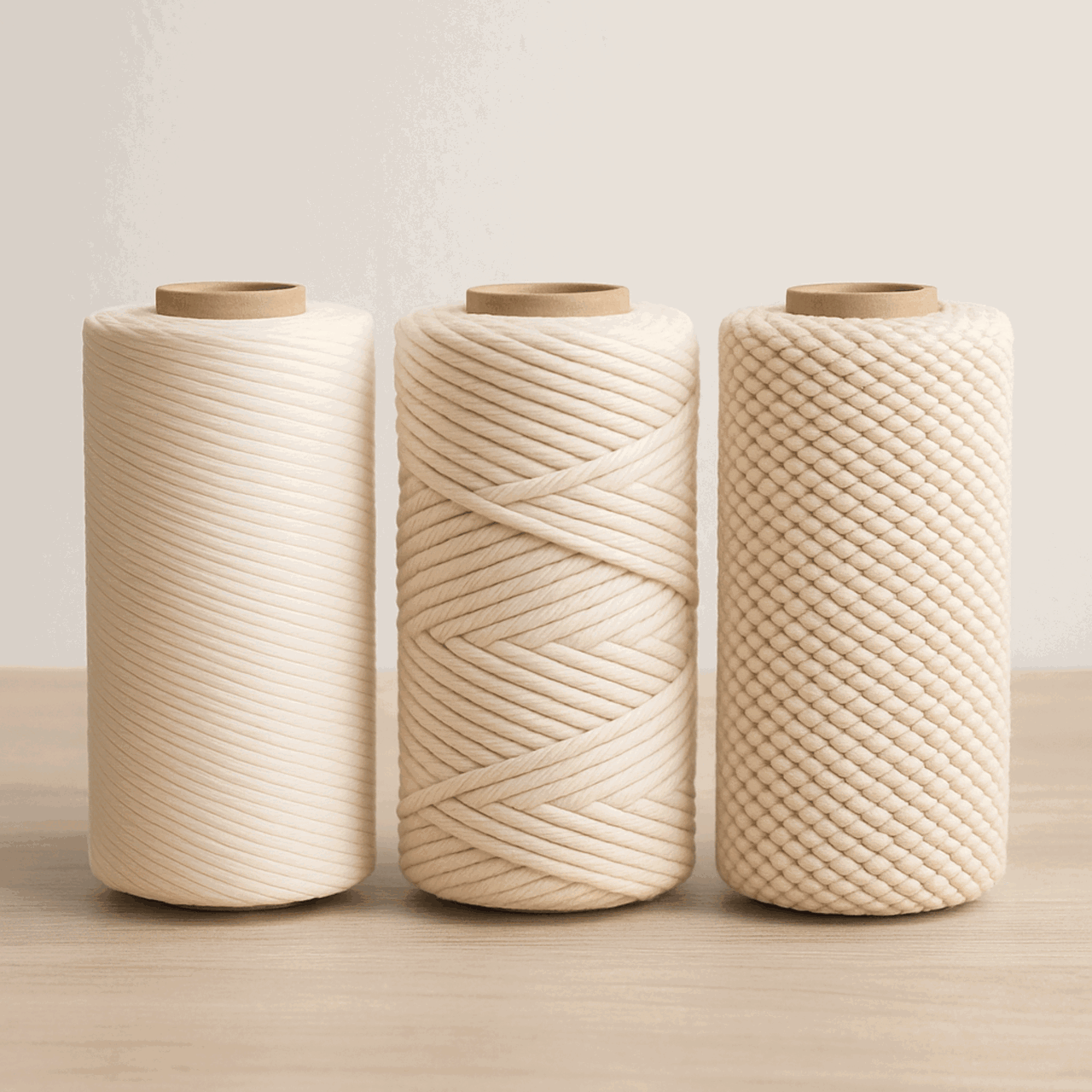
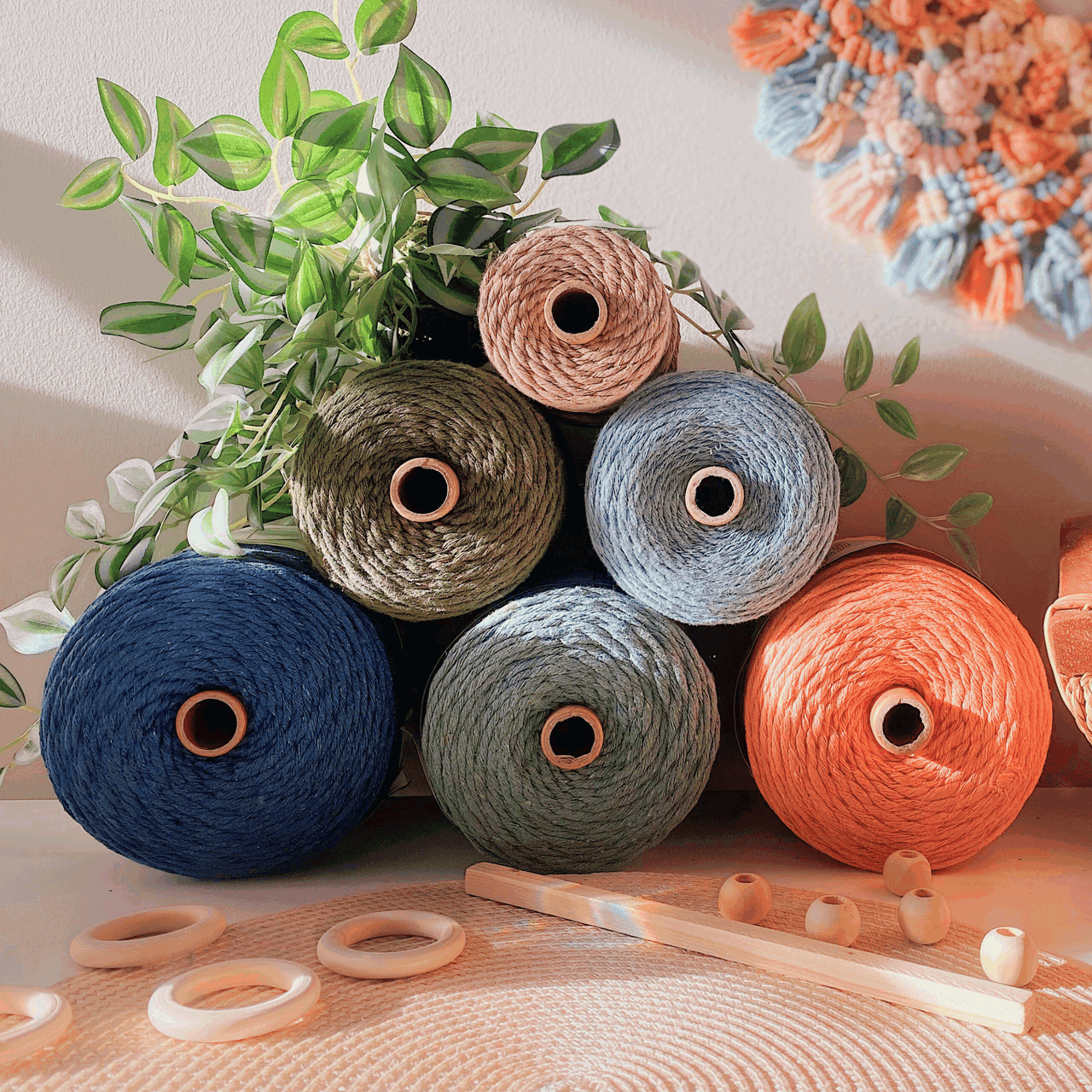
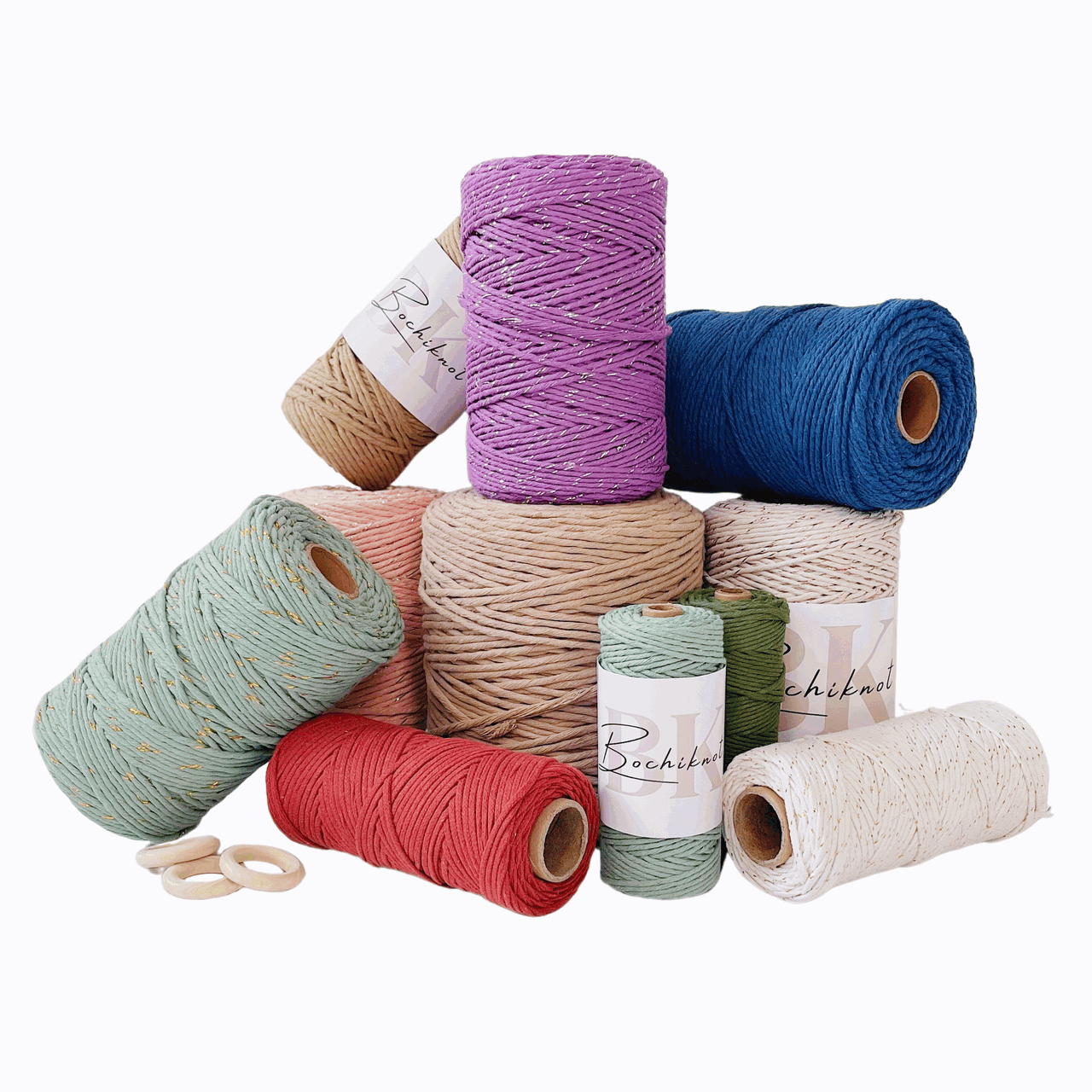
Use 3mm hollow braided cord for the leaves, one 2-inch wooden ring, and 30 cm of ribbon. A hollow braid bends and holds the small shaped leaves differently from soft single-strand cotton. Keep the same construction for your first attempt. The original green and metallic colors may not be available; choose the 3mm option in the braided range and make one sample leaf first.
Some links are affiliate links. As an Amazon Associate, Bochiknot earns from qualifying purchases, at no extra cost to you.

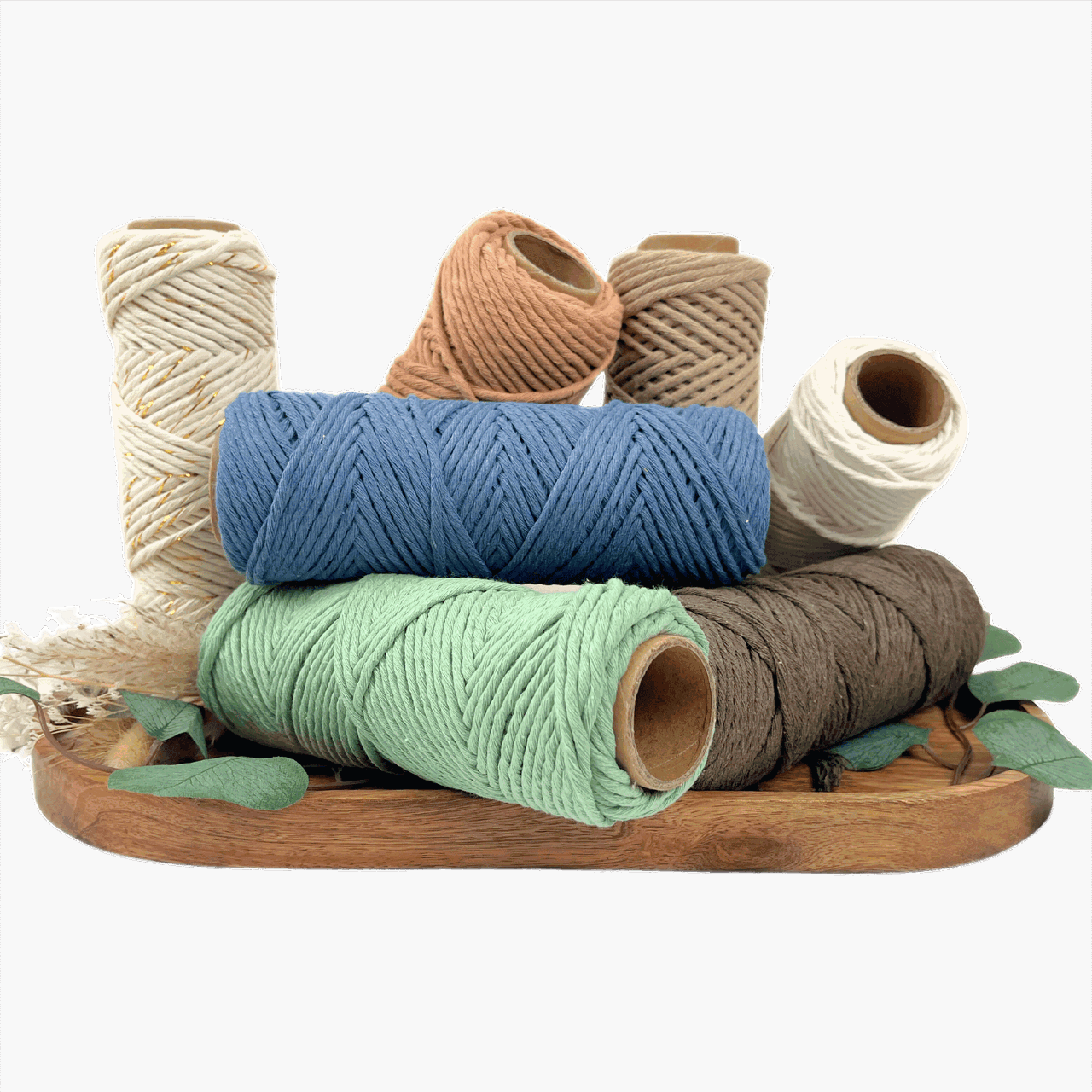
3mm Braided Macrame Cord
Choose 3mm. Cut 6.70 m in total for the leaves and hanger; keep extra for practice. Solid colors give the same design a quieter finish.
Shop Braided Cord →
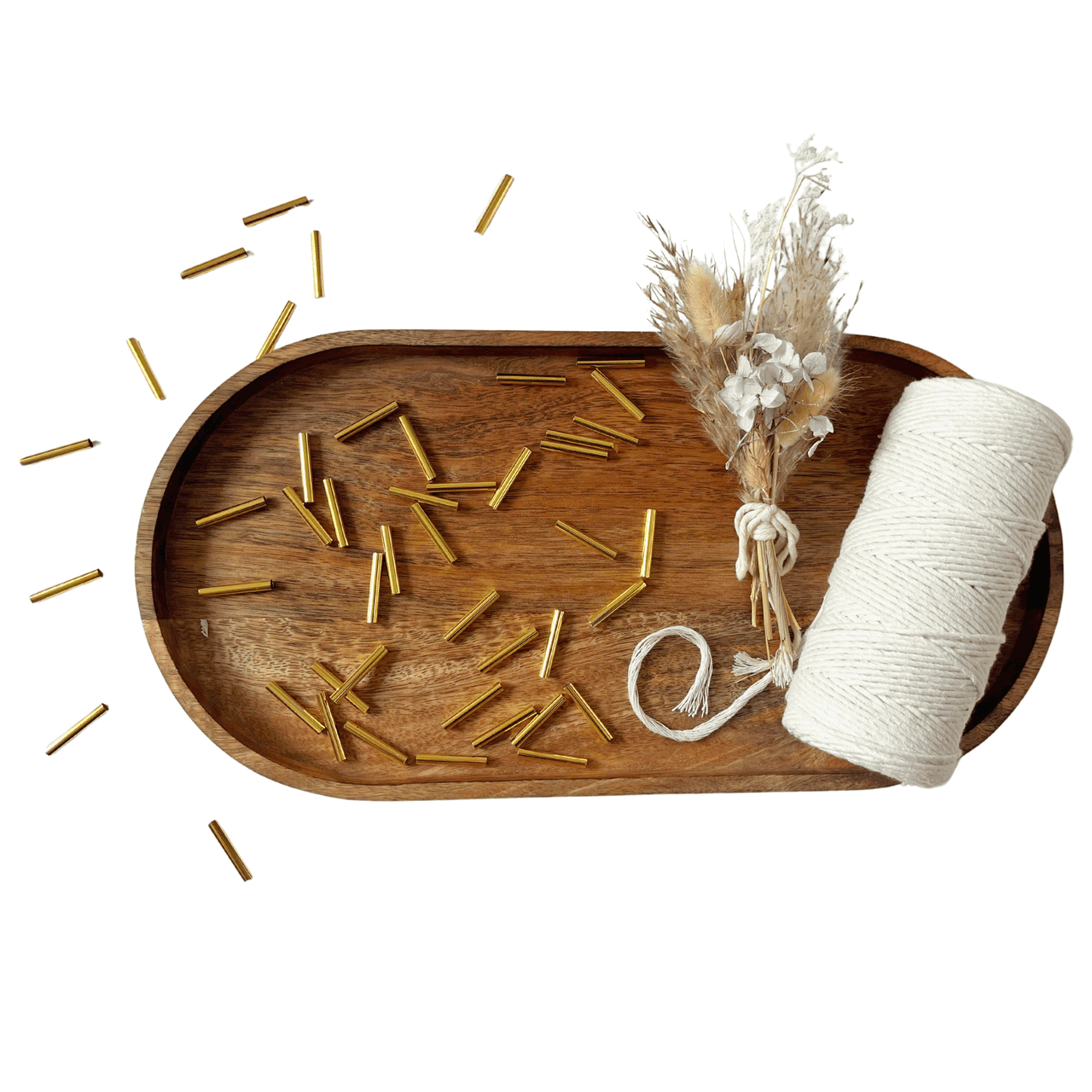
2-Inch Wooden Ring
One ring supports all six leaves. Arrange three on each side before tightening their attachment knots.
Shop Wooden Rings →
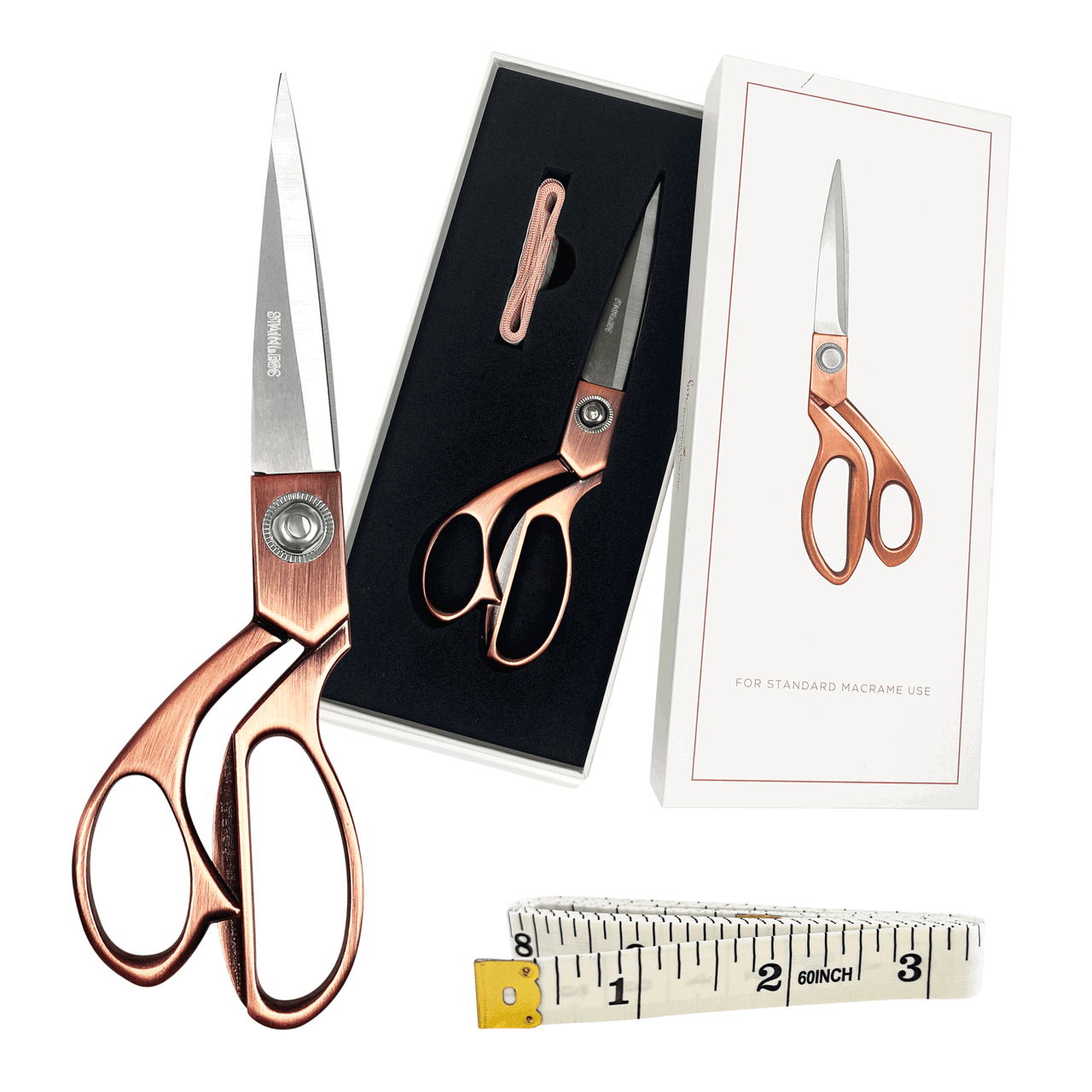
Gold Precision Scissors
Use small, controlled cuts to tidy the attachment tails after the leaves are secure.
Shop Precision Scissors →Your Remaining Tools
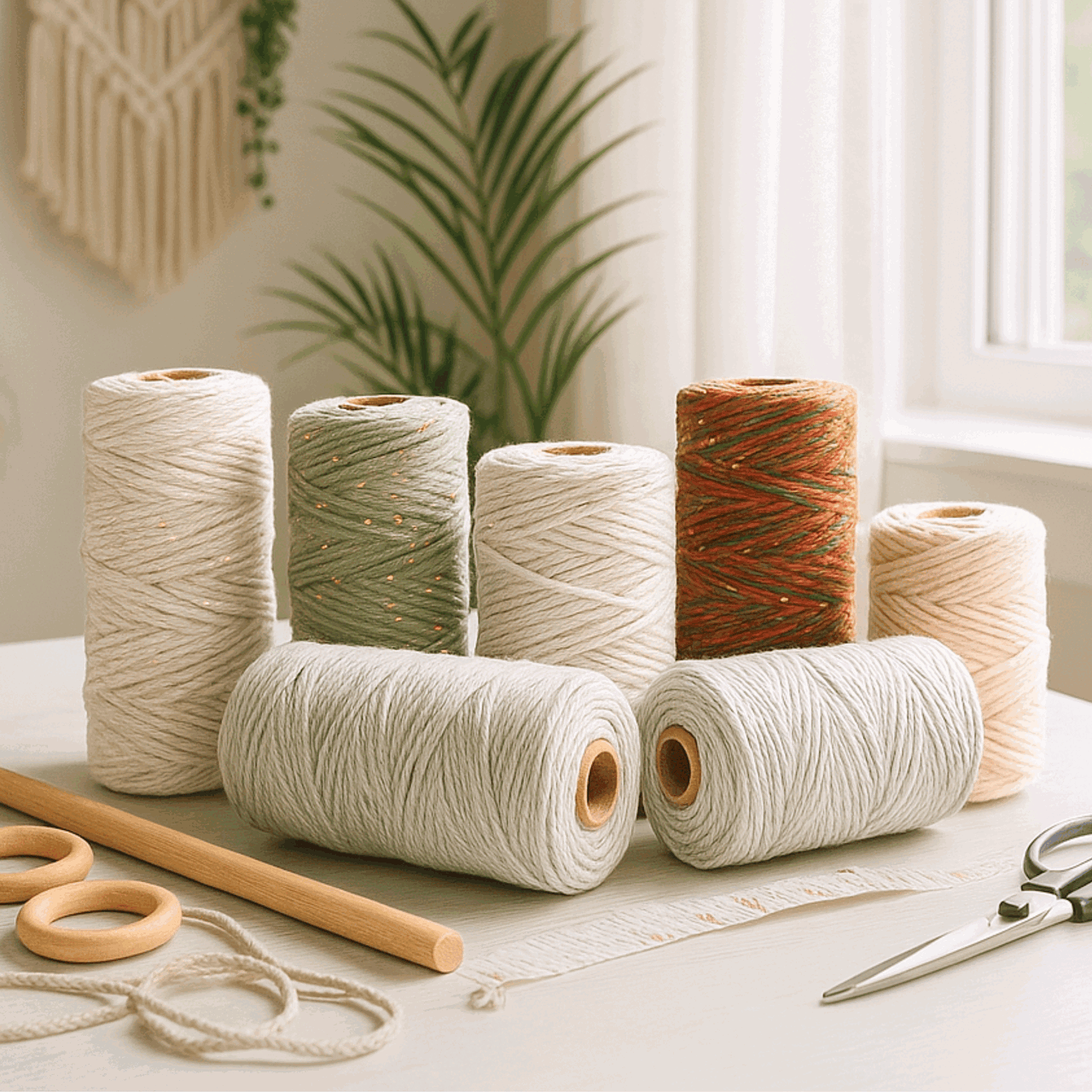
Gather measuring tape, masking tape or pins to hold the anchor, and 30 cm of ribbon for the bow. Glue is optional for tidying the back; the leaves are attached with knots, not glue.
Use supplies you already own where possible. For other craft essentials, browse the Bochiknot Amazon US storefront.
Cut Your Cord Before You Start
| Use | Cut length | Approximate conversion | Notes |
|---|---|---|---|
| Four leaves — color 1 | 12 × 35 cm | About 14 in each | Three cords per leaf |
| Two leaves — color 2 | 6 × 35 cm | About 14 in each | Three cords per leaf |
| Hanger — color 2 | 1 × 40 cm | About 16 in | Attach at the top |
| Ribbon bow | 1 × 30 cm | About 12 in | Ribbon, not macrame cord |
Total macrame cord: 6.70 m (about 22 ft), plus 30 cm of ribbon. Each leaf uses three separate 35 cm pieces. Cut in centimeters for consistency; inch values are rounded.
Understand the Knots Before You Combine Them

Double Half Hitch
Tie two half hitches with the working strand around an anchor. The anchor sets the direction.
See The Knot Tutorial →
Reverse Lark’s Head
Attach a folded cord to a ring or frame. Check which side of the attachment should face you.
See The Knot Tutorial →The hanging loop uses an overhand knot; follow the close-up in the linked finishing step.
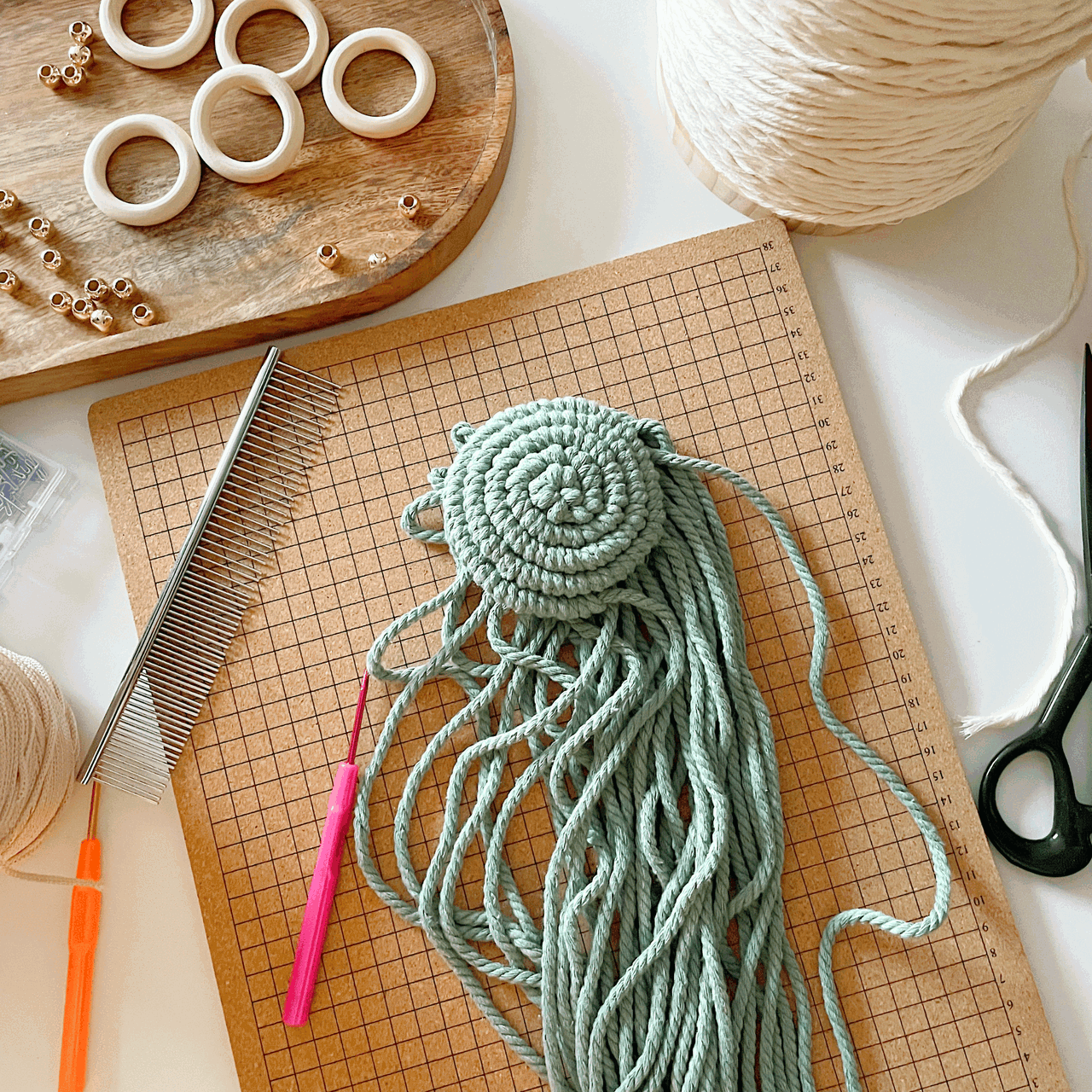
Tape one anchor cord horizontally. Leave room to work from both sides and keep the first leaf beside you as a size reference for the other five.

Watch Nicole Make It
Use the full video for an overview, or click the timestamp beside any step to jump directly to that demonstration.
3D Leaf Wreath: Step-by-Step Pattern
Read the instruction, compare the original step photos, then use the linked video whenever you need to see the cord move. Clicking a step photo also opens that step in the video.
1. Prepare three cords for one leaf
Set aside three 35 cm cords in one color. Secure one horizontally as the anchor, leaving both ends accessible. The other two cords will form the leaf around its center.


2. Attach the two working cords
Attach each of the remaining 35 cm cords near the center of the horizontal anchor with a Double Half Hitch (DHH) knot. Keep the attachment knots close together. Each DHH contains two half hitches; one wrap alone is not a complete knot.


3. Shape both sides of the leaf
Bring the far-right cord toward the left and tie two DHH knots around it. Mirror the shaping on the other side. Add the next row on both sides, keeping the anchor angle and knot tension similar. Watch the second row at 5:54.


4. Close the center and finish the tip
Tie the diagonal DHH in the middle. For the last row, make one regular DHH, then include the working cord with the anchor for the next knot; repeat on the other side. Snip only the newly incorporated anchor ends shown in the video, then finish with the diagonal DHH in the center. Preserve the remaining attachment ends. Closing row: 8:01 · Trimming and final knot: 9:30.


5. Repeat until you have six leaves
Make four leaves in color 1 and two in color 2, or use one color for all six. Compare each completed leaf with your first one before trimming. Similar anchor angles and tension matter more than pulling the knots as tightly as possible.

6. Tie the leaves onto the ring
Lay out three leaves on each side of the ring. Bring the attachment ends around the ring and tie Double Overhand knots at the back as demonstrated. Adjust the leaves so they cover the frame evenly while leaving the center open. Tighten only after you like the arrangement.


7. Tidy the back
Turn the wreath over and check every attachment. Trim excess tails after the knots are secure, without cutting into a knot. If you choose to use a small amount of glue to hold a tail flat, keep it on the back and let it set before moving the ornament.


8. Add the hanger and bow
Fold the 40 cm cord in half, attach it at the top of the ring with a Reverse Lark’s Head knot, and tie a large overhand knot at the ends to form the hanger. Tie the 30 cm ribbon into a bow at the bottom. Hang the wreath and make small spacing adjustments. Watch the bow at 16:06.


Check the shape from the front and back, secure every attachment, and hang the ornament before your final trim.
If Your 3D Leaf Wreath Looks Different
My leaves are different sizes.
Compare your anchor angles and the spacing between rows. Loosen and retie a row while the cords are still long. Use the same cord construction and tension for all six.
The wooden ring shows through.
Slide the leaf attachments around the ring and adjust their tilt before tightening. A larger ring will need a different arrangement; the six-leaf layout is designed for a 2-inch ring.
My leaves twist or look flat.
Check the direction of the closing rows against the close-up video. Shape the leaf gently with your fingers; pulling every cord hard can flatten or distort the small motif.

Display It, Gift It, Make It Yours
Use the loop on a Christmas tree branch or tie it to a wrapped gift as a keepsake. Choose one color for a calm botanical look, or place the two accent leaves symmetrically. Store the wreath flat so the raised leaves are not crushed.
Share your finished piece and tag @bochiknot on Instagram. Seeing how a familiar pattern looks in another maker’s colors is part of the fun.
Questions Before You Start?
Can I make this macrame wreath as a beginner?
Yes, after practicing Double Half Hitch knots. Start with one leaf before cutting a full batch. The closing row is the most detailed part; use its timestamp to replay it slowly.
How much cord does one wreath need?
The cutting list uses 6.70 m: eighteen 35 cm leaf cords and one 40 cm hanger. Ribbon is separate. Keep extra cord for your first practice leaf.
Does the wreath need glue?
The leaves and hanger attach with knots. Glue is optional for tidying loose ends at the back, not a substitute for secure attachment knots.
Can I use leftover cord?
Yes, if each piece is at least 35 cm and the thickness and construction match. Mixing very different cords can produce uneven leaves.
What Would You Like to Make Next?
Keep exploring with another free Christmas macrame tutorial. Choose a different construction to build on what you just practiced.

DIY Macrame Angel Ornament: Free Wooden Ring Pattern
This DIY macrame angel ornament combines a wooden ring halo, a wooden bead head, two knotted wings, and a soft tassel skirt.
Try This Free Pattern →
Macrame Christmas Tree Ornament: Free Metallic Cord Pattern
Make a macrame Christmas tree ornament with layered diagonal knots, a star bead, and a wrapped tassel trunk.
Try This Free Pattern →
Mini Macrame Wreath Ornament: Free Pattern Without a Ring
Create a mini macrame wreath ornament from three cords, a repeating scalloped knot pattern, and a ribbon bow.
Try This Free Pattern →Browse all Christmas macrame tutorials, or follow the Macrame Journey to choose your next learning stage.
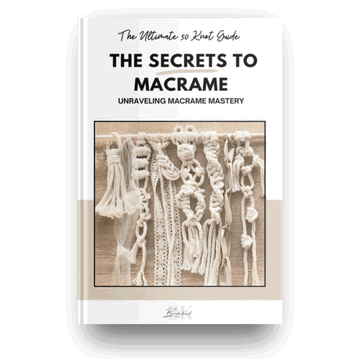
KEEP A KNOT REFERENCE NEARBY
A Little Help Between Tutorial Pauses
Revisit a knot before repeating it across your project. Our free 50 Macrame Knots & Sennits guide gives you a reference to return to as you learn.
Get The Free Knot Guide →A LITTLE SUPPORT FOR YOUR NEXT PROJECT
Keep Learning With The Bochiknot Patreon Community
If you would like a regular reason to pick up your cord, explore the Bochiknot community on Patreon. Choose the level of guidance that fits the projects you want to make.

TIER 1
Mini-Macrame Creations
Explore smaller projects with patterns and video guidance.

TIER 2
Mastering Macrame Skills
Build your technique through guided projects, lessons, and creative challenges.

TIER 3
Macrame Masterpiece
Explore a learning and materials-kit option. Compare the kit schedule and shipping details on Patreon.
Tier 3 also has Macrame Masterpiece Lite (S2) and Macrame Masterpiece Bundle (S1) options. See Patreon for the current inclusions, availability, and pricing.

NICOLE WOO · BOCHIKNOT
Enjoy making something personal for your Christmas tree. Take your time with the shaping, and let the first ornament be your practice piece.

A Little Inspiration Between Projects
Follow Bochiknot for tutorials, new ideas, and more ways to keep knotting.
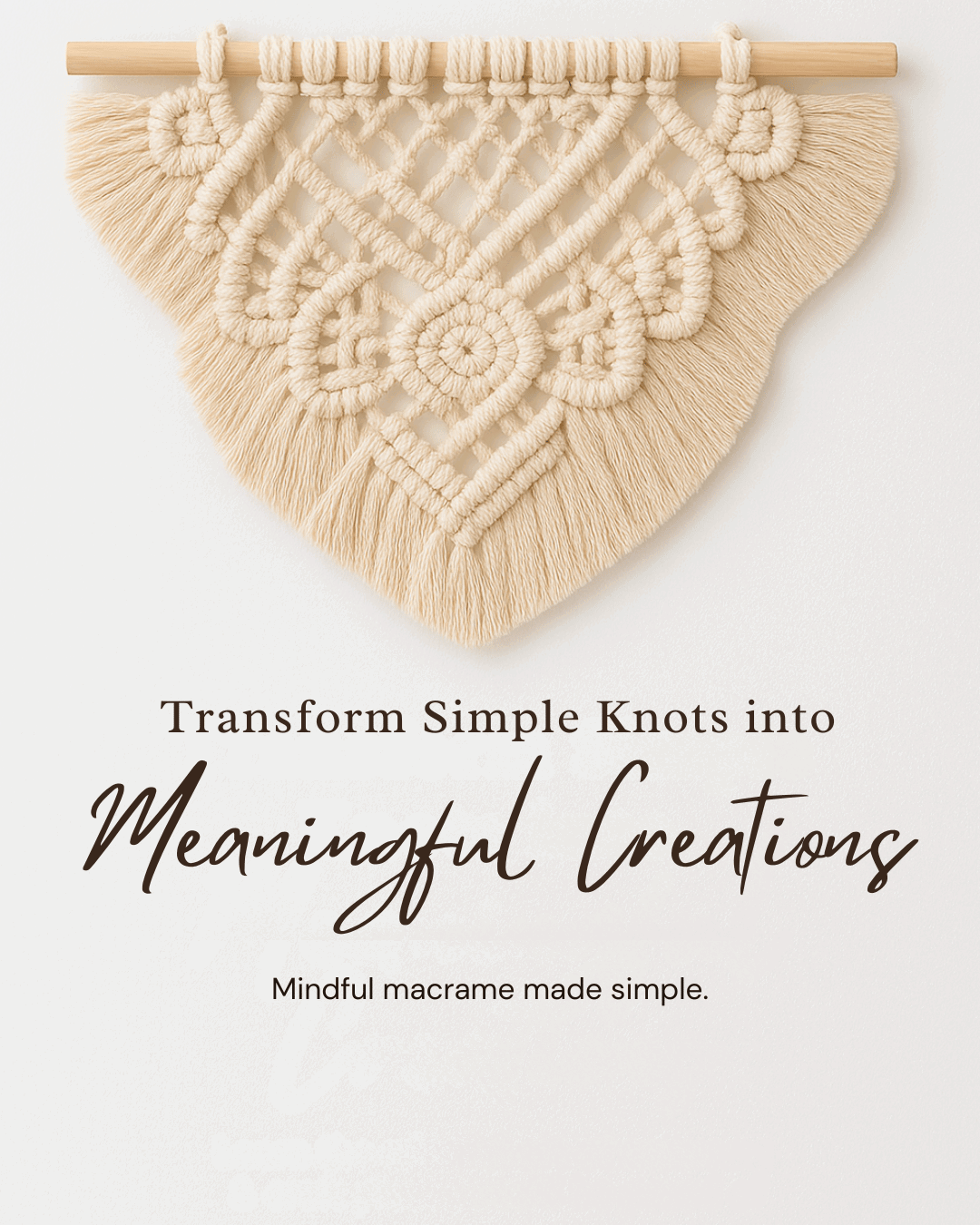
Pattern and instruction: Nicole Woo, Bochiknot. Original step photographs accompany the linked tutorial. Lifestyle scenes are styled illustrations of the finished project.

Leave a comment