





How to Make a Macrame Flower Coaster: A Step-by-Step Floral Pattern Tutorial


Updated June 13, 2026 · ~16 min read
A macramé flower coaster is one of those small projects that feels both functional and decorative at the same time. It protects your tabletops and counters from rings and heat while adding a soft, handmade detail that quietly elevates an everyday space. It is the kind of piece guests notice and ask about.
What makes this design special is its continuous, round floral pattern. Instead of bulky edges or a fringe that frays over time, the petals knot into a clean, seamless ring that looks polished from every angle. The finished shape resembles a delicate wreath of petals — perfect for spring and summer styling, though it reads beautifully in any color palette you choose.
The pattern is built almost entirely from one knot, the double half hitch, worked in a repeating rhythm that creates structure and symmetry. That makes it approachable for confident beginners while still feeling satisfyingly intricate once the round shape comes together. Follow along below and you will have your own macramé flower coaster — and a repeatable pattern for a whole matching set.
What Is a Macramé Flower Coaster?

Attach three cords to a base cord, then knot 10 petals around a center ring using double half hitch knots, adding a divider knot between each petal. Trim the ends and weave them back through the loops with a crochet hook to join everything into a seamless, fringe-free circle.
Tutorial Contents
- What you'll learn
- The trick to symmetrical petals and an invisible join
- Why make this coaster
- Materials & tools you'll need
- How much cord do you cut?
- Video walkthrough
- Step-by-step tutorial (11 steps)
- Pro tips & troubleshooting
- Common mistakes & fixes
- Ways to use it / style it
- Color combinations to try
- Make it vs buy it: the savings math
- A handmade gift for any occasion
- Frequently asked questions
- Get the free 50 macrame knots guide
- More macramé projects to try
- Join the Bochiknot community
What You'll Learn
By the end of this tutorial you will be able to:
- Set up the three foundation cords with reverse larks head and half hitch knots.
- Form a clean petal center and knot a full petal with double half hitch knots.
- Add divider knots so each petal sits evenly spaced around the ring.
- Repeat the petal rhythm to build all 10 petals into a round floral pattern.
- Trim and weave the ends with a crochet hook for a seamless, fringe-free join.
- Keep your tension even so every petal matches and the coaster lies flat.
The Trick to Symmetrical Petals and an Invisible Join
After teaching this pattern for years, the difference between a wobbly coaster and a crisp one always comes down to three things. Get these right and the rest of the pattern almost knots itself.
1. Keep every double half hitch at even tension. The entire coaster is built from rows of double half hitch knots. Each petal is the same number of knots as the last, so the only thing that makes one petal look bigger or smaller than its neighbor is how hard you pull. Snug each knot to the same firmness — not loose, not strangled — and the petals come out identical. If you find yourself tightening harder as you get tired, set the piece down, look at it straight on, and reset your hands.
2. The first petal is a partial setup — on purpose. The very first petal is knotted slightly differently from the rest. It acts as a partial setup created by the initial cord attachment, while the second petal begins the true repeating pattern. This is not a mistake to fix; it is what lets the design curve into a smooth, continuous circle later instead of leaving an awkward seam. Knot it as written, trust the rhythm, and the ring closes cleanly.
3. Use the crochet hook to weave ends through two back loops. The seamless, no-fringe closure is the signature of this coaster. Rather than tying off visible joining knots, you trim the ends to about three inches and use a crochet hook to weave each loose cord through two loops on the back of the opposite side. Going through two loops — not one — locks the cord so it will not slip, and keeps the front face of the coaster completely clean. The final two bottom cords thread through opposite sides to complete the closure.
Why Make This Coaster
A macramé flower coaster earns its place on the table in more ways than one:
- Functional first. It protects wood, stone, and painted surfaces from heat rings and condensation, and the dense double half hitch knotting gives it real body under a mug or glass.
- Decorative by design. The round floral pattern looks like a tiny knotted wreath, so it doubles as decor even when nothing is sitting on it.
- Made for gift sets. Once you know the petal rhythm, a set of four or six comes together quickly — a polished, handmade housewarming or hostess gift.
- Seasonal and versatile. Natural tones suit any season; pastels feel like spring, warm rusts feel like fall, and a crisp white set reads festive for the holidays.
- Beginner-approachable with one knot. Almost the entire coaster is the double half hitch. Learn that one knot well and you can make the whole project, then reuse the skill across countless other patterns.
Materials & Tools You'll Need

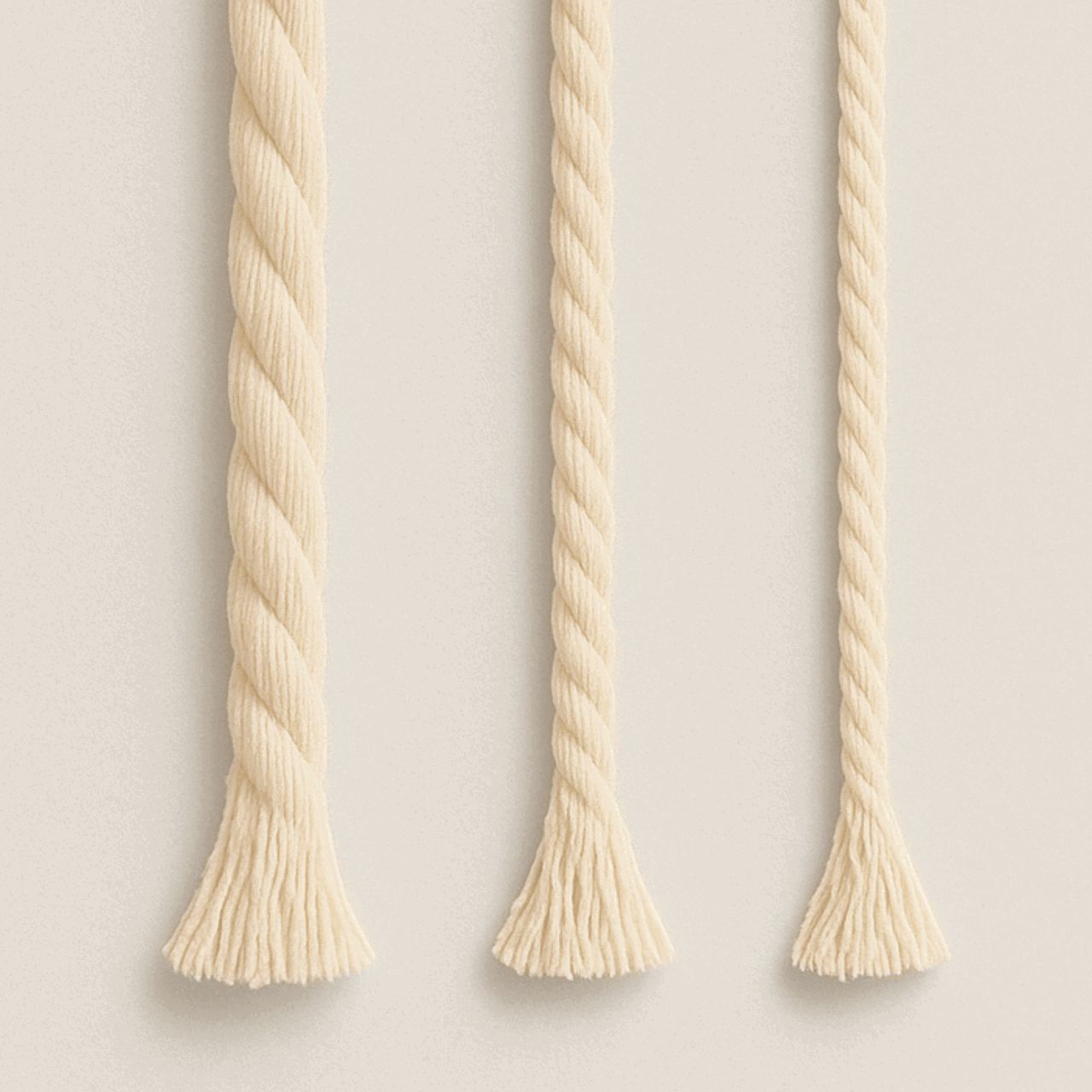
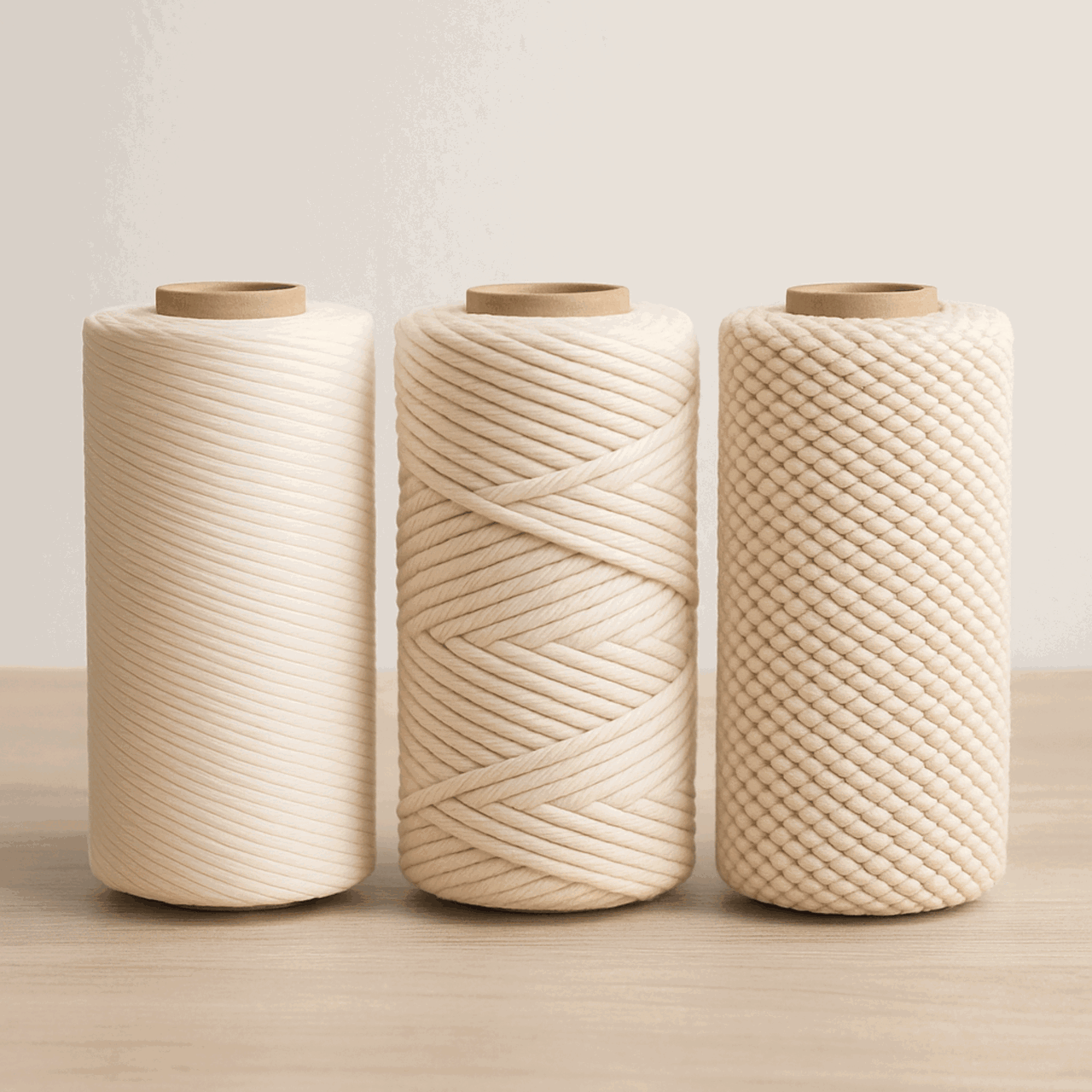
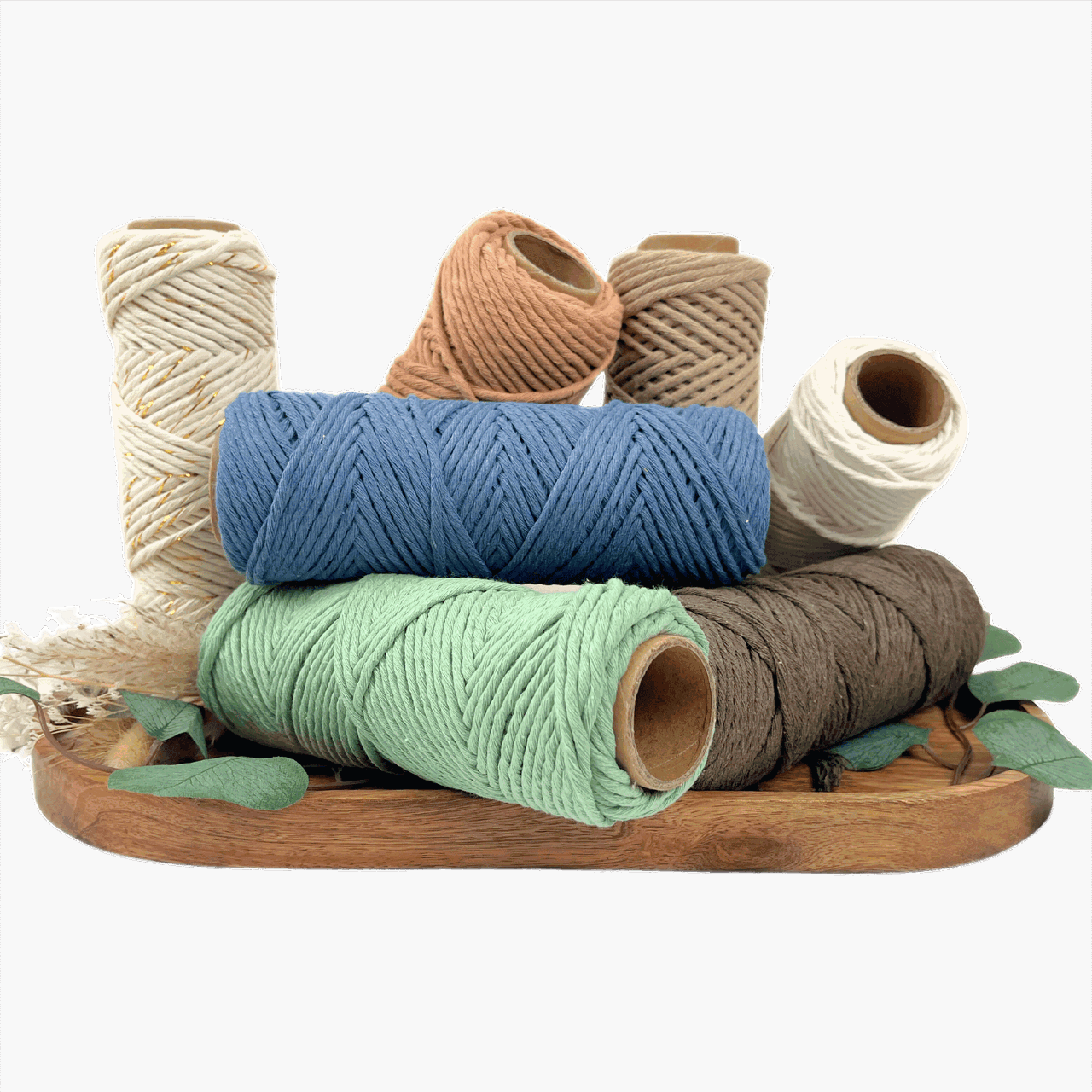
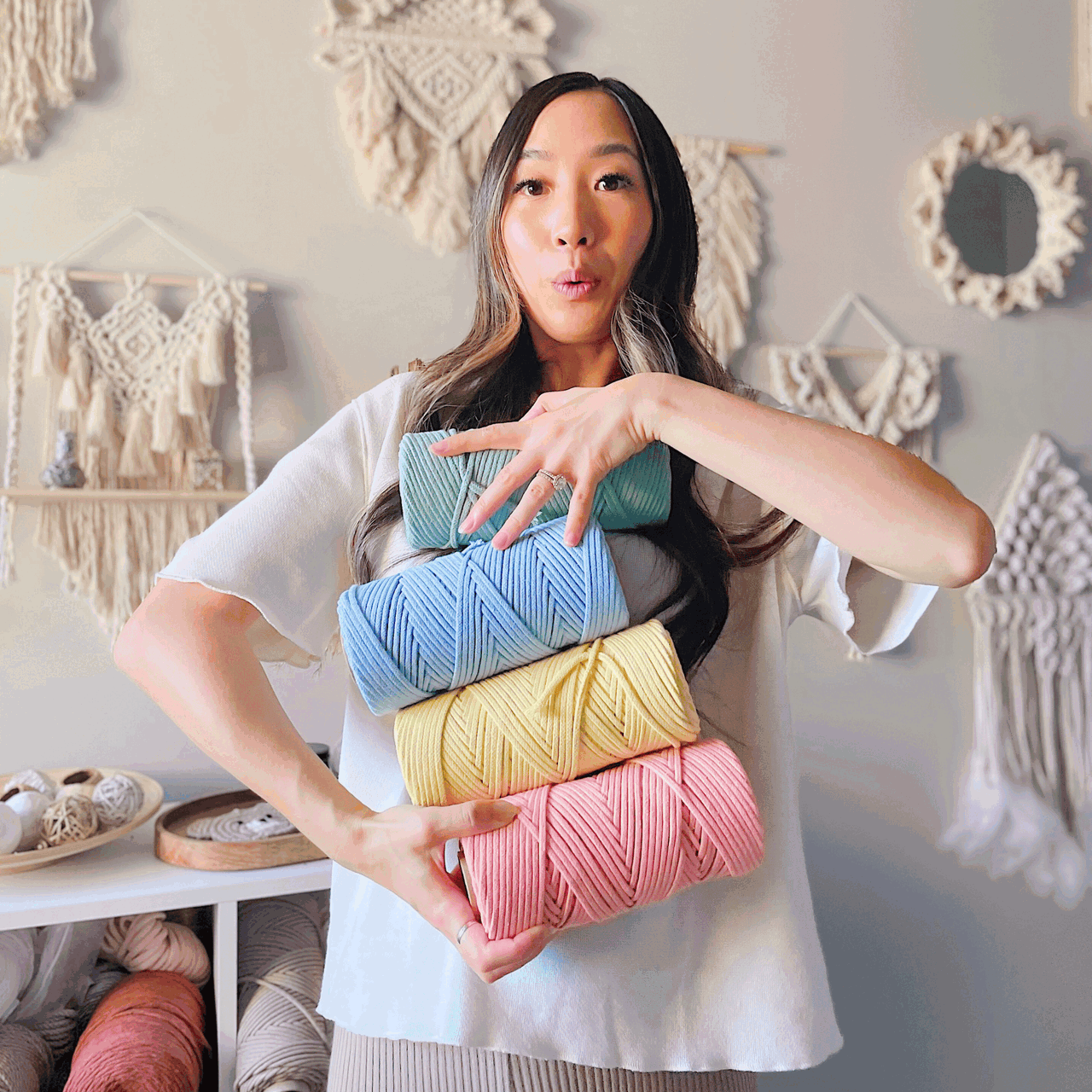
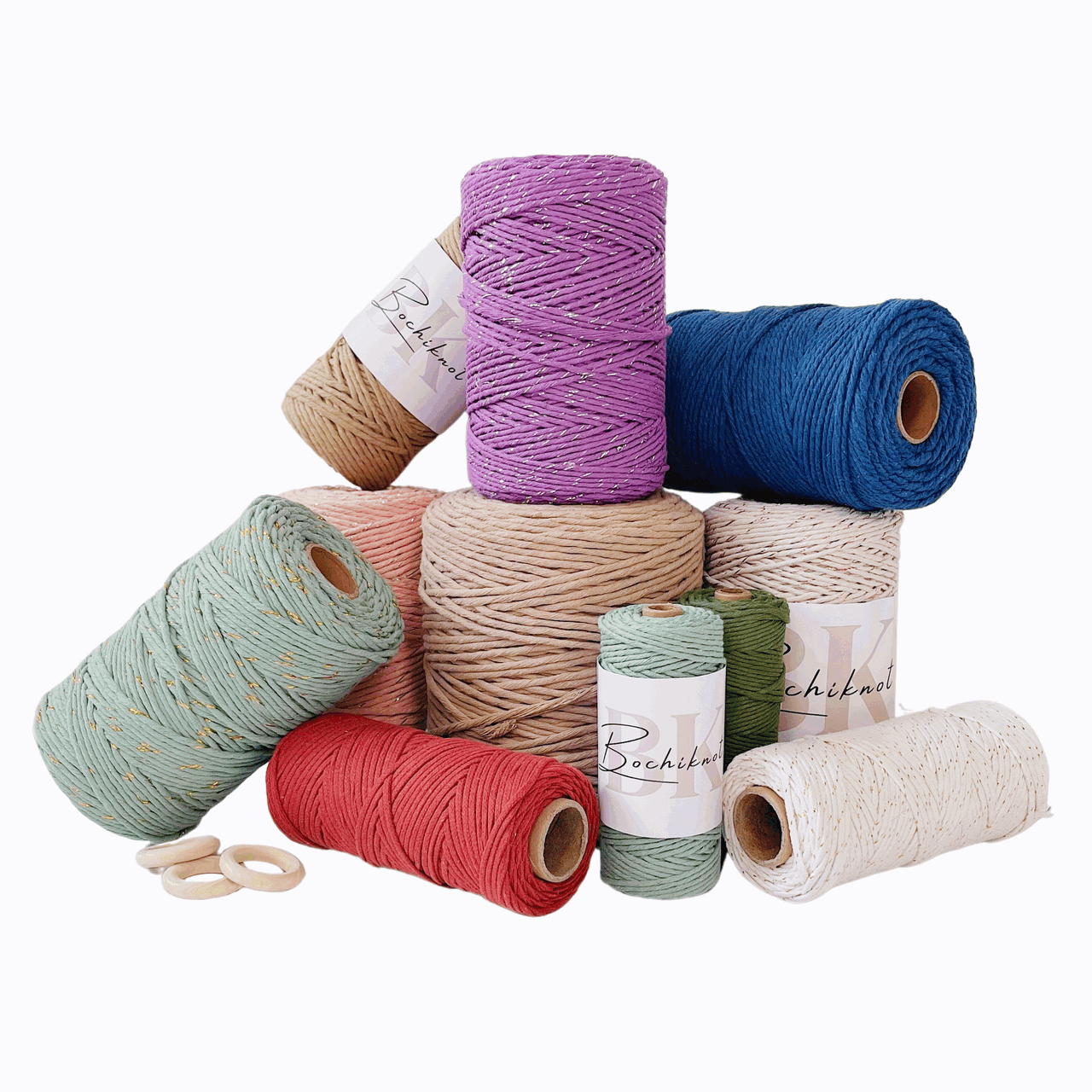
3-4 mm Single-Strand Cotton Cord
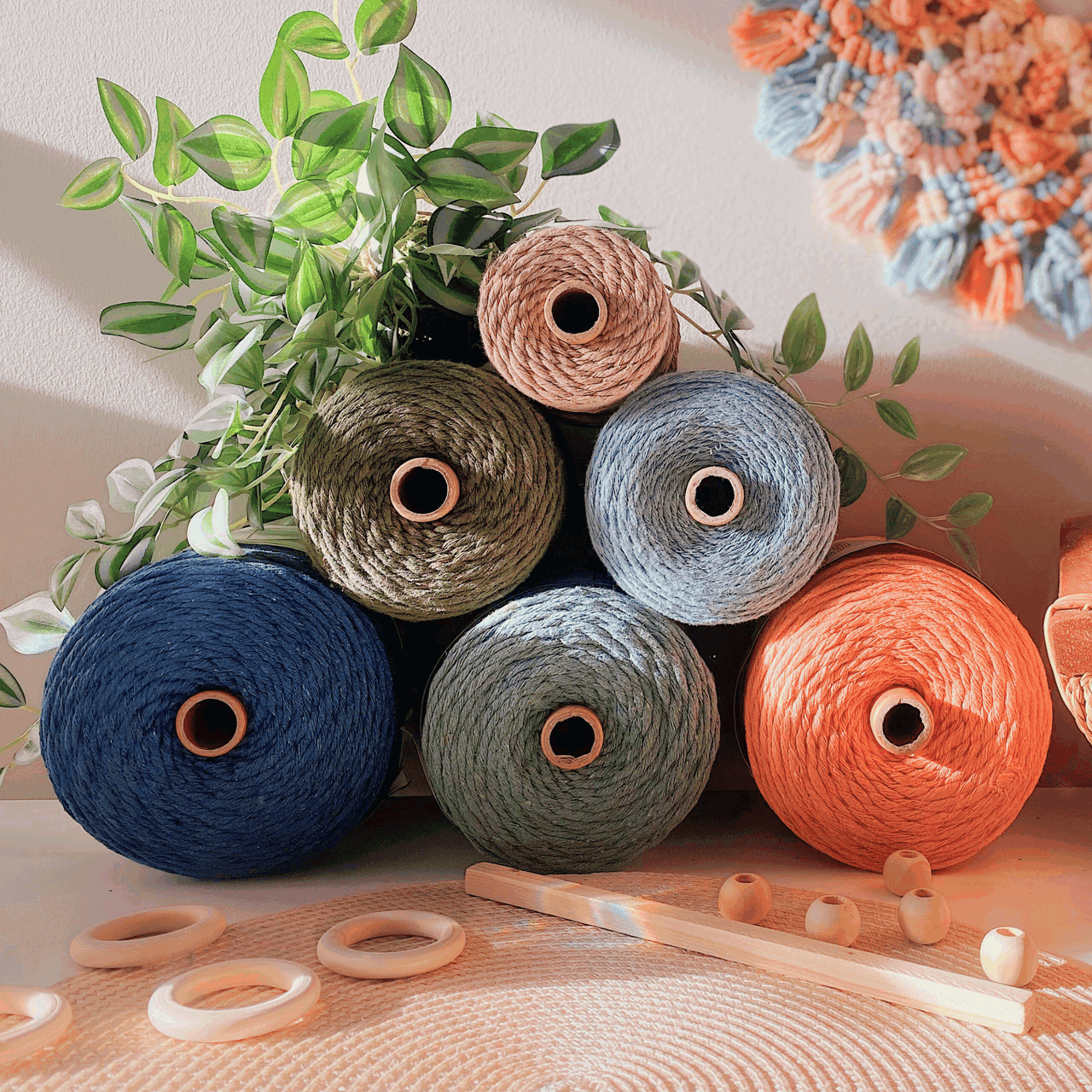
The whole coaster is one continuous run of knots, so cord choice matters. 4 mm is the featured size and gives the petals their soft, defined shape. 3 mm makes a daintier coaster; 5 mm makes it larger. Single-strand cotton holds a crisp double half hitch.
Shop 4 mm cord
Crochet Hook & Tools
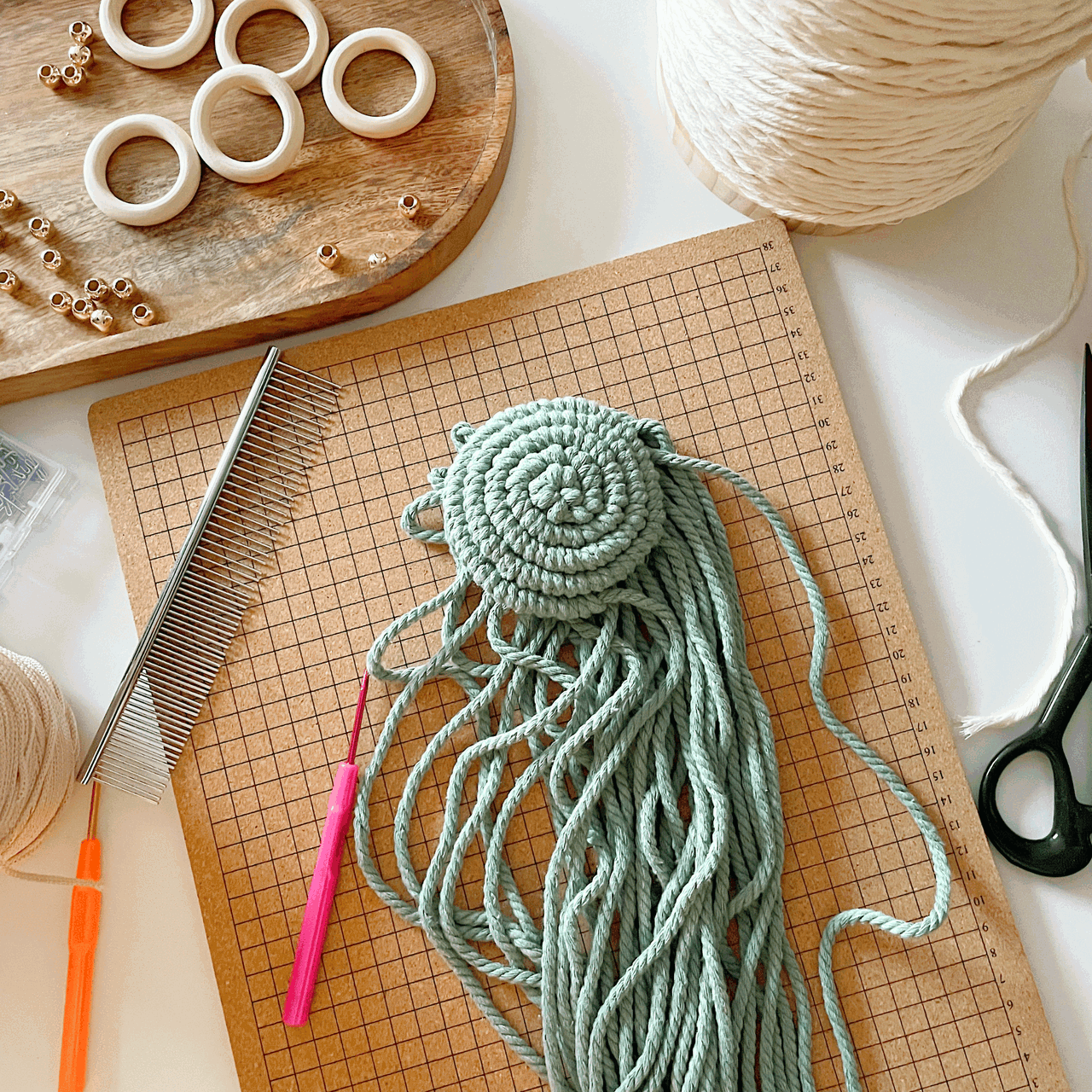
A crochet hook is essential here — it weaves the ends through the back loops for the seamless join. A measuring tape and a comb round out your kit and keep your cuts and petals tidy.
Shop tools
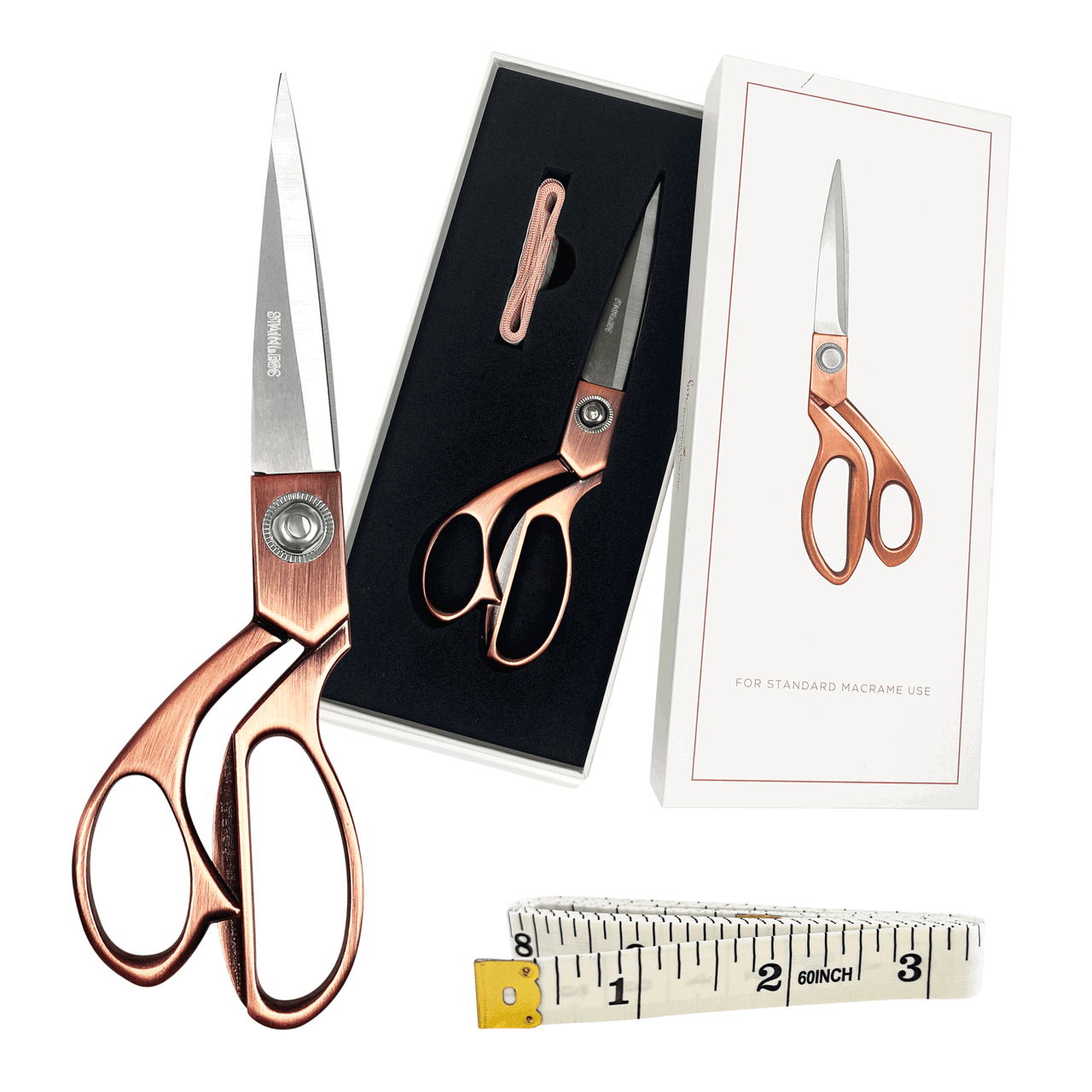
Precision Scissors
Sharp precision scissors give you a clean trim on the ends before you weave them in — no fraying, no bulk at the join.
Shop scissorsFull materials list:
- 4 mm single-strand cotton cord (featured size) — or 3 mm single-strand cord for a daintier coaster; 5 mm makes it larger
- Crochet hook and macramé tools (the crochet hook is required for the join)
- Scissors
- Measuring tape
- Comb
Free shipping on orders over $100 USD (US) or $75 CAD (Canada). This post contains affiliate links. We may earn a small commission at no extra cost to you. Also on Amazon and Etsy: browse our Amazon storefront or shop patterns and cord on Etsy.
How Much Cord Do You Cut?
These are the exact, tested cord lengths for the coaster in the photos, cut from 4 mm single-strand cord. Cut all three before you start so you can knot without stopping.
| Cord | Quantity | Length each | Used for |
|---|---|---|---|
| Base cord | 1 strand | 150 cm (59 in) | The horizontal base for the first attachments and the final join |
| Working cord | 1 strand | 300 cm (118 in) | Attached first; helps form the petal center |
| Working cord | 1 strand | 450 cm (177 in) | Attached to the right; carries the bulk of the petal knotting |
Sizing note: These lengths are tested for a ~3.5 to 4.5 in coaster in 4 mm cord. Using 5 mm cord makes the finished coaster larger and will use a little more length, so treat any new amounts as an estimate and cut a little extra rather than running short.
Video Walkthrough
Note: We recommend following the tutorial video for more detailed instructions and to achieve the best results. It provides extra guidance and clarity as you work through each step.
Step-by-Step: How to Make the Macramé Flower Coaster
1Set Up the Base Cord
- Start with the 150 cm cord. Lay one end horizontally and secure it in place, leaving about 5 to 6 inches of extra length on the left side.
- This horizontal cord serves as the base for your first attachments and will be used later when you form the full circle.

2Attach the 300 cm Cord
- Fold the 300 cm cord in half and attach it to the base cord using a reverse larks head knot.
- Make one half hitch knot on the right and one on the left to form the starting setup.
- Keep your knots snug and even to create a clean, neat center.

3Attach the 450 cm Cord to the Right
- Take the 450 cm cord and attach it to the right of the first set using a reverse larks head knot.
- Add one half hitch knot on the right and one on the left to match the setup.
- With both cords in place, your arrangement is ready for the first flower petal.

4Form the First Petal Center
- Take the third cord from the right and use it as your anchor cord.
- Use the cord immediately to its right as the working cord and make one double half hitch knot to the right.
- This knot forms the center line of the petal, acting as the spine for the floral segment.

5Bring the Anchor Down and Knot Across to the Left
- Fold the anchor cord downward to the left.
- Knot across using double half hitch knots all the way to the left side.
- Keep the curve smooth to form the petal shape.

6Add the Divider Knot Between Petals
- Take the second cord from the right as the anchor.
- Use the cord next to it and make one double half hitch knot to the right.
- This creates a clean space between petals so each one stays distinct.


7Build the First Full Petal
- Bring the left anchor cord over to the right.
- Make a full row of double half hitch knots to the right side.
- Continue the pattern: right row, center knot, left, then left row to form each petal.


8Close the Petal and Continue the Pattern
- After the row to the right, add a center double half hitch knot, then bring the top anchor back to the left and knot across.
- Add a divider knot between petals, then repeat the same sequence below.
- Continue until you have 10 petals total, following the pattern: divider, row, center, row, divider.

9Complete the Circle
- Once all petals are formed, the floral ring will be visible with open ends ready to join.
- Add one final double half hitch knot on the right to align the ends.

10Trim the Ends
- Trim the excess cords, leaving about 3 inches on each end.
- Keep enough length to secure the cords neatly without adding bulk at the join.

11Join the Coaster Seamlessly
- Bring both ends together and weave the loose cords through the loops at the back with your crochet hook.
- Pull each cord through two loops to close the circle neatly and hide the join, then thread the final two bottom cords through opposite sides to complete the closure.

Pro Tips & Troubleshooting
- Pin or tape the starting cord securely. If the base cord shifts, your early knots loosen and the whole ring drifts. Anchor it before you start.
- Leave the recommended extra space on the left. That 5 to 6 inches of tail at the beginning is what you weave in at the end — do not skip it.
- Keep your double half hitch knots evenly tensioned. Even tension is the single biggest factor in symmetrical petals. Snug each knot to the same firmness.
- Use the crochet hook, do not force cords by hand. The hook glides the ends through the back loops without distorting the petals or fraying the cord.
- Weave each end through two loops at the back. Two loops locks the cord so the join cannot slip; one loop can work loose over time.
- Trim only after weaving in. Cut the ends to length, but do the final close trim only once each cord is woven in properly.
- Lay it flat and look at it straight on. Every couple of petals, set the coaster down and check the ring from above so you can catch any drift early.
Small details like these make a big difference in how polished the final macramé flower coaster looks.
Common Mistakes & Fixes
| Mistake | What happens | The fix |
|---|---|---|
| Uneven knot tension | Petals come out different sizes and the ring looks lopsided | Snug every double half hitch to the same firmness; reset your hands if you start pulling harder |
| Base cord shifts at the start | The early knots loosen and the whole circle drifts off center | Pin or tape the 150 cm base cord securely before knotting |
| Tails cut too short | Not enough length to weave in, so the join shows or comes loose | Leave 5 to 6 inches at the start and about 3 inches at the ends before joining |
| Forcing cords through by hand | Frayed ends, distorted petals, and a messy back | Use a crochet hook to weave the ends through the loops |
| Weaving through only one loop | The join works loose with use | Weave each end through two loops on the opposite side to lock it |
| Treating the first petal like the rest | The ring will not curve and close cleanly | Knot the first petal as a partial setup as written; the second petal starts the true repeat |
Ways to Use It / Style It

This little floral ring is more versatile than a standard coaster. A few favorite ways to use it:
- Coaster set. Make four or six in matching cord for a cohesive, gift-ready set.
- Candle mat. Set a pillar candle or a small jar candle on one for a soft, decorative base.
- Plant or jar mat. Protect a shelf or sill under a small potted plant or a mason jar.
- Mini trivet. Group two or three under a small teapot or warm dish.
- Wall decor. Stitch a loop on the back and hang a few together as a tiny floral gallery.
- Gift topper. Tie one onto a wrapped present as a reusable, handmade bow.
Color Combinations to Try
The same petal pattern reads completely differently depending on your palette. Six combinations to consider:
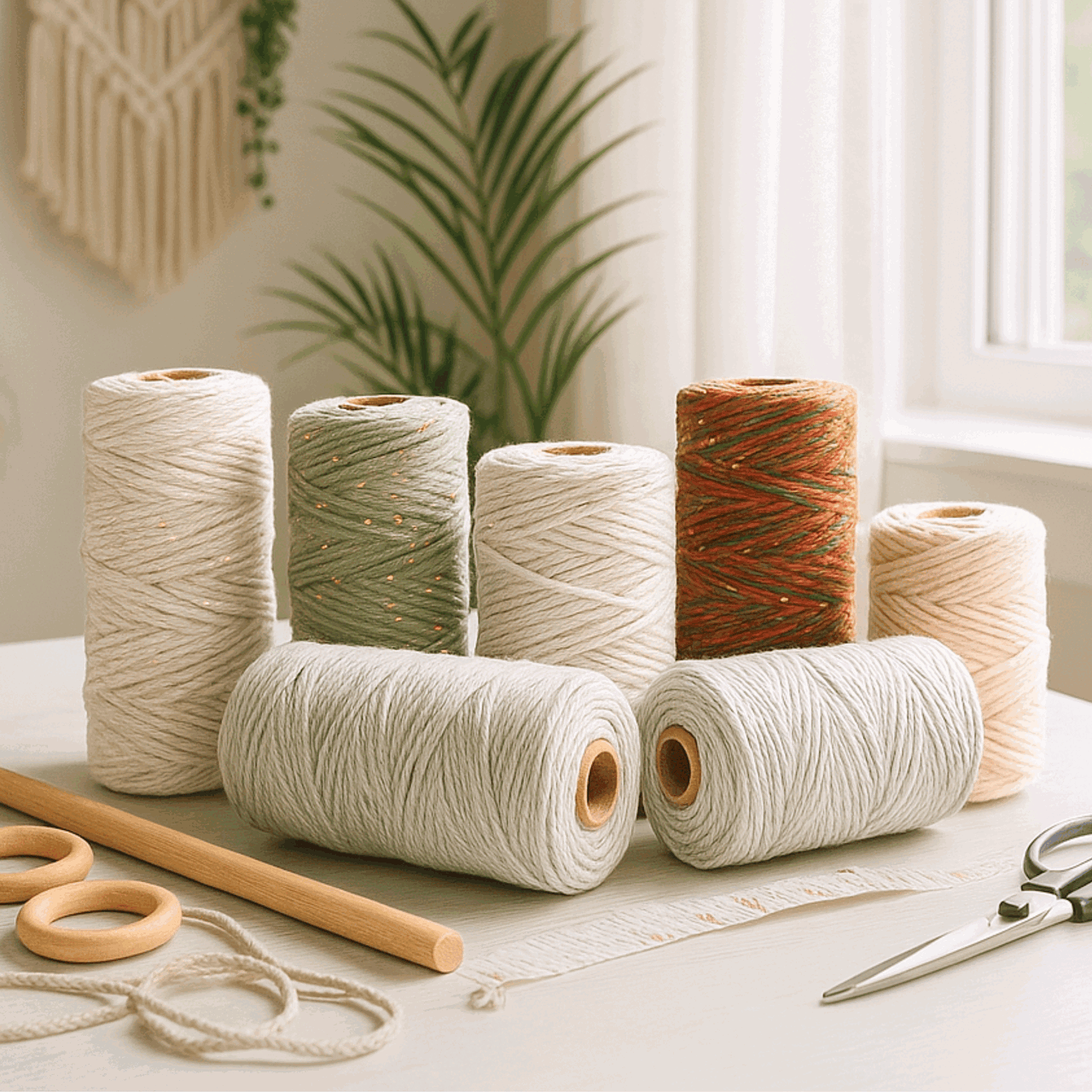
- Natural. Undyed natural organic cotton for a timeless, neutral coaster that suits any table.
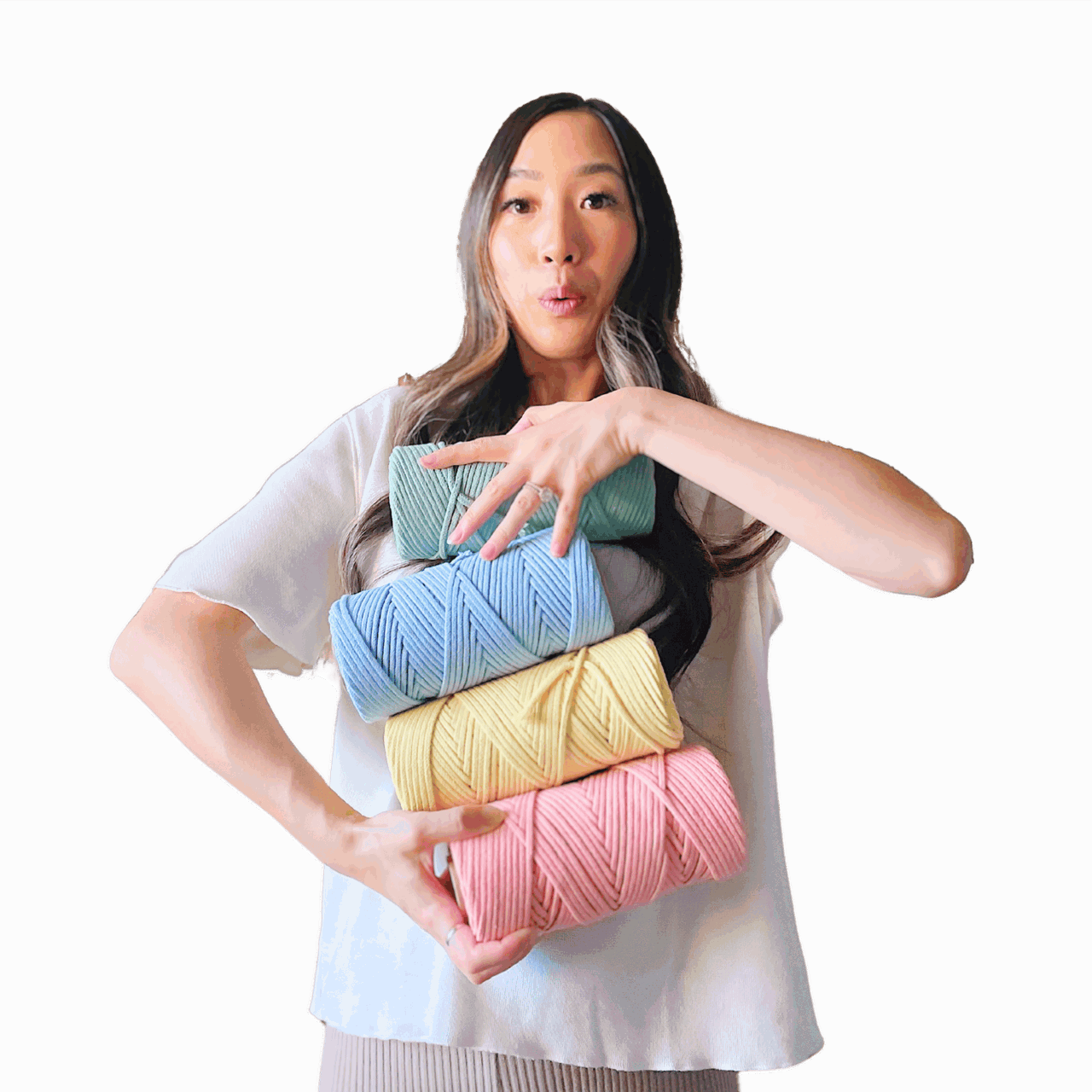
- Pastel spring. Soft pink, lilac, or mint for a fresh, springtime set.
- Bold. A punchy single color — terracotta, mustard, or deep teal — for a statement piece.
- Tonal neutrals. Cream, oatmeal, and sand across a set for a soft, sophisticated look.
- Two-tone. One color for the petals and another woven accent for subtle contrast.
- Seasonal. Rust and cream for fall, or crisp white for the holidays.
Browse cord colors in our recycled cotton and natural organic cotton collections.
Make It vs Buy It: The Savings Math
Handmade macramé coasters sell well on Etsy and at markets. The figures below are honest, clearly-labeled ranges — not invented exact prices.
| Buy it (handmade) | Make it (Bochiknot supplies) | |
|---|---|---|
| Typical price | ~$8-$20 each, more for a set (estimate) | ~$5-$12 in cord (estimate) |
| Make more than one | Full price every time | One roll of cord makes many coasters, so the per-piece cost keeps dropping |
| Customization | Limited to listed colors | Any color or palette you choose |
| Skill gained | None | Reverse larks head, half hitch, and the double half hitch — reusable forever |
A Handmade Gift for Any Occasion
A handmade macramé flower coaster set is a thoughtful, useful gift that suits plenty of moments:
- Housewarming — a practical, decorative welcome for a new home.
- Hostess gift — pair a set with a bottle of wine or a candle.
- Wedding favors — batch a matching set in the couple's colors.
- Mother's Day — a handmade accent for the kitchen or coffee table.
- Holiday sets — crisp white or rust and cream make festive, giftable bundles.
Frequently Asked Questions
Is this macramé flower coaster suitable for beginners?
It is best described as beginner to intermediate. The coaster relies almost entirely on double half hitch knots, so it feels much easier if you already know that one knot and can keep your tension consistent. Confident beginners can absolutely make it — just go slowly through the first petal.
What knot is used for the macramé flower coaster?
The pattern is built mainly from the double half hitch knot, worked in repeating rows to form each petal. You also use a reverse larks head knot to attach the working cords and a half hitch knot in the initial setup.
What cord size and length should I use?
The featured pattern uses 4 mm single-strand cotton cord. You need three lengths: 150 cm (base), 300 cm, and 450 cm. A 3 mm cord makes a daintier coaster, and a 5 mm cord makes the finished coaster larger.
Do I need a crochet hook for this pattern?
Yes. The crochet hook is used to weave the loose ends through the loops on the back of the coaster. That is how the circular floral design is closed without adding extra visible joining knots.
How many petals does the macramé flower coaster have?
The completed pattern has 10 petals in total, knotted around the center ring with a divider knot between each one.
How do I join the coaster seamlessly?
Trim the cords so about 3 inches remain, then use a crochet hook to weave each end through two loops on the back of the opposite side. The final two bottom cords are threaded through opposite sides to complete the closure, hiding the join completely.
How much cord do I need?
You need three cord lengths for this macramé flower coaster: 150 cm, 300 cm, and 450 cm, using 4 mm cord. One standard roll of cord makes many coasters.
How do you finish the macramé flower coaster neatly?
Trim the cords so about 3 inches remain, then use a crochet hook to weave each end through two loops on the back of the opposite side. Trim any final whiskers only after each cord is woven in, so nothing works loose.
Why is the first petal different from the rest?
The first petal acts as a partial setup created by the initial cord attachment, while the second petal begins the full repeating pattern. This small variation is intentional — it is what lets the design form a smooth, continuous circle when you close the ring.
Can I make a set of coasters?
Yes, and it gets easier each time. Once the petal rhythm clicks, a matching set of four or six comes together quickly. One roll of cord is usually enough for several coasters, which makes a set an affordable, polished gift.
How do I wash a macramé coaster?
Spot clean with a little cool water and mild soap, then press out moisture and lay it flat to air dry. Cotton cord can be hand washed gently if needed; avoid wringing or hot water so the petals keep their shape.
Can I make the coaster bigger?
Yes. Using a thicker 5 mm cord makes the finished coaster larger overall (estimate). You can also scale up the design by adding more cord length, though the 4 mm version with the listed lengths gives the tested ~3.5 to 4.5 in round.
Get the Free 50 Macramé Knots Guide
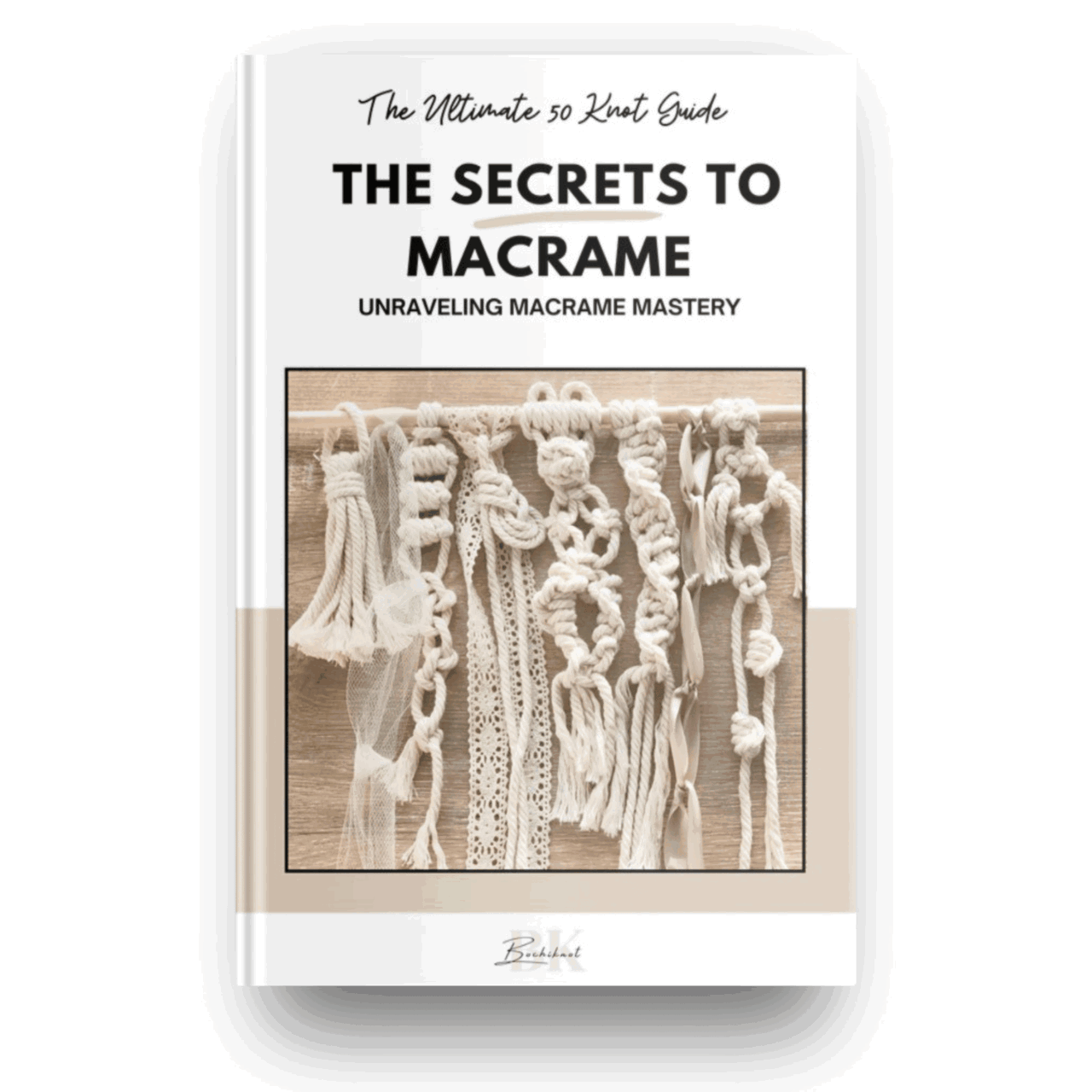
Want to add more knots to your macramé designs? Grab my free resource, the 50 Macramé Knots & Sennit Guide. It is packed with easy, step-by-step instructions to help you improve your skills and try new creative projects.

More Macramé Projects to Try
- Macramé Diamond Coaster — a geometric take on the coaster.
- Beaded Macramé Flower Coaster — the flower coaster with a beaded center.
- The Original Macramé Flower Coaster — where this design started.
- Macramé Daisy Keychain — a small floral project to try next.

Pin this flower coaster tutorial
Save this DIY macramé flower coaster pattern to your macramé, home decor, or coaster board so you can find the full 11-step tutorial again. Beginner-friendly, about 1 to 2 hours, and made with 4 mm single-strand cotton cord. (A pin graphic is coming soon — for now, save the post to come back to it.)
Save to PinterestJoin the Bochiknot Community
Knot along with thousands of makers, share your finished coasters, and get help when a knot does not cooperate.
About Nicole Woo
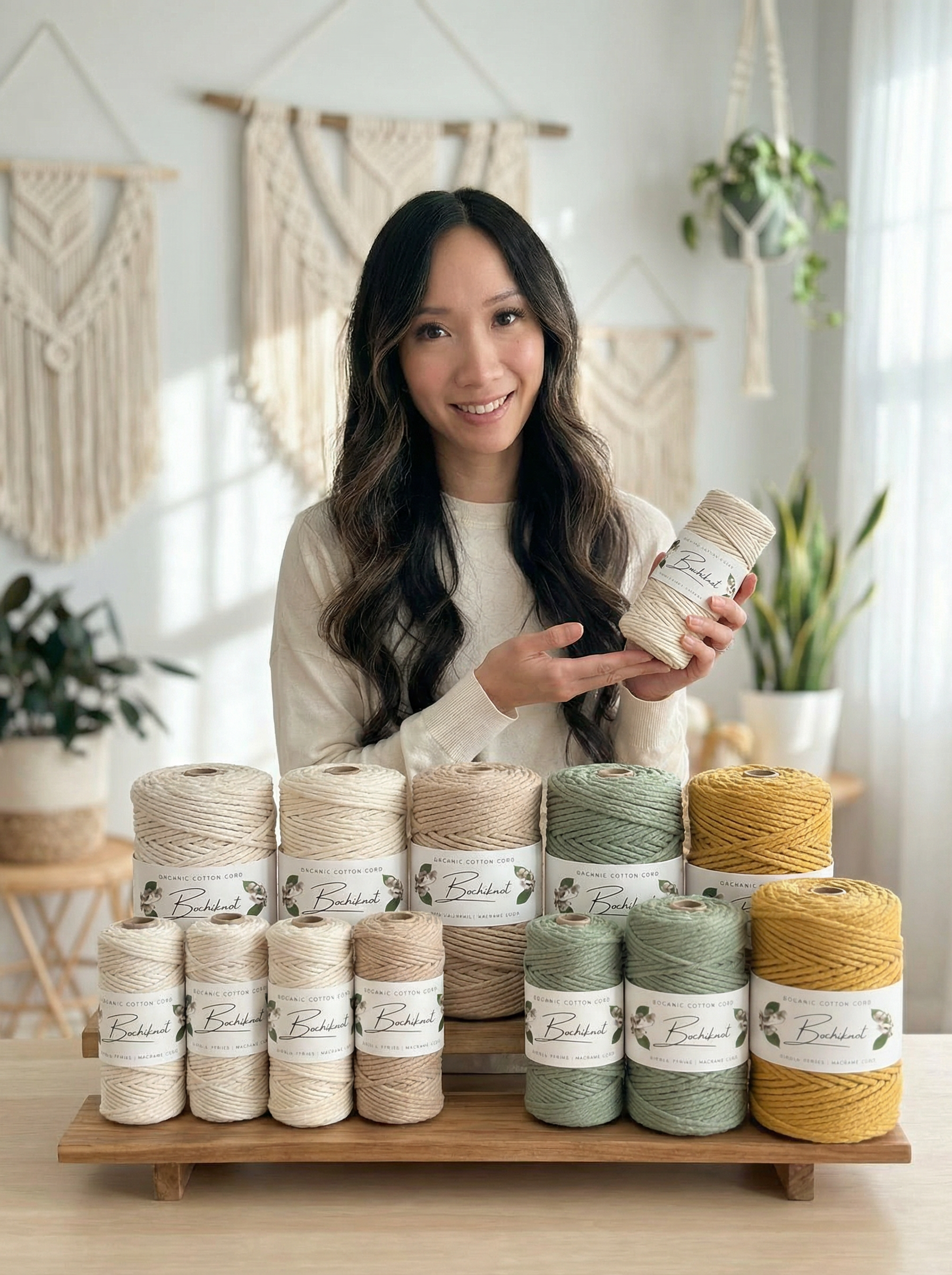
Hi, I'm Nicole Woo, founder of Bochiknot. I've been designing macramé patterns, kits, and beginner-friendly tutorials since 2021, and I test every project by hand so the steps, cord lengths, and knot counts actually work. The cord cuts and the 10-petal pattern in this flower coaster tutorial are the exact numbers I used to make the piece you see in the photos.
Where to find Bochiknot: YouTube, Facebook page, our Facebook community, Instagram, Pinterest, TikTok, Etsy, and Patreon for exclusive patterns.
Last updated: June 13, 2026.

Leave a comment