

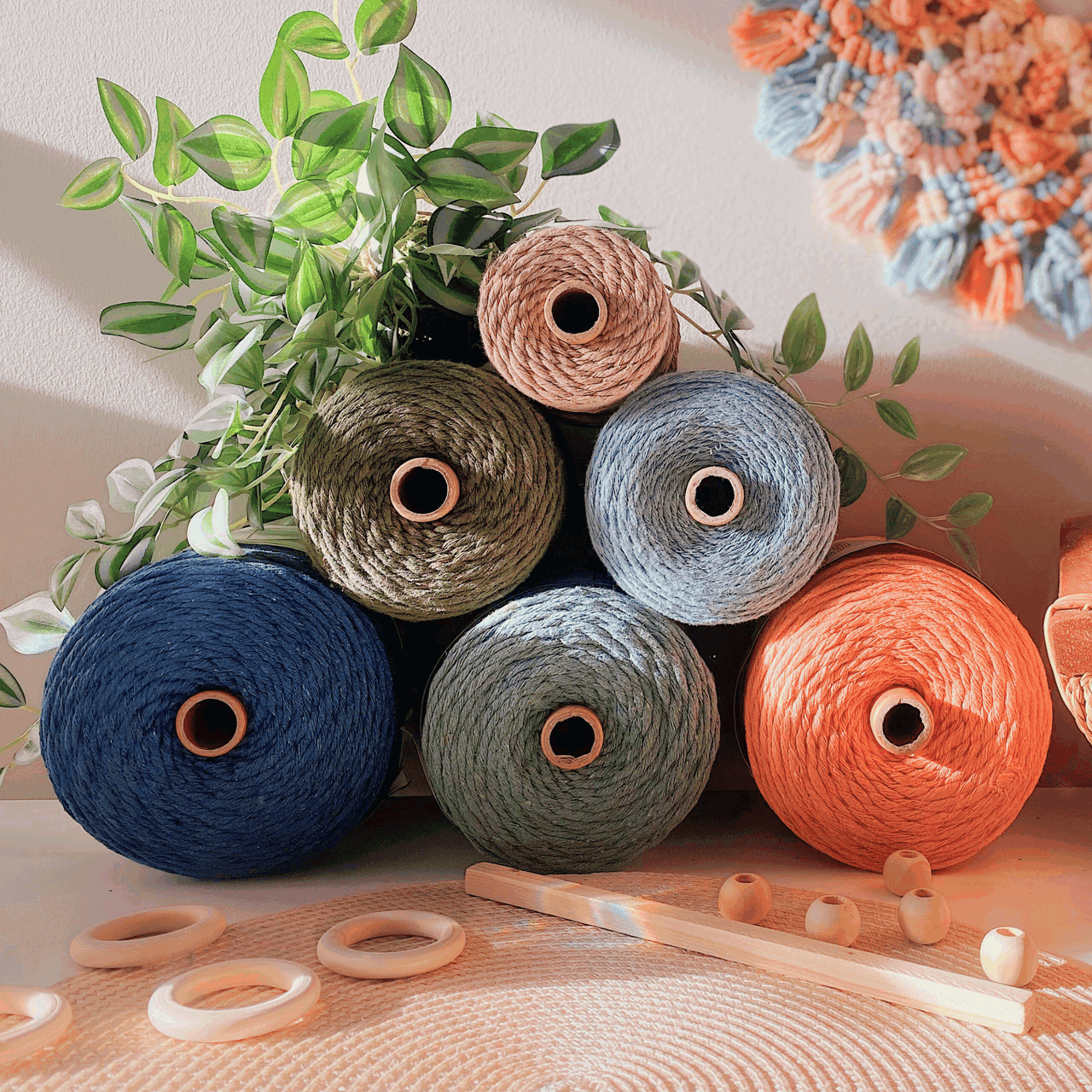
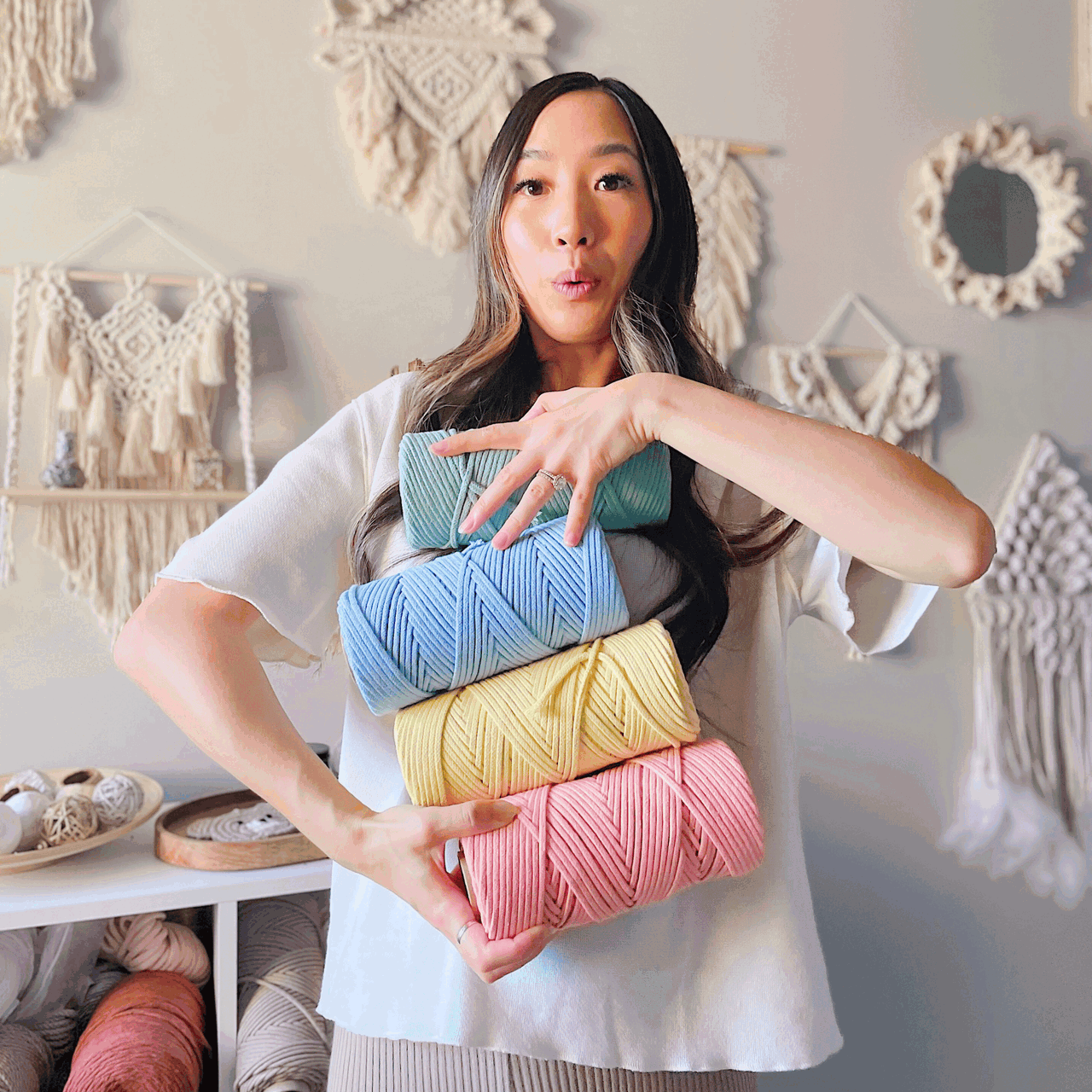


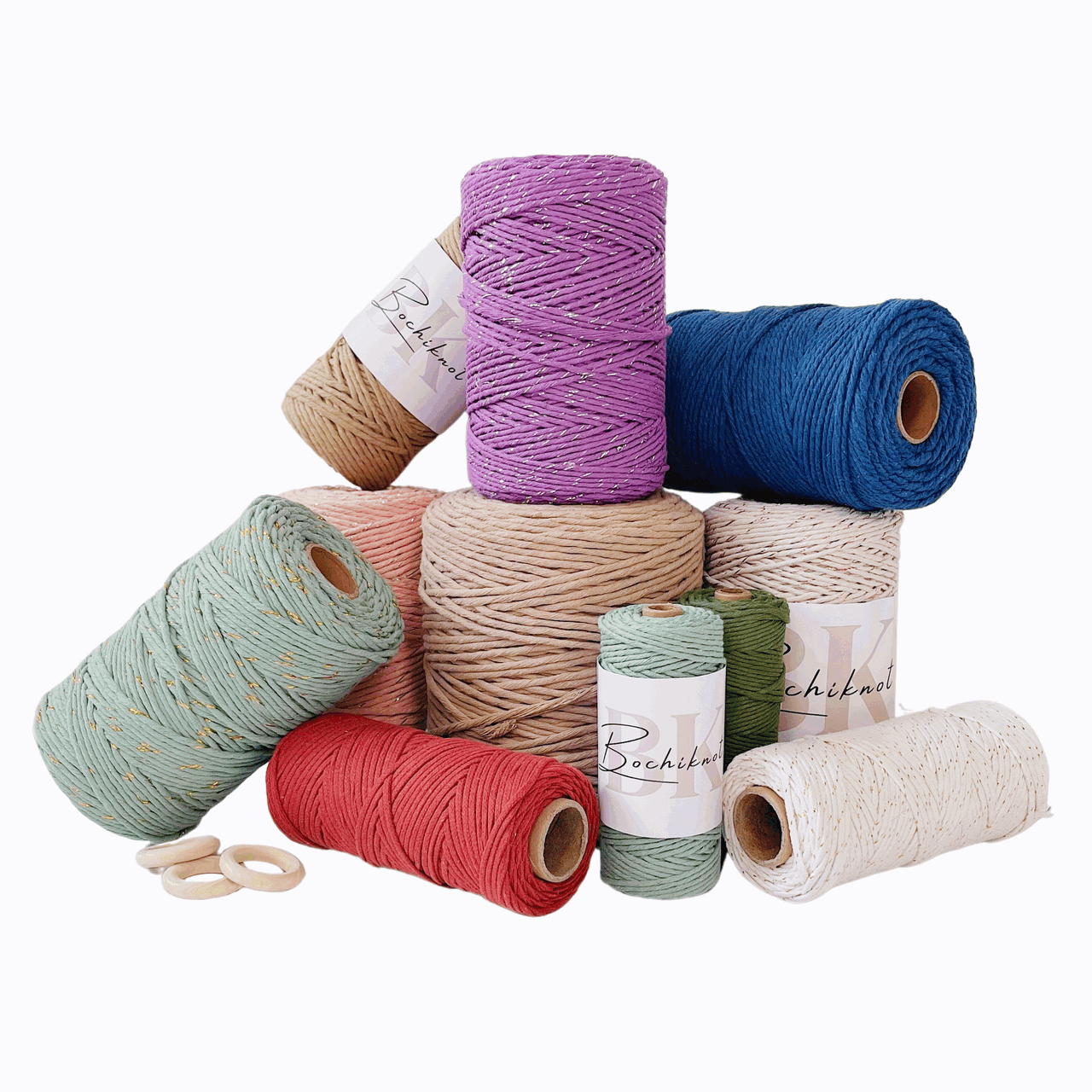
Alternative Macramé Cord Options: 17 Cords to Explore Beyond Cotton

By Nicole · Updated April 2026 · 16 min read
Trusted by 100,000+ on YouTube · 100,000+ on Instagram · 40,000+ Facebook community · 20,000+ on Pinterest · 10,000+ email subscribers
📎 Disclosure: This post contains affiliate links. If you purchase through these links, Bochiknot may earn a small commission at no extra cost to you. This helps support free tutorials and content. All recommendations are based on genuine research and community experience.
A note from Nicole 👋
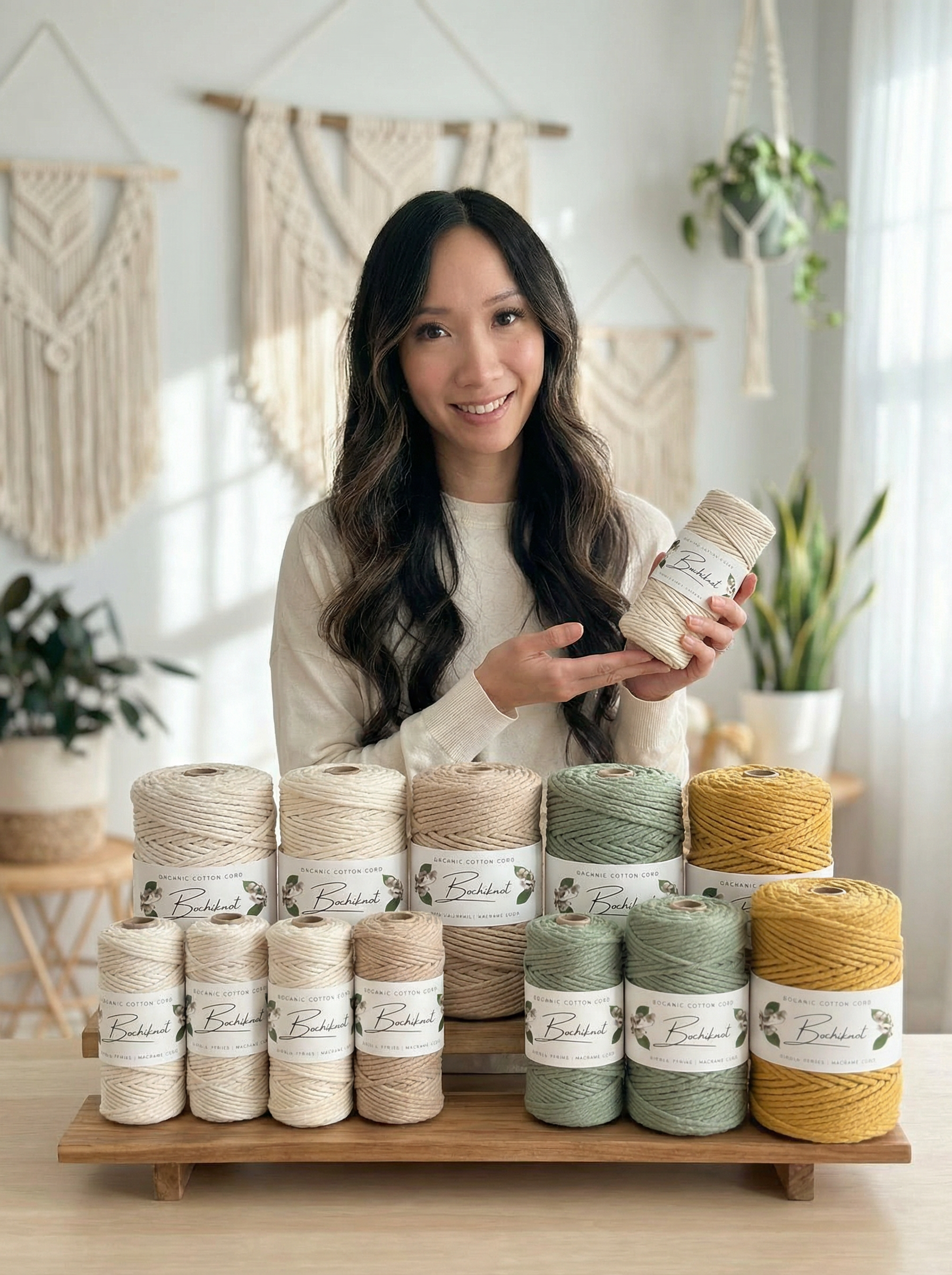
I'll be honest — when I first started teaching macramé, I was a total cotton convert. Soft single-strand cotton, 3mm or 4mm, in natural cream. That was my world, and I stood behind it completely. And honestly? I still do. For most projects, cotton is your best friend.
But after years of creating, experimenting, and connecting with thousands of makers in our community, I've discovered that the macramé world is so much wider than cotton. There are materials out there that drape like silk, hold their shape like sculpture, create the most satisfying chunky baskets you've ever made, or bring a rustic earthy texture that cotton simply can't replicate.
I want to be upfront with you: none of this is your conventional macramé content. Some of these materials are unusual. Some are rarely talked about in tutorials. A few of them I've experimented with personally, and a few I'm sharing purely from research and community experience so you have the complete picture.
This guide is my way of expanding what's possible for you — because the more you understand your materials, the more intentional and creative your work becomes. Think of it as your permission slip to explore beyond cotton. 🌿
⚡ Quick Answer — Alternative Macramé Cord Types at a Glance
- Most eco-friendly swap: Recycled cotton — same knotting feel, made from reclaimed textile waste
- Best premium cotton upgrade: Egyptian Giza cotton — ultra-smooth, sharper knot definition, the option most makers haven't tried yet
- Best luxury alternative: Bamboo-rayon — silky sheen, fluid drape, vibrant colour
- Best rustic/earthy alternative: Jute — affordable, golden-brown, perfect boho-natural aesthetic
- Best for macramé jewellery: Wax cord — knots grip and hold, vivid colours, 1–2mm diameter
- Best for chunky baskets & bags: Trapillo (T-shirt yarn) — ultra-soft, fast to work up, completely different look
- Best for outdoor durability: Sisal or nylon — weather-resistant, won't rot like cotton
- New to macramé cord basics? Read the beginner cord guide first →
The 17 Alternative Macramé Cord Materials Covered in This Guide
Decorative & Specialty
Chunky & Textile
Synthetic & Performance
Plus: recycled cotton, organic cotton & Egyptian Giza as your starting point — covered in the first section.
What's in This Guide
- Cotton starting point: recycled, organic & Egyptian Giza — what makes them different
- The most distinctive alternative: bamboo-rayon (Lush)
- Natural plant fibres: jute, sisal, linen, hemp & raffia
- Decorative & specialty cords: metallic, wax, satin, velvet & leather
- Chunky & textile alternatives: wool yarn, trapillo & paper cord
- Synthetic & performance cords: nylon & paracord
- Full macramé cord materials comparison table
- Which alternative cord is right for your project?
- Frequently asked questions
Starting Point: The Three Types of Cotton Cord

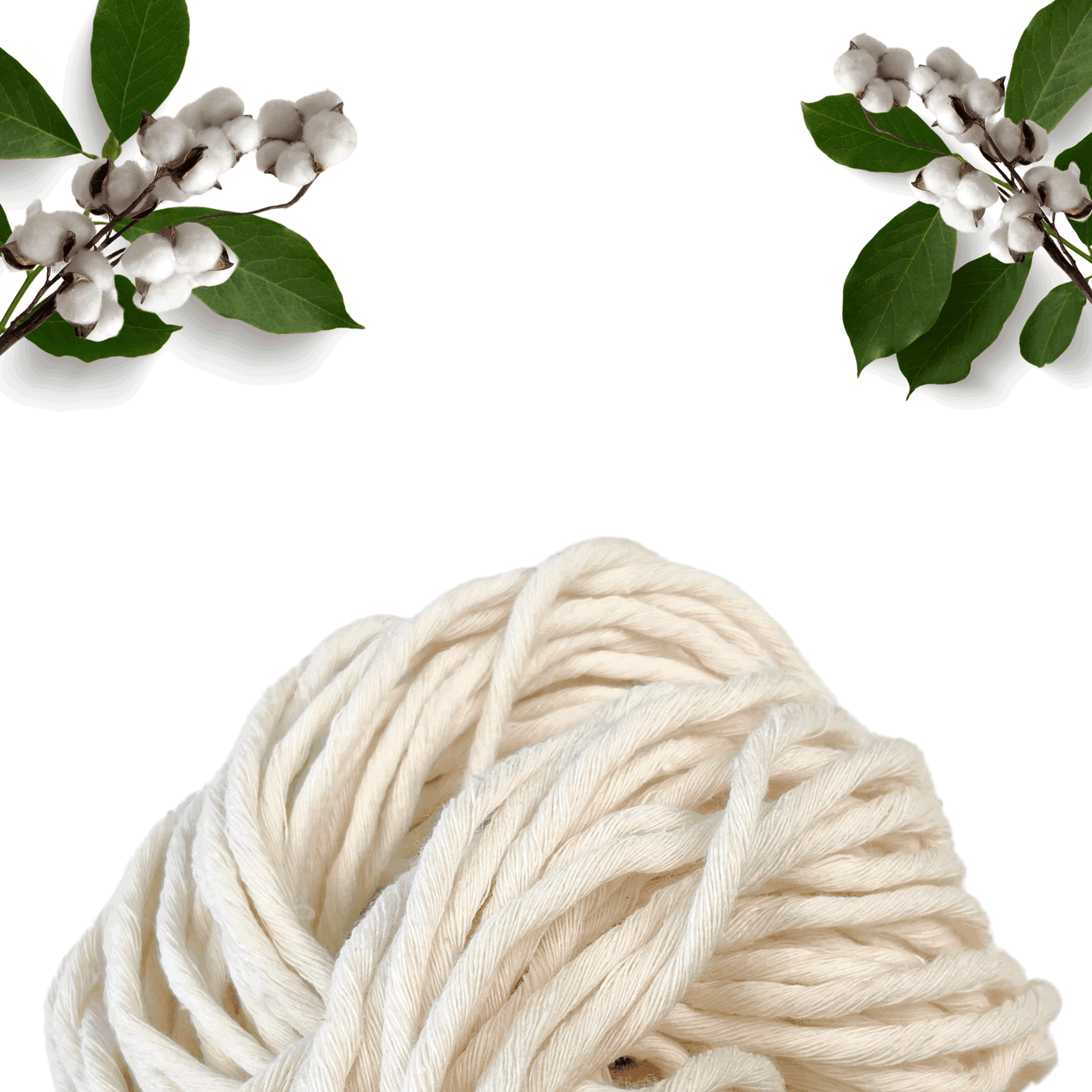
Most macramé tutorials refer to "cotton cord" as if it's one thing — but there are actually three distinct types worth knowing.
Recycled and organic cotton are the most widely used and the best starting points for most makers. Egyptian Giza cotton is a premium variety that's rarely talked about in tutorials but genuinely worth knowing about when you're ready to level up. Here's how they differ — and when each one makes sense.
Recycled Cotton — The Best Eco-Friendly Macramé Cord ⭐ Most commonly used
Made from reclaimed textile manufacturing waste — fabric offcuts that would otherwise go to landfill. Knotting performance is identical to standard cotton, but production uses up to 80% less water and requires no new agricultural land. A slight natural texture variation between lots is normal and expected — many crafters consider this characterful rather than a flaw. This is my go-to recommendation for anyone asking about sustainable macramé cord.
→ Shop recycled cotton cord
Organic Cotton — Chemical-Free Macramé Cord ⭐ Most commonly used
Grown without synthetic pesticides, processed without bleach. Functionally identical to standard cotton in every way. Available in natural undyed cream-white only — but it takes plant-based dyes (turmeric, indigo, walnut) exceptionally well. If you're crafting for babies, pets, or anyone with chemical sensitivities, organic cotton is the right call.
→ Shop organic cotton cord
Egyptian Giza Cotton — The Premium Cotton Most Makers Haven't Tried ✨ Premium
Egyptian Giza cotton is grown in the Nile Delta, where the climate produces extra-long staple fibres — individual cotton hairs that are longer than standard varieties. When spun into cord, these longer fibres create a noticeably smoother, finer, more consistent surface. The difference in your hands is immediate. The difference in your finished piece is visible from across the room.
- Ultra-smooth surface — dramatically less fuzz than standard cotton
- Exceptional knot definition — crisp, precise, professional-looking edges
- Fine, soft fringe when unravelled and brushed
- Best results at intermediate+ skill level — the precision makes uneven tension more visible, not less
- Worth the upgrade for commissions, gifts, or any piece you want to feel proud selling
Nicole's take: Egyptian Giza is the cord I reach for when I want a piece to look like it came from a high-end studio. The knots just look more intentional — more considered. If you've been making macramé for a while and you haven't tried it yet, get a small roll and make one piece. You'll immediately feel the difference.
→ Shop Egyptian Giza cotton cord
🔗 Want the full cotton breakdown? Construction types (single-strand, 3-ply, braided), cord sizes, and everything a beginner needs to know is in The Complete Guide to Macramé Cord & Materials →
The Most Distinctive Cotton Alternative: Bamboo-Rayon
If Egyptian Giza is the precision upgrade within the cotton family, bamboo-rayon is the leap into a completely different material world. The look, the feel, the drape, the colour — all of it is genuinely different. This is the cord I recommend when makers tell me they want their pieces to look like fibre art, not just macramé.

01Bamboo Rayon — The Most Distinctive Macramé Cord Alternative
Bamboo-rayon — our Lush cord line — is made from bamboo plant fibres processed into a silky rayon thread. It is the most different cord to work with in the plant-fibre family. Genuinely silky in your hands. A visible lustrous sheen in the finished piece. Colour saturation that cotton can't match — deep burgundy, rich sage, petrol blue, warm terracotta. These colours glow in bamboo-rayon in a way they simply don't in cotton.
- Silky, fluid feel — noticeably different from all cotton options
- Visible lustrous sheen from across the room — your pieces look like fibre art
- Colours are more vibrant and saturated than equivalent cotton shades
- Fluid drape — great for hanging pieces with movement
- Bamboo is a fast-growing, renewable resource — strong eco credentials
- Requires deliberate tension management — the silky surface has less natural grip than cotton
💡 Nicole's tip: Bamboo-rayon is not a beginner cord — the silky surface means less grip between knots, so tension needs more attention than with cotton. My advice: make one small test piece first. Work slowly, check your tension every few rows. Once you're used to the feel, the results are genuinely stunning. It's worth the learning curve.
Best for: Luxury wall hangings, fashion macramé, wearable pieces, any project where the finish needs to look genuinely premium or where colour depth matters.
→ Shop bamboo-rayon cord
Natural Plant Fibre Macramé Cord: Jute, Sisal, Linen, Hemp & Raffia
This is where macramé gets genuinely earthy — and where it starts to look and feel completely different from cotton. Natural plant fibres were actually the original macramé materials, used centuries before cotton dominated the craft. They create a rustic, organic aesthetic that suits outdoor projects, Japandi or farmhouse interiors, and makers who want their work to tell a story about where it came from.
I want to be honest here: none of these are as comfortable to knot with as cotton. They're rougher, stiffer, and less forgiving. But for the right project and the right aesthetic, there is absolutely nothing else like them.

02Jute Cord for Macramé — The Classic Rustic Alternative
If someone asked me to recommend one natural-fibre cord for a maker wanting to step outside cotton, it would be jute. It's the most approachable of the plant fibres — more pliable than hemp or sisal, more affordable than almost anything else on this list, and it has a warm golden-brown colour that creates an instantly distinctive earthy aesthetic.
Jute is made from the stalks of the jute plant, one of the most sustainably grown natural fibres in the world. It biodegrades naturally, requires minimal agricultural inputs, and has been used in craft and textiles for centuries.
- Texture: Golden-brown, slightly fuzzy surface, flexible and pliable
- Knotting feel: Rougher than cotton but manageable — more like working with a natural rope
- Aesthetic: Rustic, earthy, artisan market, farmhouse, botanical
- Durability: Good for indoor use; not ideal for long-term outdoor moisture exposure
- Price: One of the most affordable natural fibre options
- Watch out for: Can be rough on hands during long sessions — take breaks or use light gloves
Best macramé projects for jute cord: Rustic wall hangings, outdoor garden plant hangers, earthy home décor, food storage baskets, gift wrapping and packaging twine, any piece where you want a distinctly "handmade, natural" look.
Not ideal for: Fringe work (doesn't brush as softly as cotton), beginner's first project, anything requiring precision tension control.
03Sisal Macramé Cord — The Strongest Natural Fibre for Outdoor Use
Sisal comes from the leaves of the Agave sisalana plant and is one of the strongest natural plant fibres available — significantly tougher than jute or hemp. It's pale cream to off-white in colour with a coarser, drier surface. If you've ever had an outdoor cotton plant hanger start to rot or soften after a few months of weather exposure, sisal is the natural fibre answer.
- Texture: Coarse, dry, wiry — noticeably tougher than jute
- Strength: Very high tensile strength — excellent for weight-bearing projects
- Weather resistance: More resistant to moisture and UV than cotton or jute
- Colour: Natural pale cream-white
- Watch out for: Hardest on hands of all the natural fibres — it's tough to knot for long periods
Best macramé projects for sisal: Outdoor plant hangers in exposed positions, garden décor, functional pieces that need to hold weight or withstand the elements.
04Linen Cord for Macramé — The Refined Natural Option
Linen sits in a unique position among natural fibres: it has the earthy, plant-based authenticity of hemp or jute, but with a noticeably smoother, more refined surface. Made from flax plant fibres, linen has a subtle natural lustre — not shiny, but more polished than the rough matte of hemp — and a warm ecru/off-white colour that's elegant without being stark. It's the natural fibre I'd recommend if you love the idea of plant-based cord but want something that bridges rustic and refined.
- Soft enough to knot comfortably — more hand-friendly than hemp or sisal
- Subtle natural lustre — more refined than jute, less silky than bamboo
- Warm ecru/off-white colour with natural undertones
- Takes natural and plant-based dyes exceptionally well
- Strong, durable, and biodegradable
Best macramé projects for linen: Wall hangings with a refined natural aesthetic, Japandi or Scandinavian-style home décor, pieces that blend artisan character with a cleaner, more minimal look.
05Hemp Cord for Macramé — Durable, Earthy & Deeply Sustainable
Hemp cord is made from industrial cannabis plant fibres (zero psychoactive properties — just a very tough, sustainable plant). It's one of the most environmentally positive fibres you can use: grown without pesticides, requires minimal water, and improves soil health as it grows. The cord is rough, stiff, golden-tan to greenish-brown in colour, and has a distinctly rustic, earthy character.
- Very durable — stronger than cotton and more weather-resistant
- One of the most sustainable natural fibres commercially available
- Rough texture that softens slightly over time with handling
- Stiff to work with — harder on hands than jute or linen
- Natural golden-tan colour, strong rustic aesthetic
💡 Jute vs hemp for macramé: Both are natural, earthy, and rustic — but jute is softer and easier to knot, while hemp is tougher and more weather-durable. For most indoor macramé projects, jute is the more comfortable choice. For outdoor durability, hemp wins. Neither creates fringe the way cotton does, so if fringe is part of your design, cotton (even recycled or organic) is the better call.
Best macramé projects for hemp cord: Outdoor garden plant hangers, rustic wall art, earthy botanical-style décor, any project where sustainability credentials are part of your story.
06Raffia — The Ribbon-Like Natural Fibre
Raffia is harvested from the leaves of the raffia palm tree and is unlike every other fibre on this list: it's flat and ribbon-like rather than twisted or round. When knotted, it creates a result that looks more like woven basket-making than traditional macramé — a uniquely textural, summery aesthetic.
- Flat, ribbon-like structure — creates a woven, basketry appearance
- Natural golden-straw yellow colour, warm and summery
- Lightweight and flexible
- More fragile than twisted cords — handle with care, especially at knot points
Best for: Decorative baskets, coastal and summer-style wall art, hat bands, bag accents, seasonal home décor.
💬 What the Bochiknot Community Is Making
"I'd been wanting to try jute for ages after seeing Nicole mention it. Finally grabbed some at my local craft store and made a small wall hanging — the earthy golden colour is so different from anything I'd made with cotton. Worth trying just for the smell alone! 😄"
— Amanda R., Bochiknot Facebook Community
"Switched to recycled cotton six months ago after reading this guide. The knotting feels completely identical to regular cotton but it just feels better knowing it's made from reclaimed materials. I use it for everything now."
— Lauren T., Bochiknot Facebook Group
"The Lush cord is genuinely something else. I was nervous about the tension control Nicole mentioned — she's absolutely right, my first attempt was a mess 😂 But I got the hang of it and the sheen in my photos is unlike anything I've achieved with cotton."
— Priya M., @bochiknot community on Instagram
Experimenting with a new cord type?
Share your results with 40,000+ makers in the Bochiknot community — you might just inspire someone else to try something new.
Join the Facebook Community →Specialty Macramé Cord: Metallic, Wax, Satin, Velvet & Leather
These cord types move away from the natural fibre aesthetic entirely — and open up a whole new category of macramé work. Jewellery. Fashion accessories. Holiday décor. Contemporary statement pieces. If you've only ever worked with cotton, these will feel completely foreign at first. That's not a bad thing — that's what makes them exciting to explore.

07Metallic Macramé Cord — Shimmer, Sparkle & Statement Décor
Metallic cord blends cotton or polyester fibres with metallic thread woven through the twist. Nothing else in the macramé world catches light the way this does. Bochiknot's metallic cord weaves the metallic thread into the cord structure itself — not surface-coated — so it doesn't shed, flake, or rub off with use. It's a firm cord, firmer than pure cotton, and it doesn't fray into fringe. But for seasonal and statement pieces, it's absolutely irreplaceable.
- Visible shimmer and sparkle — catches light from every angle
- Firm structure — keep working lengths shorter than you would with cotton to prevent tangling
- Does not fray into fringe — the metallic thread holds the structure intact
Best for: Christmas ornaments and garlands, New Year's and wedding installations, macramé jewellery, contemporary wall art with a glamorous edge.
→ Shop Metallic 3-Ply Cord →
08Wax Cord — The Go-To Macramé Cord for Jewellery & Micro-Macramé
Wax cord is a polyester or nylon cord coated with a thin layer of wax. That coating changes everything about how it behaves: knots grip tightly, set precisely, and stay exactly where you put them. This is why wax cord is the standard material for macramé bracelets, anklets, and adjustable jewellery closures — the wax surface lets a sliding knot move smoothly while holding firm once set. Available in 0.5–2mm diameters in a huge range of vivid solid colours.
- Knots grip and hold — no sliding, no loosening
- Perfect for adjustable jewellery closures (sliding knot technique)
- Vivid consistent colours — more saturated than cotton dyes
- Weather-resistant — bracelets hold up to daily wear
- Fine diameter (0.5–2mm) — designed for small, intricate work
- Does not fray — wax coating keeps structure intact
Best for: Macramé bracelets, rings, anklets, necklaces, micro-macramé, friendship bracelets, any jewellery with an adjustable closure.
09Satin Cord — High-Gloss, Polished, Contemporary Knotwork
Satin cord (also called rattail or Chinese knotting cord) is a braided polyester or nylon cord with a high-gloss satin surface finish. It has deep roots in Chinese decorative knotting traditions, and that lineage shows — the polished finish is part of the aesthetic. The surface is extremely smooth, almost slippery, which means knots can loosen if tension isn't managed carefully. This is an intermediate-to-advanced material, not a beginner one. But in the right hands, satin cord produces a jewellery-quality knotwork finish unlike anything else.
- High-gloss satin finish — bold, contemporary, non-natural aesthetic
- Available in vivid consistent solid colours
- Slippery surface requires deliberate tension management
- Does not fray into fringe
Best for: Fine jewellery, Chinese-style decorative knotwork, hair accessories, fashion macramé wearables.
Not ideal for: Beginners, traditional wall hangings, plant hangers, fringe work.
10Velvet Cord — Soft Luxury for Wearables & Accessories
Velvet cord has a soft, plush exterior made from polyester velvet fibres over a cord core. At 1–3mm in diameter, it's designed primarily for jewellery and fashion accessories where softness against skin matters as much as visual appeal. The velvet surface gives finished pieces a luxurious, tactile quality — particularly popular for chokers, necklaces, and wrap bracelets, where you want something that looks and feels premium.
- Soft, plush velvet exterior — beautiful and comfortable against skin
- Available in rich, deep colours (burgundy, navy, forest green, black)
- Small diameter (1–3mm) — for jewellery and accessories
- Knots hold well due to the soft surface creating natural grip
Best for: Chokers, necklaces, wrap bracelets, anklets, hair accessories, wearable pieces where softness against the skin is important.
→ Shop velvet cord on Amazon ↗
11Leather Cord — Edgy Fashion Macramé
Leather cord — genuine or faux — brings a completely different aesthetic to macramé knotwork: structured, edgy, contemporary. Available in round or flat profiles in natural tan, brown, or black. It doesn't flow with the same fluidity as fibre cords, but for fashion jewellery and accessories it creates a distinctive look that nothing else replicates.
- Genuine leather: durable, develops a patina and character over time
- Faux leather: more consistent, affordable, and vegan-friendly
- Round or flat profiles available
- Creates a structured, deliberate aesthetic in knotwork
Best for: Fashion jewellery, men's macramé bracelets, contemporary accessories, pieces combining macramé with metal hardware (clasps, rings, beads).
→ Shop leather cord on Amazon ↗
Chunky Macramé Materials: Wool Yarn, Trapillo (T-Shirt Yarn) & Paper Cord
These three are my personal favourites to share — because they genuinely surprise people. When most makers think of macramé, they think of cord. But these materials prove that macramé is really about the knotting — and you can knot with almost any continuous material. These three create work that looks completely unlike anything made from standard cord.

12Can You Use Yarn for Macramé? Wool & Chunky Yarn
Yes — you absolutely can use chunky wool or acrylic yarn for macramé, and the result is completely unlike cord-based work. Soft, fluffy, cloud-like. The knot definition is less sharp — the fibres blend together more — but the overall aesthetic has a cosy, boho warmth that was actually the signature look of 1970s macramé and has made a strong comeback in contemporary fibre art.
- Very soft and cloud-like — fluffy fringe and soft knot texture throughout
- Available in a huge colour range (standard knitting yarn)
- Chunky weights (5–10mm equivalent) work up quickly into large pieces
- Wool: biodegradable, natural, temperature-regulating
- Acrylic: affordable, machine washable, colourfast, wide colour range
- Knots don't define as sharply as cotton cord — the aesthetic is softer, blended
- Less structural strength than cord — not ideal for plant hangers or weight-bearing pieces
Nicole's take: I love recommending chunky yarn macramé for crafters who want a really soft, cosy aesthetic for their bedroom or living space. It photographs beautifully against natural textures and gives a completely different feel from cord work. Just don't use it for plant hangers — it won't hold up to the weight or moisture.
Best macramé projects with yarn: Large statement wall hangings with a fluffy organic look, boho bedroom décor, pieces where softness and cloud-like texture are the visual priority.
→ Shop chunky yarn on Amazon ↗
13Trapillo (T-Shirt Yarn) — Chunky Macramé for Baskets, Bags & More
Trapillo — also known as T-shirt yarn, jersey yarn, or fio de malha — is one of the most exciting alternative macramé materials I've come across. Made from strips of jersey/cotton fabric (typically recycled T-shirt material) formed into continuous loops, it's dramatically thicker than any cord: usually 1–3cm wide. The macramé it creates looks more like chunky weaving or basket-making than traditional knotwork. And it's deeply satisfying to work with — soft, fast, and forgiving.
- Very wide loops (1–3cm) — creates bold, large-scale texture unlike any cord
- Extremely soft and lightweight — pleasant to work with for long sessions
- Works up very quickly — ideal for big baskets and bags
- Can get wet and dries quickly — great for bathroom storage or poolside pieces
- Often made from recycled jersey fabric — strong eco and sustainability story
- Available in solid colours and prints
Best macramé projects with trapillo: Storage baskets and bowls, market bags and tote bags, bath mats and rugs, plant pot covers, festival wearables (ponchos, beach bags, swimsuit cover-ups).
Not ideal for: Traditional wall hangings requiring fine detail, plant hangers needing structural cord strength, any project using cord under 5mm.
"Made my first trapillo basket last month and I'm completely hooked. The whole thing took me one evening — my partner keeps asking me to make more for the bathroom! Totally different to cord macramé but so satisfying to work with."
— Sarah K., @bochiknot community on Instagram
→ Shop trapillo yarn on Amazon ↗
14Paper Cord Macramé — Sculptural, Architectural & Unexpected
Paper cord is made from tightly twisted kraft paper, and it creates macramé unlike anything else on this list. Where fibre cords drape, soften, and flow, paper cord holds its shape. Knots stay exactly as you leave them — rigid, three-dimensional, architectural. It creates sculptural knotwork that looks deliberate and structural rather than draped and organic.
- Stiff and rigid — knots hold their shape permanently
- Natural kraft brown or bleached white
- Biodegradable and compostable — strong eco credentials
- Creates three-dimensional sculptural knotwork
- Widely available at craft and stationery stores
- Not suitable for wet environments — paper softens when damp
Best macramé projects with paper cord: Table centrepieces, sculptural wall art, architectural home décor, Christmas ornaments and decorations, gift wrapping and presentation packaging.
Not ideal for: Plant hangers, outdoor pieces, anything requiring flexibility or softness, wet environments.
Synthetic Macramé Cord for Outdoor & Functional Projects: Nylon & Paracord
Synthetic cords don't have the natural, handmade warmth of cotton or plant fibres — and for interior boho décor, they're not the right choice. But for specific applications, particularly outdoor and functional projects, they outperform every natural fibre on durability.

15Nylon Cord — Waterproof Macramé Cord for Outdoor Projects
Nylon is a synthetic polymer cord that is smooth, slightly shiny, completely waterproof, and mould-resistant. If you've had an outdoor cotton plant hanger deteriorate after a season of exposure to rain and humidity, nylon is the solution. It won't absorb moisture, won't rot, and holds up significantly longer in outdoor conditions than any natural fibre.
- Fully waterproof — won't rot or mould in damp or outdoor environments
- Strong and durable — significantly outlasts cotton outdoors
- Available in a wide colour range with vivid, consistent colours
- Smooth surface — less grip than cotton, requires careful tension management
- Knots can be untied easily — useful for adjustable projects
- Less natural, more "plastic" aesthetic than plant-fibre cords
Best for: Outdoor plant hangers, garden furniture macramé, coastal or poolside décor, functional projects exposed to rain or humidity.
16Paracord Macramé — Durable, Colourful & Great for Practice
Paracord (parachute cord) was originally developed as the suspension line for military parachutes. Standard 550 paracord has a tightly woven nylon outer sheath and a multi-strand nylon inner core, making it extremely strong. In the craft world, it's valued for its durability, huge colour range, and the fact that it holds knots very well — but also un-knots cleanly when needed. That last quality makes it brilliant for practising new patterns.
- Exceptionally strong — originally rated for parachute loads
- Huge colour range including multi-colour and camo patterns
- Holds knots firmly but un-knots cleanly — ideal for learning new patterns without wasting expensive cord
- Weather and UV resistant — naturally suited to outdoor use
- Distinctive woven texture and slightly stiff feel
- More "utility" aesthetic — functional rather than decorative
💡 Nicole's practice tip: Paracord is one of my favourite recommendations for anyone learning a new complicated knot pattern. It's affordable, it holds the knot shape so you can see the pattern clearly, and it un-knots cleanly so you can use the same cord to practice over and over. Save your beautiful cotton for when you're ready to make the final piece.
Best for: Outdoor functional pieces, pet leads and collars, keychains, bag handles, practice knot work, survival and utility projects.
17Polyester Cord — Affordable, Colourfast & Widely Available
Polyester macramé cord is one of the most common affordable alternatives to cotton — particularly in beginner kits and bulk spools. It's made from synthetic polyester fibres, which makes it colourfast (colours don't bleed or fade), mildew-resistant, and widely available at craft stores globally. It doesn't have the natural warmth or feel of cotton, but for practice pieces, colourful projects, or budget-conscious making, it's a solid choice.
- Colourfast — vivid colours that don't bleed in humidity or light washing
- Mildew-resistant — better than cotton for semi-outdoor or bathroom locations
- Widely available and very affordable
- Consistent diameter and construction — good for beginners learning tension
- Less natural feel than cotton — slightly slicker surface
- Not biodegradable — not the eco-conscious choice
Best for: Budget-friendly projects, colourful decorative pieces, practice work, any project where a wide colour range matters more than natural material feel.
→ Shop polyester cord on Amazon ↗
Full Macramé Cord Materials Comparison Table
All 19 cord types and materials covered in this guide, at a glance:
← Scroll to see full table on mobile
| Cord / Material | Texture & Feel | Best For | Skill Level | Outdoor? | Fringe? |
|---|---|---|---|---|---|
| Cotton Family | |||||
| Natural Cotton | Soft, matte, slightly fluffy | All projects — the all-rounder | All levels | No ✗ | Yes ✓ |
| Recycled Cotton | Soft, artisan texture variation | Any project; sustainable gifting | All levels | No ✗ | Yes ✓ |
| Organic Cotton | Soft, matte, natural cream-white | Natural décor, natural dyeing | All levels | No ✗ | Yes ✓ |
| Egyptian Giza | Ultra-smooth, fine, almost silky | Premium décor, commissions | Intermediate+ | No ✗ | Yes ✓ |
| Bamboo-Rayon | Silky, lustrous sheen, fluid | Luxury décor, fashion, wearables | Intermediate+ | No ✗ | Moderate |
| Natural Plant Fibres | |||||
| Jute | Golden-brown, fuzzy, pliable | Rustic décor, garden hangings | Intermediate | Partial ⚠️ | Partial |
| Sisal | Pale cream, coarse, very strong | Outdoor, heavy-duty, garden | Intermediate | Yes ✓ | No ✗ |
| Linen | Smooth, subtle lustre, ecru | Refined natural décor, Japandi | All levels | No ✗ | Yes ✓ |
| Hemp | Rough, stiff, golden-tan | Rustic décor, outdoor, garden | Intermediate | Partial ⚠️ | No ✗ |
| Raffia | Flat, ribbon-like, straw yellow | Baskets, coastal décor | Intermediate | No ✗ | No ✗ |
| Decorative & Specialty Cords | |||||
| Metallic | Firm, sparkly, catches light | Holiday décor, jewellery | Intermediate | No ✗ | No ✗ |
| Wax Cord | Smooth, waxy grip, vivid colours | Jewellery, micro-macramé | All levels | Yes ✓ | No ✗ |
| Satin Cord | High-gloss, smooth, slippery | Fine jewellery, decorative knots | Intermediate–Advanced | No ✗ | No ✗ |
| Velvet Cord | Soft, plush, rich deep colours | Chokers, necklaces, wearables | All levels | No ✗ | No ✗ |
| Leather Cord | Structured, smooth, develops patina | Fashion jewellery, accessories | Intermediate | Partial ⚠️ | No ✗ |
| Chunky & Textile Materials | |||||
| Wool / Chunky Yarn | Very soft, fluffy, cloud-like | Fluffy wall hangings, boho décor | All levels | No ✗ | Yes ✓ (fuzzy) |
| Trapillo (T-Shirt Yarn) | Soft, flat, ultra-chunky loops | Baskets, bags, bath mats, rugs | All levels | Yes ✓ | No ✗ |
| Paper Cord | Stiff, rigid, sculptural, holds shape | Sculpture, centrepieces, ornaments | Intermediate | No ✗ | No ✗ |
| Synthetic & Performance Cords | |||||
| Nylon | Smooth, strong, waterproof | Outdoor, functional projects | All levels | Yes ✓ | No ✗ |
| Paracord | Woven outer sheath, very strong | Outdoor, functional, practice | All levels | Yes ✓ | No ✗ |
| Polyester | Smooth, colourfast, affordable | Colourful décor, budget projects | All levels | Partial ⚠️ | No ✗ |
Which Alternative Macramé Cord Is Right for Your Project?
Find your situation and go straight to your answer:
| I want to be more sustainable without changing my technique | → Recycled cotton. Identical to knot, made from reclaimed textile waste. Easiest swap you can make. |
| I want my finished pieces to look more professional and polished | → Egyptian Giza cotton. Sharper knot edges, finer surface, noticeably higher-end result. |
| I want a luxurious silky sheen that cotton can't give me | → Bamboo-rayon. Silky, luminous, vibrant. Intermediate+ skill recommended. |
| I want a rustic, earthy, natural-fibre aesthetic | → Jute for the most approachable option. Hemp for outdoor durability. Linen for a more refined natural look. |
| My outdoor plant hanger keeps rotting — what lasts outside? | → Nylon or paracord for waterproof performance. Sisal for a natural alternative that holds up better than cotton. |
| I want to make macramé jewellery and bracelets | → Wax cord for precision and adjustable closures. Velvet cord for soft wearables. Satin for polished contemporary knots (intermediate+). |
| I want to make chunky baskets, storage, or bags | → Trapillo (T-shirt yarn). Soft, ultra-wide loops, works up fast, completely different from cord macramé. |
| I want seasonal shimmer — Christmas, New Year's, events | → Metallic 3-ply cord. Nothing else catches light and creates sparkle like this. |
| I want to try something sculptural and architectural | → Paper cord. Stiff, rigid, holds its shape permanently — creates 3D sculptural knotwork. |
| I want to learn a new knot pattern without wasting good cord | → Paracord. Holds the knot shape clearly, un-knots cleanly, and it's very affordable. |
Ready to explore beyond cotton?
Browse Bochiknot's full cord range — from recycled cotton to premium Lush bamboo-rayon and metallic cord.
Also available on Amazon.com and Amazon.ca with Prime shipping.
Frequently Asked Questions About Alternative Macramé Cord
What can I use instead of macramé cord?
There are many alternatives to standard cotton macramé cord. For a similar feel and performance: recycled or organic cotton. For a premium upgrade: Egyptian Giza cotton or bamboo-rayon. For a rustic, earthy look: jute, hemp, or linen. For jewellery: wax cord, satin cord, or velvet cord. For chunky projects: trapillo (T-shirt yarn) or chunky wool yarn. For outdoor durability: nylon or paracord. For something sculptural and unexpected: paper cord. The right alternative depends entirely on the look, feel, and function you're going for.
Can you use jute cord for macramé?
Yes — jute is one of the most popular natural fibre alternatives to cotton for macramé. It creates a rustic, earthy golden-brown aesthetic that cotton simply can't replicate. It's more pliable than hemp or sisal, making it more approachable for knotting. The main differences from cotton: jute is rougher on the hands, doesn't brush into soft fringe the same way, and is less suitable for long-term outdoor moisture exposure. For indoor rustic décor and wall hangings, jute is an excellent cotton alternative.
Is hemp cord good for macramé?
Hemp is absolutely used for macramé and creates a distinctive rough, earthy aesthetic that cotton can't replicate. It's strong, durable, and more weather-resistant than cotton — good for outdoor plant hangers. The trade-off: hemp is stiffer and rougher than cotton or jute, which makes it harder on hands during long knotting sessions. It's also not ideal for fringe work. If you want the rustic natural-fibre aesthetic, jute is generally more comfortable to work with; hemp suits makers who specifically want its durability or sustainability story.
Can you use yarn for macramé?
Yes — chunky wool or acrylic yarn can absolutely be used for macramé. It creates a completely different aesthetic: soft, fluffy, cloud-like, and more "knitted" in appearance than cord-based knotwork. The boho retro look of 1970s macramé was often made with yarn. The main limitations: knot definition is less sharp than cord, and yarn has less structural strength — it's not suitable for plant hangers that hold weight. For wall hangings where soft, cosy texture is the goal, chunky yarn is a wonderful creative option.
What is the best macramé cord for outdoor use?
For outdoor macramé exposed to rain, humidity, and UV light, synthetic cords outperform natural fibres significantly. Nylon and paracord are the most weather-resistant options — waterproof, mould-resistant, and durable. Among natural fibres, sisal and hemp hold up better than cotton or jute outdoors because of their higher tensile strength and moisture resistance. Standard cotton will deteriorate over time in consistently wet outdoor conditions, so if your plant hanger is in an exposed position, a synthetic or sisal cord will last considerably longer.
What is trapillo and how is it different from macramé cord?
Trapillo (also called T-shirt yarn or fio de malha) is made from strips of jersey fabric — often recycled T-shirt material — formed into continuous loops. It's dramatically wider than standard macramé cord, typically 1–3cm across, and creates knotwork that looks more like chunky weaving or basket-making than traditional macramé. It's very soft, lightweight, and works up quickly into large projects. Popular for storage baskets, market bags, bath mats, and wearables. It's a legitimate macramé material — just at a completely different scale and aesthetic from cotton cord.
What is the most eco-friendly macramé cord?
Recycled cotton is the most practical eco-friendly choice for most makers — identical performance to standard cotton, made from reclaimed textile waste, and uses up to 80% less water than virgin cotton production. Organic cotton eliminates pesticides and chemical processing. Hemp and jute are grown without pesticides, biodegrade naturally, and require minimal agricultural inputs. Bamboo-rayon uses a fast-growing renewable plant. Trapillo made from recycled jersey fabric also has strong eco credentials. All natural fibres are significantly better environmental choices than synthetic cords (nylon, paracord, polyester).
Get 10% Off Your First Order
Join 10,000+ crafters. Free tutorials, new patterns & exclusive offers — straight to your inbox. No spam, unsubscribe any time.
We respect your inbox. Unsubscribe any time.
From Nicole — before you go 🌿
I hope this guide has opened up some new possibilities for you. Maybe you're suddenly tempted by jute for that next outdoor plant hanger, or you're eyeing bamboo-rayon for a statement wall piece you've been wanting to make for a while. Maybe you had no idea paper cord or trapillo existed — and now you're imagining what you could create with them.
That's exactly why I wrote this. Macramé is one of those crafts where the material is the message. The cord you choose changes everything — the look, the texture, the weight, the story behind the piece. And the more you understand your options, the more intentional and creative your work becomes.
Start with one. Pick the material that made you most curious while reading this. Try it on a small project first — a simple wall hanging, a test piece, a single knot pattern. See how it feels. See what it creates. Then share it with us.
Come post your creation in the Bochiknot Facebook Community or tag us on Instagram @bochiknot — I genuinely love seeing what this community creates, and you just might inspire someone else to try something new too. 🤍
Happy knotting,
Nicole
Nicole — Founder, Bochiknot
Nicole has been teaching macramé to a global community of crafters since 2018. With over 100,000 YouTube subscribers, 100,000 Instagram followers, and a 40,000-member Facebook community, she's passionate about making macramé approachable, creative, and materials-informed for makers of every level.

Leave a comment