






3 Essential Macramé Knots Every Beginner Must Learn (Step-by-Step)

Updated April 2026 · 8 min read
Trusted by 100,000+ on YouTube · 100,000+ on Instagram · 40,000+ Facebook community · 20,000+ on Pinterest · 10,000+ email subscribers
Here's a truth about macramé that will simplify everything: 90% of all macramé projects use just 3 knots.
The Lark's Head Knot, the Square Knot, and the Double Half Hitch. That's it. Once you can tie these three reliably, you can make wall hangings, plant hangers, bags, keychains, and hundreds of other projects. Everything else in macramé is a variation or combination of these basics.
This guide walks you through each knot step-by-step — with tips, common mistakes to avoid, and suggestions for which projects to make once you've got each one down.
📌 How to use this guide: Read through the instructions once first, then watch the video tutorial, then try the knot with cord in your hands. Most people can't learn knots from text alone — the video and hands-on practice are both essential.
In This Guide
What You Need Before You Start
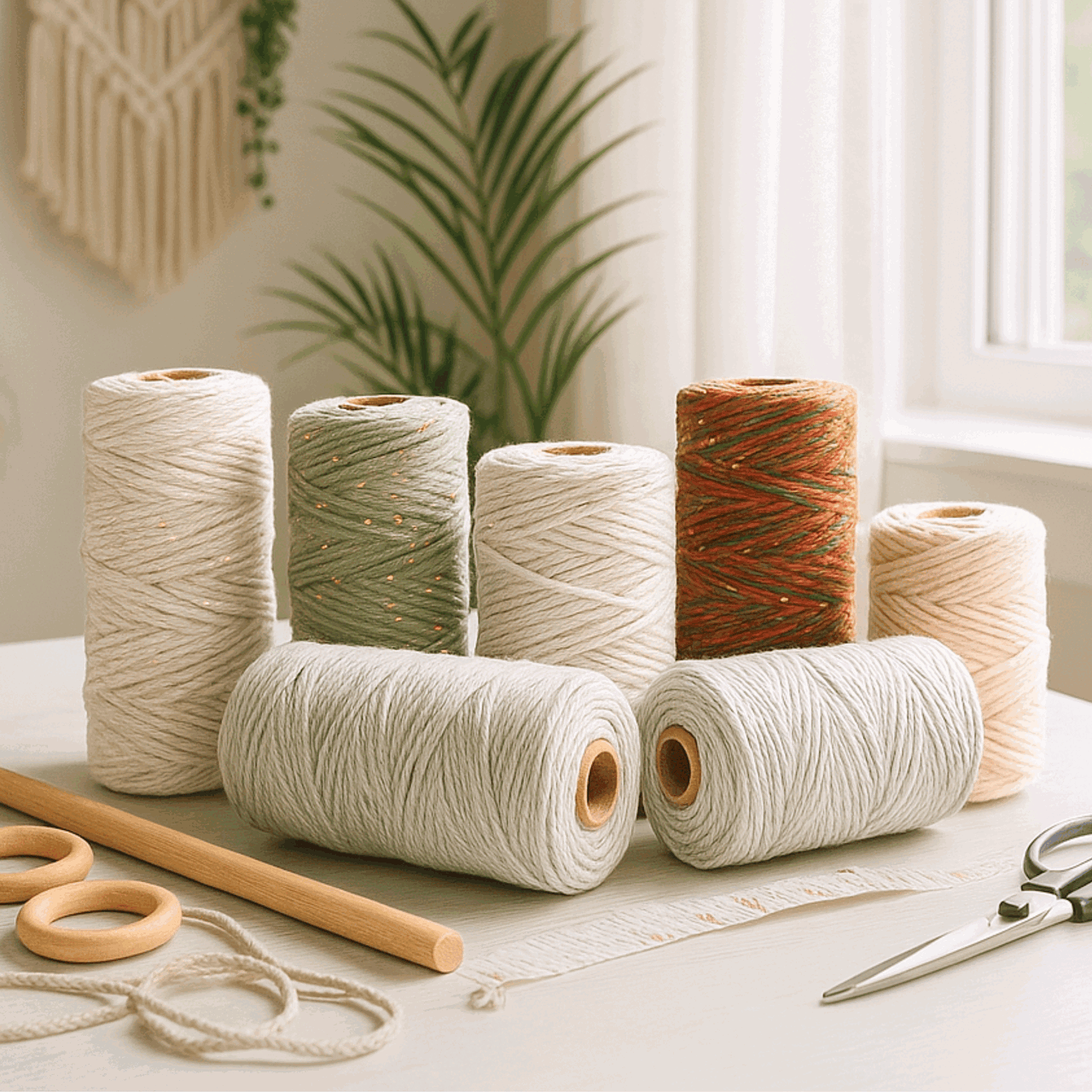
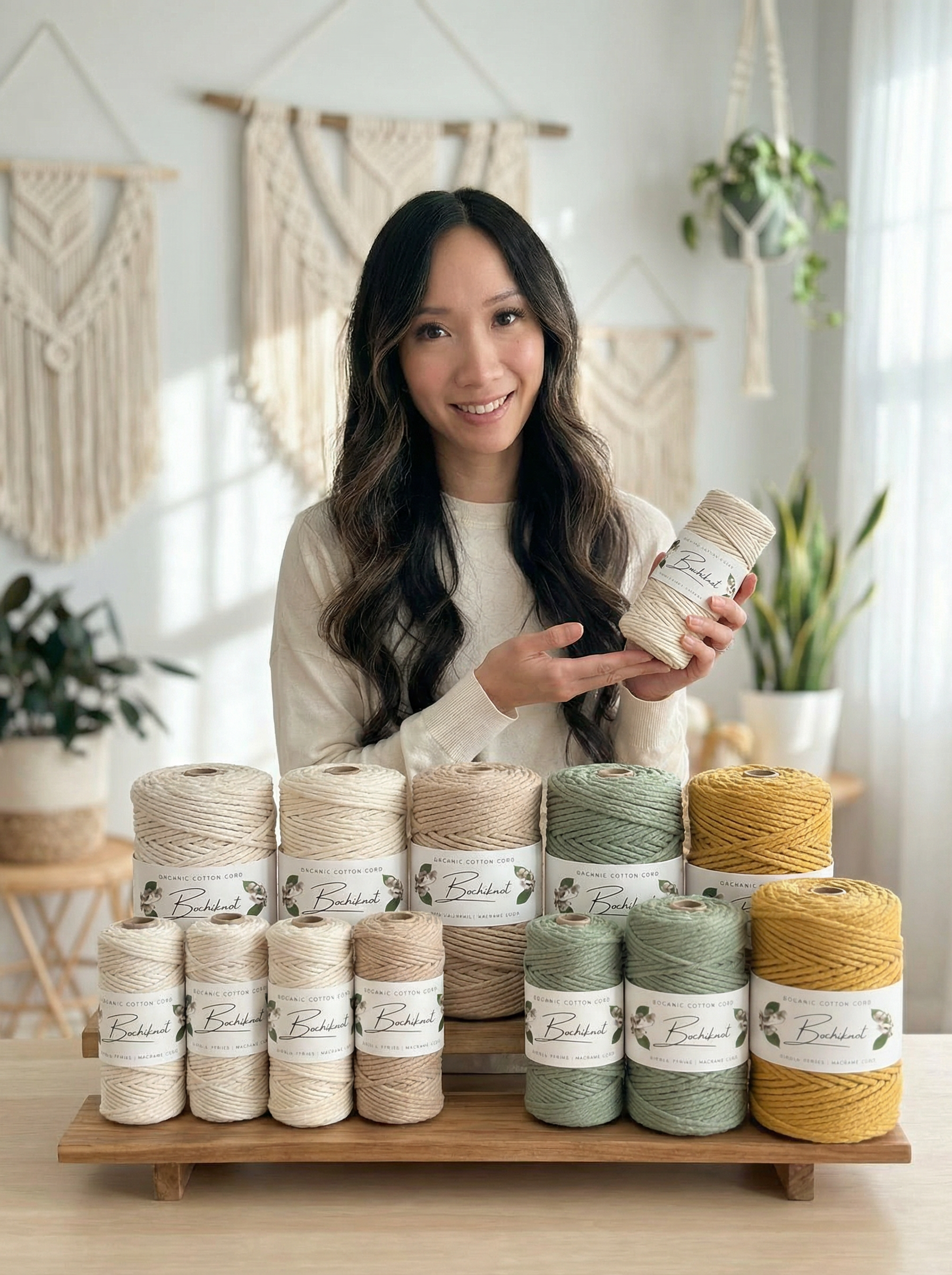
To practice these three knots, you need almost nothing:
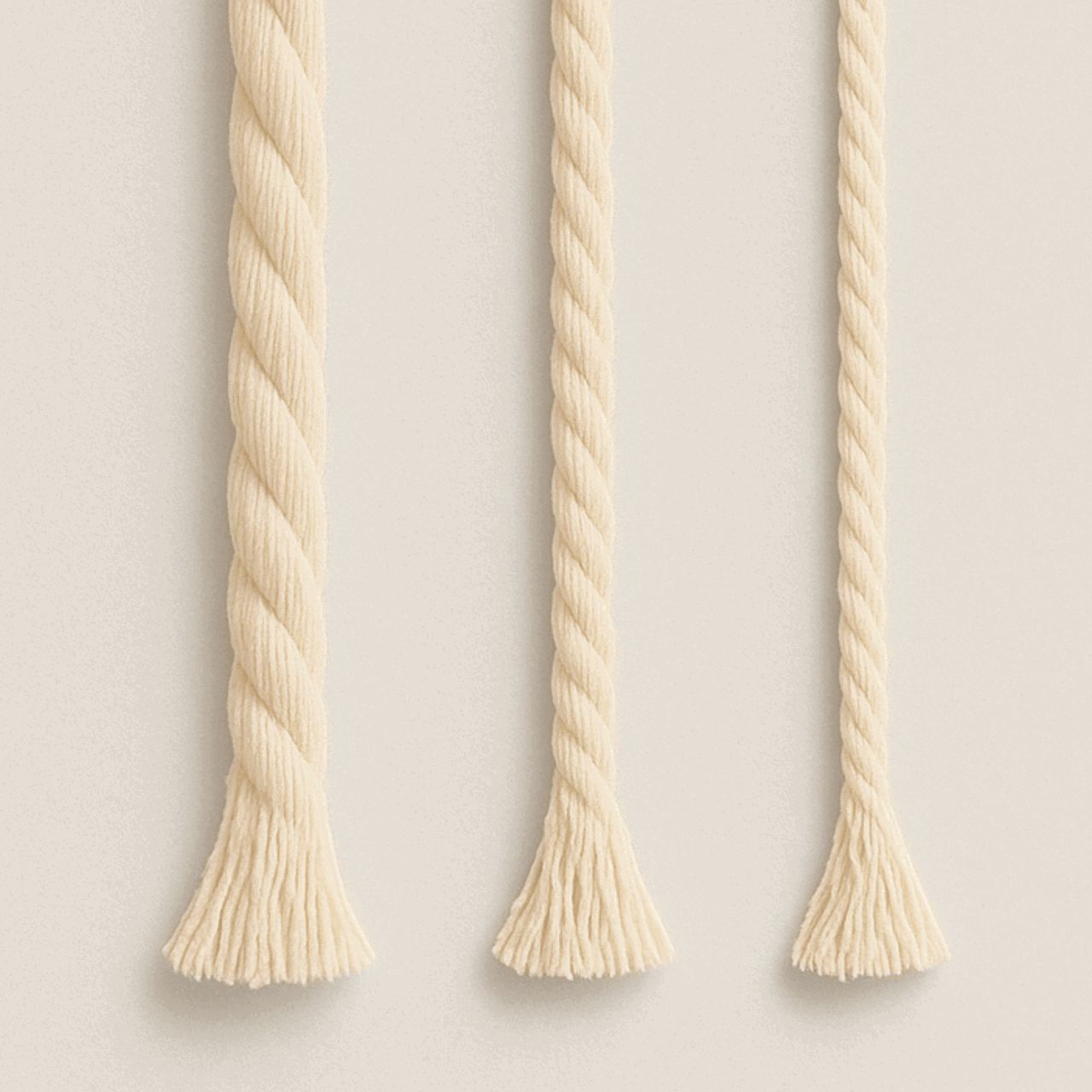
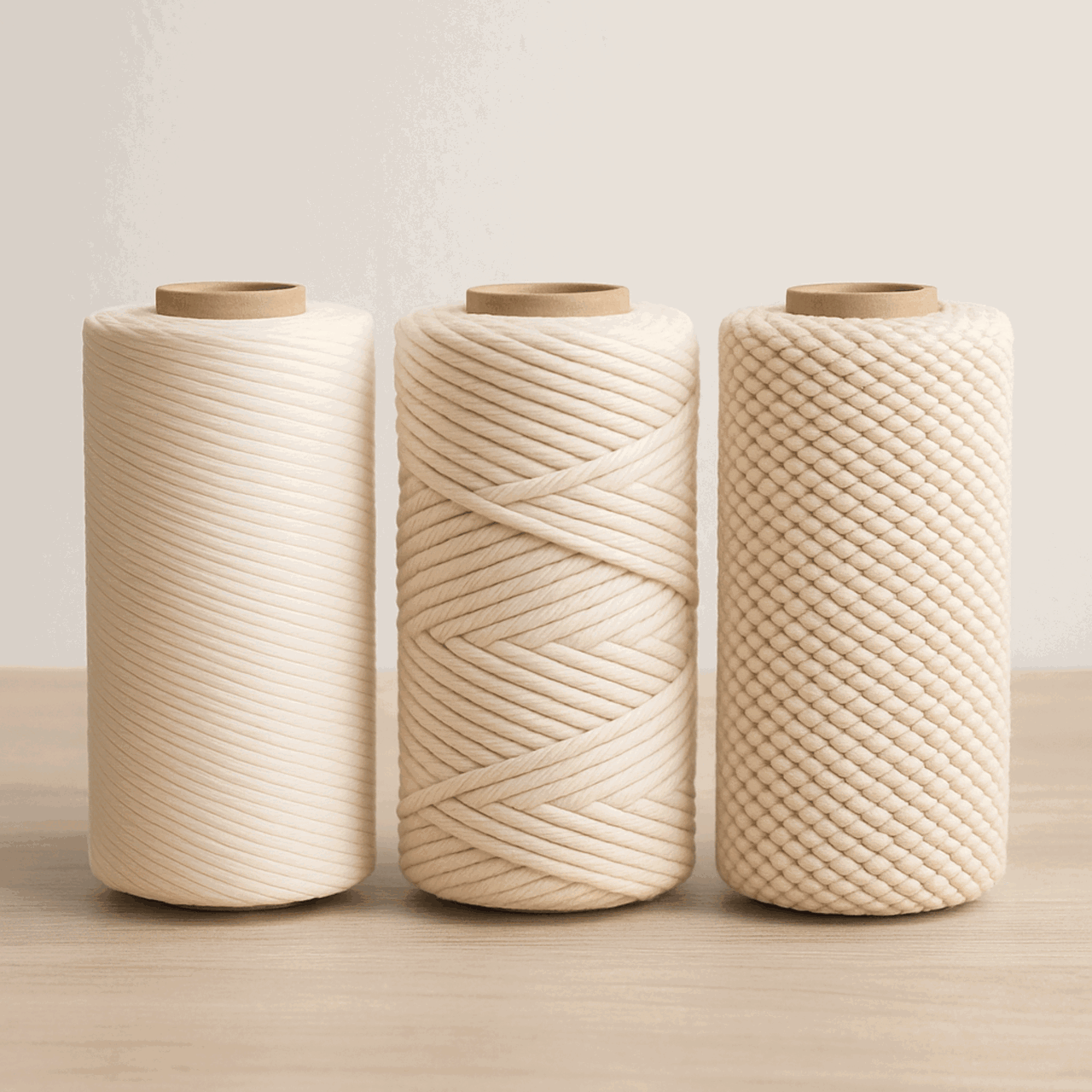
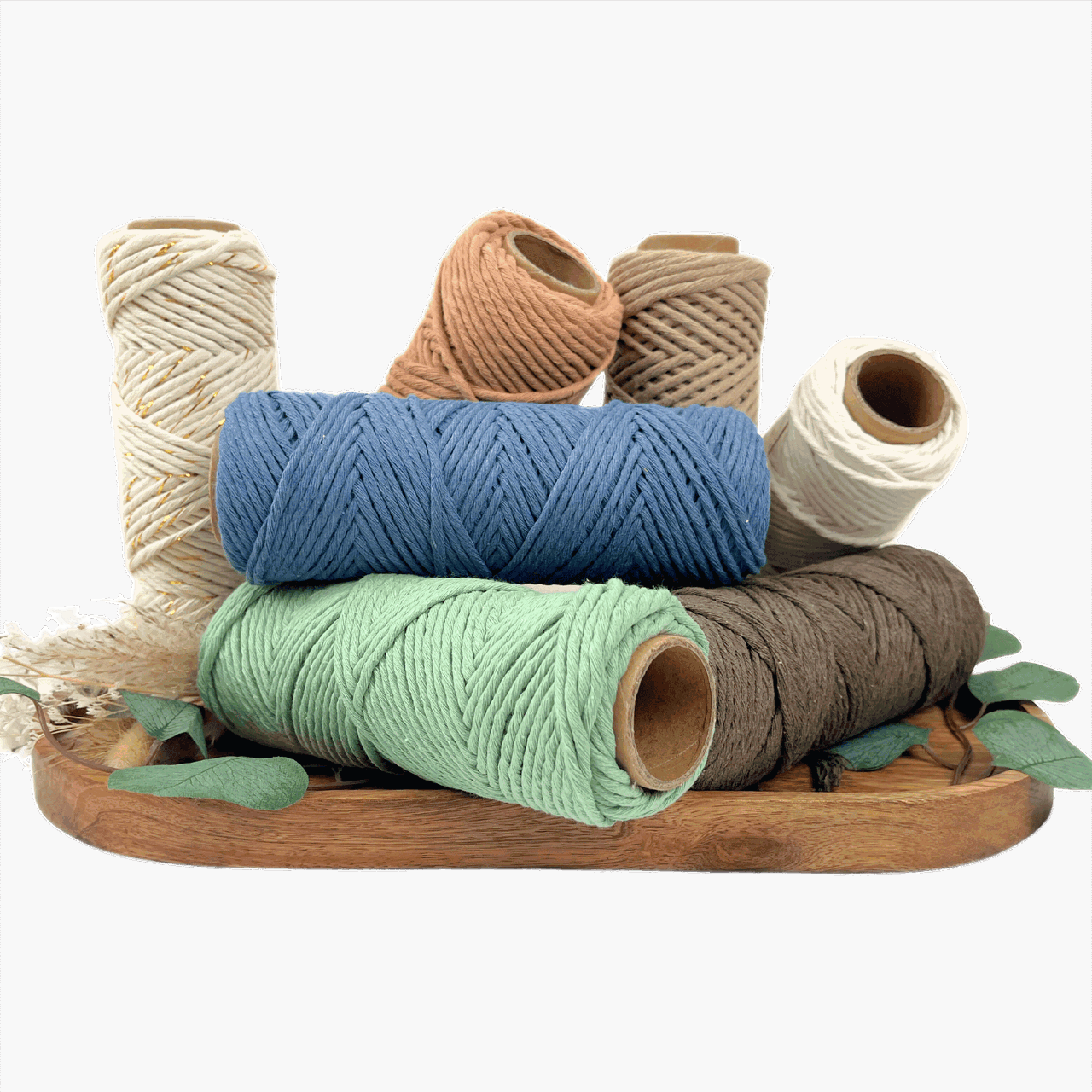
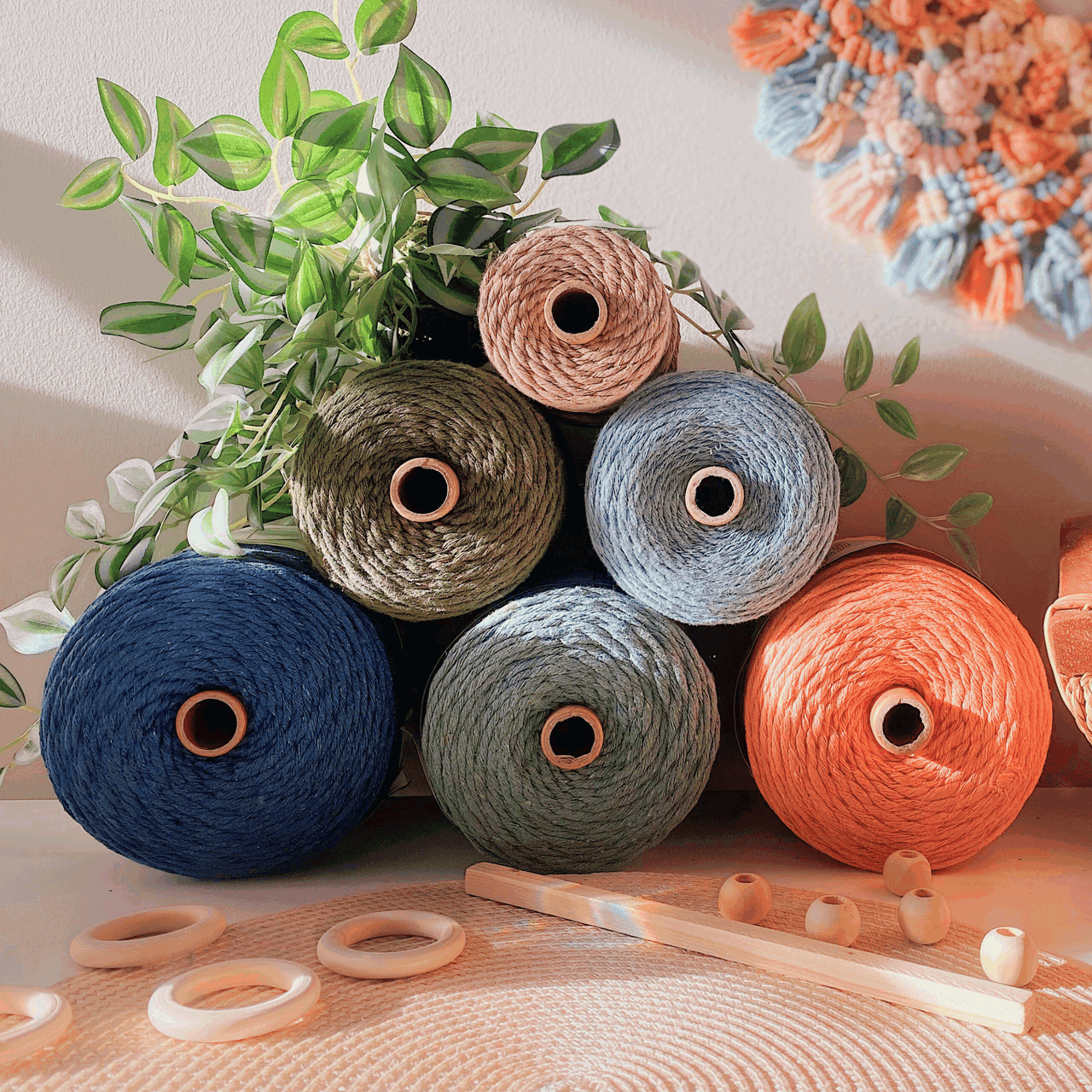
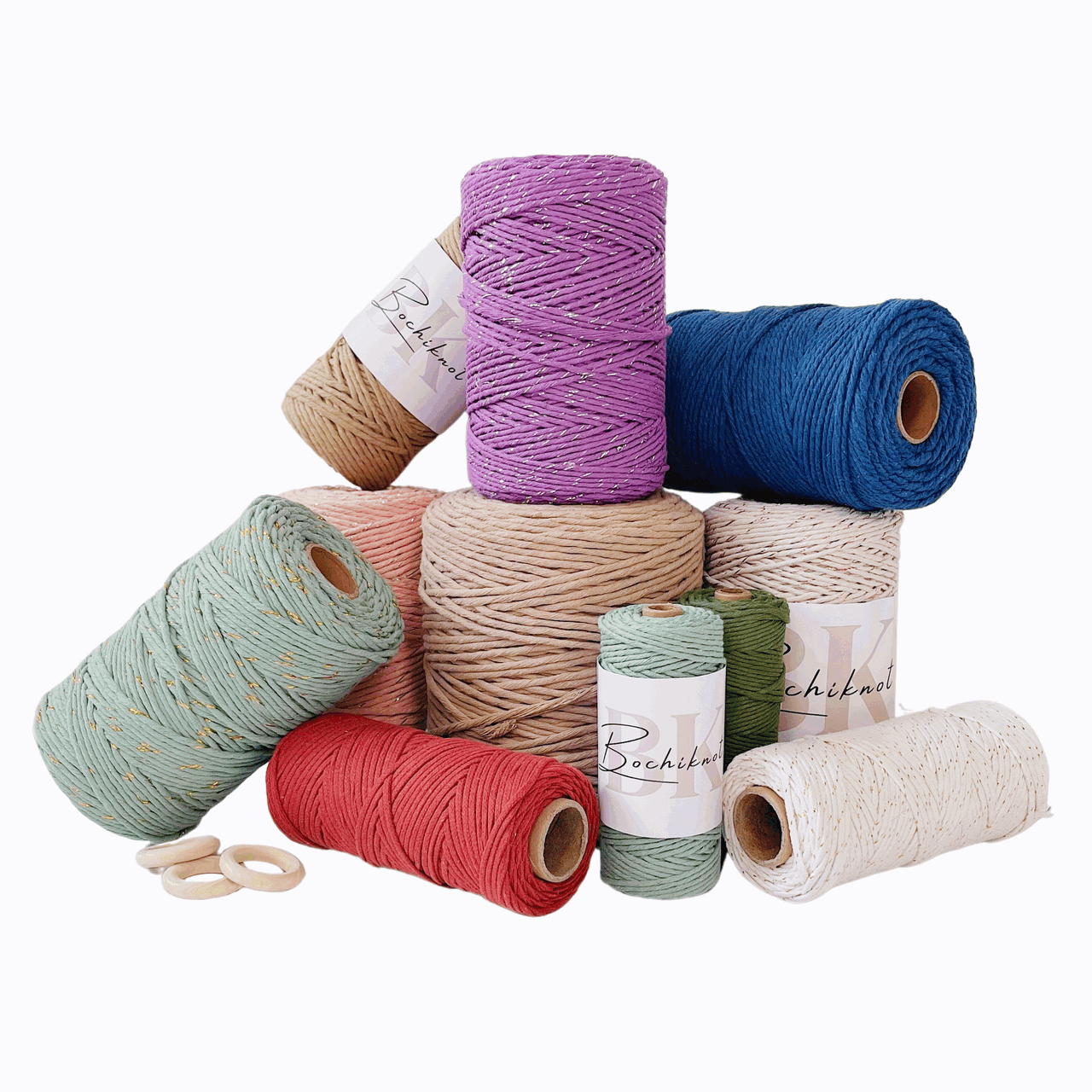
- Cord: 3mm or 4mm single-strand cotton cord, cut into 1.5–2m lengths for practice
- Mounting point: A wooden dowel, metal ring, or even a piece of rope tied between two chair backs
- Somewhere to hang it or lay down: S-hook over a clothing rack — anything at eye level. Or on a flat working table.
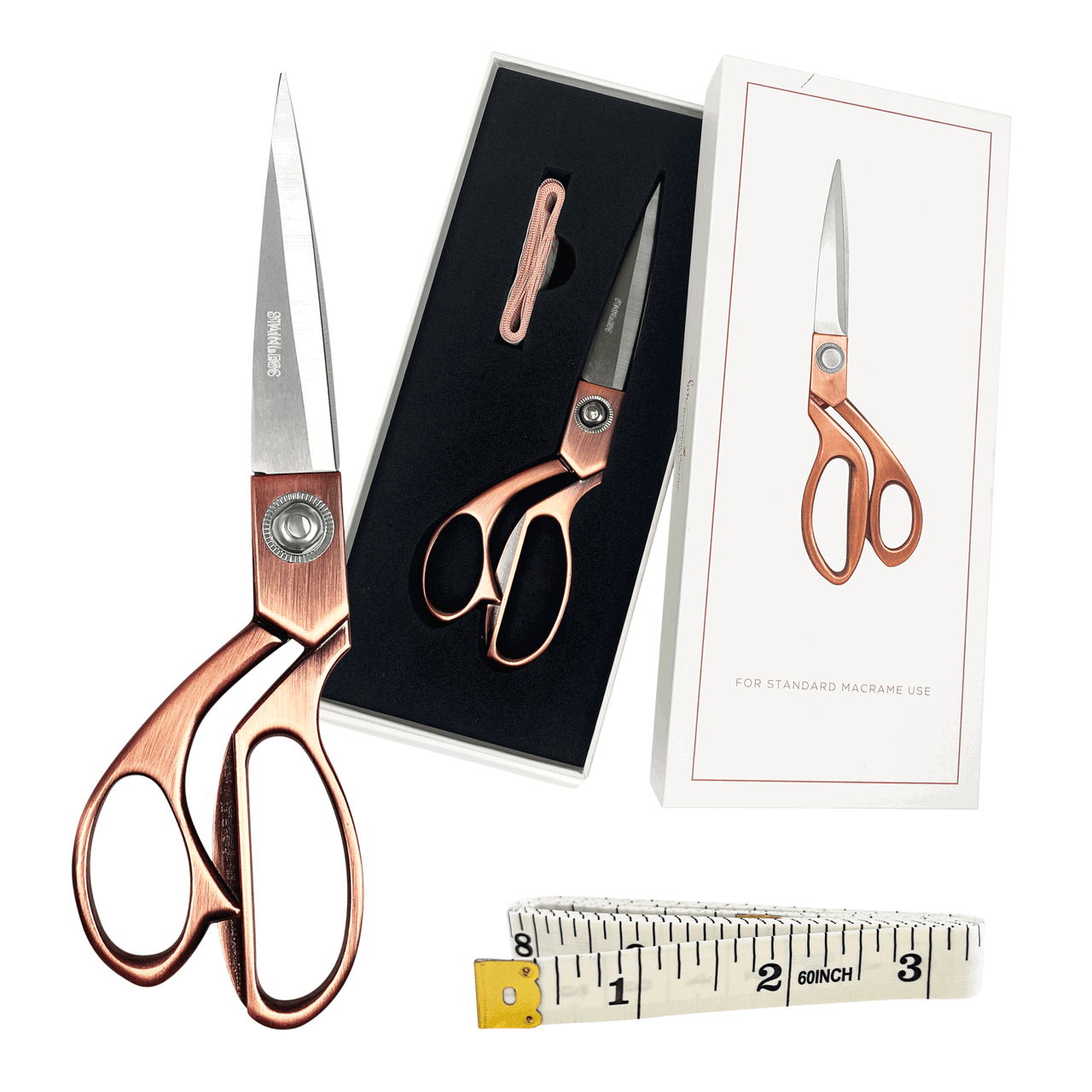
- Sharp macrame scissors
That's genuinely all you need. Many beginners overthink the setup. Just hang a dowel somewhere and start tying.
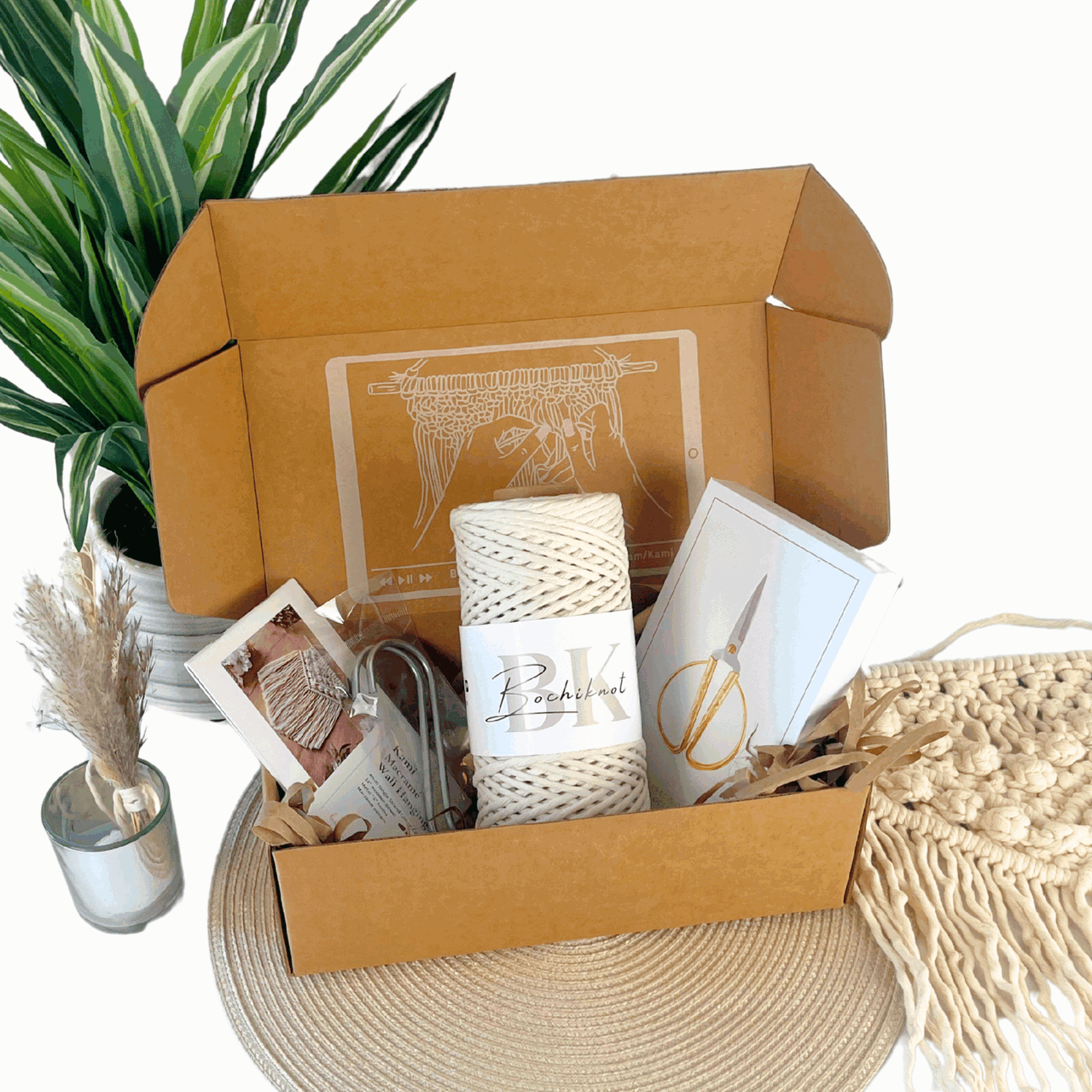
→ Or skip the guesswork entirely — our starter kits include everything
Knot 1: The Lark's Head Knot
▶ Watch the Video Tutorial
*Note: We recommend following the tutorial video for more detailed instructions and to achieve the best results.
Can't see the video? Watch on the Bochiknot YouTube channel — 100,000+ subscribers.
What is the Lark's Head Knot?
The Lark's Head Knot is how you attach cord to a dowel, ring, or other anchor. It's not really a decorative knot — it's the starting point of almost every single macramé project. Without knowing this knot, you can't start anything.
Every cord in a wall hanging was attached with a Lark's Head. Every plant hanger starts with Lark's Heads on a ring. It's the foundation everything else is built on.

How to tie a Lark's Head Knot
- Fold your cord in half to find the midpoint. You now have two equal lengths hanging from the fold.
- Place the folded loop over the dowel from front to back, so the loop sits on top of the dowel and the two cord ends hang down in front.
- Pull the two loose ends through the loop from front to back.
- Pull both ends down firmly to tighten the knot against the dowel. The knot should sit flush and snug — not loose and sliding.

Reverse Lark's Head knot (important variation)
Also known as the Cow Hitch Knot, it is essentially the Lark's Head knot viewed from the opposite side.
Since these two common macrame knots are identical in their structure, deciding whether to use the Lark's Head or the Reverse Lark's Head knot boils down to personal preference.
Common mistakes
⚠️ Knot too loose: Always pull both ends firmly downward after completing the knot. A loose Lark's Head will slide along the dowel when you start knotting.
⚠️ Loop on the wrong side: If your knot looks twisted or backwards, you've placed the loop back-to-front. Untie and re-do it — it only takes 5 seconds.
⚠️ Uneven cord lengths: After mounting, both halves of the cord should hang at equal lengths. If they don't, the knot is off-centre on the fold.
🎯 Practice target: Mount 10 cords in a row on your dowel using Lark's Heads. They should all sit at the same height with even tension. This is literally the first step of every wall hanging pattern.
Projects that use this knot: Every macramé project — it's the starting point for all of them
Knot 2: The Square Knot
▶ Watch the Video Tutorial
*Note: We recommend following the tutorial video for more detailed instructions and to achieve the best results.
Can't see the video? Watch on the Bochiknot YouTube channel — 100,000+ subscribers.
What is the Square Knot?
The Square Knot is the heart of macramé. If macramé were music, the Square Knot is the chord you play most. It creates that distinctive knotted texture seen in every wall hanging, the spiral pattern in plant hangers, the woven panels in bags. Learn this knot and you have the single most important tool in macramé.
A Square Knot uses 4 cords: two outer "working cords" and two inner "filler cords." The fillers stay in place — the outer cords do all the movement.

How to tie a Square Knot
Start with 4 cords hanging vertically. Label them Left, Inner Left, Inner Right, Right (L, IL, IR, R).
- Take cord L and cross it over the two filler cords (IL and IR), laying it horizontally to the right.
- Take cord R and cross it over cord L from the right side, then pass it behind both filler cords and up through the loop created on the left.
- Pull L and R away from each other horizontally to tighten. This completes the first half of the Square Knot (a Half Knot).
- Now take cord R (which is now on the left side after step 3) and cross it over the fillers to the right.
- Take cord L (now on the right) and cross it over cord R, then pass it behind the fillers and up through the left loop.
- Pull both cords firmly to tighten. The completed Square Knot should sit flat and symmetrical.

Memory trick
Some crafters remember it as: "Left over, right through — right over, left through." The first half always goes one direction; the second half mirrors it.
Alternating Square Knot

The Alternating Square Knot takes that same knot and staggers it row by row, creating a beautifully woven effect. It's a go-to pattern in macramé — perfect for wall hangings, plant hangers, bracelets, and more. Simple to learn, and lovely in any project.
This knot pattern is often used to add visual interest to macrame designs, such as wall hangings, plant hangers, and bracelets.
It's a versatile knot that can add a touch of elegance and complexity to your macrame projects.
How to Tie an Alternating Square Knot Pattern Step-by-Step

- Tie two square knots side by side.
- Directly below and between them, tie your next square knot to create the alternating effect.
The Square knot is one of macramé's most-used knots — great for building flat, woven patterns in plant hangers, wall hangings, handbags, and more. Once you master it, you'll have the foundation to add beautiful texture and structure to any project.
Common mistakes
⚠️ Knot is lopsided or twisted: You've tied two first-halves instead of first then second. Double-check the direction before each step.
⚠️ Filler cords are moving: Hold or pin the filler cords in place. They should remain stationary — only the outer cords move.
⚠️ Knots are uneven spacing: Slide each new Square Knot up to a consistent distance from the previous one before tightening. Use a ruler if needed.
⚠️ Cords pulling at an angle: Your working cords should pull directly sideways (horizontal), not diagonal. Keep tension even on both sides.
🎯 Practice target: Tie a column of 8 Square Knots down your mounted cords with even spacing. Then try alternating Square Knots (shift the groupings by 2 cords for the second row) — this creates the classic diamond pattern in macramé wall hangings.
Projects that use this knot: Wall hangings, plant hangers, bags, keychains, seasonal décor — almost everything
👥 Join the community: Share your finished project with 40,000+ crafters in the Bochiknot Facebook Community. Tag us on Instagram @bochiknot — we repost our favourites.
Knot 3: The Double Half Hitch
▶ Watch the Video Tutorial
*Note: We recommend following the tutorial video for more detailed instructions and to achieve the best results.
Can't see the video? Watch on the Bochiknot YouTube channel — 100,000+ subscribers.
What is the Double Half-Hitch Knot (DHHK)
The Double Half-Hitch knot is one of macramé's most essential knots. It's the foundation for countless patterns and a technique you'll come back to again and again.
In this tutorial, I'll walk you through how to tie it in three directions — horizontal, diagonal, and vertical.
Variation 1: Horizontal Double Half-Hitch Knot
The horizontal double half-hitch creates clean, straight lines across your work — one of the most useful knots for adding structure and definition to any macramé piece. Use it to create borders, separate sections of a design, or build rows of texture in wall hangings, plant hangers, and bags.

How to tie a Horizontal Double Half Hitch
- Lay a horizontal anchor cord across your vertical working cords.
- Take the far left cord and tie a half-hitch knot over the anchor cord.
- Bring the same cord back over and through the loop to complete the second half-hitch.
- Pull both cords to tighten.
Repeat across the row until you've reached your desired length or pattern.

Once you get the rhythm, this knot works up quickly and the results are always satisfying. It's a versatile technique you'll find yourself reaching for in nearly every project.
Variation 2: Diagonal Double Half-Hitch Knot
The Diagonal Double Half-Hitch creates angled lines that add movement and flow to your macramé work. It's perfect for creating chevron patterns, leaf shapes, and geometric designs — making it a go-to knot for wall hangings, feathers, and decorative pieces where you want a sense of direction and dimension.

How to Tie It
- Lay a diagonal anchor cord at your desired angle across your vertical working cords.
- Take the first working cord and tie a half-hitch knot over the anchor cord.
- Bring the same cord back over and through the loop to complete the second half-hitch.
- Pull both cords to tighten.
Repeat along the anchor cord, following the diagonal angle until you've reached your desired length or pattern.

Once you're comfortable with the horizontal version, the diagonal comes naturally — it's the same knot, just at an angle. Mastering this variation opens the door to some of macramé's most beautiful and intricate designs.
Variation 3: Vertical Double Half-Hitch Knot
The vertical double half-hitch creates neat, column-like lines that run up and down your work — ideal for adding vertical texture and detail to your macramé pieces. It's commonly used for creating ribbed effects, decorative columns, and intricate surface patterns in wall hangings, table runners, and woven pieces.

How to Tie It
- Hold a vertical anchor cord straight down across your horizontal working cords.
- Take the first working cord and tie a half-hitch knot over the anchor cord.
- Bring the same cord back over and through the loop to complete the second half-hitch.
- Pull both cords to tighten.
Repeat down the column until you've reached your desired length or pattern.

With all three variations under your belt — horizontal, diagonal, and vertical — you now have the full range of the double half-hitch at your fingertips. Combined, they form the backbone of some of macramé's most stunning and intricate designs.
Common mistakes
⚠️ Pattern line isn't straight: You're letting the carrier cord angle change between knots. Hold it firmly at a consistent angle — even use a pin through the board to hold it in place.
⚠️ Only one hitch per cord: It's called "Double" Half Hitch for a reason — two wraps per working cord, every time. One hitch will slide.
⚠️ Working cords are too loose: Pull each working cord firmly after both hitches before moving to the next cord. Loose knots make the pattern line look sloppy.
⚠️ Carrier cord is moving: Hold the carrier in your non-dominant hand and don't let it slack. The tighter you hold the carrier, the cleaner the result.
🎯 Practice target: Tie two diagonal lines crossing in a V-shape to create one chevron. This is the basis of literally every chevron/diamond pattern in macramé.
Projects that use this knot: wall hangings, patterns with diagonal lines, chevron designs, the Fishtail Keychain, detailed decorative pieces
Practice Projects: What to Make With These 3 Knots
Now that you know the knots, here's what to make with them — roughly in order of difficulty:
| Project | Knots Used | Time | Difficulty |
|---|---|---|---|
| Daisy Keychain | Lark's Head, Half-Hitch, DHHK, Gathering Knot | 20–30 min |
★★☆ |
| 10-Minute Plant Hanger | Overhand, Square Knot, Gathering Knot | 10–15 min | ★☆☆ |
| 6-Knot Plant Hanger | HHK, LHK, DHHK, Berry Knot, Square Knot, Gathering Knot | 30–45 min | ★★☆ |
| Feather Wall Hanging | Lark's Head, Square Knot, Rose Knot | 1–2 hrs | ★☆☆ |
| Fishtail Keychain | Lark's Head, Double Half Hitch Knot, Gathering Knot | 30 min | ★☆☆ |
| Half Mandala Wall Hanging | Lark's Head, Square Knot, Double Half Hitch | 3–5 hrs | ★★★ |
| Net Bag | Lark's Head, Square Knot, HHK, Berry Knot, 4-ply Braid, Gathering Knot | 2–3 hrs | ★★☆ |
→ See all 12 free beginner project tutorials
Skip the guesswork — everything's included
Cord, dowel, pattern & video tutorial in one box. No experience needed.
Shop Starter Kits →Get 10% Off Your First Order
Join 10,000+ crafters. Free tutorials, new patterns & exclusive offers — straight to your inbox. No spam, unsubscribe any time.
We respect your inbox. Unsubscribe any time.
Frequently Asked Questions
How long does it take to learn macramé knots?
The good news is — not long at all. Most beginners can pick up the three basic macramé knots in a single sitting. With a little practice and patience, you'll start to feel confident within your first few sessions.
Each knot has its own learning curve. The square knot and lark's head knot tend to click quickly, while the double half-hitch may take a little more time to get comfortable with due to its variations. But once your hands find the rhythm, it becomes second nature.
Like any craft, the more you practice, the more natural it feels. Start slow, be patient with yourself, and enjoy the process — before you know it, these knots will feel like second nature.
Do I need to learn any other knots for macramé?
Not at first. The Lark's Head, Square Knot, and Double Half Hitch will take you through dozens of projects. Additional knots like the Alternating Square knot, Horzontial, Vertical, and Diagonal Knot are variations. Learn the basics first, then expand your repertoire naturally as projects call for it.
What is the easiest macramé knot for complete beginners?
The Lark's Head Knot is the simplest — it's a 3-step fold-and-pull. After that, the Square Knot is the most important to learn, and most beginners get it within an hour. Start with the Lark's Head to mount your cords, then practice Square Knots in a column.
Why do my knots look uneven?
Uneven knots usually come from inconsistent tension. Each knot needs to be pulled with equal force on both sides before you move to the next one. Try working at eye level (hanging your dowel at chest height rather than working flat on a table) — gravity helps keep tension consistent. Consistent spacing between knots also matters — use a ruler when you're learning.
What cord should I use to practise macramé knots?
Use 3mm or 4mm single-strand natural cotton cord. It's soft enough to work with for extended practice sessions, easy to untie when you make mistakes, and knots clearly so you can see your work. Avoid fine string (too fiddly) or very stiff cord (too hard to manipulate) when you're just starting out.
Can I watch video tutorials for these knots?
Yes — we have step-by-step video tutorials for each of these knots in our video tutorials. Watching a knot being tied in real time is often easier than following written steps, especially for the Double Half Hitch. We recommend reading these instructions first to understand the concept, then watching the video to see the technique in motion.
Ready to Put These Knots to Work?
The fastest way to learn macramé knots is to actually make something with them. Pick one project from the table above and you'll have all three knots down by the time you finish.
If you want everything sorted for you, our macramé starter kits include pre-measured cord, a wooden dowel, a pattern, and a video tutorial — designed specifically to teach you these knots through a real project.
→ Shop macramé starter kits
→ Shop 3mm cord for practice
About Bochiknot
Bochiknot has helped over 100,000 people learn macramé through free YouTube tutorials and leads a community of 40,000+ crafters on Facebook. Our premium macramé cord, starter kits, and patterns are trusted by beginners and experienced makers across the US, Canada, and Australia — and are available on Amazon.com and Amazon.ca. Read our story →

Leave a comment