







How to Make a DIY Macramé Nursery Basket (Tension-Mastery Tutorial)


Updated 2026 · ~12 min read
🔖 Save for later
How to Make a DIY Macramé Nursery Basket (Tension-Mastery Tutorial)
Updated June 8, 2026 · 12-step tutorial- Phase 1 — Anchor and build the top band (Steps 1–4): Start two 310 cm anchor cords with a square knot, then weave in 43 cords of 110 cm to size the band to the 8-inch base. Add a 44th cord at the end so the count stays even.
- Phase 2 — Join the band into a continuous loop (Steps 5–7): Weave the anchor cords through the opposite side, secure the loose ends, and refit the band around the wooden base.
- Phase 3 — Build the walls with tension control (Step 8): Tie 13 rows of square knots, alternating between regular and offset rows. Hold ~0.5 cm of spacing between rows. This is the make-or-break tension moment.
- Phase 4 — Attach to the base and finish (Steps 9–12): Final fit check, then tie each pair of cords through the wooden base holes with double overhand knots, tuck the final strand, and trim.
Total time: 2–4 hours · Finished size: ~8" wide × 6.5" tall · Skill level: advanced beginner to intermediate · Cost: ~$30–$35 in materials

📌 Save this nursery storage DIY ($30 vs $89 Crate & Kids)
Handmade macramé nursery baskets retail for $45 to $129 on Etsy and Pottery Barn Kids. This Bochiknot DIY costs about $30 in premium 5mm single-strand cotton cord and an 8-inch wooden base, takes one afternoon, and works for diapers, toys, blankets, books, and baby essentials. Pin to your nursery storage, baby shower, or boho nursery board.
Save to Pinterest
🎥 Prefer to watch?
The full step-by-step video shows every square knot and every fit check in real time. The tension control around row 6 (where most baskets start to collapse) is much easier to see in motion than from still photos. Pause and rewind freely.
Jump to videoWhat You'll Learn
Tutorial Contents
- The Tension Rule (why most baskets collapse)
- What is a macramé nursery basket?
- Why DIY one for your nursery?
- Materials & tools you'll need
- Project details (skill, size, time, cost)
- Cord quantity calculator (3 basket sizes)
- Sizing variations
- Video walkthrough
- Step-by-step tutorial (12 steps)
- The tension mastery deep dive
- What to know before starting
- Pro tips & troubleshooting
- Common mistakes & fixes (tension-focused)
- 6 nursery storage use cases
- 6 color variations
- How high should the basket sit?
- Make it vs buy boutique (savings breakdown)
- Perfect gift for these 6 occasions
- Nursery basket FAQ
- Keep learning with Bochiknot
The Tension Rule (Why Most Baskets Collapse)
The lesson most macramé basket tutorials skip
If your basket collapses inward, leans sideways, or looks lopsided, it is almost never a counting problem. It is a tension problem. Each row of square knots quietly pulls the wall a little tighter than the last — and by row 6 or 7, the basket is narrowing visibly. Once that starts, no amount of pulling or steaming will straighten it out. The fix is to control your tension from row 1.
This tutorial teaches the tension principle that makes your basket stand up straight and look professional. The skill transfers to every macramé basket you build for the rest of your life — bigger laundry baskets, taller hampers, slouchy floor baskets, mini desk caddies. Get tension right, and structure follows.
What Is a Macramé Nursery Basket?
A macramé nursery basket is a hand-knotted cotton storage piece built on a circular wooden base using a continuous band of square knots. The 8-inch base version we teach here finishes at about 8 inches wide by 6.5 inches tall — the perfect proportions for a changing-table diaper caddy, a shelf basket for folded blankets, or a low-profile toy bin beside the crib. The wooden base gives the bottom its structure so beginners can focus on the square knots and the tension principle instead of shaping a freeform base by hand.
What makes this basket a viral favorite for nursery storage:
- One knot, twelve steps. The entire basket is built from the square knot — no fancy decorative knots to memorize. The challenge is tension, not technique.
- Boho-modern nursery aesthetic. Plays beautifully with Montessori, Scandinavian, and earth-tone palettes. Reads as boutique, not craft fair.
- Gender-neutral by default. Natural cotton on a warm wooden base works for boy nurseries, girl nurseries, and gender-reveal showers.
- Real, functional storage. Holds 5 to 8 pounds of dry items — diapers, blankets, burp cloths, books, plush toys.
- Free pattern for commercial use. Sell handmade versions on Etsy. Nursery baskets retail at $45 to $129 in the handmade home-organization market.
Why DIY a Macramé Nursery Basket?
Pottery Barn Kids storage baskets run $69 to $129, Crate & Kids macramé baskets sit at $89 to $149, and Etsy handmade nursery baskets retail at $45 to $120. A handmade Bochiknot version using premium 5mm single-strand cotton has four real advantages:
- Cost. About $30 to $35 in 5mm cord and an 8-inch wooden base — plus one afternoon of your time.
- Premium material. Bochiknot 5mm single-strand cotton is 100% natural fiber, soft to the touch, and free of synthetic blends.
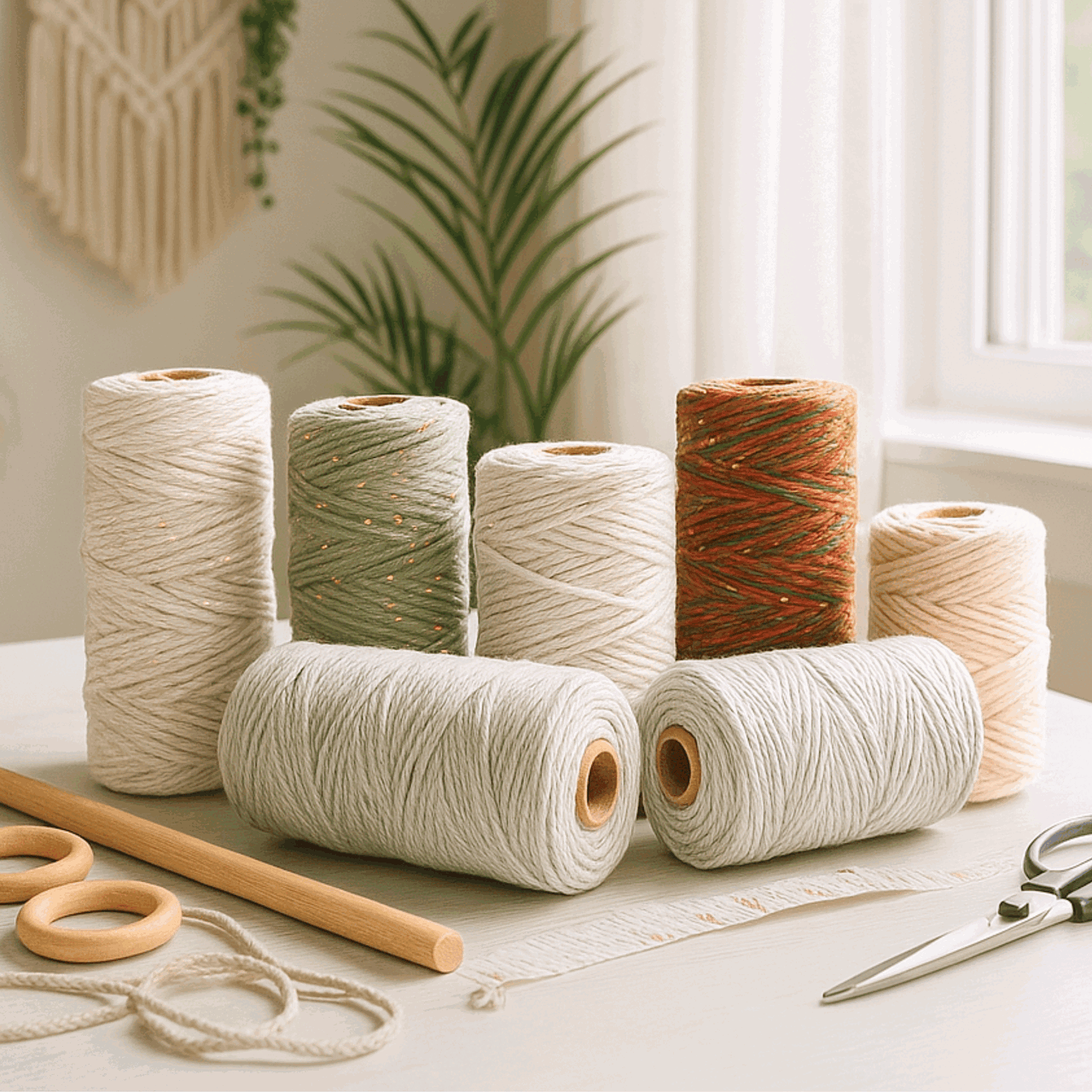
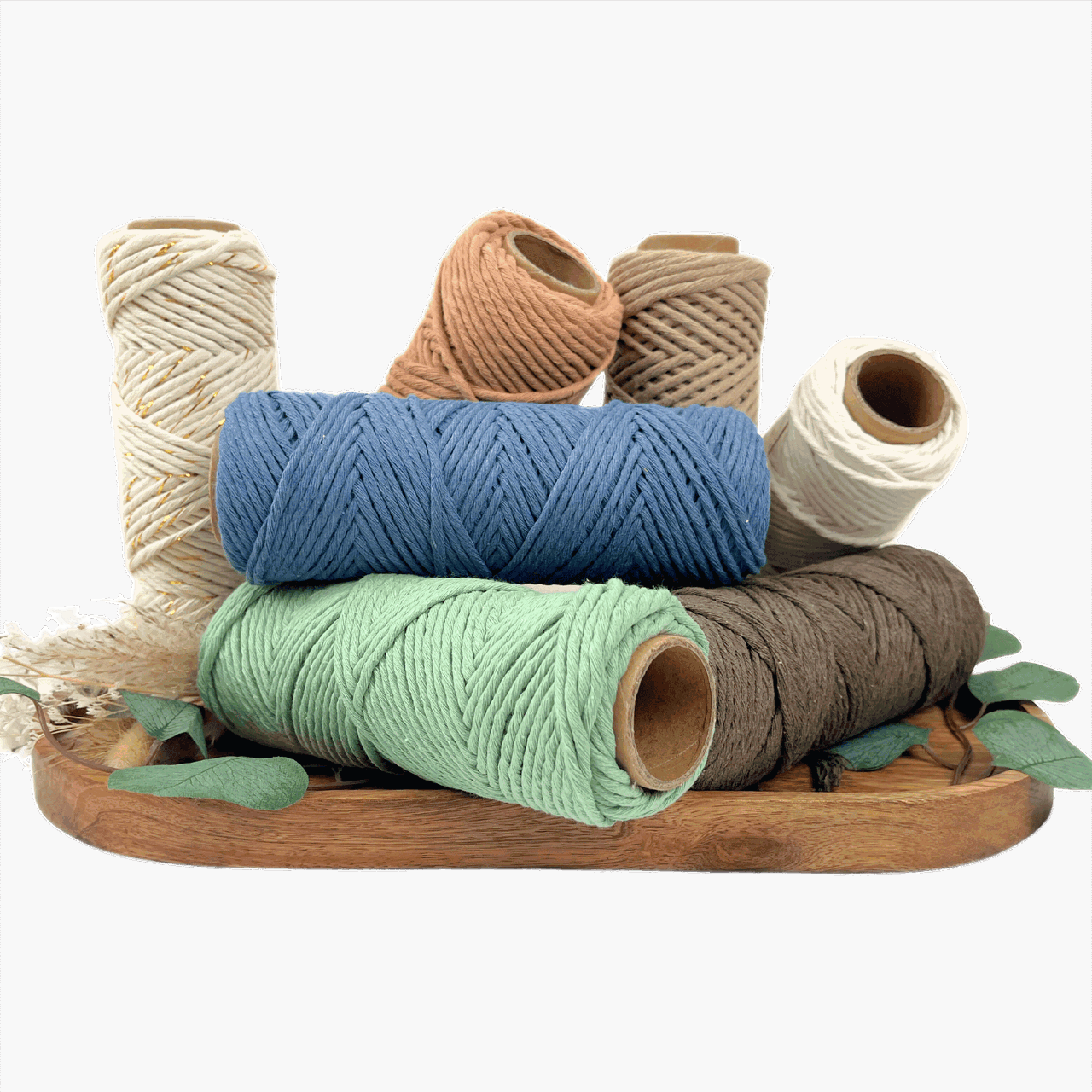
- Custom size and color. Pick natural, cream, beige, blush, sage, or terracotta — and scale the base from 6 inches to 12 inches for the exact storage piece you need.
- Heirloom durability. Natural cotton outlasts the synthetic-blend baskets at Pottery Barn and softens beautifully over years of use.
Materials & Tools You'll Need

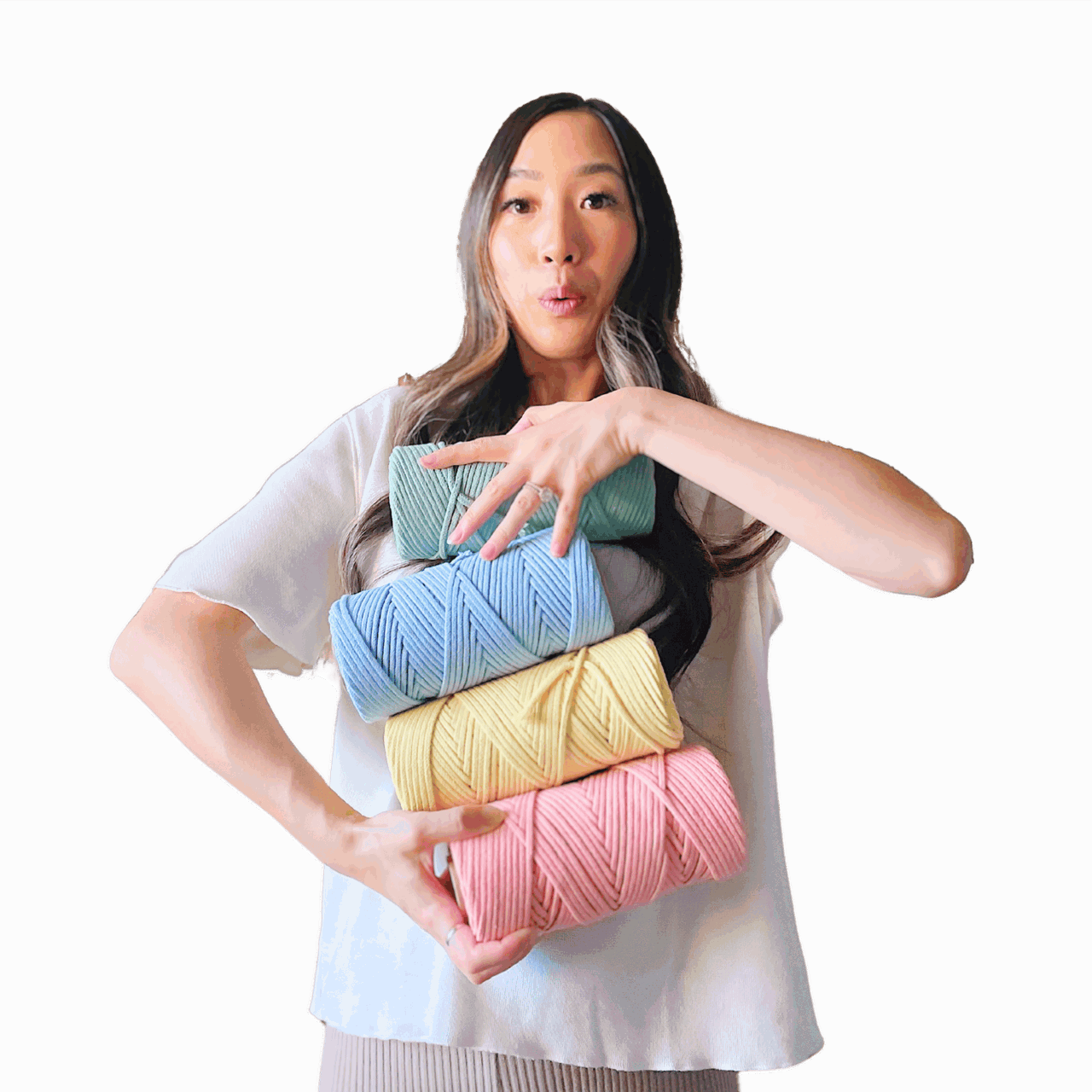
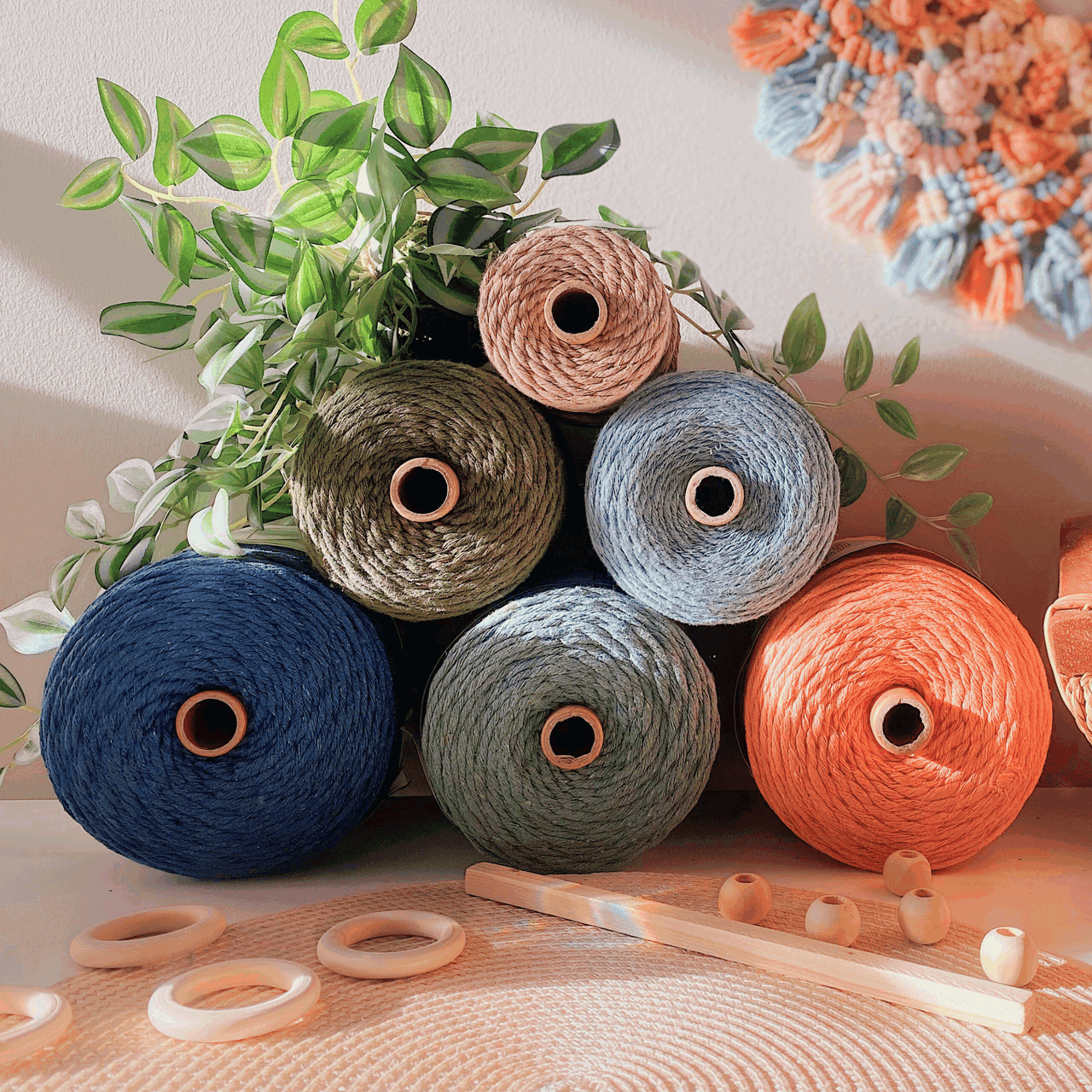
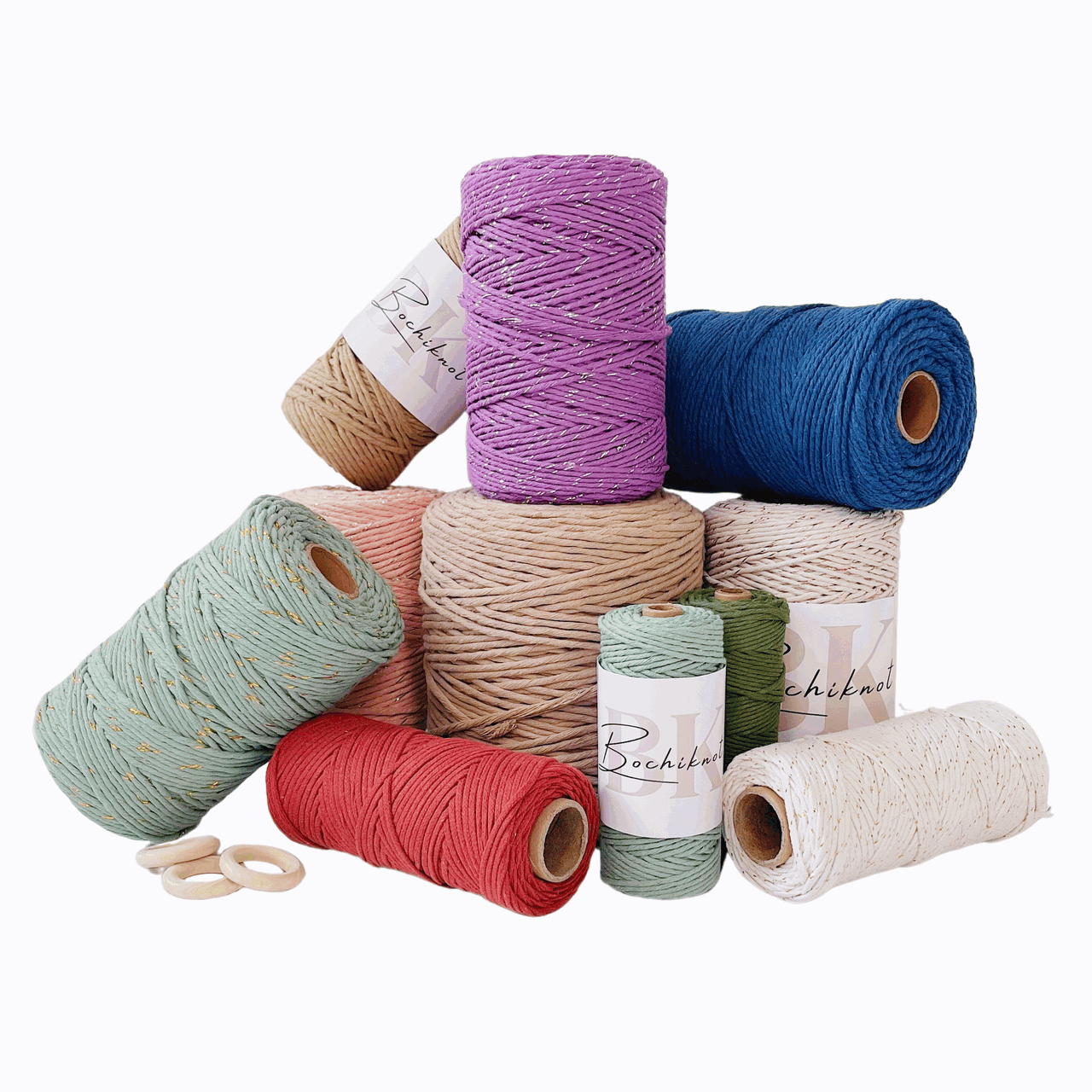
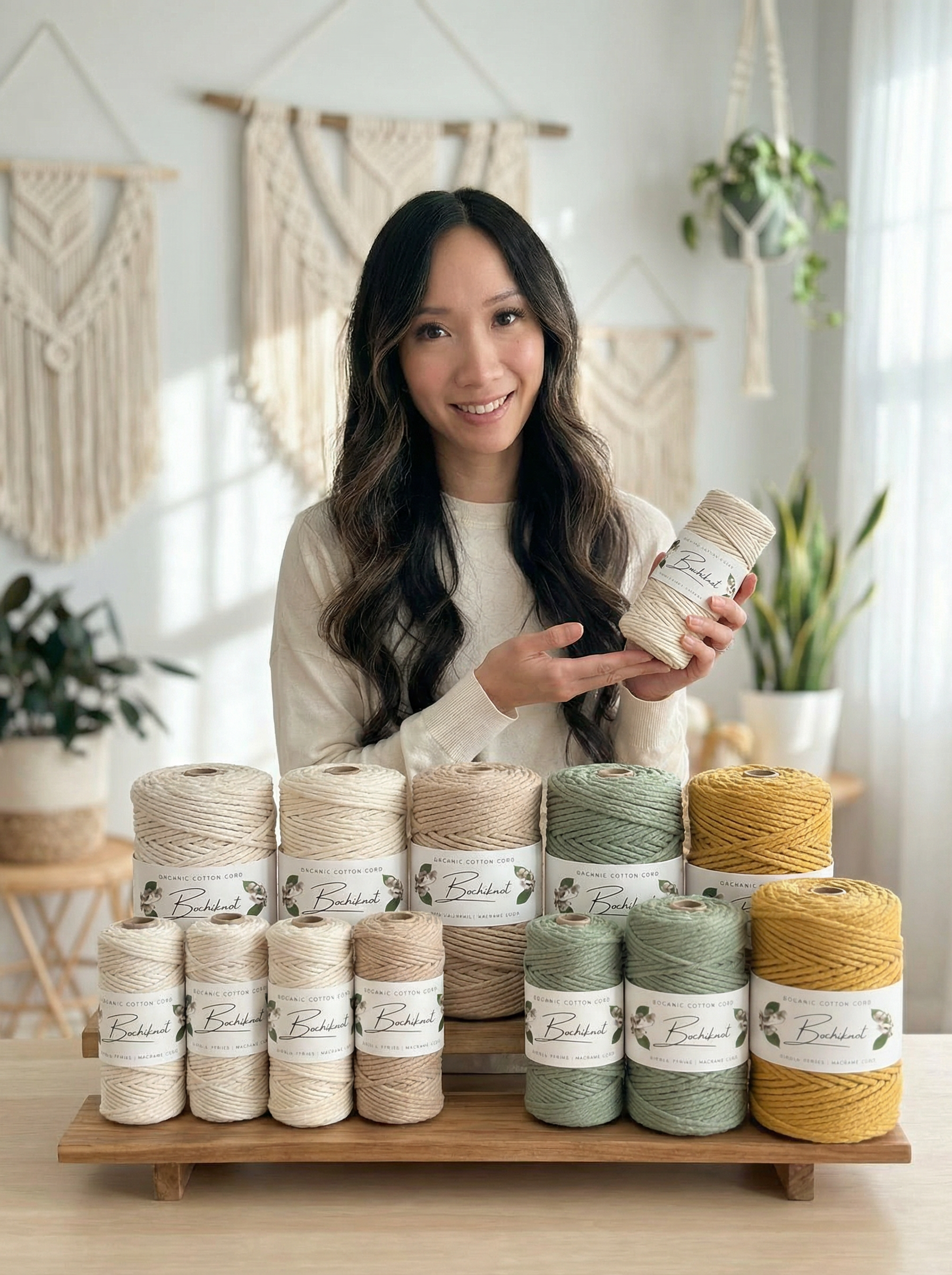
5mm Single-Strand Cotton Cord
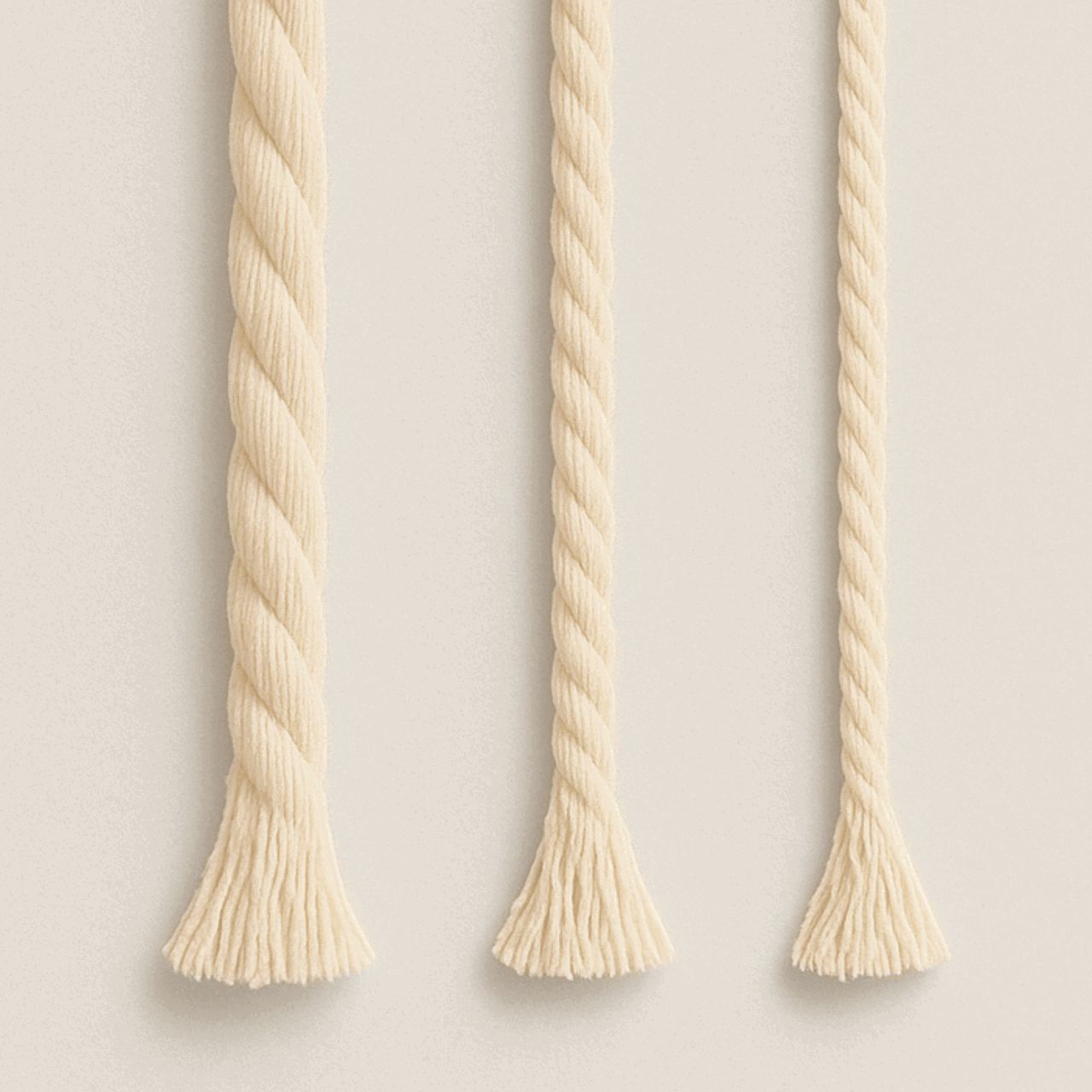
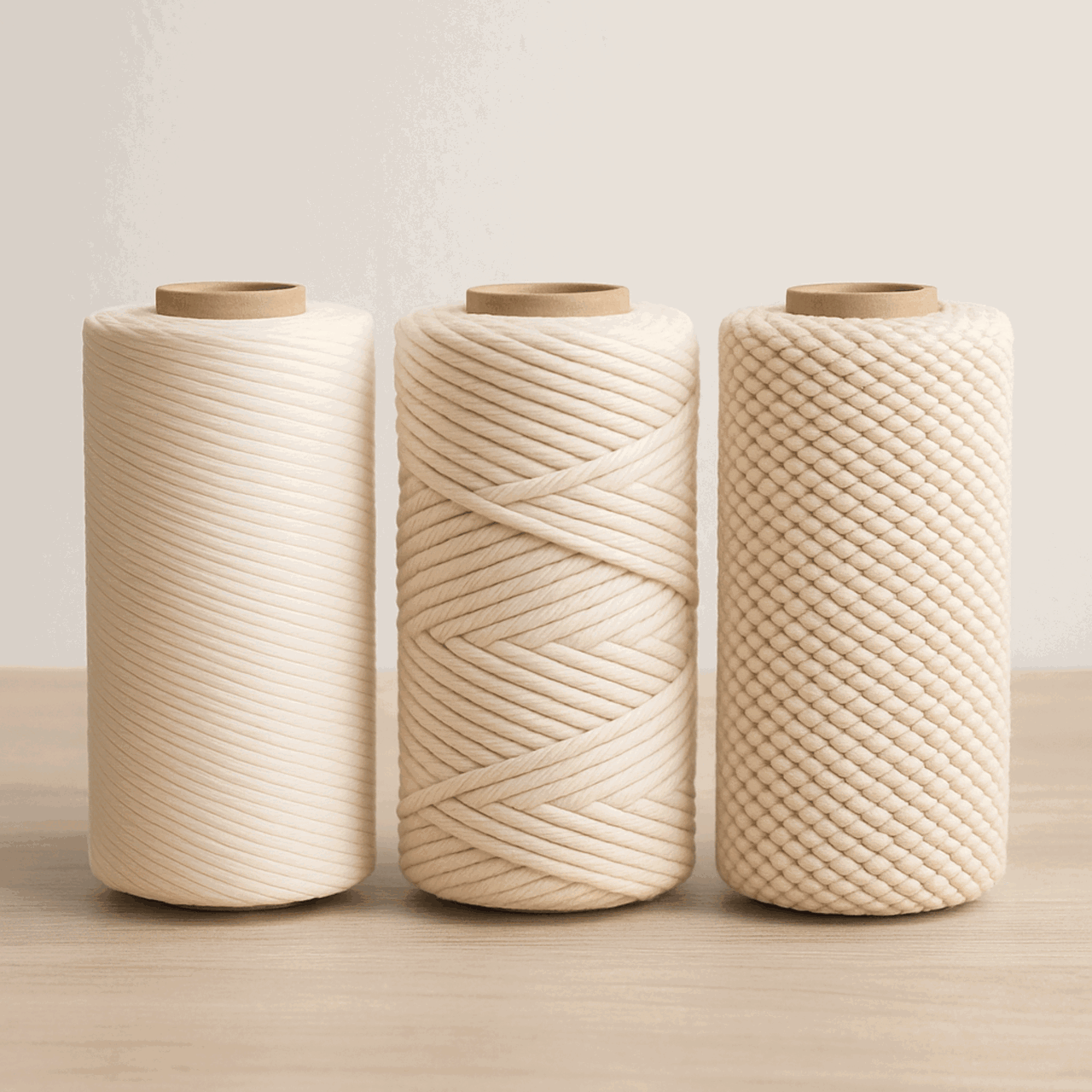
The structural cord for the basket walls — sturdy enough to hold shape, soft enough for boho nursery decor. One regular roll covers one to two standard baskets.
Shop 5mm cord
8" Wooden Base (43 holes)
The structural foundation that gives the basket a flat, sturdy bottom. Comes as a 2-pack so you can make a matching pair for the nursery.
Shop wooden base
Bochiknot Welcome Kit
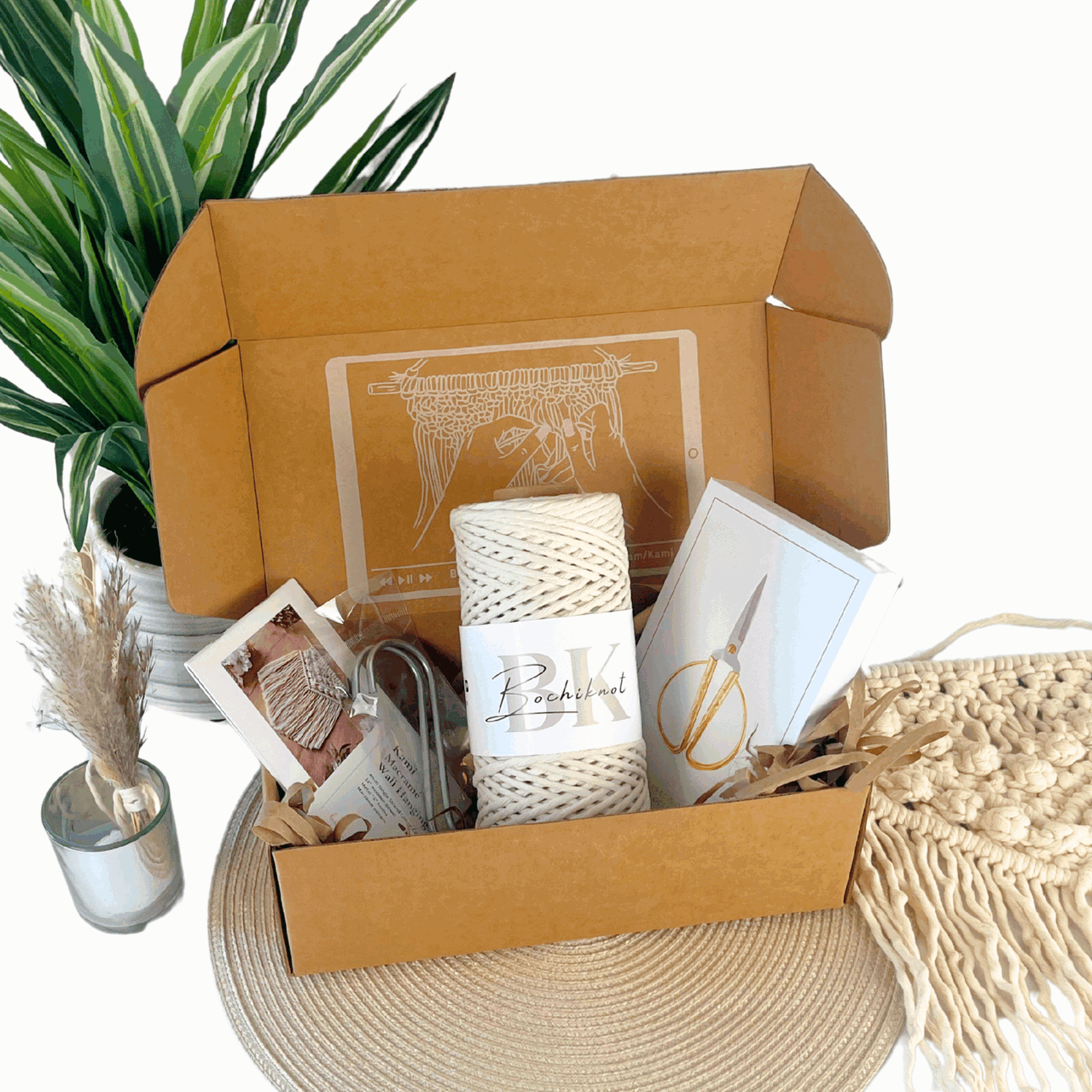
The full beginner bundle — cord, scissors, comb, dowel, and pattern access in one box. Perfect first-time gift for an expecting mom or new maker.
Shop Welcome KitEssential Macramé Tools
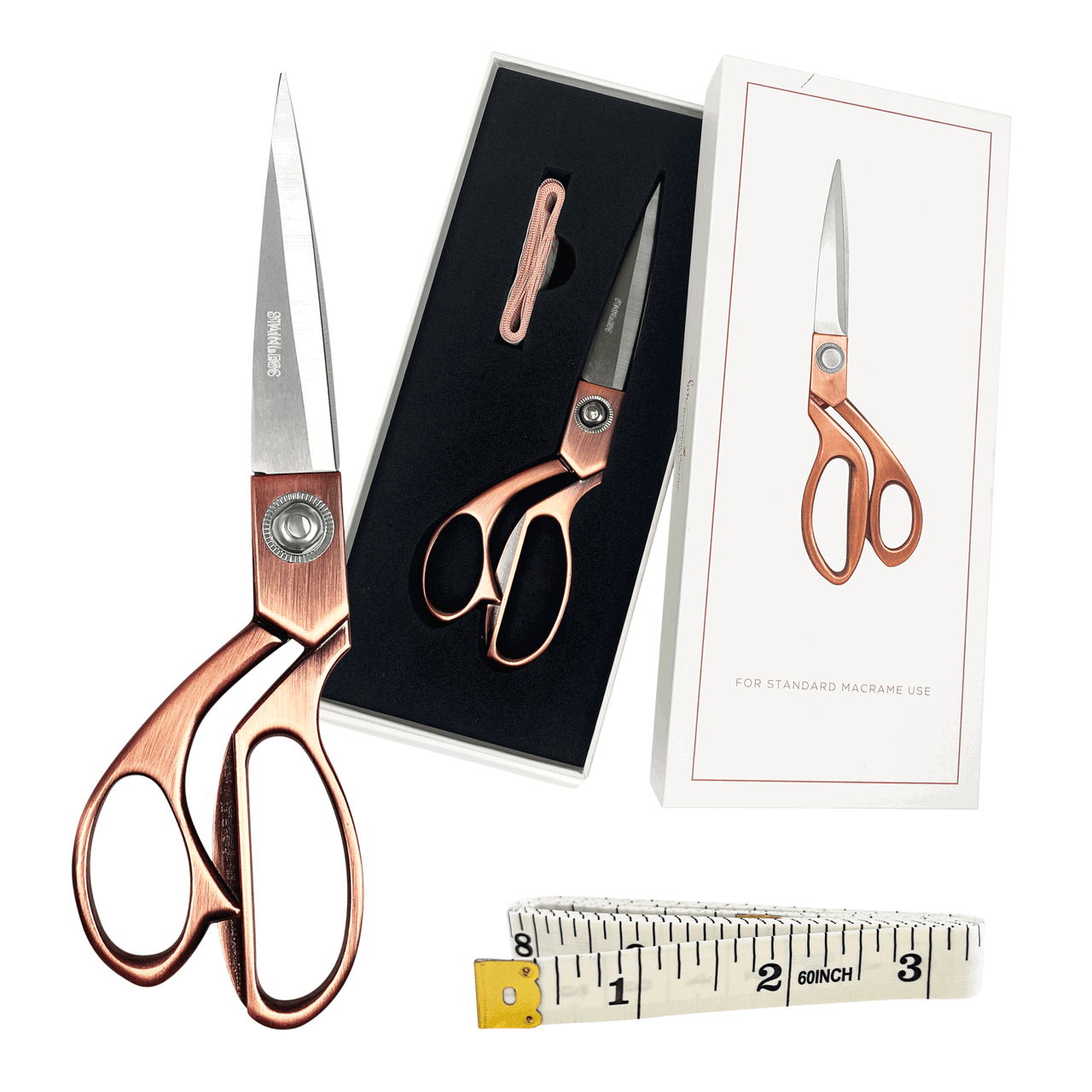
- Rose gold macramé scissors — sharp, clean cuts for cord ends and the final fringe trim
- Macramé measuring tape — accurate cuts for the two 310 cm anchor cords and the 44 working cords at 110 cm each
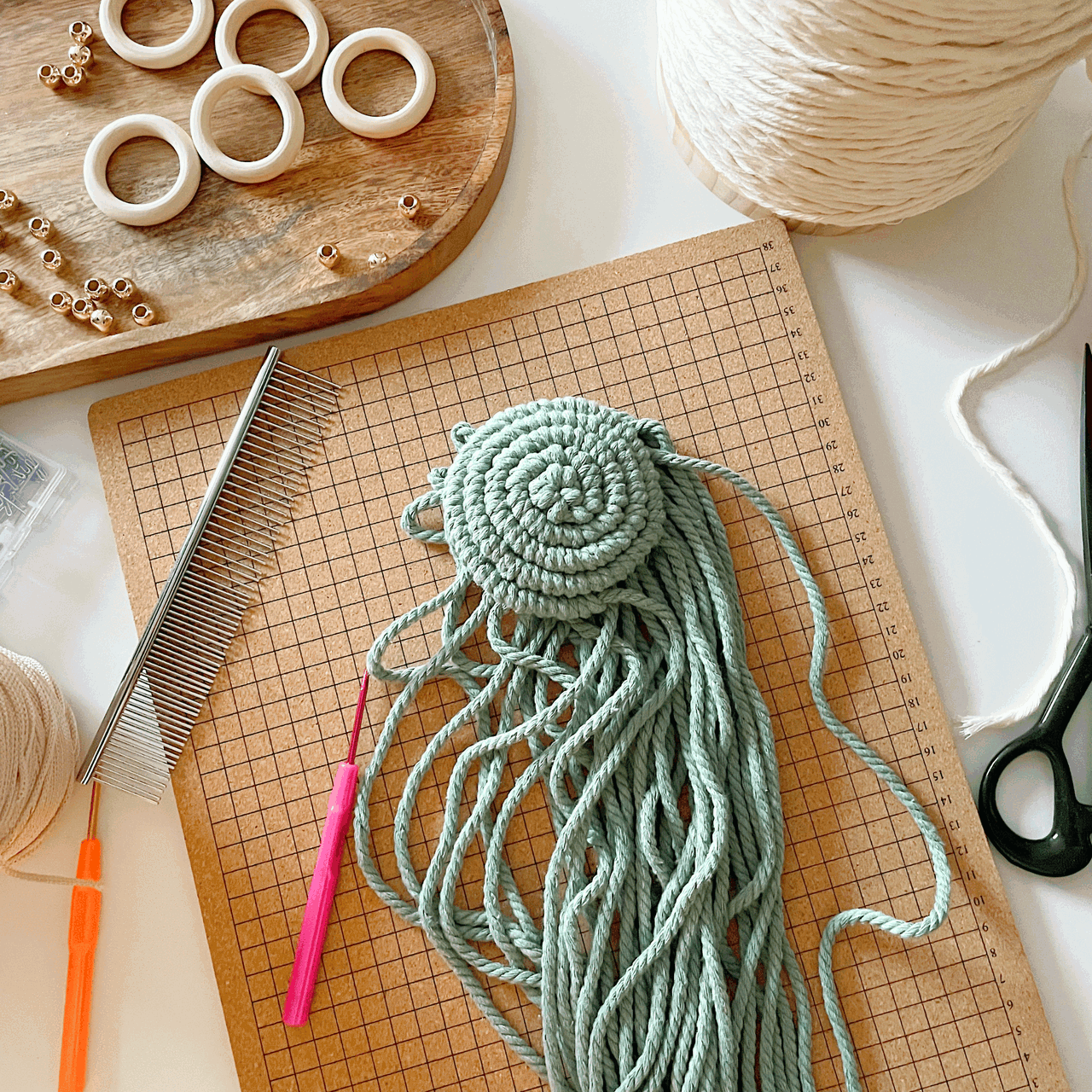
- Macramé fringe comb — straightens the cord before knotting and brushes the final fringe smooth
- Small crochet hook or weaving needle — used in step 5 to weave the anchor cords through the join
- Bochiknot Welcome Kit — full beginner bundle for first-time makers
Project Details
Cord Quantity Calculator (3 Basket Sizes)
The base tutorial uses an 8-inch wooden base with 43 holes. Scale your cord lengths based on the basket size you are building:
| Basket size | Wooden base | Anchor cords | Working cords | Estimated cost |
|---|---|---|---|---|
| Small (caddy) | 6" base (~32 holes) | 2 × 240 cm | 32 × 90 cm | ~$22–$26 |
| Standard nursery (this tutorial) | 8" base, 43 holes | 2 × 310 cm | 44 × 110 cm | ~$30–$35 |
| Large (laundry / blanket) | 12" base (~64 holes) | 2 × 460 cm | 64 × 160 cm | ~$48–$58 |
Cost estimate based on 5mm Single-Strand Cord (regular roll, $24) plus the 8" wooden base 2-pack ($15). One cord roll covers one to two standard 8-inch nursery baskets.
Sizing Variations
| Size | Wooden base | Finished height | Best for |
|---|---|---|---|
| Small caddy | 6" base | ~6" wide × 5" tall | Changing-table diaper caddy, pacifier station, small toys |
| Standard (base pattern) | 8" base, 43 holes | ~8" wide × 6.5" tall | Shelf storage, toy bin, burp cloth basket, books |
| Tall blanket basket | 10" base | ~10" wide × 11" tall | Folded blankets, swaddles, stuffed animals |
| Large laundry | 12" base | ~12" wide × 16" tall | Nursery laundry, big plush toys, floor storage |
Video Walkthrough
How to Make a Macramé Nursery Basket (Step-by-Step)
Follow the 12 steps below. Each step has photos and clear instructions. If you get stuck on any step, the video above walks through every step in real time.
How the pattern works — a quick overview
This pattern builds in four phases: (1) anchor two long cords on a starting square knot and weave in 43 working cords to size the top band to the wooden base, (2) join the band into a continuous loop and refit it, (3) build 13 alternating rows of square knots while controlling tension to keep the walls from collapsing inward, and (4) attach the bottom cords to the 8-inch wooden base with double overhand knots, tuck the final strand, and trim.
Step 1: Create the Initial Anchor with 2 Long Cords
- Start with two 310 cm strands. Match the ends, then fold at 80 cm to create shorter center cords and longer outer cords.
- Use the two center cords as anchor cords and the outer cords as working cords to tie a square knot.
- This creates the starting point for the top band of the basket.


Step 2: Keep Adding Cords Through the Right Side
- Weave one 110 cm cord through the right side, then tie a square knot. Repeat this process, adding a new cord each time.
- Secure your work with tape or pins as you go to keep the top band steady.
- Continue until you have added 43 strands to match the base — this section builds the basket's circumference, not its height.


Step 3: Check the Fit Around the Wooden Base Before Going Further
- Wrap the square-knot band around the wooden base to check the fit — this is your first checkpoint.
- If it is too short, gently loosen and spread the knots to create more space between them.
- Adjust until it fits around the base, since this section sets the shape for the rest of the basket.

Step 4: Add the Extra Cord Needed for an Even Square-Knot Pattern
- Add one more 110 cm cord to create a 44th strand, since square knots need an even number of cords.
- Weave this last cord into place without tying another square knot.
- This keeps the count even for the basket walls while staying subtle in the final look.

Step 5: Join the Ends Neatly by Weaving the Anchor Cords Through the Square Knots
- Use a crochet hook or needle to weave each of the two center anchor cords through the centers of square knots on the opposite side (one or two knots at a time if tight).
- Repeat for both anchor cords, using a tool if needed to gently loosen the openings.
- Retighten the final square knot to secure everything into a clean, continuous loop.


Step 6: Secure the Top and Bottom Loose Cords Across the Join
- Pull the top cord through the opposite side loop, then weave it through two square knots on the other side to secure it.
- Take the bottom cord, pull it from outside to inside, then weave it under loops on the opposite side, passing through two loops.
- You should now have a continuous band with two secured anchor cords on each side.

Step 7: Loosen Everything Again So the Ring Fits the Base Perfectly
- Test the fit again before continuing, as weaving may have tightened the ring.
- Loosen and spread the square knots until the base fits evenly inside the opening.
- Aim for a snug, balanced fit all the way around — not forced or uneven.

Step 8: Build the Basket Walls with Square Knots
- Take four adjacent cords and tie a square knot using the outer cords as the working cords.
- Move to the next group of four cords, keeping the cord ends even as you go.
- Continue around to complete one full row of square knots.
- The tension rule: The most important rule during this phase is to control your tension to keep the basket from collapsing inward. When making alternating square knots, leave about 0.5 cm of space between rows so the rows stay level and the shape remains even.
- Continue the pattern for 13 rows total (regular + alternating), checking that the width stays consistent. The finished basket is about 8 inches wide by 6.5 inches tall.


Step 9: Test the Fit One More Time
- Do a final fit test. Ensure the wooden base passes through evenly to confirm the basket kept its correct shape after all 13 rows.
- If the bottom opening is too tight, gently loosen the lowest row of square knots until the base slides through cleanly.

Step 10: Attach the Bottom Cords to the Wooden Base
- Take the first cord section (two cords), pull one cord through a hole from bottom to top, then flip to the inside and tie a double overhand knot with the second cord.
- Repeat this process for each hole, keeping the knots snug and consistent underneath.
- Since there are 44 sections and 43 holes, blend one section subtly as you go to keep the spacing even.


Step 11: Handle the Extra Cord Section So It Disappears into the Design
- Attach each cord section normally until you reach about the 21st hole (halfway around the base).
- Tuck the extra cord section behind, then use the next section to attach to the base with a double overhand knot.
- Continue around the base, keeping spacing even so the adjustment stays subtle.


Step 12: Tuck the Final Strand and Trim
- Once all 43 holes are filled, tuck the final leftover strand neatly to the inside of the basket so the exterior looks even.
- Check that only fringe and cord tails remain on the inside before moving on.
- Trim the cords from the top inner edge, then cut the bottom ends, leaving about 1 inch inside.
- Continue trimming all the way around until the basket looks clean, balanced, and fully finished.


That's a Wrap!
Step back and admire your finished macramé nursery basket. The whole piece is built from one square knot, repeated with consistent tension, anchored on a wooden base — and it is the kind of nursery storage that gets photographed for Instagram, gifted at baby showers, or sold for $89+ on Etsy. Style it on the changing table, the nursery shelf, or beside the crib.
The Tension Mastery Deep Dive
Honest Take: What to Know Before Starting
A few honest disclaimers before you commit
- It is not pure beginner. If this is your very first macramé project, build a small square-knot practice piece first to feel out tension before committing to 13 full rows on a real basket.
- Rows 1 to 4 are practice. Your first few rows will look slightly uneven. By row 5 your tension will lock in and the shape will straighten. Do not unravel — keep going.
- The 0.5 cm spacing rule is non-negotiable. Skip it and your basket will collapse inward by row 7. There is no fix at the base stage. Get spacing right in step 8.
- Cord length matters. The 110 cm working cords feel long when you start, but each one will be used up by row 13. Cutting them shorter means splicing mid-row, which is much harder than starting with extra.
- Use a flat surface for square knots. The basket band is round, but each individual square knot is tied flat. Lay the band on a table or your lap as you knot to avoid distortion.
- Storage decor, not toy. This is a storage basket, not a baby toy. Do not let baby chew or pull the cord. Place out of baby's reach when storing items.
Pro Tips & Troubleshooting
- Cut all cords at once. Measure and cut all 46 cords (2 anchor + 44 working) before starting. Cutting mid-project leads to inconsistent lengths and inconsistent tension.
- Comb the cord first. Run a fringe comb down each cord before knotting to remove kinks. Smoother cord pulls more consistently and reads as boutique-quality.
- Tape the band as you build it. Tape the top band to a flat work surface during steps 2 to 4. Stable cord network = consistent tension.
- Count knots, not inches. The 13-row count keeps the basket height consistent across attempts. Counting knots also helps you spot when you skipped a row.
- Take breaks every 3 rows. Hand fatigue is the silent tension-killer. Stop, stretch, then re-tension the last few knots before resuming.
- Steam if needed. Light steam (hover a steamer 6 inches away for 10 seconds per side) helps relax cord and even out minor tension differences post-build.
- Photograph in golden hour. Style the finished basket against linen or oak shelving during morning light for the most boutique-quality nursery photos.
Common Mistakes & Fixes (Tension-Focused)
| Problem | Likely cause | Fix |
|---|---|---|
| Basket collapses inward (vase shape) | Tension too tight in walls — the classic killer | Maintain 0.5 cm row spacing and use the consistent thumb-pressure technique. If it has already started, stop and gently spread the most recent 2 rows before continuing. |
| Basket walls feel floppy | Tension too loose throughout | Retighten every knot row by row before attaching to the base. A floppy wall cannot be fixed at the base — fix it in the walls first. |
| Top band does not fit around the base | Wrong cord count or non-uniform spacing in steps 1–3 | Re-do the fit check in step 3. Loosen knots and spread evenly until the band wraps without forcing. Do not stretch the band — adjust the knot spacing. |
| One side of the basket is taller than the other | Inconsistent tension between left and right hands | Use the thumb-pressure technique on every knot, not just the visible ones. Switch hands mid-row if needed to balance tension. |
| Square knots twist sideways | Working cord and anchor cord mixed up | The outer two cords are working cords. The inner two are anchors. If knots are twisting, you have flipped them — restart the affected knot. |
| Cord ends fray underneath the base | Trimmed too short with no double overhand knot | Re-tie the double overhand knot first, then trim leaving a 1 inch tail past the knot. |
6 Nursery Storage Use Cases
Diaper Organizer
Sits on the changing table with rolled or folded diapers visible above the rim. Boho-functional — diapers stay within arm's reach without looking cluttered.
Toy Storage
Wooden rattles, soft plush, small puzzles. Low enough that toddlers can reach in for self-directed play in a Montessori setup.
Blanket Basket
One folded swaddle, one muslin, one chunky knit. Stacks beautifully on open shelving or beside the glider.
Bath Time Essentials
Hooded towels, washcloths, baby lotion, comb. A single grab-and-go basket for the whole bath routine.
Bookshelf Accent
Hold board books vertically on a low nursery bookshelf. Soft cotton against wood reads as a curated reading nook.
Plant Pot Cover
Slip over a plain plastic pot for a 6-inch nursery plant. Instant boho upgrade without re-potting.
6 Color Variations for the Nursery
The basket pattern works in any 5mm single-strand cord color. Six of the most-pinned nursery palettes in 2026:
Color combination grid coming soon — pin or save this post and check back, or message us your nursery palette and we will share the exact 5mm single-strand color codes that fit.
| Palette | Cord color | Wooden base | Best for |
|---|---|---|---|
| Natural classic | Natural | Light oak | Most-pinned, gender-neutral nurseries |
| Cream boho | Cream / off-white | Light oak | Scandinavian and minimalist nurseries |
| Blush boho girl | Blush pink | Light oak or walnut | Soft feminine pink nurseries |
| Earthy boy | Terracotta or cinnamon | Walnut | Earth-tone modern boy nurseries |
| Sage Montessori | Sage green | Light oak | Montessori and earth-tone palettes |
| Charcoal Scandi | Charcoal or mocha | Walnut | Black-and-cream Scandi nurseries |
How High Should the Basket Sit?
Pair basket sizes with the nursery furniture you are styling:
| Nursery furniture | Recommended size | How it sits |
|---|---|---|
| Changing table top | Small caddy (6" base) | Sits on the changing table within arm's reach, holds diapers and wipes vertically |
| Open nursery bookshelf | Standard (8" base, this tutorial) | Slots between cubbies as a soft texture layer beside board books |
| Beside the crib (low) | Standard (8" base) or Tall blanket (10") | Floor-level placement for toys or blankets, easy reach from rocker or floor |
| Dresser top or styling shelf | Small caddy or Standard | Decorative top accent with a folded muslin or small plush visible above the rim |
| Nursery floor corner | Large laundry (12" base) | Standalone floor piece — holds nursery laundry, big plush, or blanket overflow |
Make It vs Buy Boutique: The Savings Math
| Source | Typical price | Notes |
|---|---|---|
| Etsy similar nursery basket | $45–$120 | Cotton cord, varies in quality and cord origin |
| Pottery Barn Kids storage basket | $69–$129 | Mass-produced, often synthetic blends, mass-market sizing |
| Crate & Kids macramé basket | $89–$149 | Boutique branding, limited size options, no custom color |
| Bochiknot DIY (this tutorial) | ~$30–$35 | Premium 5mm single-strand cotton, custom color, free pattern, heirloom durability |
Save $60+ vs Etsy and $90+ vs Crate & Kids — for a premium-cotton heirloom storage piece in your exact nursery palette.
📸 Show Off Your Nursery Basket
Hundreds of Bochiknot makers have posted their finished baskets in real nurseries on Instagram. Tag @bochiknot and use #BochiknotNursery #macramebasket #nurserystorage #bohonurserydecor #babynursery #handmadestorage #squareknotbasket #babyshowergift #nurseryorganization #macrameDIY on your finished piece — we feature reader makes every week in our story round-up.
Tag @bochiknotPerfect Gift for These 6 Occasions
Baby Shower
Fill it with newborn essentials (swaddles, hooded towel, lotion) and gift the basket plus contents. Becomes nursery decor day one.
Expecting Mom
Pair with the Bochiknot Welcome Kit so she can knot her own matching pieces during maternity leave. Thoughtful + activity.
New-Home Gift
Boho storage doubles as housewarming decor. Style with rolled tea towels for a kitchen-functional gift, or with blankets for the living room.
Gender Reveal
Make it in natural or cream cord — works regardless of the news. Safe to pre-make months in advance of the reveal.
First Birthday
The "first basket of toys" gift. Personalize with a wooden name tag tied to one of the cord pairs.
Christmas (New Parents)
Cinnamon or cream cord doubles as holiday decor and year-round nursery storage. The handmade gift that earns repeat use.
Nursery Basket FAQ
What size is the finished macramé nursery basket?
The completed basket is about 8 inches wide by 6.5 inches tall. That is the ideal size for a changing-table caddy, a shelf basket for blankets, or a toy bin on a low nursery shelf. Scale up the wooden base and cord lengths to make taller laundry-style baskets, or scale down for a small organizer.
What size cord works best for a sturdy basket?
5mm single-strand cotton cord is the sweet spot. The 5mm thickness gives the basket structural body so the walls hold their shape under weight, while single-strand keeps the surface soft and brushable for a boho finish. Twisted 3-ply also works but reads more rustic. For a more rigid laundry-style basket, 6mm single-strand is the upgrade. Shop 5mm single-strand cord.
Why is my macramé basket narrowing as I go down?
The single most common reason is overly tight tension in the alternating square knot rows. Each row is pulling the cord network tighter, which compounds with every row. Leave about 0.5 cm of breathing room between rows and tighten only enough to keep the knots flat instead of pulling inward. See the tension mastery deep dive for the consistent thumb-pressure technique.
How do I keep my tension consistent across the entire basket?
Use consistent thumb pressure on every square knot. Place your thumb on the knot, pull the working cord until you feel the same resistance as the previous knot, then stop. Do not pull until "tight" — pull until the resistance matches. The phrase to repeat is firm, not tight. If you take a break, retighten the last few knots before starting again so the tension feel resets to where you left it.
Why do I need an extra cord if the wooden base has 43 holes?
The wooden base has 43 holes, but square knots work best with an even number of cords. Adding a 44th strand lets the square-knot pattern continue properly through every row, and the extra section is hidden subtly when attaching the cords to the base at the end of step 11.
How many rows should I knot for the basket walls?
Make a total of 13 rows of square knots, alternating between regular rows and offset rows. Maintain consistent width throughout the pattern. If you scale the basket taller, add more rows in the same alternating pattern. The 13-row count produces a basket that is about 6.5 inches tall and balanced for the 8-inch wooden base.
Can I fold the basket rim down?
Yes. You can leave the basket tall for more storage capacity or fold the top edge down for a slouchy boho look. A folded rim works beautifully on a changing table where the basket sits at hip height. The unfolded version reads more structured and works better on open shelving.
Can I make this without a wooden base?
You can, but the wooden base is what gives a beginner basket its structure. Without a base, you would need to knot a square-knot floor by hand, which adds about 90 minutes and requires intermediate-level shaping. For your first basket, use the 8" wooden base. Once your tension is reliable, try the no-base version for a softer, slouchier basket.
Is this basket safe for storing baby items?
Yes, for storage of dry items like diapers, blankets, burp cloths, books, and toys. 5mm single-strand cotton is 100% natural fiber, soft against fabric, and free of off-gassing finishes. Do not use as a sleep surface, do not let baby chew or pull on the cord, and keep cord ends trimmed cleanly inside the basket so no loose strands are accessible to little hands.
How do I clean a macramé basket?
Spot clean only. Use a slightly damp cloth with mild soap on visible spots, then air dry flat away from sunlight. Never machine wash, because the agitation will distort the square-knot shape. For dust, use a soft brush attachment on a vacuum at low suction, holding the brush about half an inch away from the cord.
Can I sell handmade macramé baskets?
Yes. This pattern is free for personal and commercial use. Handmade macramé nursery baskets retail for $45 to $120 on Etsy, with matching basket sets often selling as 3-piece nursery bundles for $120 to $250. The free pattern is yours to make multiples and sell at baby fairs, gift shops, and on Etsy.
How heavy can I load a macramé basket?
The 8-inch wooden base version comfortably holds 5 to 8 pounds for dry items like diapers, blankets, or stuffed animals. For heavier loads such as a folded blanket stack, upgrade to a 12-inch wooden base and 6mm cord. The base is the load-bearing element — cord thickness and base diameter together determine capacity.
Can I make a lid for this basket?
Yes. The most common lid is a flat square-knot panel made on a small dowel, then placed loosely on top of the basket. For a hinged version, attach the panel along one rim section with a few macramé loops. Lids are a 30-minute add-on to this tutorial and look beautiful for blanket baskets and gift presentations.
Is the macramé nursery basket beginner-friendly?
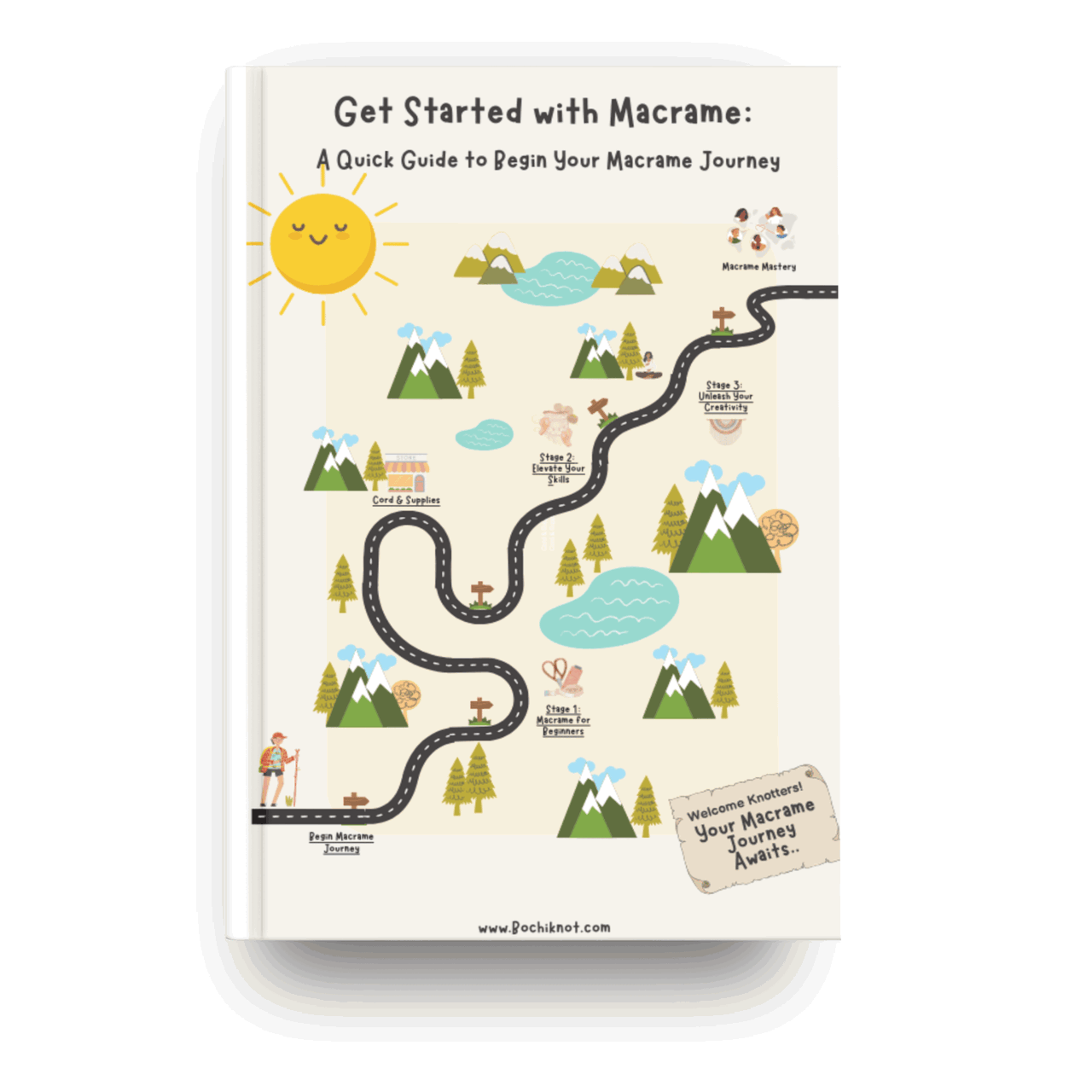
It is best described as advanced beginner or early intermediate. The only knot used is the square knot, so the technique is simple. What makes it intermediate is the tension awareness required across 13 rows and the spatial fit checks. If you have tied 50 square knots before in a sampler or a small wall hanging, you are ready. New to macramé entirely? Start with the Bochiknot Beginner's Guide first.
Join the Bochiknot Community
Macramé is more fun with friends. Plug into Bochiknot wherever you spend time online:
Keep Learning with Bochiknot

Unicorn Dreamcatcher
The nursery-decor cluster hub — a magical dreamcatcher that pairs perfectly with your nursery basket for a complete handmade room
Read tutorial
Bear Wall Hanging
The nursery wall-art cousin — a daisy-knot bear that mounts above the crib while your basket holds the gear below
Read tutorial
Macramé Baby Teether
Complete the gift bundle — pair the nursery basket with a handmade teether for a $35 baby shower set that looks $150
Read tutorial
Square Knot
The foundational knot used 500+ times in this basket — master it first if you are new to macramé
Learn the knot
Beginner's Guide
The complete 2026 guide to the 4 foundational macramé knots — start here if the basket is your first project
Start here
12 Free Projects
Twelve more free patterns to keep building once your nursery basket is done — wall hangings, plant hangers, key chains, more
Browse projects
Leave a comment