




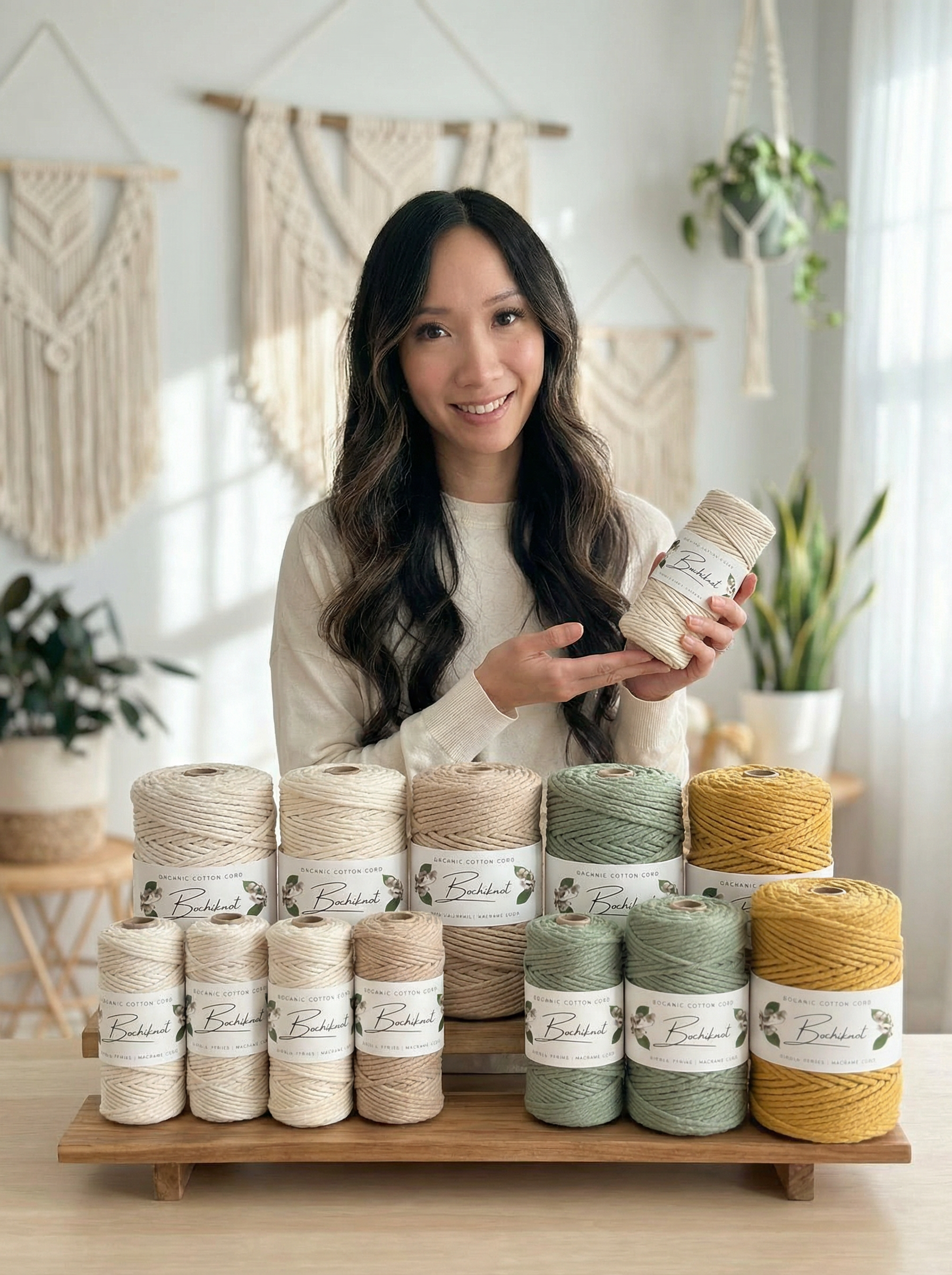
7 Beautiful Ways to Finish a Wall Hanging (+ Video) | Macramé End Knots

You've spent hours knotting away, your shoulders ache in the best possible way, and there it is — a gorgeous macramé wall hanging dangling from your dowel. Almost finished. Almost. Because here's the secret nobody tells you when you're starting out: the way you finish a macramé piece is just as important as the way you start it. A sloppy bottom edge can undo hours of beautiful knot work, and a thoughtful finish can elevate a beginner pattern into something genuinely heirloom-worthy.
In this guide I'm walking you through my seven favourite macramé end knots and finishing techniques — the same ones I use on every wall hanging that leaves my studio. Whether you want soft brushed fringe, sculptural beaded ends, or a dramatic Rain Knot cascade, there's a finish here for the look you're after. I've also tucked in a free video tutorial, a printable decision card, and a stack of FAQs for the questions I hear most often in my classes.
Nicole's note 🌿
If you came here looking for how to start a wall hanging (Lark's Head, Cat's Paw, Triple Loop and friends), you'll want my companion guide — there's a link to it at the end of this post. This one is finish-only, deep-dive style. Pour yourself a cup of tea and let's get those ends looking gorgeous.
What is a macramé end knot?
An end knot is any knot tied at the bottom of a macramé piece to lock the structure, prevent fraying, and add a decorative finish. Common examples include the Overhand Knot, Gathering Knot, Barrel Knot, Figure-8 Knot, and Rain Knot.
Why does the finish matter so much?
The bottom edge is what catches the eye first when someone walks into a room — even before the patterning above. A clean, intentional finish gives your piece a professional, gallery-quality feel and stops the cords from unravelling over time.
TL;DR — Your Finishing Cheat Sheet
- Fastest finish: Brushed cotton fringe (5 min, beginner-friendly).
- No-fringe option: Barrel Knots, Figure-8 Knots, or beads.
- Most decorative: Rain Knot cascade or feathered ends.
- Best for boho: Tassels with a Gathering Knot.
- Pro move: Combine 2–3 techniques on the same piece for visual interest.
Table of Contents
What Is a Macramé End Knot?
A macramé end knot is any knot — or grouping of techniques — used to finish off the bottom edge of a piece. Its job is two-fold: practical (locking the cords so the structure doesn't unravel) and decorative (adding visual weight, texture, and intention to the bottom of the design). Without a proper end knot, even the most beautifully patterned piece will look unfinished and is at risk of slowly working its way loose.
The umbrella term macramé finishing knots covers everything from a humble Overhand Knot to elaborate decorative bindings like the Rain Knot. Some end knots are purely functional and hidden under fringe; others (think bound tassels and Barrel Knots) are sculptural elements that become a design feature in their own right. Knowing which one to reach for is part of what separates beginner work from pieces that look professionally made.
Throughout this guide I'll show you all seven of my go-to macramé finishing techniques — when to use them, how to tie them step-by-step, and the tiny pro tips that make the biggest difference. None of them require fancy tools beyond sharp scissors, a comb, and a steady cup of tea.
Choose Your Finish by Style
Different finishes suit different aesthetics. Here's a quick visual map to match your wall hanging's vibe with the right end technique:
🌾 Boho
Soft, layered, and lived-in. Reach for brushed fringe and bound tassels — they layer beautifully and look right at home next to rattan and macramé plant hangers.
◻️ Modern Minimalist
Clean lines, structured edges. The Barrel Knot and Figure-8 Knot deliver crisp geometry without any brushing required.
🐚 Coastal / Driftwood
Light, airy, weathered. Feathered ends mimic dune grass, while beaded Overhand Knots echo seashells on a string.
✨ Eclectic Statement
Bold and full of texture. The Rain Knot Cascade is the showstopper — perfect for big walls and big personalities.
Watch the Full Tutorial
If you'd rather watch than read, I've filmed every one of these techniques in detail. The video below covers all seven finishes start-to-end (about 18 minutes) — feel free to pause and rewind as you go.
7 Macramé End Knots & Finishing Techniques
Here are my seven favourite ways to finish a macramé wall hanging, ordered roughly from easiest to most advanced. Each one includes the exact step-by-step I teach in my workshops, plus a Nicole's tip with the small details that make the biggest visual difference.
1. Brushed Cotton Fringe
⭐ Beginner ⏱ 5 min

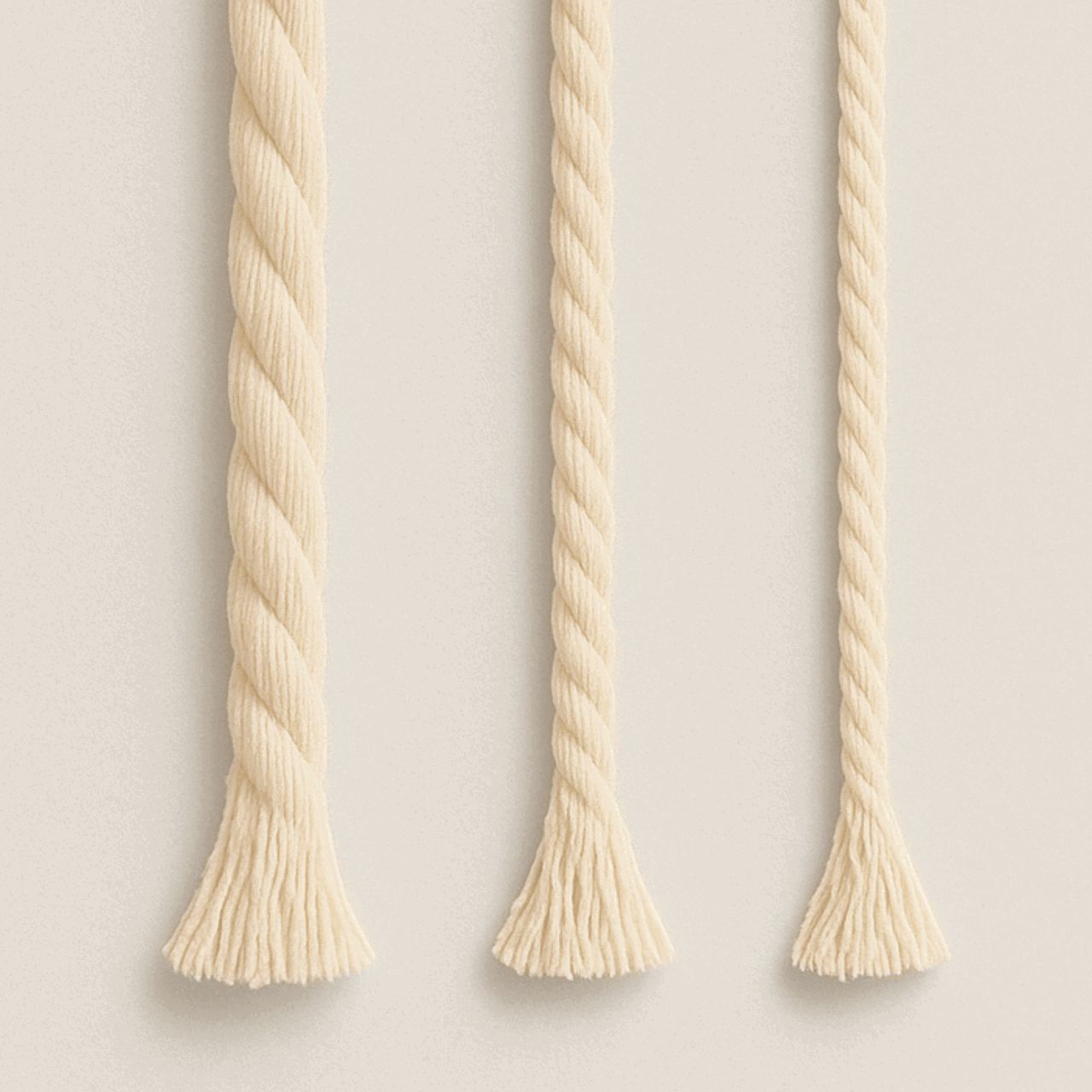
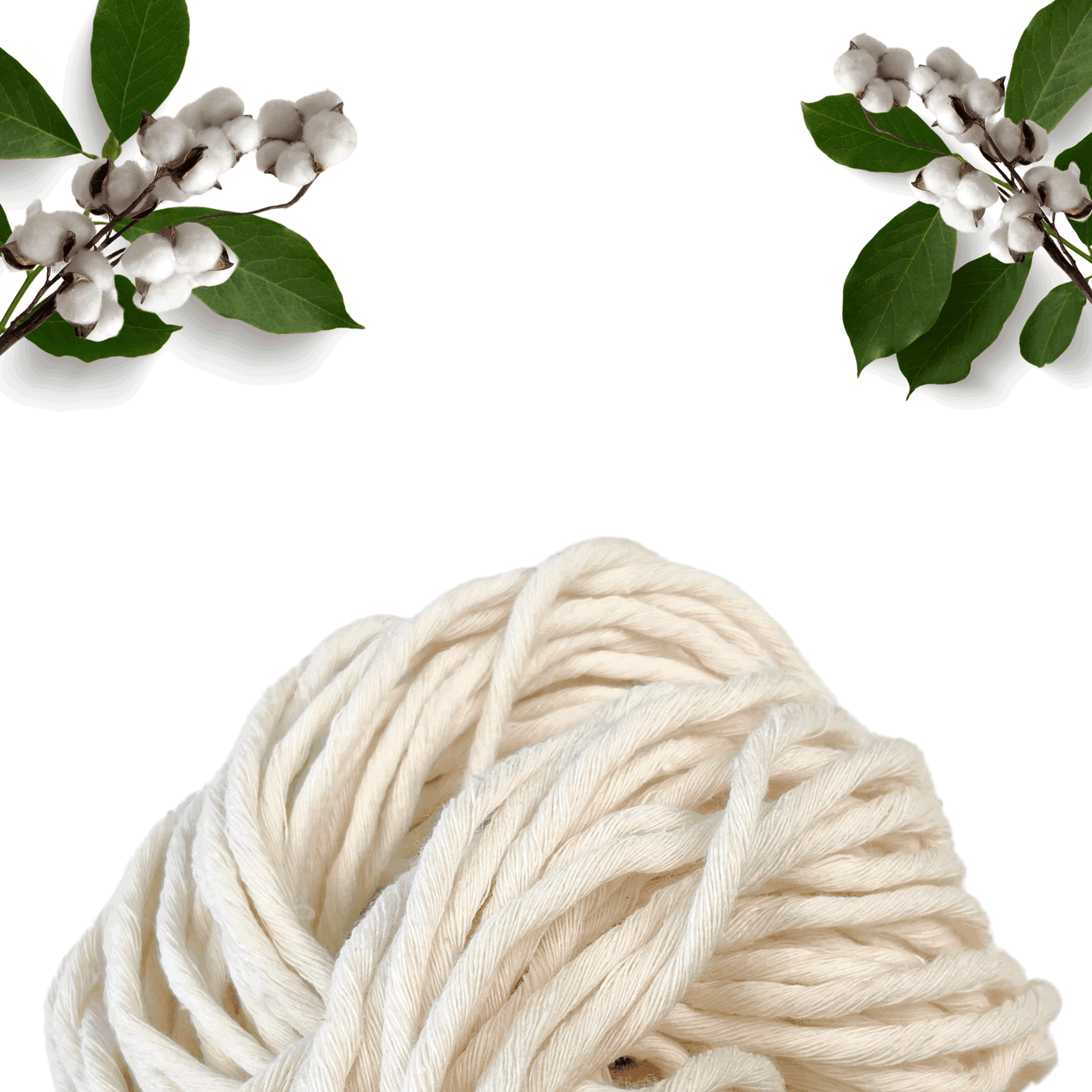
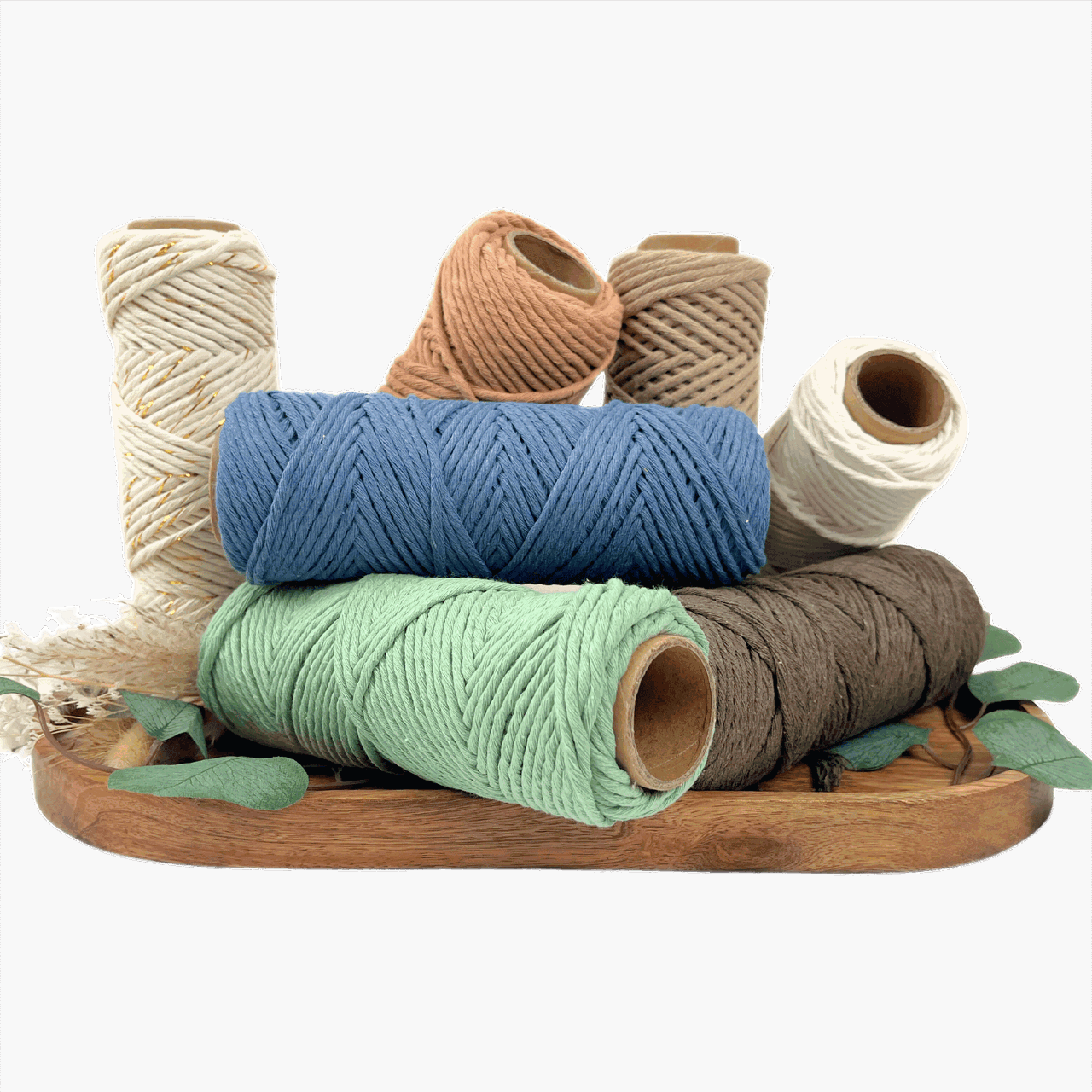
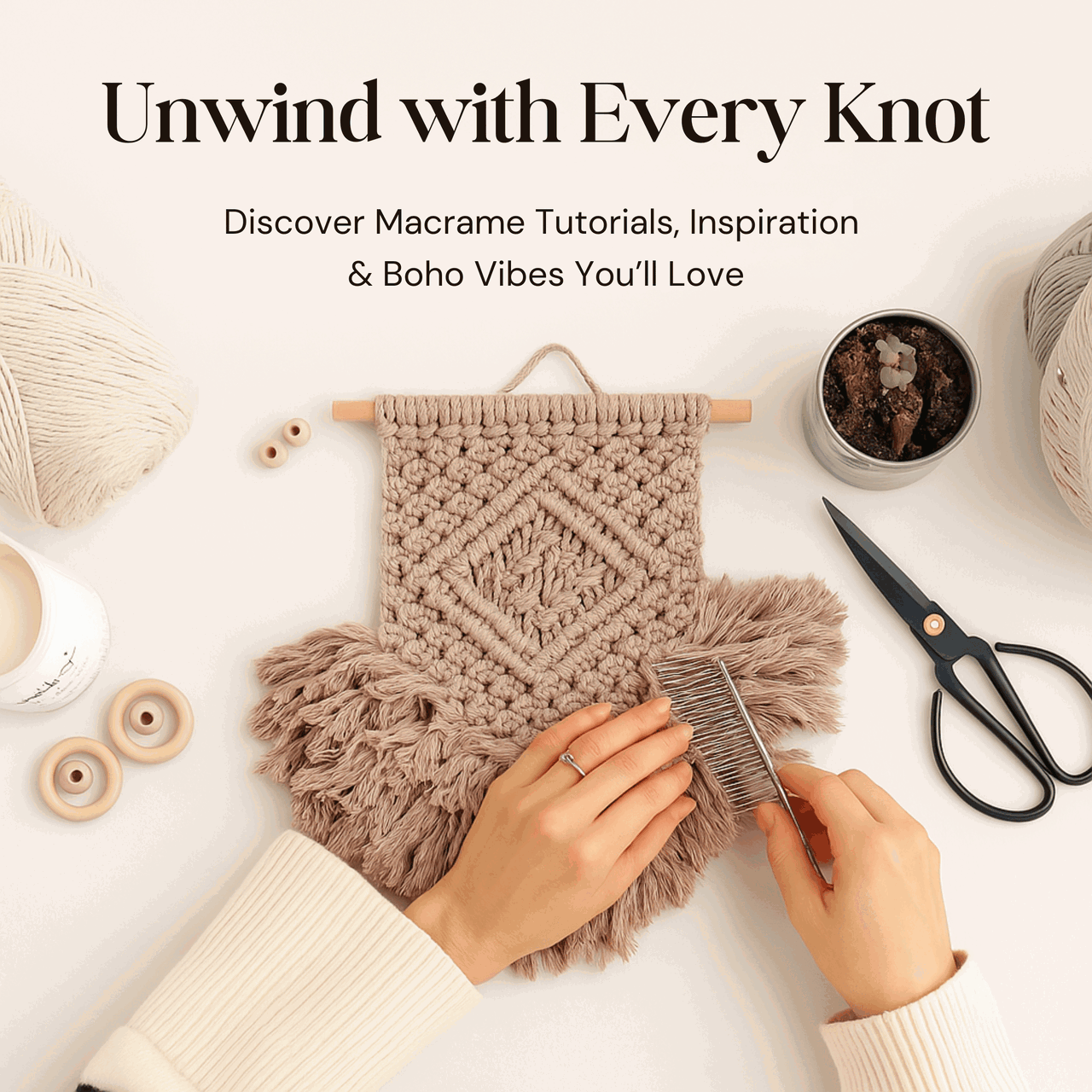
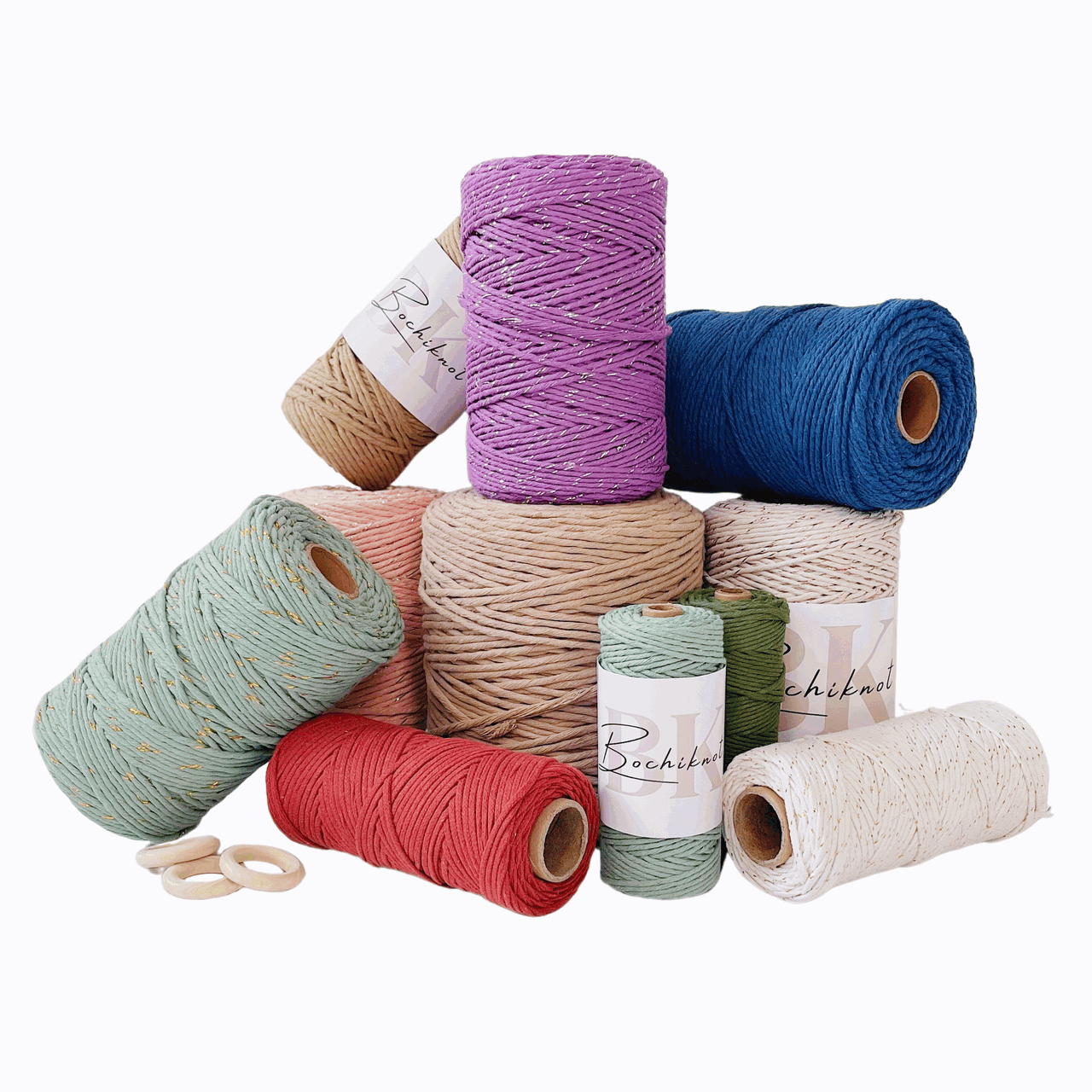
Brushed fringe is the most popular macramé finish for a reason — it's fast, beginner-friendly, and instantly transforms any piece into something soft and inviting. The trick is using a single-strand cotton cord (twisted unravels and brushes much more readily than braided). My favourite cord for fluffy fringe is our single-strand cotton — it brushes out into a cloud-like halo that looks gorgeous in any light.
Fringe length is a styling decision more than a rule. A shorter fringe (10–15 cm) reads modern and polished; a longer fringe (30–50 cm) reads bohemian and dramatic. Whatever length you choose, take your time with the trim — uneven fringe is the fastest giveaway that a piece is handmade-but-not-quite-finished.
How to do it
- Tie an Overhand Knot near each cord end. About 1–2 inches above where you want the fringe to start, tie a snug Overhand Knot on every cord. This locks the structure so nothing unravels back up into your patterning.
- Trim the ends. Use sharp fabric scissors and cut all the way across in a straight line, V-shape, or gentle curve depending on the look you're going for. Sharper scissors = cleaner edge, every time.
- Unravel each cord. Below the knot, untwist each cord by hand and let the plies fall apart. Single-strand cottons unravel almost on their own; braided cords need a bit more patience.
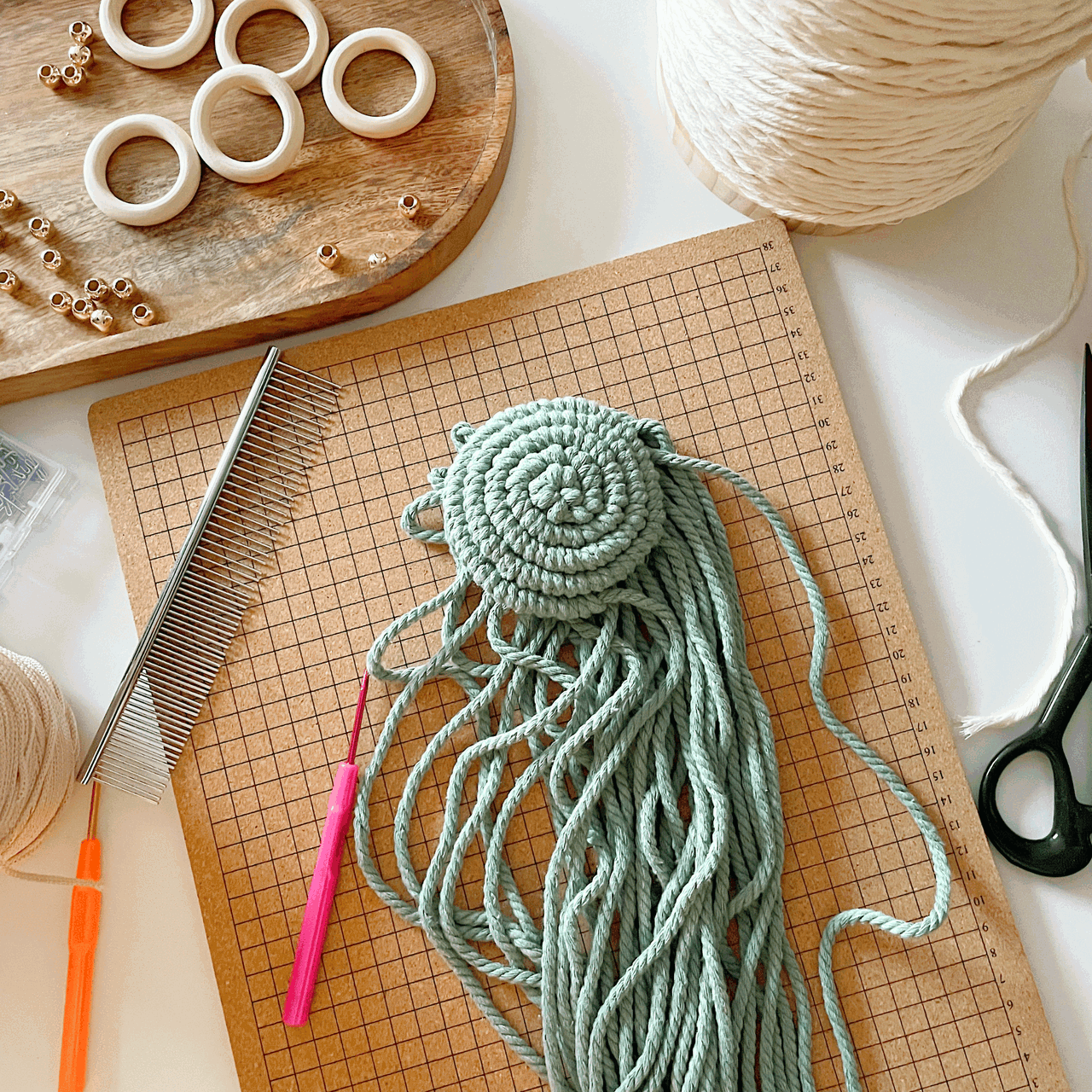
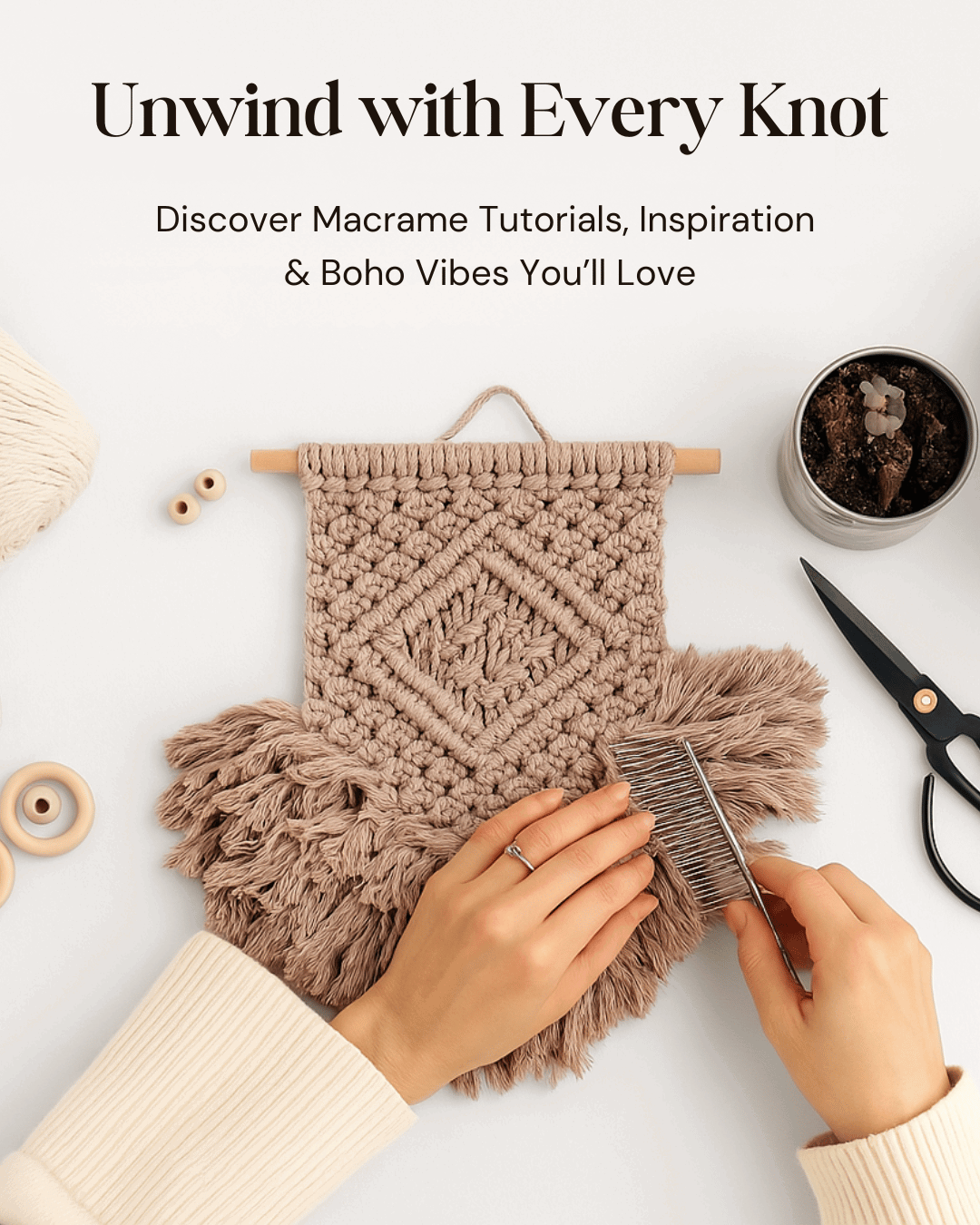
- Brush and steam. Comb each section gently with a wide-tooth comb or pet slicker brush, then hold a handheld steamer about 10 cm away to set the fluff and relax any kinks.
Nicole's tip 💛
Brush downward only — never back-and-forth. Back-brushing tangles the fibres and creates that frizzy, over-worked look. If your fringe goes flat over time, a quick spritz with water and a fresh brush brings it right back to life.
2. Feathered Ends with Gathering Knot
⭐⭐ Intermediate ⏱ 10 min

Feathered ends are one of those finishes that look impossibly fancy but are genuinely doable on your second or third wall hanging. The trick is shape — a real feather is wider in the middle and pointed at both top and bottom, so your scissors do most of the magic here. The Gathering Knot at the top of each feather keeps everything tidy and prevents the cords from creeping apart.
This finish is especially gorgeous on coastal or driftwood-style hangings, and it pairs beautifully with chunky natural-wood dowels or branches. Use single-strand cotton (3mm or 5mm) for the fluffiest feather effect.
How to do it
- Divide your cords into bundles. Group the bottom cords into 3–6 even bundles depending on the width of your piece. Five feathers across a 40 cm-wide hanging is a lovely balanced look.
- Cut a working cord. For each bundle, cut a 12-inch piece of matching (or contrast) cord — this becomes the wrap of the Gathering Knot.
- Tie the Gathering Knot. Form a small loop with the working cord, lay it along the bundle, then wrap the long end neatly around the bundle 6–10 times. Tuck the tail through the loop and pull the top tail to lock the wraps.
- Trim into a feather shape. With sharp scissors, taper each side from wide-middle to pointed-tip. Don't be afraid to be bold — feathers look best when they're really shaped, not just trimmed flat.
- Brush and refine. Unravel the bundle, brush gently downward with a slicker brush, then trim a second time to refine the silhouette. Steam to set.
Nicole's tip 💛
Trim, brush, trim again. The brushing reveals all the bumps and uneven spots you couldn't see in the flat-cord state — that second trim is what takes it from "homemade" to "wow, where did you buy that?"
3. Beads Secured with Overhand Knots
⭐ Beginner ⏱ 5 min

Beads are the easiest way to add personality and a hint of colour to a finish, and they're forgiving enough for absolute beginners. Wood, ceramic, glass, or stone beads all work — what matters most is that the bead's hole is large enough for your cord, ideally with a tiny bit of wiggle room so the bead sits properly.
Mix bead sizes for visual rhythm — a row of identical beads can feel a bit static, while a mix of small and large beads creates a more handmade, intentional look. Our wood beads collection has natural and stained options that look gorgeous on cream cotton.
How to do it
- Choose beads that fit your cord. Test-thread one bead before you commit — a bead that's too small will fight you all afternoon, and one that's too large will slide right off.
- Slide a bead onto each cord. Push the bead up to your desired height, leaving room above for tension and below for the knot.
- Tie an Overhand Knot below. Tie a tight Overhand Knot directly below each bead so it can't slide off. Pull firmly until the knot rests right against the bead.
- Trim the tails. Cut the cord tails to your preferred length. Short tails (1–2 cm) feel modern; longer tails (5–10 cm) read more bohemian.
Nicole's tip 💛
If your bead hole is slightly too big and the bead won't stay put, tie a tiny Overhand Knot above the bead too. The bead is now sandwiched between two knots and can't shift even with daily handling.
4. Barrel Knot Finish
⭐⭐ Intermediate ⏱ 5 min

The Barrel Knot is my favourite no-fringe finish. It's sculptural, uniform, and gives a piece a beautifully tailored look — exactly right for modern interiors and minimalist styling. Each knot looks like a tiny barrel sitting at the end of the cord (hence the name), and a row of them feels deliberate and architectural.
Barrel Knots take a tiny bit of practice to get uniform — the wrap count and tightening pressure both matter. But once you've tied a few, they become muscle memory and you can rip through a whole hanging in five minutes flat.
How to do it
- Form a loop. Make a small loop near the cord end with the working tail crossing over the standing part.
- Wrap 4–6 times. Wrap the working end around the loop 4–6 times. More wraps = chunkier barrel; fewer wraps = sleeker finish.
- Tuck through the wraps. Pass the cord tail down through all the wraps you just made — this is what locks the structure.
- Tighten gradually. Pull both ends slowly and evenly so the wraps compress into a clean barrel shape. Going too fast here is the #1 cause of lumpy Barrel Knots.
- Trim flush. Cut the cord tail close to the bottom of the knot for a polished, finished look.
Nicole's tip 💛
Always tie all your Barrel Knots with the same wrap count — even one knot with 5 wraps in a row of 4-wrap barrels will catch the eye instantly. Consistency is what makes this finish feel professional.
5. Figure-8 Stopper Knot
⭐⭐ Intermediate ⏱ 5 min

Borrowed from the climbing world, the Figure-8 Stopper Knot is one of the prettiest decorative end knots in macramé. Its distinctive figure-eight shape adds a tiny bit of geometry to each cord end without the bulk of a Barrel Knot — perfect for small or delicate pieces where you want structure but not weight.
This knot is sometimes called the Flemish Knot or Savoy Knot in other crafts. Whatever you call it, it's reliable, secure, and looks lovely in profile. I use it most often on slim modern hangings where I want each cord to read as a separate line.
How to do it
- Form a loop. Make a loop near the cord end with the working tail crossing on top of the standing part.
- Pass behind the standing cord. Bring the working end behind the standing cord, away from the loop.
- Thread up through the loop. Push the working end up through the original loop from underneath.
- Tighten into a figure-8. Pull both ends evenly until the knot resolves into a clean figure-8 silhouette. You should be able to clearly see the two stacked loops.
- Trim and dress. Trim the tail close to the knot, then gently massage the knot with your fingers to even out the shape.
Nicole's tip 💛
The Figure-8 looks best when both halves of the "8" are roughly equal size. If yours is lopsided, gently work the strands with your fingertips before tightening fully — once you cinch it down, it's set for life.
6. Rain Knot Cascade
⭐⭐⭐ Advanced ⏱ 15 min

The Rain Knot Cascade is my favourite show-stopping finish. The idea is simple — small Overhand Knots tied at different heights along each cord — but the visual effect is stunning, like raindrops frozen mid-fall. It's the finish that gets the most questions when one of my pieces ends up on Instagram.
This technique works best on wider hangings (50 cm+) and longer cords, because the cascade needs vertical room to breathe. If your piece is small, you can still do a mini-cascade with just two staggered rows of knots — it'll still look gorgeous, just more contained.
Plan your cascade pattern before you start tying. A truly random arrangement always looks more "designed" than a strict zigzag. I usually sketch the layout on a sticky note first.
How to do it
- Plan your cascade pattern. Sketch where each knot will fall — vary heights so no two adjacent cords have knots at exactly the same level. Random-but-balanced is the goal.
- Mark each cord lightly. Use a pin, removable marker, or a tiny chalk dab to note knot positions on each cord. This stops you having to "guess" mid-tie.
- Tie an Overhand Knot at each mark. Tie a small, tight Overhand Knot at every marked spot. Keep the knots uniform in size — that's what makes the cascade read as deliberate.
- Add beads or feathers if desired. Slide a bead above some knots, or attach a small feather tassel at the lowest points for extra texture and movement.
- Trim ends in a curve. Trim the bottom of all cords in a soft curve — longest in the centre, shorter at the edges. This frames the cascade beautifully.
- Brush and finish. Brush any fringe sections gently downward, then steam the whole piece to relax kinks and set the final shape.
Nicole's tip 💛
Less is more with the Rain Knot. A cascade with 12 well-placed knots almost always looks better than one with 30 crammed-in knots. Keep some negative space — that's where the "falling rain" feeling comes from.
7. Bound Tassels
⭐⭐ Intermediate ⏱ 8 min

Bound tassels feel fancy and they look fancy, but they're really just a Gathering Knot dressed up. The difference between a "feathered end" and a "bound tassel" is mostly the trim shape — feathers are tapered and wispy, tassels are full and rounded. Both rely on the same wrap technique at the top.
Tassels are a brilliant finish for gifts because they read as polished and intentional from across the room. They're also the easiest finish to tie in a contrast colour — a black binding cord on a cream tassel adds a tiny graphic moment without changing your whole pattern.
How to do it
- Bundle the cords. Gather 4–8 cords together for each tassel. Even bundles look most balanced; odd bundle counts (5, 7) look more organic.
- Cut a binding cord. Cut a 10-inch piece of matching or contrast cord per tassel.
- Wrap tightly 8–12 times. Lay one end of the binding cord along the bundle, then wrap the long end neatly around the bundle, working downward. Tighter wraps = neater tassel.
- Secure the binding. Tuck the tail through a hidden loop (left from your first wrap) and pull both ends tight to lock the wraps invisibly.
- Trim and brush. Cut the tassel ends evenly across the bottom — straight, V-shape, or curved. Brush gently with a slicker brush for a soft, full finish.
Nicole's tip 💛
For an extra-luxe look, add a wood bead or a tiny brass ring at the very top of each tassel binding. It catches the light beautifully and gives a $20 piece the energy of a $200 one.
Material Substitutions — When You Don't Have Cotton Cord
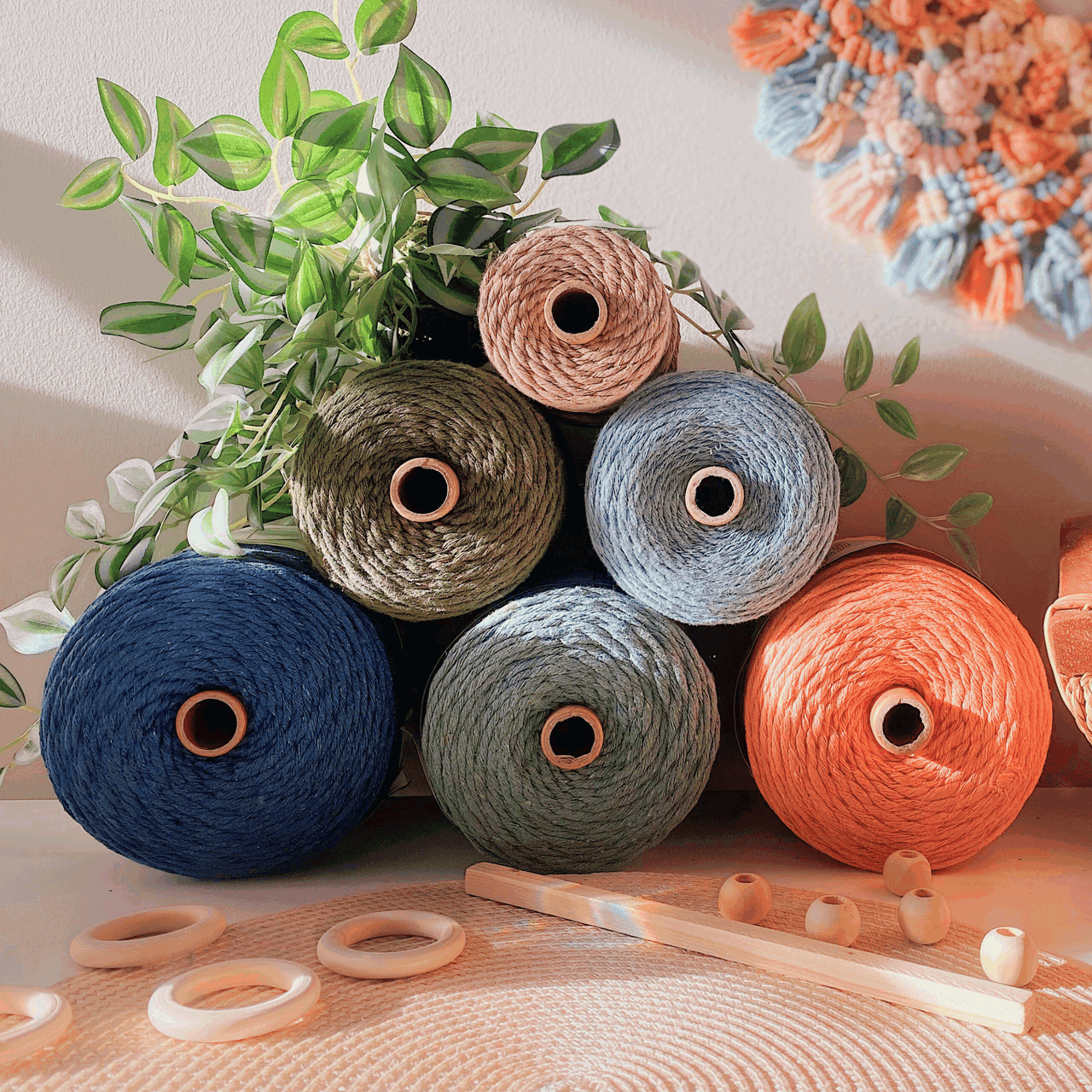
Cotton is the gold standard for macramé end knots because it's soft, brushable, and holds knots without slipping. But it's not the only option — here's how the other most common cords behave when you're finishing a piece.
Jute is rougher and more rustic than cotton. It holds knots beautifully and looks gorgeous on outdoor or coastal pieces, but it doesn't brush out into fluffy fringe — so skip the brushed-fringe finish and reach for Barrel Knots, Figure-8s, or beads instead. Jute fibres can shed a little, so trim outside if you can.
Hemp behaves similarly to jute but with a smoother finish. It's a great fit for Rain Knot cascades and bound tassels because the cord holds its tied shape extremely well over time. Hemp also takes natural dyes wonderfully if you want to add colour.
Recycled cotton is my pick for sustainable projects. It's slightly less uniform than virgin cotton (which I love — it adds texture), and it brushes out beautifully for fringe. Browse our full range at /collections/all-cord.
Wool and blended yarns can work for end knots if you choose carefully. Single-ply wool brushes into a soft, halo-like fringe but tangles fast — use very short lengths. Blended yarns (cotton + acrylic) tend to slip more, so add a tiny dab of fabric glue inside any structural knot.
Cord Care & Storage — Keep Your Finish Looking Fresh
Dust gently and often. Macramé attracts dust the way a magnet attracts iron filings. Once a week, run a clean dry paintbrush, soft makeup brush, or the upholstery attachment of your vacuum (on the lowest setting) over the piece — especially through fringe and tassels.
Spot-clean only. If something gets on your hanging, blot — don't rub — with cool water and a tiny drop of mild soap. Rubbing flattens the fibres and creates fuzzy patches that never quite recover.
Store flat or rolled, never folded. If you're putting a piece away, lay it flat or roll it loosely around a cardboard tube. Folds become permanent creases in cotton cord within a few weeks.
Mind the sun. Direct, prolonged sunlight will yellow natural cream cotton over a few months and fade dyed cords much faster. Hang your piece on a wall that gets bright but indirect light wherever possible.
Keep it dry. Bathrooms and basement walls are tempting backdrops but humidity is hard on natural fibres. If you do hang in a damp area, make sure the room is well-ventilated and consider a dehumidifier in summer.
Re-fluffing & Maintenance Tips
- Refresh fringe with a quick spritz. A water mist + a wide-tooth comb brings flat fringe back to fluffy in under a minute.
- Steam annually. Once a year, hold a handheld steamer about 15 cm away and slowly pass it over the whole piece. Kinks relax, fringe re-fluffs, and any tiny tightening from temperature changes evens out.
- Re-shape after travel. If you've moved house or shipped a piece, expect to spend 5 minutes re-shaping fringe and tassels with your fingers and a comb.
- Rotate seasonally. If you have pieces in particularly bright rooms, rotate them with pieces from dimmer rooms every few months to even out any sun fading.
- Spot-trim stragglers. Over time, a few cords always wander out of line. Snip them flush with sharp scissors — never tug them, as that can pull a knot loose above.
- Re-tie loosened knots immediately. If you spot a Barrel Knot or Figure-8 working loose, retie it the same day. It's a 30-second fix that becomes a 30-minute one if it unravels into the patterning.
Pro Tips for a Professional-Looking Finish
- Always trim after you brush, not before. Brushing reveals every uneven cord — trimming first means you'll see those bumps the moment you pick up the comb.
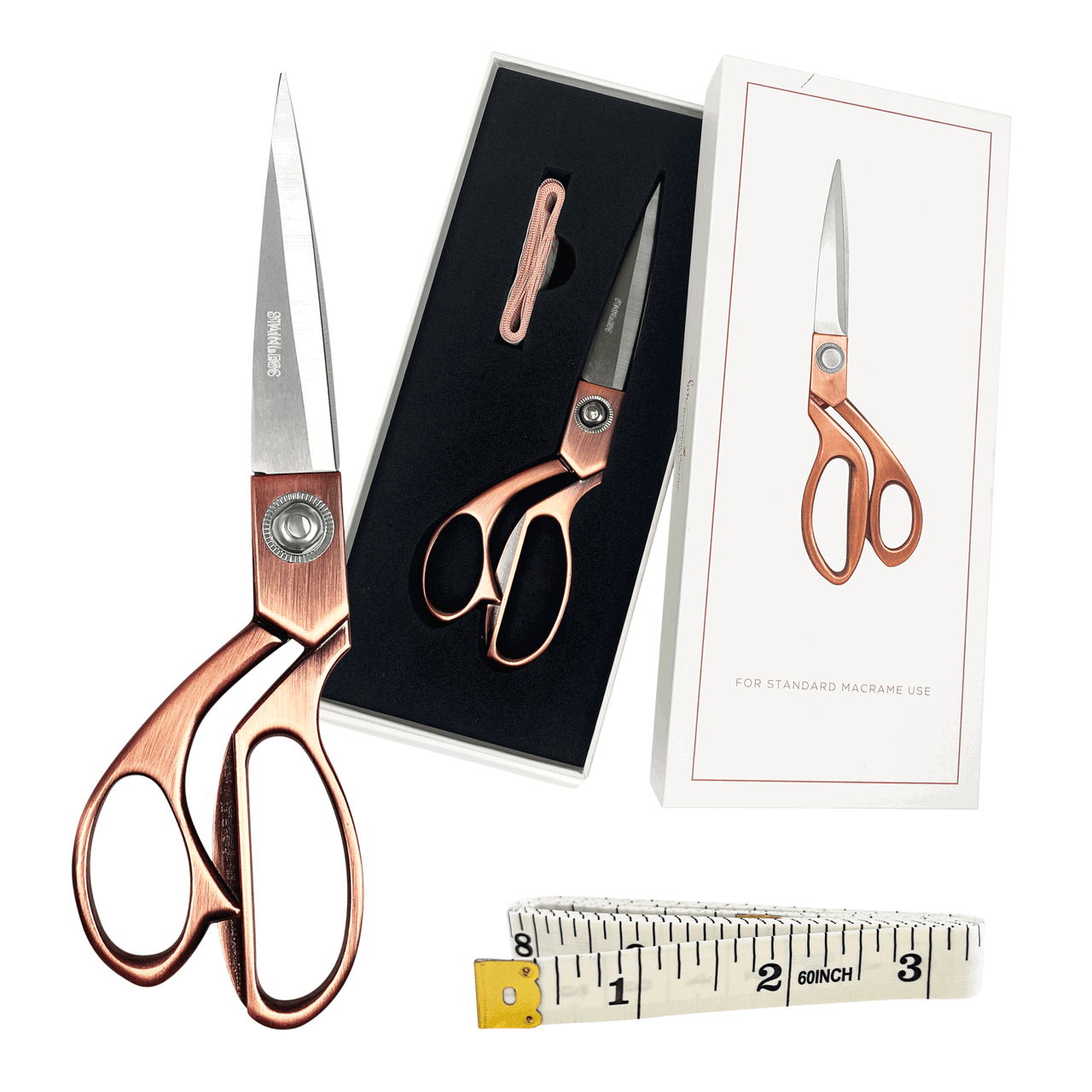
- Use sharp fabric scissors only. Dull scissors crush cotton cord rather than cutting it cleanly, leaving frayed edges that never look finished.
- Match your finish to your start. A delicate Lark's Head start pairs beautifully with feathered ends or beads. A chunky Triple Loop start balances better with bound tassels or a Rain Knot.
- Step back constantly. Every 3–4 knots, walk 2 metres back and look at the piece from a distance. What looks even up close often reads uneven from across the room.
- Photograph your work in natural light. A photo shows you what your eyes can't — uneven fringe, lopsided knots, drift in the cascade. Fix what the camera reveals.
- Lock the last knot with a tiny dab of fabric glue. Especially on Barrel and Figure-8 finishes — a single drop inside the cinched knot makes it permanent without showing.
- Don't over-brush. One thorough brush-through is better than five frantic ones. Over-brushing creates that frizzy, over-handled look you can't recover from.
- Mix two finishes for visual interest. A row of bound tassels alternating with brushed fringe sections is a designer-level move that takes 10 extra minutes.
Frequently Asked Questions About Macramé End Knots
What is the best macramé end knot for beginners?
A simple brushed cotton fringe is hands-down the friendliest finish for beginners — there's no knot tying involved beyond a basic Overhand Knot, just trimming and brushing. If you'd like a tied finish, the Overhand Knot with a bead is the next easiest stop.
What are macramé finishing knots?
Macramé finishing knots are the knots and techniques used to seal off and decorate the bottom edge of a piece. Common ones include the Gathering Knot, Overhand Knot, Barrel Knot, Figure-8 Knot, and Rain Knot — each gives the ends a different look and weight.
How do I finish macramé ends without fringe?
You have lots of fringe-free options — try a Barrel Knot, Figure-8 Knot, beaded Overhand Knots, or bound tassels. These all create a neat, structured edge with no brushing required.
How do I tie off the ends of a macramé wall hanging?
The simplest way is an Overhand Knot at the end of each cord, then trim. For something more decorative, gather small bundles with a Gathering Knot to make tassels, or stack Barrel Knots up the cord for a sculptural look.
What's the easiest way to end a macramé wall hanging?
Brushed cotton fringe wins on speed and forgiveness. Tie an Overhand Knot near the end of each cord, trim straight or angled, then unravel and brush — five minutes and done.
How do I make macramé fringe fluffy?
Use single-strand cotton cord, untwist each ply with your fingers, then comb gently with a wide-tooth comb or pet slicker brush. A quick spritz of water and a low blow-dry on the cool setting locks in extra volume.
Can I finish a macramé piece without any knots at all?
Technically yes — you can leave brushed fringe loose if your last row of knots is dense enough to lock the cords in place. That said, a small Overhand Knot above the fringe is cheap insurance against unravelling.
What's the difference between a Gathering Knot and an Overhand Knot?
An Overhand Knot is a single loop pulled tight on one cord (or a small bundle). A Gathering Knot wraps a separate working cord neatly around a bundle of cords to bind them, like the top of a tassel — it's tidier and more decorative.
How long should my macramé fringe be?
There's no rule, but most balanced wall hangings use fringe that's 20–35% of the total length. Longer fringe (40%+) reads boho and dramatic; shorter fringe (10–15%) reads modern and structural.
What's the best end knot for a wall hanging on a dowel?
Pretty much any of the seven techniques in this guide works on a dowel piece. For a polished look, try bound tassels or a Rain Knot cascade — both balance the visual weight of a chunky dowel beautifully.
How do I keep my macramé wall hanging from fraying after I finish it?
Always cap each cord with an Overhand Knot, Barrel Knot, or bead — even under fringe. For high-traffic areas, a tiny dab of fabric glue inside the final knot will lock it permanently.
Can I combine multiple end techniques on one wall hanging?
Absolutely — mixing finishes is one of the most beautiful ways to add visual interest. Try alternating tassels with brushed fringe, or scatter beaded Overhand Knots through a Rain Knot cascade.
Quick Glossary — Macramé Finishing Terms
- Gathering Knot: A wrap-around binding knot used to bundle a group of cords together at one point — like the top of a tassel.
- Overhand Knot: The simplest knot in macramé — a single loop pulled tight on one cord (or small bundle).
- Barrel Knot: A cylindrical decorative end knot made by wrapping the working cord around a small loop, then threading the tail through.
- Figure-8 Knot: A symmetrical stopper knot shaped like the number 8, borrowed from climbing and sailing.
- Rain Knot: A decorative pattern of small Overhand Knots tied at staggered heights to evoke falling rain.
- Fringe: The unravelled/brushed loose ends below the final knot row of a piece.
- Tassel: A bundle of cords bound at the top by a Gathering Knot, with full or trimmed ends below.
- Stopper Knot: Any knot whose primary job is to keep the cord from slipping further — Figure-8 and Overhand are both stoppers.

Nicole Woo — Founder, Bochiknot
Macramé educator & designer
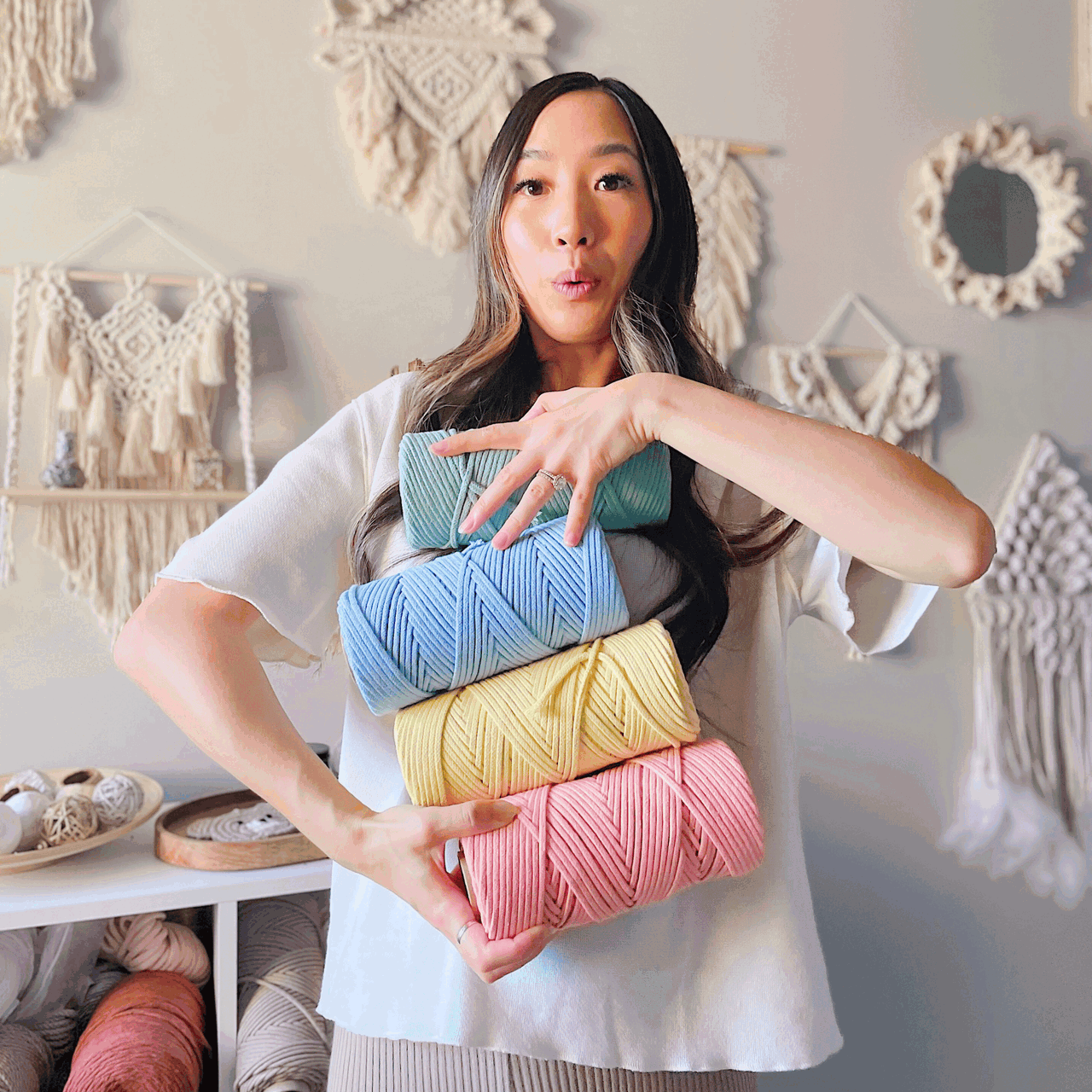
Nicole is a self-taught macramé artist teaching a global community of crafters since 2018. She's the founder of Bochiknot, author of 100+ free step-by-step tutorials, and a Featured Creator on YouTube — where she shares weekly videos to a subscriber base of 100,000+. Her mission: make macramé approachable, technique-driven, and genuinely fun for makers of every level. Read the Bochiknot story.
Looking for how to START your wall hanging?
This guide covers finishing only. For matching start techniques (Lark's Head, Cat's Paw, Triple Loop & more):
7 Ways to Start & End a Macramé Wall Hanging →🛒 Shop Bochiknot
Everything You Need for a Beautiful Finish
Whether you're finishing your first wall hanging or your fortieth, we've got the cord, beads, brushes, and tools to help. Shop directly with us — or pick up the same quality cord on Amazon.
You might also like
More Tutorials from Nicole on YouTube

Unlocking Macramé Success: 5 Essential Tips
Watch on YouTube →

How To Choose Macramé Cord
Watch on YouTube →

How to Make Macramé Leaf Earrings
Watch on YouTube →

Leave a comment