




How to Make a Macramé Daisy Keychain in 30 Minutes (Free Pattern + Video)
The macramé daisy keychain (also called a daisy knot keychain, macramé flower keychain, or bloom keychain) is a beginner-friendly macramé project used to create a slender, elegant accessory featuring stacked flower-shaped knots in two alternating cord colours. It is made using Half Hitch and Double Half Hitch knots with just two 115cm cords of 4mm single-strand cotton cord and can be completed in approximately 30 minutes — making it one of the fastest and most satisfying entry-level macramé projects.


Trusted by 100,000+ on YouTube · 100,000+ on Instagram · 40,000+ Facebook community
This macramé daisy keychain is one of those projects that looks far more complicated than it actually is — and that's exactly what makes it so satisfying. In just 30–45 minutes you'll have a gorgeous flower keychain that feels genuinely handcrafted. It's the perfect quick make for a birthday gift, a best friend, or an afternoon treat for yourself.
The secret is the Daisy Knot — a beautiful knotting sequence that builds a layered petal shape entirely from cord. No beads, no glue, no special equipment. Just cord, a clasp, and your hands.
A note from Nicole
I genuinely love this pattern. The Daisy Knot looks intricate but once you grasp the logic — anchor, shape, close, repeat — it clicks fast. I've taught this in workshops to complete beginners and watched them finish their first bloom within ten minutes of picking up the cord.
It's perfect if you're new to macramé and want a quick win, or if you're an experienced maker looking for a fast, thoughtful gift to knock out in under an hour. Either way, I think you're going to love it.
What is macramé?
Macramé is the art of creating decorative patterns and textiles by tying cord into a series of knots — no needle, no loom, just your hands. It originated centuries ago and had a big revival in the 1970s; today it's loved for wall hangings, plant hangers, jewellery, and of course keychains like this one.
What is a daisy knot?
The Daisy Knot is a decorative macramé knot that builds a small flower shape from two colours of cord. It combines Half Hitches and Double Half Hitches to create the petal outline, and it's beloved for its sweetness, symmetry, and versatility — you'll see it in keychains, bag charms, jewellery, wall hangings, and more.
In a hurry? Quick summary
- Cord needed: 2 × 115cm (45 in) + 1 × 30cm (12 in) in 4mm cotton
- Colours: Two colours for the two-tone daisy effect
- Hardware: 1 lobster swivel clasp
- Time: 30–45 minutes
- Result: A 2cm × 19cm (¾ in × 7½ in) macramé daisy keychain with 4 blooms
- Skill level: Beginner — no experience needed
In this tutorial
- What you'll make
- What you'll need
- Pattern details
- Knots you need to know
- Video tutorial
- Step-by-step instructions
- Which cord size should I use?
- Pro tips for perfect daisy knots
- Troubleshooting common problems
- Variations: 5+ ways to use the Daisy Knot
- Colour palette inspiration
- Perfect occasions to give this keychain
- FAQ
- More tutorials from Nicole on YouTube
What You'll Make

You'll make a slender, elegant macramé keychain measuring approximately 2cm wide × 19cm long (¾ in × 7½ in), featuring four stacked daisy blooms in two alternating cord colours. The lobster clasp at the top makes it practical for keys, bags, or backpacks. The cord fringe at the bottom gives it that signature boho-chic finish.
What You'll Need
Materials
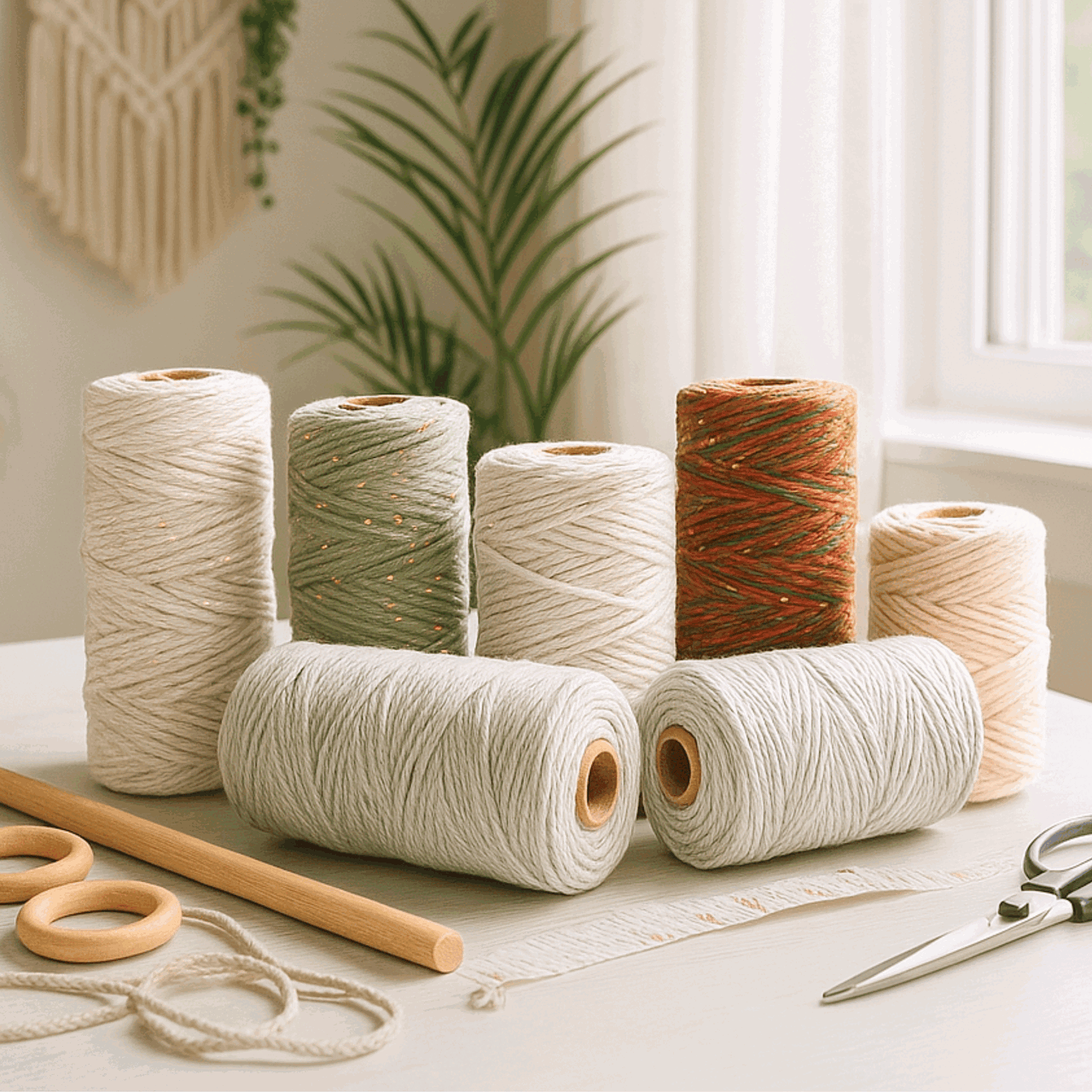
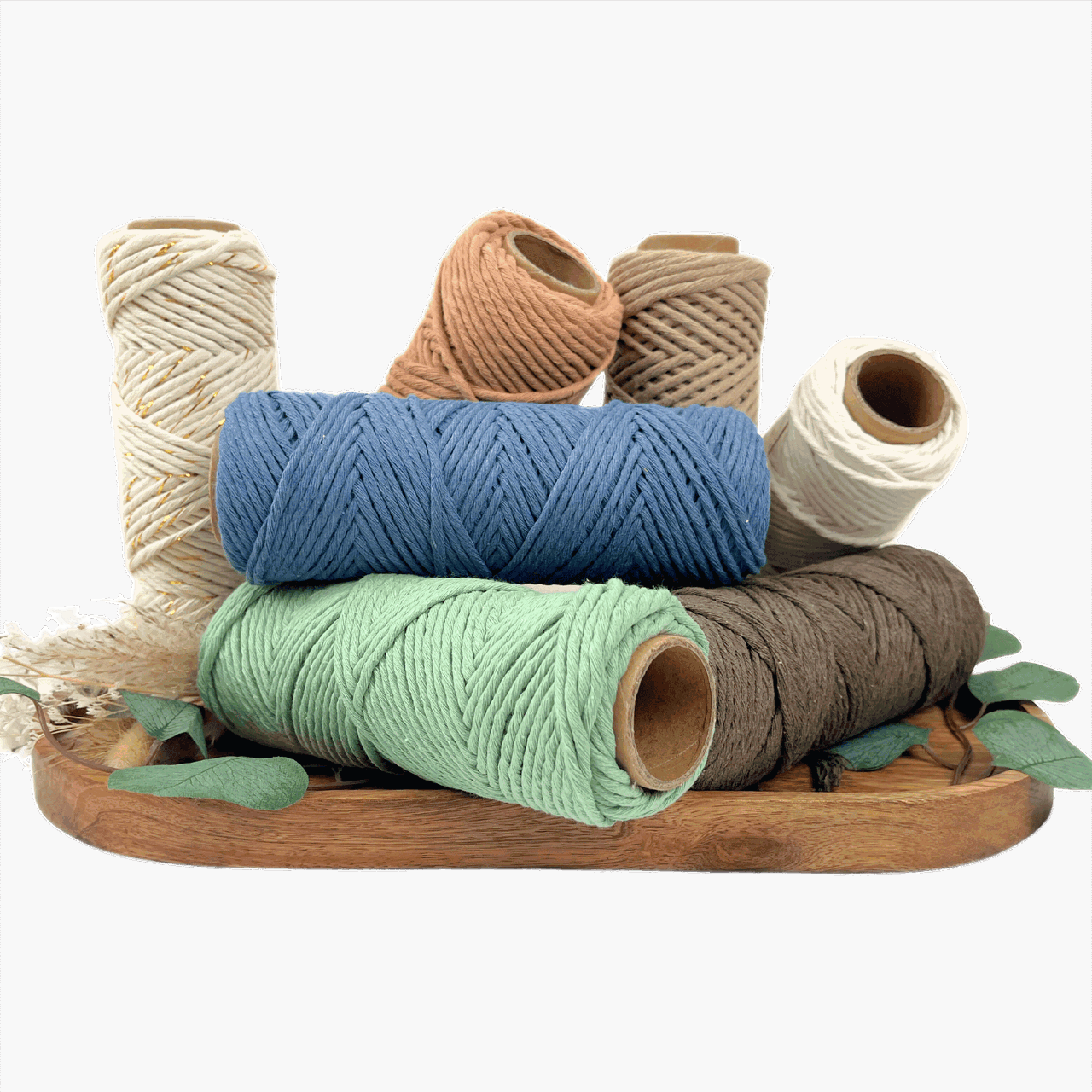
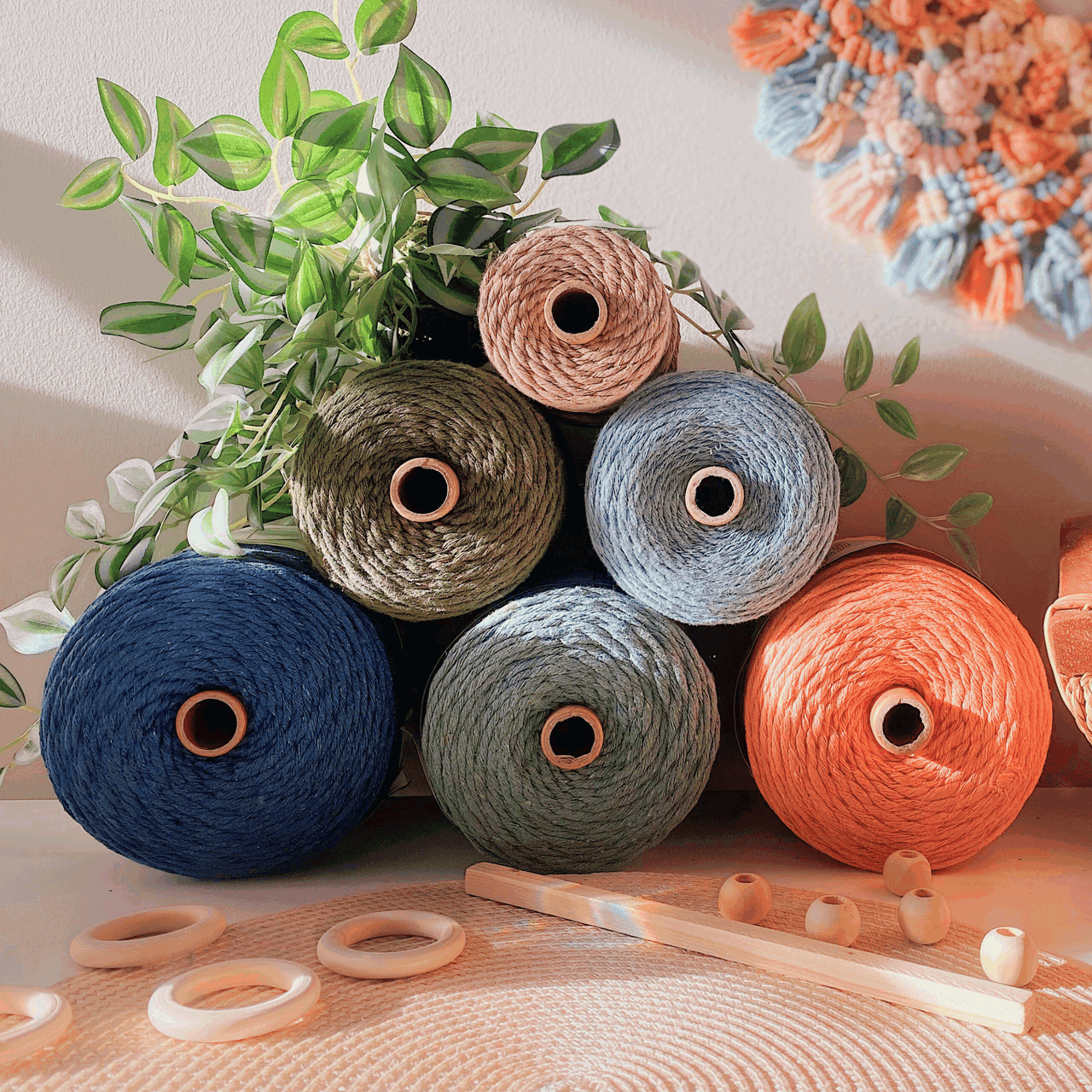
Grab your cord in two complementary colours — the two-tone combination is what makes the daisy blooms pop. You can shop our 4mm single-strand cotton cord collection.
| Cord | Quantity | Length | Purpose |
|---|---|---|---|
| 4mm cotton cord — Colour #1 | 1 piece | 115cm (45 in) | Vertical working cords |
| 4mm cotton cord — Colour #2 | 1 piece | 115cm (45 in) | Horizontal anchor / daisy outline |
| 4mm cotton cord — any colour | 1 piece | 30cm (12 in) | Gathering Knot at base |
- 1 lobster swivel clasp — any size, ideally 25–35mm
🛒 The cord Nicole uses for this project
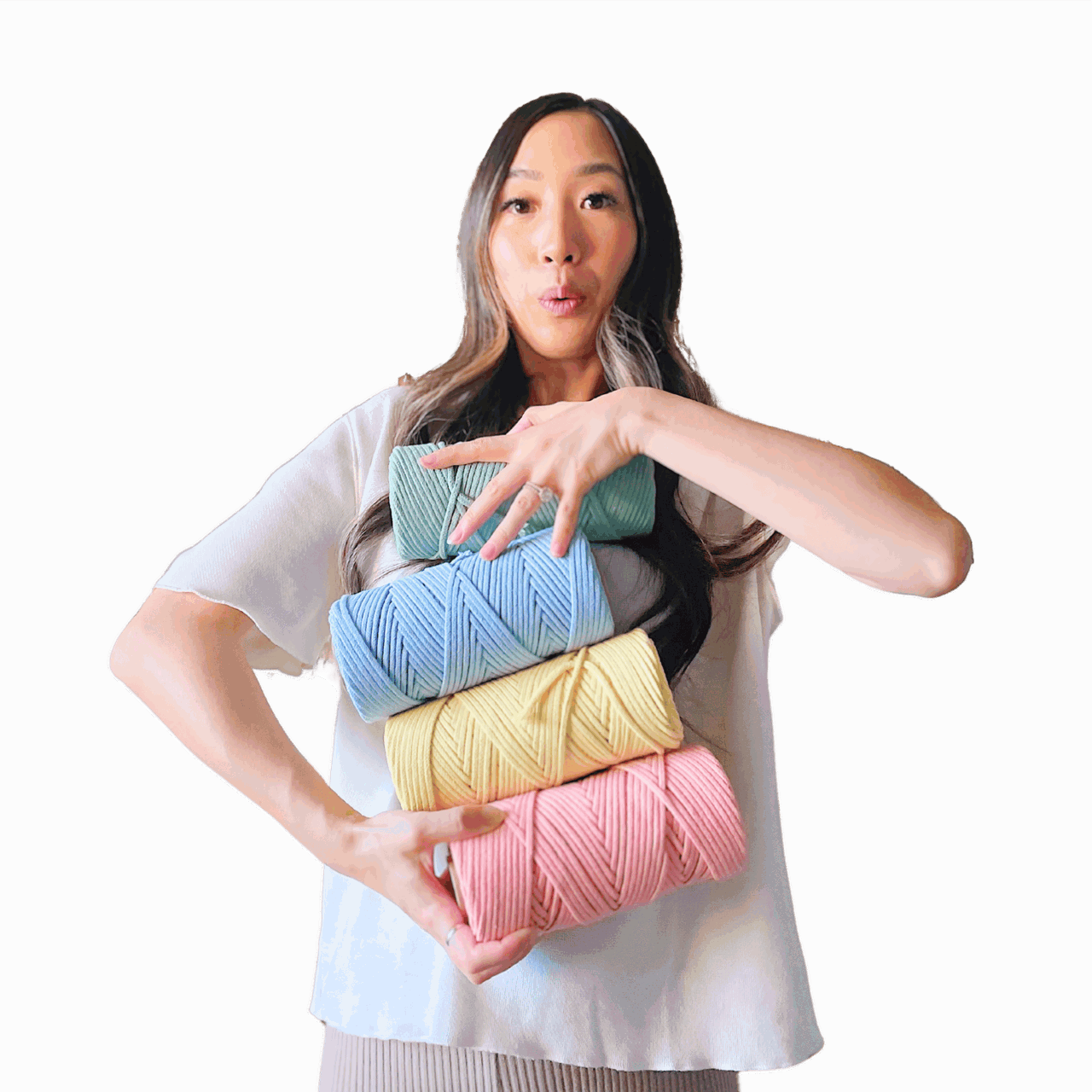
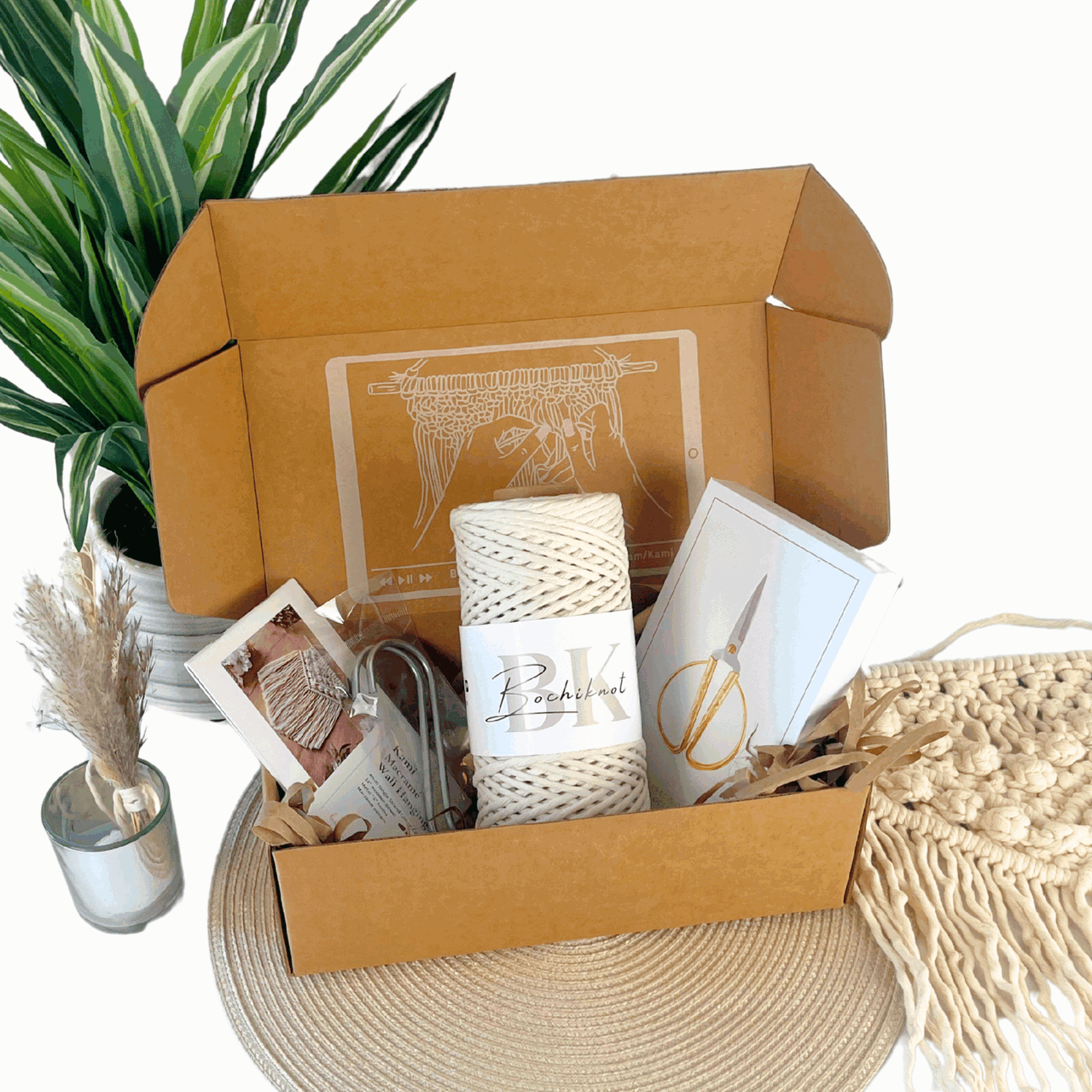
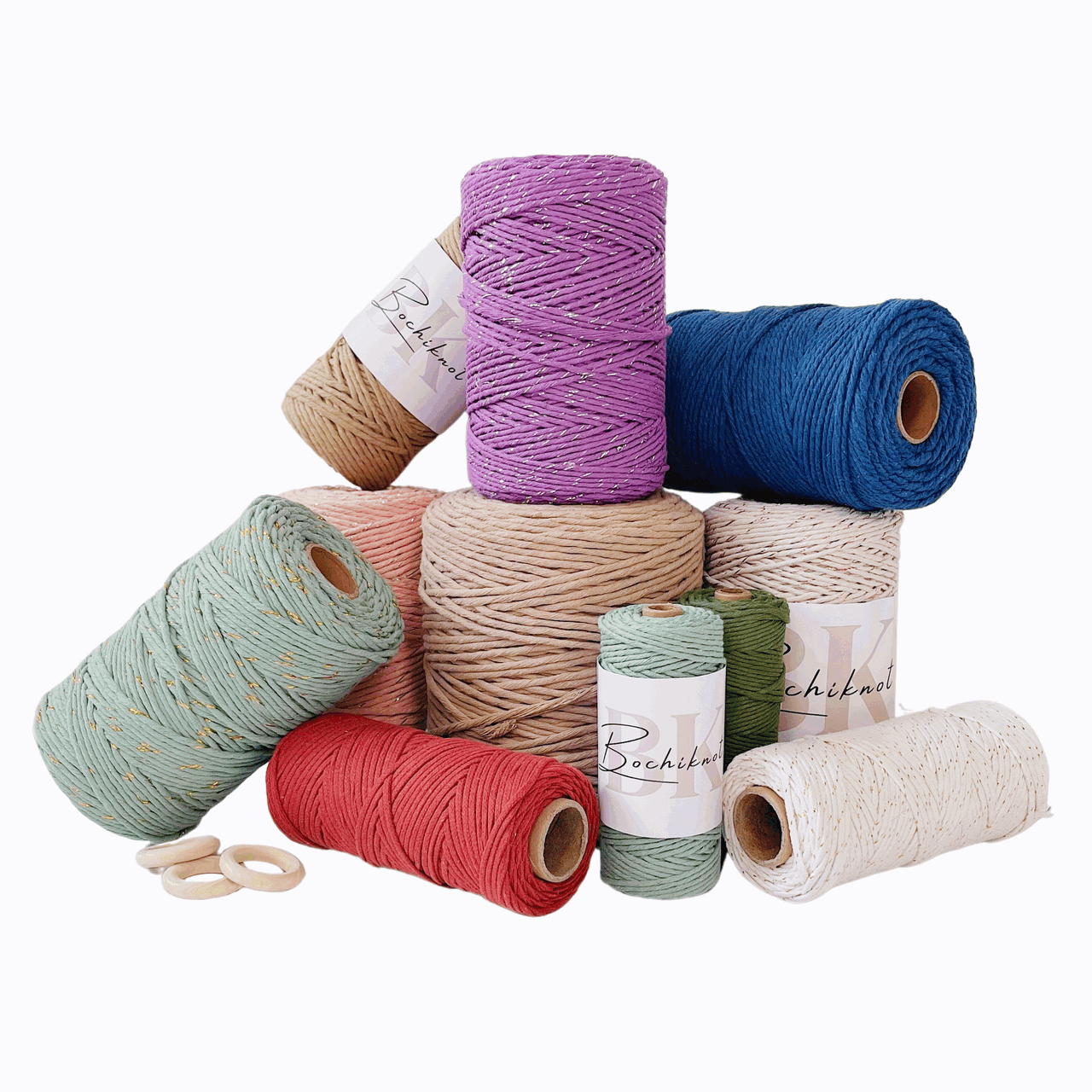
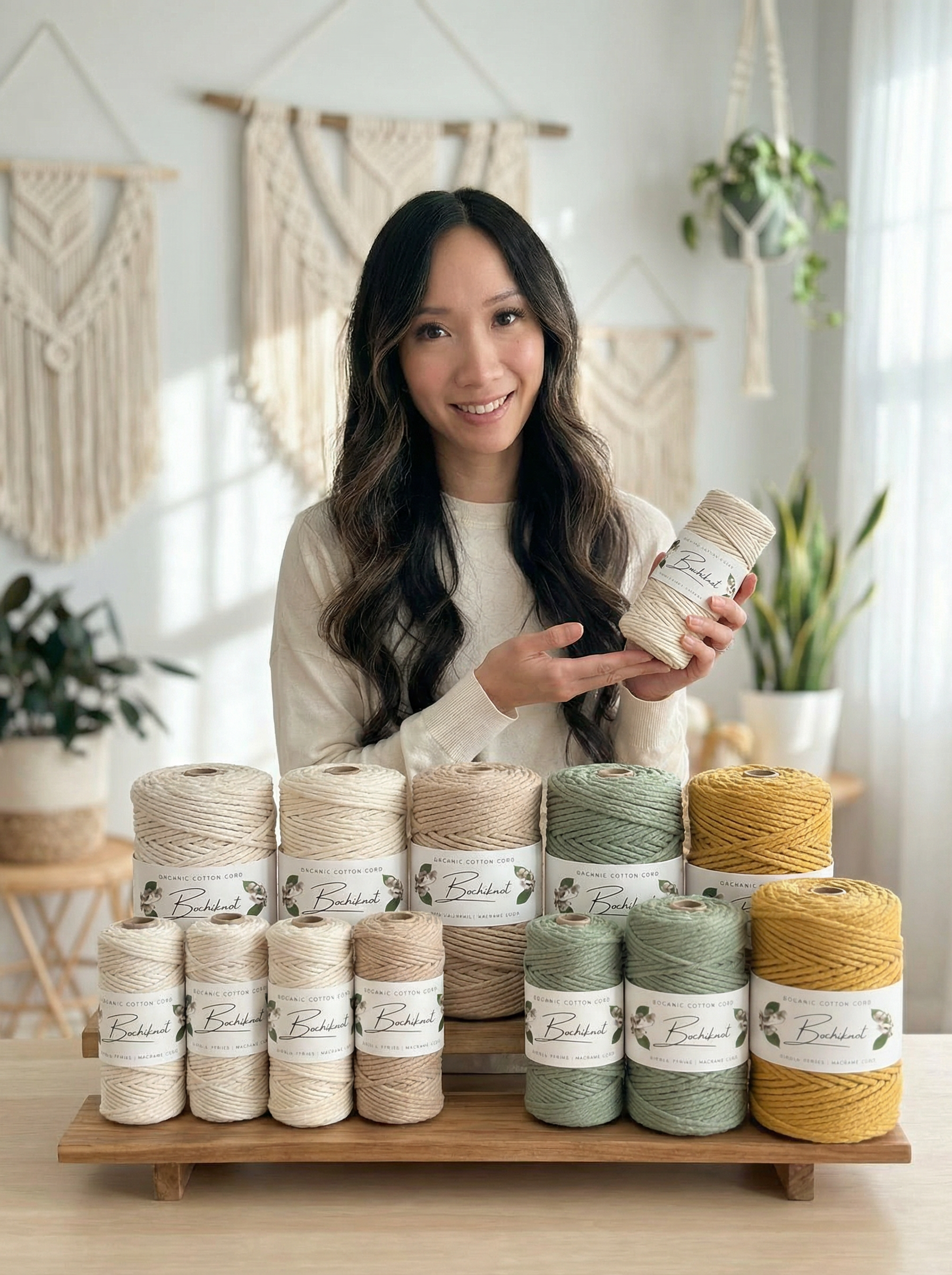
For this exact pattern, I use my own Bochiknot 4mm Single-Strand Cotton Cord — soft enough to shape beautifully, strong enough to hold the Daisy Knot structure, and fringes into a cloud of softness when you brush it out.
Tools
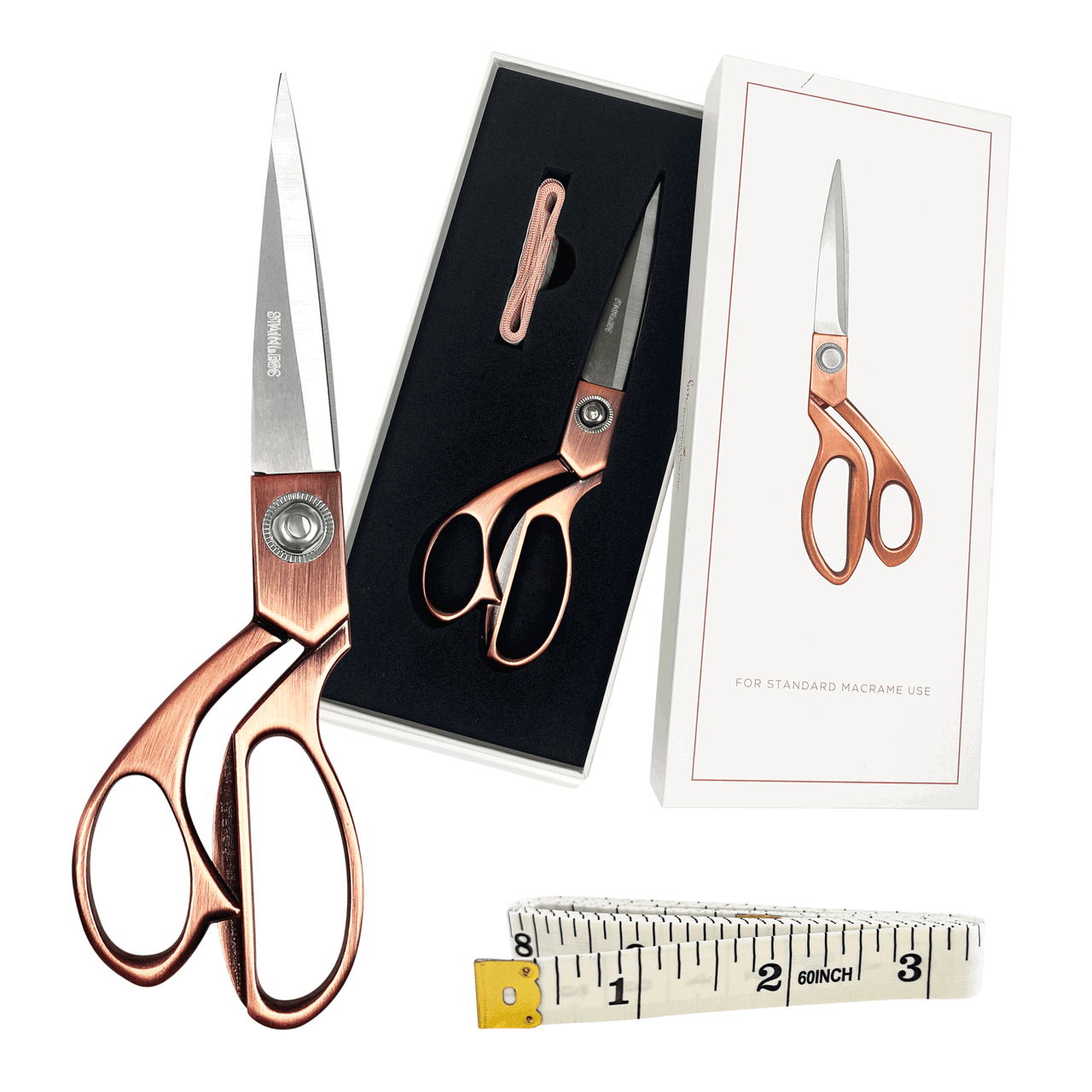
- Scissors — sharp craft scissors for clean cuts
- Measuring tape or ruler
- Painter's tape or clipboard — to hold the clasp steady while you knot (optional but highly recommended)
- Bristle brush — for brushing out the fringe at the end (optional)
Pattern Details
Skill Level
Beginner
Time
30–45 minutes
Finished Size
2cm × 19cm (¾ in × 7½ in)
Cord Type
4mm single-strand cotton
Total Cord
2 × 115cm + 1 × 30cm
Colours Used
2 (for two-tone daisy effect)
Knots You Need to Know
You only need four knots for this project. If you've never tried macramé before, don't be put off by the names — they're much simpler to do than to say. The video below demonstrates each one clearly.
Knot 1
Reverse Lark's Head Knot
How you attach your cord to the lobster clasp — a simple fold-and-loop knot that creates a tidy, secure mounting point.
Knot 2
Half Hitch Knot
A single loop over a holding cord — quick and versatile. Used to open and close each daisy bloom.
Knot 3
Double Half Hitch Knot
Two Half Hitches in a row — creates a firm, tidy knot that forms the curved petal edges of the daisy shape.
Knot 4
Gathering Knot
A wrapping knot that bundles all cords together neatly at the base to create a clean, professional finish before the fringe.
📖 Quick glossary — macramé terms used in this tutorial
- Working cord
- The active cord you tie knots with — usually the ones doing the wrapping.
- Anchor / filler cord
- The cord you tie knots around. Stays relatively stationary while working cords move.
- Lark's Head Knot
- A simple attachment knot used to mount cord to a ring, clasp or dowel. "Reverse Lark's Head" means the knot sits on the back of the ring.
- Half Hitch & Double Half Hitch
- Wrap-around knots. One "half hitch" is a single wrap; a "double" is two. These build the petal outlines in the Daisy Knot.
- Gathering Knot
- A wrap-and-tuck finishing knot that bundles all your cords together at the base — hides the transition from pattern to fringe.
- Fringe
- The loose cord ends left hanging below the final knot, usually brushed out and trimmed for a soft tassel look.
Video Tutorial
Watch me make this macramé daisy keychain from start to finish. I'll walk you through every knot and every step so you can follow along in real time — pause and rewind as much as you need.
*Note: We recommend following the tutorial video for more detailed instructions and to achieve the best results.
🎬 Jump to a moment in the video:
- 0:00 — What we're making + supplies
- 0:45 — Cutting & measuring your cord
- 1:20 — Attaching the first cord (Step 1)
- 2:10 — Starting the first daisy (Steps 2–3)
- 3:30 — Finishing your first bloom (Steps 4–6)
- 5:00 — Making the remaining daisies (Step 7)
- 7:30 — Gathering knot & finishing (Steps 8–9)
Step-by-Step Instructions
Tip before you begin: tape your lobster clasp to your work surface or clip it to a clipboard. It keeps everything stable so you can use both hands — a small detail that makes a big difference.
⚠️ Before you start — 60-second pre-flight check
- Are your cord ends taped? A small piece of masking tape on each end stops them fraying while you work.
- Is your clasp secured? Tape it to the table or clip it to a clipboard. Tension consistency depends on it.
- Did you cut a little extra? Always cut 10–15 % more cord than the pattern says. Running out mid-project is the #1 frustration — see our Golden Ratio cord formula.
Step 1: Attach the First Cord
- Cut one 115 cm cord (Color #1). Fold the cord in half to form a loop.
- Attach the loop to the lobster clasp using a Reverse Lark's Head Knot.
- Pass the loop through the bottom of the clasp.
- Pull the two cord ends through the loop and tighten.


Step 2: Add the Second Cord and Begin Knotting
- Cut one 115 cm cord (Color #2). Place it horizontally above the vertical cords.
- Pass the middle of the cord underneath the vertical cords.
- Tie a Half Hitch Knot on each side, facing the inside of the pattern.
- Ensure the anchor cord ends (Color #2) are even; adjust if needed.


Step 3: Create Double Half-Hitch Knots
- Take the left anchor cord and tie a Double Half Hitch Knot with the middle left cord.
- Repeat on the right side by tying a Double Half Hitch Knot with the middle right cord onto the right anchor cord.


Step 4: Fold and Secure the Anchor Cords
- Fold the two anchor cords over the vertical cords.
- Tie a Half Hitch Knot on each side, facing outward.
- Use the left middle cord to tie a Double Half Hitch Knot on the left anchor cord. Repeat on the right side.
- Pull the anchor cords to tighten.


Step 5: Form the Daisy Pattern
- Bring the working cords (Color #2) from the back to the front, crossing them over the pattern to form a crisscross.
- Pass the natural-colored middle cords underneath.
- Tie Half Hitch Knots on each side to close off the Daisy pattern, mirroring the first Daisy you made.


Step 6: Finish the Daisy
- Complete the Daisy design by repeating the same knotting process from Step 5.
- Pull all cords firmly and evenly so the bloom looks symmetrical from top to bottom.

Step 7: Alternate Colors for More Daisies
- Continue alternating between Color #1 and Color #2 to create three more Daisy patterns below the first one.
- Push each new bloom firmly up against the previous one before tightening — no gap between flowers.

Step 8: Create a Gathering Knot
- Use a 30 cm strand of cord to tie a Gathering Knot at the bottom of the keychain to secure the cords neatly.
- Trim the Gathering Knot tails flush with the bundle so they disappear into the wraps.

Step 9: Trim and Finish
- Trim the excess cords to your desired length.
- Neaten the fringe at the bottom for a polished finish.
- For a soft, fluffy fringe, unravel the cord ends with your fingers and brush them gently with a bristle brush.

Which Cord Size Should I Use?
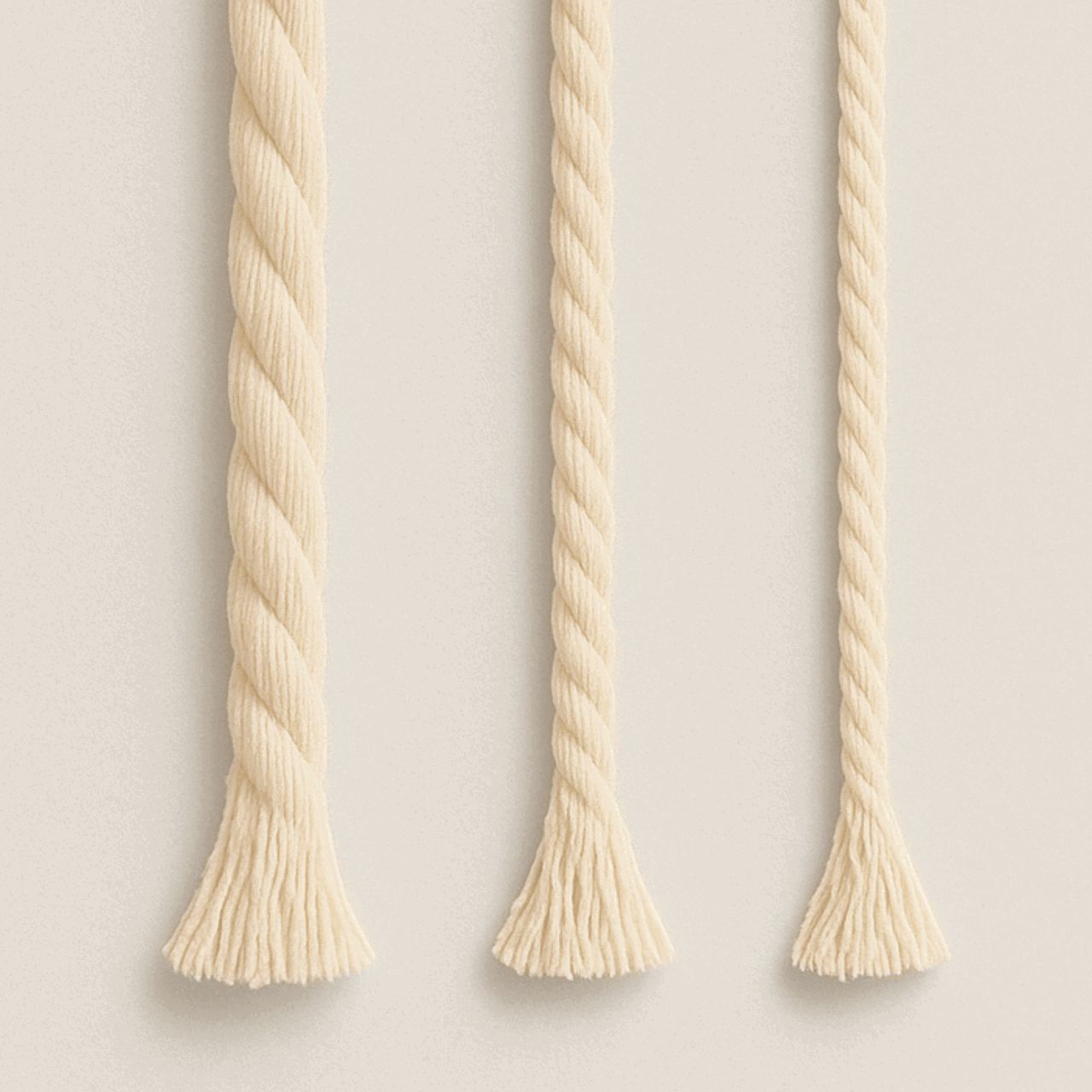
The Daisy Knot works beautifully at three common cord thicknesses — and each one gives you a slightly different finished look. Here's how 3mm, 4mm, and 5mm compare so you can pick the right cord for the vibe you want.
| Cord Size | Keychain Look | Best For | Shop |
|---|---|---|---|
| 3mm | Delicate, smaller bloom — fine and detailed | Jewellery-style keychains, dainty zipper pulls | Shop 3mm → |
| 4mm (our pick) | Balanced — defined petals with fluffy fringe | Everyday keychains, gifts, bag charms | Shop 4mm → |
| 5mm | Bold, chunky statement — oversized fringe | Standout bag charms, beginners learning the knot | Shop 5mm → |
Pro Tips for Perfect Daisy Knots
- Anchor your work. Tape your clasp to a clipboard or the edge of a table before you start. Free-hanging knots are much harder to keep tension-consistent — having a fixed anchor point changes everything.
- Pull every knot the same way. Uneven tension is the number one reason daisy blooms look lopsided. After each Half Hitch or Double Half Hitch, give a firm, smooth pull — same force every time. Your hands will find the rhythm quickly.
- Prep your cord ends. Single-strand cotton cord can fray while you're working. Wrap a small piece of tape around each cord end before you begin. It keeps the strands together and makes threading through tight knots much easier.
- Try high-contrast colour combos. The two-tone effect is most striking with a light/dark pairing — think natural cream with dusty rose, sage green with warm tan, or navy with off-white. Low-contrast combos (two similar neutrals) create a subtler, tonal look.
- Add beads between blooms. Thread a 9–10mm wooden bead onto one or both Colour #1 cords just before starting a new daisy sequence. The bead will sit snugly between blooms as a decorative accent and adds a lovely handcrafted detail.
Troubleshooting: Common Daisy Keychain Problems (and How to Fix Them)
Every maker hits a snag on the first try. Here are the six issues I see most often in my workshops — and exactly how to fix each one.
1. My daisy knot is lopsided or crooked
Fix: Uneven tension is almost always the culprit. Check that each side pulls the same amount when you work. Try pulling and settling each Half Hitch firmly before moving on to the next — same pressure, same direction, every time.
2. There's a gap between my daisy blooms
Fix: Each new bloom should be pushed firmly up against the previous one before you tighten it. Slide the new daisy up to meet the one above, then tighten — not the other way around. This closes any gap naturally.
3. My knots keep sliding down the cord
Fix: Tape your clasp to the work surface so both hands are free to manage tension, and pull each Double Half Hitch firmly toward the centre of the bloom so it locks in place against the neighbouring knot.
4. The petals look square, not rounded
Fix: When you fold the anchor cords outward in Step 4, pull them around gently so they arc — rather than pulling them straight out, which creates a sharp angle. A soft curve gives you rounded, petal-shaped edges.
5. The fringe at the bottom looks thin
Fix: You probably used a smaller cord size. Try 4mm or 5mm next time for a fuller fringe — or, for a quick rescue on your current keychain, brush the fringe firmly with a bristle brush and steam it lightly to open the fibres up into a cloud.
6. I ran out of cord mid-project
Fix: Measure twice, cut once — see our Golden Ratio cord formula to avoid this every time. A little extra length is always better than coming up short.
Variations: 5+ Ways to Use the Daisy Knot
Once you've made one, you'll want to make twenty. Here are my favourite ways to mix it up:
One bloom instead of four
Make a single daisy keychain — minimal, modern, and done in under 15 minutes. Perfect for a quick last-minute gift.
Try a tonal colourway
Use two shades of the same colour family — blush and dusty rose, or oatmeal and warm grey — for an elegant, understated look.
Add wooden or crystal beads
Thread 9–10mm round beads between blooms or onto the fringe strands before trimming. Even one bead elevates the whole piece.
Make a bag charm instead
Attach to a handbag or tote using a swivel lobster clasp, or use a longer cord and tie directly through a bag handle. Works beautifully as a zipper pull too.
Bag Charm
Make 5–6 daisies instead of 4 and swap the lobster clasp for a larger keyring. Hangs beautifully off a tote or backpack. See the cord length calculator.
Christmas Ornament
Make 1–2 daisies in festive colours (forest + cream, or red + white), finish with a gold hoop at the top instead of a clasp. See the cord length calculator.
Zipper Pull
Make a single daisy with a short cord tail and attach to a split ring. A sweet little detail on jacket zips, pencil cases, and purses. See the cord length calculator.
Phone Charm
Make 1 daisy, attach to a phone-strap ring, and you've got an adorable handmade phone charm. See the cord length calculator.
Nicole's favourite version 💛
Honestly? My favourite is the sage green + blush combo I made for my best friend Emily's 30th birthday last year. She ties it to her work tote and uses it every single day — and every time I see it, I get a little "yes, that's the one." If you're making this for a gift, that's the palette I'd go with.
Colour Palette Inspiration — Nicole's Favourite Combos
Stuck on which two colours to pick? These are the four combinations I go back to again and again — each one reads differently but always feels gorgeous in a Daisy Knot.
Boho Blush
Blush Pink · Natural · Sage
Soft, feminine, summer vibes. A perfect everyday palette that reads warm and inviting.
Christmas Classic
Army Green · Terracotta · Milk White
Perfect for ornaments or holiday gifts. A warm, grounded festive palette with a handmade twist.
Minimalist Neutral
Natural · Buttermilk · Milk White
Modern, gender-neutral, classy. A safe-bet palette that suits any recipient.
Pastel Dream
Steel Blue · Sage · Blush
Soft, dreamy, and gender-neutral. Gorgeous for Mother's Day, baby-shower favours, or gifts for a best friend.
Perfect Occasions to Give This Keychain
- Teacher appreciation gift — Add a paper tag with a little flower pun: "Thanks for helping me grow." $2 in materials, priceless in appreciation.
- Bridal party favours — Match your wedding colours and make 10+ in bulk for ~$1.50 each. Guests love a handmade touch they can actually use.
- Mother's Day — Pastels for a sweet, feminine touch. Goes beautifully tucked into a handwritten card.
- Stocking stuffer — Red, green, and cream is a festive winner that fits perfectly into any stocking.
- Birthday party activity — Kids 10+ love making these. Set up a table with cord, clasps, and your printed steps and let them at it.
- Just because — Keep a few ready in a drawer — little pick-me-ups for friends who need a cheer-up.
Frequently Asked Questions
What cord is best for a macramé daisy keychain?
4mm single-strand (or single-twist) cotton cord is my top recommendation. It's soft and pliable enough to shape the Daisy Knot beautifully, but has enough body that the blooms hold their structure and don't collapse. Single-strand cord also unravels easily at the fringe end for that soft, fluffy finish. If you prefer a finer, more delicate look, 3mm cord works well — expect slightly smaller, more intricate-looking blooms. You can find Bochiknot's full cotton cord range here.
How long does a macramé keychain take to make?
This four-bloom daisy keychain takes roughly 30–45 minutes for a first-time maker working through it carefully alongside the video tutorial. Once you're familiar with the Daisy Knot sequence, you can comfortably finish one in 20–25 minutes. It's genuinely one of the fastest satisfying macramé projects — perfect for a lunch break make or an evening craft session.
Can I use thinner or thicker cord for this pattern?
Yes — the Daisy Knot is flexible on cord size. 3mm cord produces daintier, more delicate blooms with a finer look. 5mm cord creates bolder, chunkier flowers that are great for beginners who want their knot structure to be easier to see as they work. If you change cord thickness, scale your cord lengths proportionally: go a little shorter for finer cord, a little longer for thicker cord, so you don't run out before finishing.
How do I stop my knots from sliding?
Two things help the most. First, tape your lobster clasp to a hard surface — a clipboard, a cutting mat, or even the edge of a table — so both your hands are free to manage tension rather than hold the work steady. Second, pull each knot with consistent, firm pressure before moving on. Uneven tension is almost always the cause of sliding or lopsided blooms. If knots still slip after the project is finished, a tiny dot of clear fabric glue on the back of each bloom (invisible once dry) locks everything permanently in place.
Can I add beads to the daisy keychain?
Absolutely — and it looks beautiful. 9–10mm wooden beads or glass beads are the perfect size for this pattern. Thread one onto one or both Colour #1 cords just before starting a new daisy sequence and it will sit snugly in the gap between blooms as a decorative accent. For the fringe, thread smaller seed beads onto individual cord strands before trimming for a delicate, bohemian finish. Just make sure the bead hole is wide enough to fit over your cord — if in doubt, use a threading needle to guide the cord through.
What is a daisy knot in macramé?
The Daisy Knot is a decorative macramé knot that builds a small flower shape from two cords in two colours. It uses Half Hitch and Double Half Hitch techniques to create the petal outline. It's most popular in keychains, bag charms, jewellery, and wall hangings — anywhere you want a little handmade bloom.
Can kids make a macramé daisy keychain?
Yes, with some help. Kids aged 10+ can usually tie the knots with minimal guidance once shown the pattern once. For younger makers, an adult should handle the initial setup and monitor tension. It's a lovely first craft project — quick enough to hold attention and satisfying enough that they'll want to make another.
How do I finish the ends of macramé cord?
Unravel the cord ends with your fingers or a fringe brush to open the fibres into a soft fluffy fringe. Cut straight for a tidy look, or on an angle for a more casual finish. A dab of clear fabric glue stops fraying if you prefer a tidy edge.
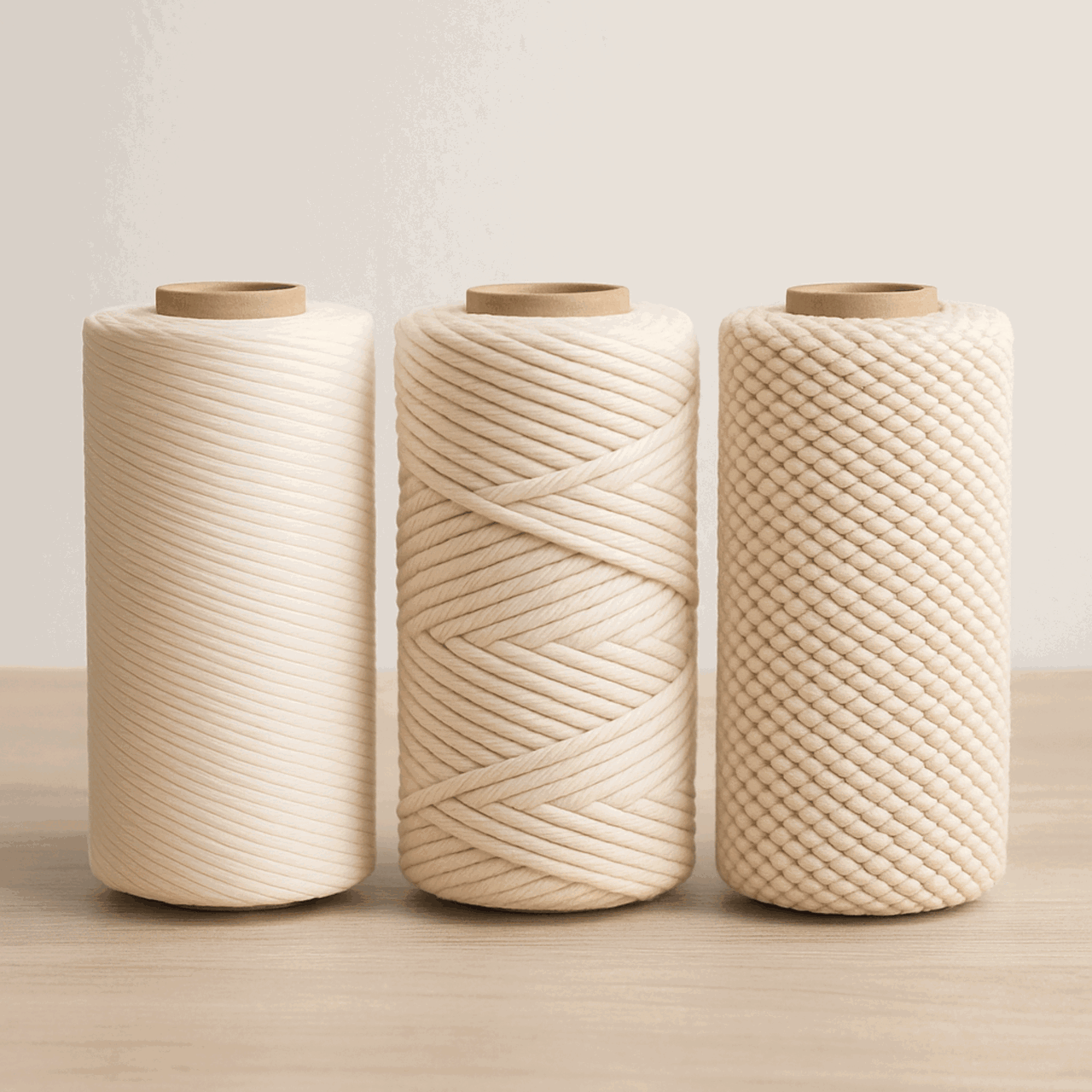
Single-strand vs 3-ply cord — what's the difference for this keychain?
Single-strand cord is one continuous rope (no twist) that frays into a soft cloud. 3-ply is 3 smaller cords twisted together — more structured, doesn't fringe as softly. For this daisy pattern, I recommend single-strand for its softness and fringe appeal.
Can I make a macramé daisy keychain without a clasp?
Absolutely. Instead of a lobster clasp, attach your cords to a small metal ring (keyring), a split ring, or a loop of cord folded over. The Daisy Knot pattern works the same regardless of what you anchor to — so feel free to improvise with whatever hardware you have.
How do I care for and store my macramé daisy keychain?
Spot-clean only — use a damp cloth with a tiny bit of mild soap and dab gently. Don't submerge it in water or the cotton fibres will lose their shape and the knots may slacken. Store it flat when not in use (not hanging) to keep the daisies from stretching over time, and brush the fringe occasionally with a bristle brush or stiff toothbrush to refresh the fluffy look.
Can I use a different type of cord — jute, silk, polyester, or recycled cotton?
Yes, with trade-offs. Recycled cotton works beautifully (soft, fringes well, eco-friendly). Jute looks rustic but is stiffer and harder on your fingers. Silk is luxurious but expensive and tricky to brush into fringe. Polyester / nylon is durable and colourful but the knots can slip under tension. For best results with the Daisy Knot, stick to a single-strand cotton or recycled cotton between 3–5 mm — that's what gives you the clean bloom shape and soft fringe.
✨ Don't feel like DIY today? Browse our handmade macramé collection on Etsy →
I hope you loved making your daisy keychain as much as I love teaching it. There's something so satisfying about turning a few strands of cord into something this pretty — and once you've made one, I guarantee you'll want to make another (and probably another after that).
If you share your finished keychain on Instagram, please tag me @bochiknot — I read every single one and I'd love to see your colour combinations. Happy knotting! 🌼
Nicole — Founder, Bochiknot
Macramé educator & designer
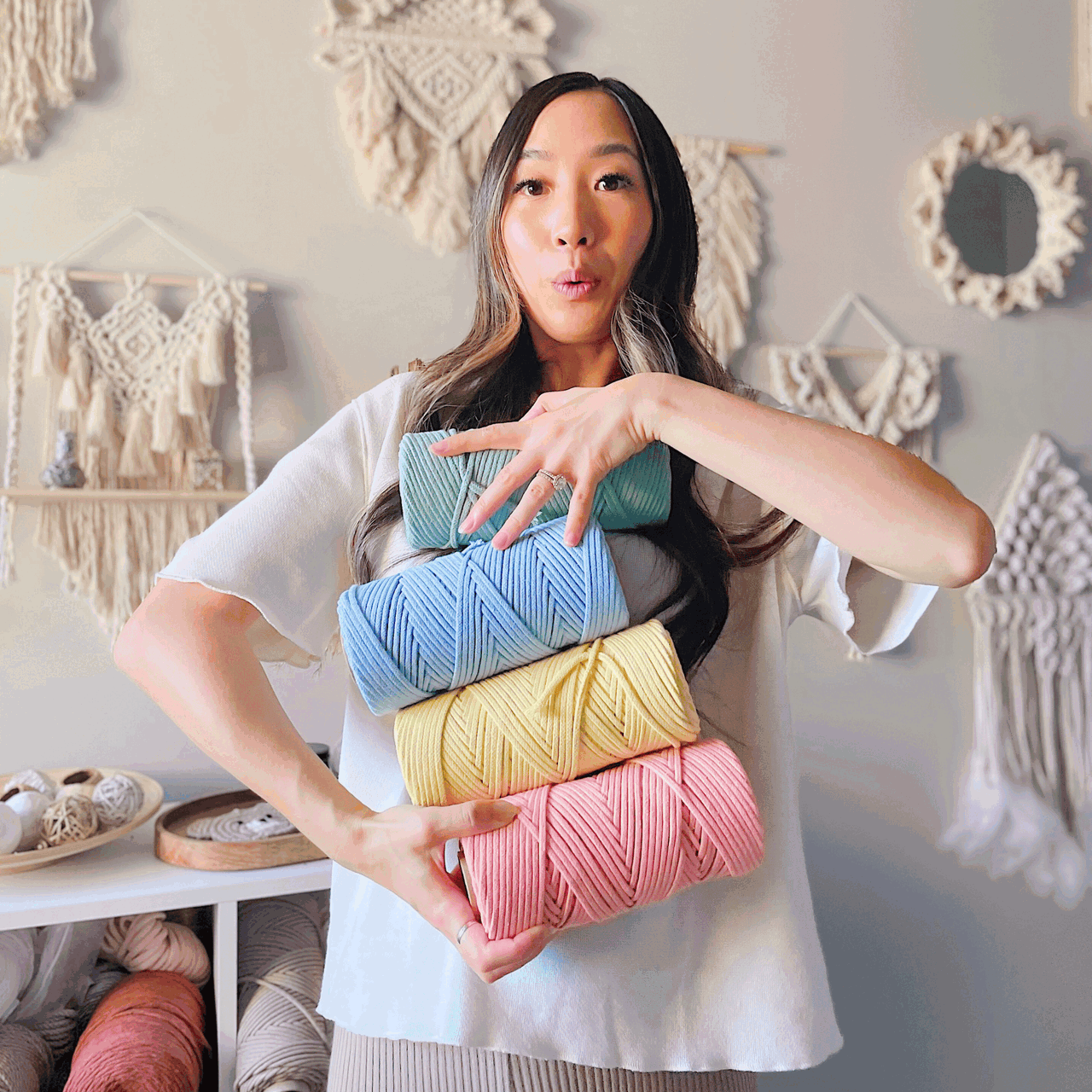
Nicole is a self-taught macramé artist teaching a global community of crafters since 2018. She's the founder of Bochiknot, author of 100+ free step-by-step tutorials, and a Featured Creator on YouTube — where she shares weekly videos to a subscriber base of 100,000+. Her mission: make macramé approachable, technique-driven, and genuinely fun for makers of every level.
You might also like


Leave a comment