








How to Tie a Berry Knot in Macramé (Step-by-Step Tutorial)


Updated 2026 · 7 min read
🔖 Save for later
- Set up 4 cords on a wooden dowel (24 inches / 60 cm long).
- Tie 3 to 5 square knots in a tight stack just below the dowel (3 = small berry, 5 = large).
- Identify the 2 center filler cords that stayed straight down the middle.
- Pull the filler cords up behind the stack and through the small opening at the top of the first square knot, exiting below.
- Pull steadily downward to compress the stack into a plump rounded berry shape.
- Tie one more square knot directly below the berry to lock it permanently in place.
Total time: about 30 seconds · Cord used per berry: 6 to 8 inches · Difficulty: beginner-intermediate

📌 Pin this tutorial for later
Save this berry knot guide to your Pinterest board so you can come back to it mid-project.
Save to PinterestWhat You'll Learn
Tutorial Contents
- What is the berry knot?
- Also known as: square knot button, popcorn knot, bobble knot
- Anatomy of a berry knot
- When and where to use the berry knot
- What you'll need
- How to tie a berry knot (step-by-step)
- Variations: small, medium, large berries
- Common berry knot mistakes
- Troubleshooting
- Projects that use the berry knot
- Berry knot FAQ
- Your next macramé knot
- Keep learning with Bochiknot
What Is the Berry Knot?
A berry knot is a 3D macramé technique that turns a stack of flat square knots into a single raised, rounded ball that looks like a small fabric berry. It's tied entirely from your existing project cord — no beads, no glue, no extra hardware — which makes it one of the cleanest ways to add dimension and focal interest to an otherwise flat macramé piece.
Visually, the berry knot reads like a small fabric pearl sitting on top of your work. Run a row of them across a wall hanging and you get instant rhythm and texture. Place one at the top of each plant-hanger arm and the whole piece looks intentionally designed instead of just functional.
Mechanically, the berry knot is built on a sequence of square knots. You tie 3–5 of them in a row, then pull the center filler cords up and back through the very top of the stack so the knots compress into a rounded ball. A final square knot below locks it in place.
Also Known As: Square Knot Button, Popcorn Knot, Bobble Knot
The berry knot goes by several names depending on the pattern designer or region. They all describe the same knot:
| Name | Where you'll hear it |
|---|---|
| Berry knot | The most common name in modern English-language macramé patterns |
| Square knot button | Used in older macramé books and some Pinterest patterns |
| Popcorn knot | Common in crochet-adjacent and friendship-bracelet circles |
| Bobble knot | Common in UK and Australian macramé patterns |
| Berry stitch | Occasionally used when worked into wider repeating panels |
If you've ever seen "square knot button" in a pattern and wondered what it was — it's the berry knot. The names are interchangeable.
When and Where to Use the Berry Knot
The berry knot is one of the most versatile decorative knots in macramé. Anywhere you want a flat panel to suddenly read as textured or 3D, the berry knot does it cleanly.
Wall Hangings
A row of berry knots across a wall hanging adds shadow and rhythm. Three or five evenly spaced berries make the strongest focal point.
Plant Hangers
Berries at the top of each plant-hanger arm — or clustered in the middle band — turn a plain hanger into a textured statement piece.
Jewelry & Keychains
A single berry knot makes a perfect bead-style accent on bracelets, necklaces, and keychains. No beads needed.
Garlands & Banners
Repeat berry knots along a horizontal cord for a textured holiday or nursery garland.
Bag & Purse Straps
Berries make great fingertip-friendly grips along a strap or handle.
Dreamcatchers
A cluster of three berries below the ring gives a dreamcatcher a finished, jewelry-like detail.
Anatomy of a Berry Knot
Every berry knot is built from the same 4-cord structure. Understanding the parts up front makes the tutorial much easier to follow:
- Working cords (2): The outer left and outer right cords. These do all the knotting around the center.
- Filler cords (2): The inner two cords. These stay still during knotting, then get pulled up to form the berry shape.
- The stack: 3 to 5 square knots tied in a row before pulling the filler cords up.
- The locking knot: One final square knot tied below the berry to hold its shape.
The rule of thumb: more square knots in the stack = bigger berry. 3 knots makes a small, tight berry. 5 knots makes a chunky, statement berry.
What You'll Need
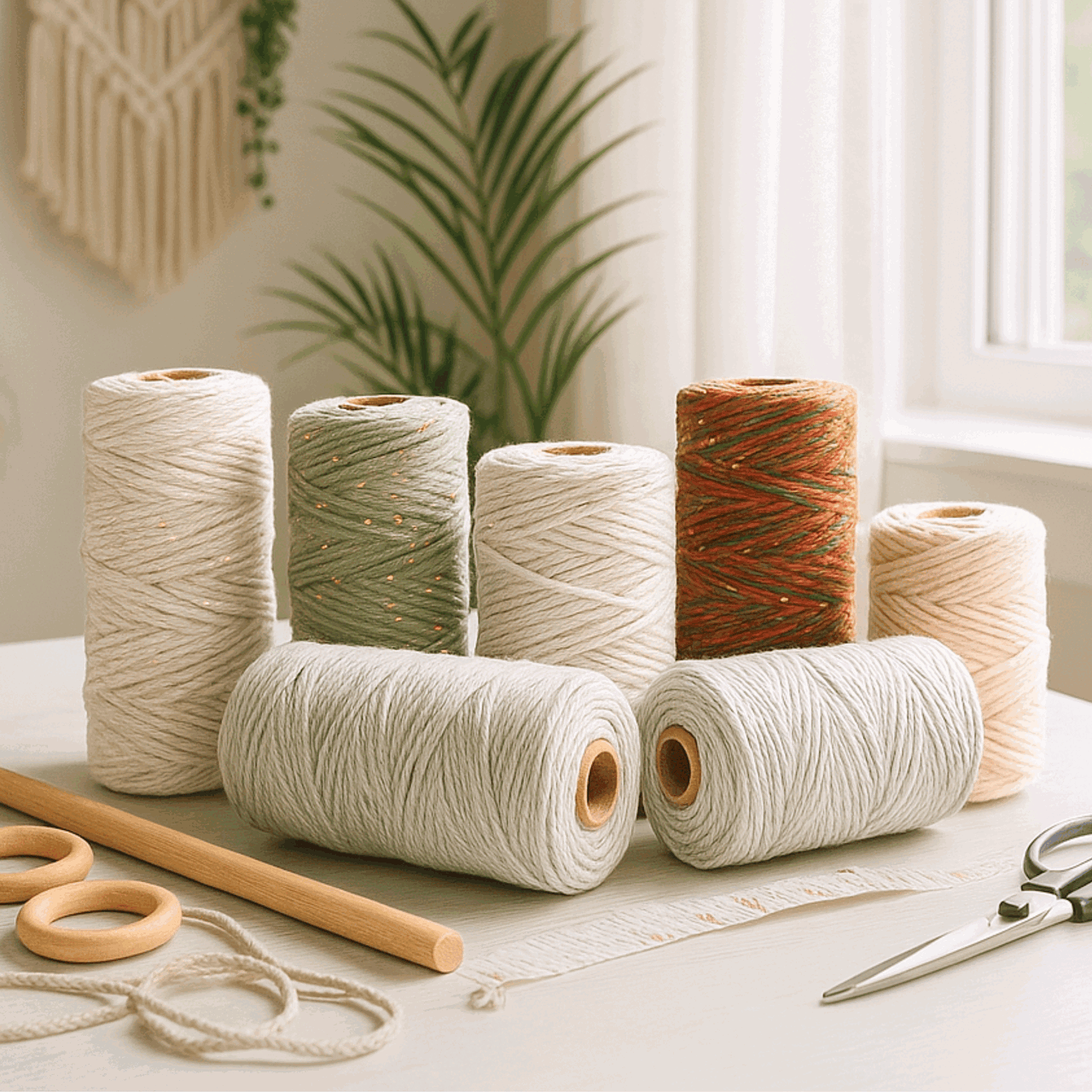
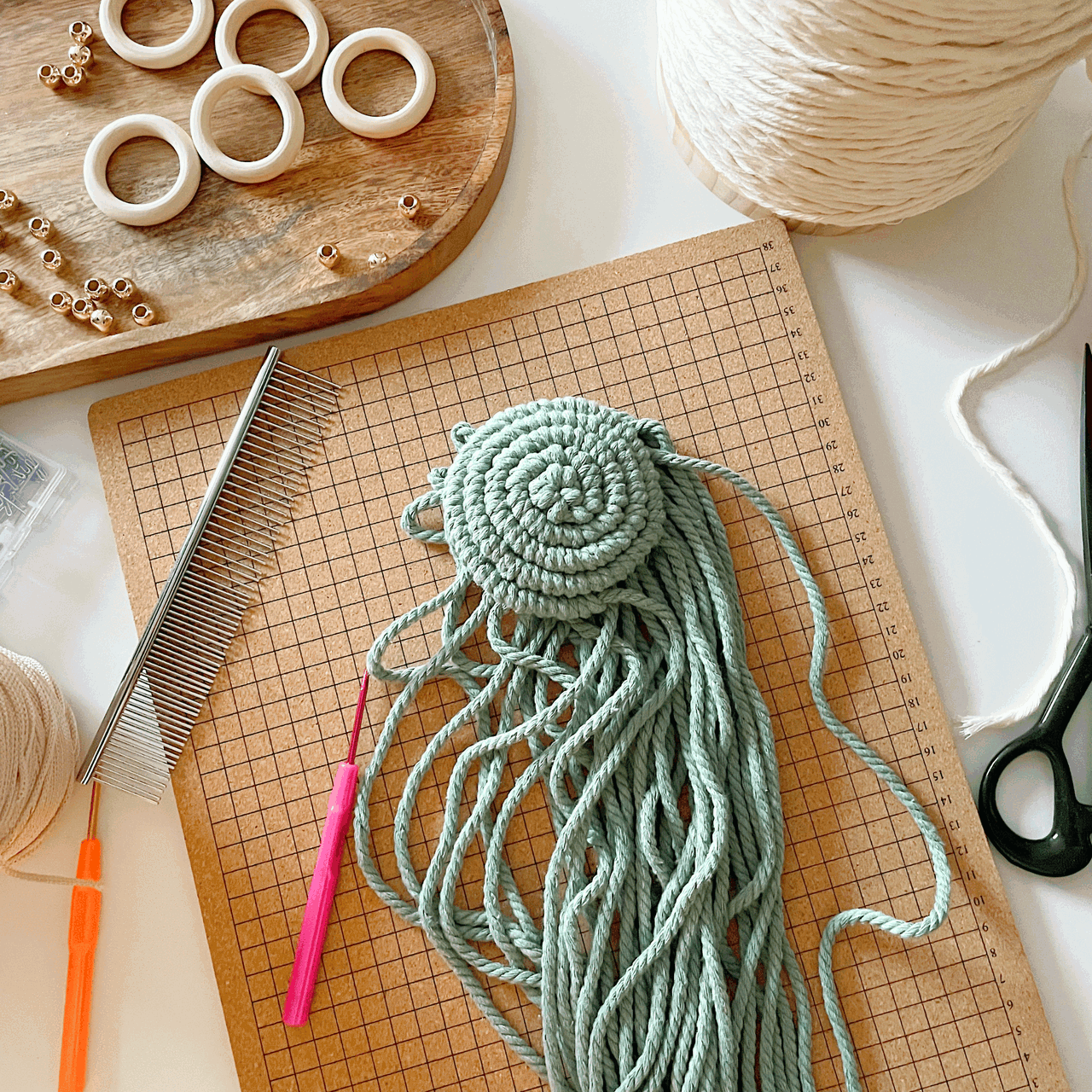
- 4 cords attached to a dowel or anchor, each at least 24 inches long for practice
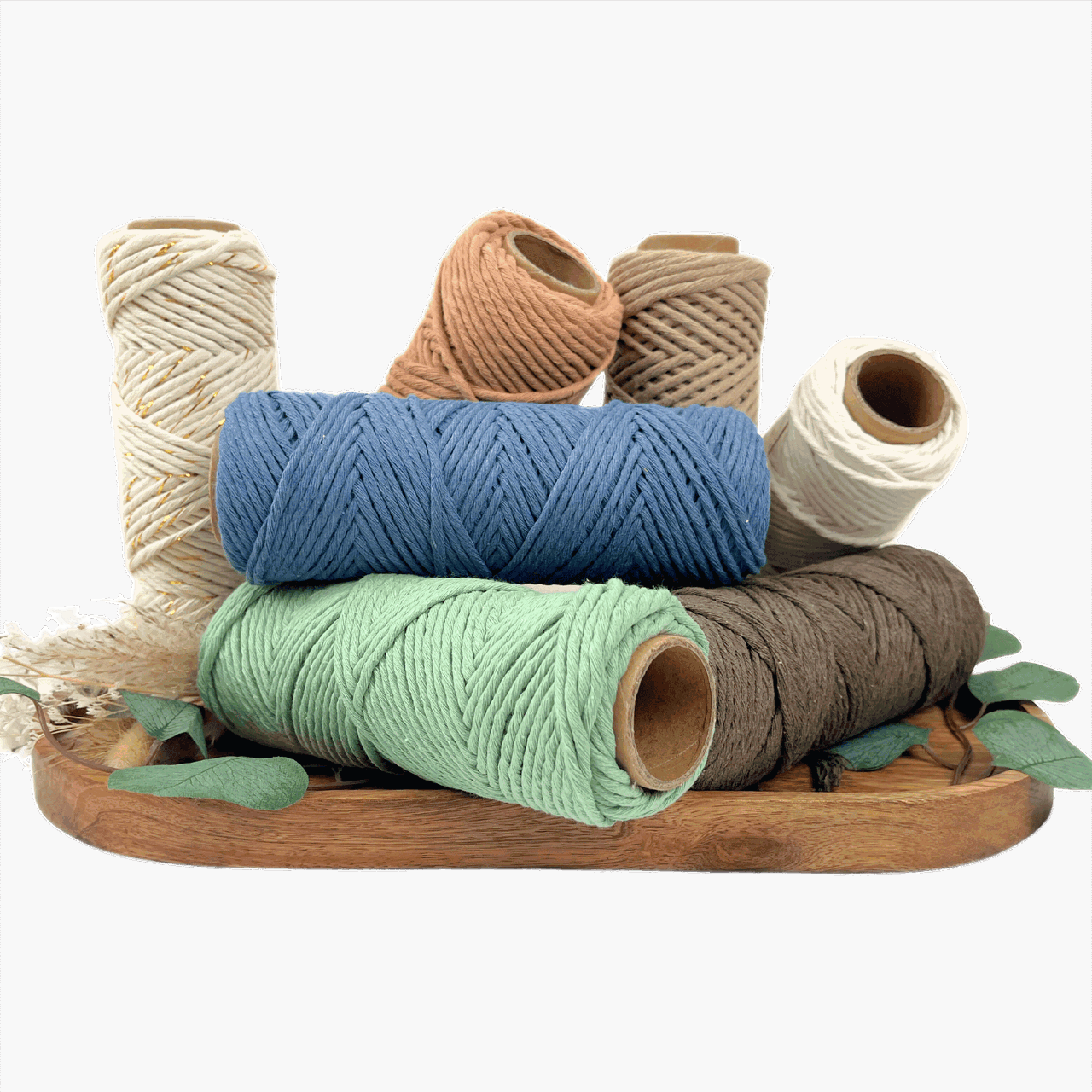
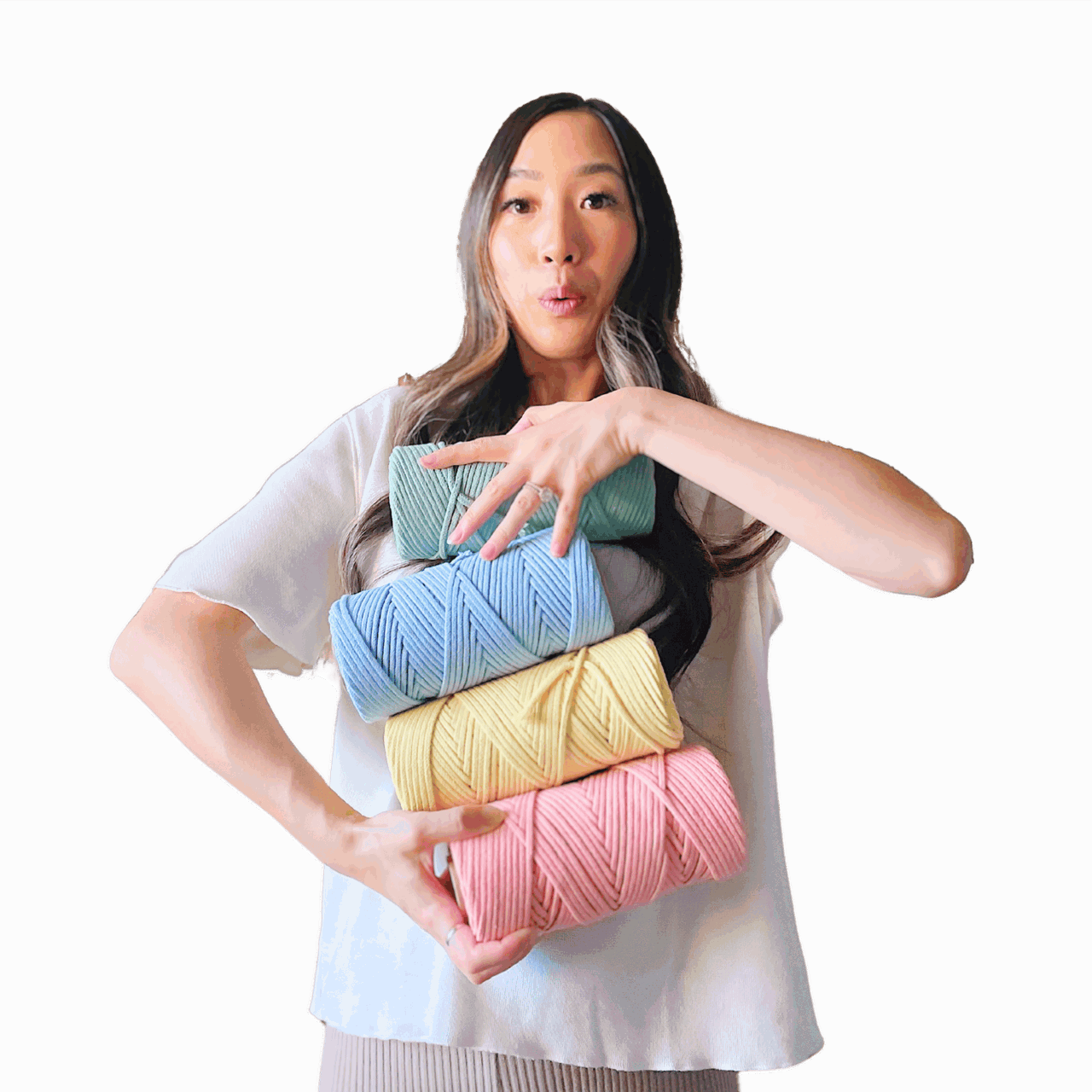
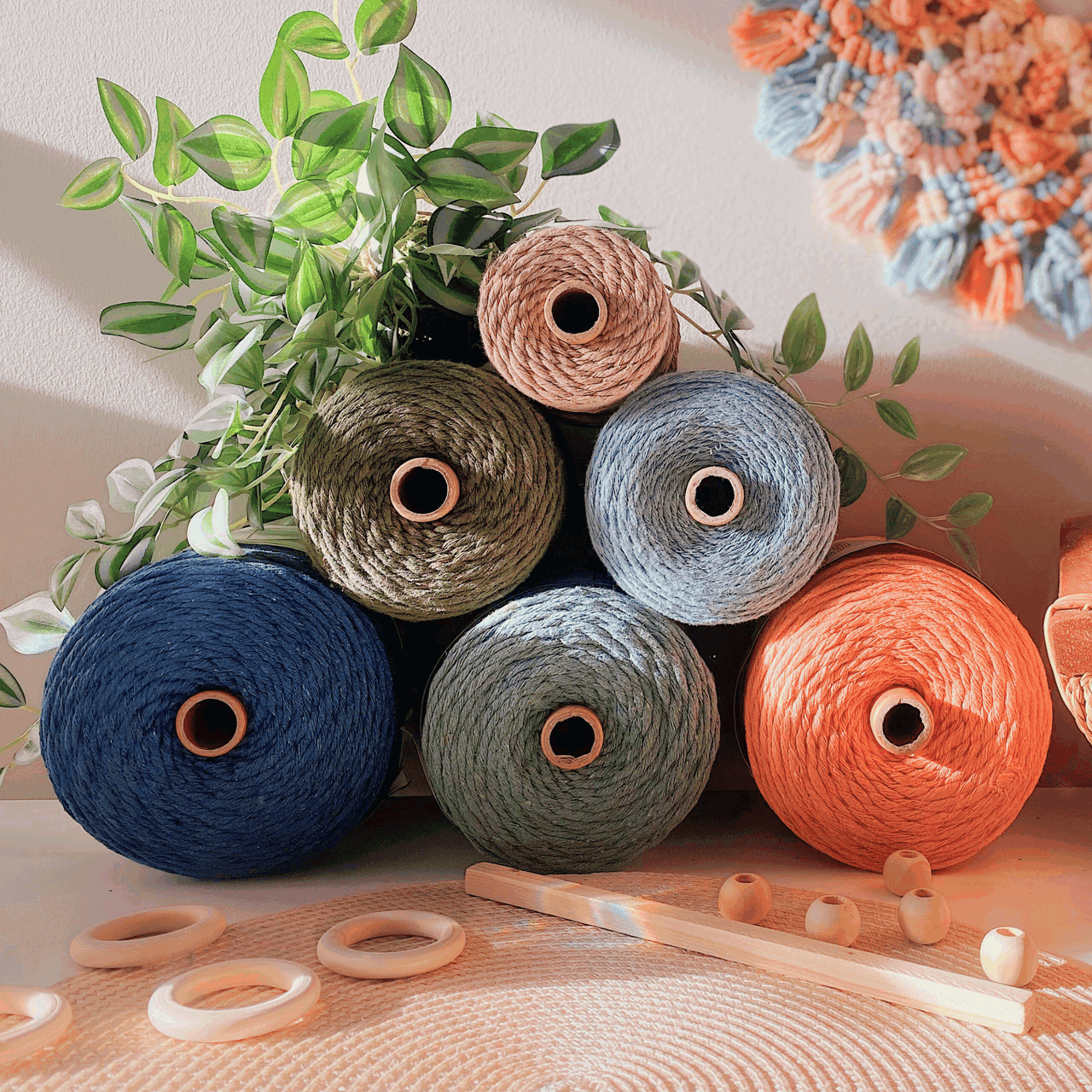
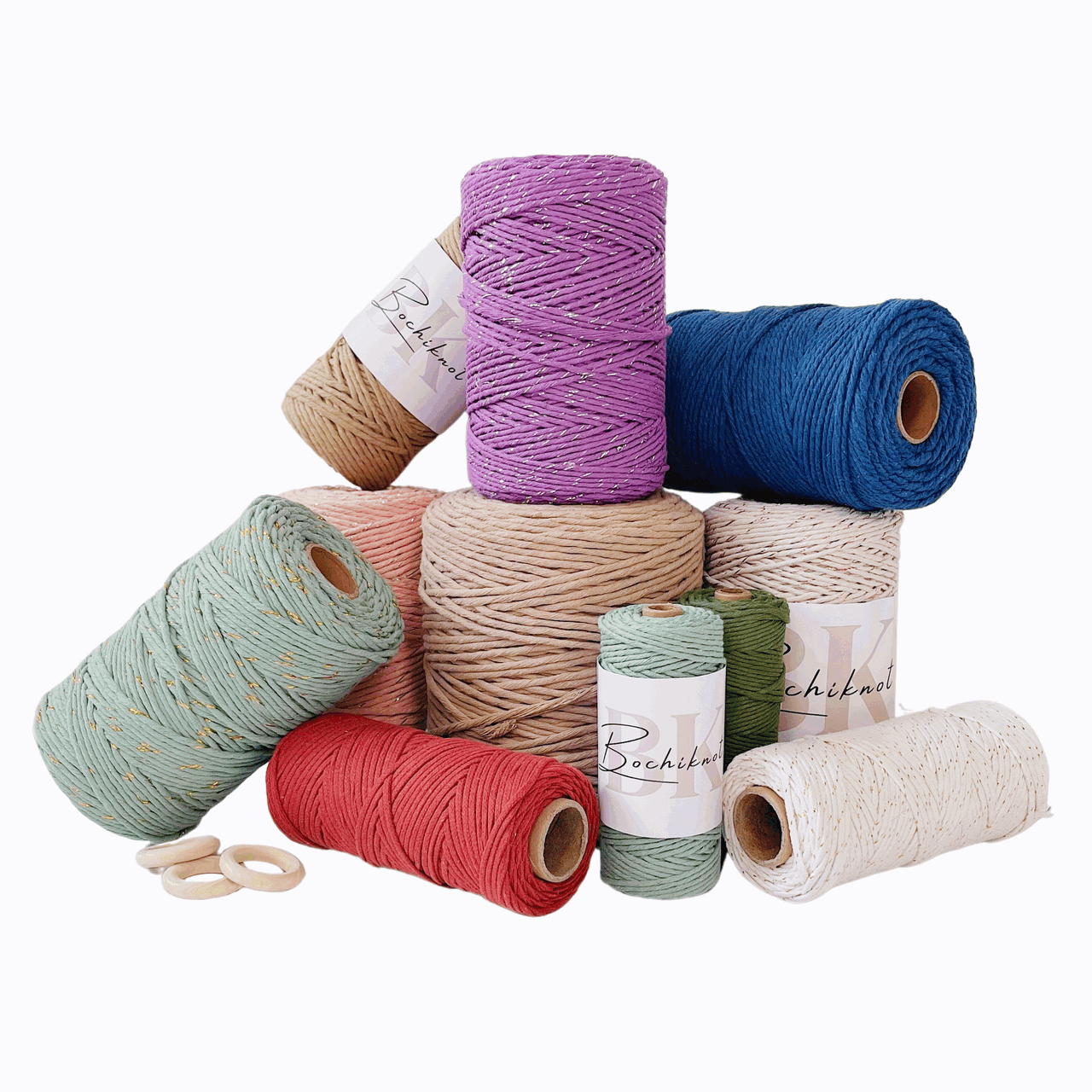
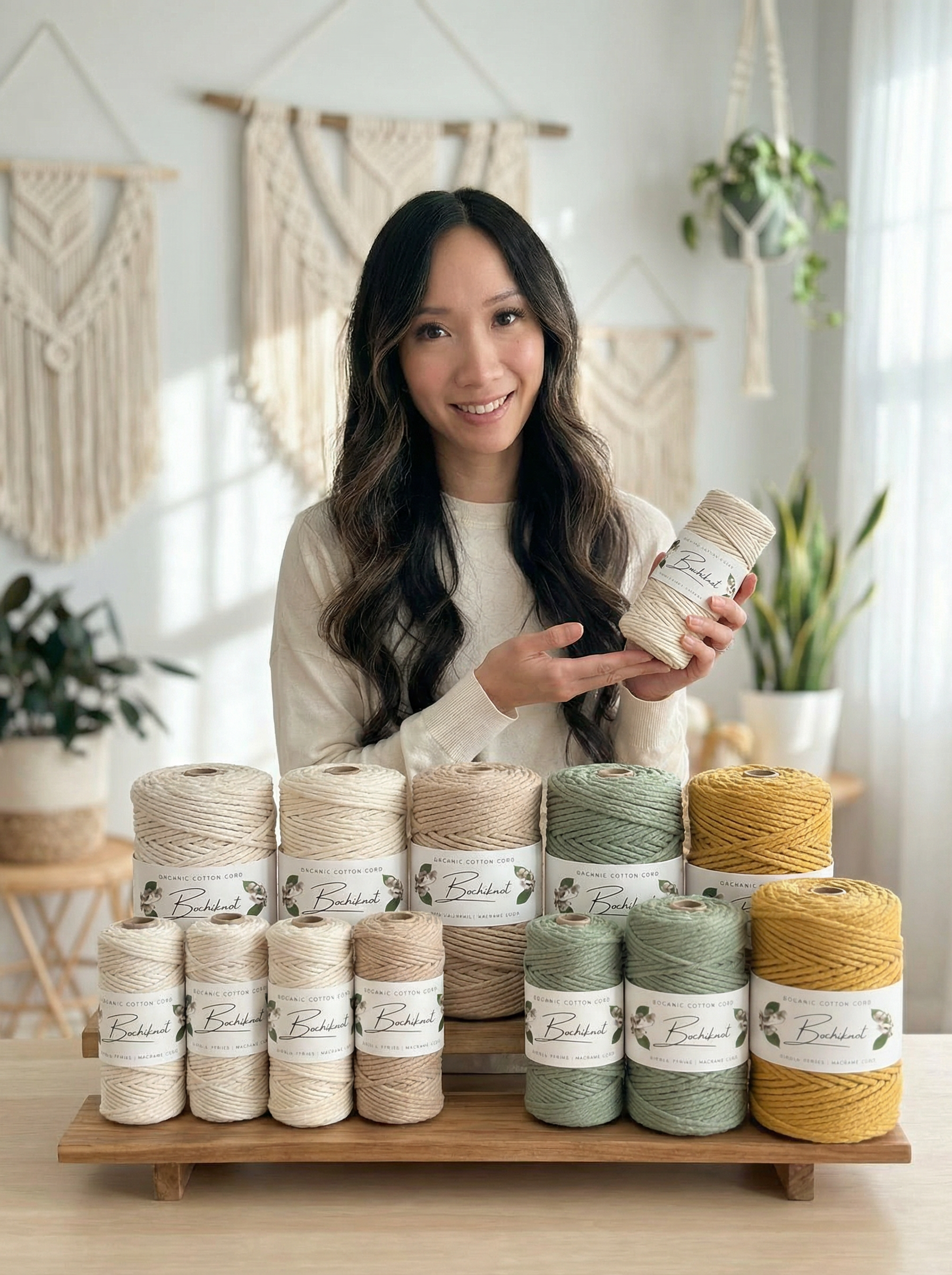
- 3mm or 5mm single-strand cotton cord — single-strand shows the berry shape most clearly (shop Bochiknot cord)
- A wooden dowel or anchor point to hold your cords taut
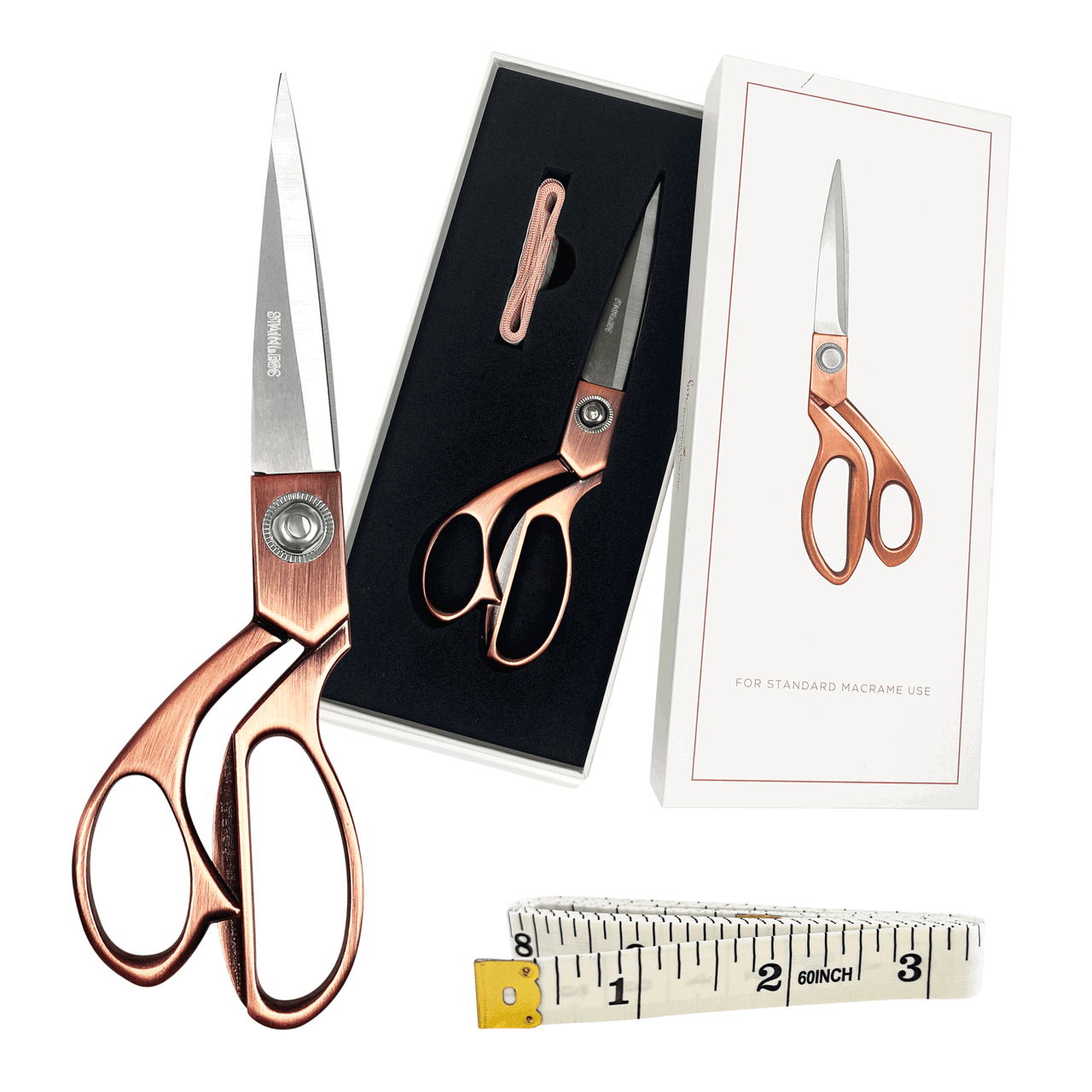
- Sharp macramé scissors for clean ends
- Optional: a crochet hook to help pull the filler cords through tight stacks
How to Tie a Berry Knot (Step-by-Step)
Before you start, make sure you can tie a basic square knot — the berry is built entirely from them.

Berry Knot Variations: Small, Medium & Large
You control the size of the berry just by changing the number of square knots in the stack:
| Berry size | Square knots in stack | Best for |
|---|---|---|
| Mini berry | 2 square knots | Jewelry, delicate keychains, fine detail accents |
| Small berry | 3 square knots | Wall hangings with subtle texture, dreamcatchers |
| Medium berry (classic) | 4 square knots | Most plant hangers, mid-size wall hangings |
| Large berry | 5 square knots | Statement focal points, garlands, chunky pieces |
| Jumbo berry | 6+ square knots | Oversized wall hangings — needs thick cord to look balanced |
Common Berry Knot Mistakes
| Mistake | What happens | How to fix it |
|---|---|---|
| Pulling filler cords through the wrong opening | The "berry" looks flat or twisted | Always pull through the top of the first square knot in the stack, not the middle |
| Stacking knots too loosely | Berry never rounds out — looks lumpy | Tighten each square knot before tying the next; no gaps between knots |
| Skipping the locking knot | Berry slips out and unravels | Always tie one square knot directly below the berry to lock it |
| Using cord that's too short | Run out mid-berry | Use 4.5–5× project length for berry-heavy projects (Golden Ratio) |
| Tying with twisted cord | Berry looks asymmetrical | Untwist your filler cords before pulling them up in Step 4 |
Troubleshooting: My Berry Doesn't Look Right
| If your berry looks… | The most likely cause is… |
|---|---|
| Flat and stretched out | You didn't pull the filler cords up tight enough — pull harder in Step 5 |
| Twisted to one side | One working cord is tighter than the other — re-tie with even tension |
| Too small / barely visible | You only tied 2 knots — add 1–2 more square knots to the stack |
| Loose and floppy | The locking square knot in Step 6 isn't tight enough — re-tighten |
| Lumpy on one side | Knots in the stack weren't even — start over with consistent tension |
| Won't compress into a ball | You pulled the filler cords through the middle instead of the top of the stack |
Projects That Use the Berry Knot
Looking to put your new berry knot skill to use? These project types use it beautifully:
- Textured wall hangings — add a row of 3–5 berries across the middle of a flat panel
- Statement plant hangers — cluster 3 berries at the top of each arm
- Macramé garlands — repeat berries along a horizontal cord for nursery or holiday decor
- Bracelets and necklaces — a single berry replaces a focal bead
- Keychains — a single berry just above the fringe creates a finished look
- Christmas ornaments — strings of berry knots make beautiful tree garland
Browse our full library of 12 free beginner macramé projects for patterns you can apply this knot to right away.
Berry Knot FAQ
What is a berry knot in macramé?
The berry knot is a 3D decorative macramé knot made by tying a stack of 3–5 square knots in a row, then pulling the inner filler cords up and through the back of the stack so it compresses into a raised, rounded ball that looks like a small fabric berry. A final square knot below locks it in place.
Is a berry knot the same as a square knot button?
Yes. The berry knot and the square knot button are the same knot — just different names. You may also see it called a popcorn knot or bobble knot. All four terms describe the same technique.
How many square knots do you need to make a berry knot?
Most berry knots use 3 to 5 square knots in the stack. Three gives you a small, tight berry. Four is the classic medium size used in most patterns. Five makes a chunky, statement-sized berry.
What size cord is best for a berry knot?
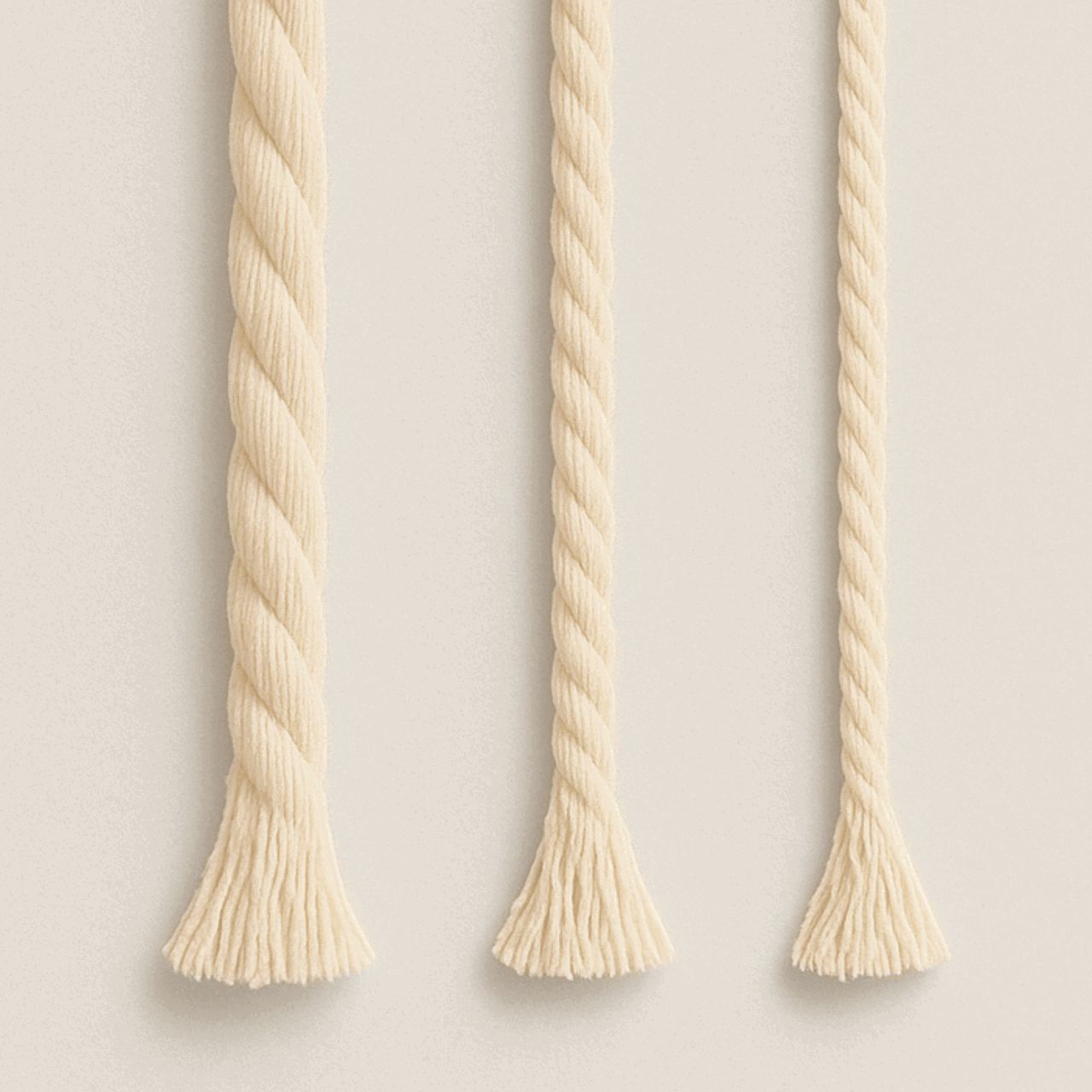
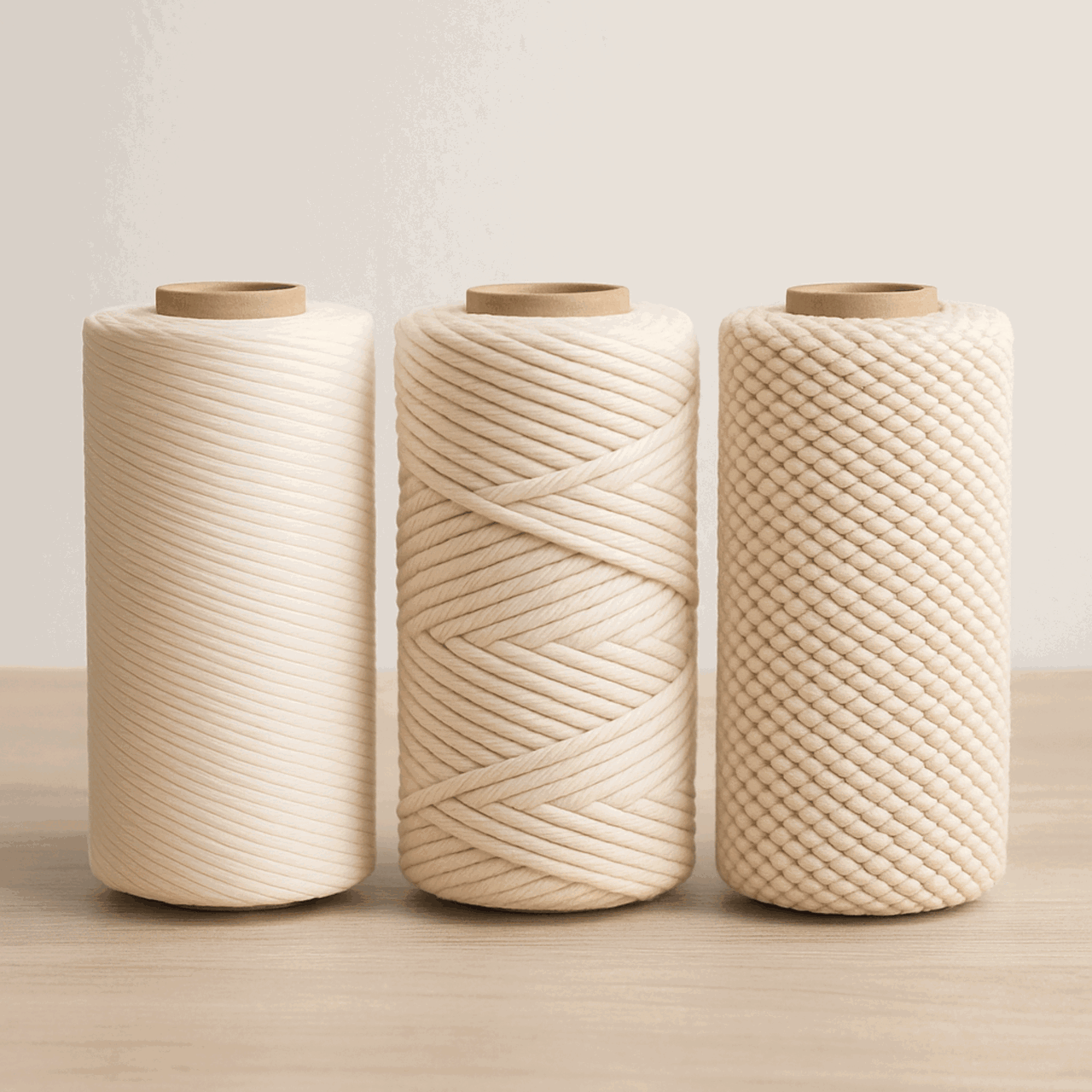
Single-strand 3mm or 5mm cotton cord works best because it shows the rounded berry shape most clearly. 3-ply twisted cord can also work but looks softer and less defined. Avoid braided cord for berry knots — it doesn't compress into the rounded shape as cleanly.
Why won't my berry knot form a ball?
The most common reason is that you pulled the filler cords through the wrong opening in Step 4. The filler cords must go up and through the very top of the first square knot in the stack — not the middle. If they go through the middle, the stack won't compress into a ball.
Do you need a special knot before a berry knot?
Yes — you need to know how to tie a basic square knot. The berry knot is built entirely from a stack of square knots. If you haven't tied a square knot before, start with our macramé square knot tutorial first.
How much cord does a berry knot use?
A single 4-square-knot berry uses roughly 6–8 inches of working cord per side, plus the cord length for the square knots themselves. For projects with multiple berry knots, plan for 4.5 to 5 times the finished project length per cord (the higher end of the macramé Golden Ratio).
Can you tie a berry knot with only 3 cords?
No. The berry knot requires exactly 4 cords — 2 outer working cords and 2 inner filler cords — because it's built from square knots, which themselves require 4 cords. With only 3 cords you can tie a half-hitch chain but not a berry.
What's the difference between a berry knot and a Josephine knot?
A berry knot creates a small, raised, rounded ball using stacked square knots. A Josephine knot creates a flat, two-loop decorative knot that looks like an interlaced pretzel. They're both decorative but visually very different — berry knots add 3D bumps; Josephine knots add flat 2D pattern.
Can you use a berry knot in jewelry?
Yes — berry knots are ideal for macramé jewelry. A single berry knot makes a beautiful focal point on bracelets, necklaces, and earrings, and it can replace a traditional bead. Use 1mm or 2mm cord for jewelry-scale berries.
What's the easiest way to pull the filler cords up in Step 4?
Use a small crochet hook. Push the hook down through the top opening of your stack from above, grab the two filler cords from behind, and pull them up and through. This is the single biggest fix for beginners who can't get the filler cords through.
How do I make a row of berry knots?
Set up enough cords for several side-by-side 4-cord groups (a row of 3 berries needs 12 cords). Tie each berry knot independently in its group, keeping each at the same vertical level. To space them, tie 1–2 additional square knots between rows of berries.
Your Next Macramé Knot
Now that you've mastered the berry knot, here are the next techniques to learn:


Keep Learning with Bochiknot
Want more macramé tutorials, patterns, and behind-the-scenes content? Connect with Nicole and the Bochiknot community across all of these platforms:
Patreon Membership
Exclusive patterns, video tutorials, and a private macramé community
Join Patreon
About Nicole Woo
Nicole is the founder of Bochiknot Macramé and has been teaching macramé for over 5 years. She's helped thousands of beginners take their first knot through her tutorials, YouTube channel, Patreon community, and best-selling DIY patterns on Etsy. When she's not knotting, she's photographing every step so you don't have to guess.

Leave a comment