























DIY Macrame Christmas Tree Ornament

Updated May 2026 · 10 min read
Trusted by 100,000+ on YouTube · 100,000+ on Instagram · 40,000+ Facebook community · 20,000+ on Pinterest
A macrame Christmas tree ornament is one of the most rewarding holiday projects you can make — it uses just four knots, takes 1–2 hours, and produces a dimensional tree shape with pearl beads that looks beautiful hanging on your Christmas tree or wrapped around a gift.
This step-by-step tutorial walks you through all 15 steps with photos, a full video, and Nicole’s pro tips so you get a clean, polished ornament on your very first try.
Can’t see the video? Watch on the Bochiknot YouTube channel — 100,000+ subscribers.
Knots You Need to Know
This project uses four knots. If any are new to you, click the link to learn them before starting — each one takes only a few minutes to pick up.
| Knot | What it does in this project | Learn it |
|---|---|---|
| Overhand Knot | Creates the hanger loop at the top | Knot library |
| Reverse Lark’s Head Knot | Mounts the first cord onto the hanger loop | Lark’s Head tutorial |
| Double Half Hitch (DHH) | Shapes the tree body — used throughout every row | DHH tutorial |
| Gathering Knot | Bundles the fringe at the base of the trunk | Gathering Knot tutorial |
Materials & Cord Lengths
| Material | Amount | Where to get it | Required? |
|---|---|---|---|
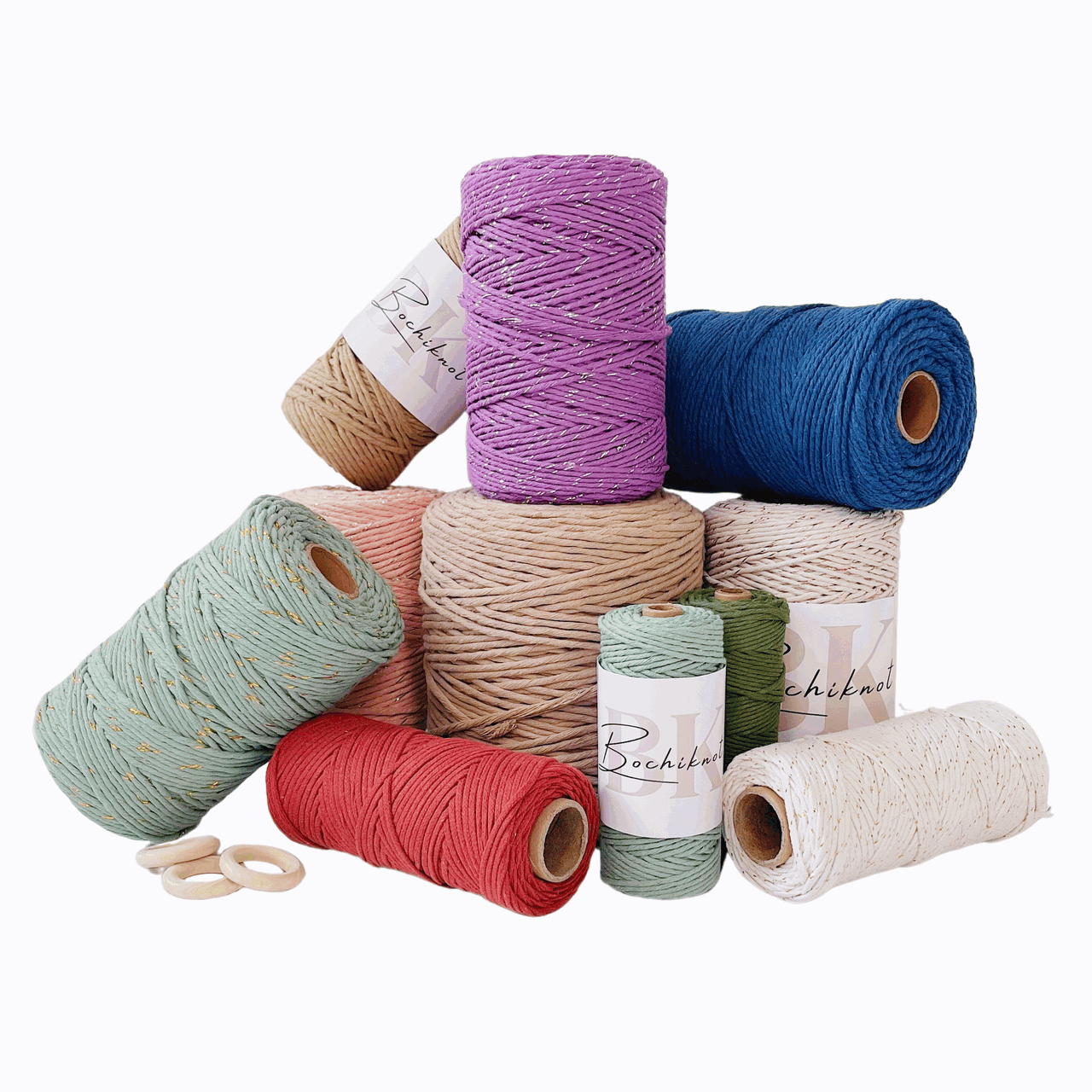
| 3–4mm single-strand cotton cord | 3 × 125cm, 1 × 90cm, 1 × 70cm | Bochiknot | Yes |
| 1–2mm string | 2 × 25cm | Bochiknot | Yes |
| Pearl beads (large hole) | 6 | Amazon | Yes |
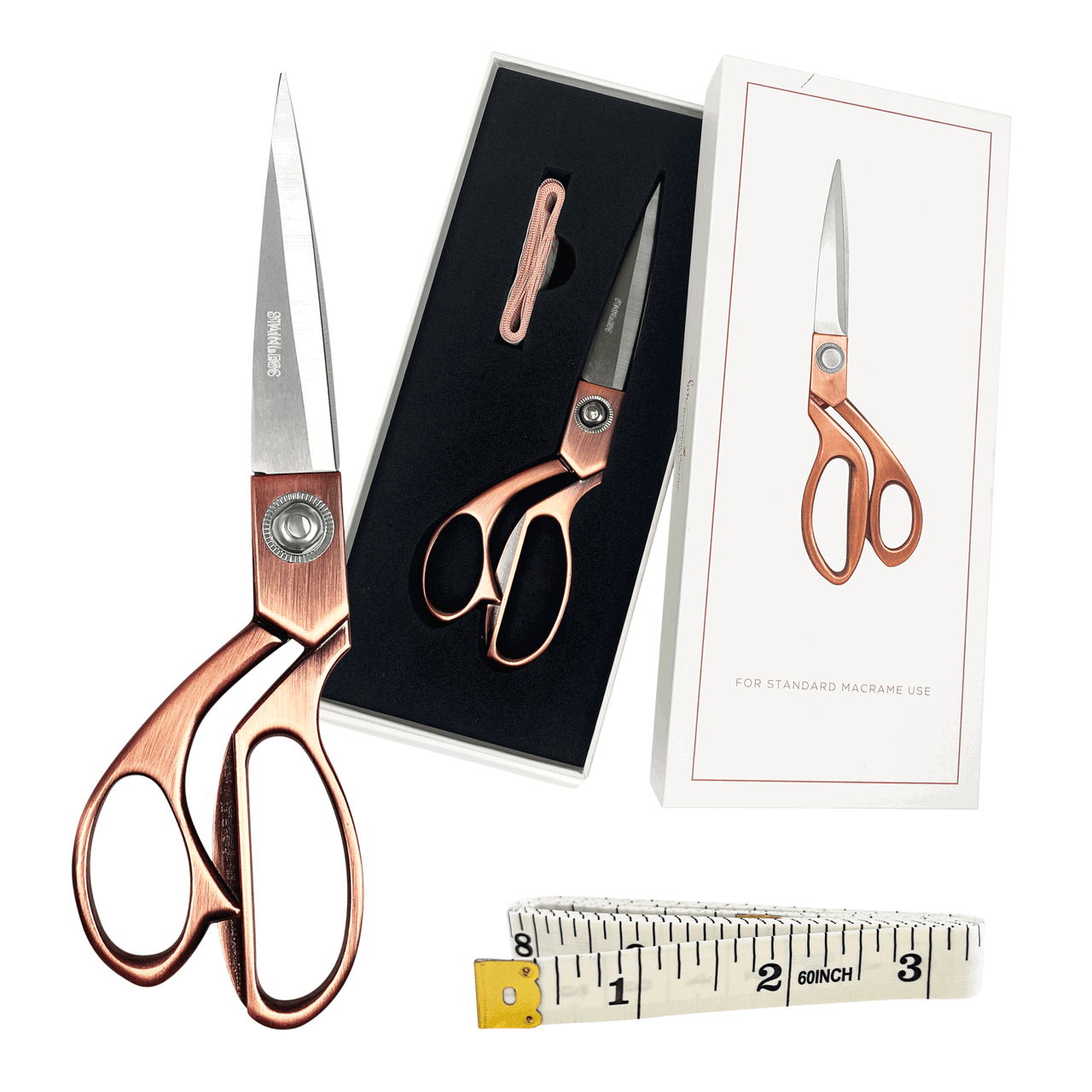
| Sharp scissors | 1 | Bochiknot | Yes |
| Measuring tape | 1 | Amazon | Yes |
This first step creates the top loop your ornament will hang from and anchors the very first working cord. Take your time here — a tight Overhand knot and a secure Reverse Lark’s Head set the foundation for every row that follows.
- Fold a 30 cm string in half and tie an Overhand knot at the ends.
- Attach a 125 cm cord to the loop using a Reverse Lark’s Head knot.


Nicole’s pro tip: Make the hanger loop about 3–4 cm long so it slips easily over a tree branch. Fold the string tightly before knotting — any looseness here will make the ornament hang unevenly.
The Double Half Hitch (DHH) knot is the workhorse of this pattern — it creates the clean, angular lines that give the tree its shape. Step 2 is your first chance to practice it before the pattern gets more complex.
- Take another 125 cm cord and tie 2 DHH knots around the two vertical cords.


Nicole’s pro tip: New to Double Half Hitch knots? Watch the DHH tutorial first — it’s the most-used knot in this project and understanding the direction of each hitch makes a big difference in how tidy your tree looks.
Here the tree shape starts to emerge. The diagonal direction of these DHH knots creates the characteristic triangular silhouette — the angle sets the slope of the tree branches.
- Make a diagonal DHH knot toward the center on both sides.


Nicole’s pro tip: Keep the angle consistent on both sides — match the left diagonal to the right before moving on. Hold the piece up and compare both sides after each row. A small difference now will be noticeable once the full tree is assembled.
Adding the third cord widens the tree section, creating the first full tier. Each new cord attached at the middle builds the layered, branch-like structure of a macrame Christmas tree.
- Take another 125 cm cord and attach it to the two middle cords with DHH knots.


Nicole’s pro tip: Find the exact center of the new cord before attaching — fold it in half and mark the midpoint with a small clip. Attaching off-center will skew the tree body and cause one side to have more cord than the other.
The pearl beads are what make this ornament sparkle. Positioning the bead correctly — before tying the flanking DHH knots — locks it in place and keeps it facing forward on the finished piece.
- Thread a pearl bead onto the far-left cord.
- Using the second cord from the left as the anchor, make 1 DHH knot to the left.
- Then make 2 DHH knots back to the right.


Nicole’s pro tip: Slide the bead all the way to the edge before tying the first DHH — it should sit snugly against the outer knot. If the hole is tight, use a crochet hook to thread the cord through.
Symmetry is what makes this ornament look professional. Step 6 mirrors exactly what you did in Step 5 — same bead position, same DHH count, same direction. Take a moment to compare both sides before continuing.
- Thread a pearl bead onto the far-right cord.
- Mirror the DHH knot sequence from Step 5 on the right side.


Nicole’s pro tip: Hold the ornament up and look at it straight-on after completing both sides. If the beads sit at different heights, gently slide the cords until both are level — it’s much easier to correct now than after the next row is tied.
This step closes the first tier of the tree and sets up the transition to the wider second tier. The diagonal DHH at the middle is the structural knot that defines each layer of the tree.
- Make a diagonal DHH knot with the middle two cords.
- Using the outer cords on both sides, make a row of DHH knots toward the center.


Nicole’s pro tip: Pull each DHH knot firmly as you work toward the center — loose knots in this closing row will create gaps in the tree outline. Even tension here makes the whole piece look more polished.
The shorter 90 cm cord starts the second, wider tier of the tree. Each cord attached from the center expands the silhouette, building the layered Christmas tree shape row by row.
- Attach a 90 cm cord to the middle two cords with DHH knots.

Nicole’s pro tip: Notice the cord is shorter than the previous tier (90cm vs 125cm) — this is intentional. The tree tapers at the top, so cords get shorter as you work down to the base. Check the reference photo before attaching to confirm the correct cord.
Enjoying this so far?
Get more free patterns + 10% off your first order — join 10,000+ crafters.
The second bead sits in the second tier, wider and lower than the first. The increased DHH count (2 left, 3 right) reflects the wider angle of the tree at this level — you’ll notice the tree growing more pronounced with each tier.
- Thread another pearl bead onto the cord.
- Make 2 DHH knots to the left and 3 back to the right.
- Repeat on the right side.


Nicole’s pro tip: The DHH count increases with each tier (1 left / 2 right in tier 1; 2 left / 3 right in tier 2). This is intentional — the tree widens as it grows. Follow the video closely if you lose track of the count.
This closing row completes the second tier — the same technique as Step 7 but one level wider. Consistent tension through every closing row is what gives the finished ornament its clean, structured silhouette.
- Make a DHH knot in the middle to close the center.
- Make another row of DHH knots toward the center from both sides.


Nicole’s pro tip: After every closing row, count the cords hanging below to make sure none have been accidentally skipped. You should have the same number on each side — if the count is off, it’s easier to undo one row than to discover the error three steps later.
The third and final new cord (70 cm) starts the lowest and widest tier of the tree body. From here the ornament grows into its full Christmas tree shape before the trunk fringe finishes it off.
- Attach a 70 cm cord to the middle two cords with DHH knots.

Nicole’s pro tip: The 70 cm cord is the shortest of the three working cords — double-check you have the right one before attaching. Using the wrong length here will affect the proportions of the bottom tier and may leave you short of cord before you finish the row.
The third bead sits in the widest tier, largest in visual weight and lowest on the tree. The DHH count increases again (3 right / 4 left) — following this precisely keeps the tree symmetrical and correctly proportioned.
- Thread a pearl bead through and make 3 DHH knots to the right and 4 back to the left.
- Repeat on the left side.


Nicole’s pro tip: If you want a more dimensional tree, use slightly larger beads in the lower tiers and smaller ones higher up — it adds a natural perspective that makes the ornament look even more like a real tree when viewed from a distance.
This is the most complex closing row — each DHH knot absorbs one more working cord into the anchor group, gradually narrowing the piece down toward the trunk. Take it slowly and follow the reference photos.
- Close the middle with a DHH knot.
- Make a row of DHH knots toward the center, including each working cord into the anchor group as you go — this bundles all cords toward the trunk.


Nicole’s pro tip: “Including the working cord with the anchor cord group” means each new DHH knot is tied around an increasingly thick anchor — don’t skip this or the base will splay open. Watch the video for this step if the written instruction feels confusing.
The Gathering knot bundles all the remaining cord ends together, forming the ornament’s trunk. A tight, neat Gathering knot gives the tree a clean base and prevents the fringe from spreading.
- Gather all loose cord ends together below the tree body.
- Use a 25 cm string to tie a Gathering knot around them at the base.


Nicole’s pro tip: Position the Gathering knot close to the bottom of the tree body — too low and the fringe trunk becomes very long; too high and it competes visually with the bottom tier. About 1–2 cm below the last DHH row is ideal. Learn the Gathering Knot technique here.
The final trim turns the raw cord ends into a neat, even trunk fringe — the signature finishing touch of a macrame Christmas tree ornament. A clean diagonal or straight cut gives the most polished result.
- Trim the fringe below the Gathering knot to your desired length.
- Even out any uneven ends for a clean finish.
Nicole’s pro tip: Cut the fringe at a slight angle (longer at the back, shorter at the front) to give the trunk a more tapered, organic look. Use sharp scissors for a clean cut — craft scissors will fray the ends. Leave at least 2–3 cm of fringe below the Gathering knot so it reads as a proper tree trunk.
Variations & Ways to Customise Your Macrame Christmas Tree Ornament
Once you’ve made one, the pattern becomes second nature. Here are the most popular ways crafters personalise this macrame Christmas tree ornament:
| Variation | How to do it | Best for |
|---|---|---|
| Natural / boho | Use undyed single-strand cotton cord, swap pearl beads for wooden beads | Rustic, farmhouse Christmas décor |
| Colourful | Use dyed cotton cord in forest green, deep red, or gold | Traditional Christmas colour palettes |
| Larger ornament | Scale up cord lengths proportionally and use a 5–6mm cord for a statement piece | Gifts, garlands, wall hangings |
| Metallic sparkle | Swap cotton cord for 3mm metallic cord to add shimmer | Glam, modern Christmas trees |
| Gift topper | Leave a longer hanger loop and tie it directly around a gift ribbon | Handmade gift wrapping and tags |
Frequently Asked Questions
How long does this macrame Christmas tree ornament take to make?
Allow 1–2 hours for your first attempt. If you’re comfortable with Double Half Hitch knots already, you can finish in closer to 1 hour. After your first ornament, most crafters can complete subsequent ones in 45–60 minutes.
What knots do I need to know?
Four knots: the Overhand Knot, the Reverse Lark’s Head Knot, the Double Half Hitch (DHH), and the Gathering Knot. The DHH is used most — if you’re new to it, practice on scrap cord before starting the project. All four knot tutorials are free on the Bochiknot knot library.
What cord is best for a macrame Christmas tree ornament?
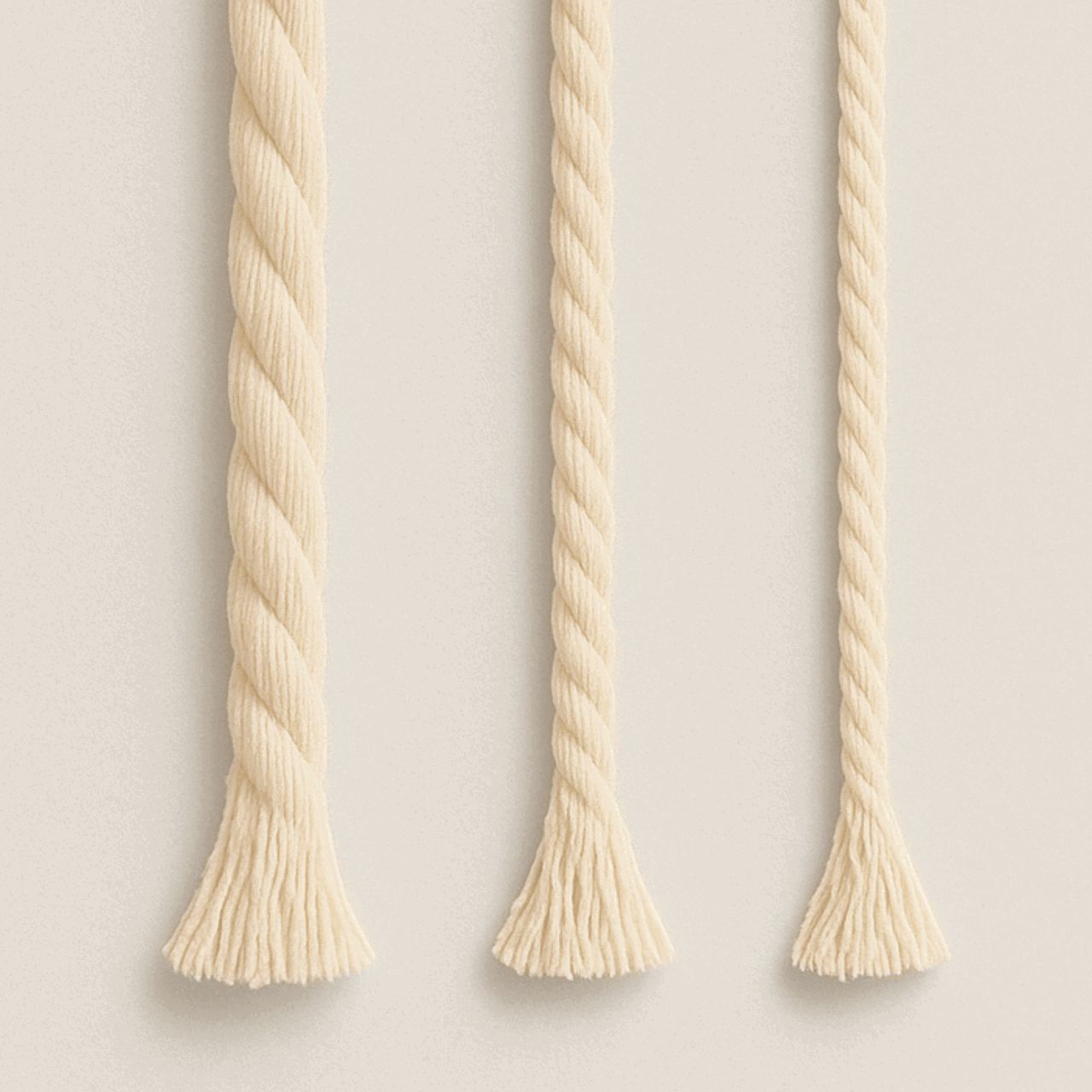
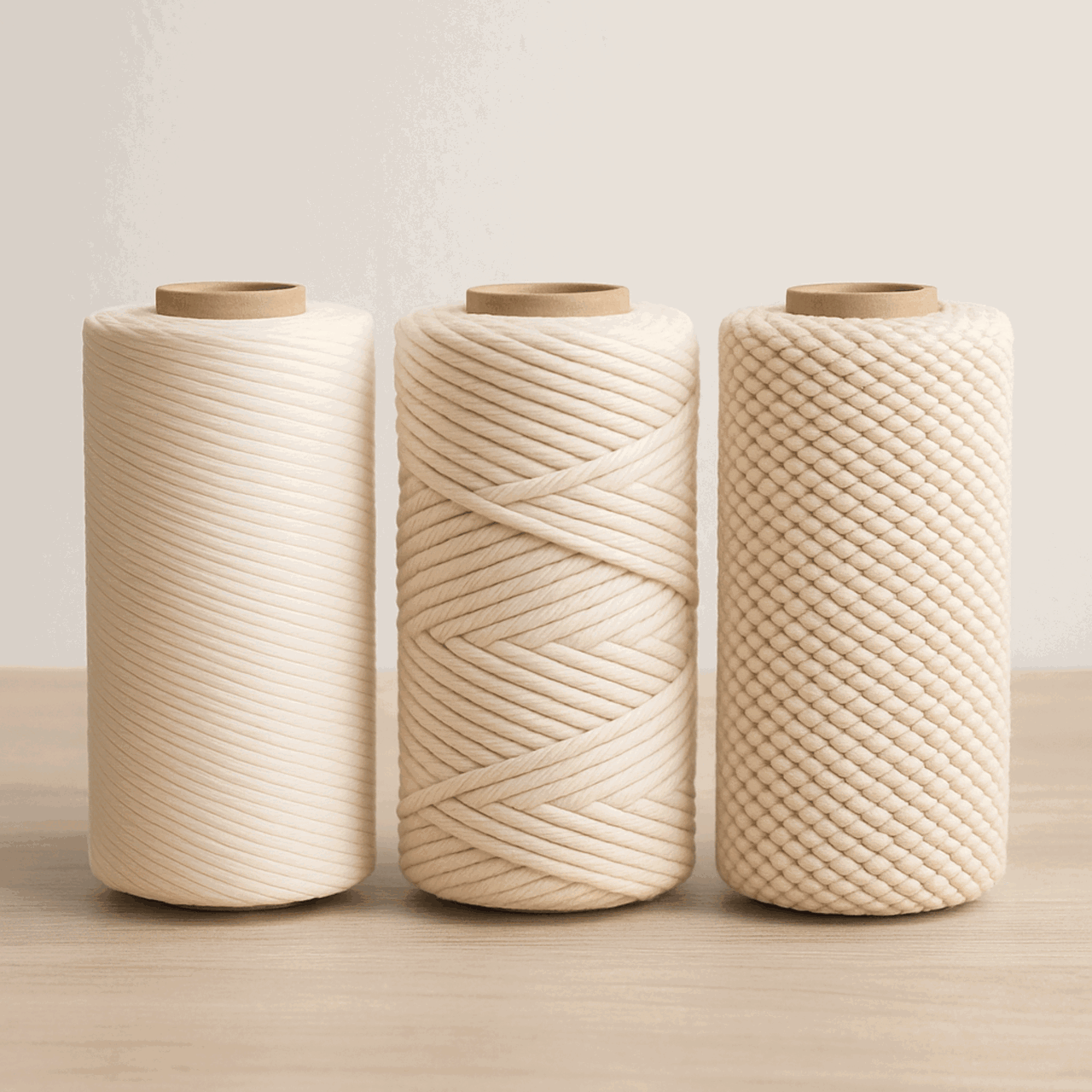
3mm single-strand cotton cord gives the cleanest result — it holds its shape, knotting is easy to control, and the finished ornament stays structured. 4mm cord also works and produces a slightly chunkier look. Avoid twisted (3-ply) cord for this project as the DHH knots don’t lie as flat.
Is this project suitable for beginners?
It’s rated “advanced beginner” — meaning it’s not a first-ever project. If you’ve completed one or two simpler macrame projects and can tie a DHH knot, you’re ready for this. Absolute beginners should try the macrame Christmas wreath ornament first (only 2 knots, under 1 hour) and then come back to this one.
Can I make this macrame Christmas tree ornament without beads?
Yes. Skip the bead steps and simply continue the DHH row across without threading anything. The ornament still looks beautiful without beads — cleaner and more minimalist. Alternatively, swap pearl beads for wooden beads, small bells, or even a tiny star charm at the top.
How do I hang this ornament on the tree?
The overhand knot loop at the top (Step 1) slips directly over a tree branch — no hook needed. For a neater hang, thread a small ornament hook through the loop. You can also use it as a gift topper by tying the loop around a ribbon bow on a wrapped present.
How do I make multiple ornaments quickly?
Batch-cut all your cord lengths first — once you’re in the flow of the knots, stopping to measure and cut breaks your rhythm. Cut 5–10 sets of cord at once, then knot them back to back. Most crafters can batch 4–6 ornaments in a single afternoon once they know the pattern.
Make More — What to Knot Next
Now that you’ve made your macrame Christmas tree ornament, you have all the core DHH skills needed for the rest of the holiday collection. These ornaments are perfect for batching — make a set of trees and wreaths together for a coordinated handmade Christmas.
Try swapping the cord colour, scaling up to a larger ornament, or gifting a few to friends and family. Drop your finished ornament in the comments below — we’d love to see your version.
You might also like
Christmas · Tutorial
DIY Macrame Christmas Wreath Ornament
A perfect companion ornament — simpler knots, under an hour. Make them as a matching set.
Knots · Tutorial
How to Tie a Double Half Hitch Knot
Master the key knot used in every row of this project — step-by-step photos and common mistakes to avoid.
Phase 1 · Guide
Complete Guide to Macramé Cord & Materials
Single-strand vs 3-ply, 3mm vs 5mm — which cord for which project, explained in plain English.
Get everything in one kit
Cord, pattern & video tutorial included. No experience needed — just follow along.
Shop Welcome Kit →Get 10% Off Your First Order
Join 10,000+ crafters. Free tutorials, new patterns & exclusive offers — straight to your inbox. No spam, unsubscribe any time.
We respect your inbox. Unsubscribe any time.

Nicole Woo — Founder, Bochiknot
Macramé educator & designer
Nicole is a self-taught macramé artist teaching a global community of crafters since 2018. Through Bochiknot, she shares step-by-step tutorials, premium cord, and beginner-friendly kits designed to help anyone pick up a rope and make something they’re proud of.
Last reviewed by Nicole — May 2026

Leave a comment