






How to Tie a Lark's Head Knot + Reverse Lark's Head Knot (Step-by-Step)

Basic Knot Tutorial · Updated May 23, 2026 · 18 min read · Phase 1
The lark's head knot — also called the cow hitch, ring hitch, or lanyard hitch — is the first knot in almost every macramé project. It's how you attach your cord to a dowel, ring, or branch at the start of a wall hanging, plant hanger, or keychain. Pair it with the reverse lark's head knot and you've got a clean, professional foundation for any piece.

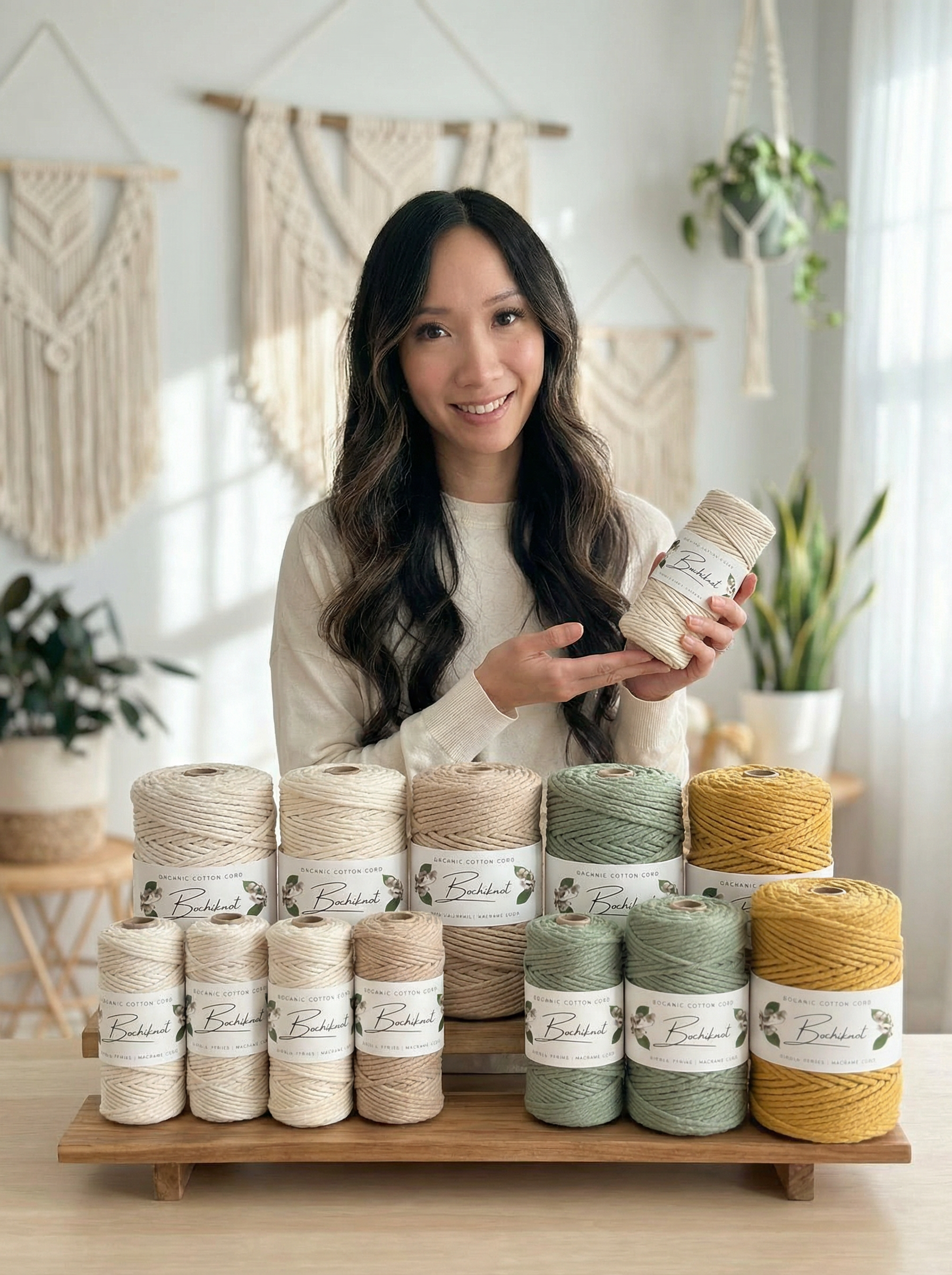
Written by Nicole Woo
Founder of Bochiknot · Teaching macramé since 2018
If this is one of the first macramé tutorials you're reading, welcome. I'm Nicole, and I've taught this exact knot to thousands of beginners — on YouTube, in person, and through our Patreon community. The lark's head knot takes about 5 seconds once you've practiced it a few times, but the small differences between the standard and reverse versions are what separate a beginner-looking piece from a polished one.
Below is the complete walkthrough: what the knot is, why it has so many names, how to tie both versions step by step (with photos for every step), the standard-vs-reverse comparison, common mistakes I see in every class, how to fix them, and a set of beginner-friendly practice exercises and projects to lock the knot into your muscle memory.
📺 Watch the lark's head knot tutorial:
In this tutorial:
- What is the lark's head knot?
- Also known as: cow hitch, ring hitch, lanyard hitch
- When you'll use the lark's head knot
- What you'll need
- How to tie a lark's head knot (step-by-step)
- How to tie a reverse lark's head knot (step-by-step)
- Standard vs. reverse — which to use
- Lark's head knot variations
- Common mistakes
- Troubleshooting
- Practice exercises
- Projects that start with a lark's head
- FAQ
- Your next macramé knot
The lark's head knot (also called a cow hitch, ring hitch, or lanyard hitch) is a mounting knot used to attach cords to a dowel, ring, or hanging cord at the start of macramé projects like wall hangings, plant hangers, and keychains. It works by folding the cord in half and pulling both ends through its own loop, and it's the first knot most beginners learn.
What Is the Lark's Head Knot?
The lark's head knot is a simple mounting knot used to attach a folded length of cord onto a base. You fold the cord in half, loop the folded end over the dowel (or ring, or branch), and pull the two cut ends through the loop. One knot mounts one folded cord — which gives you two hanging working cords to start knotting with.
It's the single most common knot used at the start of macramé projects because:
- It mounts cord cleanly with no extra hardware
- It produces two working cords from one length of folded cord
- It sits tightly against the dowel and doesn't slip when downward tension is applied
- You can untie it cleanly if you make a mistake (a big plus for beginners)
Despite how simple it is, the lark's head knot is also used in jewelry-making (mounting pendants on cord), keychain construction, paracord projects, sailing, scouting, and climbing. It's one of the most universal knots in any craft that involves cord and a fixed base.

Also Known As: Cow Hitch, Ring Hitch, Lanyard Hitch
The lark's head knot has more names than almost any other knot. Here's why that matters: if you're learning from non-macramé sources (sailing books, scout manuals, paracord forums), you'll see this exact knot called something different. They're all the same technique.
| Name | Most commonly used by | Notes |
|---|---|---|
| Lark's head knot | Macramé makers, fiber artists | The standard name in modern craft culture |
| Cow hitch | Sailors, scouts, climbers, paracord makers | The traditional functional name; identical technique |
| Ring hitch | Jewelry makers, leather workers | Used when the base is a ring rather than a dowel |
| Lanyard hitch | Military and paracord communities | Specifically when tied around a lanyard or strap |
| Bale hitch | Older craft texts | Mostly archaic now, but you'll see it in vintage knot books |
For the rest of this tutorial I'll use "lark's head knot" since you're here from a macramé context — but everything I show you applies identically if you're calling it a cow hitch.
When You'll Use the Lark's Head Knot
If you're going to learn one macramé knot first, this is it. Here's where you'll use a lark's head — and a reverse lark's head — in real projects.
| Project type | How the lark's head is used | Standard or reverse? |
|---|---|---|
| Wall hangings | Mount all working cords to the top dowel | Reverse (cleaner top edge) |
| Plant hangers | Mount cords to a wooden or metal ring | Standard (bumps don't matter) |
| Keychains | Attach cord to the key ring | Standard |
| Bracelets & jewelry | Attach cord to a clasp, jump ring, or pendant | Standard (or reverse for visible-back pieces) |
| Lanyards | Attach cord to a snap hook or split ring | Standard |
| Table runners & placemats | Mount cords to a top dowel that will be hidden after | Either — won't be visible |
| Garlands & banners | Mount decorative tassels to a horizontal cord | Reverse (front-facing) |
The rule of thumb: if the top of your piece will be visible, use the reverse lark's head. If it'll be hidden or covered, the standard lark's head is faster and easier.
What You'll Need
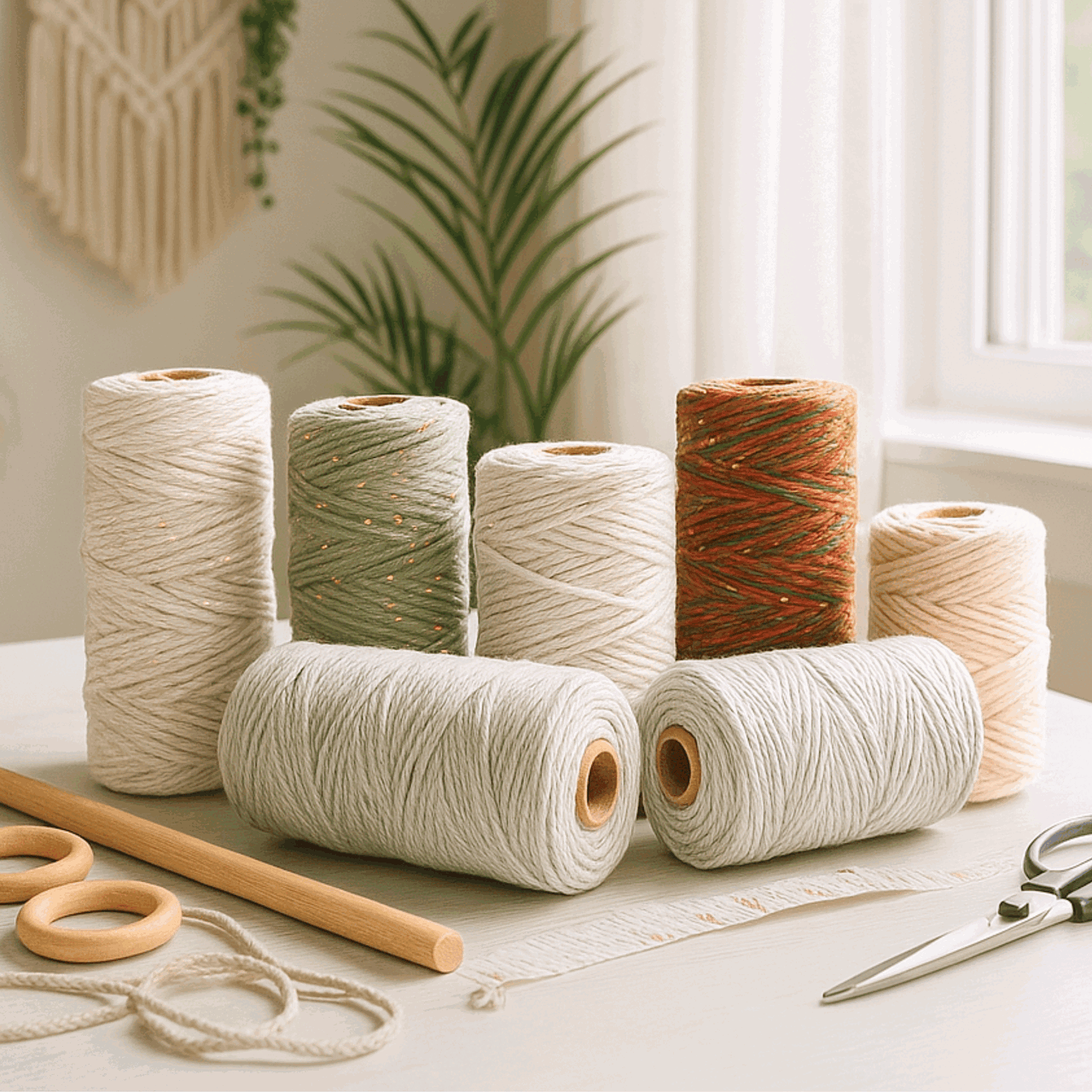
Practically nothing. To practice tying the knot, you only need three things — and you can use scrap cord for the first few attempts.
✅ The 3-item setup
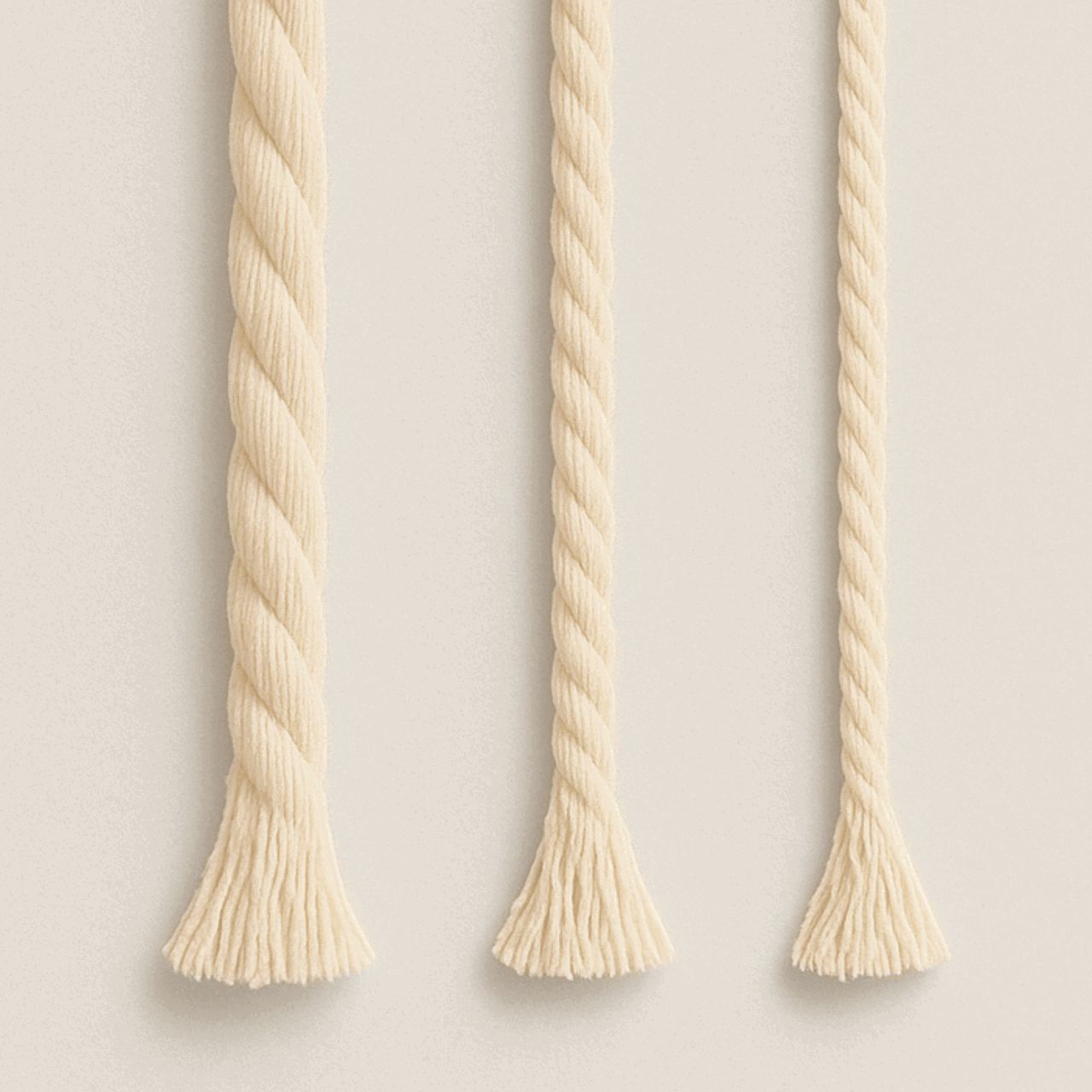
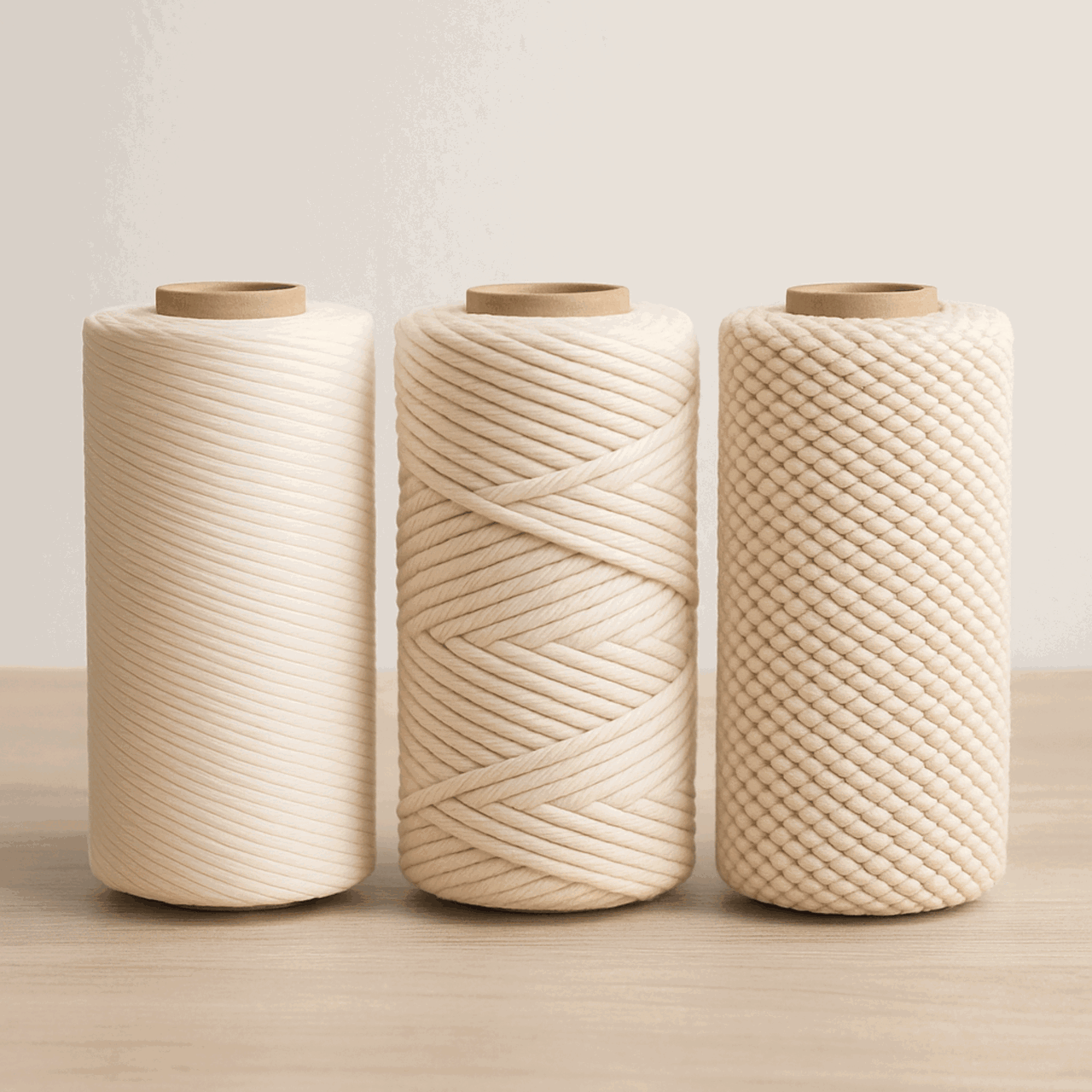
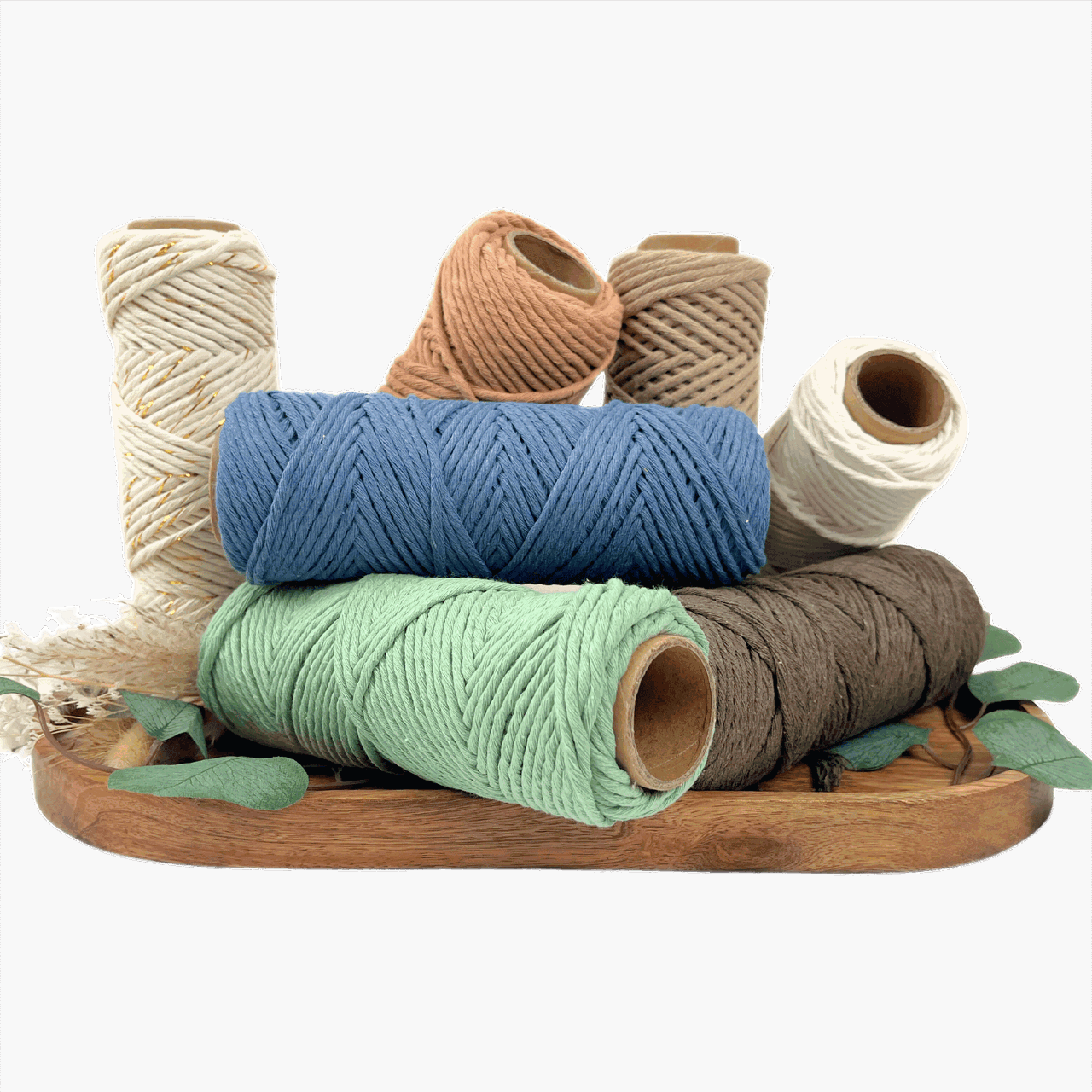
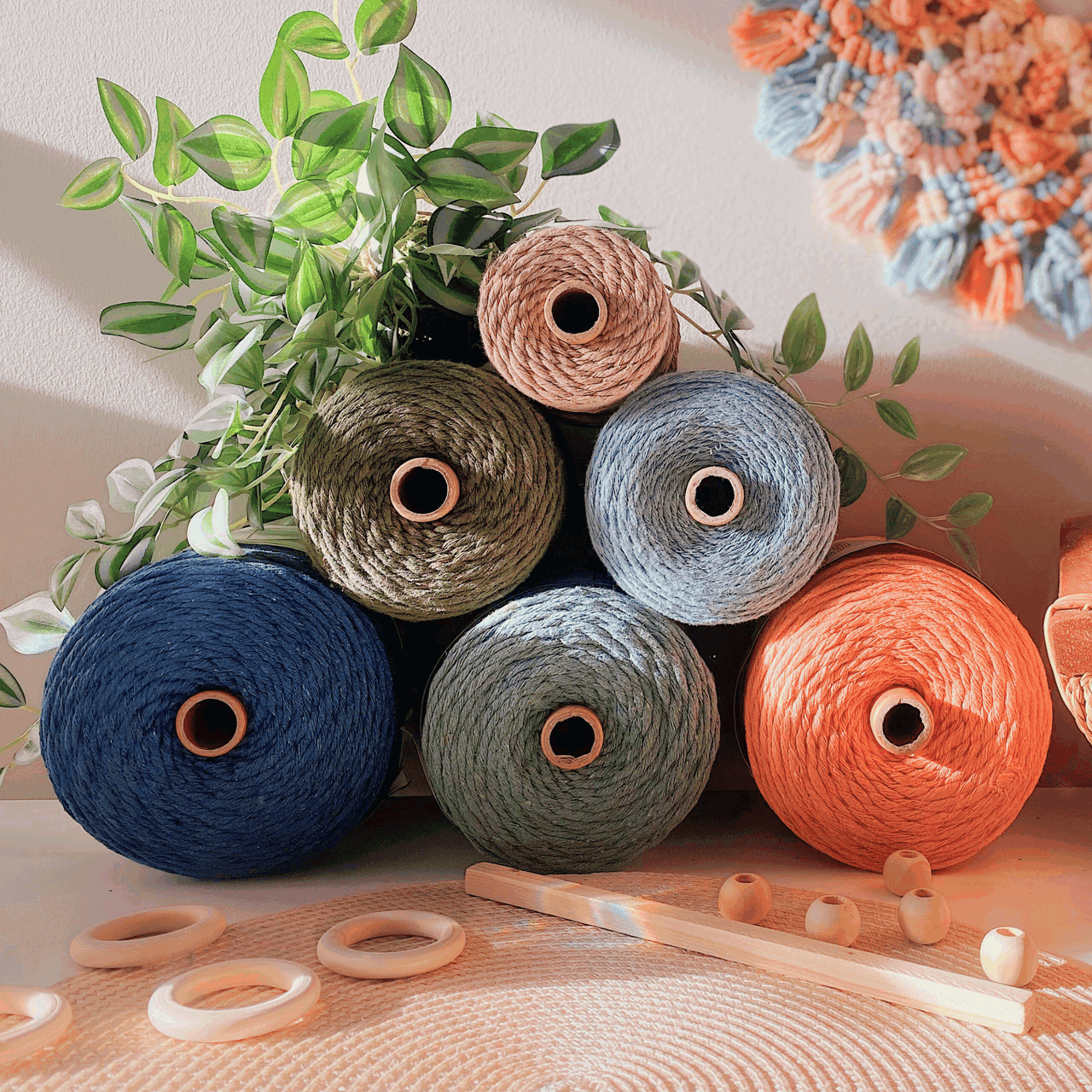
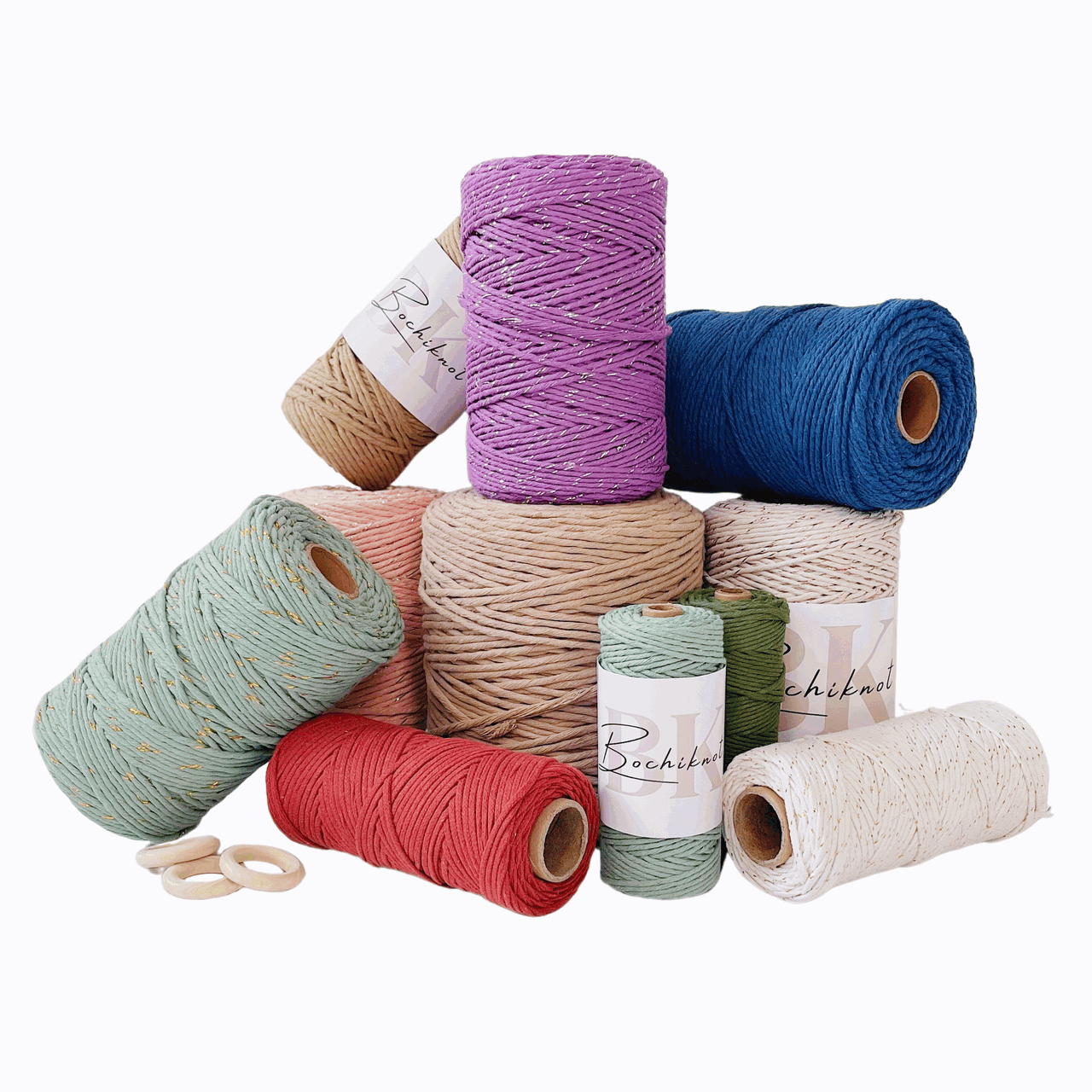
- One length of macramé cord — about 4 feet long, 3mm or 5mm single-strand cotton. Shop single-strand cord →
- A wooden dowel or branch — anything 0.5–1 inch thick works for practice. Shop wooden dowels →
- Something to hang the dowel from — an S-hook on a doorframe, a chair back, or a wall hook at eye level.
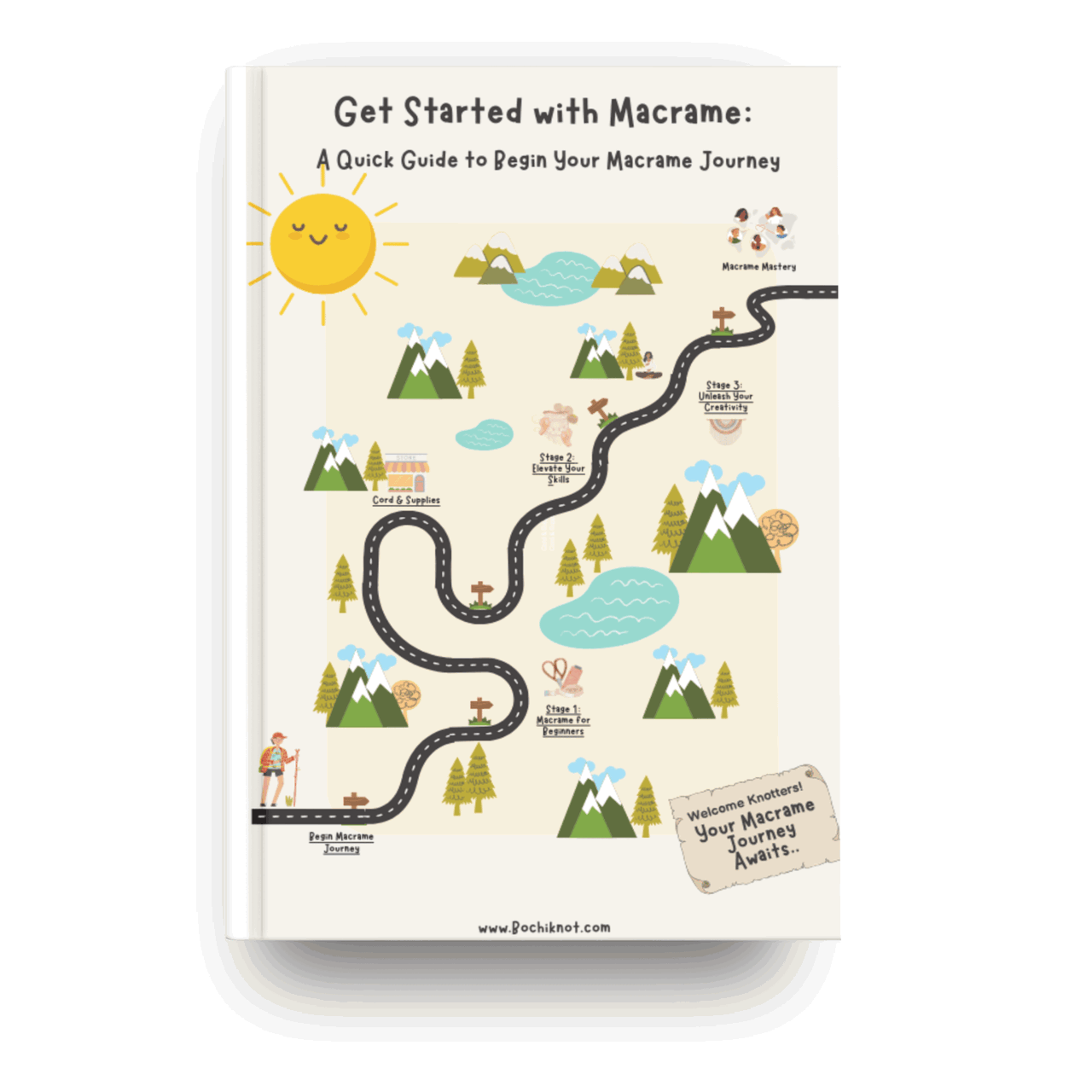
New to macramé entirely? Start with our complete beginner's guide first — it covers cord selection, workstation setup, and all 4 basic knots.
How to Tie a Lark's Head Knot (Step-by-Step)
The standard lark's head takes about 5 seconds once you've practiced it. Here's the slow walkthrough — the visual reference below shows all four steps at a glance, then the detailed instructions follow.

1Fold the cord in half
Take your length of cord and fold it in half so the two cut ends are even and the folded loop is at the top. Pinch the loop between your thumb and index finger.
2Bring the loop behind the dowel
Hold the folded loop in front of your dowel. Bring the loop up and over the top of the dowel, then let it drop down behind. The two cut ends should now be hanging in front of the dowel, with the loop poking down behind.
3Pull the loop forward over the top
Reach behind the dowel, grab the loop, and pull it forward so it hangs down in front of the dowel. The two cut ends are now hanging behind. (If you're confused: the cord has done a single wrap around the dowel.)
4Thread the cut ends through the loop and pull tight
Take the two cut ends (currently behind the dowel), bring them up and over the top of the dowel, and feed them through the loop you just created in front. Pull both ends downward firmly until the knot tightens against the dowel.
That's it. You've tied your first lark's head knot. You should see two small bumps at the front where the cord crosses over itself, and two cut ends hanging down ready for your next knot.
How to Tie a Reverse Lark's Head Knot (Step-by-Step)
The reverse lark's head is the same knot — just flipped. The bumps end up on the back of the piece instead of the front, leaving a clean, smooth top edge that looks more polished in finished work. It's the version I use on every wall hanging I make.

1Fold the cord in half
Same as the standard version — fold your length of cord in half so the two cut ends are even and the folded loop is at the top.
2Bring the loop in FRONT of the dowel
This is the only step that changes from the standard version. Hold the folded loop behind the dowel. Bring the loop up and over the top of the dowel, then let it drop down in front of it — the opposite direction from the standard.
3Pull the loop down in front
The loop should now be hanging down in front of the dowel. The two cut ends are hanging behind. (Same end state as standard step 3 — just got there from the opposite direction.)
4Thread the ends through the loop and pull tight
Take the two cut ends (currently behind the dowel) and feed them up and through the loop in front. Pull both ends downward firmly until the knot tightens. Now look at the front of the dowel — you should see a smooth, flat surface with no visible bumps. Look at the back, and that's where the bumps are.
Standard vs. Reverse — Which One Should You Use?
Both versions are the same knot — the only difference is which side of your dowel the bumps face. Here's the quick decision framework:
| Feature | Standard lark's head | Reverse lark's head |
|---|---|---|
| Bumps face | The front (visible side) | The back (hidden side) |
| Front-facing look | Two small bumps per knot | Smooth, flat, clean |
| Difficulty | Beginner | Beginner (one tiny change) |
| Best for | Plant hangers, keychains, backs of pieces, practice | Wall hangings, garlands, anything with a visible top edge |
| Common mistake | Mixing knot directions across the dowel | Accidentally starting in front (= standard, not reverse) |
Lark's Head Knot Variations
Once you can tie both the standard and reverse versions cleanly, three small variations open up the rest of macramé. You'll see all of these in patterns.
1. Alternating lark's heads
You alternate one standard and one reverse across the same dowel. Creates a subtle "woven" look at the top of a piece — useful when you want texture without going full reverse. Less common but striking on minimalist pieces.
2. Double lark's head
You wrap the folded loop around the dowel twice before threading the cut ends through. The knot bulks up and grips more tightly — useful for slippery cord (synthetic or braided) or large-diameter cord on small dowels where a single wrap might shift.
3. Lark's head on a ring
Same technique, but mounted on a wooden or metal ring instead of a dowel. The knot sits cleanly on the curved surface and is the standard mounting method for ring-based plant hangers and modern circle wall hangings.
Common Lark's Head Knot Mistakes
After teaching hundreds of beginners, I see the same five lark's head mistakes on repeat. All five are fixable in 30 seconds once you know what to watch for.
- Knots facing different directions. The single biggest "tell" of a beginner piece. When you mount a row of lark's heads, every single one should face the same way — all bumps forward, or all bumps backward. Mixing them makes the top edge look chaotic. Fix: pause after every knot to check the direction matches the previous one.
- Uneven tension across the row. Some knots tight, some loose. Fixes the same way as any tension issue — pick one consistent pull (firm but not strained) and apply it identically every time.
- Loop too small to thread the ends through cleanly. If you can barely fit the cut ends back through the loop, the knot will be lopsided when tightened. Fix: make the initial loop fold longer than you think — a generous loop is easier to work with and produces a cleaner finish.
- Bumps too high above the dowel. If the knot bumps are visible far above where the cord leaves the dowel, you didn't pull tight enough. Fix: after threading the ends through, pull both downward firmly until the bumps sit flush against the dowel.
- Mixing standard and reverse on the same dowel. A beginner does the first few reverse, then forgets and accidentally finishes the row with standard. Mismatched bumps. Fix: do one full row at a time without breaks, and double-check direction after every 2–3 knots.
Troubleshooting
You've tied a row and something looks off. Use this section to diagnose what's happening.
"My lark's head keeps slipping along the dowel"
Two likely causes: (1) the cord is too smooth (synthetic or braided cord) and needs friction, or (2) you haven't started knotting downward yet so the lark's head has no weight holding it in place. The lark's head is designed to lock under downward tension — once you tie a square knot or any downward knot below it, the lark's head won't move. If you absolutely need it to stay put before then, use the double lark's head variation above.
"The front of my piece looks bumpy when I wanted it smooth"
You tied standard lark's heads instead of reverse. Untie and re-tie as reverse (start with the loop behind the dowel — see step 2 in the reverse section above). It's the same amount of work either way.
"My lark's head knots look stretched out vertically"
The knot wasn't pulled tight enough at step 4. After threading the ends through the loop, you need to pull both cut ends downward firmly until the loop closes flush against the dowel. A loose lark's head looks elongated and weak; a properly tightened one sits snug.
"Some of my knots are leaning left or right"
You're pulling one cut end harder than the other when tightening. Take both ends in two hands and pull them downward with equal pressure. If a knot is already crooked, you can adjust it slightly by tugging the looser side — but it's easier to redo it.
Practice Exercises
The lark's head knot becomes muscle memory faster than any other macramé knot — usually after 10–20 knots in a row. Here are three drills I use to get beginners there in one sitting.
Drill 1: The 10-knot row (5 minutes)
Hang a 12-inch dowel at eye level. Cut 10 lengths of cord, each 2 feet long. Tie 10 standard lark's head knots across the dowel in a single row. Goal: every knot facing the same direction, evenly spaced, evenly tensioned. Look at the row from across the room — if any knot stands out, redo it.
Drill 2: The reverse row (5 minutes)
Same setup, but tie 10 reverse lark's heads. Goal: the front of the dowel should look completely smooth — no visible bumps. Run your finger across the front; it should feel almost flat against the dowel.
Drill 3: The half-and-half (8 minutes)
Tie 5 standard lark's heads on the left half of the dowel and 5 reverse lark's heads on the right half. The visible difference between the two halves is the lesson — you'll instantly understand when to use which. Take a photo for your reference; this is the single most useful comparison shot for any future project.
Projects That Start With a Lark's Head Knot
Every project in this list starts with a row of lark's head knots. Pick one that matches your time and skill level.
- Small dowel wall hanging (2 hours) — 6 reverse lark's head knots across a 12-inch dowel, then rows of square knots, finished with brushed fringe. The classic first project.
- Basic plant hanger (3 hours) — 4 standard lark's head knots on a wooden ring, square knot sennits, finished with a gathering knot. → See my 5 ways to start a plant hanger guide.
- Lark's head keychain (15 minutes) — 1 lark's head on a key ring, a few alternating square knots, and you've got a gift. Great for scrap cord.
- Lark's head bracelet (30 minutes) — A lark's head on a small jump ring or clasp, a sennit of square knots or twists, finished with a sliding closure. Perfect last-minute jewelry.
- Diamond-pattern wall hanging (4 hours) — Row of reverse lark's heads, then double half hitches in a diamond pattern, then fringe. Looks far more advanced than it is.

Lark's Head Knot FAQ
What is the lark's head knot?
The lark's head knot is a simple mounting knot used to attach a folded length of cord onto a base (like a wooden dowel, ring, or branch). You fold the cord in half, loop the folded end around the base, and pull the cut ends through the loop. It's the first knot in almost every macramé project.
Is the lark's head knot the same as a cow hitch?
Yes — exactly the same knot. Macramé makers call it the lark's head knot. Sailors, scouts, climbers, and paracord makers call it the cow hitch (or ring hitch, or lanyard hitch). The technique is identical.
What is a reverse lark's head knot?
A reverse lark's head is tied exactly like a standard lark's head, but the loop comes from behind the dowel instead of in front. The result: the knot's "bumps" face the back of the piece, giving the front a smooth, flat edge that's more polished for finished wall hangings.
When should I use a lark's head vs. reverse lark's head?
Use a standard lark's head when bumps don't matter (plant hangers, the back of a piece, beginner practice). Use a reverse lark's head when you want a clean, flat top edge — most modern wall hangings benefit from the reverse variant.
How do you tie a lark's head knot step by step?
Four steps: (1) fold one length of cord in half, (2) bring the folded loop up and over the top of the dowel so it drops behind, (3) pull the loop forward so it hangs in front while the cut ends hang behind, (4) bring the cut ends up and through the loop, then pull down firmly to tighten.
What is the lark's head knot used for?
Mounting macramé cord to a dowel, ring, or branch at the start of a project; attaching pendants or charms in jewelry; starting keychain and bracelet projects; and connecting cord to any fixed base in fiber and rope crafts.
Can a lark's head knot come undone?
A standard lark's head can slip if there's no tension below it — which is why it's always combined with downward knots (like square knots) that lock it in place. For extra security, tie a square knot directly below or use the double lark's head variation.
How many lark's head knots do I need for a wall hanging?
For a small 12-inch wall hanging: 6 to 10 lark's head knots (giving you 12 to 20 working cords). For a medium 24-inch piece: 10 to 16 lark's heads. Each lark's head produces 2 hanging cords.
Why do my lark's head knots look uneven?
Three likely causes: (1) knots facing different directions, (2) inconsistent tension, or (3) mixing standard and reverse on the same dowel. Check all three before un-tying.
Can you tie a lark's head knot on a ring?
Yes — the technique is identical. Wooden or metal rings are common bases for plant hangers and ring-style wall hangings. The lark's head sits cleanly on the ring's curved surface.
What's the difference between a lark's head and a clove hitch?
A lark's head mounts a folded cord onto a base (one knot = two hanging cords). A clove hitch wraps around a base with a single cord and is used for diagonal or horizontal lines mid-piece, not for mounting. They look similar but serve different purposes.
How long should my cord be before tying a lark's head?
Cut each working cord 4× the finished length of your project before folding it in half for the lark's head. So a 24-inch finished wall hanging needs each cord cut to 96 inches (8 feet). When in doubt, add 20%.
Your Next Macramé Knot
You've got the lark's head locked in. The next three knots — combined with what you just learned — cover 95% of every macramé pattern you'll ever see.
- The square knot — the workhorse · You'll use this thousands of times
- The double half hitch — for diagonals · How you create V-shapes and diamond patterns
- The gathering knot — how you finish · The neck of every plant hanger
- The berry knot — for 3D texture · Stacked square knots that form raised decorative bumps
- The endless falls knot — two-color decorative knot with a braided front and ladder-pattern back, perfect for plant hangers and bag straps.
Or jump back to the complete beginner's guide to macramé for the full Phase 1 foundation.
Join the Bochiknot Patreon Community
Monthly exclusive patterns, early video access, and 1-on-1 knot feedback. Where my most engaged beginners go to keep learning.
Become a patron →The lark's head is the smallest knot in macramé that creates the biggest difference. Once it's muscle memory, you'll never have to think about it again — and the rest of macramé opens up in front of you.
When you finish your first row, tag @bochiknot on Instagram. I love seeing first knots most of all. Happy knotting. 🌾
Nicole Woo — Founder, Bochiknot
Macramé educator & designer · Teaching since 2018
Nicole is a self-taught macramé artist who left a career in accounting to teach the craft full-time. Through Bochiknot, she's helped thousands of beginners take their first knot — sharing step-by-step tutorials on YouTube, premium cotton cord in the shop, and beginner-friendly kits.
You might also like
Basic knot · Tutorial
How to Tie a Square Knot
The workhorse knot you'll use thousands of times. Step-by-step.
Basic knot · Tutorial
How to Tie a Double Half Hitch
For diagonal lines, V-shapes, and diamond patterns.
Phase 1 · Pillar
Macramé for Beginners: The Complete Guide
The full pillar — 4 knots, supplies, your first project, and more.


Leave a comment