





How to Start a Macramé Plant Hanger: 5 Easy Methods (With or Without a Ring)

Beginner Guide · Updated April 22, 2026 · 12 min read
The very first few minutes of a macramé plant hanger are the most important ones of the whole project.
I've been teaching macramé since 2020, and if there's one thing I've learned from watching hundreds of beginners at that opening moment, it's this: how you start decides how the rest of the piece behaves. A clean, even beginning gives you a hanger that falls straight and feels balanced in your hands.
A rushed one — tangled cords, an off-center midpoint, a loose first knot — quietly sets up every knot that follows to fight you.
The good news? Starting a plant hanger is genuinely beginner-friendly once you know a few small tricks.
Below are 5 ways to start a macramé plant hanger that I teach in my beginner classes — three that use a wooden ring, and two that don't need one at all. Each method has a difficulty badge, a time estimate, a clear step-by-step, and a pro tip that I wish someone had told me when I started.
Pick the one that matches the look you want, pour yourself a cup of tea, and let's begin.
In this guide:
Starting a macramé plant hanger (also called mounting or anchoring the hanger) is the first step of any hanger pattern — gathering your cords at the top with a ring, loop, or knot so the piece can hang and carry the pot's weight. This guide covers five ways to start: three with a wooden ring and two without.
Quick Comparison: Which Method Fits You?
Here's every method at a glance. If you're picking your first plant hanger start, Method 1 (Gathering Knot with Ring) and Method 5 (Overhand Knot) are the two easiest places to begin.
| Method | Ring? | Difficulty | Time | Best for |
|---|---|---|---|---|
| 1. Gathering Knot + Ring | Yes | Beginner | 5 min | Classic, clean start — your safest first try |
| 2. Crown Knot + Ring | Yes | Intermediate | 10 min | Decorative, twisted texture at the top |
| 3. Square Knot Chain + Ring | Yes | Beginner | 8 min | Symmetrical, balanced aesthetic |
| 4. Square Knot Loop | No | Intermediate | 10 min | Minimalist, no ring needed |
| 5. Overhand Knot | No | Beginner | 2 min | Fastest start, softest look |
📺 Watch all 5 methods in one video:
Materials You'll Need
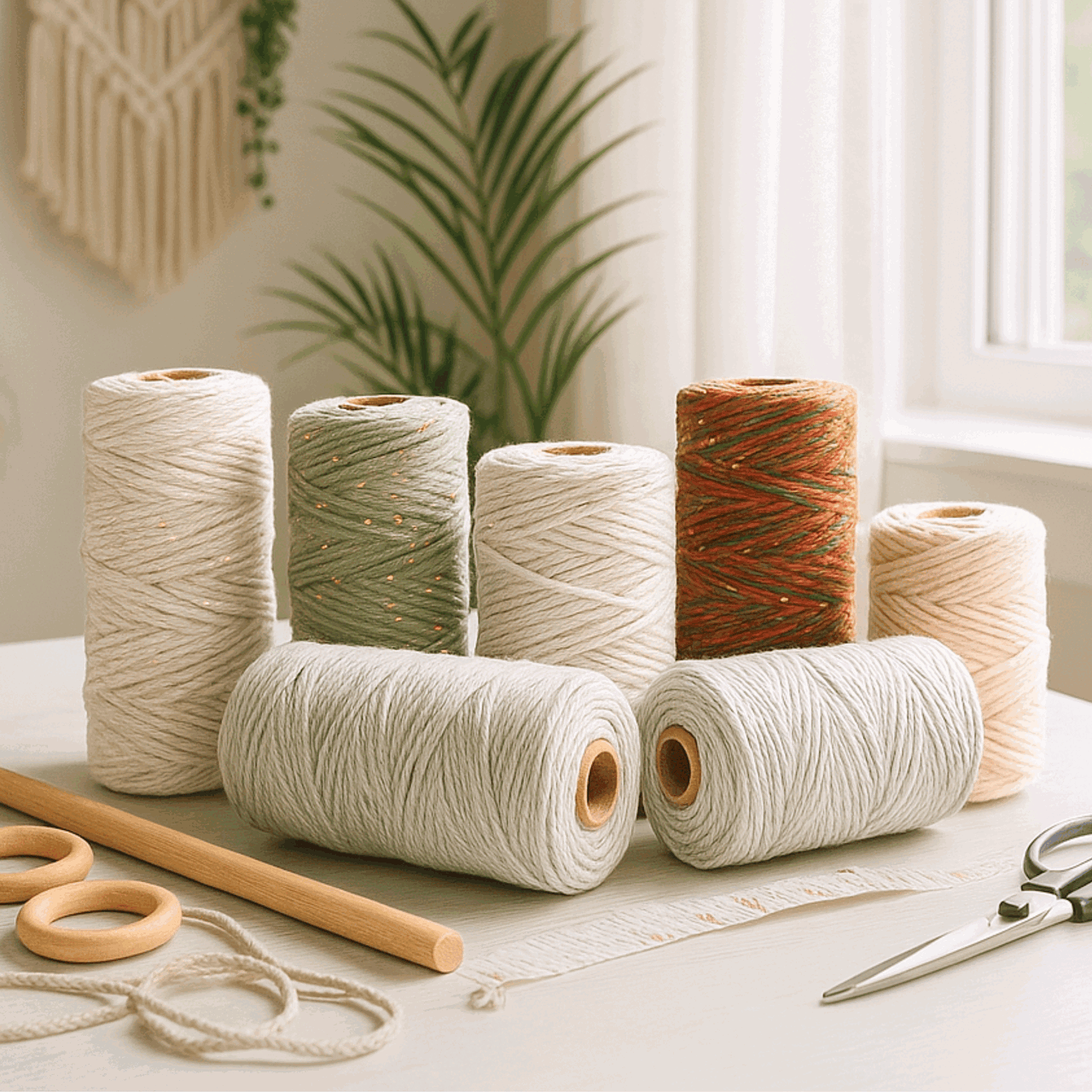
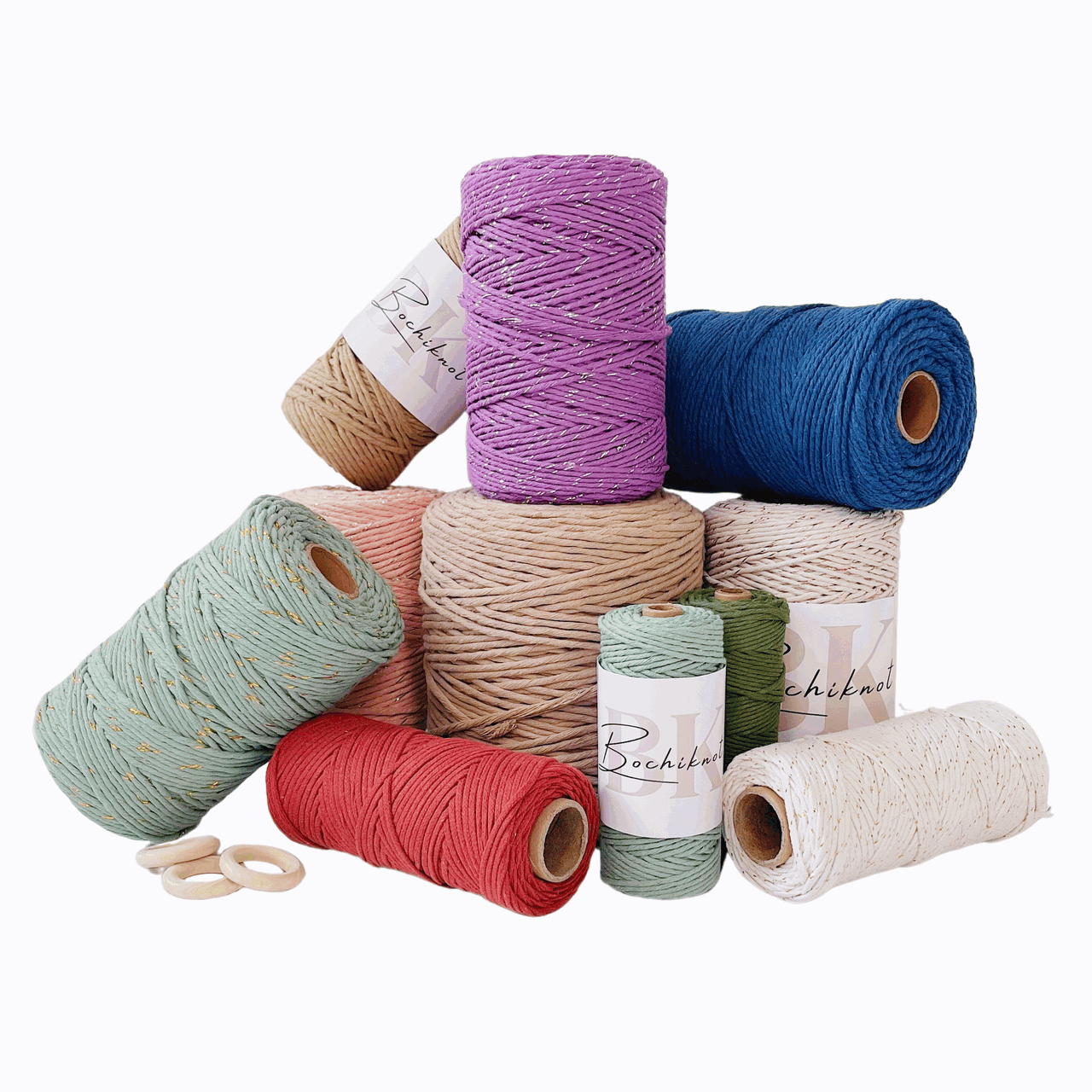
Every method in this guide uses the same small set of materials — and all of them are things you'll reach for again on every macramé project you make next.
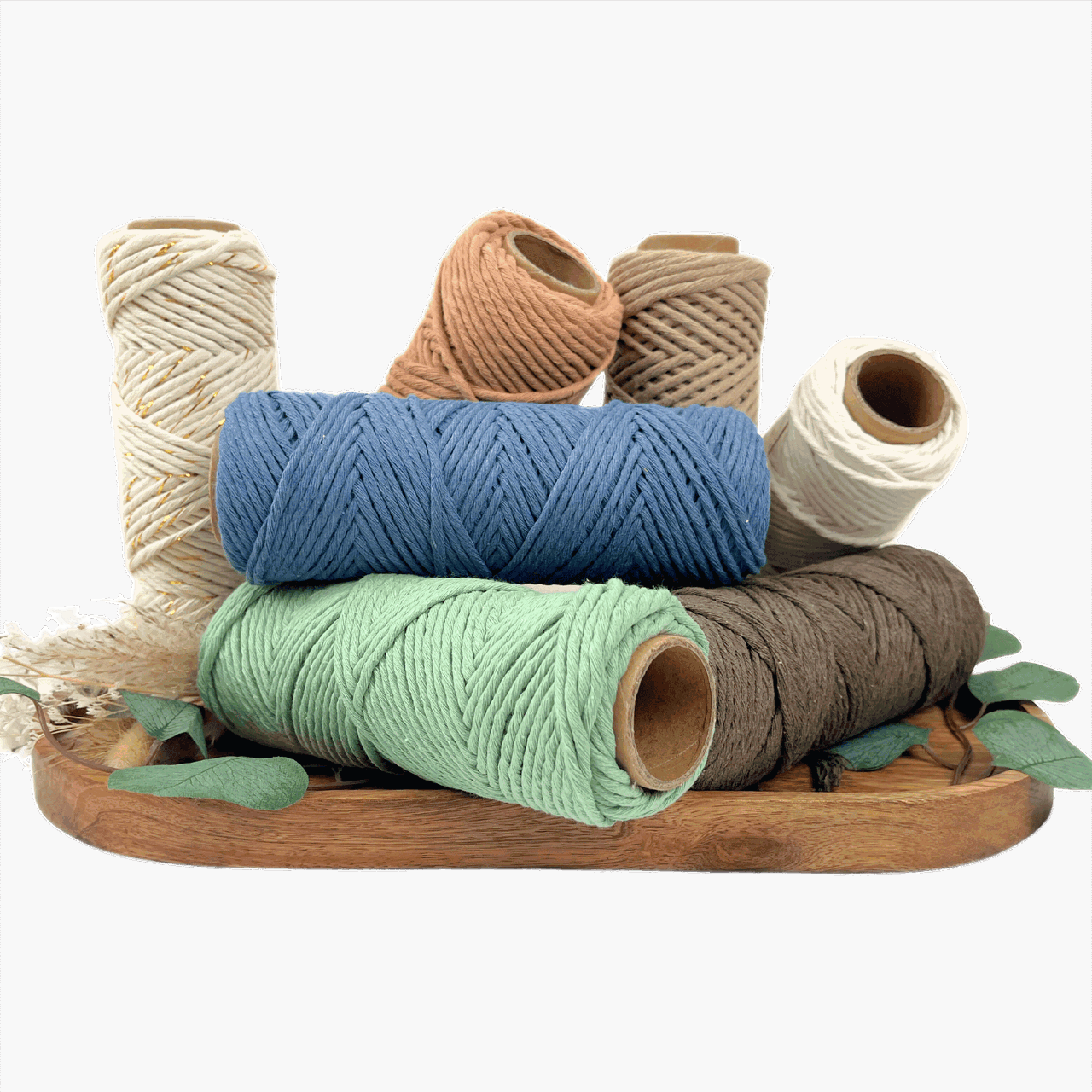
If you've never bought cord before, start with our complete guide to choosing macramé cord, and use our cord-measuring guide to work out exact lengths for the piece you want to make.
Materials checklist
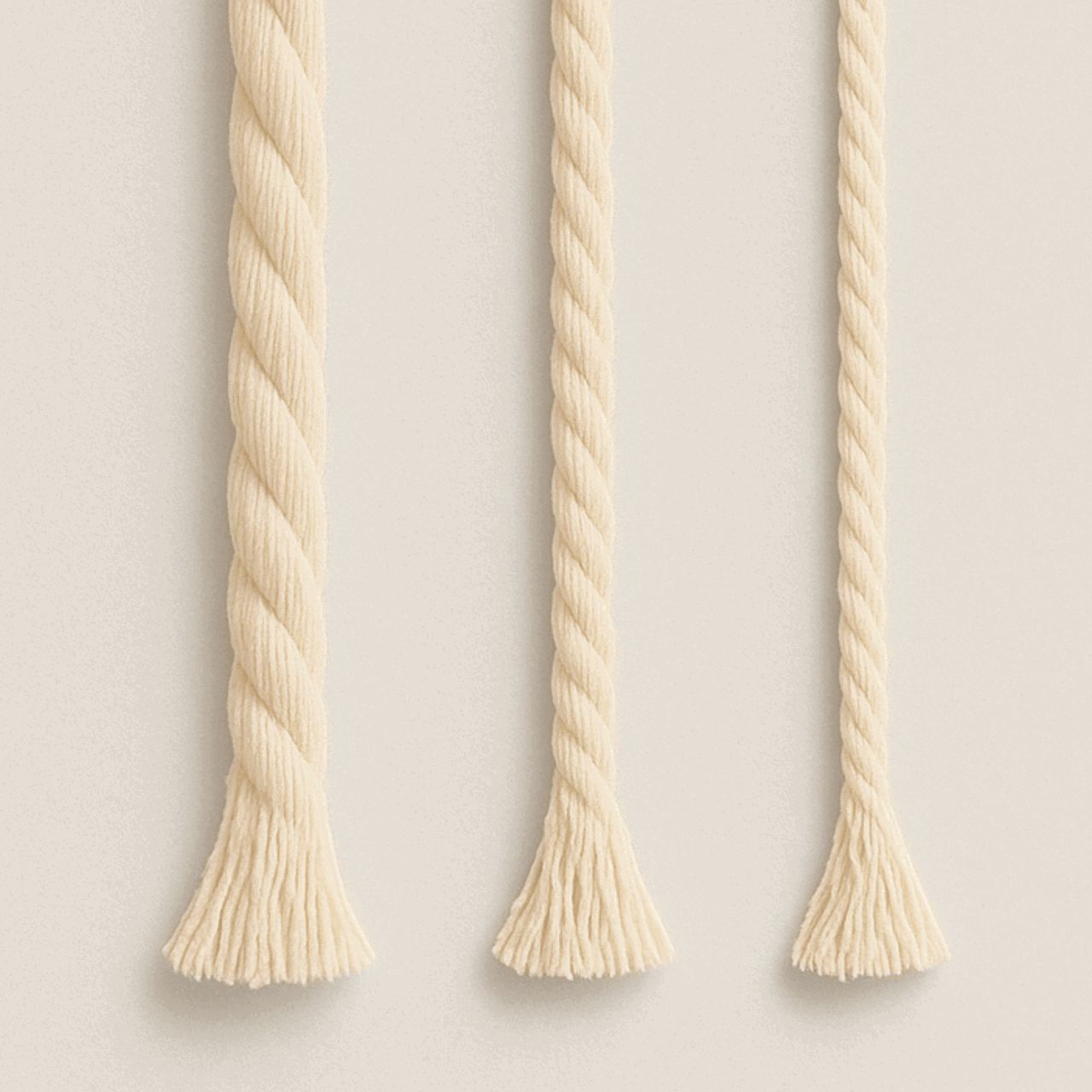
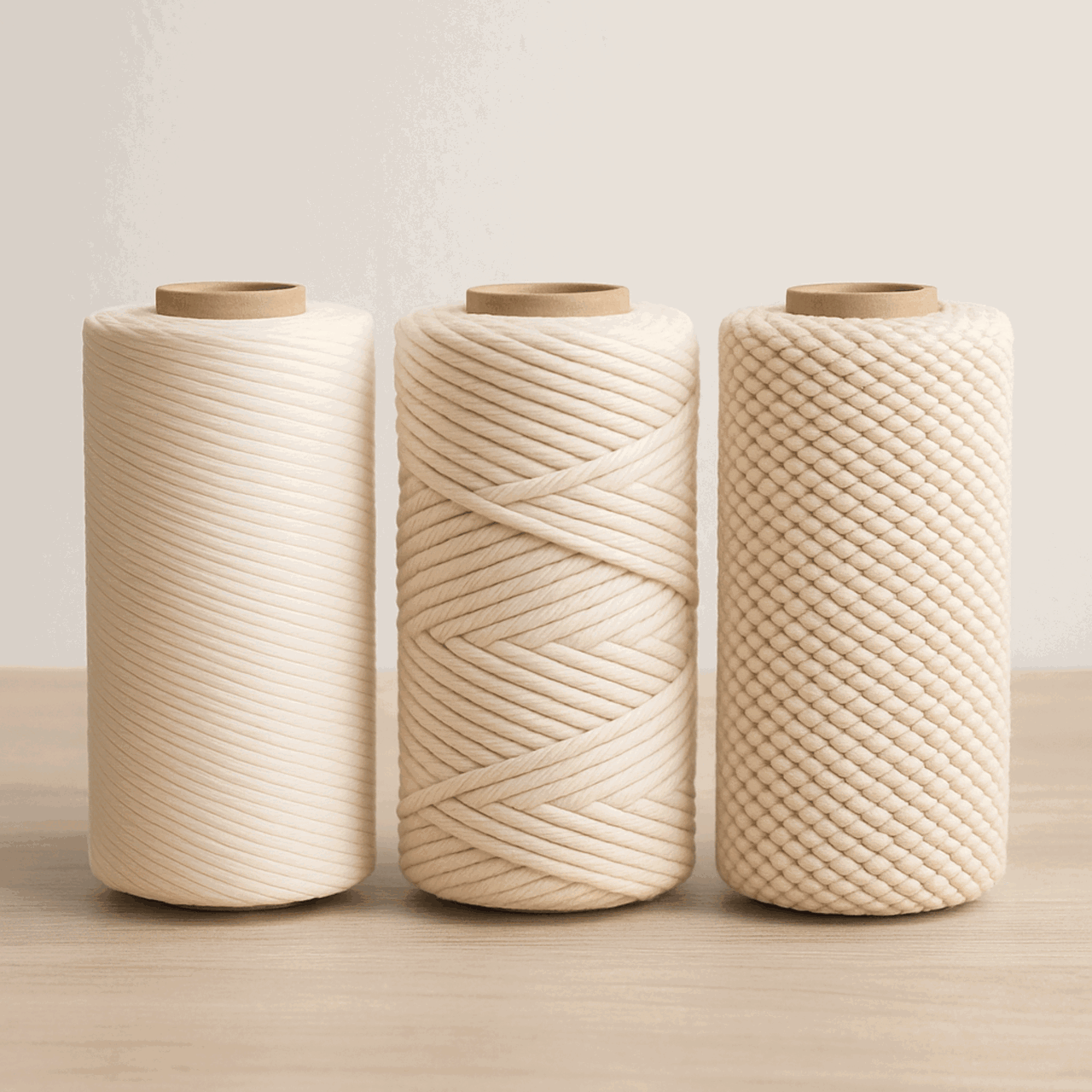
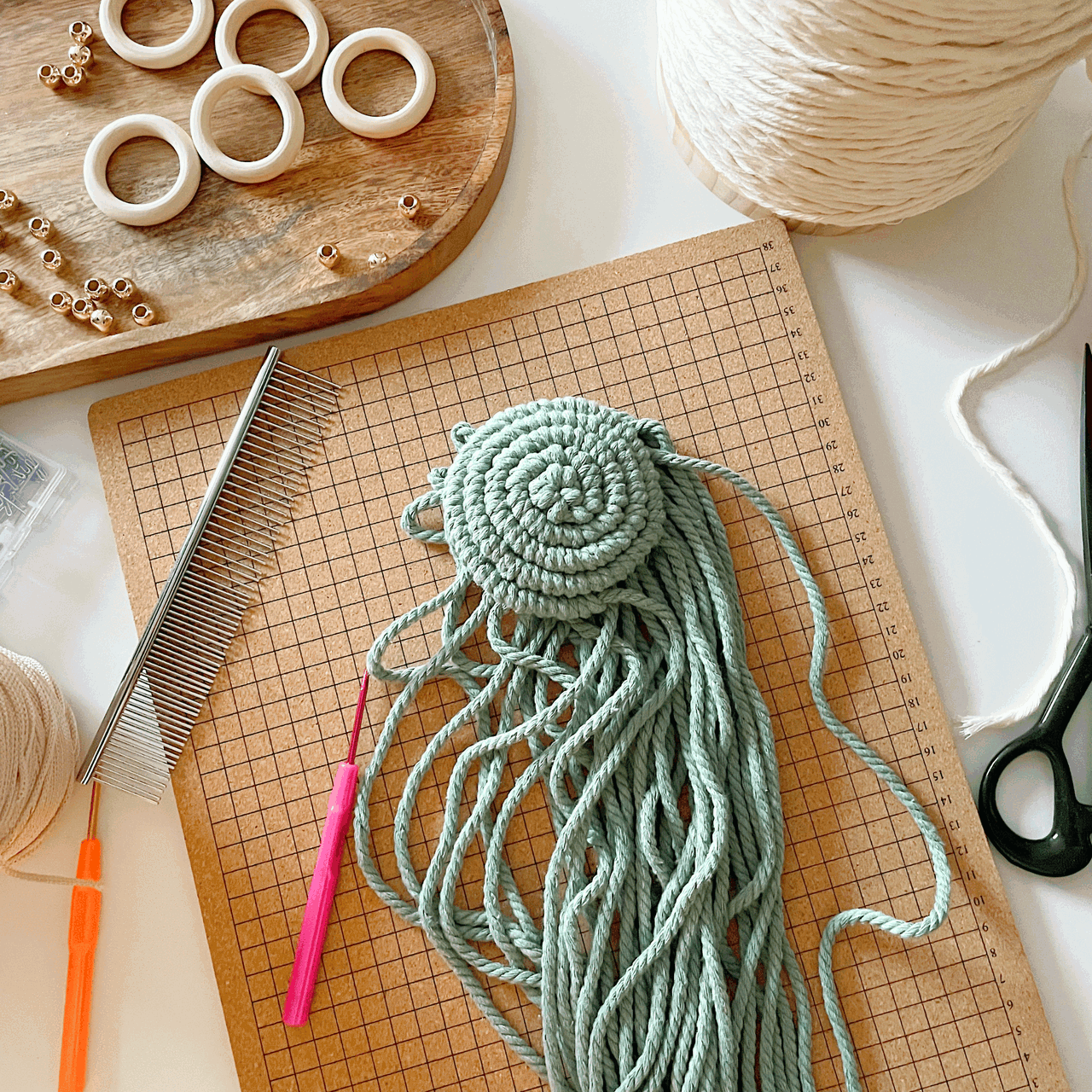
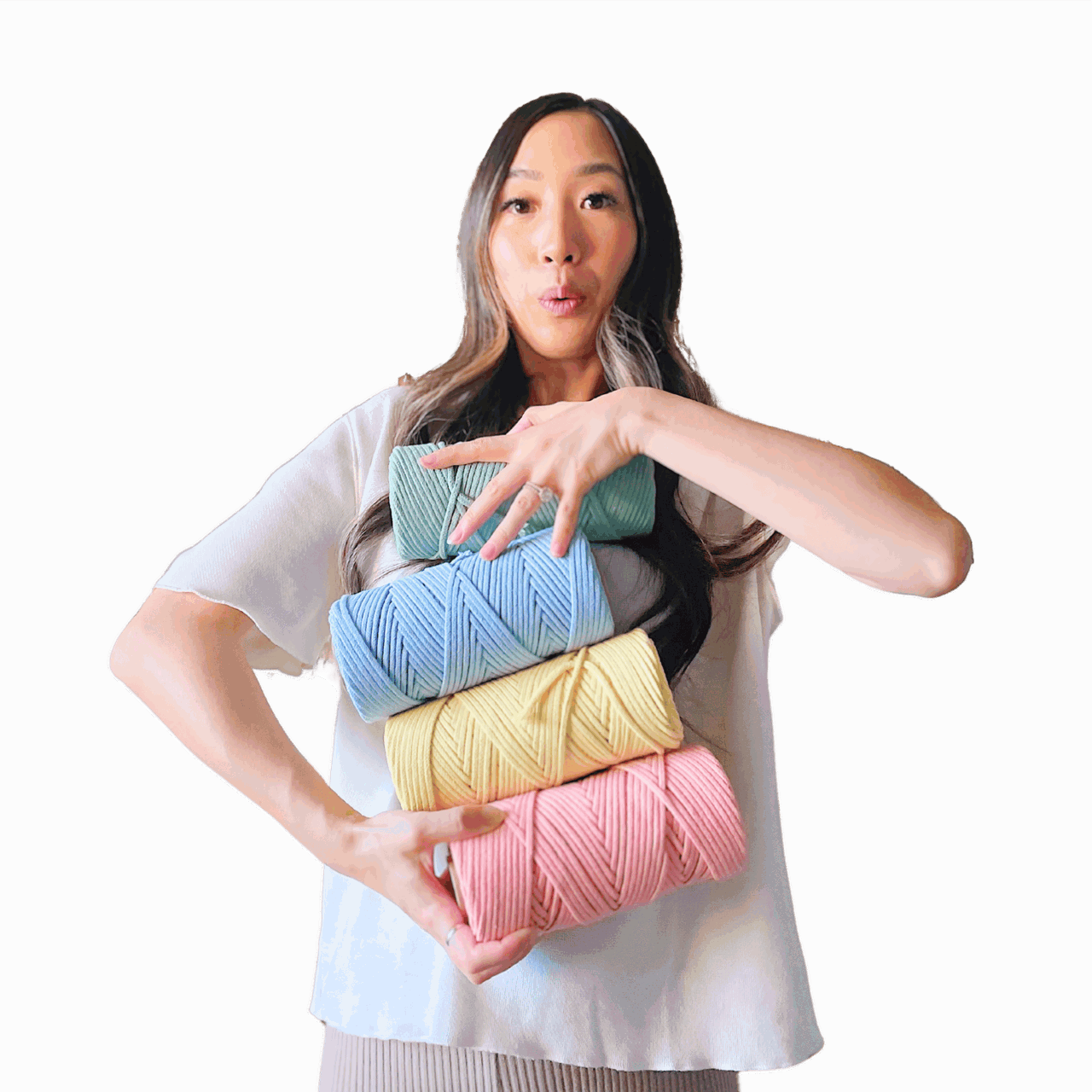
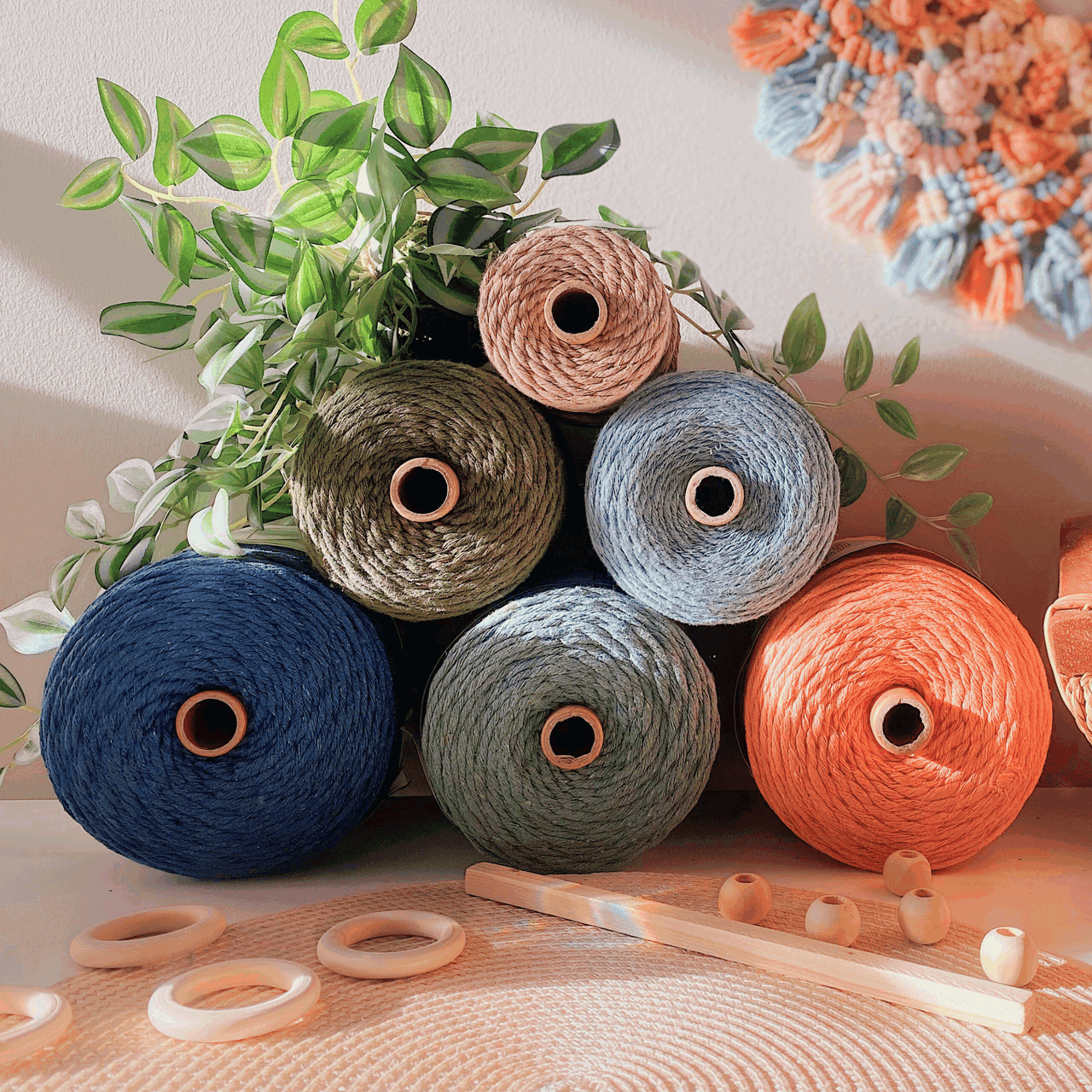
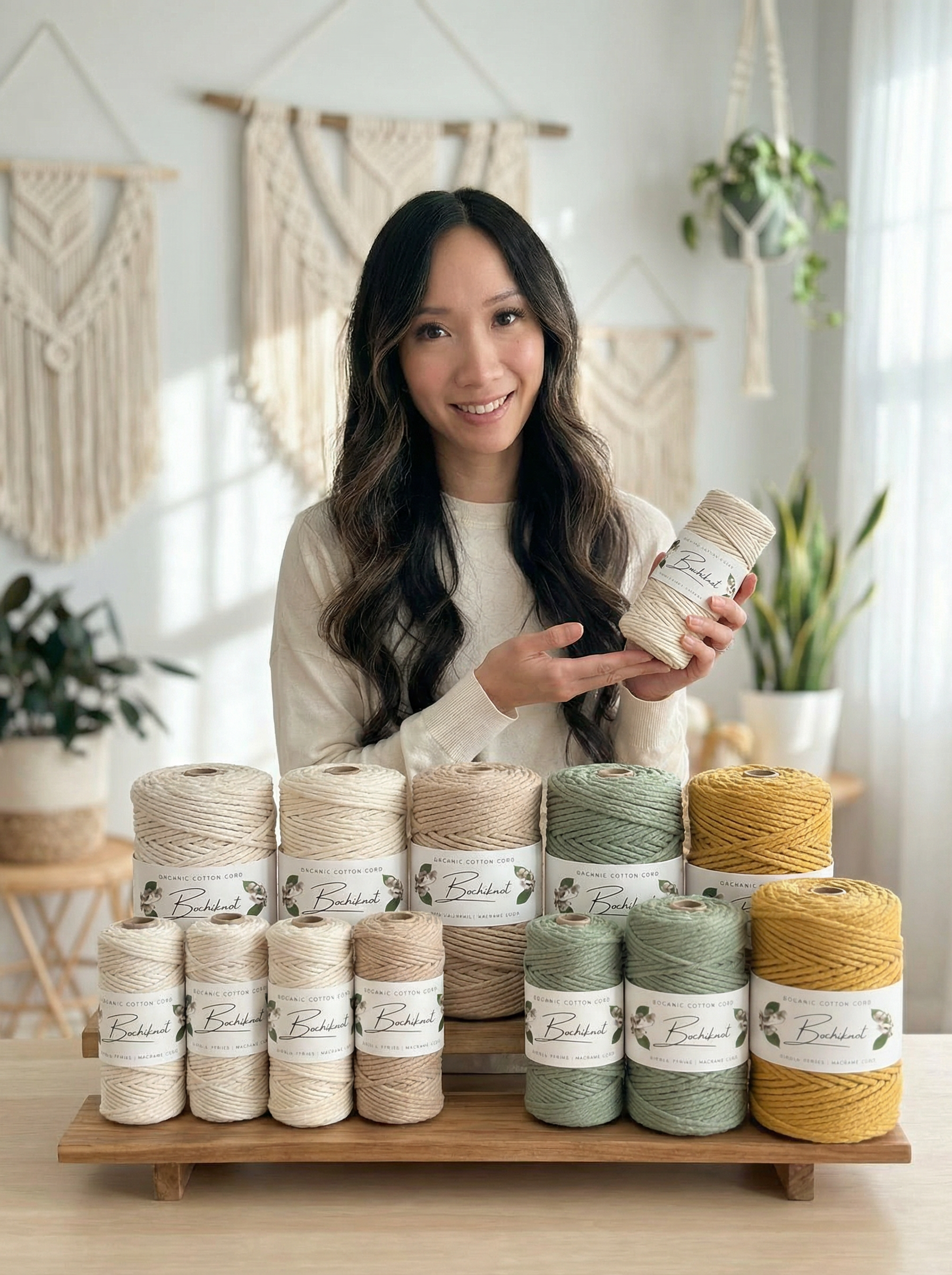
- 8 cords, 300 cm (118") each — single-strand cotton cord in 3mm or 5mm (I recommend 5mm for your first hanger). Shop our full range of single-strand cord.
- 1 wooden ring, 2–3 inches — only needed for Methods 1–3. Browse rings and accessories.
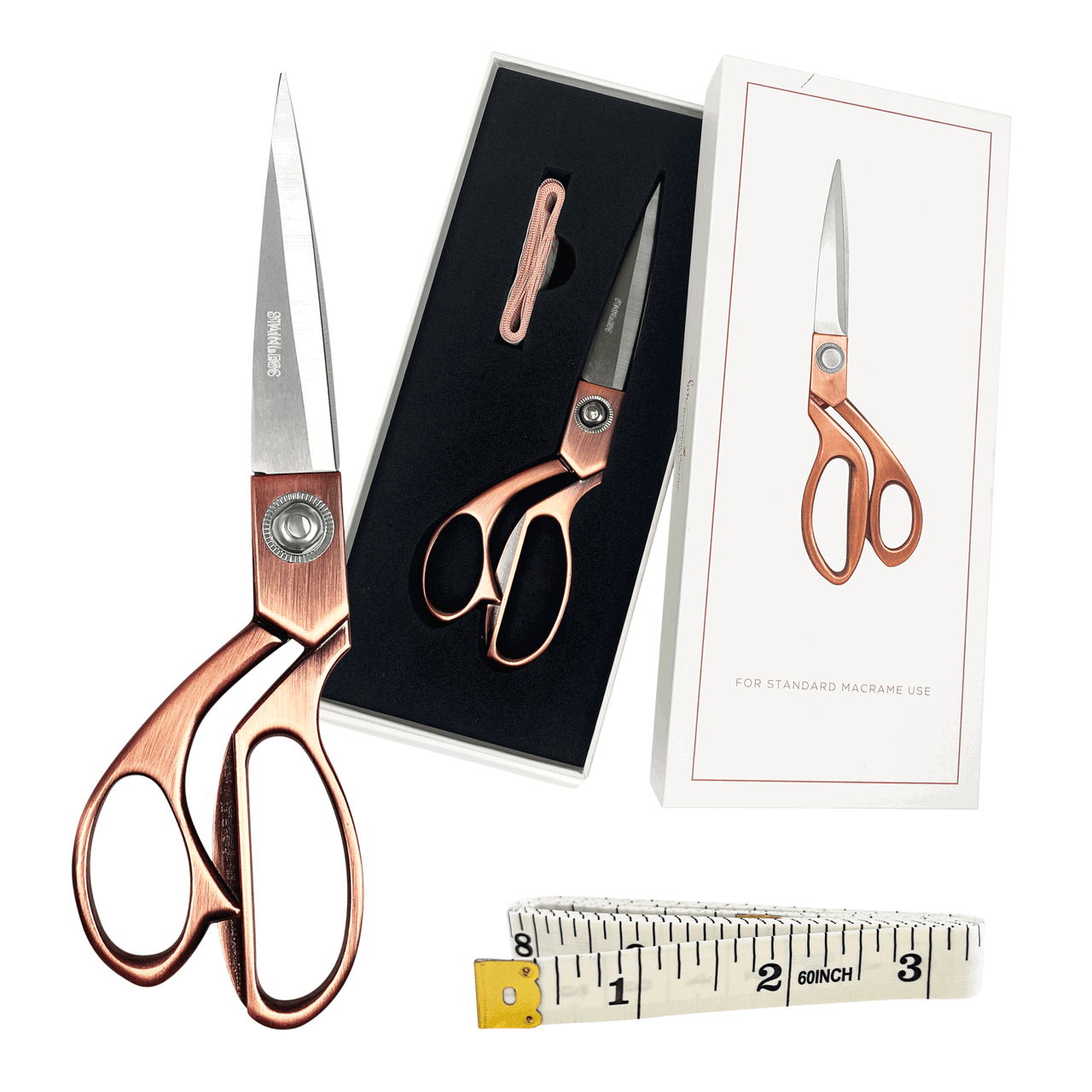
- Sharp fabric scissors — a clean cut makes a world of difference. Our 9" professional scissors are the pair I reach for daily; the 8" rose gold scissors are a gorgeous lighter option.
- Measuring tape — any soft tape measure works.
- S-hook, rod, or door handle — to suspend the ring while you work. A wooden dowel clipped to two chairs also works beautifully.
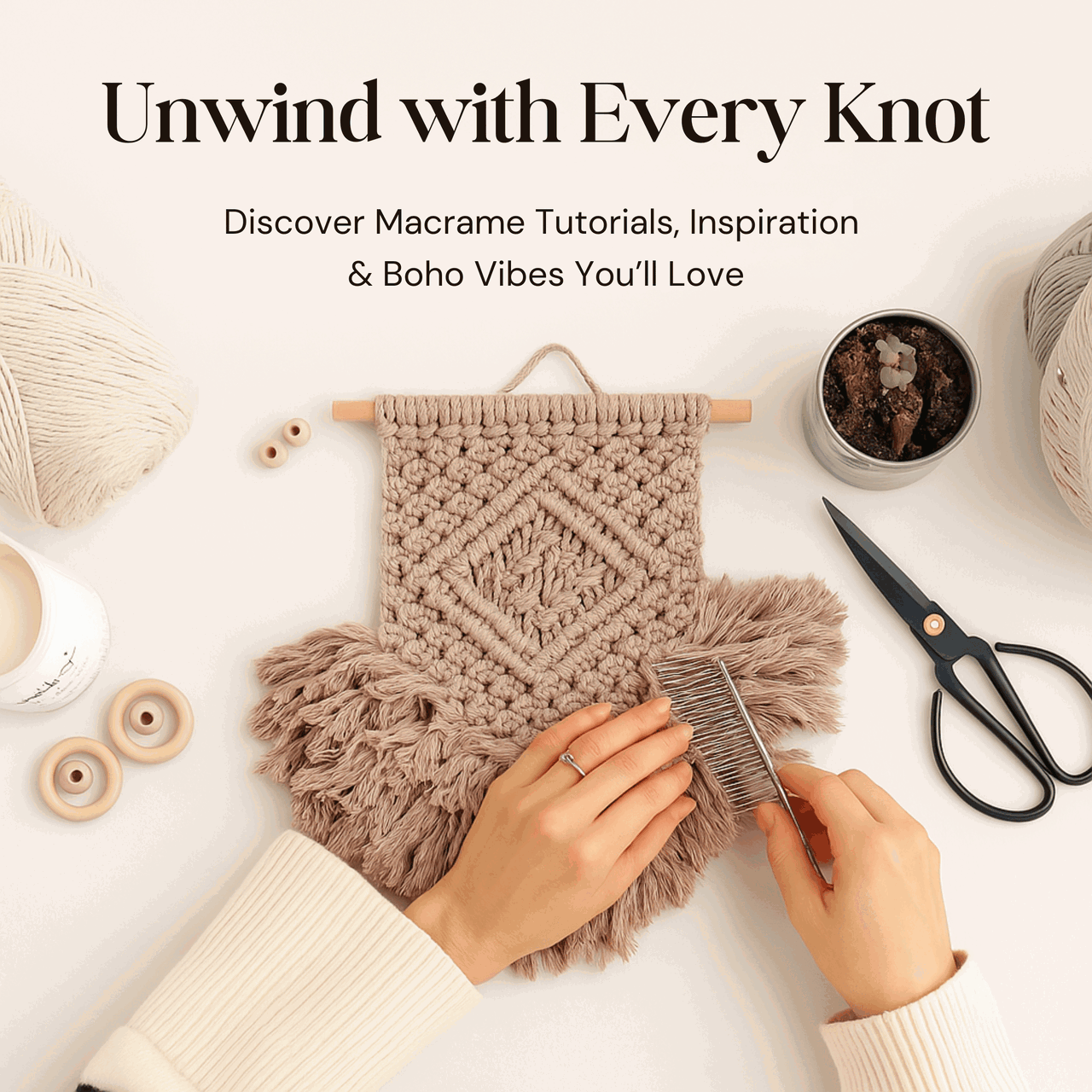
- Comb — for finishing the fringe at the end. Our 8" fringe comb is the one we use in every tutorial.
✨ New to macramé?
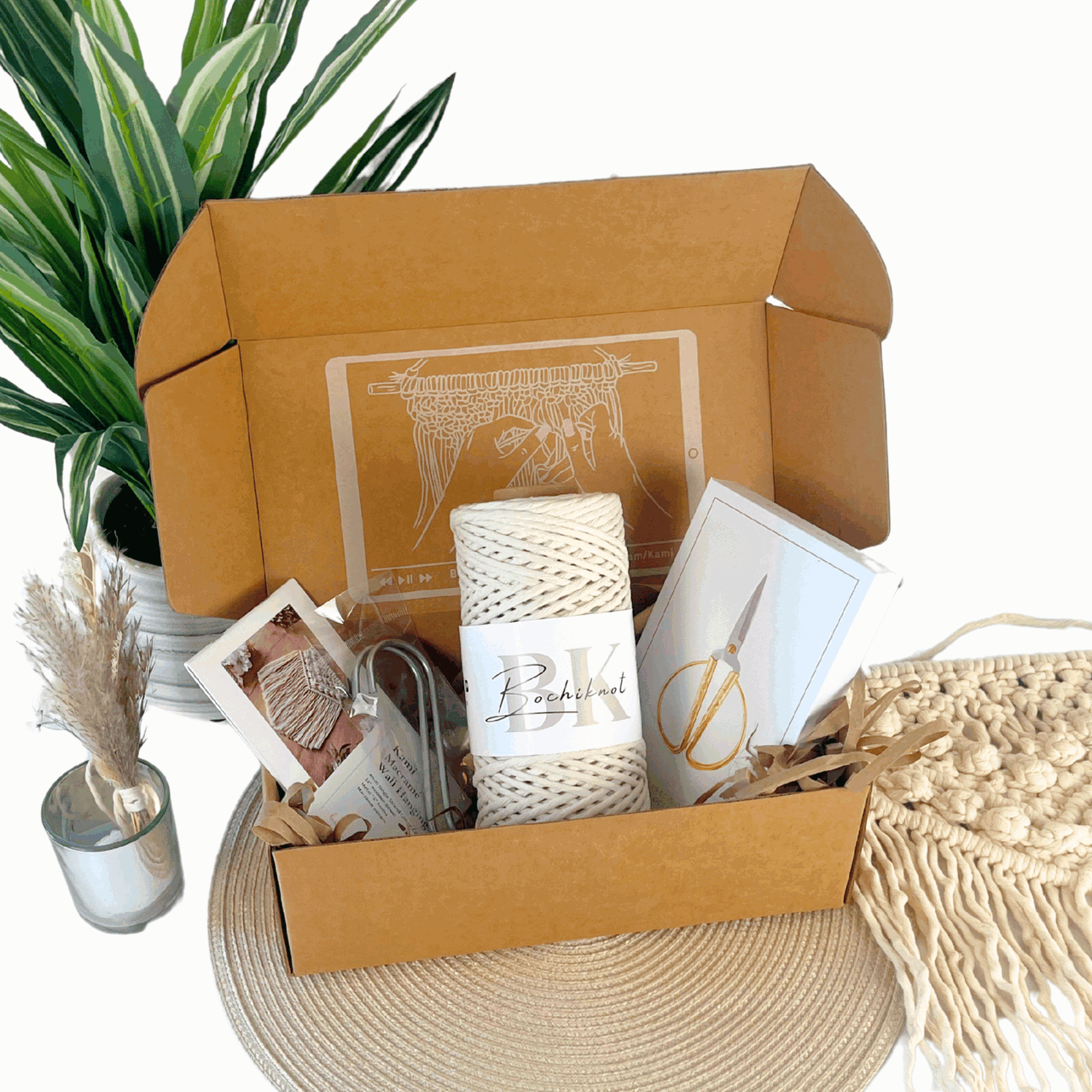
If you'd rather have everything in one box, our Macramé Welcome Kit includes all the cord, ring, and tools you'll need for your first few projects — curated so you can start knotting the day it arrives.
Shop the Welcome Kit →
Methods 1–3: Starts With a Wooden Ring
A wooden ring gives your plant hanger a defined hanging point and that polished, finished look you see in a shop-bought piece.
All three methods below use the same ring — the only thing that changes is which knot ties the cords to it.
Before you start any of them, cut 8 cords at 300 cm each and fold every one precisely in half. (Take the extra thirty seconds here; it always pays you back.)
Method 1 — Gathering Knot with a Ring
Beginner⏱ 5 min to start

This is the most forgiving start for a first-time maker — and it's the one I recommend in every beginner class I teach.
It's clean, symmetrical, and almost impossible to get wrong once you've done it once. If you're unsure where to start, start here.
- Fold each of your 8 cords in half so you have a clean loop at the top.
- Pass all 8 loops through the wooden ring together.
- Pull every working end (all 16 strands) back through the loops you just passed through the ring — this is a lark's head bundle.
- Take one extra short cord (about 40 cm) and tie a tight Gathering knot around all 16 strands, 1–2 cm below the ring.
- Trim the gathering-knot tails flush with the bundle.
Nicole's pro tip: Wrap the gathering knot 8–12 times, not 4–5. Short wraps slip; long wraps hold for decades.
Method 2 — Crown Knot with a Ring
Intermediate⏱ 10 min to start

The crown knot (sometimes called a "pineapple knot" start) creates a beautiful twisted texture at the very top of your hanger — a design feature in its own right. It looks intimidating at first glance, but it's just a repeating 4-step pattern. Once you've done two rounds, your hands remember it.
- Attach your 8 folded cords to the ring with Lark's Head knots, distributing them evenly.
- Group the 16 strands into 4 groups of 4 cords each, arranged north, east, south, west around the ring.
- Take the north group, fold it over the east group.
- Fold the east group over the south group.
- Fold the south group over the west group.
- Weave the west group up and through the loop the north group created. Tighten evenly.
- Repeat for 2–3 rounds to build the twisted texture.
Nicole's pro tip: Keep tension even across all 4 groups as you fold. If one group is tight and another loose, the crown will spiral sideways instead of stacking straight.
Method 3 — Square Knot Chain on a Ring
Beginner⏱ 8 min to start

This method gives a clean, symmetrical start that looks especially nice on plant hangers with multiple tiers. You're building a short sennit (a vertical chain) of Square knots right under the ring.
- Attach your 8 folded cords to the ring with Lark's head knots.
- Gather all 16 strands directly below the ring.
- Using the 2 outermost cords on each side as your working cords, tie 3–5 square knots around the 12 filler cords in the middle.
- Tighten each knot firmly so the sennit sits flat against itself.
- After your chain is complete, split the 16 strands into 4 groups of 4 and continue with the body of your plant hanger.
Nicole's pro tip: If your square-knot sennit starts to spiral, you're tying half-knots instead of full square knots. A full square knot alternates direction every single time.
Methods 4–5: Starts Without a Ring
No wooden ring? No problem at all. These two methods build a hanging loop entirely out of cord, which gives you a softer, more minimalist look — the kind of finish that suits boho, Japandi, and Scandi interiors beautifully.
Some of my favourite hangers I've ever made use no ring at all.
Method 4 — Square Knot Loop (No Ring)
Intermediate⏱ 10 min to start

This is the ring-free start I reach for when I want a plant hanger to feel soft and structured at the same time. You're creating a loop out of a mini square-knot sennit.
- Lay your 8 cords together and find the midpoint.
- Using the 2 outermost cords, tie 10–15 square knots around the remaining 14 cords to create a sennit about 7–10 cm long.
- Fold the sennit in half to form a loop.
- Bring all 16 cords (8 from each side of the loop) together directly below the folded sennit.
- Tie a tight gathering knot around the bundle to lock the loop in place.
Nicole's pro tip: Make the square-knot sennit longer than you think — it compresses when folded. 10 cm unfolded gives a 5 cm loop, which is the right size for most hooks.
Method 5 — Overhand Knot (Easiest, No Ring)
Beginner⏱ 2 min to start

The fastest start in this guide — truly, just one knot. If you're making a last-minute, gift-ready plant hanger in under an hour (something I've done more than once!), start right here.
- Fold your 8 cords in half together so all the midpoints line up.
- About 3–4 cm below the fold, tie a single tight overhand knot through all 16 strands.
- Adjust the loop above the knot to the size of your hook.
- Start knotting the body of the plant hanger below the overhand knot.
Nicole's pro tip: Wet the knot with a spray of water before pulling it tight — cotton compresses better wet, and you'll get a more compact, invisible overhand that doesn't loosen over time.
With a Ring vs. Without a Ring — Which Should You Choose?
Both approaches make beautiful plant hangers. The right choice depends on the look you're after and the tools you have on hand.
| Consideration | With a ring | Without a ring |
|---|---|---|
| Aesthetic | Classic, structured, defined focal point | Minimalist, soft, organic |
| Hanging | Fits any hook or nail cleanly | Loop sizing must match your hook |
| Weight capacity | Slightly higher (ring distributes load) | Fine for plants under 4 kg |
| Supplies | Cord + ring | Cord only |
| Best for | First-timers, traditional styles | Minimalist decor, gifts, quick projects |

Common Mistakes to Avoid
After teaching hundreds of beginners, these are the starting mistakes I see on repeat. Avoiding them saves you the "why does my plant hanger look wonky?" moment later.
- Cords that are too short. Beginners almost always under-cut. 300 cm per cord is a safe minimum for a single-tier hanger.
- Uneven cord midpoints. When folding, line up every cord end to end before folding. Off-center midpoints mean one side of the hanger ends shorter than the other.
- Loose gathering knot. A gathering knot wrapped fewer than 6 times will slip over time under the weight of a plant.
- Starting without suspending your ring. Always hang the ring on an S-hook before knotting. Working flat on a table twists the cords and warps your tension.
- Mismatched tension across the 4 groups. The moment you split into 4 groups of 4, keep tension identical. If one group is tight, the hanger hangs sideways.
- Wrong cord diameter. 3mm is delicate; 5mm is the everyday beginner choice; 6mm+ is heavy and hard to knot cleanly. Start with 5mm.
- Cutting the gathering knot tails too short. Leave at least 3 mm tucked inside the wrap so the knot can't unravel.
Plant Hanger Glossary
A few key terms you'll see in every plant hanger tutorial — including this one:
- Anchor cord
- The central cord (or group of cords) that other knots are tied around — in plant hangers, typically the 12 inner strands of your 16-strand bundle.
- Working cord
- The cord actively being tied — the 2 outer strands on each side of your bundle when tying square knots.
- Lark's head knot
- The go-to knot for attaching folded cord to a ring or dowel.
- Sennit
- A vertical chain of repeated knots — e.g. a square-knot sennit.
- Gathering knot
- A wrapped knot that binds a bundle of cords together, typically used just below a ring or loop.
- Crown knot
- A decorative 4-group interlocking knot that creates a twisted, textured top.
- Fringe
- The loose cord tails at the bottom of the hanger, often brushed out for a soft finish. See our ultimate guide to macramé fringe for all 5 finishing techniques.
Frequently Asked Questions
How do you start a macramé plant hanger for beginners?
The easiest start is Method 1 in this guide: fold 8 cords in half through a wooden ring, pull the ends back through the loops, then secure the bundle with a tight gathering knot just below the ring. It takes under 5 minutes.
Do you need a ring to make a macramé plant hanger?
No. Methods 4 and 5 in this guide are both ring-free. A square-knot loop gives a structured minimalist look; a single overhand knot is the fastest start of all.
What knot do you use to start a macramé plant hanger?
The most common starter knots are the gathering knot, lark's head knot, crown knot, square knot, and overhand knot. For your very first hanger, start with a gathering knot on a ring — it's the most forgiving.
How long should cord be for a plant hanger?
Cut 8 cords at 300 cm (118") each in 3mm or 5mm cotton cord. For longer or multi-tier designs, add 100 cm per extra tier. Our cord-measuring guide walks through exact formulas.
What size ring is best for a macramé plant hanger?
A 2–3 inch (5–7.5 cm) wooden ring is the sweet spot for beginner plant hangers. Larger rings make a bolder feature; smaller rings suit delicate 3mm cord.
Can you make a plant hanger without a wooden ring?
Yes — see Methods 4 and 5 above. The square-knot loop creates a structured cord-only loop; the overhand knot creates a soft fabric loop in seconds.
How many cords do I need for a plant hanger?
Eight cords, folded in half, gives 16 working strands — the standard for beginner plant hangers. Larger or more decorative designs may use 10–12 cords.
How much cord do I need to start a macramé plant hanger?
Most plant hangers use 6-8 cords cut at 4-5x the finished hanging length — for a 40-inch hanger, cut cords around 4.5-5.5 metres each. Gathering-knot wraps use 50-70cm of their own cord. Use our free cord calculator to get exact numbers.
Which plant hanger start method is best for beginners?
The overhand knot start (Method 5) is the easiest — one knot, no ring needed, done in seconds. Once you're comfortable, the gathering knot with a ring (Method 1) gives the most professional finish.
What cord is best for a macramé plant hanger?
3mm or 4mm single-strand or 3-ply cotton is ideal — strong enough to hold a potted plant, soft enough to knot comfortably. Choose 3-ply for extra durability under the weight of larger pots.
Whichever method you pick, remember: your first plant hanger doesn't have to be perfect. It has to be yours. Every maker I know — myself very much included — looks back at their first piece with a smile at the uneven bits. Start slow, keep your tension even, and trust that your hands will learn the rhythm faster than you think. I can't wait to see what you make.
What to Make Next
Once you've nailed the start, the rest of a plant hanger is mostly repetition and tension control — and those get better with every inch you knot. These guides walk you the rest of the way:
- How to Improve Your Macramé Skills — 18 Pro Tips
- The Square knot, step by step
- The Lark's Head knot, step by step
- The Gathering knot, step by step
- The Double Half Hitch knot, step by step
- How to Finish a Beautiful Fringe
- How to Measure Cord for Macramé Projects
Whichever start you pick today — the lark's head loop, the gathering-knot bundle, the slip-knot ring, the braided coil, or the free-form knot — know that every plant hanger you've ever admired began with one of these exact five moves. There's no "advanced" secret. Just pick one, tie it, and hang a plant in it.
If you make one from this guide, tag @bochiknot on Instagram — I love seeing what you create. Happy knotting. 🌾

Nicole Woo — Founder, Bochiknot
Macramé educator & designer
Nicole is a self-taught macramé artist teaching a global community of crafters since 2018. Through Bochiknot, she shares step-by-step tutorials, premium cord, and beginner-friendly kits designed to help anyone pick up a rope and make something they're proud of.
You might also like
Phase 2 · Tutorial
How to Measure Cord for Macramé
Stop guessing and running short. The exact multipliers I use for plant hangers, wall hangings, and more.
Phase 1 · Guide
Selecting Macramé Cord & Materials
Single-strand, 3-ply, braided — which cord for which project, explained in plain English.
Phase 2 · Pro tips
18 Tips to Improve Your Macramé Skills
Small fixes that separate "handmade" from "looks professional." My favorite studio habits.


Leave a comment