




Macramé Daisy Headband: Beaded Boho DIY


Updated 2026 · ~17 min read
Macramé headbands are having a moment — and it is easy to see why. They are stylish, lightweight, and add that effortless boho touch to any outfit. Instead of buying one, you can create your own DIY wide headband that is just as beautiful and even more personal.
In this guide you will learn how to make a wide macramé daisy headband using a simple base, braided cotton cord, and a repeating daisy knot pattern accented with large-hole beads. The design is eye-catching yet easy to follow, which makes it perfect for beginners and experienced crafters alike.
By the end you will have a unique, wearable piece that is perfect for sunny days, festivals, or everyday looks that need a little extra charm — and a fun project you will want to make again.
What Is a Macramé Daisy Headband?
Wrap a 1-inch headband base with 4 mm braided cord, then knot a repeating daisy pattern accented with large-hole beads using reverse larks head, vertical larks head, and half hitch knots, securing each daisy around the band; repeat for 12 daisies across the band.
Tutorial Contents
- What you'll learn
- The trick to keeping all 12 daisies even and the band flat
- Why make this headband
- Materials & tools you'll need
- How much cord do you cut?
- Video walkthrough
- Step-by-step tutorial (10 steps)
- Pro tips & troubleshooting
- Common mistakes & fixes
- How to wear it / style it
- Color combinations to try
- Make it vs buy it: the savings math
- A handmade gift for any occasion
- Frequently asked questions
- More macramé projects to try
- Join the Bochiknot community

What You'll Learn
By the end of this tutorial you will be able to:
- Wrap a 1-inch headband base cleanly and securely with 4 mm braided cotton cord.
- Set up two-color daisy cords with the correct inner and outer cord lengths.
- Attach working cords with a reverse larks head knot and build the daisy top with vertical larks head knots.
- Thread a 14 mm large-hole bead through the center and close the daisy with half hitch knots.
- Use the back-and-around securing method so every daisy sits flat and stays put.
- Repeat the sequence evenly across 12 daisies and finish the ends neatly.
The Trick to Keeping All 12 Daisies Even and the Band Flat
Why some daisy headbands look crisp and others look bunched
Here is the single most important thing I can teach you about this project: because the same daisy is repeated twelve times, consistency is everything. When every daisy is the same size and tension, the band reads as one continuous, professional-looking row of flowers. When the cord lengths drift or the tension wanders, the daisies bunch, the beads sit at different heights, and the band starts to curl instead of lying flat against your head.
The fix is a four-part habit you repeat for every daisy:
- Match your cord lengths early. Measure and mark your daisy cords before you start, especially where the cords overlap and crisscross at the front. Starting each daisy from the same lengths is what keeps all twelve the same size.
- Keep tension consistent and re-tighten after each daisy closes. Once you close a daisy with the half hitch knots, pull the anchor and vertical cords to the same firmness every time, then re-snug before you move on. Sameness matters more than strength.
- Use minimal glue until the very end. Excess glue shifts as it dries, adds bulk, and locks daisies in slightly crooked positions. Glue only to seal the wrap ends and the final trimmed ends — let the knots do the structural work.
- Use the back-and-around securing method every time. After each daisy, take the anchor cords to the back, wrap around the headband, and bring them back to the front before starting the next daisy. This is what keeps each daisy flat and anchored instead of floating loose.
Get your cord lengths, tension, and securing method consistent, and the row of daisies practically lines itself up. For more ways to work clean, repeatable knots, see our guides to the macramé daisy knot and flower knot patterns.
Why Make This Headband
- Boho and festival ready. The wide row of beaded daisies gives an instant boho, festival-friendly look that pairs with sundresses, denim, and flowing tops.
- Lightweight and comfortable. Built on a slim 1-inch base in soft cotton cord, it sits comfortably all day with no heavy hardware.
- Endlessly customizable. Change the cord colors, swap the bead finish, or adjust how many daisies you make to fit your style and head size.
- Giftable. Handmade, personal, and quick enough to make more than one — a lovely gift for friends, bridesmaids, or party favors.
- Perfect for spring and summer. The daisy motif and breezy cotton make it a natural fit for warm-weather outfits, beach days, and outdoor events.
Materials & Tools You'll Need

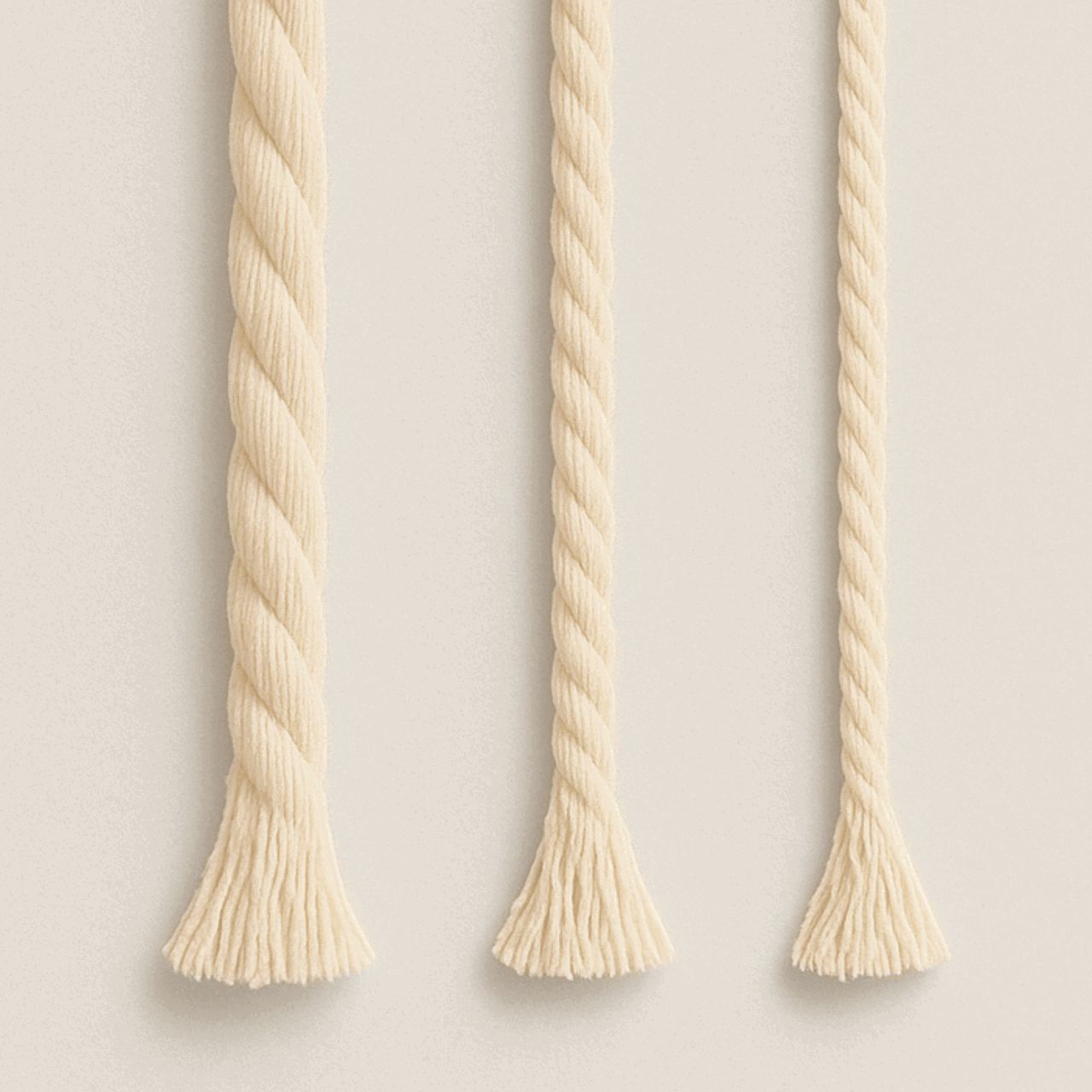
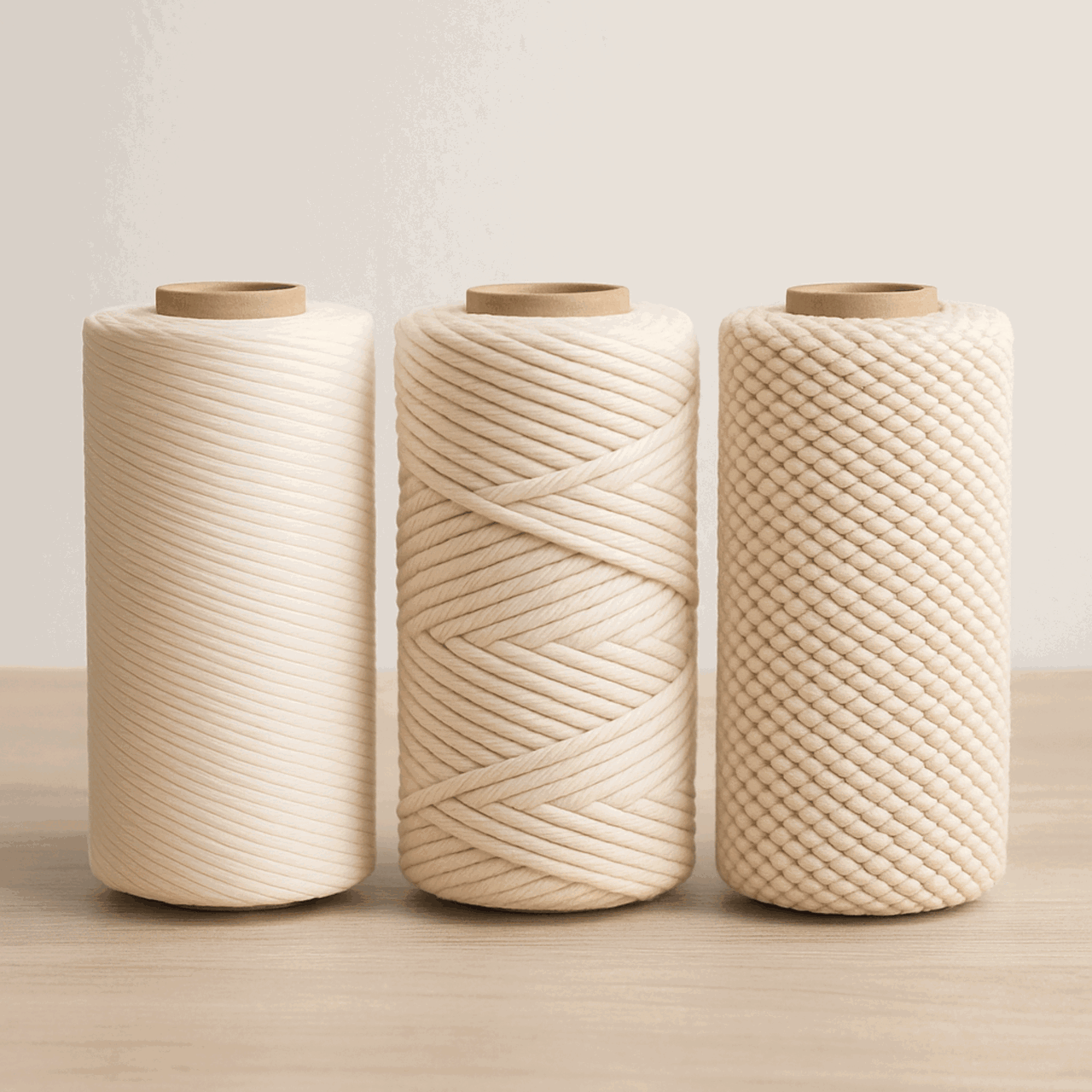
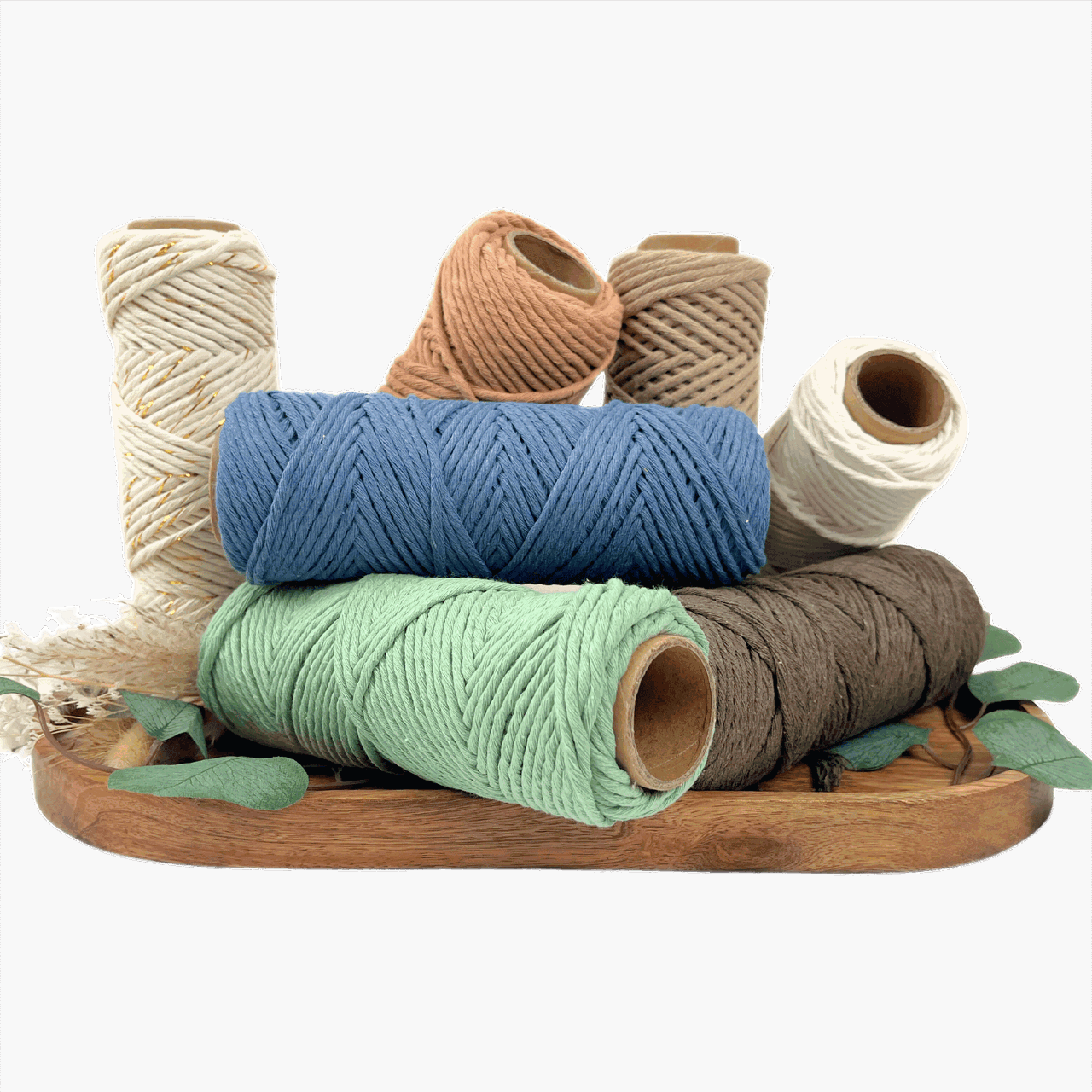
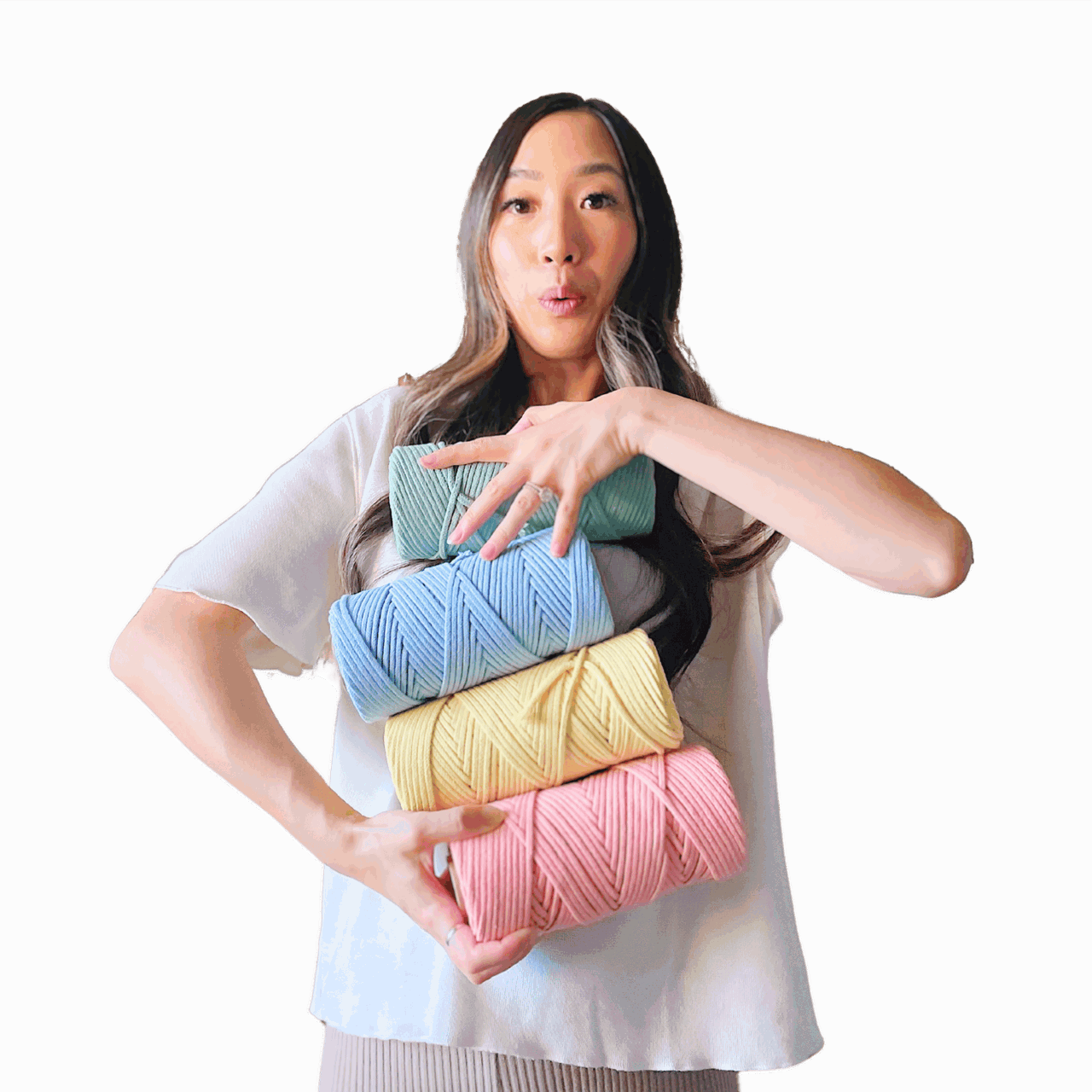
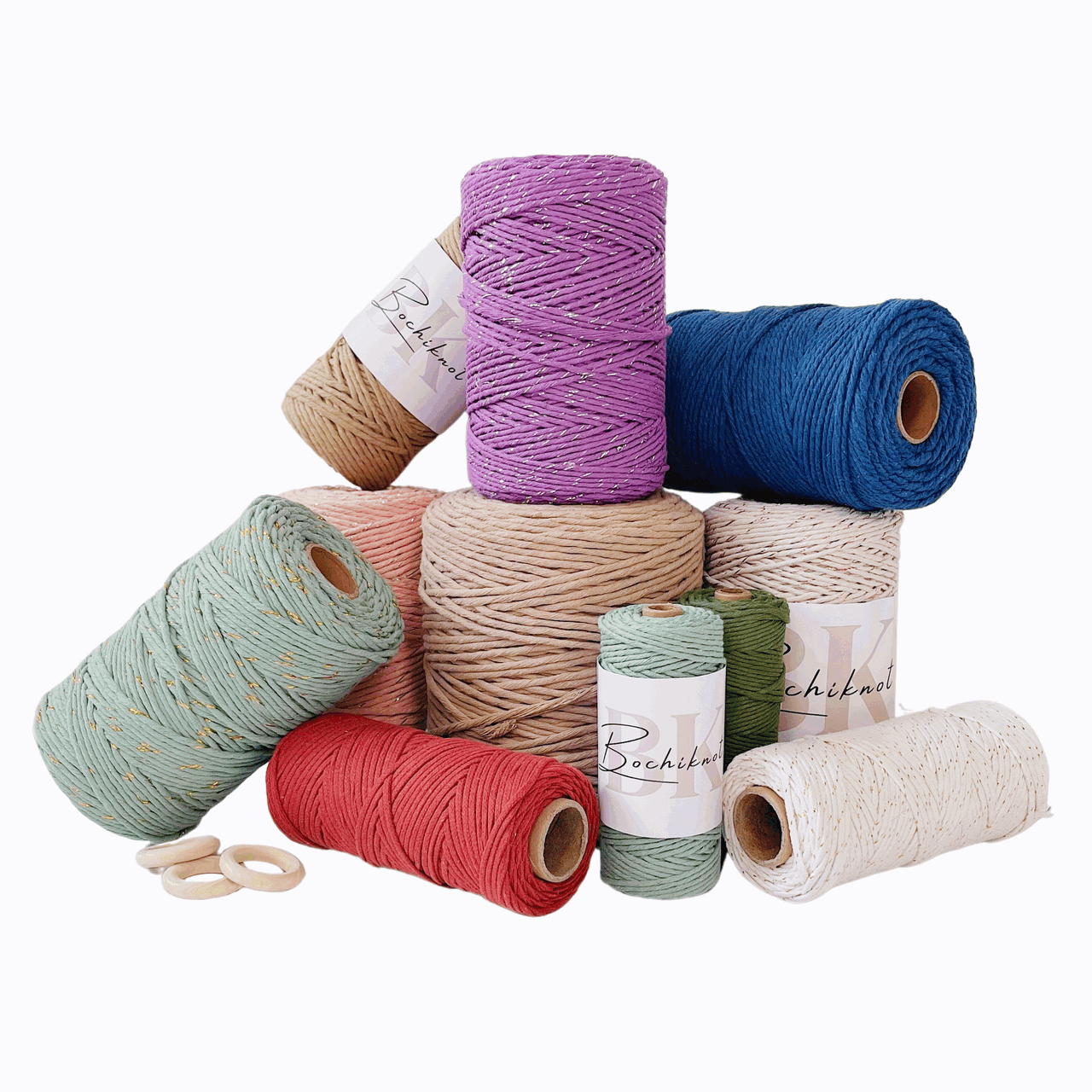
4 mm Braided Cotton Cord
The workhorse of this piece. It wraps the headband base and forms every daisy. Braided cord is flexible and threads neatly through large-hole beads. Pick two colors so the daisies stand out against the wrapped base.
Shop 4 mm braided cord
14 mm Large-Hole Beads
You will need 12 beads, one for the center of each daisy. A 7 mm hole gives enough room to thread two strands of 4 mm braided cord through cleanly.
Shop large-hole beads
Headband, Glue & Tools
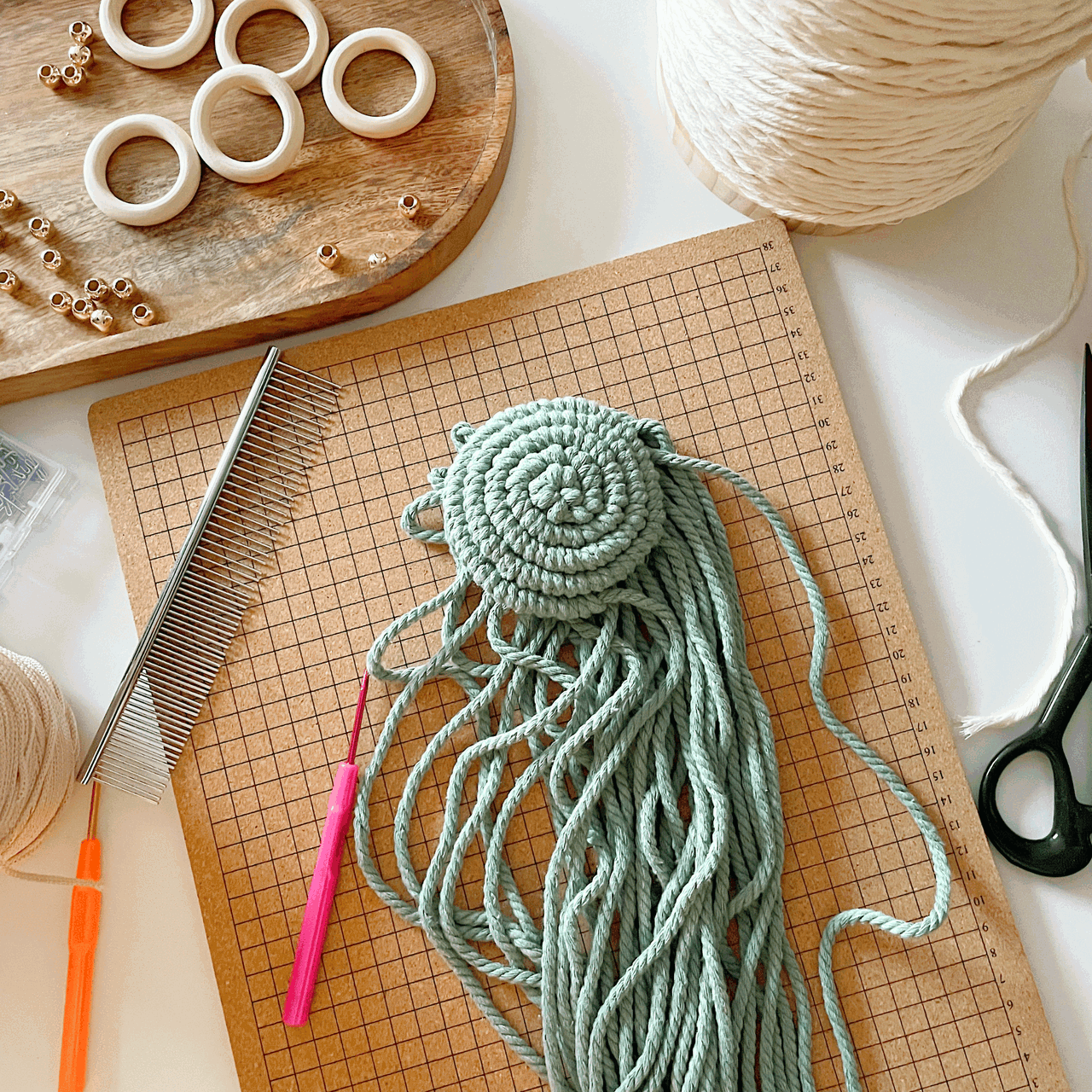
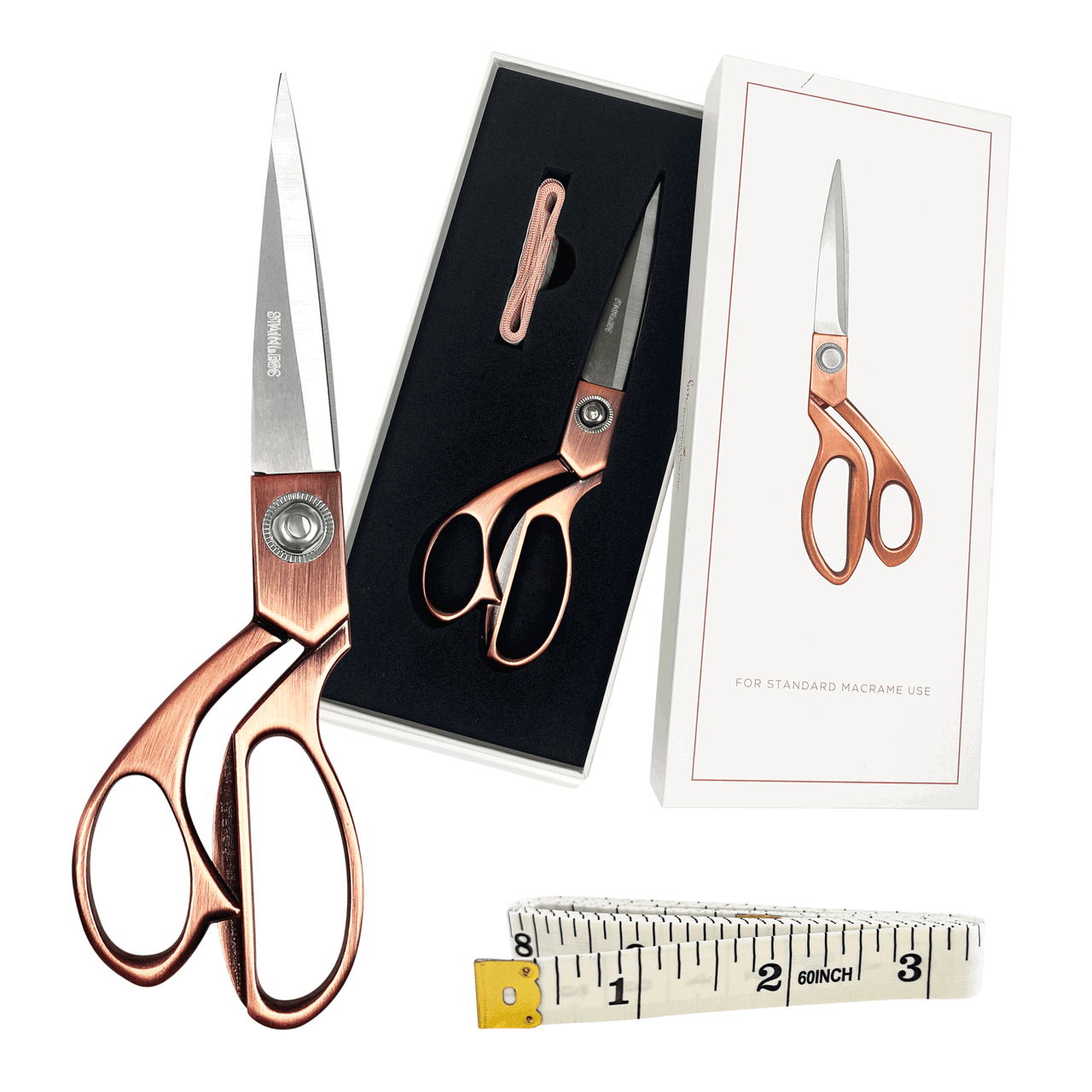
A 1-inch headband base and craft glue, plus sharp precision scissors, a measuring tape, and a metal comb.
Shop toolsFull materials list:
- 4 mm braided cotton cord in two colors
- 12 x 14 mm large-hole beads (7 mm hole)
- 1 x 1-inch headband base
- Craft glue
- Scissors
- Measuring tape
- Comb
Shop 4 mm braided cord Shop large-hole beads
Free shipping on orders over $100 USD (US) or $75 CAD (Canada). This post contains affiliate links. We may earn a small commission at no extra cost to you. Prefer to shop elsewhere? Browse our Amazon storefront or Etsy shop.
How Much Cord Do You Cut?
These are the exact, tested cord lengths I used to make the headband in the photos. Cut them before you start so you can knot without stopping.
| Cord (color) | Quantity | Length each | Used for |
|---|---|---|---|
| Color #1 | 1 strand | 400 cm (157 in) | Wrapping the headband base |
| Color #1 | 1 strand | 300 cm (118 in) | Anchor cords around the headband |
| Color #2 | 2 strands | 330 cm (130 in) | Daisy setup cords (inner & outer) |
Sizing note: These lengths are tested for a standard 1-inch adult headband with 12 daisies. A larger or smaller headband changes how much cord you need, so treat any new amounts as an estimate and cut a little extra rather than running short.
Video Walkthrough
Note: We recommend following the tutorial video for more detailed instructions and to achieve the best results. It provides extra guidance and clarity as you work through each step.
Step-by-Step: How to Make the Macramé Daisy Headband
1Wrap the Headband With Cord (Base Layer)
- Wrap one long strand of Color #1 (about 400 cm) around the headband, working directly from the roll, and secure the end underneath with a small amount of glue.
- Add a light dab of glue near the starting point to prevent shifting, then continue wrapping tightly while using minimal glue.
- Finish by gluing the end at the bottom and covering the sealed end neatly with the cord.


2Prepare the Daisy Setup Cords (Two Colors, Pre-measured)
- Cut two strands of Color #2 (about 330 cm each) and measure 110 cm from one end on both cords.
- Hold or mark that 110 cm point, then flip the cords so these sections become the center cords.
- This setup creates longer outer cords and shorter inner cords for forming the daisy pattern.

3Attach Color #1 Around the Headband and Secure With Reverse Larks Head Knots
- Take a 300 cm strand of Color #1, skip about 1.5 inches from the headband edge, wrap it over the top, and crisscross the ends at the front.
- Adjust both sides so they are even, then attach the right loop of Color #2 using a reverse larks head knot.
- Repeat on the left side with the same knot, then pull the anchor cords to tighten — shorter cords should sit inside and longer cords on the outside.

4Create the First Daisy Top Structure With Vertical Larks Head Knots
- On the right side, use the second cord from the right as the working cord and make 2 vertical larks head knots (under, over, then through the loop — repeat).
- On the left side, use the second cord from the left as the working cord and make 2 vertical larks head knots to mirror the right side.

5Thread the Bead Through the Middle Cords
- Take the two middle cords and thread one large-hole bead through both to add the signature center of the daisy.

6Close the Daisy With Half Hitch Knots (and Tighten)
- Crisscross the anchor cords, then use the far right and far left cords to make half hitch knots over the crossed cords.
- With the middle cords, wrap under, over, and through the center, then tighten everything by pulling the anchor and vertical cords.

7Secure the Daisy to the Headband (Wrap Around and Back)
- After tightening the first daisy, take the anchor cords to the back, wrap them around the headband, and bring them back to the front.
- Repeat this back-and-around method each time to keep the daisy pattern flat and securely attached.

8Repeat to Build the Second Daisy (Same Sequence)
- Crisscross the anchor cords again, then make half hitch knots on the far right and far left.
- Use the middle two cords for center knots, then complete the daisy pattern the same way as the first.

9Keep Going — Make 12 Daisy Patterns
- The design is built in 3 daisy pattern sections, with 12 daisies repeated across the headband.
- This repetition builds the full, wide statement look of the finished piece.

10Finish the Ends Cleanly (Trim, Glue, and Fuse)
- Trim the four middle cords (excluding the anchor cords), seal the cut ends with a small dab of glue, and remove any excess.
- Take the anchor cords to the back, trim to a short length, glue each end down neatly, and clean up any remaining excess for a tidy finish.

Pro Tips & Troubleshooting
- Match your cord lengths before each daisy. Starting from the same lengths every time is the easiest way to keep all 12 daisies the same size, especially where the cords overlap at the front.
- Use a contrasting cord color for the daisies. A different color from the wrapped base makes it easy to see your working cords and keep each daisy oriented correctly.
- Keep tension even and re-tighten after every closure. Pull the anchor and vertical cords to the same firmness each time, then re-snug before you start the next daisy.
- Use minimal glue until the very end. Glue only the wrap ends and the final trimmed ends. Excess glue shifts as it dries, adds bulk, and can lock a daisy in crooked.
- Always use the back-and-around securing method. Wrapping the anchor cords around the band between daisies is what keeps the row flat and stops daisies from floating loose.
- Lay the band flat as you go. Every few daisies, set the headband down and look at it straight on so you can catch any drift early.
Common Mistakes & Fixes
| Mistake | What happens | The fix |
|---|---|---|
| Mismatched cord lengths | Daisies come out different sizes and the pattern looks uneven | Measure and mark your daisy cords before starting; begin each daisy from the same lengths |
| Uneven knot tension | Beads sit at different heights and some daisies bunch | Pull the anchor and vertical cords to the same firmness, and re-tighten after every closure |
| Too much glue too early | Glue shifts as it dries, adds bulk, and locks daisies in crooked | Use minimal glue until the very end — let the knots do the structural work |
| Skipping the back-and-around step | Daisies float loose and the band curls instead of lying flat | Take the anchor cords to the back, wrap around the band, and return to the front after every daisy |
| Bead hole too small | Two cords will not thread through, or the bead snags | Use 14 mm beads with at least a 7 mm hole; with non-braided 4 mm cord choose an 8 mm hole |
How to Wear It / Style It

This wide beaded daisy headband is an easy way to finish an outfit. A few favorite ways to wear it:
- Festival season. Pair it with a flowy dress, denim cutoffs, and loose waves for an effortless festival look.
- Spring and summer outfits. The daisy motif and light cotton sit beautifully with sundresses, linen, and pastel tops.
- Beach day. Lightweight and comfortable, it holds back your hair without feeling heavy in the heat.
- Brunch and day events. A polished, handmade accent that dresses up jeans and a simple tee.
- As a gift. Make one in a friend's favorite colors for a personal, wearable present.
Color Combinations to Try
The same daisy pattern reads completely differently depending on your palette. Six combinations to consider:
- Natural + gold beads. Undyed natural organic cotton cord with warm gold-tone beads for a timeless, neutral look.
- Pastel spring. Soft pinks, lilacs, and mint for a fresh, springtime feel.
- Bold festival brights. Punchy color-block cords for a statement festival headband.
- Tonal neutrals. Cream, oatmeal, and sand layered for a soft, sophisticated finish.
- Black + natural. High-contrast and graphic — pairs with almost anything.
- Bridal white. All-white cord with pearl-look beads for weddings and bridal events.
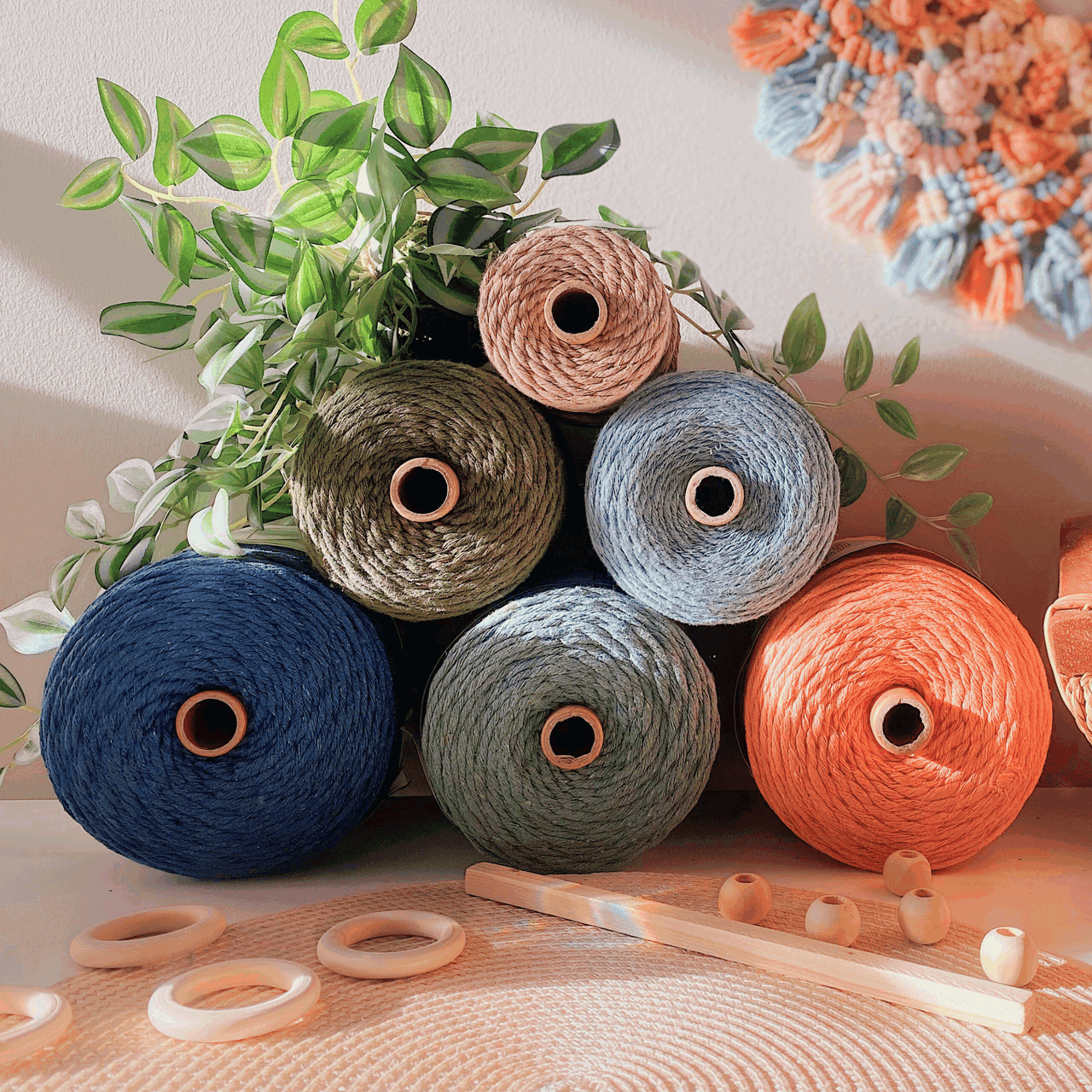
Browse cord colors in our recycled cotton and natural organic cotton collections.
Make It vs Buy It: The Savings Math
Handmade daisy headbands sell well on Etsy and at markets. The figures below are honest, clearly-labeled ranges — not invented exact prices.
| Buy it (handmade) | Make it (Bochiknot supplies) | |
|---|---|---|
| Typical price | ~$15-$35 each (estimate) | ~$15-$25 in cord, beads, and a headband (estimate) |
| Make more than one | Full price every time | Leftover cord and beads stretch across multiple headbands, lowering the per-piece cost |
| Customization | Limited to listed colors | Any color combo and bead finish you choose |
| Skill gained | None | Reverse larks head, vertical larks head, half hitch, and the daisy knot — reusable forever |
A Handmade Gift for Any Occasion
A handmade daisy headband is a thoughtful, personal gift. This one suits plenty of moments:
- Festival season — a fun, on-theme accessory for friends heading to a show.
- Summer birthdays — light, pretty, and easy to make in a favorite color.
- Bridesmaid or bachelorette — coordinate colors for a matching set.
- Mother's Day — a handmade accessory with a personal touch.
- Party favors — quick to batch in different palettes for a group.
Frequently Asked Questions
What cord and bead size work best for this headband?
Use 4 mm braided cotton cord and 14 mm large-hole beads with at least a 7 mm hole. Braided cord is flexible and creates enough space to thread two cord strands through a 7 mm hole. If you use a different 4 mm cord (single strand or 3-ply), choose beads with at least an 8 mm hole for easier threading.
Can beginners make this headband?
Yes. This is a beginner-to-intermediate project. The daisy sequence is repeated, so once you complete the first few daisies the pattern clicks and the rest go quickly. If you can tie a reverse larks head, a vertical larks head, and a half hitch knot, you can make this headband.
What knots are used in this project?
Four knots build the design: the reverse larks head knot attaches the working cords to the band, vertical larks head knots form the top of each daisy, a half hitch knot closes each daisy, and together they create the repeating daisy knot pattern.
How long does it take to make?
Most people finish this headband in 1 to 3 hours, depending on experience. The base wrap and cord setup take a little time up front, then the 12 daisies go faster once you find your rhythm around the third daisy section.
Will it fit all head sizes?
The finished piece is about 1 inch wide and 35 to 40 cm long, designed to fit a standard adult headband base. If you start with a larger or smaller headband, the pattern still works — just plan to add or remove daisies and treat the cord amounts as an estimate.
Can I make it without beads?
Yes. The beads form the center of each daisy, but you can skip them and close the daisy with the same half hitch knots for an all-cord flower. The look is more subtle and tonal without the bead, and it is a good option if you cannot find large-hole beads.
How do I keep the daisies even?
Match your cord lengths early, especially where they overlap at the front, and keep tightening consistently after each daisy closure. Use minimal glue until the end, because excess glue can shift or add bulk. The back-and-around securing method after every daisy keeps the band flat and the spacing even.
Do I need glue for this headband?
You only need glue in a few places: to seal the cord ends while wrapping the base, to seal the trimmed ends on the daisies, and to fuse the anchor cord ends to the back of the headband. Most of the structure comes from the knots, so keep glue minimal until the very end.
How many daisies are needed across the headband?
The tutorial completes the design with 12 daisy patterns across the wide headband, created by repeating the daisy knot sequence and anchoring each one to the band with the back-and-around method.
How do I wear and style it?
This wide beaded daisy headband suits boho and festival looks, spring and summer outfits, beach days, and brunch. Pair it with a sundress and loose waves, or make one in a friend's favorite colors as a handmade gift.
Get the Free 50 Macramé Knots Guide
Want to add more knots to your macramé designs? Grab my free resource, the 50 Macramé Knots & Sennit Guide. It is packed with easy, step-by-step instructions to help you improve your skills and try new creative projects.

More Macramé Projects to Try
- How to Make a Macramé Daisy Keychain — uses the same daisy knot.
- 12-Step Guide to Handmade Macramé Flower Earrings
- How to Make a Macramé Skirt
- Macramé Flower Coaster, Step by Step

Pin this daisy headband tutorial
Save this DIY wide beaded macramé daisy headband to your macramé, hair accessory, or boho fashion board so you can find the full 10-step tutorial again. Beginner-friendly, about 1 to 3 hours, and made with 4 mm braided cotton cord and large-hole beads. (A pin graphic is coming soon — for now, save the post to come back to it.)
Save to PinterestJoin the Bochiknot Community
Knot along with thousands of makers, share your finished headbands, and get help when a knot does not cooperate.
About Nicole Woo
Hi, I'm Nicole Woo, founder of Bochiknot. I've been designing macramé patterns, kits, and beginner-friendly tutorials since 2021, and I test every project by hand so the steps, cord lengths, and knot counts actually work. The cord cuts and daisy counts in this headband tutorial are the exact numbers I used to make the piece you see in the photos.
Where to find Bochiknot: YouTube, Facebook page, our Facebook community, Instagram, Pinterest, TikTok, Etsy, and Patreon for exclusive patterns.
Last updated: June 12, 2026.

Leave a comment