




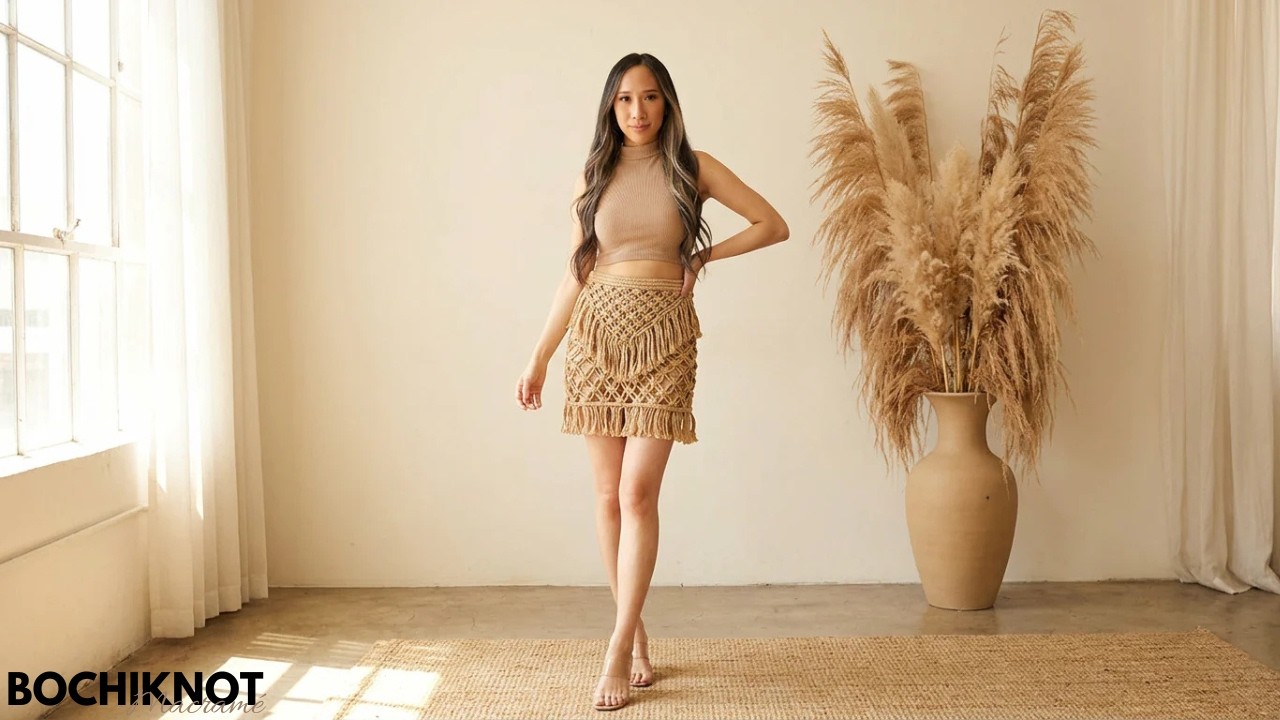
How to Make a DIY Macramé Skirt (Boho Coachella Fringe Tutorial)


Updated 2026 · ~4 min read
🔖 Save for later
How to Make a DIY Macramé Skirt (Boho Coachella Fringe Tutorial)
Prefer to watch? See the 18-minute video walkthrough
Hear the tension cues, see each square-knot row land, and follow Nicole through every V-shape decision in real time.
Watch the video- Phase 1 — Waistband & anchor (Steps 1–3): Pin a 150 cm horizontal anchor cord, attach 36 × 300 cm working cords with reverse lark's head + half hitch knots, then double half-hitch two rows at the back for waistband stability.
- Phase 2 — Body & V-shape front (Steps 4–7): Square-knot all the way around, then build the inverted V front panel from the center forward, leave the back panels looser for movement, and connect both sides with alternating square-knot rows.
- Phase 3 — Length & fringe (Steps 8–10): Add extra rows if you want length, seal the bottom with one more 150 cm DHH row, fill the V gap with rya-weave fringe panels, then trim everything to an even hemline.
- Phase 4 — Closure (Step 11): Undo the temporary back knot and braid two 3-ply ties so the skirt closes neatly at the back waistband.
Total time: 2–4 hours · Finished waist: 26" XS–S (sizing chart below) · Skill level: beginner to intermediate · Cost: under $35 in materials

📌 Pin this tutorial for festival season
Save this DIY macramé skirt guide to your Pinterest boho fashion or Coachella board.
Save to PinterestWhat You'll Learn
Tutorial Contents
- What is a macramé skirt?
- Why make a boho macramé skirt?
- Project details (skill, size, time)
- Materials & tools you'll need
- Cord lengths & cost
- Sizing chart (XS–XL)
- Video walkthrough
- Step-by-step tutorial (11 steps)
- Fit checks & finishing touches
- Pro tips & troubleshooting
- Common mistakes & fixes
- Color variations for festival looks
- How to style your macramé skirt
- Macramé skirt FAQ
- Keep learning with Bochiknot
What Is a Macramé Skirt?
A macramé skirt is a hand-knotted cotton garment built around a horizontal waistband cord and a panel of vertical working cords. The body is shaped with square knots, an inverted V-shaped front, looser back panels for movement, a sealed double half hitch hem, and a flowing fringe finish. The result is a flowy, festival-ready skirt that drapes like high-end boho fashion but costs a fraction of the boutique price.
What makes this DIY version so festival-friendly:
- Coachella-ready. The fringe + V-shape silhouette is exactly the look festival blogs and Instagram have been hunting for.
- Custom fit. Add or remove cord pairs to size it from XS to XL — try it on as you go.
- Wearable in 4 ways. Beach cover-up, festival skirt, layered over a bikini, or paired with a crop top and boots.
- One natural material. 100% cotton cord — soft, breathable, no synthetics, no irritation.
- Photographs beautifully. The natural fringe catches sunset light perfectly for content creation.
Why Make a Boho Macramé Skirt?
Boutique macramé skirts on Etsy and at festival vendors retail for $120 to $280. A handmade version offers three big advantages:
- Cost. Around $30–35 in cord and a couple of hours of your time.
- Fit. Sized exactly to your waist and length preference — no returns, no tailoring.
- Statement piece. The kind of one-of-a-kind festival outfit you'll wear in photos for years.
Project Details
Materials & Tools You'll Need


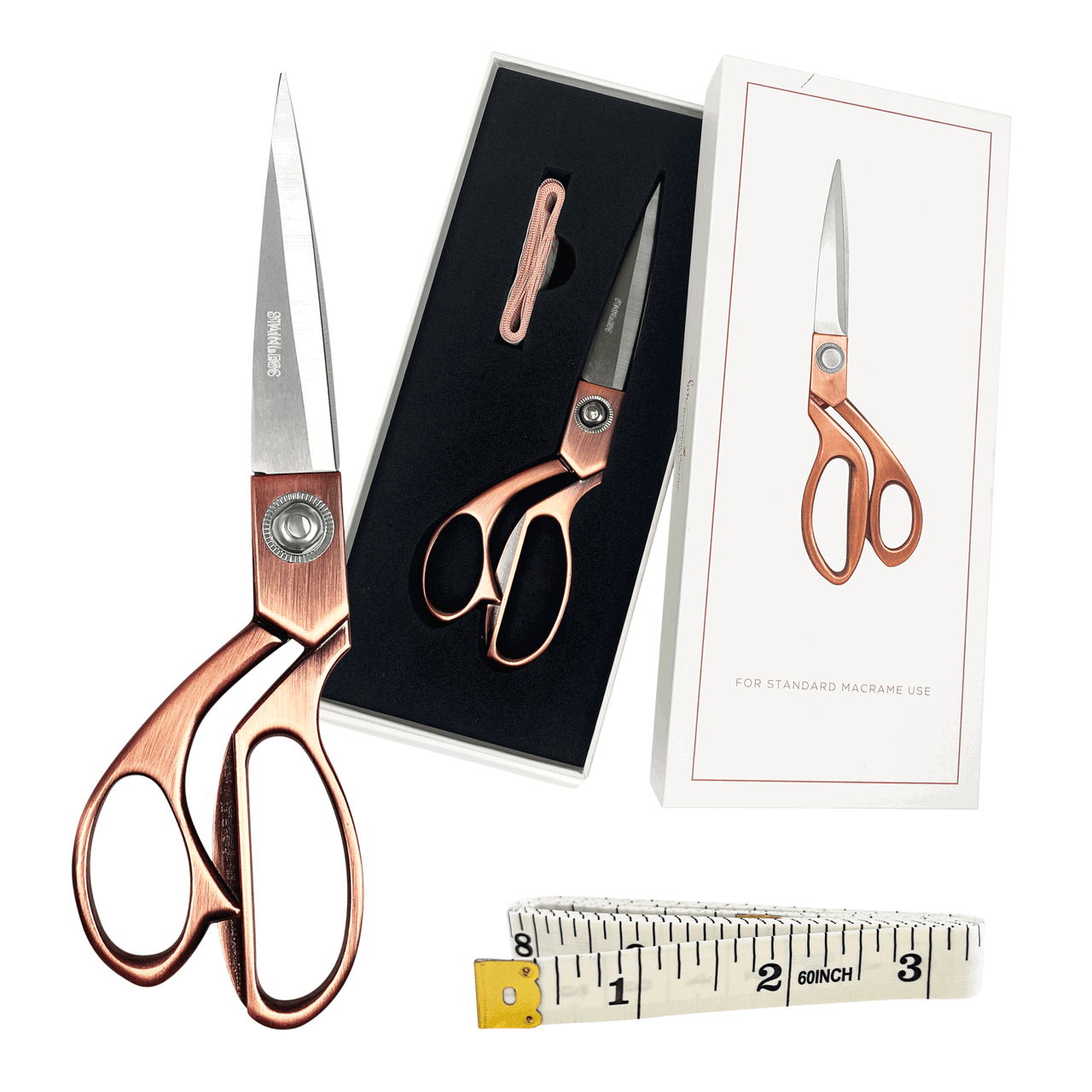
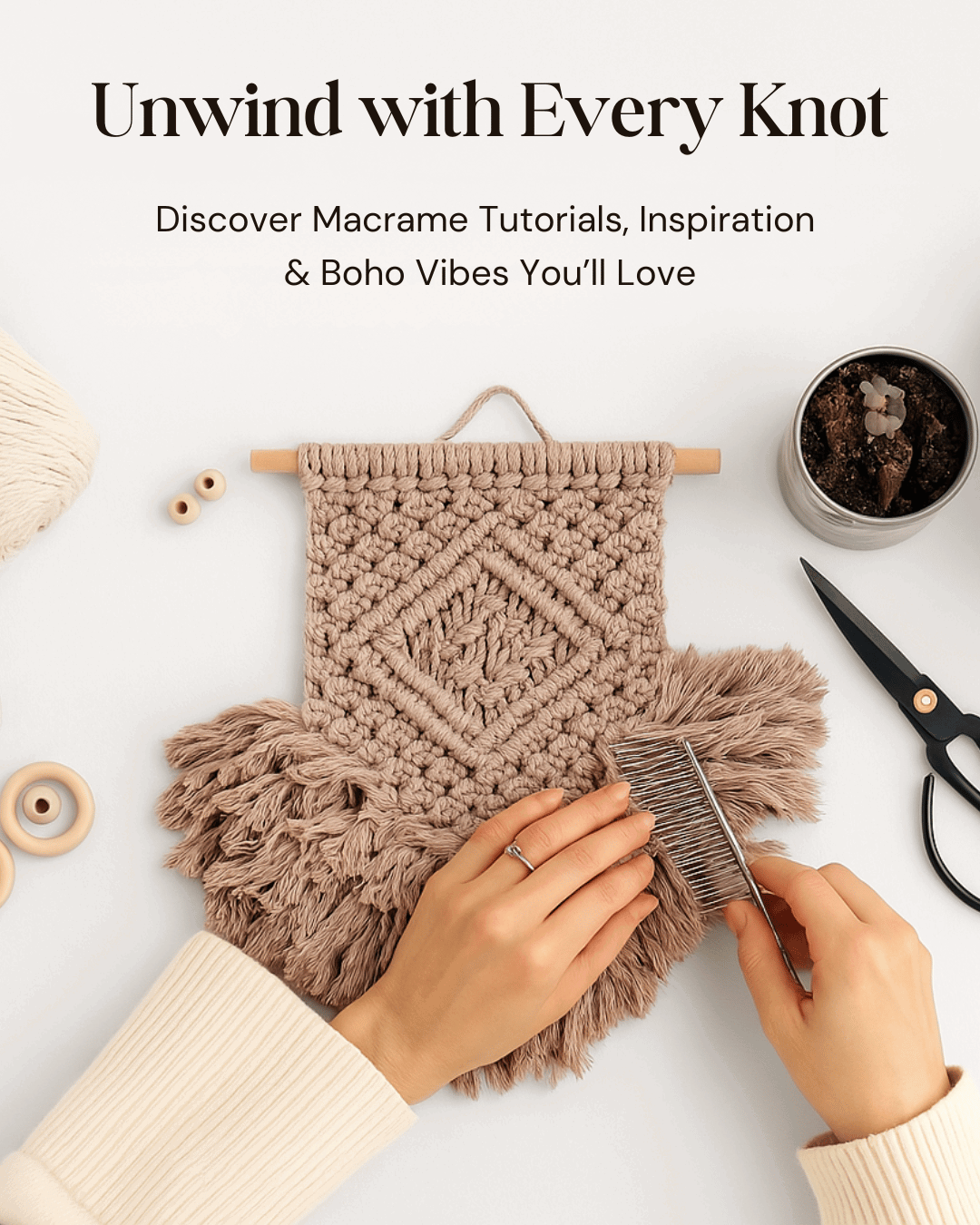
Scissors, Tape & Comb
Rose gold scissors, measuring tape, and metal fringe comb for a clean finish
Shop tools
Essential Macramé Tools

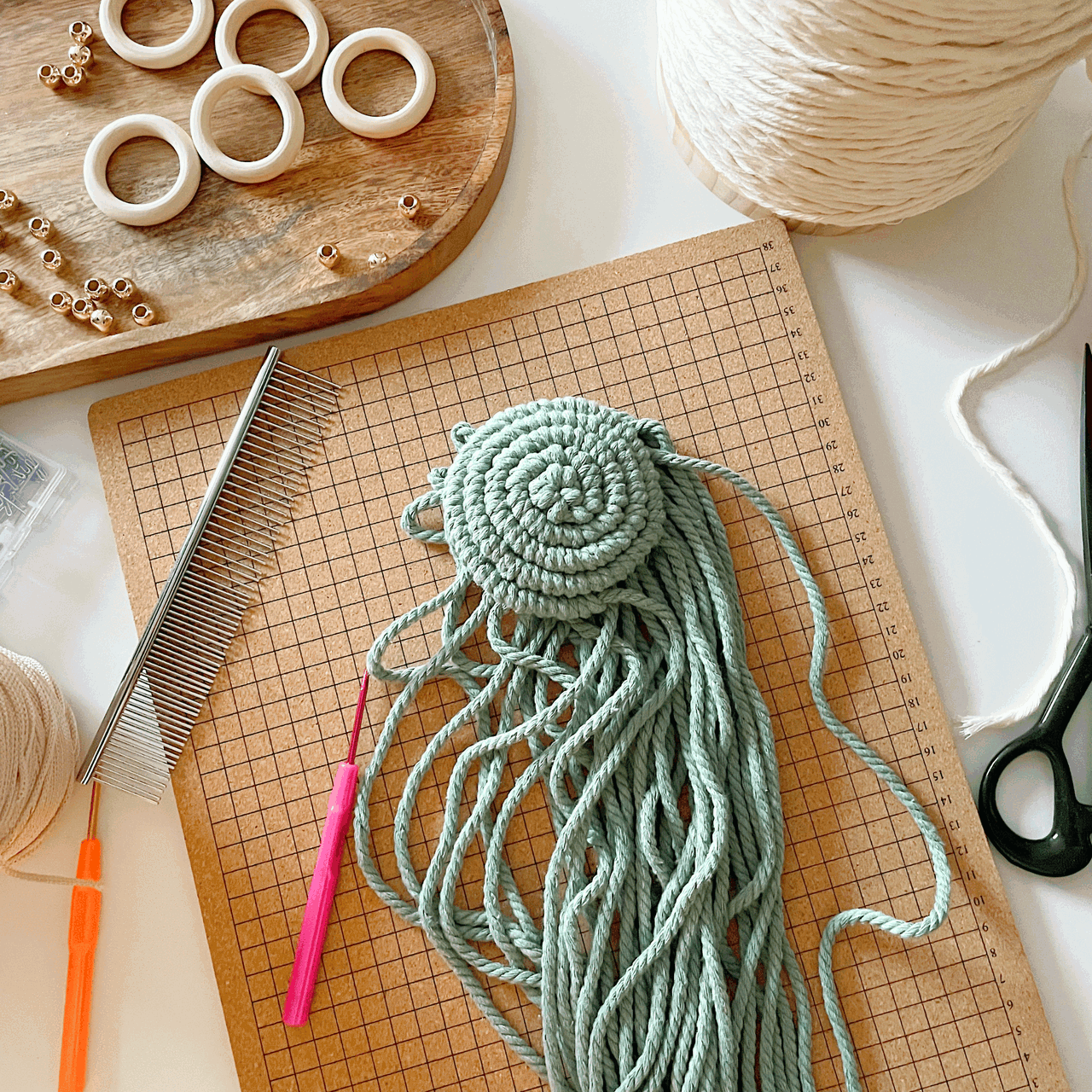
- Rose gold macramé scissors — clean cuts so the fringe ends don't fray
- Macramé measuring tape — accurate 300 cm working cords + waist sizing
- Metal fringe comb — straightens the fringe before the final trim
- A mannequin, dress form, or pin board to work hands-free
Cord Lengths & Cost Breakdown
| Component | Quantity | Length | Notes |
|---|---|---|---|
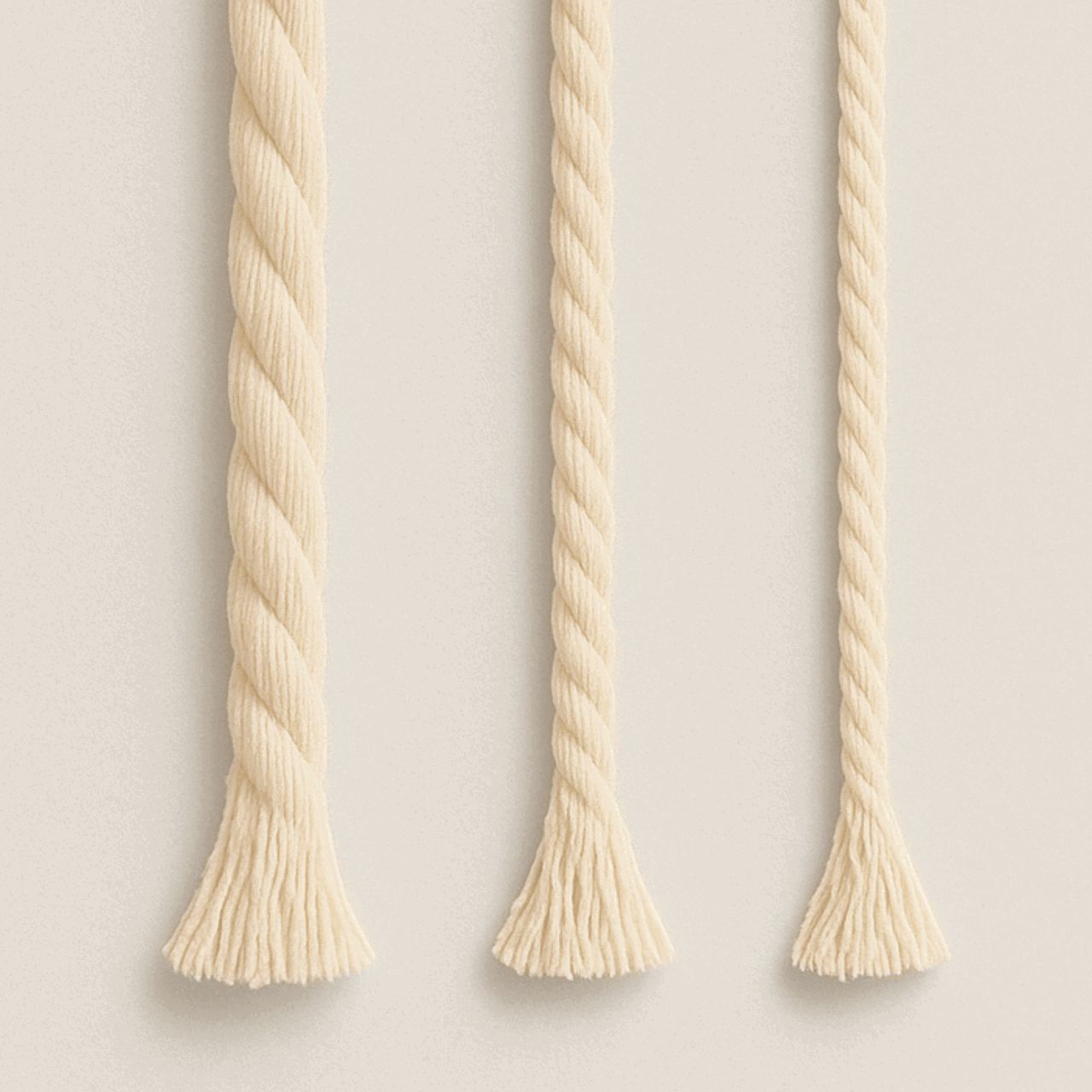
| Horizontal anchor cords (waistband & bottom) | 4 | 150 cm (59") each | 4 mm 3-ply cotton |
| Vertical working cords (skirt body) | 36 | 300 cm (118") each | 4 mm 3-ply cotton |
| Rya-weave fringe scraps | varies | 30 cm+ pieces | Saved from trimmed bottom ends |
| Material | Quantity | Estimated cost |
|---|---|---|
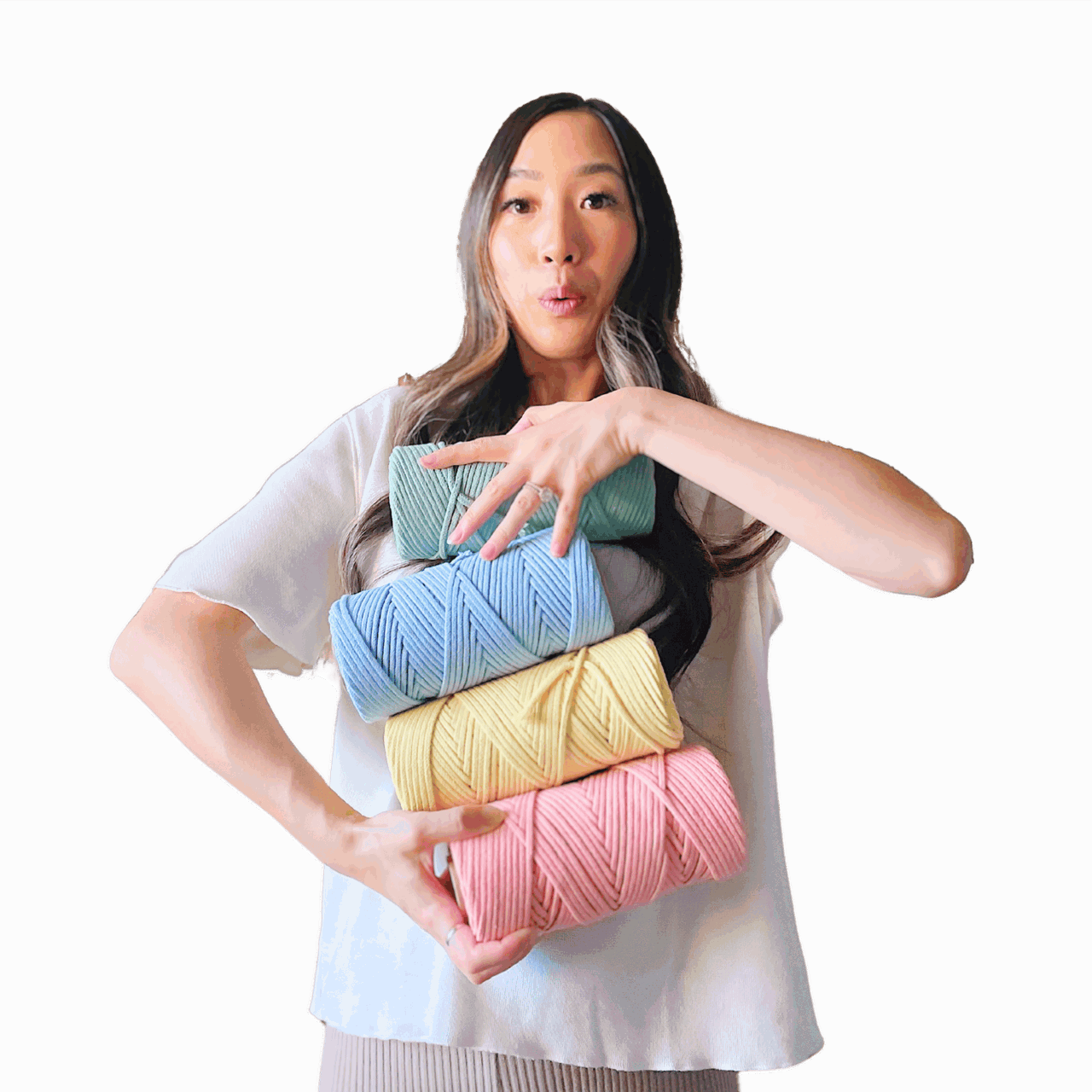
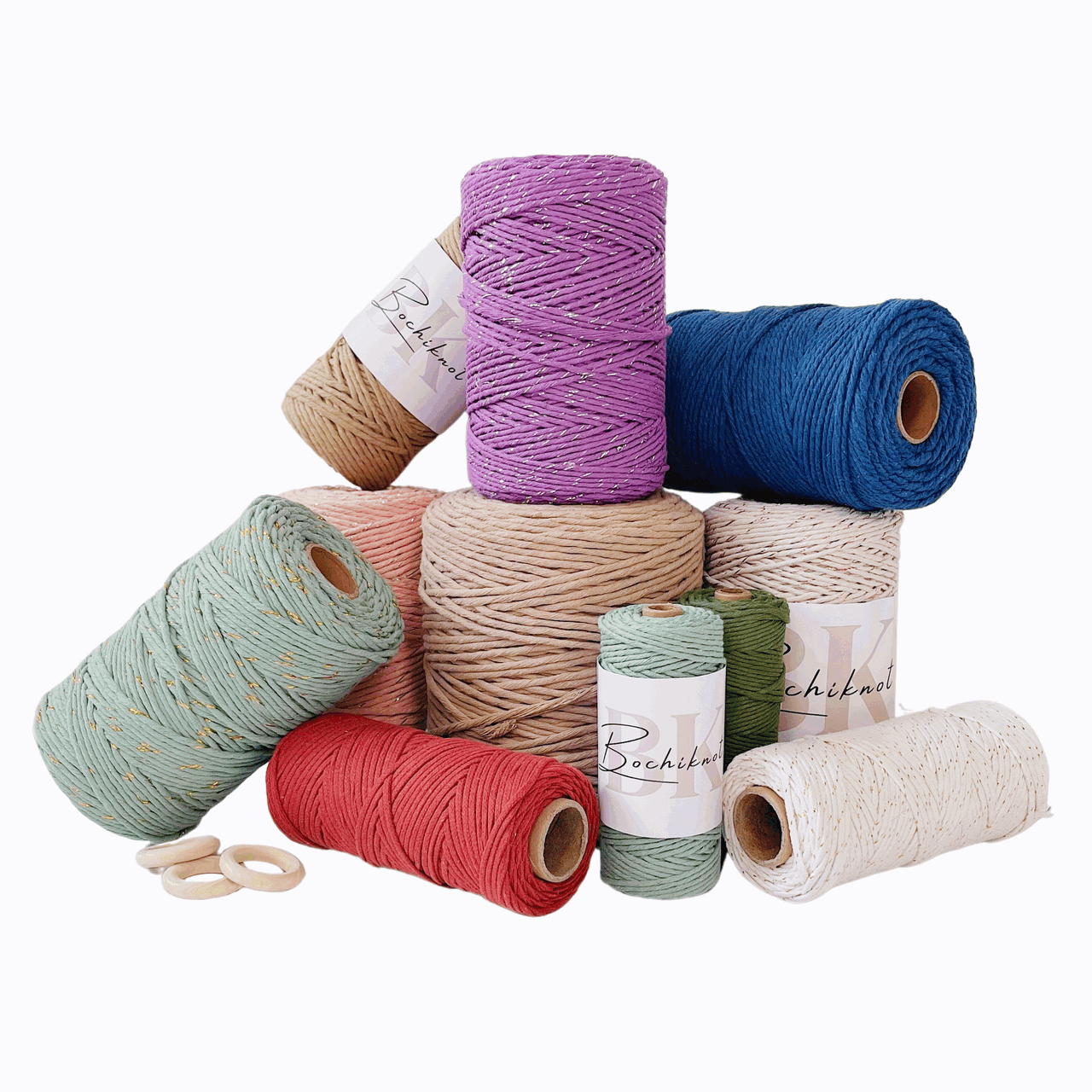
| 4 mm 3-ply cotton cord | ~115 m total | ~$28–32 |
| Tools (one-time, optional) | — | ~$0 if reused |
| Total per skirt | Under $35 |
How Much Cord Do You Need?
Use this quick reference to estimate cord by skirt size before you order rolls. Costs assume our 4mm 3-ply cotton cord at standard pricing.
| Skirt size | Total cord needed | Approx. cost (4mm 3-ply) |
|---|---|---|
| XS / S (waist 24–28") | ~300 m | ~$28–32 |
| M (waist 28–32") | ~400 m | ~$32–36 |
| L (waist 32–36") | ~500 m | ~$36–42 |
| XL / Plus (waist 36–44") | ~600 m | ~$42–48 |
Sizing Chart (XS–XL)
The base pattern uses 36 × 300 cm working cords for a 26" waist (XS–S). To scale up or down, add or remove cords in pairs — two on each side. Try the skirt on after each round to confirm fit before sealing the bottom.
| Size | Waist (in / cm) | Working cords (300 cm each) | Approx. cord total |
|---|---|---|---|
| XS | 24" / 61 cm | 32 | ~102 m |
| S | 26" / 66 cm | 36 (base pattern) | ~115 m |
| M | 28" / 71 cm | 40 | ~127 m |
| L | 30" / 76 cm | 44 | ~140 m |
| XL | 32" / 81 cm | 48 | ~152 m |
Video Walkthrough
💡 Pro tip: This project is best suited by following along in the video. The written steps are a great reference, but seeing the knots formed in real time makes the V-shape and fringe finish much easier to learn.
How to Make a DIY Macramé Skirt (Step-by-Step)
Follow the 11 steps below. Each step has photos and clear bullet instructions. If you get stuck on any step, the video above walks through every step in real time.
Step 1: Anchor the top cord
- Use a 150 cm cord across the front as your top anchor. Pin it in place on a mannequin or pin board so you can work hands-free.

Step 2: Attach the working cords
- Fold each 300 cm cord in half and attach one at a time to the horizontal anchor using a reverse lark's head plus half hitch knot.
- After each attachment, make a half hitch with each tail so the cord sits as two vertical strands.


Step 3: Create two rows of double half-hitch anchors at the back
- Pin a second 150 cm cord at the back under the start of the attached cords. Use this to tie a row of double half hitch knots.
- Repeat with another 150 cm cord for stability — this gives the waistband a structured band that holds its shape on the body.


Step 4: Make a full round of square knots
- Take the first four vertical cords and make square knots all the way around. This forms the skirt's main body and locks the waistband in place.

Step 5: Build the V-shaped front pattern
- From the center front, isolate the middle eight square knots. Create alternating square knot rows beneath them, leaving ~1 cm between rows.
- Each lower row has one fewer knot, forming an inverted triangle or upside-down V that shapes the front and creates the signature festival silhouette.

Step 6: Design the back opening with looser rows
- On the back panels, leave several rows unconnected to create an opening. Build alternating rows that step diagonally so the hips and back have a slightly looser fit.
- This gives you room to sit and move comfortably — essential for a festival or beach day. Keep your square knot tension consistent across the back so the panels drape evenly.

Step 7: Connect both sides
- Once the front and back Vs are balanced, bring the center cords together and seal with alternating square knots to complete the pattern.
- Try the skirt on as you go and add extra two-cord rows under the gap if you need a bigger opening.

Step 8: Extend length and seal the bottom
- If the skirt is still short, add four more alternating square knot rows all around.
- Then place one last horizontal 150 cm cord under the last row and attach all vertical cords to it with double half hitch knots — this gives the hem a clean, structured edge before the fringe.

Step 9: Add rya weave fringe
- Trim the long fringe to leave ~8 cm at the bottom. Save any scraps longer than 30 cm — you'll need them for the rya weave.
- Use two scrap cords to form rya weave knots inside the upside-down triangle gap. Feed the scrap ends through the tighter loops on either side.
- Bring them through the larger center gap to make diagonal V-shaped fringe panels.
- Trim the fringe to an even length when the weaving is complete.

Step 10: Finish bottom gaps and trim
- Fill the 1 cm gaps at the bottom with reverse lark's head + half hitch fringe using 30 cm scraps.
- Trim all fringe to your desired length for a uniform, festival-ready finish.

Step 11: Braid the back ties
- Undo the temporary knot at the top back and create two 3-ply braids (one on each side).
- Secure each braid with an overhand knot at the end to create a functional and decorative back-tie closure.

Fit Checks & Finishing Touches
- Always try the skirt on after major sections — after the top attachments, after the front V, and before sealing the sides. This saves time and prevents reworking large sections.
- If the hips feel tight, add two cords on each side (in pairs) and re-balance the pattern.
- Keep at least 1 cm between square-knot rows where instructed so the fringe and bottom closures fit evenly.
- A light spray of fabric starch will help the skirt keep its shape during wear — especially useful for outdoor festival days when the cotton softens with body heat.
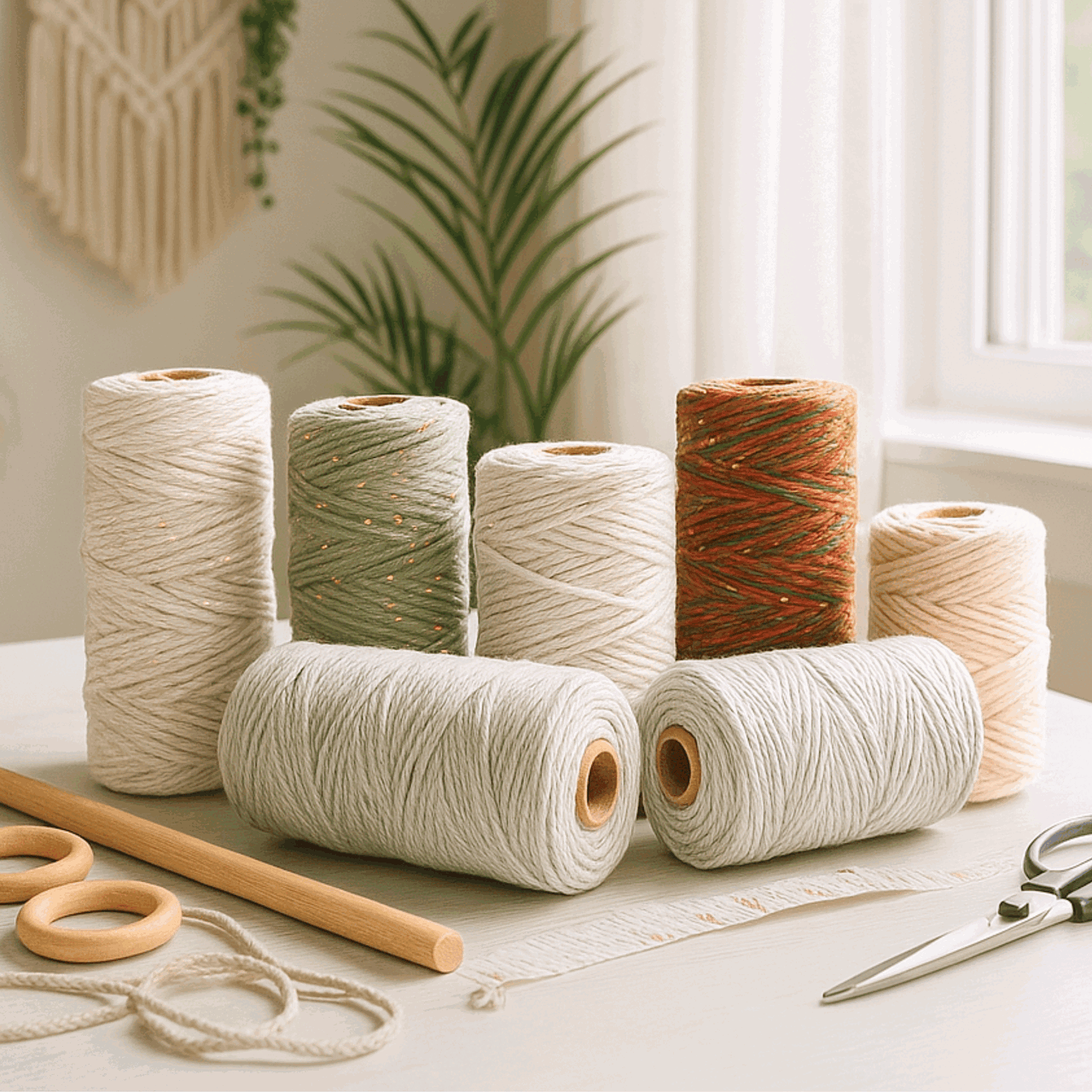
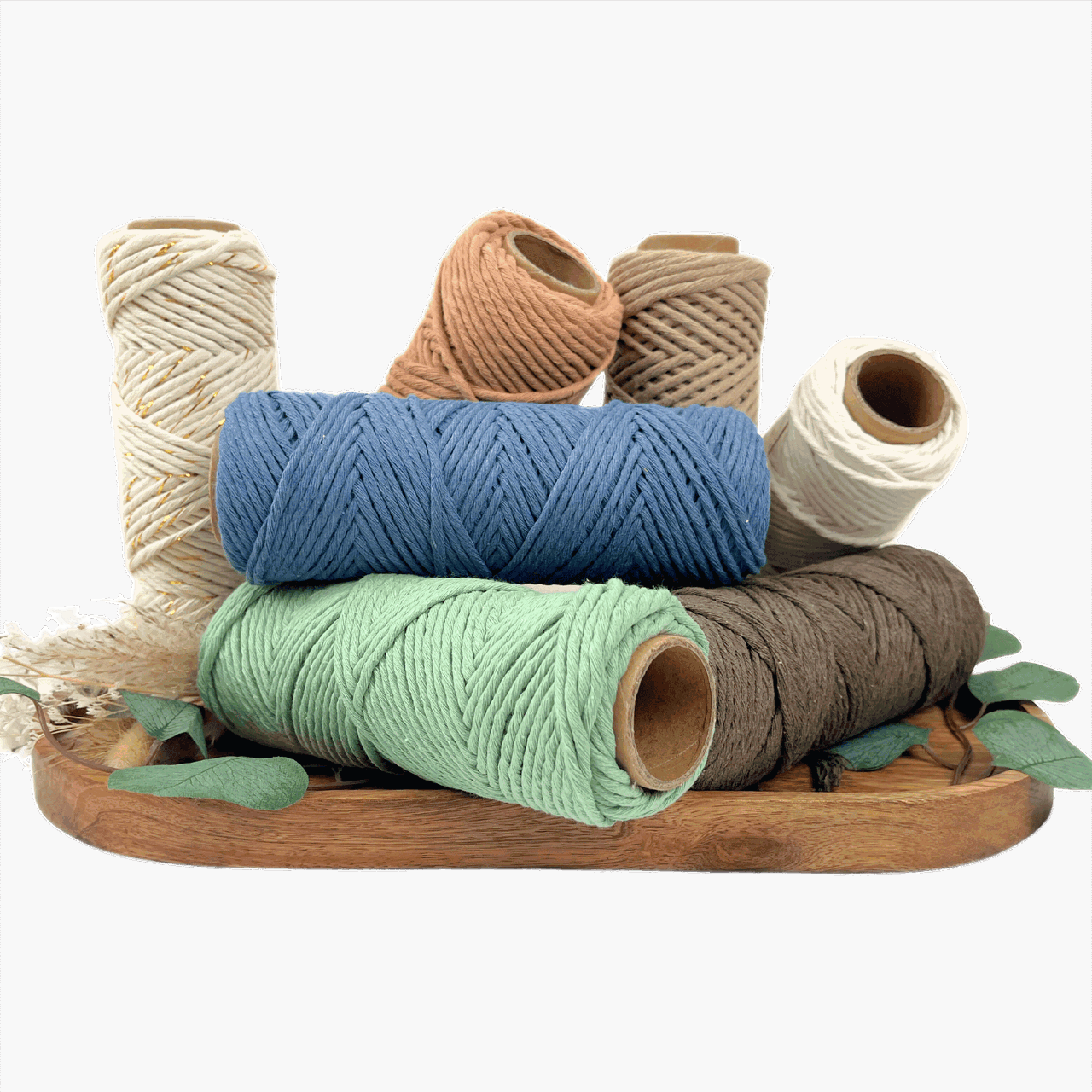
- Choose cotton cord colors that work with your festival wardrobe — natural cream for versatility, blush or rust for sunset photos, sage or mustard for a statement.
Pro Tips & Troubleshooting
- Work on a mannequin or dress form. Pinning the waistband to a body form is the single biggest upgrade — you build the skirt in 3D rather than flat, so fit issues show up early.
- Consistent square-knot tension. All knots should be pulled the same number of times. A comb run between rows keeps the cords aligned.
- Mark the center front. Tie a small thread tag at the exact center-front cord before you start the V — it's the anchor for the inverted triangle.
- Save every scrap over 30 cm. You'll need them for the rya weave fringe panels in Step 9 and gap-filling in Step 10.
- Trim fringe in two passes. First pass: rough cut to ~8 cm. Second pass after the rya weave: micro-trim for a perfectly even hem.
- Color-block intentionally. Two-tone skirts (e.g., natural top + rust fringe) photograph beautifully against desert and beach backdrops.
- Pre-stretch the cord. Run each 300 cm working cord through your hands once before attaching — this removes any kinks and gives a smoother drape.
- Plan for the breeze. The fringe moves. Build at least 2 inches of extra coverage if you want the skirt to read modest in outdoor wind.
Make It Yourself vs. Buy Boutique
Boutique macramé skirts mark up the same materials by 4–8x. Here's the honest comparison:
| Source | Typical price | What you get |
|---|---|---|
| Free People (similar style) | $148 | Mass-produced, polyester blend |
| Revolve / Showpo boutique | $180–$240 | Imported, machine-made |
| Etsy handmade similar | $95–$220 | Handmade but pre-sized |
| Bochiknot DIY (this tutorial) | ~$30–$35 | Custom size, organic cotton, made by you |
Common Mistakes & Fixes
| Problem | Likely cause | Fix |
|---|---|---|
| Waistband stretches out | Only one DHH anchor row, or knots too loose | Use two full DHH anchor rows (Step 3) and tighten each knot fully |
| V-shape front looks crooked | Off-center starting knot or uneven tension | Mark the center-front cord first; mirror knot count left/right of center |
| Skirt won't fit over hips | Not enough cord pairs | Add 2 cords on each side at the waistband; rebuild the affected rows |
| Back opening too tight to sit in | Back panel rows too tight in Step 6 | Loosen step diagonals; leave more 1 cm gaps between rows |
| Fringe looks scraggly | Cut with dull scissors or angled cuts | Use sharp rose gold macramé scissors, cut straight across |
| Rya weave panels gap | Scraps too short | Use scraps of at least 30 cm; double up if needed |
| Back ties keep loosening | 3-ply braids not locked at the end | Finish each braid with a tight overhand knot, then trim flush |

Color Variations for Festival Looks
Natural cream is the classic boho, but the right palette can transform your skirt into a Coachella signature piece:
Natural Cream
Unbleached cotton — the boho classic, photographs perfectly at golden hour
Blush Pink
Soft rose cord — sunset desert vibes, perfect for Coachella weekend two
Sage Green
Muted botanical sage — coastal boho, looks incredible against ocean blues
Rust Terracotta
Warm boho rust — top palette for desert festivals and adobe backdrops
Mustard
Vintage mustard yellow — 70s revival energy, pairs with denim and turquoise
Dusty Rose
Muted dusty rose — soft, romantic, the highest-engagement festival palette on Pinterest

What This Skirt Doesn't Do (Honest Take)
- Not fully opaque — wear bike shorts, a slip, or a fitted skirt underneath in a neutral color
- Not waterproof — handwash only, lay flat to dry, no machine washing
- Heavier than woven fabric — about 800g–1.2kg depending on size
- Custom-sized — cotton macramé doesn't stretch, so measure carefully before starting
- Not for cold weather — best for spring, summer, and warm-weather travel
How to Style Your Macramé Skirt
Three real-world lookbooks for the skirt — pick the vibe that matches your event.

Desert Festival
✓ Cream crop top
✓ Layered gold necklaces
✓ Tan suede ankle boots
✓ Wide-brim straw hat
Sunset golden hour, dust haze, layered Coachella style
Beach Day
✓ White linen blouse
✓ Wide-brim straw hat
✓ Tan leather sandals
✓ Shell jewelry
Tropical vacation, breezy and easy, palm tree backdrop

City Brunch
✓ Cream knit tank top
✓ Tan suede crossbody bag
✓ Tan ankle boots
✓ Gold hoop earrings
European cafe street style, sun-dappled, elevated boho
Macramé Skirt FAQ
What cord thickness works best for a DIY macramé skirt?
A 4 mm 3-ply cotton cord is recommended — it's sturdy enough to hold the V-shape structure while still draping like clothing. Anything thinner and the skirt loses its silhouette; thicker cord makes it heavy on the hips.
How do I size this pattern for medium or large?
Add cords in pairs (two on each side) to the top anchor until the total width matches your waist measurement. The base pattern is 36 cords for a 26" waist — add 4 cords per size up (40 for medium, 44 for large, 48 for XL). See the sizing chart above for exact counts.
Can beginners make this DIY macramé skirt?
Yes — if you know the four basic knots (reverse lark's head, half hitch, double half hitch, and square knot), you can build this pattern. It's labeled beginner-to-intermediate because of the V-shape shaping logic, not the knots themselves.
How long should the fringe be?
The tutorial trims the fringe to about 8 cm, but you can shorten it to suit your style. For a longer maxi look, leave 15–20 cm of fringe. Trim little by little for best results.
What can I wear under a macramé skirt?
Most macramé skirts are semi-sheer because of the open square-knot pattern. Wear a slip skirt, bikini bottoms, fitted shorts, or seamless underwear in a tone close to the cord color (nude under cream, black under dark cord). For festival looks, a high-cut bikini bottom doubles as a styling layer.
How do I size a macramé skirt for different body types?
Measure your natural waist (or wherever you want the skirt to sit), then match the cord count from the sizing chart. For curvier hips, add 2 extra cord pairs at the side seams in Step 4 — this gives the skirt extra room to drape over hips without pulling. Petite frames may want to shorten the working cords to 250 cm.
Is a macramé skirt good for the beach?
Yes — cotton dries fast, doesn't fade like polyester, and the fringe shakes sand off easily. Rinse with fresh water after the ocean to avoid salt buildup, then air-dry flat. Avoid wringing the skirt, which can distort the square knots.
Can I wash a macramé skirt?
Hand wash only. Soak in cool water with a mild detergent, gently agitate, rinse, then squeeze (don't wring) the excess water out. Lay flat to dry on a towel and reshape while damp. Machine washing will tangle the fringe and loosen the waistband knots.
Can I sell handmade macramé skirts?
Yes — handmade macramé skirts are one of the higher-margin handmade fashion categories on Etsy. Boutique prices range from $120 to $280. Be sure to follow your country's labeling rules (fiber content, country of origin) and consider offering a small size range (XS–XL) to capture more orders.
What's the difference between a macramé skirt and a macramé wrap?
A macramé skirt has structured cord attachments at the waistband, a fixed silhouette, and braided closure ties at the back. A macramé wrap is a single rectangular panel that ties around the waist like a sarong — easier to make but less fitted and less festival-stage-ready.
How long does it take to make a macramé skirt?
2–4 hours for an experienced macramé maker, 4–6 hours for a first-timer. Working in a single session helps you keep tension consistent — if you break, mark your row count so the second session matches.
Are macramé skirts back in style?
Yes — macramé fashion has been a top-performing summer trend on Pinterest and TikTok for three consecutive festival seasons. Search "Coachella macramé skirt" and "boho fringe skirt" peak every March–April and again in late June for European festivals.
How much does a macramé skirt cost to make?
A medium-size macramé skirt costs $30–$36 in materials using our 4mm 3-ply cord — most makers complete it in 4–6 hours. Compare that to $148+ for similar styles at Free People or $95–$220 on Etsy.
Where can I buy a handmade macramé skirt?
Make your own with this tutorial for the lowest cost AND custom sizing, OR shop ready-made macramé pieces on our Etsy at etsy.com/shop/bochiknot. Either way, you support an independent maker.
Made this skirt? Show us 📸
Tag @bochiknot on Instagram with #BochiknotMakers for a chance to be featured on our page and Pinterest boards. We love seeing your festival, beach, and brunch looks.
Follow @bochiknotKeep Learning with Bochiknot


12 Free Beginner Projects
Step-by-step tutorials for wall hangings, plant hangers, bags, and more
Browse projects
Double Half Hitch Knot
The structural knot that anchors your waistband and bottom hem
Learn the knot

Macramé Coasters Collection
Build your square knot consistency on bear, diamond, and floral coasters
Browse coasters
About Nicole Woo
Nicole is the founder of Bochiknot Macramé and has been teaching macramé for over 5 years. She's helped thousands of beginners take their first knot through her tutorials, YouTube channel, Patreon community, and best-selling DIY patterns on Etsy. When she's not knotting, she's photographing every step so you don't have to guess.

Leave a comment