




How to Make a Macramé Butterfly Keychain with Beads (Step-by-Step Tutorial)


Updated 2026 · 12 min read
🔖 Save for later
How to Make a Macramé Butterfly Keychain with Beads (Step-by-Step Tutorial)
- Phase 1 — Base setup (Steps 1–2): Attach the base cord to the lobster clasp with a lark's head, then mount 6 long cords.
- Phase 2 — Upper wings (Steps 3–6): Build diagonal rows of double half hitch knots; add beads on bead rows; mirror on the left.
- Phase 3 — Lower wings (Steps 7–8): Bring cords back to the center, then extend new rows outward.
- Phase 4 — Closing & finishing (Steps 9–12): Make tight closing rows, trim, and tuck cord ends through the back.
- Phase 5 — Beaded tail (Step 13): Thread beads onto the two center cords, secure with an overhand knot, and trim.
Total time: 1–2 hours · Finished size: 3" wide × 6" long · Skill level: confident beginner to intermediate

📌 Pin this tutorial for later
Save this macramé butterfly keychain guide to your Pinterest board so you can come back to it mid-project.
Save to PinterestWhat You'll Learn
Tutorial Contents
- What is a macramé butterfly keychain?
- Project details (size, skill, time)
- Materials & tools you'll need
- Cord lengths to cut
- Step-by-step tutorial (all 13 steps)
- How long does it take?
- How much does it cost?
- Macramé butterfly vs. other methods
- Pro tips for symmetrical wings
- Common mistakes & how to fix them
- Variations & color ideas
- Ways to use your finished butterfly
- Macramé butterfly keychain FAQ
- Your next macramé project
- Keep learning with Bochiknot
What Is a Macramé Butterfly Keychain?
A macramé butterfly keychain is a small, handmade decorative project that uses macramé knotting techniques to form a flat butterfly shape attached to a swivel lobster clasp. The wings are shaped using diagonal rows of double half hitch knots, with small beads woven into the wing rows for texture and visual interest. A short beaded tail hangs from the center to balance the design.
The layered wings, bead details, and curved knot rows give the butterfly a more dimensional look than a typical flat keychain — while still using a very repeatable knotting process throughout. This design is built mainly with the double half hitch knot, but the real magic comes from how the rows are shaped and tightened. Keeping the center section neat and balanced helps the butterfly wings stay symmetrical, while the beads add texture and a subtle decorative finish.
The completed butterfly measures roughly 3 inches wide by 6 inches long and makes a beautiful handmade accessory for keys, bags, or gifts. While the project has more steps than a beginner keychain, each section builds gradually, making it much easier to follow once you start working row by row.
Macramé Butterfly Keychain Project Details
Materials & Tools You'll Need
Materials

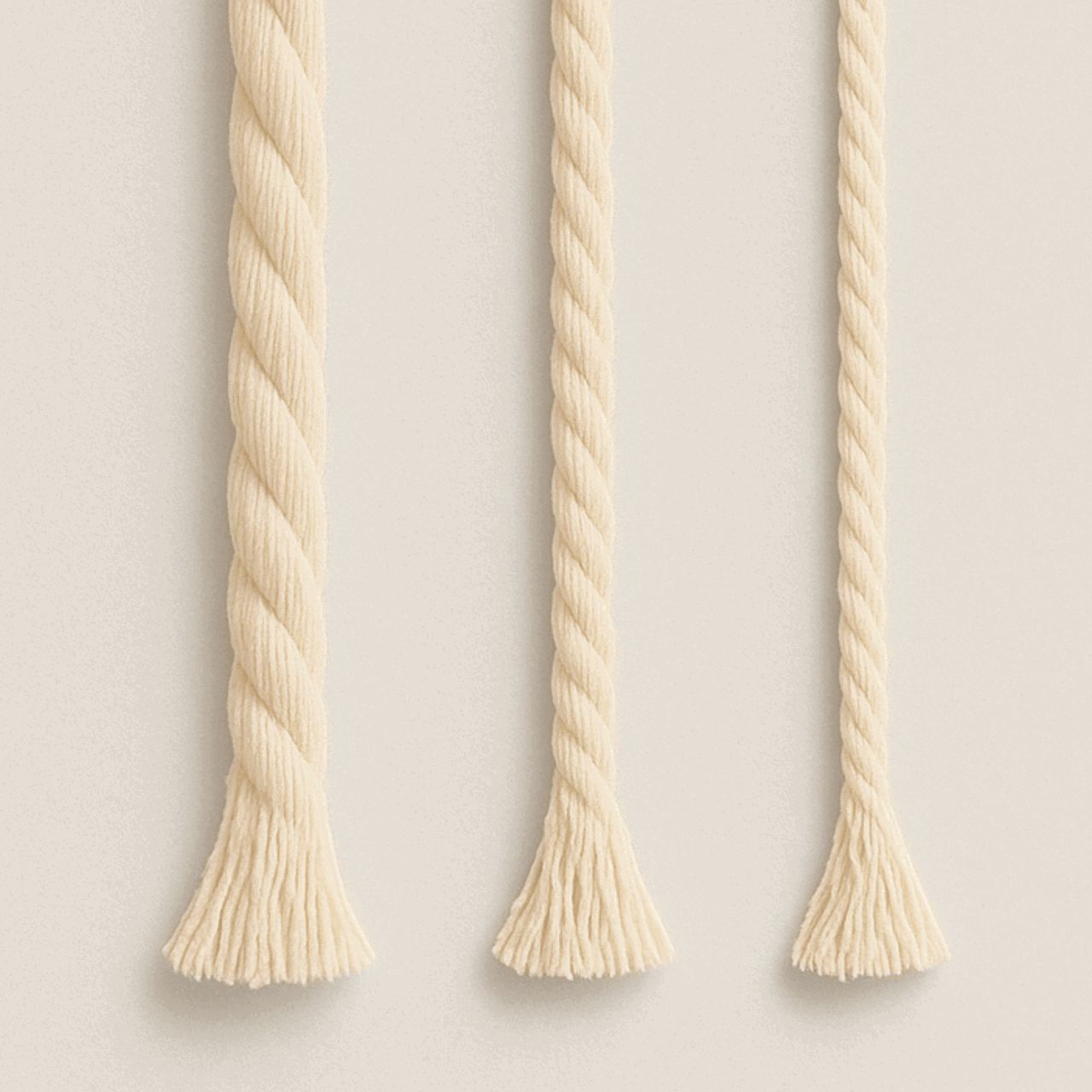
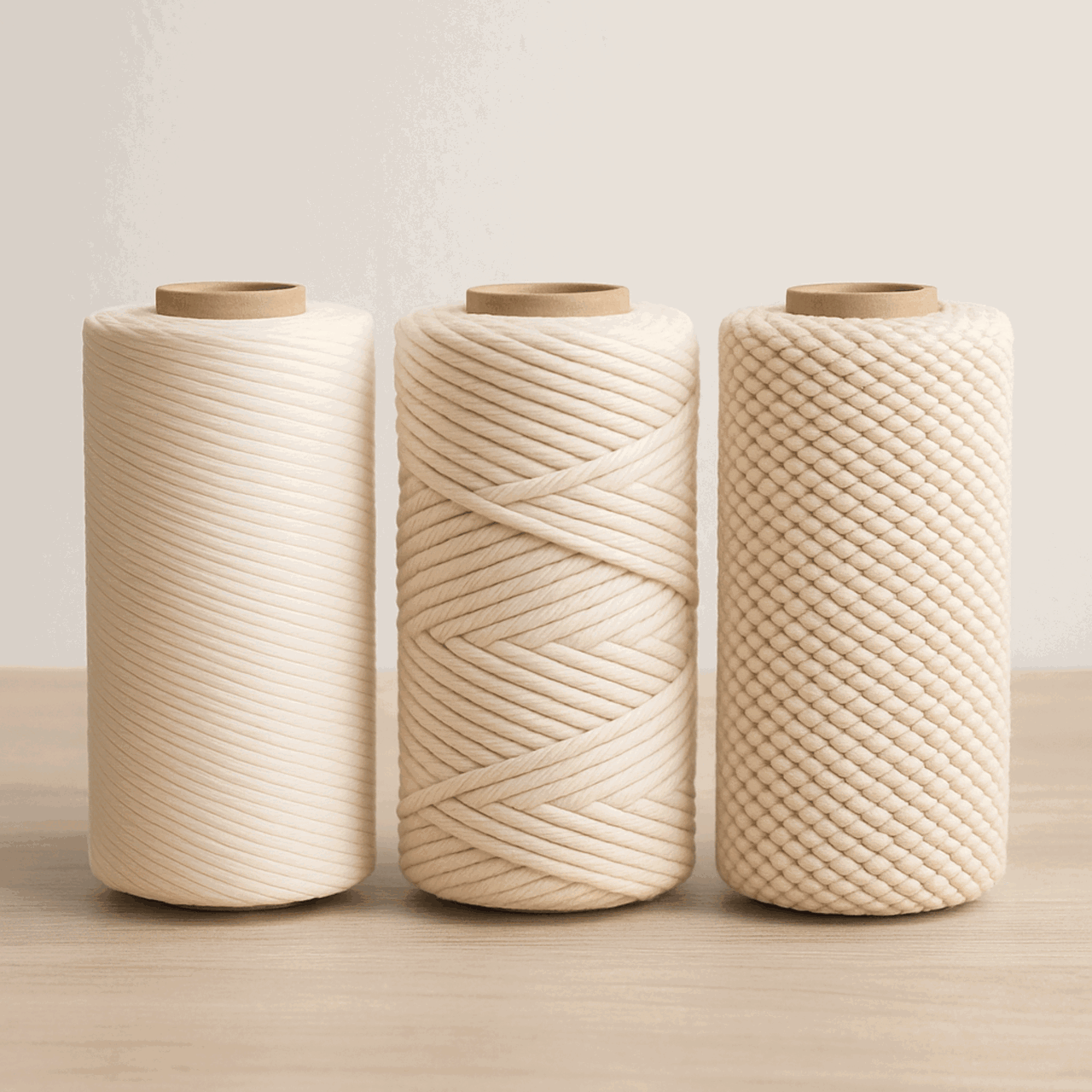
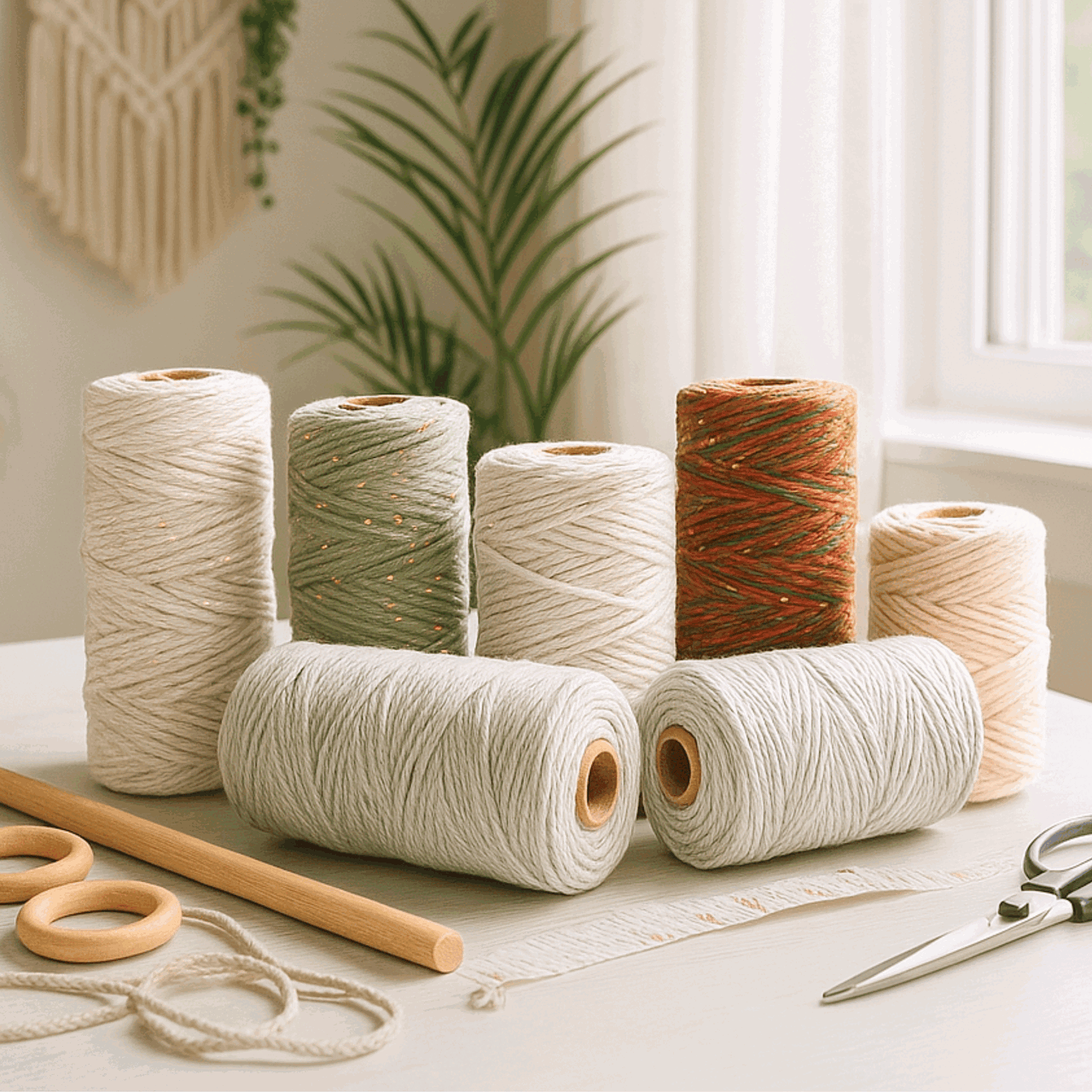
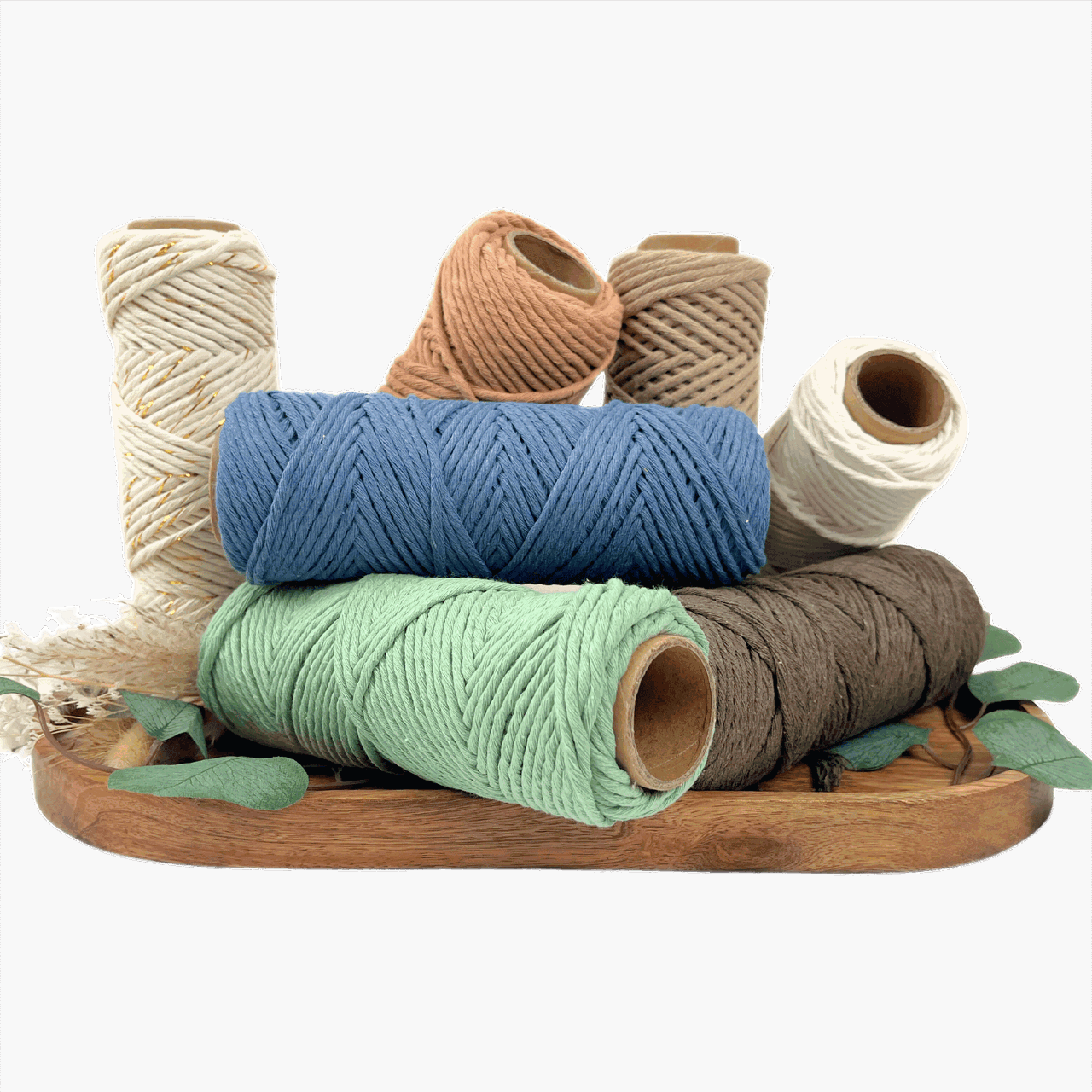
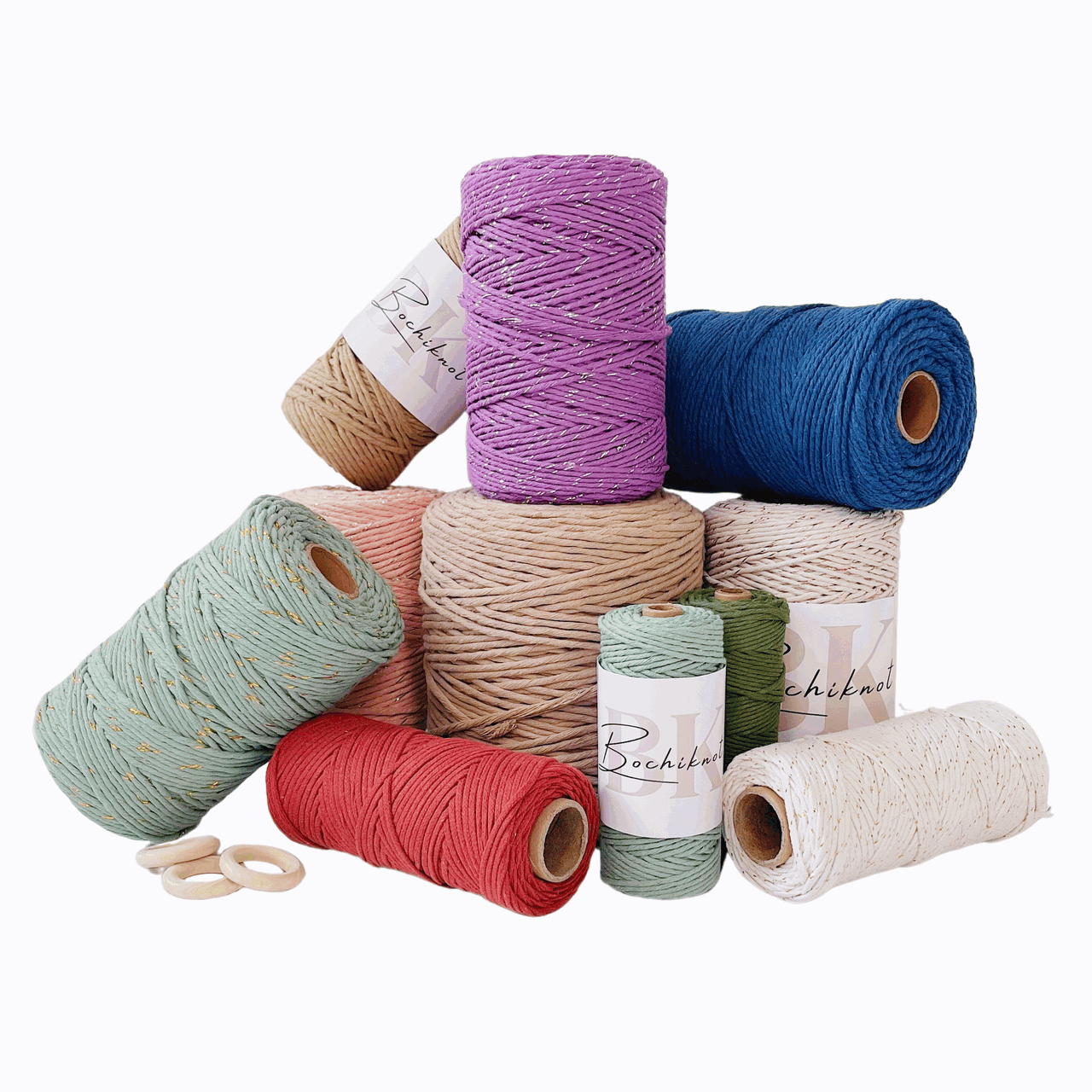
3mm Single-Strand Macramé Cord
Metallic mix cord works beautifully for butterflies — adds shimmer to the wings
Shop cord
Swivel Lobster Clasp
1 × clasp (clasps come in 10-pack — great for making multiple keychains)
Shop clasps
Essential Macramé Tools

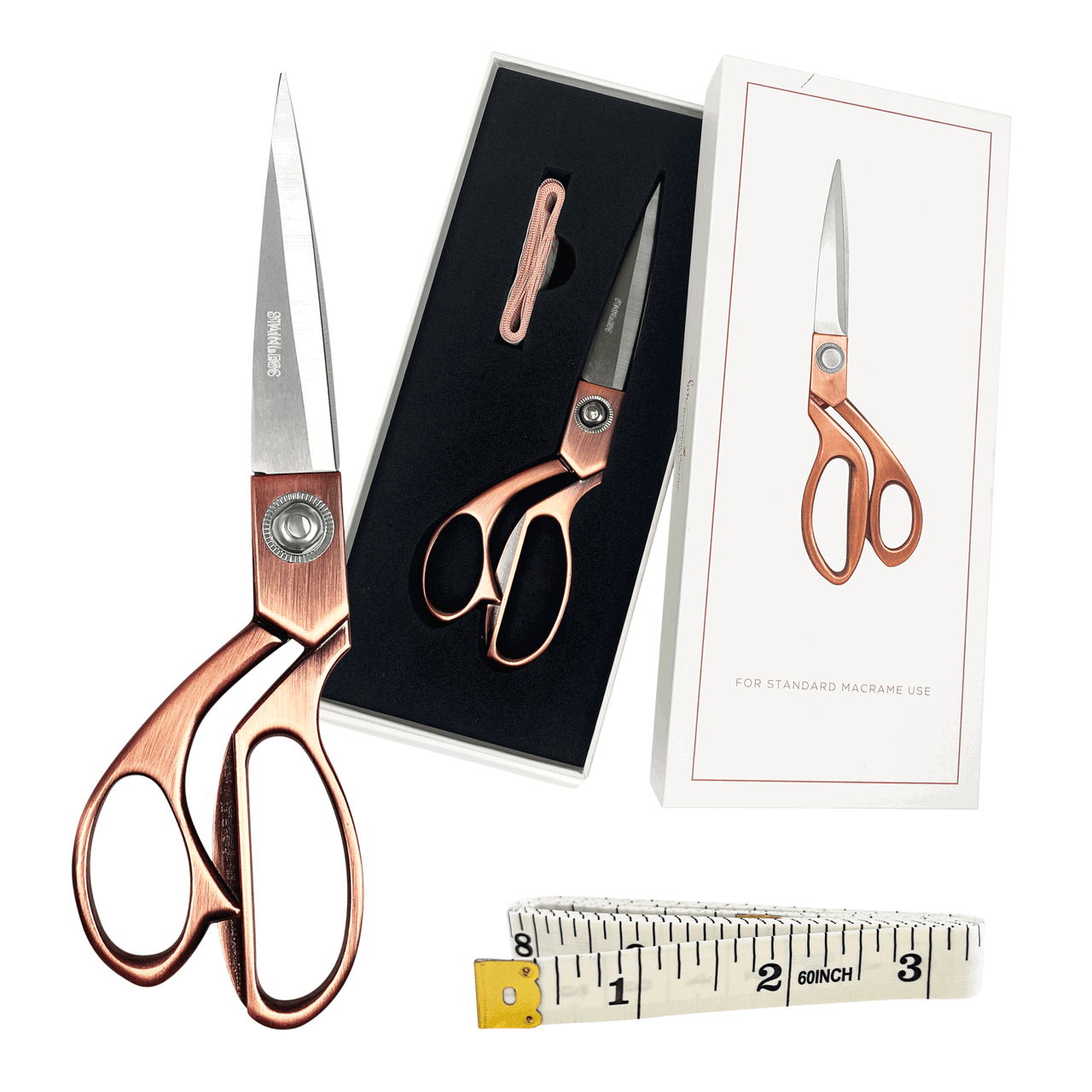
- Gold precision scissors — for clean cord ends
- Macramé measuring tape — for accurate cord lengths
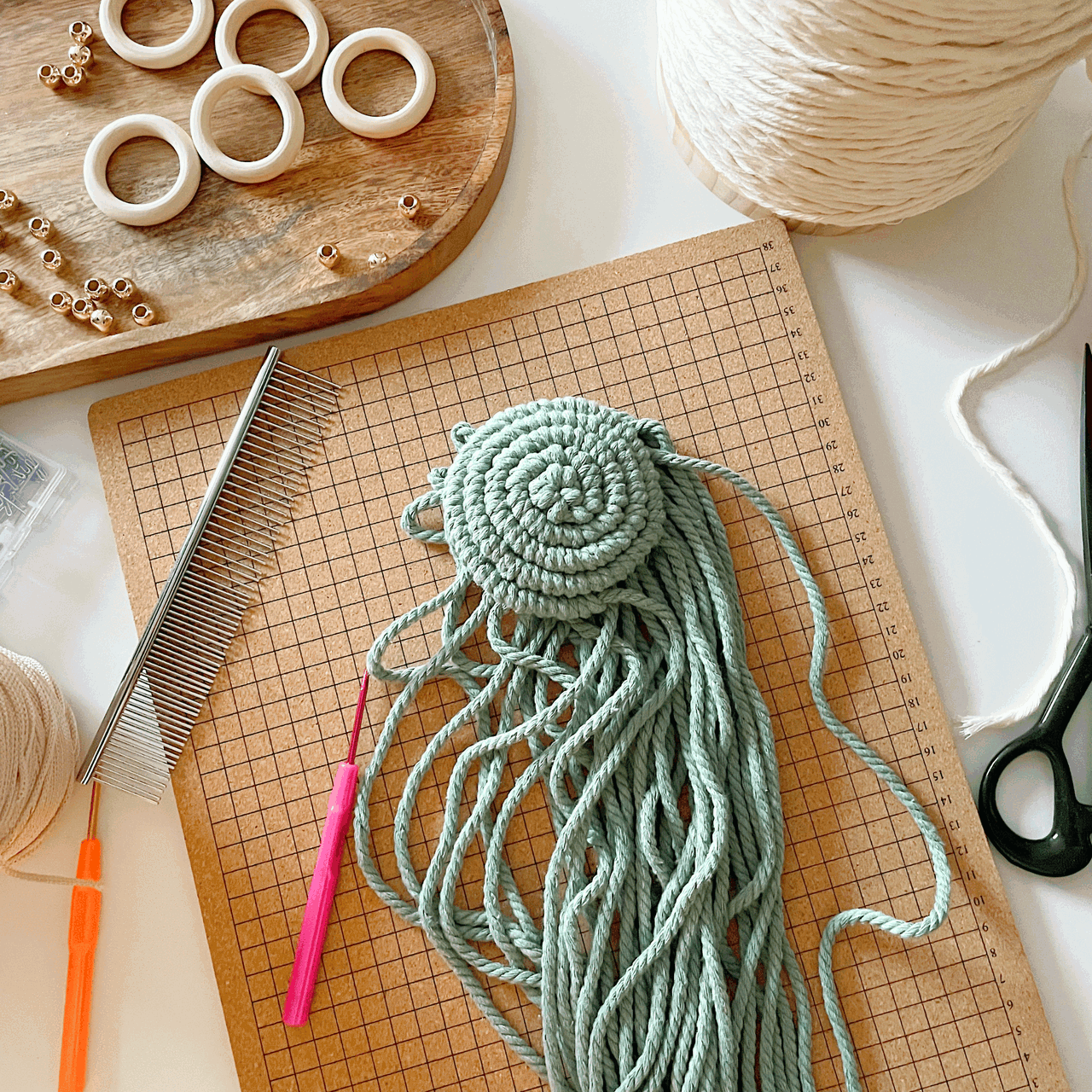
- Metal comb — for tidying fringe and back loops
- Optional: small crochet hook — makes weaving cord ends through the back much easier
Cord Lengths to Cut
| Quantity | Length (cm) | Length (inches) | Purpose |
|---|---|---|---|
| 6 cords | 140 cm | 55" | Wing cords (will be knotted onto the base) |
| 1 cord | 50 cm | 20" | Base cord (folded for lark's head onto the clasp) |
How to Make a Macramé Butterfly Keychain (Step-by-Step)
Follow the 13 steps below. Each step has a photo and clear bullet instructions. If you get stuck, the video at the top of the page walks through every step in real time.
Step 1: Attach the Base Cord to the Lobster Clasp
- Start with the 50 cm cord.
- Fold it in half, thread the loop through the bottom of the lobster clasp, and attach it with a lark's head knot.

Step 2: Add the Six Long Cords to the Center
- Take the first 140 cm cord and place it underneath the two center vertical cords. Attach it with a double half hitch knot.
- Before tightening, make sure the left and right sides of the cord are even.
- Repeat with the remaining five 140 cm cords until all six are attached beneath the center cords.


Step 3: Build the Upper Right Wing
- Begin the upper wings on the right side using the bottom-right cord as the anchor for a row of double half hitch knots worked upward.
- For the next row, skip the bottom cord and use the second cord up as the new anchor cord.
- Repeat this process, working upward each time with one fewer knot in every row to gradually shape the wing.

Step 4: Add Beads While Shaping the Right Wing
- Take the far-right cord as the anchor cord and work a row of double half hitch knots toward the left.
- Before making the final knot in the row, thread a bead onto the last working cord, then use that cord to complete the knot.
- Repeat this same sequence across the next rows of the wing to create the beaded detail pattern.

Step 5: Make the Closing Row on the Upper Right Wing
- The last row of the upper wing uses a slightly different closing technique.
- Start with one normal double half hitch knot. For each following knot, include the previous working cord together with the anchor cord group.
- As the anchor group grows across the row, the edge closes neatly and helps the wing keep its shape.


Step 6: Mirror the Same Pattern on the Left Wing
- The left upper wing follows the same pattern as the right wing, but in reverse.
- Start from the bottom-left cord, work upward rows, and skip the bottom cord each time to gradually shorten the rows.
- Add beads before the last knot in each bead row, then finish with the same closing-row technique to shape the edge neatly.


Step 7: Start the Lower Wings From the Middle
- Once the upper wings are complete, begin shaping the lower wings to give the butterfly more structure and definition.
- Choose one longer cord from each side group to use as anchor cords, then tighten the grouped cords on both sides before starting.
- Take the chosen left cord and use it as the working cord to make a double half hitch knot onto the two middle vertical cords.
- Then do the same with a chosen cord from the right side.

Step 8: Extend the Lower Wings Outward
- Now take those cords you just used in the middle and use them as anchor cords for new rows heading outward to each side.
- On the left side first, knot the nearby vertical cords one by one onto the anchor cord, moving outward. Then repeat the same thing on the right.

Step 9: Build Extra Rows on the Bottom Right, Then the Bottom Left
- Continue shaping the lower wings with back-and-forth rows of double half hitch knots.
- On the right side, use the far-left cord as the anchor cord and knot to the right, then flip the anchor cord back and knot to the left.
- Repeat the same mirrored process on the left side to fill out the lower wings and connect the shape back toward the center.

Step 10: Make the Bottom Closing Rows and Trim As You Go
- To finish the lower wings, use the same closing-row method as before, but trim the newly added anchor cord after each knot.
- Start with one normal double half hitch knot, then include the previous working cord into the anchor cord group for the next knot.
- Tighten the knot, trim the short added anchor cord, and repeat across the side.

Step 11: Bring the Last Side Cords Back Into the Middle
- At the end of the lower wing closing rows, you should be left with one anchor cord on each side.
- Take the left one first and use it as a working cord to make a very tight double half hitch knot onto the two middle vertical cords. Then do the same with the remaining cord on the right.

Step 12: Tuck the Remaining Cords to the Back
- Tuck the two working cords through the side openings toward the back, then turn the butterfly over to clean up the back side.
- Trim the four wing cords, leaving a few inches of length, but keep the two middle vertical cords uncut for now.
- Use a crochet hook to weave the trimmed cords through the back loops so they stay hidden neatly.

Step 13: Add the Final Beads to Finish the Tail
- Thread one bead onto each of the two center vertical cords. Then tie an overhand knot beneath the beads to hold them in place.
- Trim the ends to your preferred length. Leaving a few inches creates a soft tail that suits the butterfly shape nicely.


How Long Does a Macramé Butterfly Keychain Take to Make?
A macramé butterfly keychain takes 1 to 2 hours to complete. First attempts typically take closer to 2 hours; with practice, you can finish one in under an hour. The two slowest sections are the upper wings (about 30 minutes per wing) and the final back-weaving step (about 15 minutes).
| Project phase | Time (first try) | Time (with practice) |
|---|---|---|
| Phase 1 — Base setup (Steps 1–2) | 10 min | 5 min |
| Phase 2 — Upper wings (Steps 3–6) | 50 min | 25 min |
| Phase 3 — Lower wings (Steps 7–8) | 25 min | 12 min |
| Phase 4 — Closing & finishing (Steps 9–12) | 20 min | 10 min |
| Phase 5 — Beaded tail (Step 13) | 5 min | 3 min |
| Total time | ~110 min (1 h 50 min) | ~55 min |
How Much Does It Cost to Make a Macramé Butterfly Keychain?
The total materials cost is approximately $6 to $10 USD per keychain, depending on which Bochiknot supplies you already own. Buying materials in bulk significantly lowers the per-keychain cost:
| Material | Used per keychain | Bulk pack price | Cost per keychain |
|---|---|---|---|
| 3 mm metallic mix cord | ~9.5 m | 100 m spool | ~$3.00 |
| Swivel lobster clasp | 1 | 10-pack | ~$0.50 |
| 10 mm beads | 10 | 100-pack | ~$1.50 |
| Total materials per butterfly | ~$5 |
Macramé Butterfly Keychain vs. Other Butterfly Keychain Methods
Wondering how a macramé butterfly compares to other butterfly keychain techniques? Here's a side-by-side breakdown:
| Method | Skill level | Time | Cost | Best for |
|---|---|---|---|---|
| Macramé butterfly (this tutorial) | Beginner–intermediate | 1–2 hrs | $5–10 | Soft fabric texture, beaded detail, scalable production |
| Beaded wire-wrapped butterfly | Intermediate | 30–60 min | $8–15 | Delicate sparkly look, jewelry-style finish |
| Polymer clay butterfly | Beginner | 2–3 hrs (incl. baking) | $3–6 | Sculpted custom shapes, paintable |
| Crochet butterfly | Intermediate | 1–2 hrs | $2–5 | Tiny appliqué-style butterflies |
| Bead-weaving (peyote stitch) butterfly | Advanced | 3–5 hrs | $10–20 | Highly detailed, heirloom-quality |
Macramé butterflies are the strongest balance of affordable materials, reasonable time investment, and impressive finished look — which is why they're the most popular DIY butterfly keychain on Pinterest and Etsy.
Pro Tips for Symmetrical, Show-Stopping Wings
Symmetry is what separates a beautiful butterfly keychain from a wobbly one. Here are the techniques that make the biggest difference:
- Tighten the center constantly. Every time you finish a row, gently pull the two center vertical cords to re-snug the middle. A loose center is the #1 cause of asymmetric wings.
- Count knots out loud. If the right wing's third row has 4 knots, the left wing's third row needs 4 knots too. Counting prevents the most common mismatch.
- Place beads identically on each side. If the right wing has a bead on knots 1, 3, and 5, the left wing must mirror it — bead on the matching knots from the opposite end.
- Pull anchor cords firm but not stretchy. A cord pulled too tight will distort the wing shape. Pull until the row sits flat, then stop.
- Steam the finished butterfly. A quick hover with a fabric steamer relaxes any uneven tension and sets the final shape. Don't touch the fibers with the steam plate — just hover 2–3 inches away.
Common Mistakes & How to Fix Them
| Mistake | What happens | How to fix it |
|---|---|---|
| Uneven cord placement in Step 2 | The 6 long cords aren't centered — the butterfly is lopsided from the start | Always center each cord under the two middle verticals before tightening the double half hitch |
| Inconsistent tension on bead rows | Beads sit at different angles, making the wing look messy | Pull each beaded knot to the same firmness — bead should sit flush with the cord above |
| Skipping the closing-row growth | Wing edges look ragged or flap out | Always add the previous working cord into the anchor group on the closing row |
| Not mirroring the left side exactly | Wings don't match — most common issue | Count rows, count knots, count beads — match every count from the opposite end |
| Trimming too aggressively at the back | Cord ends pop out, the back looks unfinished | Leave at least 2 inches before trimming; weave through 3+ back loops with a crochet hook |
| Beads too big for the cord | Beads slide on the cord or fall off entirely | Use 10 mm beads with a 5 mm hole — they grip 3 mm folded cord perfectly |
Macramé Butterfly Keychain Variations & Color Ideas

Once you've made one butterfly, the design is endless. Try one of these variations:
Two-Tone Wings
Use one color for the upper wing rows and a contrasting color for the lower wings — instant designer look.
Monarch-Inspired
Burnt orange cord with black beads creates a stunning monarch butterfly homage.
Pastel Spring
Soft cream cord with pastel beads (mint, blush, lavender) for a spring-fresh nursery accessory.
Wedding White
Pure white cord with pearl beads — a beautiful favor or bridesmaid keepsake.
Halloween Edition
Black cord with orange or purple beads for a chic seasonal swap.
Mini Butterfly Earrings
Cut all lengths to half size (70 cm / 25 cm) and skip the clasp — finished butterfly becomes earring-sized.
Ways to Use Your Finished Macramé Butterfly
- Keychain — the original design, perfect for keys, backpacks, and lanyards
- Bag charm — clip onto handbag zippers or tote handles for handmade flair
- Car rearview mirror accent — adds a personal touch to your car interior
- Bookmark — slide the clasp through the spine ribbon of a journal or planner
- Wedding favor — make in bulk for a memorable handmade gift to guests
- Birthday gift topper — tie to a wrapped present instead of a bow
- Wall decor — hang several in a cluster as a butterfly mobile
- Christmas tree ornament — substitute a small loop for the lobster clasp
Macramé Butterfly Keychain FAQ
Is this macramé butterfly keychain beginner-friendly?
It's better suited to confident beginners or intermediate makers. The only knot used throughout is the double half hitch knot — so if you already know that knot, you can complete this project. The challenge comes from keeping the butterfly symmetrical and shaping the wings neatly, which gets easier with practice.
What size beads work for a macramé butterfly keychain?
This project uses 10 mm beads with a 5 mm hole. That size works well with 3 mm macramé cord and allows the bead to slide on without extra tools. If you use 5 mm cord, look for 14 mm beads with an 8 mm hole instead.
How long does it take to make a macramé butterfly keychain?
The finished butterfly takes 1 to 2 hours to make, depending on your speed and how familiar you are with the double half hitch knot. Your first attempt may take closer to 2 hours; with practice, you can finish one in under an hour.
Why are my butterfly wings not matching?
The most common cause is uneven tension, especially in the middle section. Tight center knots, matching knot counts on both sides, identical bead placement, and pulling anchor cords to straighten the structure will help a lot. Count your knots and beads on each row to keep both wings identical.
Do I need a crochet hook for this project?
A crochet hook is very helpful for weaving the cord ends through the back neatly in Step 12. The project can still be completed without one, but a crochet hook makes the finishing step much easier and cleaner.
Can I use a different cord for the butterfly keychain?
Yes, though the tutorial uses 3 mm single-strand metallic mix cotton cord. If you swap cord thickness or texture, the finished size, bead fit, and wing shape will change. For best results stick with 3 mm single-strand cord, which holds knot shape cleanly and shows the bead detail nicely.
How big is the finished macramé butterfly keychain?
The completed piece is approximately 3 inches wide by 6 inches long, including the beaded tail. The butterfly portion itself is about 3 inches tall.
What knot do I need to know before making this keychain?
The only required knot is the double half hitch knot (also called a clove hitch). It's also helpful to know how to tie a lark's head knot for attaching the base cord to the clasp.
How much cord do I need for a macramé butterfly keychain?
You need six 140 cm (55 inch) cords plus one 50 cm (20 inch) cord — about 9.5 meters / 10.5 yards of 3 mm cord total per keychain. A 100-meter spool of Bochiknot 3 mm cord will make approximately 10 butterfly keychains.
Can I sell macramé butterfly keychains I make from this tutorial?
Yes — the finished keychains you make are yours to sell. You may not copy or republish the tutorial itself, but products made from your knowledge are completely yours.
What's the best cord color for a macramé butterfly keychain?
Metallic mix cord (cream with gold fleck) is the most popular choice because the gold adds a subtle shimmer to the wings. Pure cream, soft pink, sage green, and burnt orange are also crowd favorites. For gifts, match the recipient's bag or jewelry tone.
Can I make a macramé butterfly without beads?
Yes. Skip the beads in Steps 4, 6, and 13 — the finished butterfly will still have lovely shape and texture from the knotted wings alone. Beadless butterflies look particularly clean in a single solid color.
What's the easiest macramé keychain for beginners?
The easiest macramé keychain for beginners is a basic lark's head sennit or square knot keychain, which use only one knot repeated downward. The butterfly keychain in this tutorial is a step up from those — it uses only the double half hitch knot, but the wing-shaping makes it a "confident beginner" project. If you're brand new, master the double half hitch tutorial first, then come back here.
How do you finish a macramé keychain neatly on the back?
To finish a macramé keychain cleanly, tuck the loose cord ends through the side openings to the back of the project, then use a small crochet hook to weave each trimmed cord through 3 or more back loops. Leave at least 2 inches before trimming so the woven ends stay hidden. A drop of clear fabric glue on each tucked end will lock it in place permanently if you want extra security.
What's the best yarn for macramé keychains?
The best yarn for macramé keychains is 3 mm single-strand cotton macramé cord. It's thick enough to hold knot shape, thin enough to fit standard 5 mm hole beads, and soft enough not to fray quickly with everyday key-jingling. Avoid acrylic yarn (too slippery) and standard knitting yarn (too soft to hold knots). Bochiknot's 3 mm single-strand cord is purpose-made for keychains and jewelry.
Can I make a macramé butterfly keychain with paracord?
Yes, paracord works for a macramé butterfly keychain — but the finished look will be different. Paracord is stiffer than cotton, so the wings will hold a more rigid, sculptural shape (great for outdoor, military, or scout-style designs). The knots also show less softly. Use 4 mm or 5 mm paracord and 16 mm beads with a 10 mm hole. Cotton macramé cord still gives the softer, more decorative finish most makers prefer.

Your Next Macramé Project

Master the Double Half Hitch
Deepen the foundation knot that builds the entire butterfly
Learn the knot


Macramé Bear Coaster
A cute round coaster with a clean no-fringe edge — DHH practice project
Make the coasterKeep Learning with Bochiknot
Want more macramé tutorials, patterns, and behind-the-scenes content? Connect with Nicole and the Bochiknot community across all of these platforms:
Patreon Membership
Exclusive patterns, video tutorials, and a private macramé community
Join Patreon
About Nicole Woo
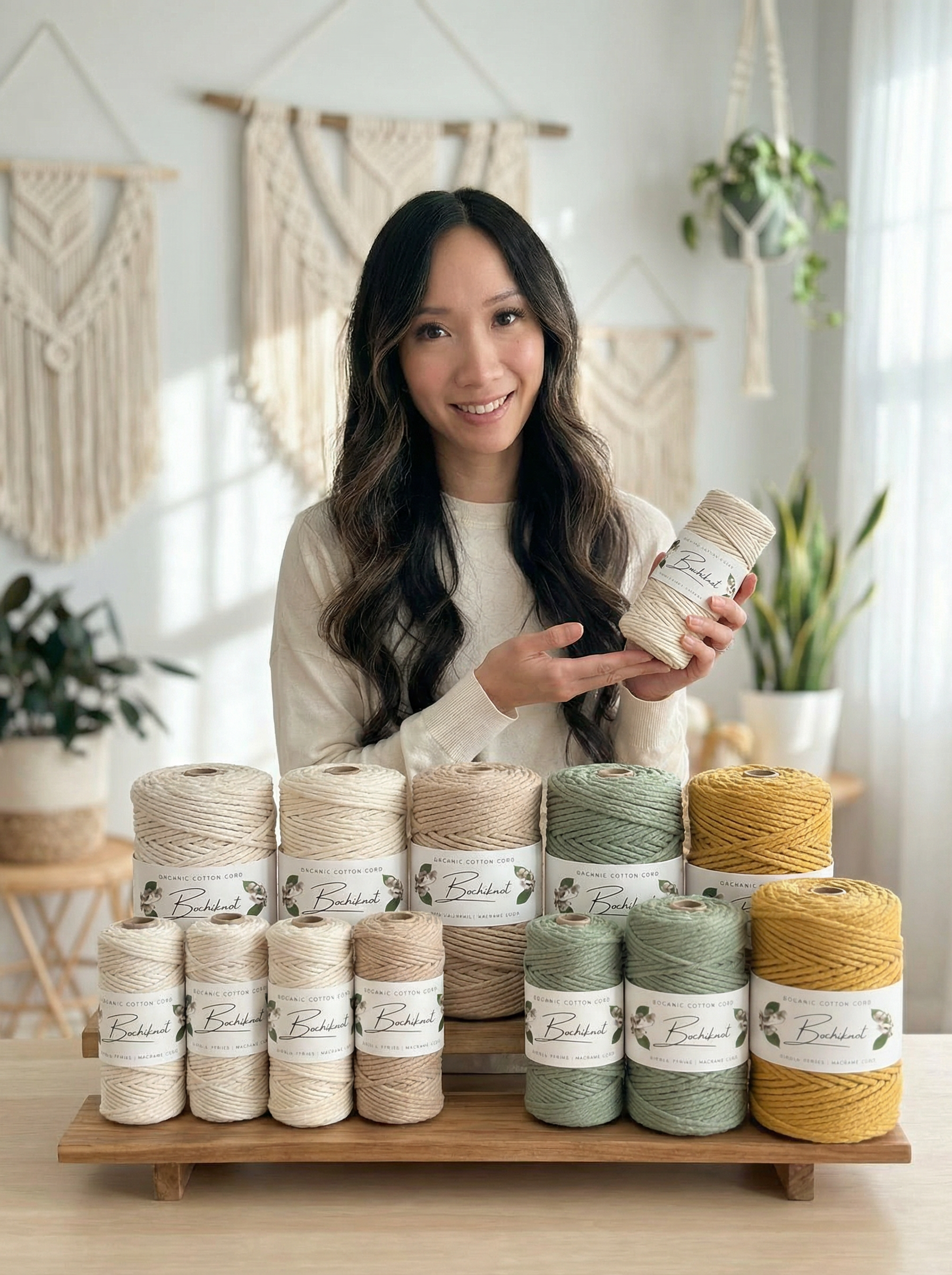
Nicole is the founder of Bochiknot Macramé and has been teaching macramé for over 5 years. She's helped thousands of beginners take their first knot through her tutorials, YouTube channel, Patreon community, and best-selling DIY patterns on Etsy. When she's not knotting, she's photographing every step so you don't have to guess.

Leave a comment