




How to Make a Macramé Heart Keychain (Beginner Wristlet Tutorial)


Updated 2026 · ~14 min read
How to Make a Macramé Heart Keychain (Beginner Wristlet Tutorial)
Updated June 9, 2026 · 15-step tutorialIf you are looking for a project that is practical, giftable, and undeniably cute, this macramé heart keychain is your next must-make. What makes it stand out is the way a heart is woven directly into a classic square-knot wristlet, so you get a sturdy everyday keychain with a soft, romantic detail baked right in.
By contrasting a bold body color with a second color for the heart, you keep the crisp structure of a wristlet while adding a playful, custom touch that turns it into wearable art. It also makes a sweet handmade gift, especially around Valentine's Day. And do not let the detailed look fool you: this tutorial is completely beginner-friendly.
Work in three phases. Build the band: attach two base cords and a heart-color cord to a lobster clasp and tie 34 square knots. Weave the heart: add contrasting cords and shape a heart with diagonal double half hitch knots, then add five square knots below it. Finish the loop: fold the band, match the ends, and secure it with a gathering knot. It uses 3 mm cord and takes 1 to 2 hours.

What You'll Learn
Tutorial Contents
- The tension trick that keeps your heart crisp
- What is a macramé heart keychain?
- Why make a macramé heart keychain?
- Materials & tools you'll need
- How much cord do you cut? (3 sizes)
- Video walkthrough
- Step-by-step tutorial (15 steps)
- Pro tips & troubleshooting
- Common mistakes & fixes
- Ways to use your heart keychain
- Color combinations to try
- Make it vs buy it: the savings math
- A heartfelt gift for any occasion
- Frequently asked questions
- More macramé keychain projects
- Join the Bochiknot community
By the end of this guide you will know how to build a clean square-knot band, add a second cord color cleanly, shape a symmetrical heart with diagonal double half hitch knots, hide and trim your working cords so the back stays tidy, and close a wrist loop with a tidy gathering knot. You will also walk away with a tension habit that transfers to every shaped macramé design you make next.
The Tension Trick That Keeps Your Heart Crisp (Not Blobby)
Why some hearts look crisp and others look like a blob
Here is the single most important thing I can teach you about this project: the diagonal double half hitch defines the heart's shape, so consistent tension is everything. A square knot can be a little loose and still look fine. A half hitch cannot. Each hitch is a tiny curve, and if you pull one tight and the next one loose, the heart's outline wobbles, and a wobbly outline reads as a blob instead of a heart.
The fix is a four-part tension habit:
- Hold the anchor cord taut at about 45 degrees. The anchor cord is the rail your hitches ride on. If it sags, every knot on it sags with it. Keep gentle, steady tension and aim it on a consistent diagonal so the curve stays smooth.
- Pull each hitch with equal thumb pressure. Place your thumb on the knot and pull until you feel the same resistance as the last knot, then stop. Firm, not tight. Sameness matters more than strength.
- Work in good light. A crisp heart is a symmetry game, and you cannot match your left and right sides if you cannot see the cord clearly. Sit near a window or a lamp and turn the piece as you work.
- Re-snug before you trim. Before cutting, gently pull each anchor cord to take out hidden slack and tighten the whole heart. Cords relax as you handle them, so this final snug locks in the crisp shape. Trim only after it looks right.
Get tension right, and the heart practically shapes itself. This same habit carries straight into macramé feathers, leaves, and any motif built from diagonal hitches.
What Is a Macramé Heart Keychain?
A macramé heart keychain is a hand-knotted cord accessory built as a slim square-knot wristlet with a small woven heart sitting in the middle of the band. It clips to keys, bags, and zippers with a swivel lobster clasp, and the finished piece is about 9 inches long and 0.75 inches wide, long enough to loop over a wrist, compact enough to dangle from a backpack.
What makes it such a satisfying beginner-friendly project:
- A handful of friendly knots. The band is all square knots. The heart introduces the diagonal double half hitch and a reverse larks head, and the loop closes with a gathering knot, a low-stakes way to learn shaping.
- Two-color wearable art. Contrasting body and heart colors turn a plain band into a custom keepsake without any extra hardware.
- Genuinely useful. It is a real keychain, bag charm, and zipper pull, not just decor.
- Quick and giftable. One afternoon yields a handmade gift, and a single 100 m roll of cord makes a whole batch.
Why Make a Macramé Heart Keychain?
There are three reasons this project is worth your afternoon:
- It is a heartfelt gift. A woven heart in someone's favorite colors lands as personal and thoughtful in a way a store-bought keychain never does, ideal for Valentine's Day, Mother's Day, or a thinking-of-you surprise.
- It is genuinely beginner-friendly. The band is forgiving square knots, and the heart is taught one hitch at a time. If you can tie a square knot, you can finish this with patience.
- It is endlessly customizable. Swap colors, change cord material, lengthen or shorten the band, or batch a matching set.
Materials & Tools You'll Need

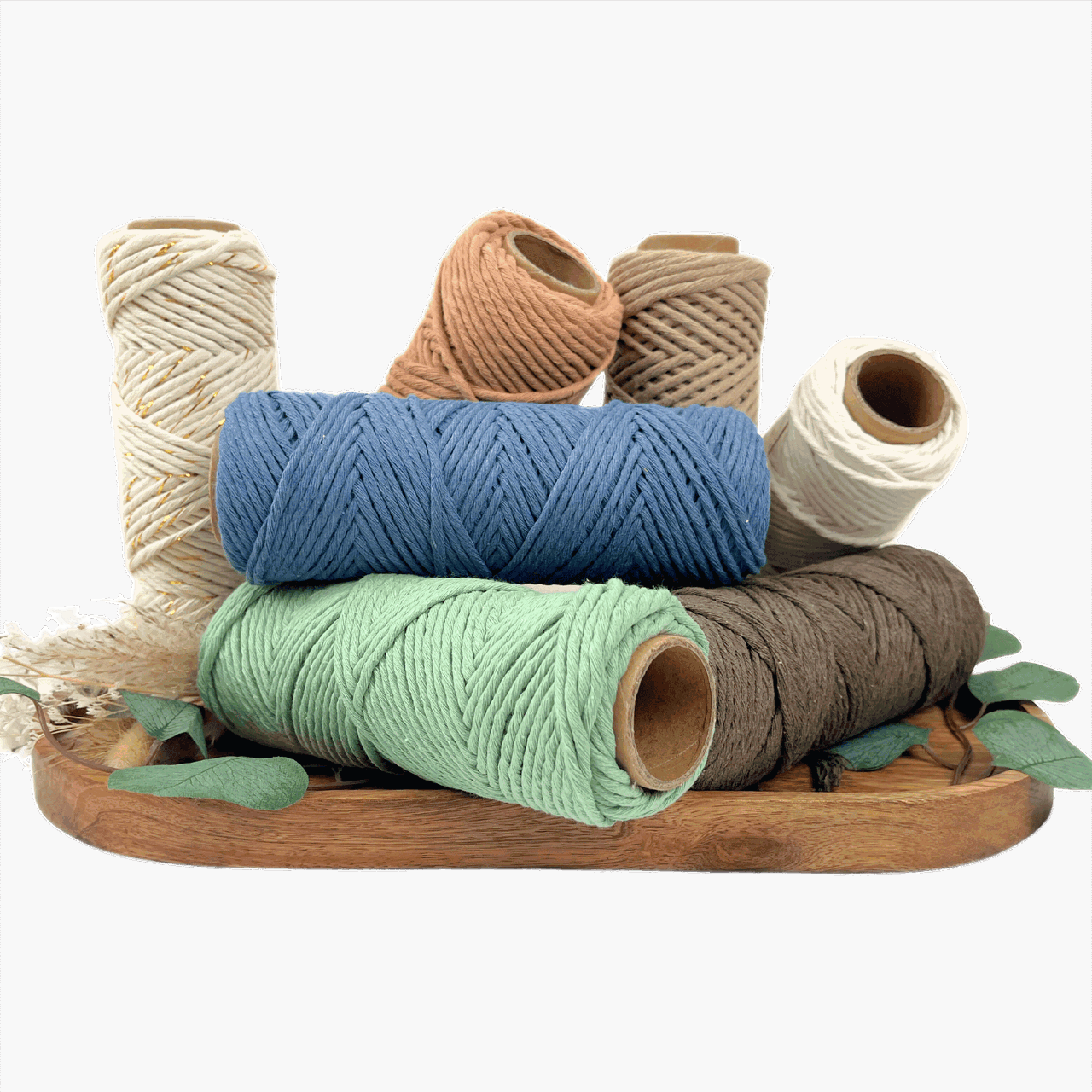
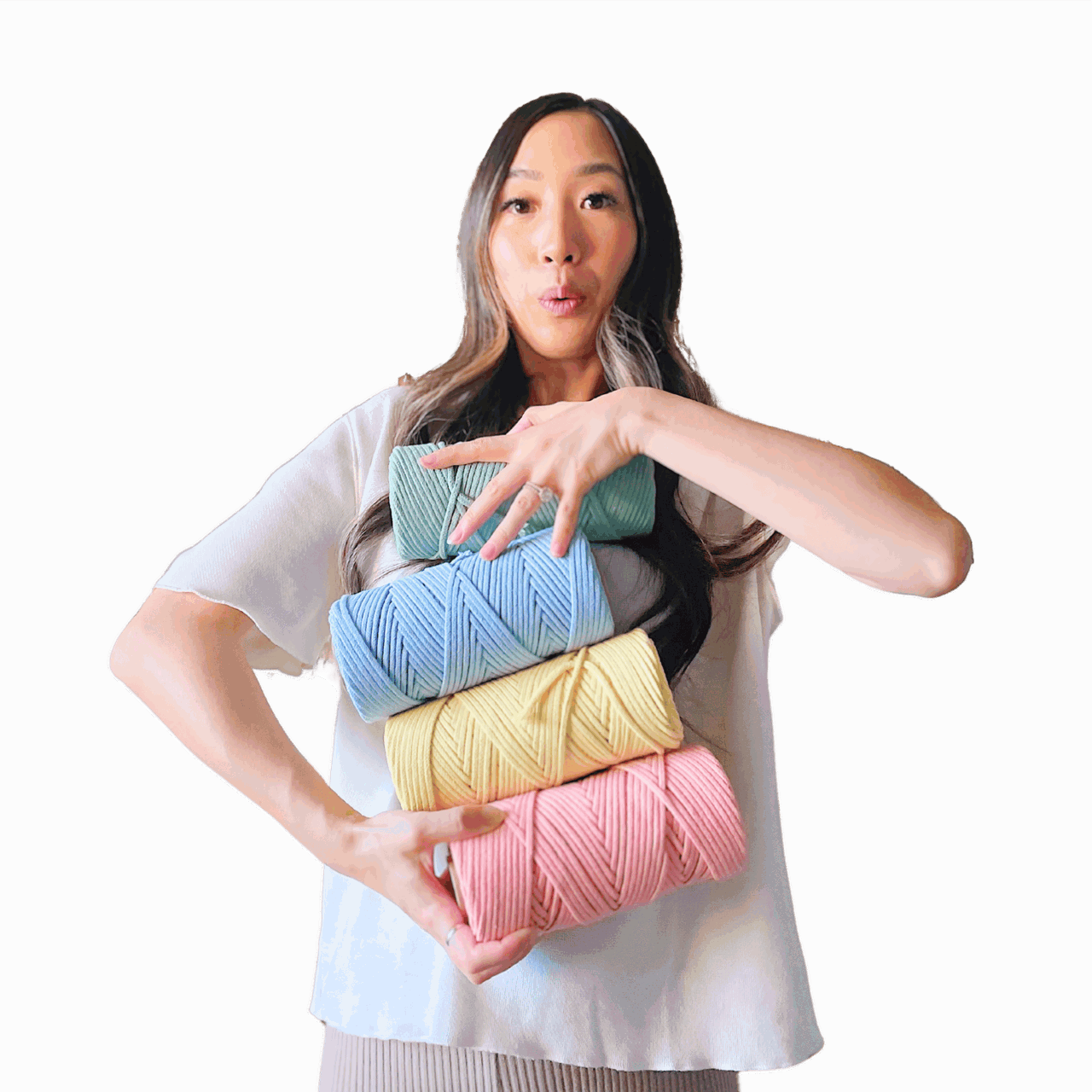
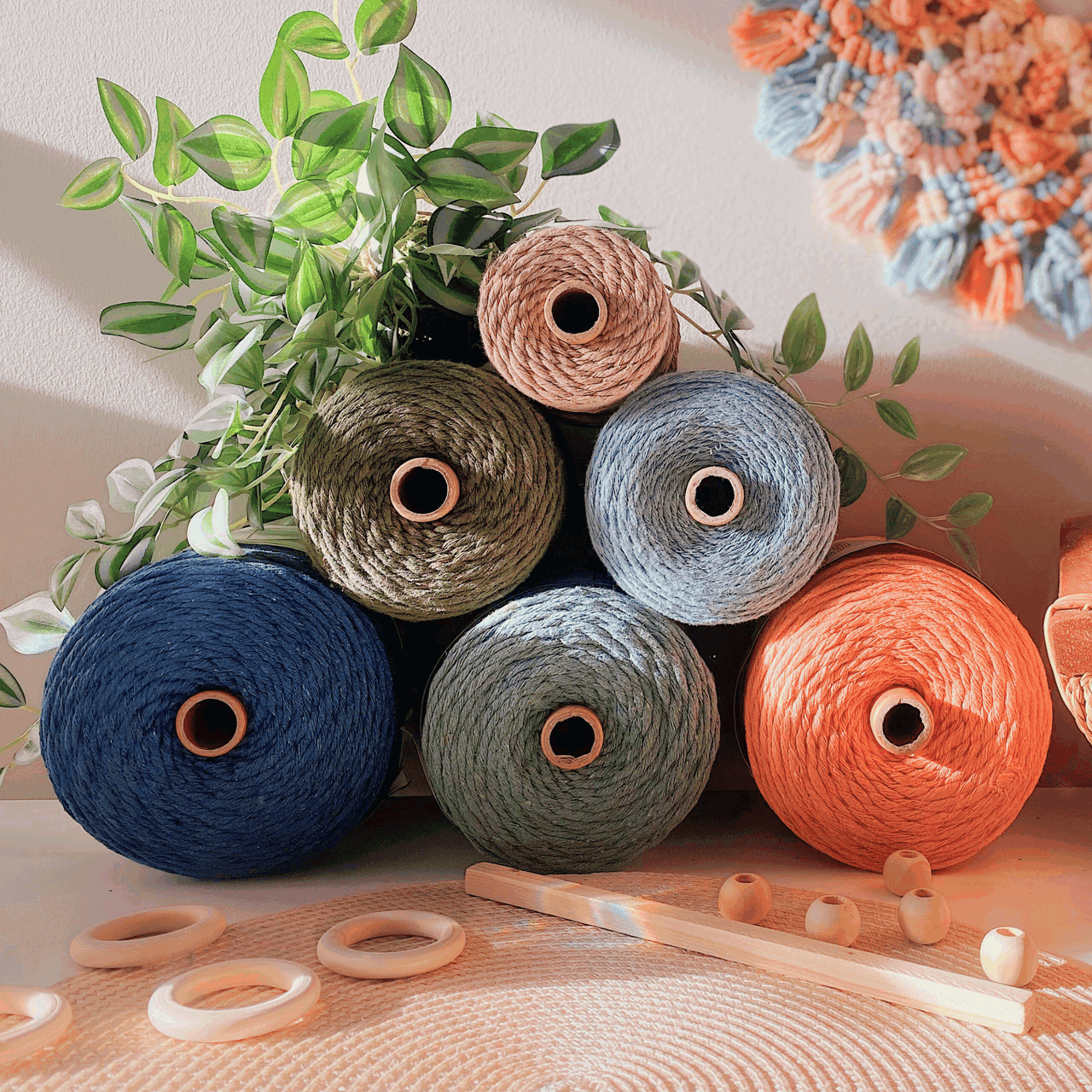
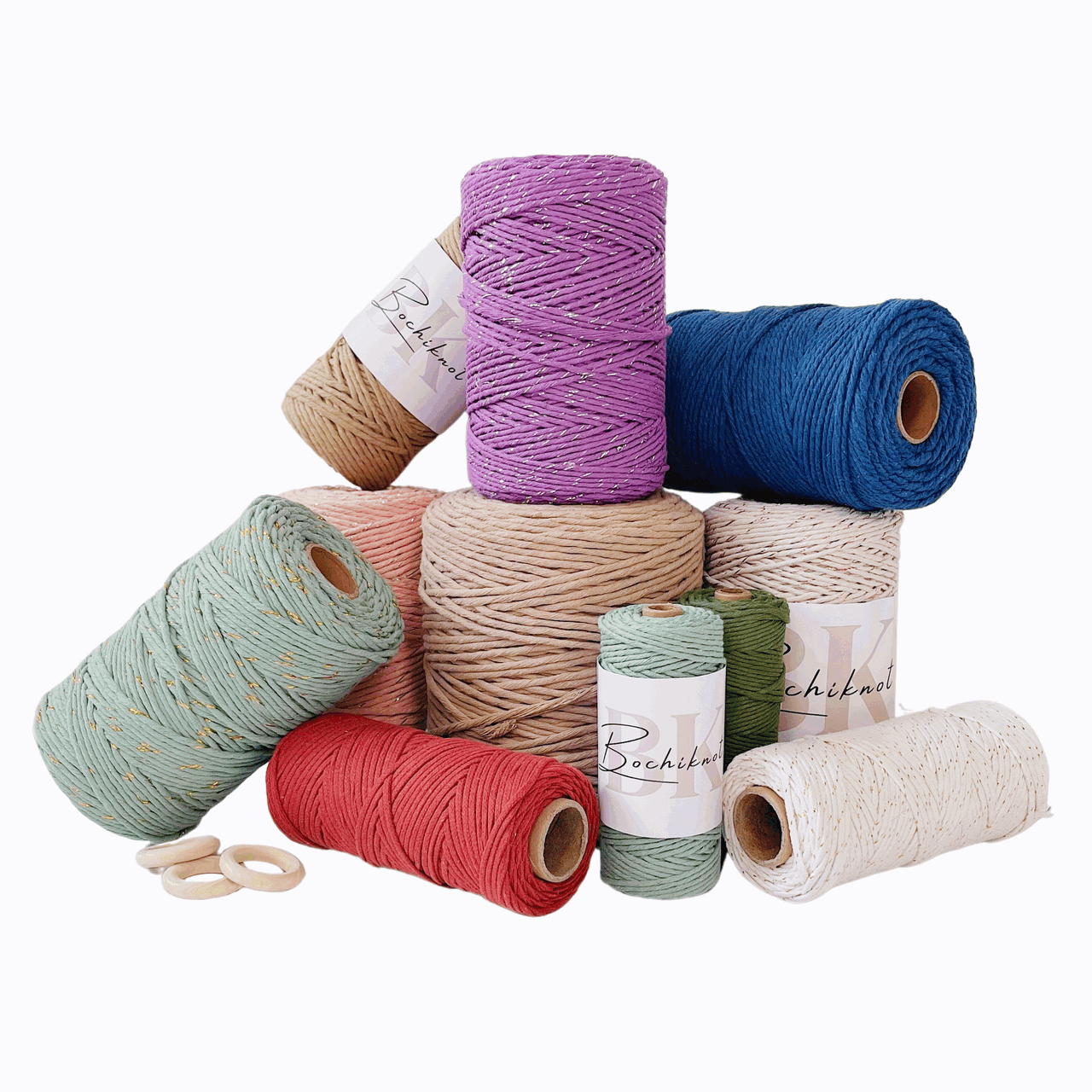
3 mm Single-Strand Cord (2 Colors)
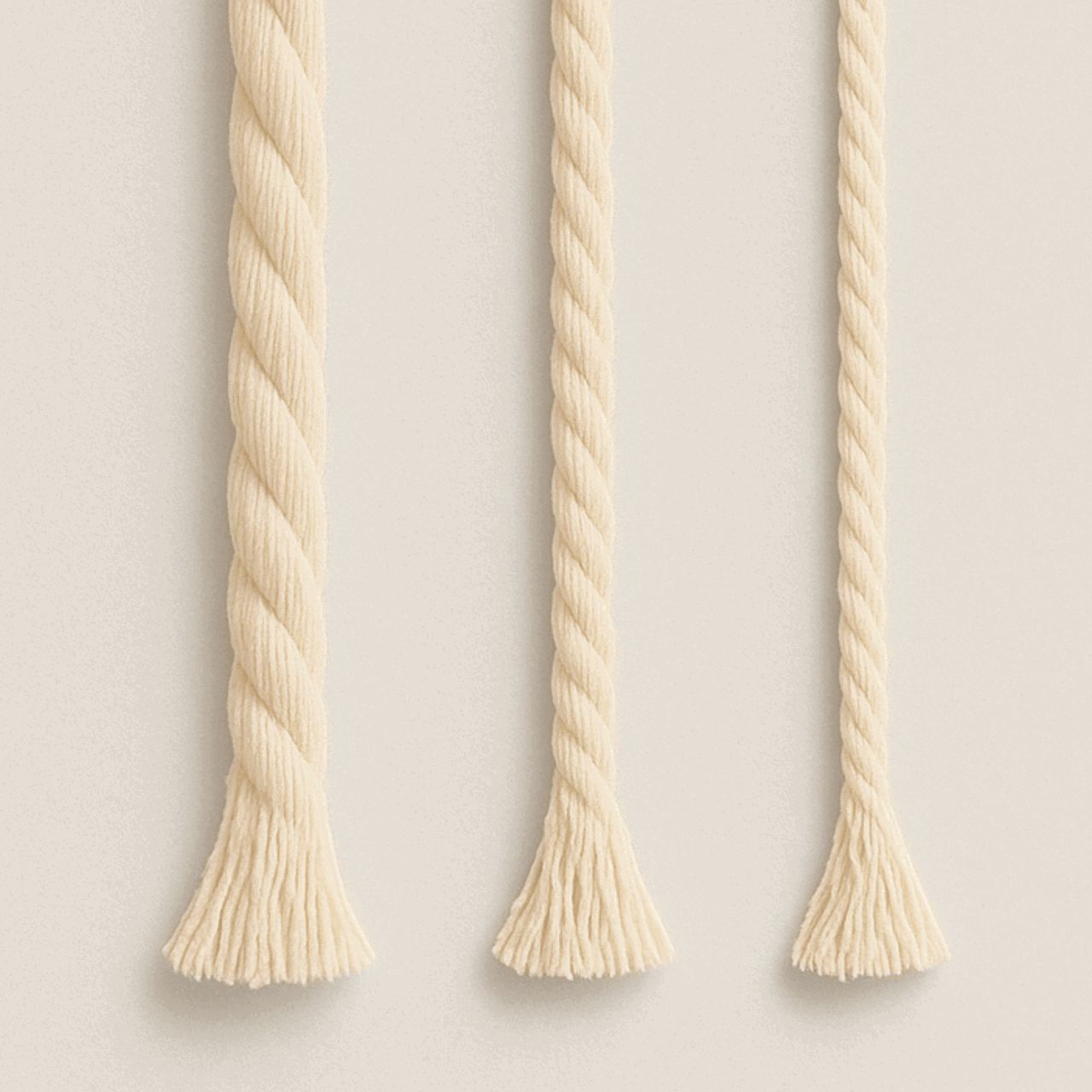
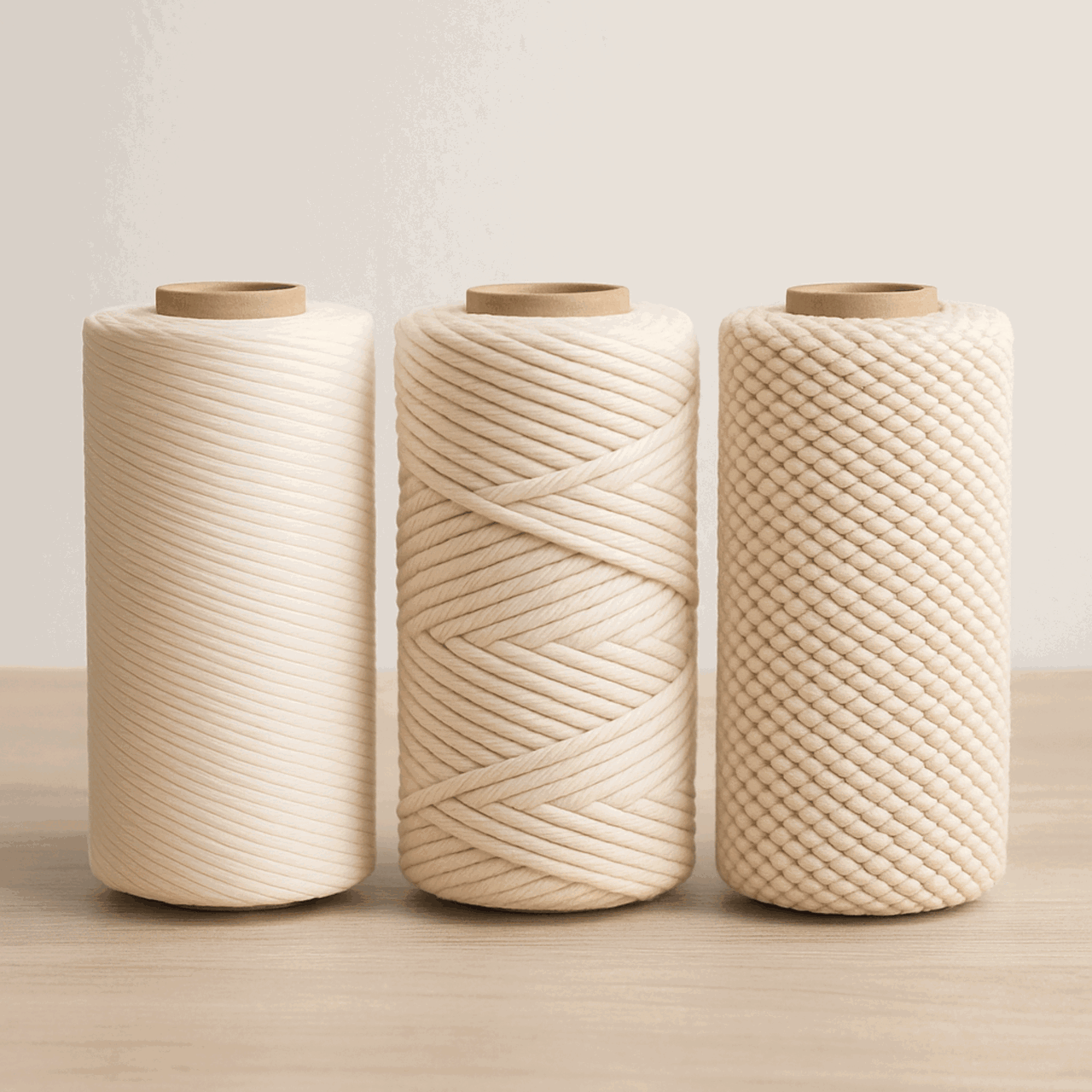
One color for the wristlet body, one for the heart. The 3 mm thickness holds a crisp heart shape without bulk. One 100 m roll makes many keychains.
Shop 3 mm cord
1 Swivel Lobster Clasp
Clips to keys, bags, and zippers and swivels so the wristlet never twists. Sold in a 10-pack so you are ready to make a set.
Shop clasps
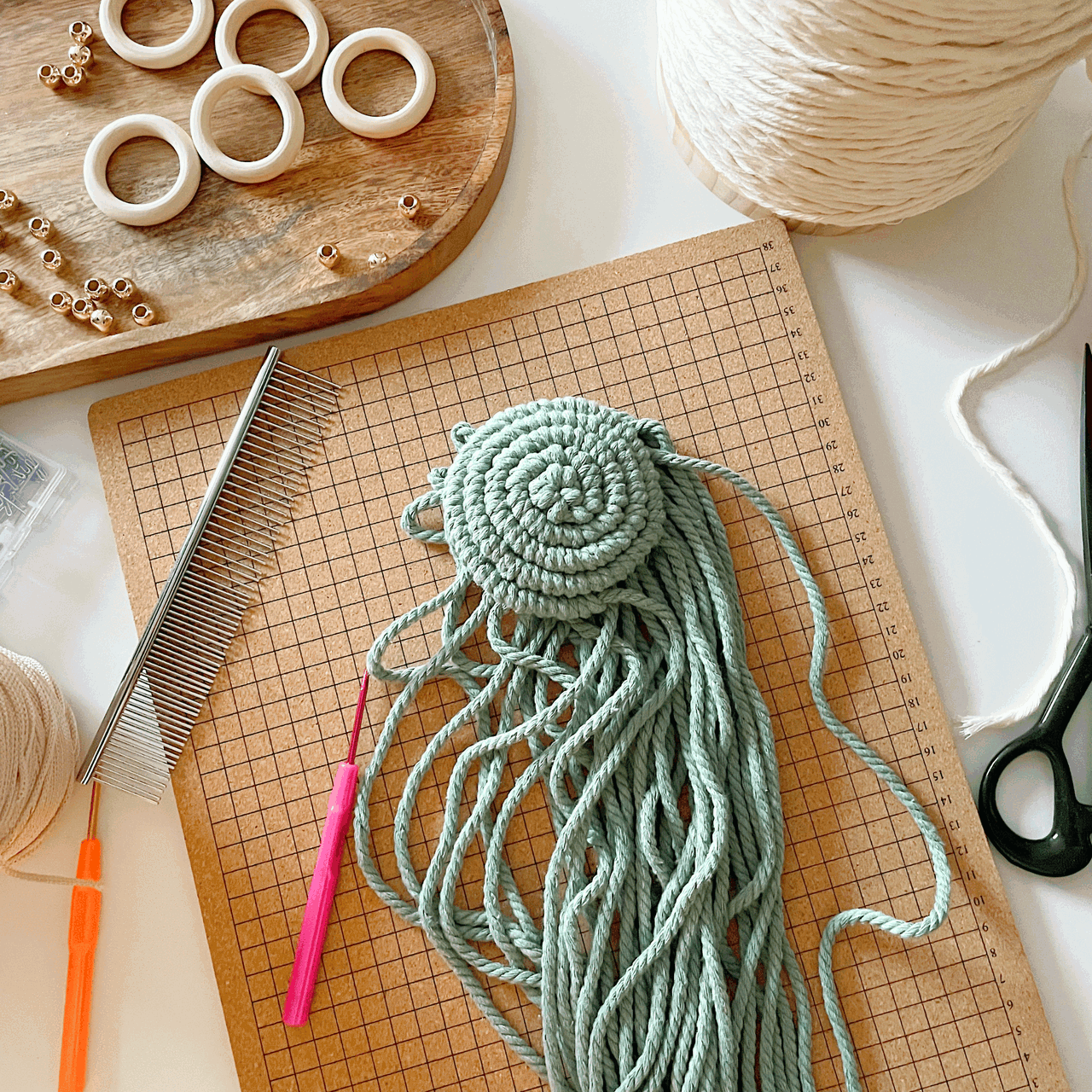
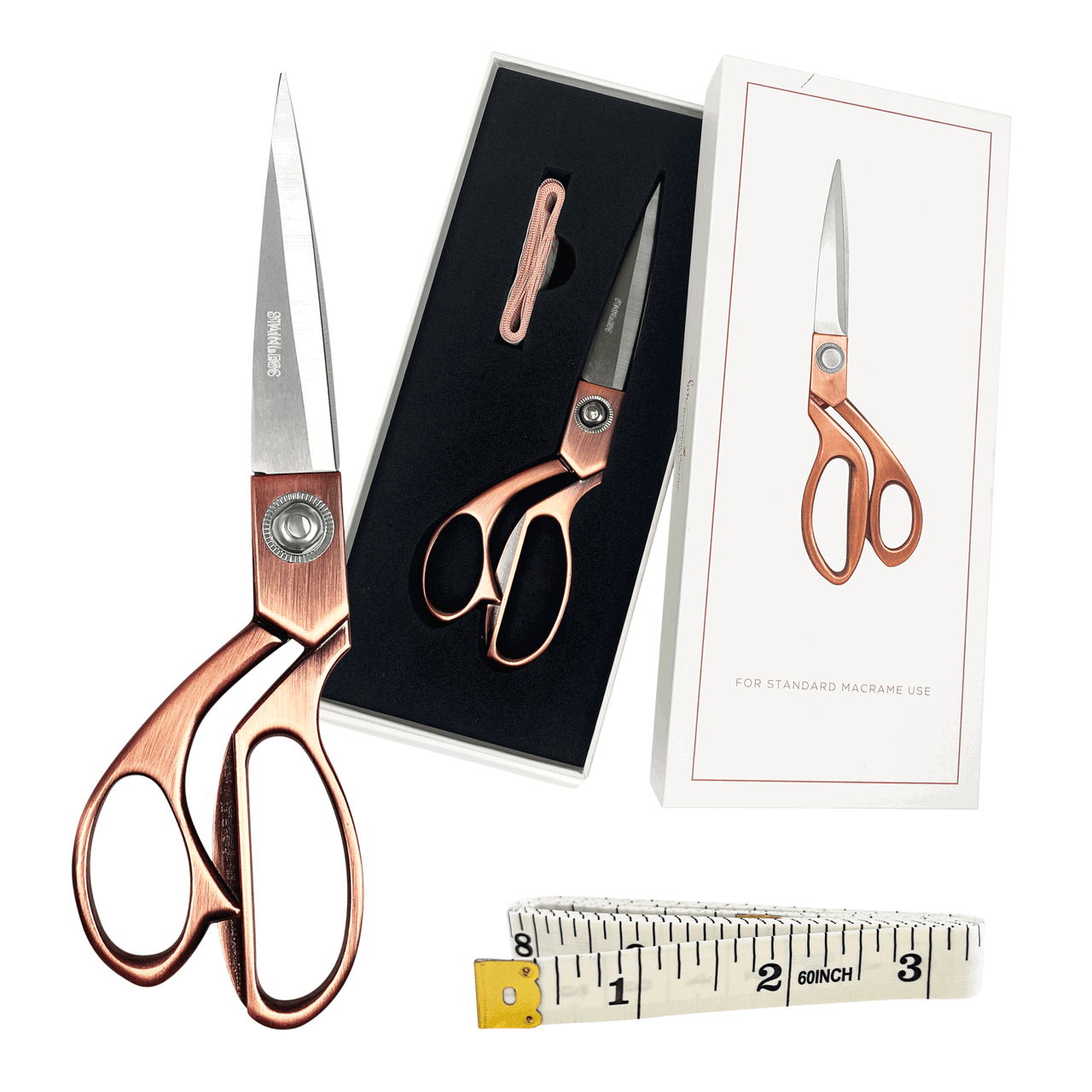
Scissors, Tape & Comb
Sharp precision scissors, a measuring tape, and a metal comb to finish.
Shop toolsFree shipping on orders over $100 USD (US) or $75 CAD (Canada). Prefer Amazon? Browse our Amazon storefront. This post contains affiliate links. We may earn a small commission at no extra cost to you.
How Much Cord Do You Cut?
Cut your cord before you start. Only the standard wristlet below uses exact, hand-tested measurements, the version in this tutorial. For the shorter bag-charm and longer keyring-loop versions, these are honest rules of thumb, not bench-tested numbers. Treat them as starting estimates and adjust as you knot.
| Version | Body cords (Color 1) | Heart cords (Color 2) | Notes |
|---|---|---|---|
|
Short bag charm (estimate) |
about 2 x 160-180 cm | Same heart set: 1 x 100 cm + 4 x 40 cm + 1 x 30 cm | Rule of thumb: body cords about 4x your finished band length, folded, plus ~50 cm working margin. Fewer band square knots before the heart. |
|
Standard wristlet (tested - this tutorial) |
2 x 240 cm (95 in) | 1 x 100 cm (39 in) center, 4 x 40 cm (16 in) sides, 1 x 30 cm (12 in) gathering knot | 34 square knots before the heart, 5 after. Finished ~9 in by 0.75 in. These are the verified numbers. |
|
Longer keyring loop (estimate) |
about 2 x 280-320 cm | Same heart set: 1 x 100 cm + 4 x 40 cm + 1 x 30 cm | Rule of thumb: add ~40-50 cm of body cord for every extra ~10 square knots. More band knots before and after the heart. |
The heart itself stays the same size across all three versions, so only the body cords change length. When in doubt, cut a little long, you can always trim, but you cannot add cord back mid-knot.
Watch the Video Tutorial
Tip: Follow along with the video for the clearest results. It shows the hand movements around the heart that are hard to capture in still photos. Pause and rewind freely.
If this helps, subscribe and join us on YouTube for new macramé tutorials every week.
Step-by-Step: How to Make the Heart Keychain
1Attach the base cords and center heart cords
- Fold the 2 base cords (240 cm each) at the 50 cm mark and attach them to the lobster clasp.
- Fold the 100 cm heart-color cord in half and secure it through the center, between the base cords.
- Line up the shorter base-cord ends with the heart-color ends, leaving the long outer cords at the top as your working cords.


2Make 34 square knots for the wristlet body
- Use the two long outer base cords as working cords and the four center cords as anchor cords.
- Tie square knots continuously, stacking each one directly below the last.
- Continue until you have 34 square knots, which forms the main wristlet section.


3Start the top center of the heart
- Add one 40 cm heart-color cord to the right side using a diagonal double half hitch knot on the middle-right anchor cord, then adjust it so both ends are even.
- Repeat on the left side with another 40 cm heart-color cord.
- These new cords create the upper curves of the heart.

4Join the middle of the heart
- Use the two middle heart cords you just added as anchor cords.
- Make one diagonal double half hitch knot to the left.
- This small center join defines the top dip of the heart and starts pulling the shape inward.

5Add cords on the far left and far right
- Take a 40 cm heart-color cord and attach it to the far-right cord with a reverse larks head plus a half hitch, sliding it inward to meet the center.
- Mirror the same process on the far left with the last 40 cm cord.
- With these cords attached, the heart now has the volume to form the lower sides and the final point.


6Build the inner heart with double half hitch knots
- Skip the second cord from the outer edge on each side and take the next cord inward as your anchor cord.
- Make two diagonal double half hitch knots toward the center on the left side, then repeat with two knots on the right side.
- Use the middle two cords to make one more diagonal double half hitch knot to the left, filling in the center before you close the lower point.

7Close the right side of the heart
- Fold the far-right two cords toward the center to create a curve, use the second cord from the right as the working cord, and make a diagonal double half hitch knot to the left.
- Include that working cord with the anchor cord for the next knot downward, pull both anchor cords to remove any spacing, then snip off the newly added anchor cord.
- Repeat this shape, tighten, and trim sequence so the right side tapers cleanly instead of looking bulky.


8Mirror the same process on the left side
- Fold the far-left two cords toward the center, use the second cord from the left as the working cord, and make a diagonal double half hitch knot to the right.
- Include the working cord with the anchor cord for the next knot downward, tighten both anchor cords to remove slack, and trim off the last added anchor cord.
- Continue until the left side mirrors the right, so the lower sides of the heart taper neatly toward the center point.

9Finish the point of the heart
- With the middle two cords, make one final diagonal double half hitch knot to the left. That closes the heart and completes the motif.

10Hide the side heart cords behind a square knot
- Fold up the top two center cords, then use the outer left and outer right base cords to make a square knot over the middle four anchor cords.
- This square knot covers and secures the side heart cords from behind, keeping the front of the design clean.

11Trim the hidden heart cords
- Once the side heart cords are trapped behind that first square knot, trim off the excess on those hidden cords.
- You should be left mainly with the two center heart cords still active in the design.

12Make 4 more square knots under the heart
- Use the outer left and outer right cords as working cords to make four more square knots over the middle four anchor cords.
- Combined with the square knot directly under the heart, that brings the total to five square knots beneath the design.
- This section balances the wristlet, gives the heart breathing room, and reconnects the pattern to the original body style.

13Fold the wristlet and check the spacing
- Bring the bottom end of the wristlet up toward the lobster clasp.
- Match the ends so the loop forms naturally.
- Leave about 1 cm (roughly half an inch) between the last square knot and the bottom of the lobster clasp.

14Secure the bottom with a gathering knot
- Place one short end of the 30 cm cord along the wristlet and fold it to create a small loop underneath.
- Wrap the longer end around the wristlet several times, then thread the long end through the loop at the bottom.
- Pull the top end to tighten the gathering knot, adjust so the bottom sits neatly underneath, and pull the anchor cords if needed to snug everything up.


15Trim all excess cords
- Snip off the excess cords once the gathering knot is secure.
- Check the wristlet shape and make any final tightening adjustments.
Once trimmed, your heart keychain is complete.


Pro Tips & Troubleshooting (From Nicole)
- Keep your square knots even. Pull each square knot with the same tension so the band stays an even width along its whole length.
- Tame metallic cord. If you use a metallic or shimmer cord, tie a small overhand knot at the end of each strand before you start so the fibers do not unravel as you work.
- Mind the heart tension. Diagonal double half hitch knots set the shape, so snug each one before moving on. Loose knots make the heart look blurry instead of crisp.
- Trim as you go. Tucking and snipping the added heart cords right after each side keeps the back tidy and stops bulk from showing through the front.
- Test the fit. Before the gathering knot, slip the loop over your wrist (or a bag strap) to confirm the length before you commit.
Common Mistakes & Fixes (Tension-Focused)
| Problem | Why it happens | The fix |
|---|---|---|
| Heart looks blobby or fuzzy | Half hitches pulled with uneven tension | Hold the anchor cord taut at ~45 degrees, pull every hitch with equal thumb pressure, then re-snug before trimming. |
| Heart is lopsided | Left and right sides knotted at different tightness | Mirror the two sides exactly, knot for knot, and check symmetry in good light before closing the point. |
| Band width wanders | Square knots tied with inconsistent pull | Use the same thumb pressure on every square knot; firm, not tight keeps the band even. |
| Bulky, lumpy back | Added heart cords not trimmed as you go | Tuck and snip each side's working cords right after you finish that side, behind the hiding square knot. |
| Loop too loose or too tight | Skipped the fit check before the gathering knot | Fold and try the loop on a wrist or strap first, leaving ~1 cm below the clasp, then tie the gathering knot. |
| Metallic cord frays | Cut ends unravel during knotting | Tie a small overhand knot at each strand end before you start; trim those knots off at the finish. |
Ways to Use Your Heart Keychain

- Keys. Clip it to your house or car keys so they are easy to grab and easy to spot in a bag.
- Bag or backpack charm. The heart dangles beautifully from a tote, purse, or kid's backpack zipper pull tab.
- Zipper pull. Loop the clasp through a jacket or pencil-case zipper for a soft, grippy pull.
- Planner charm. Clip it to a planner's elastic or ring for a pretty bookmark you will not lose.
- Water-bottle clip. Attach it to a water-bottle handle or sling so your bottle is easy to identify.
- Gift topper. Tie it onto a wrapped present as a reusable, handmade bow that doubles as a second gift.

Color Combinations to Try

- Classic cream + blush. Soft, romantic, and neutral enough to match any bag.
- Bold black + red. High contrast and graphic, the heart really pops.
- Tonal oat + cream. Subtle and chic, where the heart is felt more than shouted.
- Metallic natural + gold. Natural body with a shimmer-gold heart for a little luxe sparkle.
- Valentine white + pink. The sweetest combo for February gifting.
- Rainbow for kids. A bright body with a contrasting heart, a hit for backpacks and party favors.
Not sure which cord color to pick? Take our Cord Matchmaker quiz or browse the 3 mm cord collection. You can also swap fibers entirely: matte recycled cotton, soft bamboo rayon for a gentle sheen, or natural organic cotton for a classic boho finish.
Make It vs Buy It: The Savings Math
Handmade macramé keychains are popular on Etsy, where similar woven heart and wristlet keychains tend to retail in the $12 to $22 range (approximate, varies by seller and materials). Making your own changes the math considerably. The figures below are honest estimates, not invented exact prices.
| Buy it (Etsy) | Make it (Bochiknot) | |
|---|---|---|
| Price per keychain | ~$12-$22 each (estimate) | ~$5-$10 in supplies for this run (estimate) |
| Cost to make a set of 6 | ~$72-$132 | One ~100 m roll of 3 mm cord makes many; effective per-piece cost drops well below retail |
| Customization | Limited to listed colors | Any two-color combo you choose |
| Skill gained | None | Square knot, diagonal DHH, gathering knot, reusable forever |
Because a single 100 m roll yields many keychains, the per-piece supply cost falls fast when you batch, which is exactly why these make such economical handmade gifts. Treat all dollar figures here as ballpark ranges; actual prices depend on cord choice, color count, and where you shop.
A Heartfelt Handmade Gift for Any Occasion
- Valentine's Day. A woven heart in a partner's or friend's favorite colors is a quick, heartfelt handmade gift.
- Mother's Day. Match the heart to mom's signature color for a keepsake she will clip to her keys.
- Bridesmaid or party favors. Knot a coordinated set so every guest leaves with a handmade token.
- Teacher gift. A cheerful end-of-year thank-you that is practical and personal.
- Stocking stuffer. Small, flat, and giftable, perfect for the holidays.
- Galentine's. Make a batch in different color stories for your whole crew.
Frequently Asked Questions
Is this macramé heart keychain suitable for beginners?
Yes. It uses a few different knots, but it is taught step by step and is very doable for beginners who work carefully. The square-knot band is especially approachable, and the heart is a friendly introduction to shaping with diagonal double half hitch knots.
How long does a macramé heart keychain take to make?
Plan on about 1 to 2 hours from cutting cord to the final trim. Your first one usually takes closer to 2 hours because the heart shaping is new. Once you have made one or two, you can knot a wristlet in well under an hour.
What size cord is used?
The project uses 3 mm single-strand macramé cord for both the body color and the heart color. The 3 mm thickness holds a crisp heart shape without making the wristlet bulky.
How long is the finished wristlet?
The completed piece is about 9 inches long and roughly 0.75 inches wide, which fits comfortably over a wrist as a loop or clips to a bag, keys, or a zipper.
How many base square knots do you make before the heart?
You make 34 square knots before starting the heart section. Stack them directly below one another for a clean, even band.
How many extra cords create the heart?
You add 4 extra strands of the heart color, each 40 cm long, plus the 100 cm center cord added at the start. Together they form the curves, sides, and point of the heart.
Can kids make this macramé heart keychain?
With supervision, yes. Older kids and tweens who can tie a square knot do well with the band, while an adult can help with the diagonal double half hitch heart shaping and the trimming. It is a great rainy-day or Valentine craft to make together.
Is the heart keychain machine washable, and how do I clean it?
Spot clean only. Use a slightly damp cloth with a little mild soap on any marks, then let it air dry away from direct heat. Avoid the washing machine, because the agitation can loosen the heart knots and fray cord ends. A quick comb-through restores the look.
How do I keep the heart from looking lopsided?
Consistent tension is everything. The diagonal double half hitch defines the shape, so hold the anchor cord taut at about a 45 degree angle and pull each hitch with the same thumb pressure. Work in good light, mirror your left and right sides exactly, and re-snug every knot before you trim. A lopsided heart almost always means one side was pulled tighter than the other.
What if my metallic cord starts separating?
Tie a simple overhand knot at the end of each strand before you begin. That helps keep the metallic fibers from unwinding while you knot. You can trim those securing knots off at the very end.
How is the wristlet closed at the bottom?
Fold the band into a loop and secure it with a 30 cm cord using a gathering knot near the base of the lobster clasp. The gathering knot wraps the bundle neatly and hides the cord tails inside.
What else can I attach the keychain to?
The swivel lobster clasp clips onto keys, a bag or backpack zipper, a planner ring, a purse strap, or a water-bottle handle. It works equally well as a keychain, a bag charm, or a zipper pull.
How much does it cost to make?
About $5 to $10 in cord and a clasp for a single keychain. Because one 100 m roll of 3 mm cord makes many wristlets, your per-keychain cost drops quickly when you batch a set of gifts.
Can I customize the colors?
Absolutely. The pattern is built around one color for the body and another for the heart, so it is easy to personalize. The heart reads best when the two colors clearly differ in value, such as a light body with a bold heart, or a bold body with a soft heart.
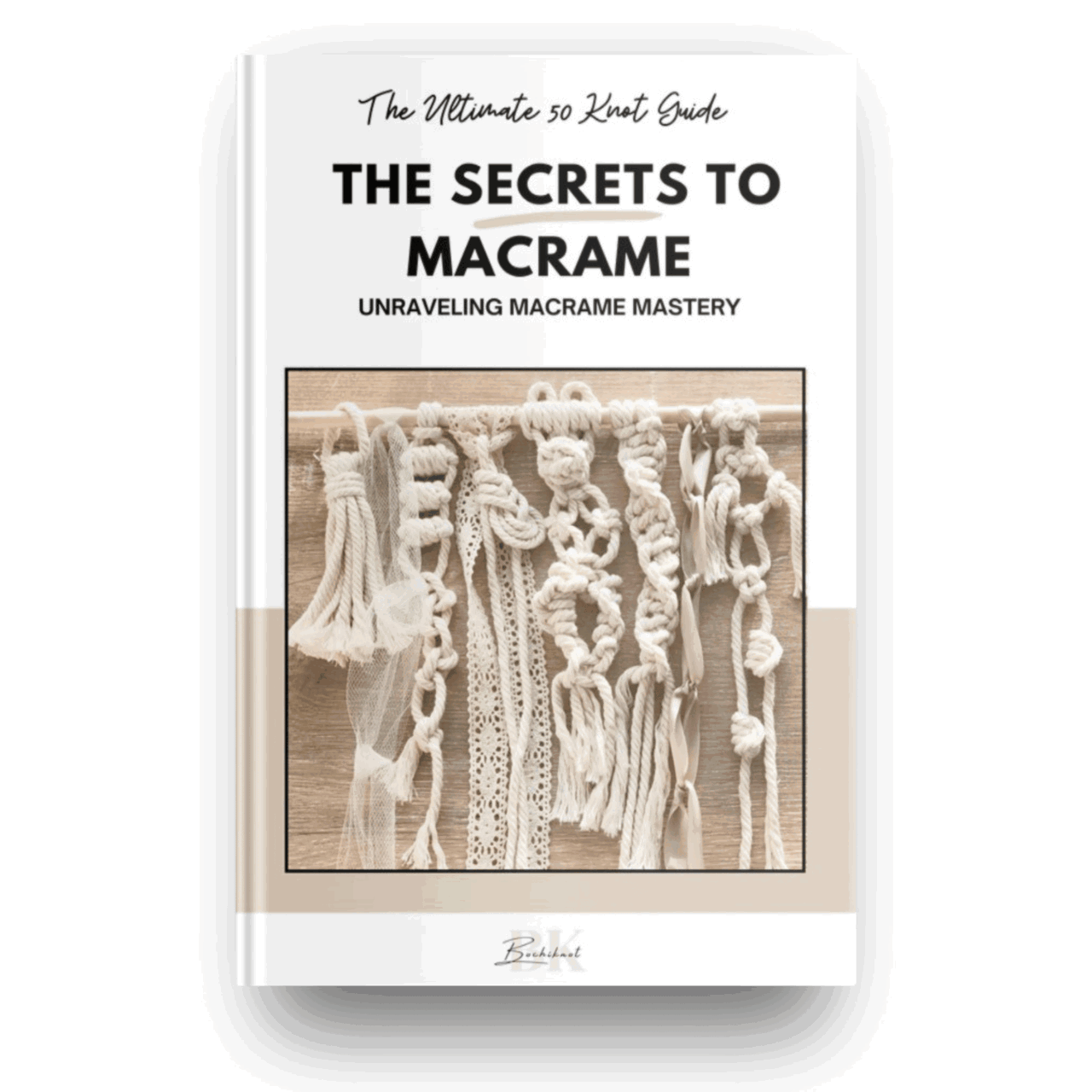
Get Our Free 50 Macramé Knots and Sennit Guide
Want to add more knots to your designs? Grab our free resource, the 50 Macramé Knots & Sennit Guide. It is packed with easy, step-by-step instructions to help you build your skills and try new projects.

More Macramé Keychain Projects to Try
- How to Make a Macramé Keychain Wristlet
- Macramé Keychain Wristlet: Two Styles, One Knot
- How to Make a Macramé Daisy Keychain in 30 Minutes
- How to Make a Macramé Butterfly Keychain with Beads
- 6 Beginner-Friendly Macramé Keychains to Make
- How to Make Macramé Feathers (great double half hitch practice)
- 7 Ways to Start and End a Macramé Wall Hanging
For the foundation knots used here, see our cornerstone guide to the square knot.

Pin this heart keychain tutorial
Save this two-color macramé heart keychain to your macramé, keychain, or handmade-gifts board so you can find the full 15-step tutorial again. Beginner-friendly, about 1 to 2 hours, and made with 3 mm cord.
Save to PinterestJoin the Bochiknot Community
Knot along with thousands of makers, share your finished hearts, and get help when a knot does not cooperate.
About Nicole Woo
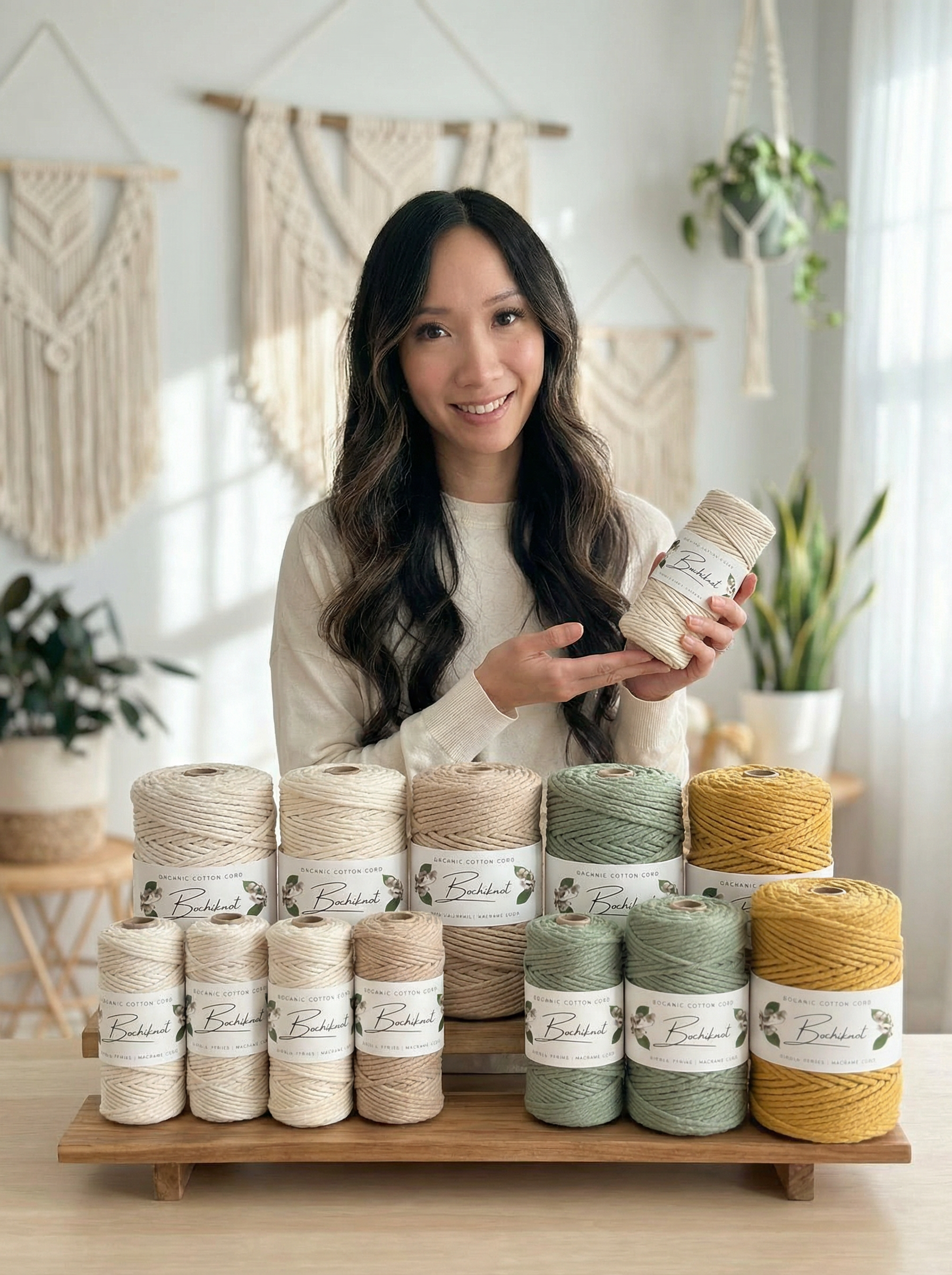
Hi, I'm Nicole Woo, founder of Bochiknot. I've been designing macramé patterns, kits, and beginner-friendly tutorials since 2021, and I test every project by hand so the steps, cord lengths, and knot counts actually work. The cord cuts and knot counts in this heart keychain tutorial are the exact numbers I used to make the wristlet you see in the photos.
Where to find Bochiknot: YouTube, Facebook page, our Facebook community, Instagram, Pinterest, TikTok, Etsy, and Patreon for exclusive patterns.
Last updated: June 9, 2026.

Leave a comment