




How to Make Macramé Feathers: 2 Easy Methods for Beginners

Beginner· 1–2 hrs· ~4.5 × 7.5 in· Updated May 2025· By Nicole Woo· 6 min read
Macramé feathers are one of the most satisfying beginner projects you can make — they come together quickly, look incredibly boho-chic, and can be used in a dozen different ways. Whether you want to make a macramé feather keychain, a macramé feather wall hanging accent, or even a pair of feather earrings, this tutorial shows you exactly how to do it from start to finish.
In this guide you'll learn how to make macramé feathers using two distinct methods: the Double Half Hitch technique, which produces a tight, structured feather ideal for keychains and handled items; and a Square Knot variation that creates a softer, more decorative feather perfect for wall art. Both are genuinely beginner-friendly — all you need is some cotton cord, a pair of scissors, and a fringe comb.
Each method takes just 1–2 hours, finishes at approximately 4.5 inches wide by 7.5 inches long, and requires only a small amount of 3mm macramé cord. By the end you'll have a complete DIY macramé feather — shaped, combed, and ready to attach to whatever project you have in mind.
What is a Macramé Feather?
A macramé feather is a knotted textile decoration made by attaching short working cords to a central anchor cord using either double half hitch or square knot variations, then combing and trimming the loose fringe ends into a feather silhouette. The result is a soft, boho-inspired accent that can be used as a keychain charm, wall hanging element, earring, or gift tag decoration.
At a Glance: Project Details
| Detail | Method 1: Double Half Hitch | Method 2: Square Knot Variation |
|---|---|---|
| Skill level | Beginner | Beginner |
| Finished size | ~4.5 in × 7.5 in | ~4.5 in × 7.5 in |
| Time | 1–2 hours | 1–2 hours |
| Anchor cord | 1 × 40cm | 1 × 40cm |
| Working cords | ~15 × 15–20cm | ~26 × 15–20cm (13 pairs) |
| Best for | Keychains, handled items | Wall hangings, decor |
Materials and Tools
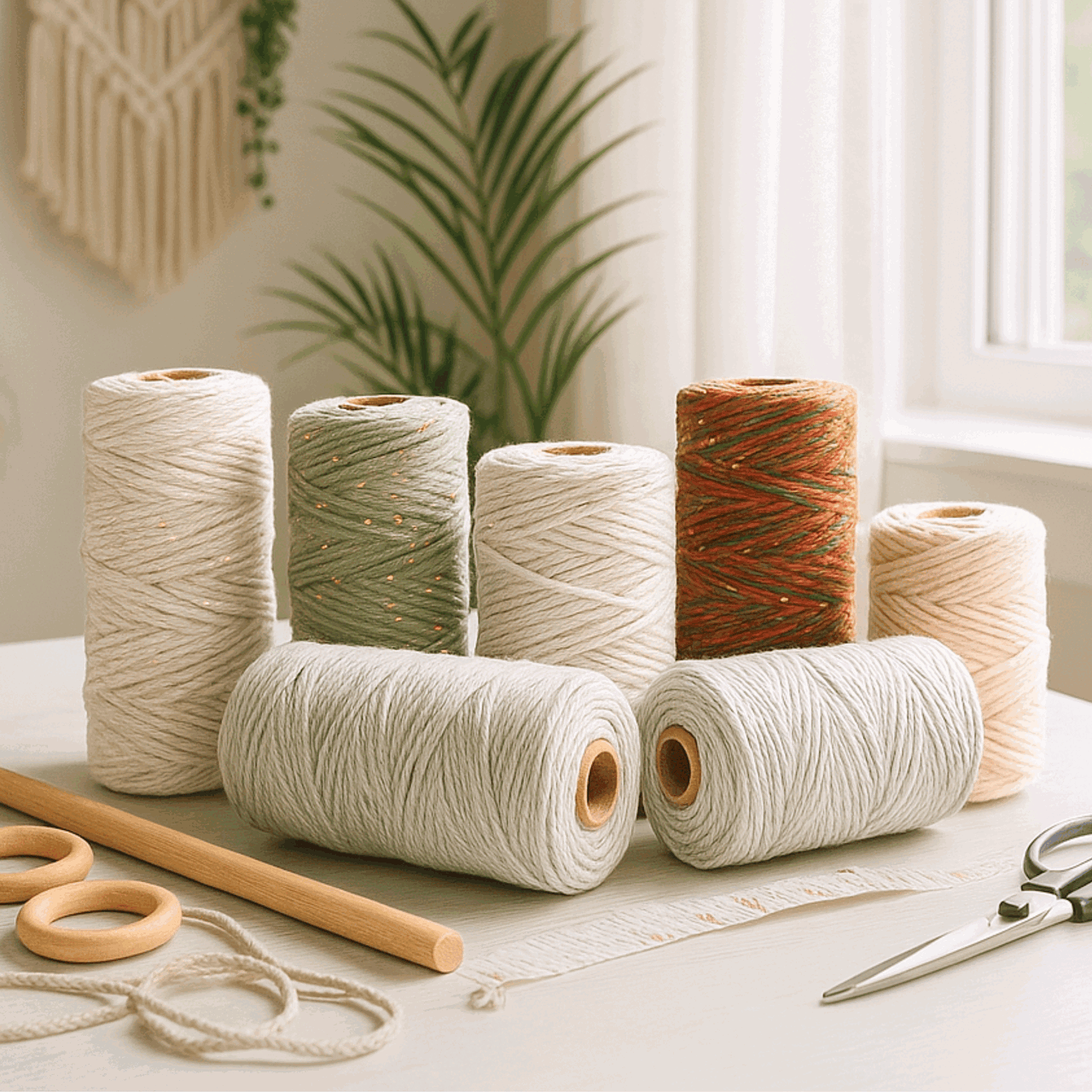
You don't need much to make a macramé feather. Here's everything used in both methods:
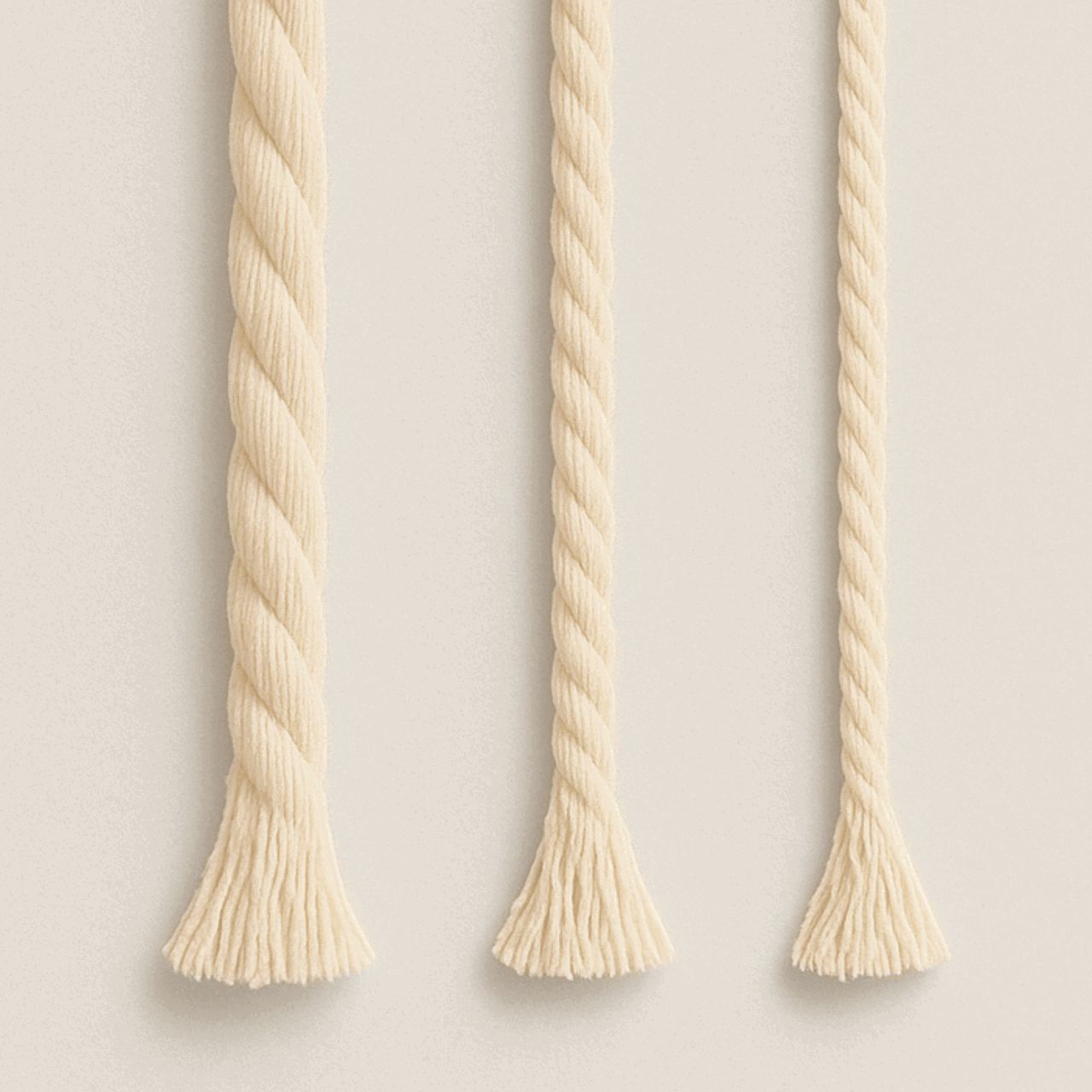
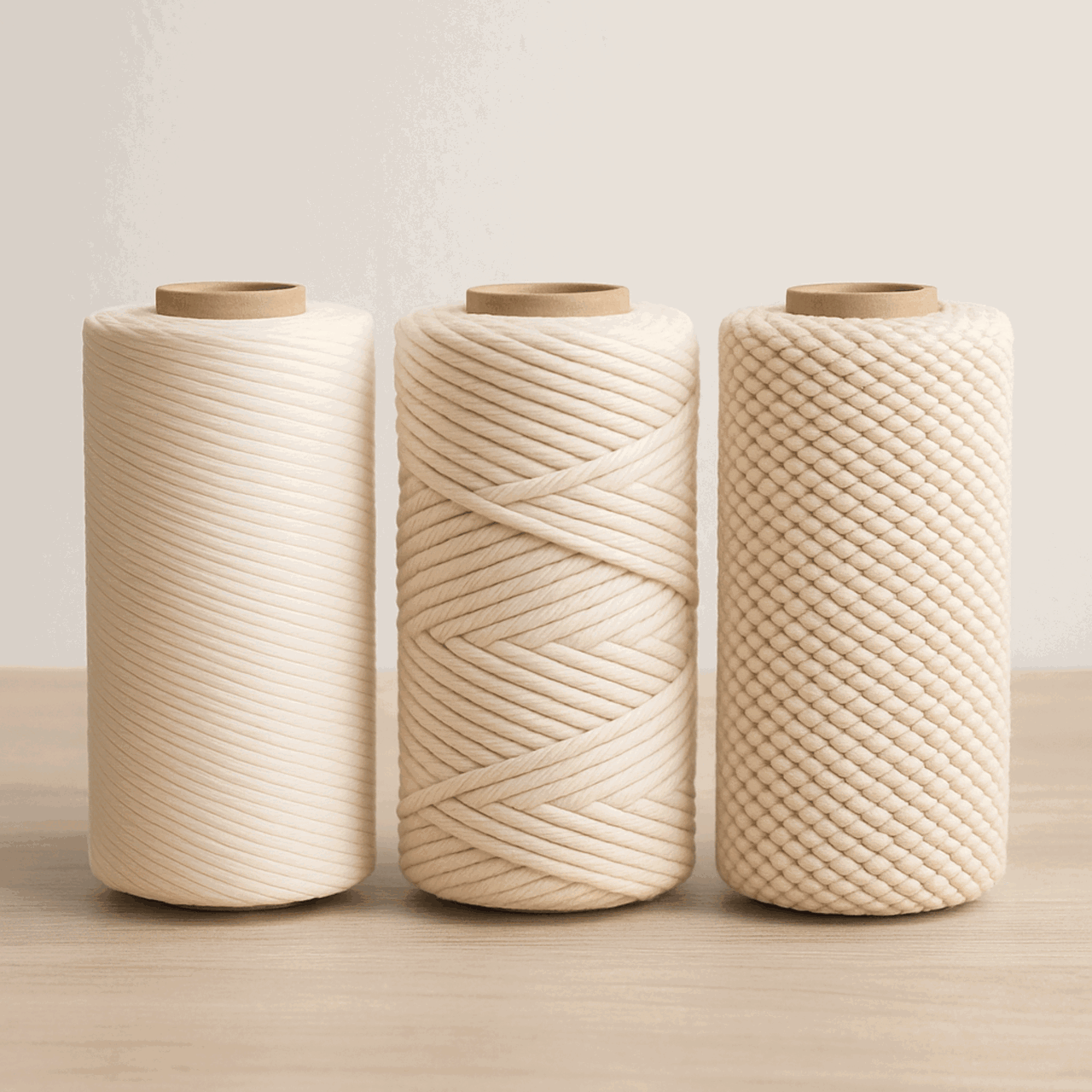
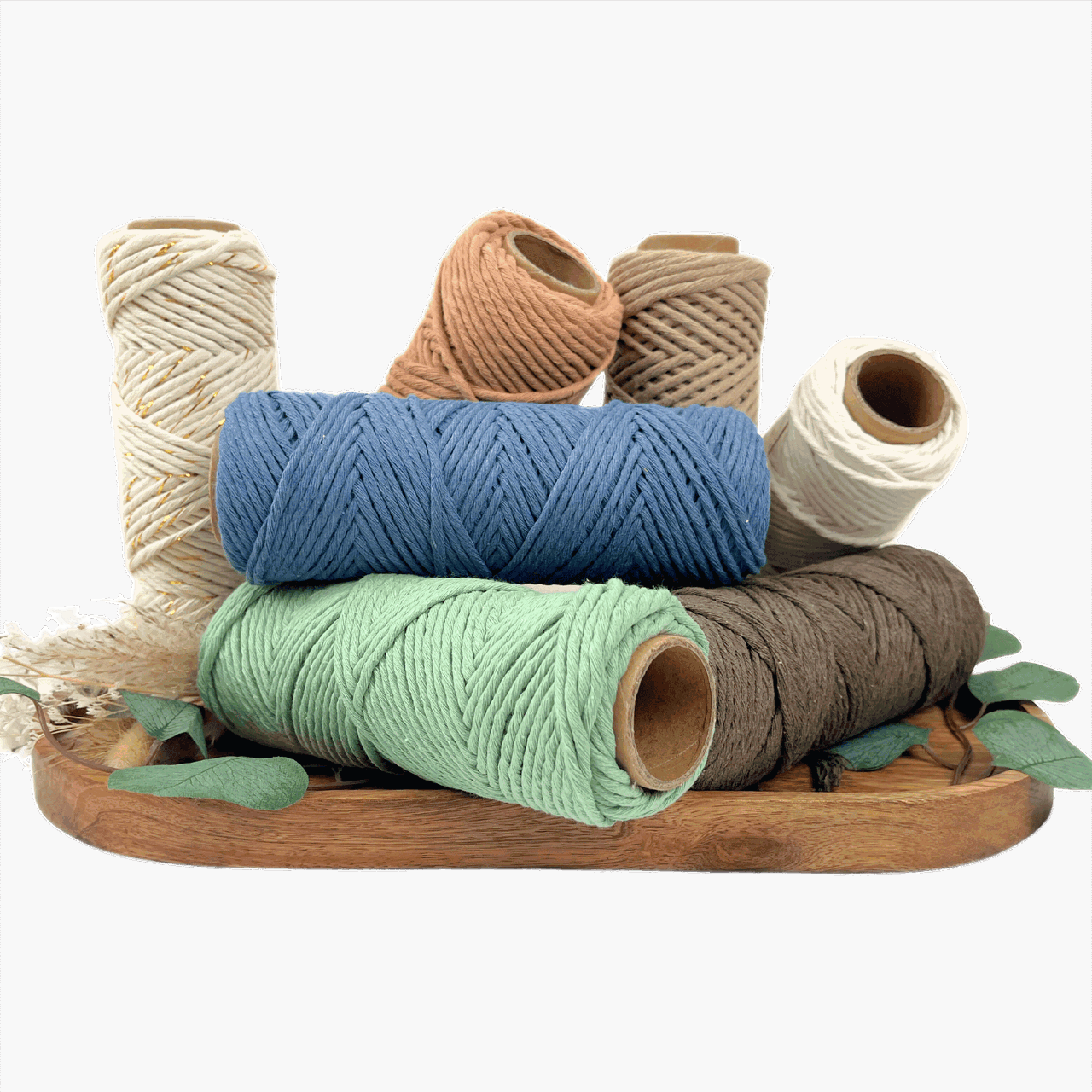
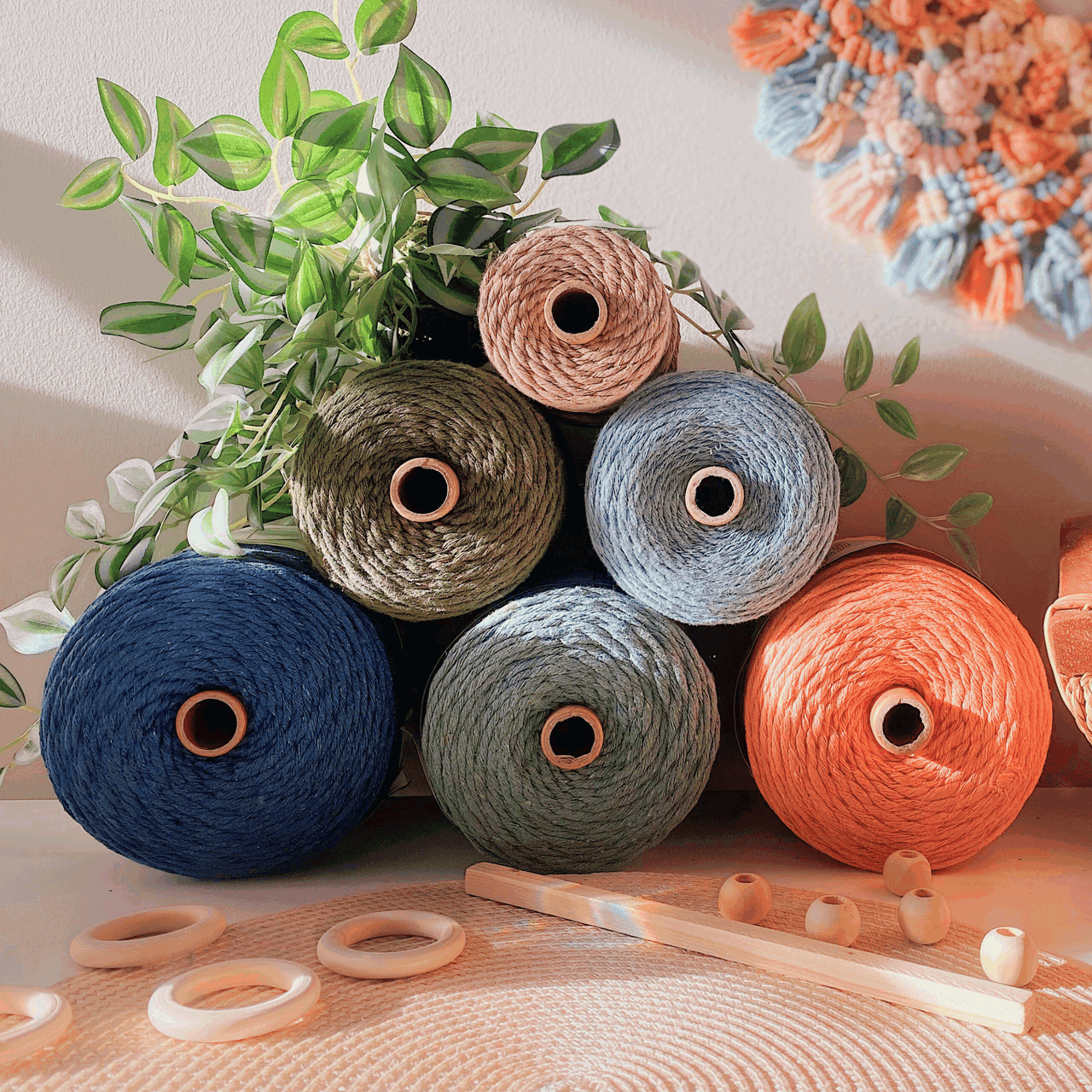
- 3mm macramé cord — 3mm single-strand cotton is ideal; it combs into beautiful, fluffy fringe and knots cleanly at feather scale. You can also use single-strand cord in other thicknesses for a finer or fuller look.
- Lobster clasp — for attaching the anchor cord and turning your feather into a keychain or charm
- Masking tape — to hold your work surface setup and to mask a clean trim line
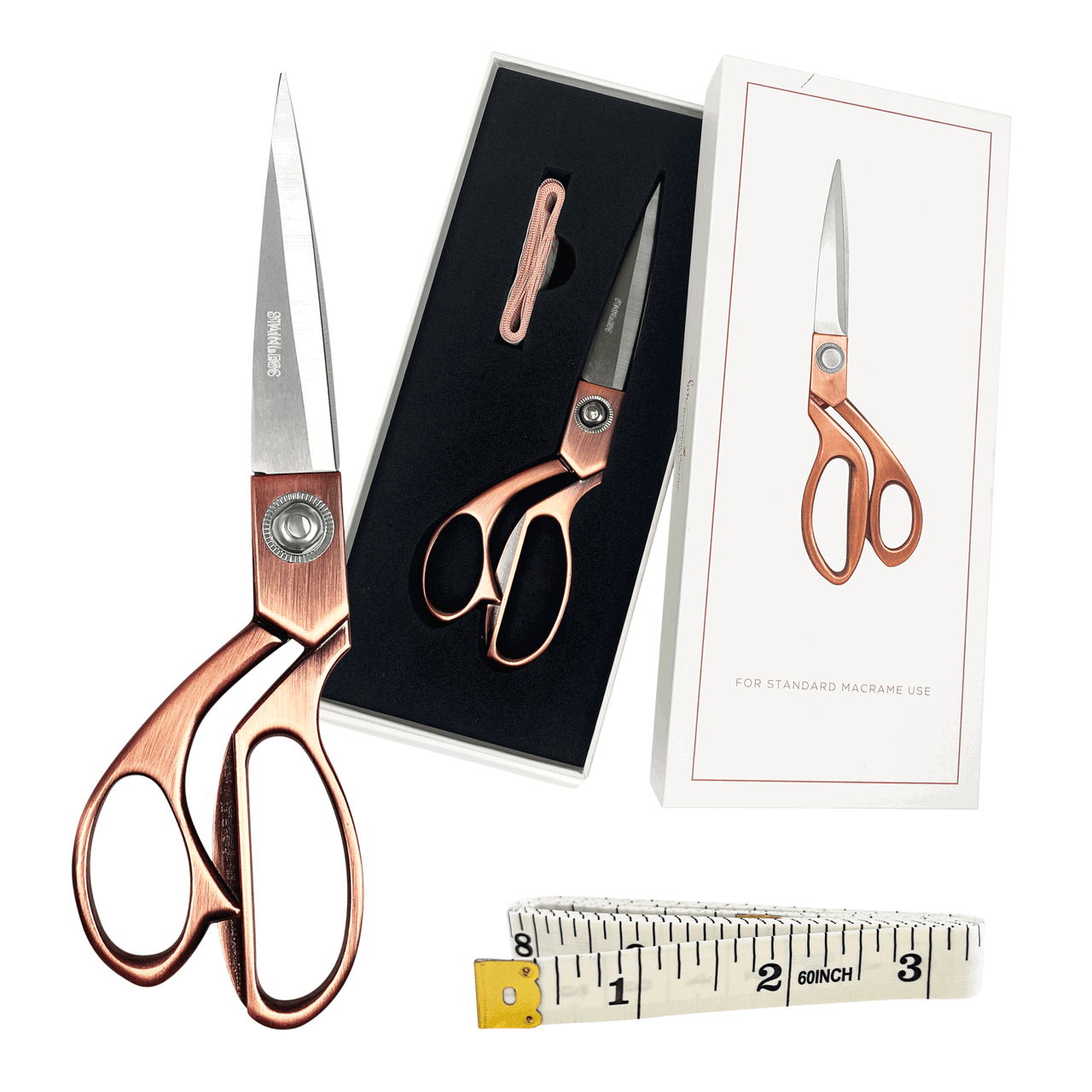
- Sharp scissors — precision scissors make trimming the feather silhouette much easier and cleaner
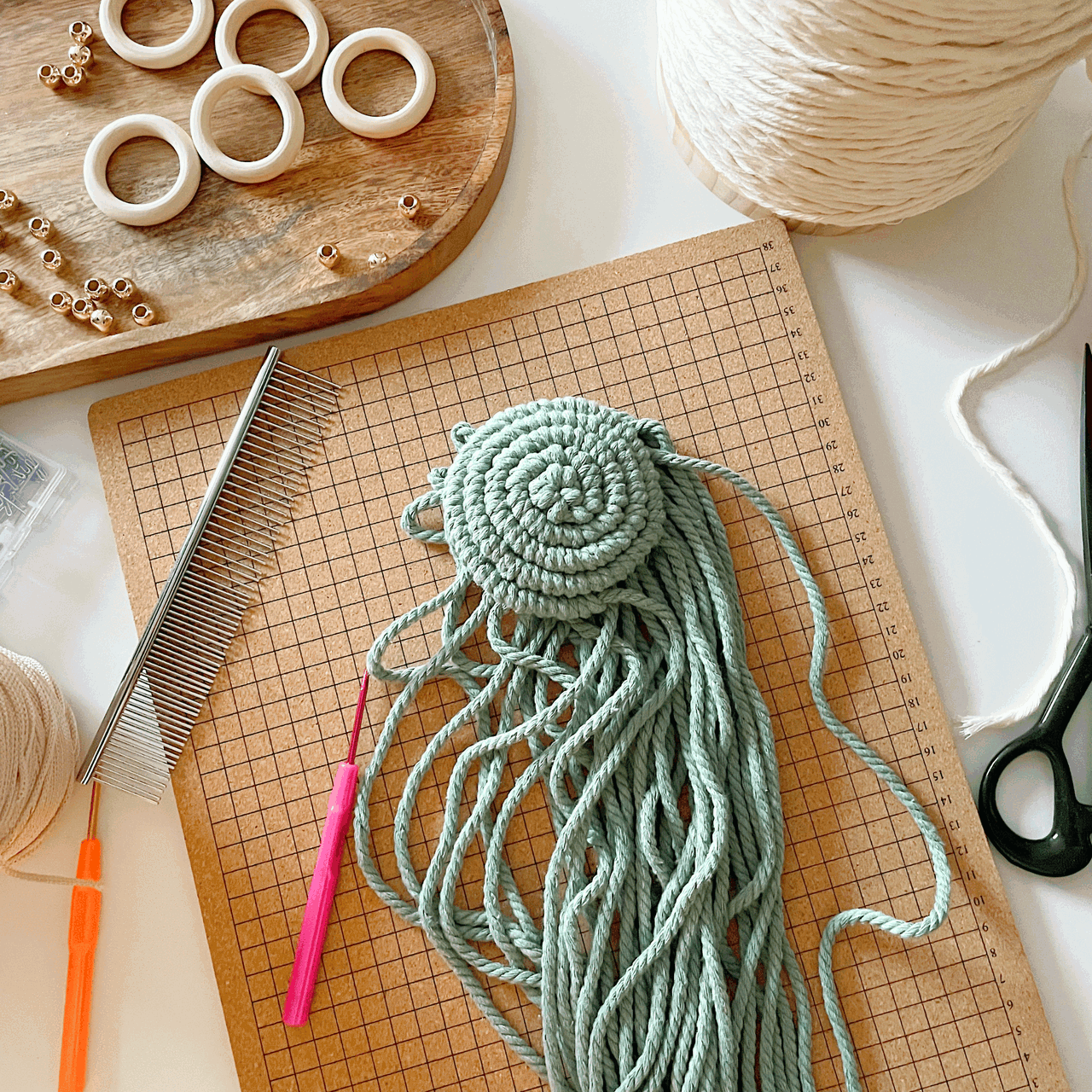
- Fringe comb — essential for brushing out fringe into a fluffy, even texture; a pet slicker brush also works
- Hairspray or fabric stiffener — optional but recommended to hold the final feather shape
Find scissors, fringe combs, and all macramé accessories in the Bochiknot tools collection.
Cord Lengths: Method 1 vs Method 2
| Cord | Method 1 (DHH) | Method 2 (Square Knot) |
|---|---|---|
| Anchor cord | 1 × 40cm (16 in) | 1 × 40cm (16 in) |
| Working cords | ~15 × 15–20cm (6–8 in each) | ~26 × 15–20cm (6–8 in each) |
| Knot unit | 1 cord per DHH knot | 2 folded cords per square knot unit |
| Total cord | ~340–350cm (approx.) | ~560–580cm (approx.) |
Not sure how much cord to cut? Read the how to measure cord for macramé guide for a full explanation of the 4× rule and working-cord ratios.

Free Resource
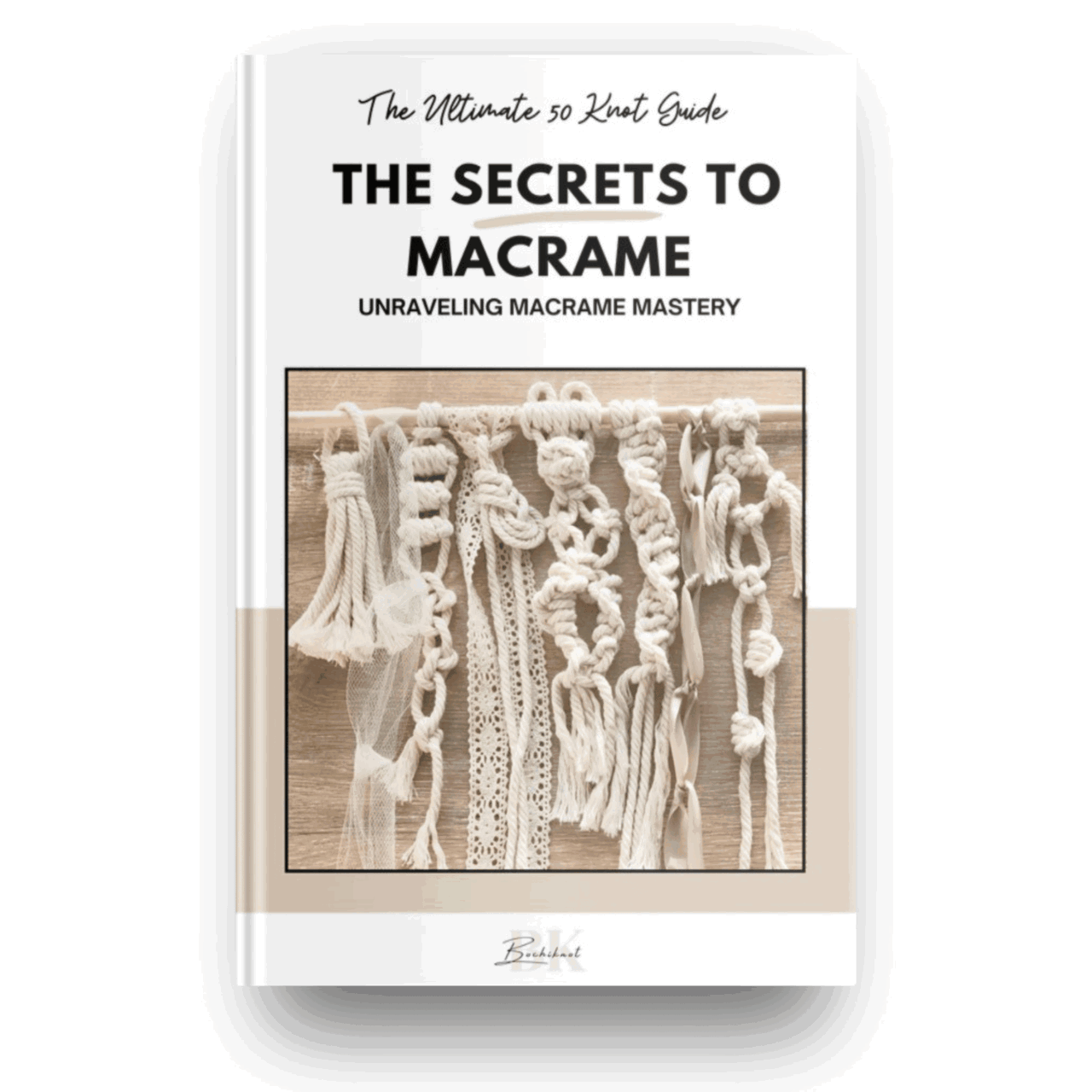
Get the 50 Macramé Knots & Sennit Guide
Visual step-by-step instructions for every knot used in this project — including the double half hitch and square knot — plus 48 more.
Download Free →Watch the Full Macramé Feather Tutorial Video
Follow along with the video below — watching the knot motion is especially helpful for the double half hitch and square knot variation steps.
Method 1: How to Make a Macramé Feather with Double Half Hitch Knots
The Double Half Hitch (DHH) method produces a firm, structured feather with tightly packed knots that hold their shape beautifully. Because the working cords are locked onto the anchor cord with a true double half hitch knot, the feather can handle everyday handling — making it the preferred choice for macramé feather keychains and other items that get picked up and used regularly.
Attach the Anchor Cord to the Lobster Clasp
Cut a 40cm anchor cord. Fold it in half to find the midpoint, then attach it to your lobster clasp using a lark's head knot: place the folded midpoint behind the clasp bar, bring the two ends forward through the loop, and pull snug. You should now have two anchor cord ends hanging down from the clasp.
Tape the clasp firmly to your work surface so both anchor cords hang vertically and stay taut while you knot.

Nicole's pro tip: Keep the two anchor cord ends as parallel as possible when you tape them down. If they splay outward, your finished feather will be wider and less uniform than intended.
Knot the First Working Cord with a Double Half Hitch
Cut a working cord 15–20cm long. Place the middle of this cord under both anchor cords so a loop sits behind them. Now tie the double half hitch:
- Take the right end of the working cord — bring it over both anchor cords, under them, back to the right, over the working cord itself, and pull it through the loop on the right side.
- Match the two ends of the working cord so they are even on both sides.
- Pull the knot upward toward the clasp and tighten firmly.


Shift Knot Upward and Repeat Down the Anchor Cord
After tightening the first knot, use your fingers to slide it as far up toward the clasp as it will go — you want the knots packed close together for a dense, feather-like texture.
Cut another 15–20cm working cord and tie a second double half hitch immediately below the first. Continue sliding each new knot upward before adding the next one. Repeat until roughly 2–3 inches of anchor cord remain at the bottom free.

Fill with All Working Strands and Close Gaps
Continue adding working cords until you have approximately 15 working strands knotted onto the anchor cord. Once all cords are in place, grip both anchor cord ends firmly and pull them apart (horizontally, away from each other) to compress the knots together and eliminate any visible gaps.

Nicole's pro tip: After pulling the anchor cords tight, run your thumbnail along each side of the knotted column to press any loose strands back into alignment. This gives the feather a much cleaner spine before trimming.
Secure the Bottom with an Overhand Knot
Take both anchor cord ends at the bottom and tie a firm overhand knot to lock all the working cords in place. This prevents the knot column from sliding down and keeps the feather structure intact over time.

Comb Fringe, Tape Edges, and Trim Feather Silhouette
Using your fringe comb, brush all the loose cord ends downward until they are completely fluffy and separated into individual fibers. Take your time — the more thoroughly you comb, the softer and more realistic the feather looks.
Once fully combed, place a strip of masking tape along each side of the feather to mark your trim line. The silhouette should be widest in the upper-middle section and taper gradually to a point at the bottom tip. Use sharp scissors to trim along the outside edges of the tape.

Need guidance on combing and fringe finishing? The ultimate macramé fringe guide covers all five combing and finishing tips in detail.
Remove Tape, Fluff, and Apply Stiffener
Peel the tape away carefully, then use your fingers to push the trimmed fringe ends back together toward the center spine. Give the feather one final light comb and fluff with your hands to restore fullness.
For a finished look that holds its shape, lightly spritz the fringe with hairspray or fabric stiffener and allow it to dry flat. The stiffener is especially important for macramé feather keychains that will be handled daily.


Nicole's pro tip: Hold the hairspray can at least 20–25cm from the feather and apply in short bursts — a light, even coat is all you need. Drenching the fibers will make them clump and lose the fluffy texture.
Method 2: How to Make a Macramé Feather with the Square Knot Variation
The Square Knot variation uses two folded cords per knot unit instead of one, creating a softer, more textured feather with a slightly fuller fringe. The resulting feather has a looser, more organic feel — ideal for macramé feather wall hangings, boho decor, and anywhere you want the feather to serve as a decorative accent rather than a functional item. It uses the same square knot logic but applied in a unique interlocking way.
Attach the Anchor Cord to the Lobster Clasp
This step is identical to Method 1. Cut a 40cm anchor cord, fold it in half, and attach it to the lobster clasp using a lark's head knot. Tape the clasp to your work surface with both anchor cords hanging down vertically.
Add Working Cords with the Square Knot Variation
Cut two 15–20cm working cords. Fold each cord in half. Here is how to form the square-knot unit:
- Place the folded loop of the first cord under both anchor cords, with the loop pointing left.
- Place the folded loop of the second cord on the opposite side (from the right) so the two loops interlock behind the anchor cords.
- Pull the ends of the first cord through the loop of the second cord, and the ends of the second cord through the loop of the first cord simultaneously — forming a square-like interlocking knot.
- Tighten the knot upward toward the clasp until it sits snugly.


Nicole's pro tip: The interlocking motion can feel awkward the first time. Hold both loops in place with your thumb before pulling the ends through — it keeps everything aligned while you tighten.
Alternate Sides for Staggered, Overlapping Rows
Unlike Method 1 where every knot is identical, the square knot variation builds a more interesting texture by alternating which side each new pair of cords comes from. Add each new knot unit directly below the previous one, alternating the starting side: left, right, left, right. This offset creates a naturally staggered, woven appearance that makes the feather look fuller and more dimensional.
Continue adding pairs until approximately 2–3 inches of anchor cord remain at the bottom.

Tie Overhand Knot and Trim Excess
Once all 13 pairs (26 working cords total) are knotted onto the anchor cord, tie a firm overhand knot with both anchor cord ends at the bottom to lock everything in place. Trim any obviously uneven working cord ends that extend significantly past the main fringe body before combing.

Comb, Shape, and Finish
Use your fringe comb to thoroughly brush all fringe strands downward. The square knot variation produces more fringe volume than Method 1, so take extra time to comb through any tangled areas.
Apply masking tape along each side to mark the feather outline, then trim to your desired silhouette. Remove the tape, fluff by hand, and apply a light coat of hairspray or fabric stiffener if desired.


Finished Macramé Feather: Method Comparison

| Feature | Method 1: Double Half Hitch | Method 2: Square Knot Variation |
|---|---|---|
| Texture | Tight, compact, structured | Soft, fuller, more organic |
| Knot density | Higher — packed DHH knots | Lower — staggered pairs |
| Fringe volume | Moderate | High — more cord = more fluff |
| Durability | Excellent — knots lock tight | Good for display; softer hold |
| Best for | Keychains, bag charms, earrings | Wall hangings, gift decor, art |
| Difficulty | Slightly more precise | Slightly more intuitive |
Both feathers finish at approximately the same size and look stunning side by side. If you're not sure which to start with, try both — the total cord for both methods combined is less than a meter, so it's a very low-cost experiment.
Uses & Finishing Touches
Once you've mastered the basic macramé feather shape, you can use it in all sorts of ways:
- Macramé feather keychain — the lobster clasp you already attached doubles as a keychain clip. Method 1 is preferred here for its durability.
- Wall hanging accents — cluster three to five feathers of different sizes on a branch or driftwood for a bohemian macramé feather wall hanging. Method 2 gives the fullest look at scale.
- Feather earrings — scale down with 1mm or 1.5mm cord and attach to ear hooks. DHH method works best for the tighter construction earrings require.
- Gift tag decorations — tie a small feather through the hole of a kraft paper tag for an elegant handmade touch.
- Bag charms and bookmarks — attach to zipper pulls, bag handles, or use as a woven bookmark.
Finishing Touches That Make a Difference
- Hairspray or fabric stiffener: Apply a light mist after the final shaping step. This locks the fibers in place and prevents fringe from going limp over time — especially important for keychains.
- Color variation: Combine two different cord colors in the same feather for an ombré effect. Add one color for the top half of knots and a second color for the bottom half.
- Dyeing: Undyed natural cotton feathers take fabric dye beautifully. Dip-dye the fringe tip for a gradient effect before trimming.
- Cord thickness: Use thicker cord (4mm+) for oversized wall hanging feathers; use finer cord (1–2mm) for delicate earring-scale feathers. See the cord selection guide for full recommendations.
Want to level up your overall technique? The 18 pro tips to advance your macramé skill set includes advice on tension, finishing, and taking your work to the next level.
Final Thoughts
Making macramé feathers is one of those projects that rewards you instantly — from the satisfying rhythm of knotting along the anchor cord to the dramatic transformation when you comb out the fringe and reveal the finished shape. It's the kind of project that makes you want to make ten more the moment you finish your first one.
Whether you choose the tight, durable DHH feather for a keychain or the soft, voluminous square knot feather for a wall accent, the techniques you practice here — lark's head knots, double half hitch, square knots, fringe combing, and trimming — form the foundation of countless other macramé projects. Every feather you make is practice that makes your next piece better.
If this is your first time working with these knots, don't worry about perfection on the first attempt. Cord is inexpensive and feathers are small — you'll have a polished technique long before you run out of cord. And if you want all the knot references in one place, grab the free 50 Macramé Knots & Sennit Guide before you start.
5 Common Macramé Feather Mistakes (and How to Fix Them)
Most beginner macramé feather problems come down to a few repeating mistakes. Here's what to watch for — and exactly how to fix each one before it ruins your feather.
1. Not anchoring the clasp firmly enough
If your lobster clasp moves while you're knotting, your anchor cords shift and your knots end up uneven — some too tight, some too loose. Fix: Tape the clasp to your work surface with two strips of masking tape in an X pattern before you tie a single knot. The setup takes 30 seconds and makes every knot that follows cleaner.
2. Cutting working cords too long
Longer cords feel like they give you more to work with, but working cords over 22cm create too much fringe volume — the feather becomes overstuffed and won't taper cleanly to a point at the tip. Fix: Stick to the 15–20cm range specified in both methods. If you're using thicker cord (4mm+), err toward the shorter end.
3. Skipping the "push knots up" step in Method 1
In the DHH method, each knot must be slid firmly upward before you add the next one. If you skip this, gaps form between knot rows that show through the fringe as bare patches on the finished feather. Fix: After every knot, push it all the way up with your thumbnail before picking up the next working cord. Make it a habit — knot, push, repeat.
4. Combing fringe in the wrong direction
Dragging your comb upward through the fringe (against the natural fiber direction) breaks individual cotton fibers and creates frizz that no amount of re-combing can fix. Fix: Always comb downward, working in short strokes from the top of the fringe toward the bottom. For stubborn tangles, mist the fringe lightly with water first — damp fibers separate without breaking. The macramé fringe guide has more detail on managing difficult fringe.
5. Trimming the silhouette without a tape guide
Eyeballing the feather shape freehand almost always produces an uneven edge — one side tapers faster or the tip doesn't come to a clean point. Once you've cut too much from one side, you can't add it back. Fix: Apply masking tape along both sides before every cut, even when you feel confident. The tape takes 30 seconds to place and is the single easiest way to get a professional-looking silhouette every time.
Frequently Asked Questions
What cord thickness works best for macramé feathers?
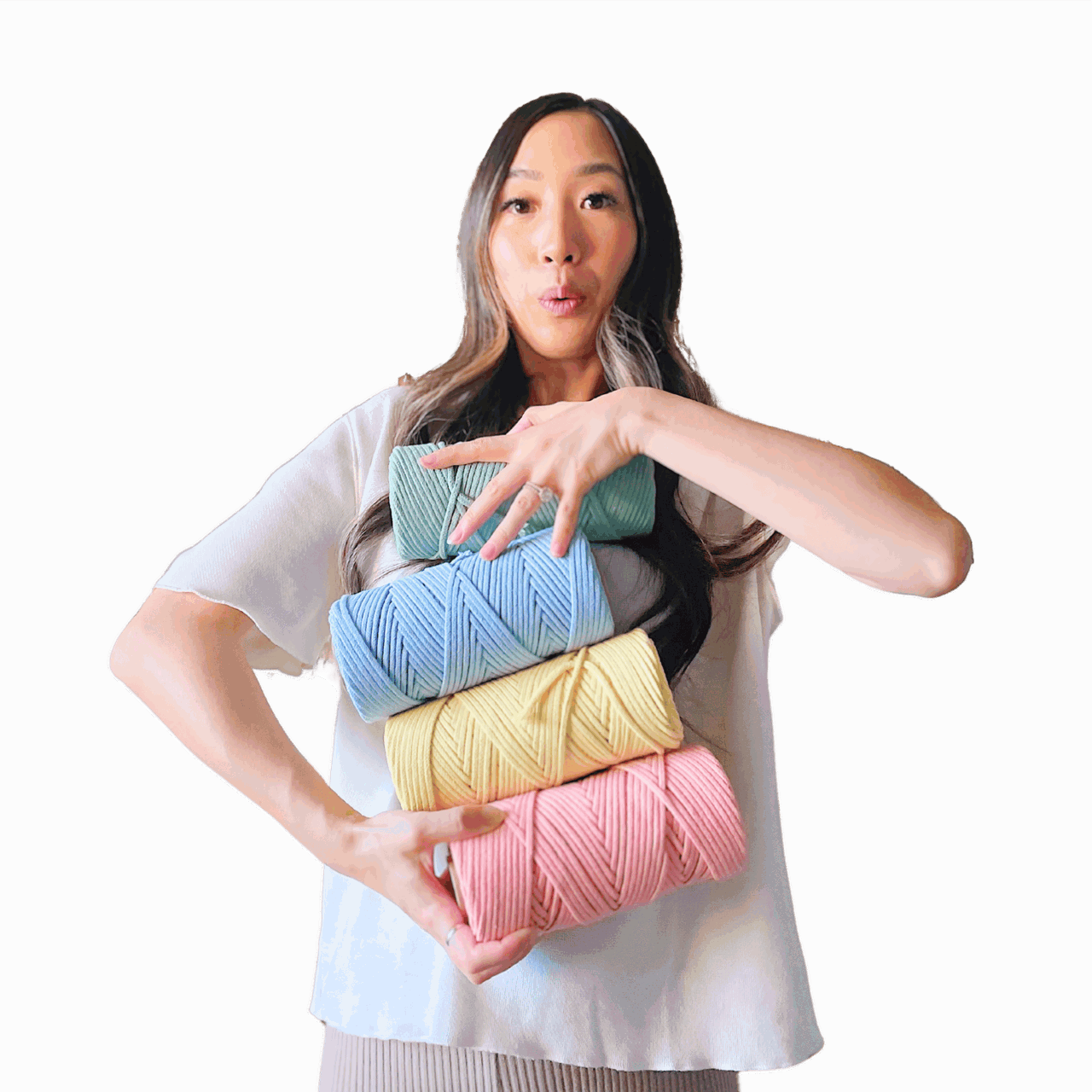
3mm single-strand cotton cord is the sweet spot for most feather projects — it knots cleanly, combs into fluffy fringe without matting, and produces a feather that's full enough to look impressive but not so bulky that it loses detail. For macramé feather earrings, go finer: 1mm or 1.5mm cord gives the delicate scale earrings need. For large wall hanging feathers, 4mm or 5mm cord makes a bolder, more substantial piece. Browse the 3mm cord collection or the full single-strand cord range to find your preferred thickness.
How many working cords do I need per feather?
For the DHH method, approximately 15 working cords (each 15–20cm) produce a nicely filled feather. For the square knot variation, you'll use approximately 26 working cords arranged as 13 pairs. Both methods use a single 40cm anchor cord. The exact count can vary slightly depending on how tightly you pack your knots — more cords means a fuller, denser feather.
How do I keep the fringe from getting messy while I work?
Keep a consistent downward bias: after knotting each cord, let the loose ends hang straight down rather than fanning them out sideways. When you're ready to comb, work in sections from the top of the fringe downward — never drag the comb upward against the fiber direction. For very tangled fringe, mist lightly with water before combing; damp fibers separate more easily and stay aligned as they dry. The macramé fringe guide has more detailed tips on managing difficult fringe.
Which method should I choose — DHH or Square Knot?
Choose the DHH method if your feather will be handled regularly (keychains, bag charms, earrings) — the knots lock firmly and the feather holds up to daily use. Choose the square knot variation if your feather is purely decorative (wall hanging, gift decor) — the softer, fuller texture reads beautifully as wall art and the looser construction is faster to build. When in doubt, make one of each — total material cost is minimal and trying both gives you a clear first-hand comparison of the finished feel.
What tools make the process faster and easier?
Three tools make a significant difference: (1) sharp precision scissors — dull blades crush cord fibers and leave ragged edges; a fine-point scissors lets you trim a clean, smooth feather silhouette; (2) a fringe comb — purpose-built combs have fine teeth spaced to separate cotton fibers without tearing; using a regular comb risks snapping fibers; (3) masking tape for the trim guide — it takes 30 seconds to apply but makes the difference between a feather with a clean professional edge and one that looks hand-hacked. Find the full set in the macramé tools collection.
Related Tutorials


Learn the square knot variation that creates the soft, decorative feather in Method 2.

Macramé Fringe: The Ultimate Guide
Five essential tips for combing, shaping, and finishing fluffy macramé fringe.
Just Starting Out?
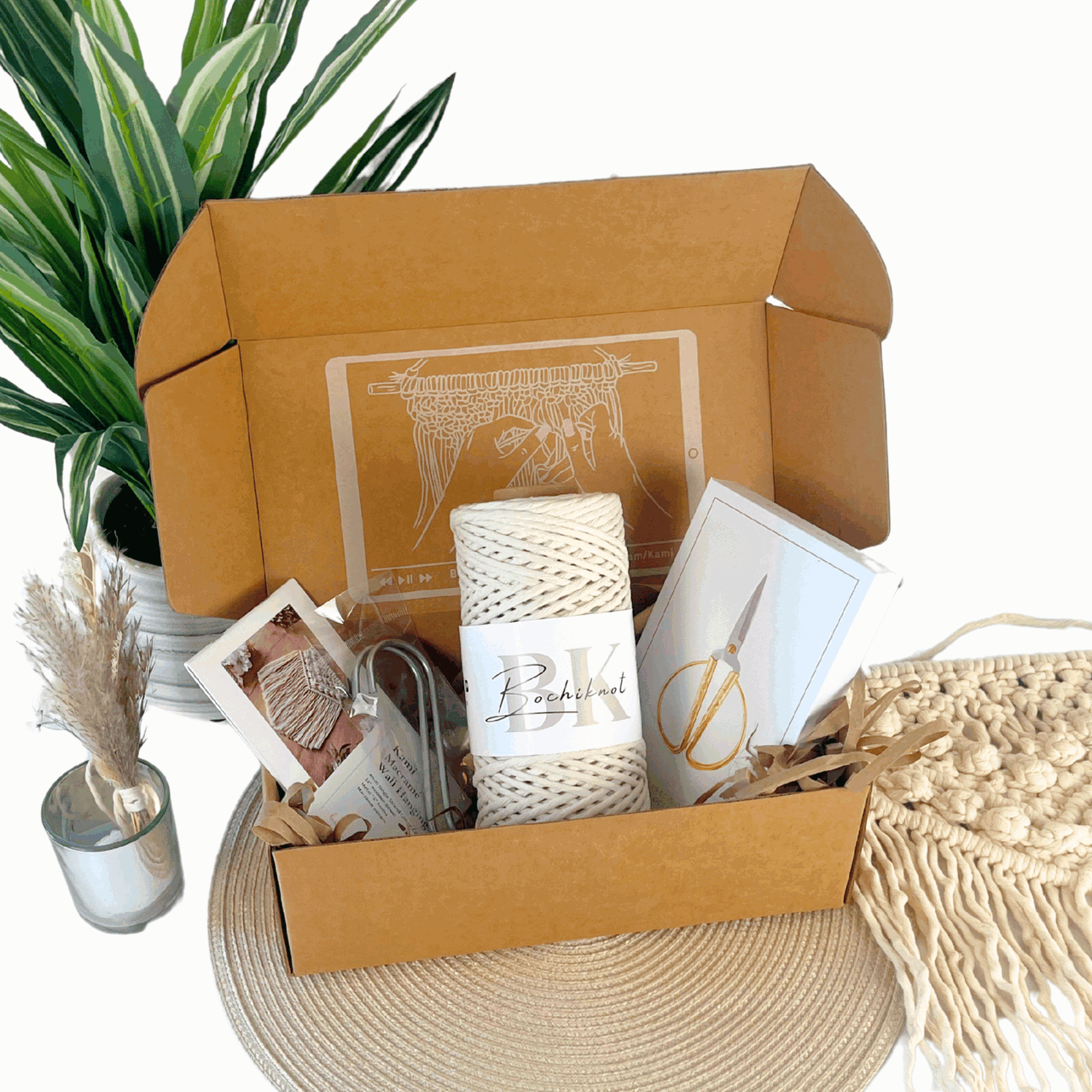
Get the Macramé Journey Welcome Kit
Everything you need to begin your macramé practice — cord, tools, and a guided beginner tutorial — bundled into one kit. No guesswork, no separate orders, no overwhelm.
Explore the Welcome Kit →Free Resource
Get the 50 Macramé Knots & Sennit Guide — Free
Step-by-step visual instructions for every knot used in this tutorial — double half hitch, square knot, lark's head, and 47 more patterns.

Nicole Woo
Self-taught macramé educator since 2018. 100,000+ students taught worldwide. Nicole created Bochiknot to make macramé approachable for makers at every level — from complete beginners tying their first lark's head knot to advanced artists designing original wall installations. Every tutorial is tested, photographed, and written with beginners clearly in mind.

Leave a comment