




How to Make a Macramé Baby Headband (No-Glue Flower Tutorial + Video)
Last updated: 2026-07-06
Quick answer
What you’ll make: A soft 3-petal macramé flower headband with a berry-knot center — attached with knots only, no glue.
Skill level: Beginner — three simple knots (reverse lark’s head, double half hitch, berry).
Time: About 1 hour.
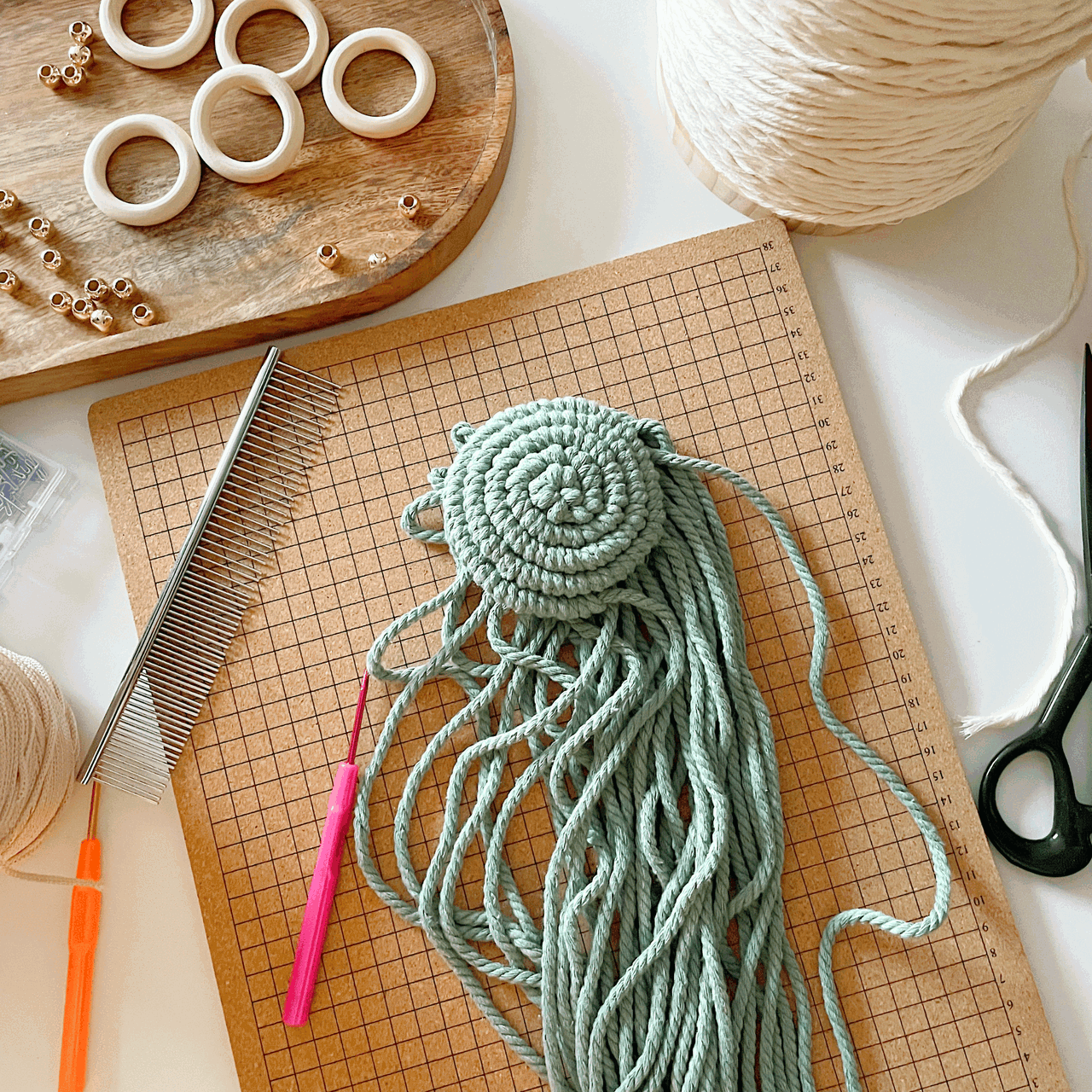
Materials: 3mm soft baby-safe cotton cord · an elastic or solid headband · scissors · a comb.
Cost: Around $2 per headband in materials.

📌 PIN THIS FOR LATER
🎥 Prefer to watch? The full step-by-step video is below — the petal-building section is much easier once you’ve seen the double half hitch motion.
What you’ll learn
Knots You’ll Need
Just three knots build the whole flower. If you’ve made a small keychain or wall hanging before, you already know most of them.


New to Macramé?
The berry knot is a stack of square knots — start with the beginners guide.
Start hereMaterials & Tools
A short, baby-conscious list. The most important choice is a soft, baby-safe cotton cord — skip anything scratchy or synthetic against a little one’s skin.
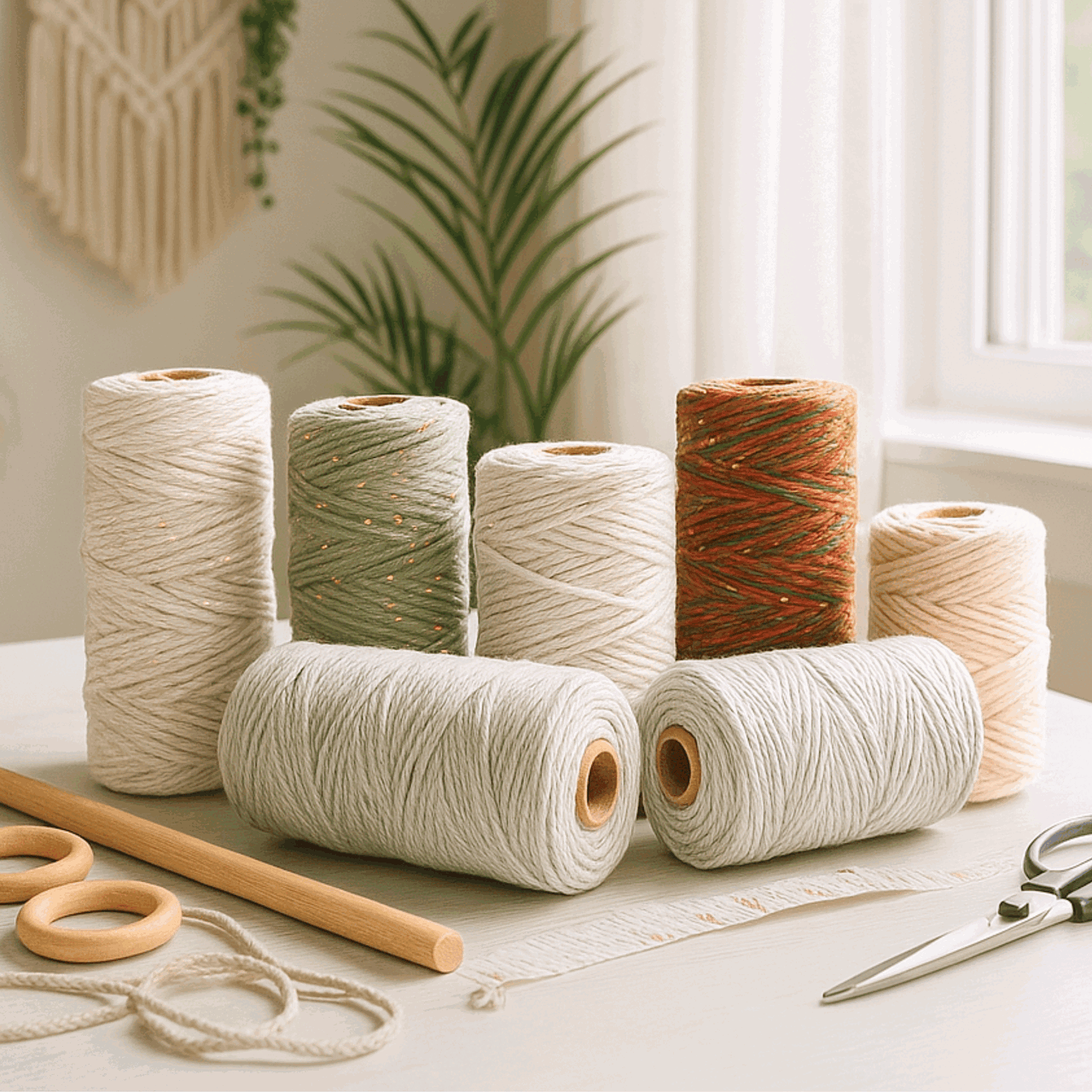
Cord & Materials
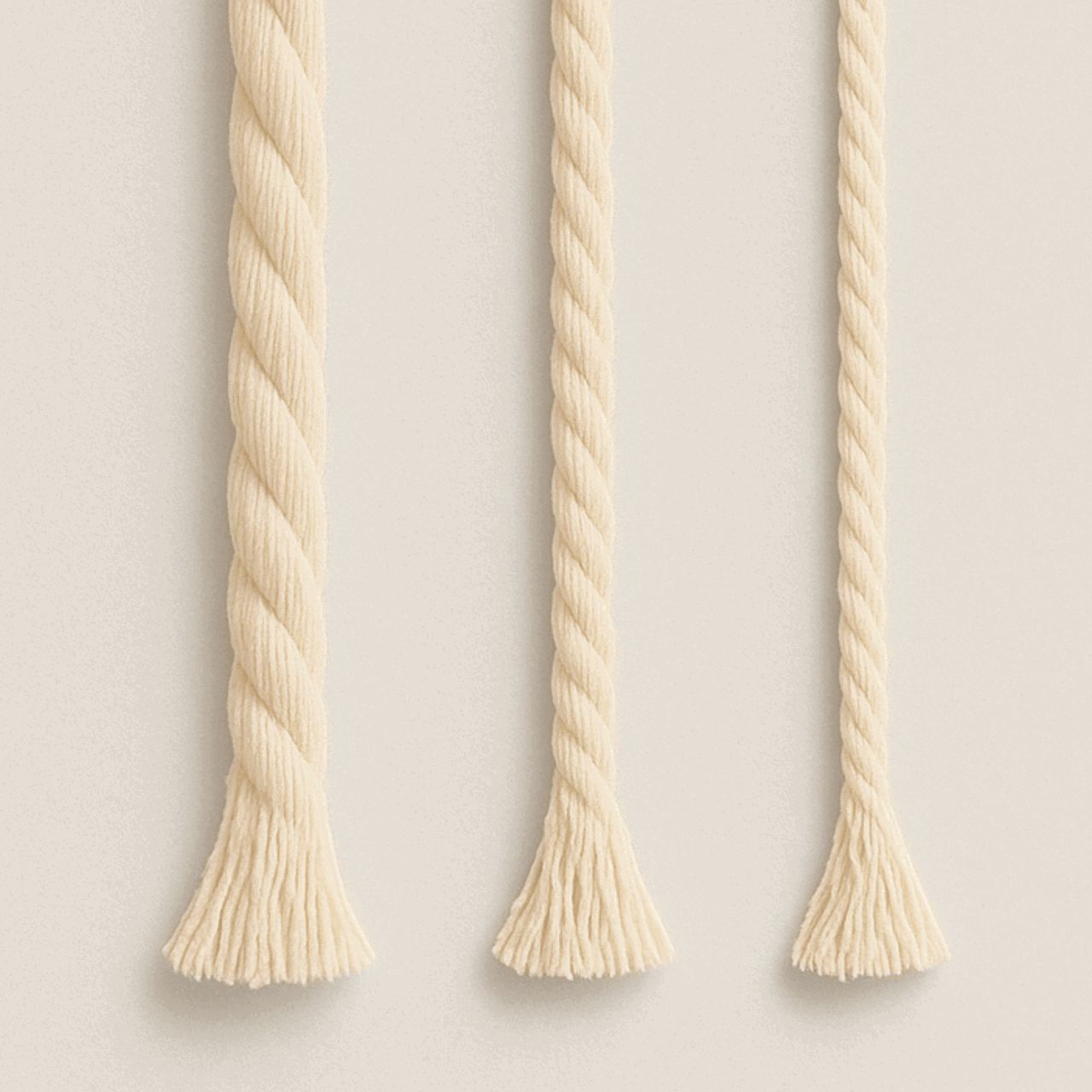
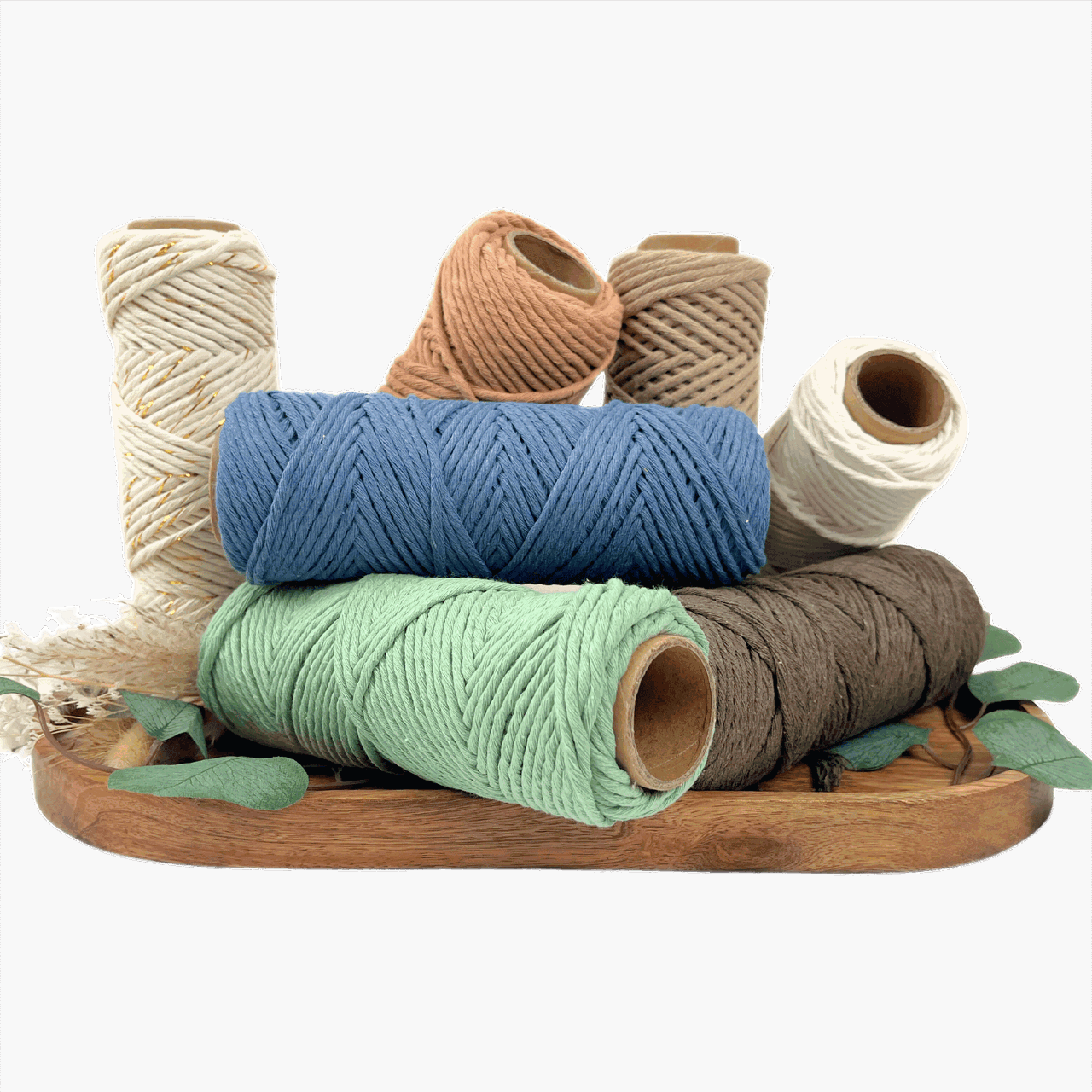
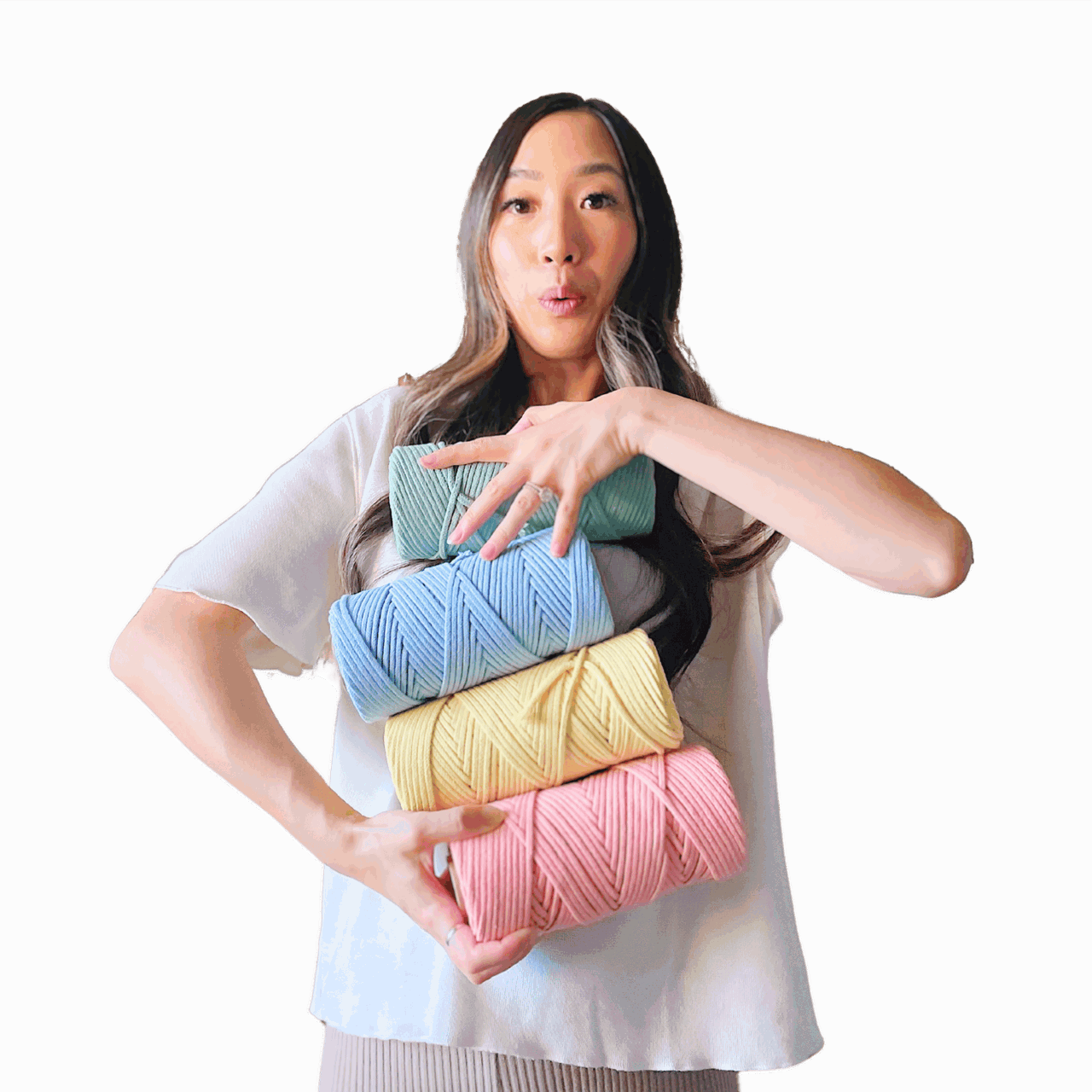
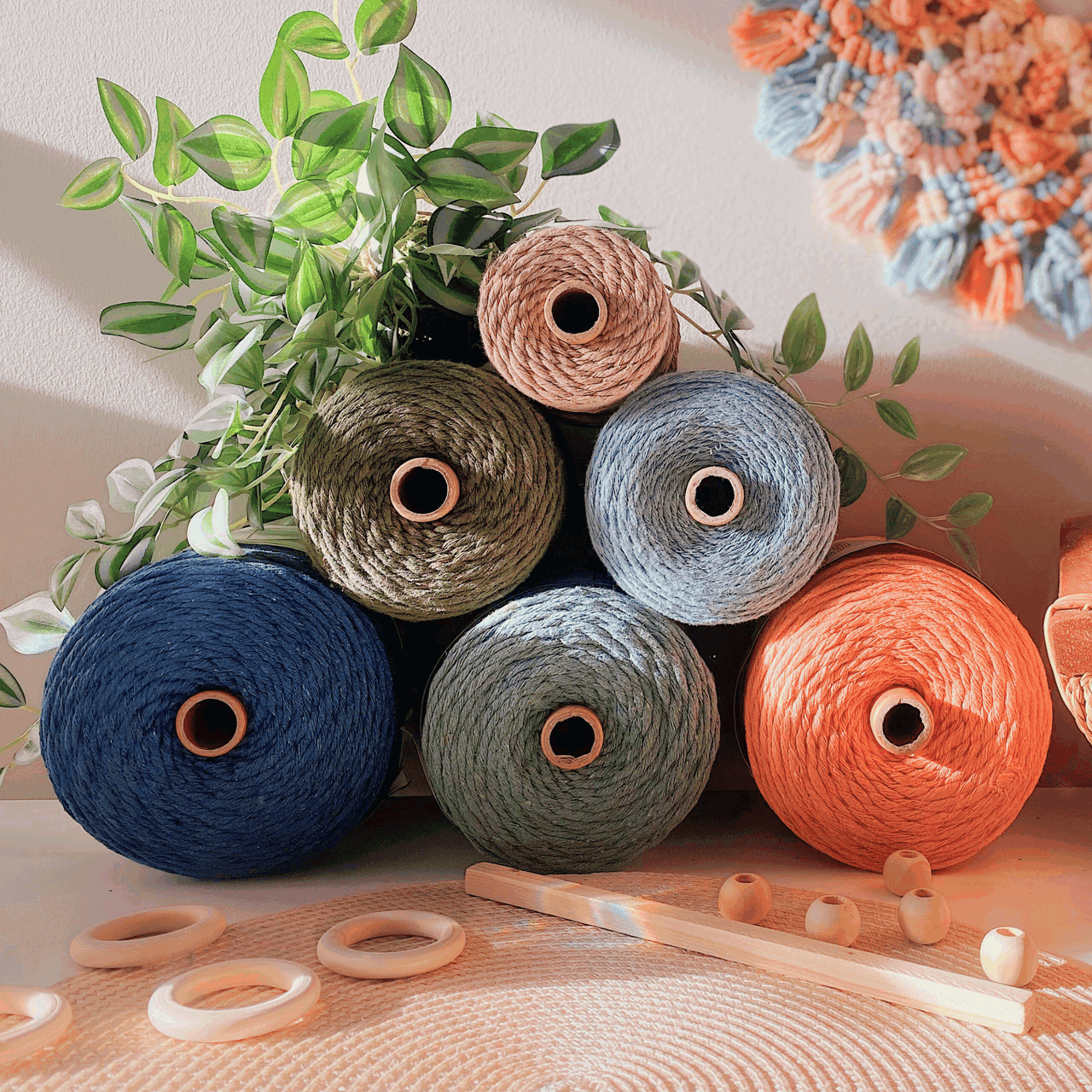
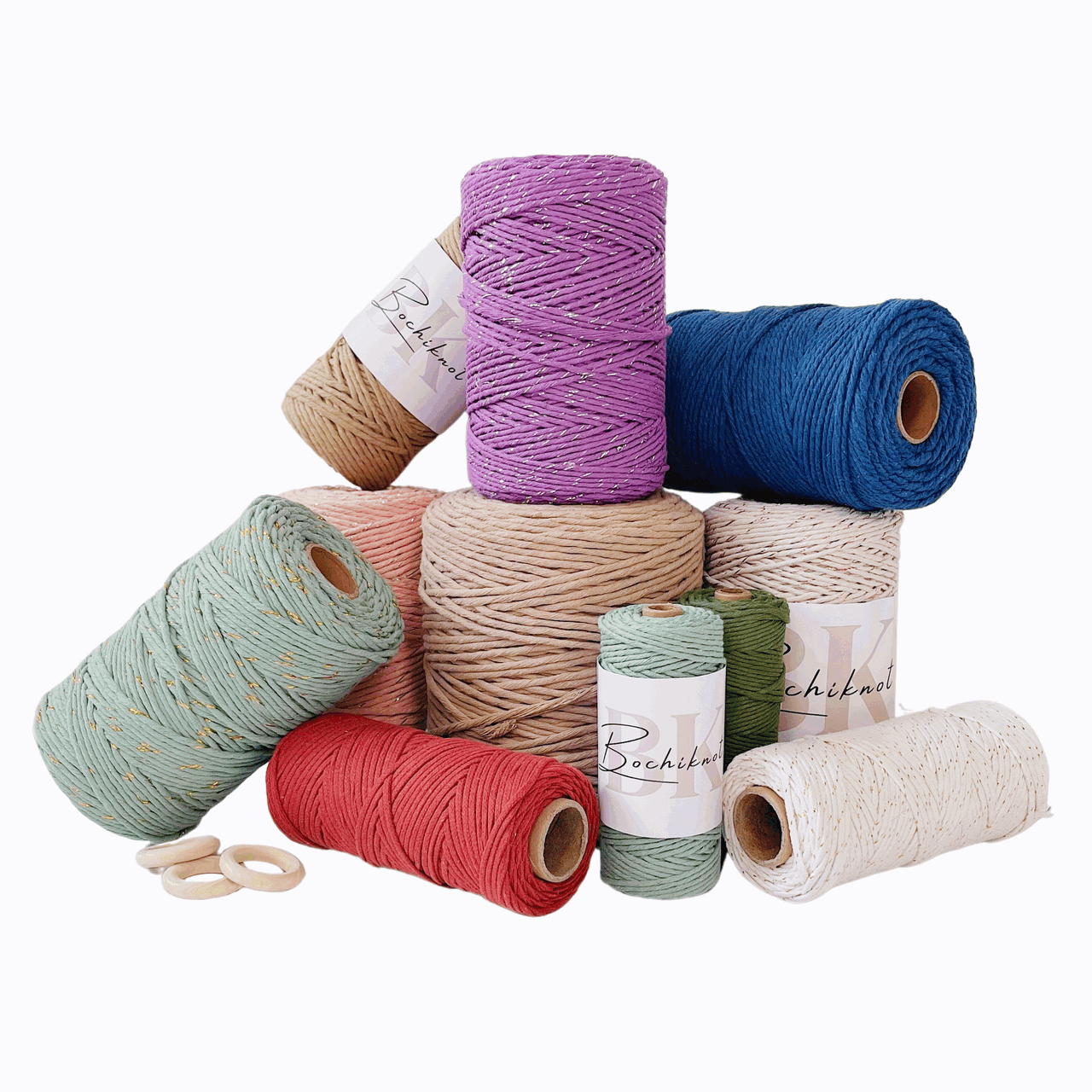
- 3mm single-strand cotton cord — soft and baby-safe. About 6.5 meters total (see cord lengths below). A tightly-twisted recycled cotton gives the neatest petals. Shop soft cotton cord →
- 1 elastic or solid headband — a soft nylon elastic band is gentlest for newborns; a solid band works for toddlers and adults.
Tools
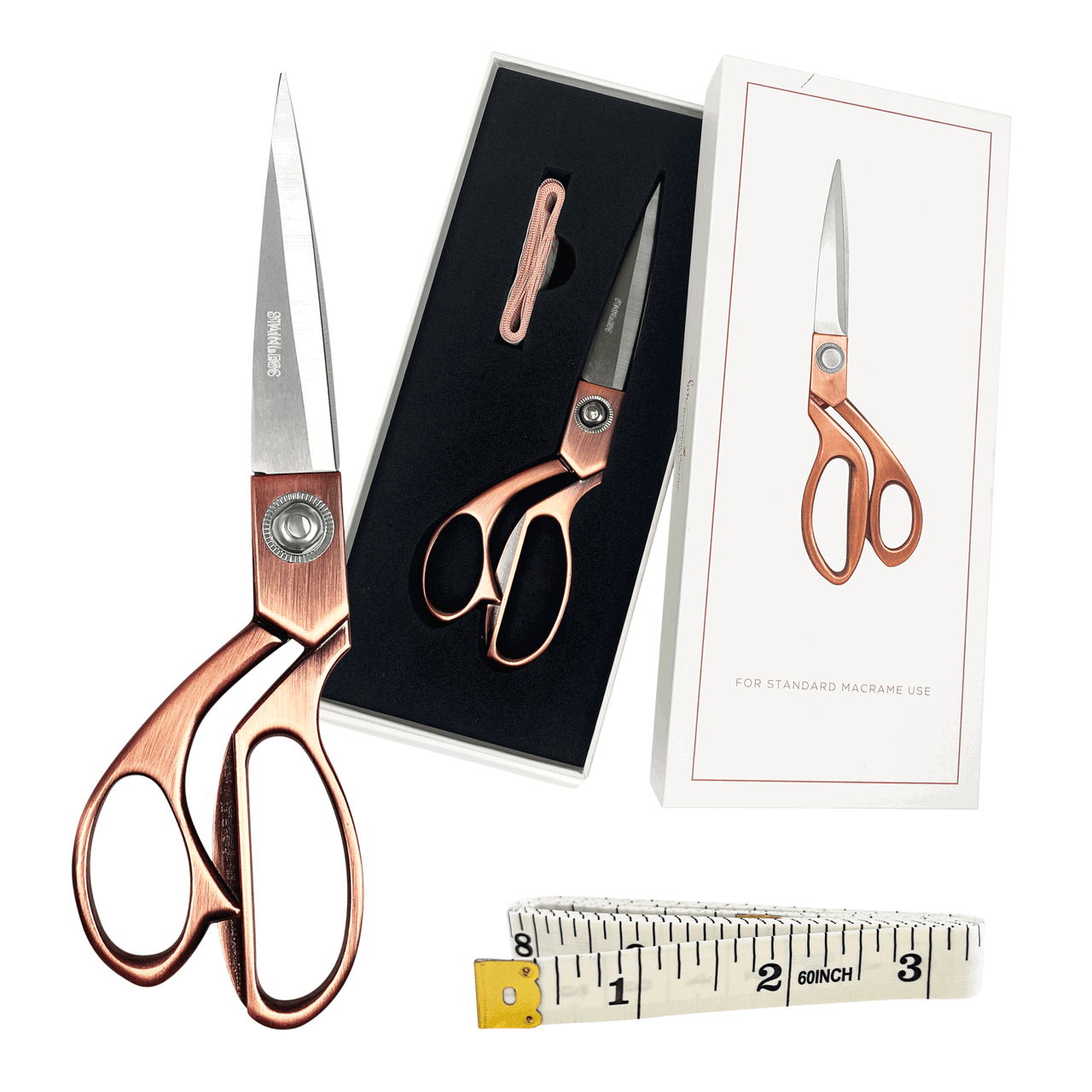
- Sharp fabric scissors — the rose gold pair I use daily.
- A comb — for fluffing the fringe before the final trim.
- Optional: a small piece of tape to hold the first cord steady while you knot.
Cord Lengths to Cut Before You Start
| Quantity | Length (metric) | Length (imperial) | Used for |
|---|---|---|---|
| 2 | 200 cm | 79” | Main petal cords |
| 2 | 120 cm | 47” | Added cords for the second & third petals |
Headband Details
| Spec | Detail |
|---|---|
| Skill level | Beginner — three simple knots, no glue |
| Flower size | About 1–2” (2.5–5 cm) across |
| Completion time | About 1 hour |
| Cord needed | 3mm soft cotton, ~6.5 m (2×200 cm + 2×120 cm) |
| Best for | Newborn photo props, baby-shower gifts, nursery accessories |
Full Video Tutorial
This is the complete step-by-step video for the baby flower headband. Watch the first petal (Steps 1–7) once before you start — the double half hitch petal shape clicks quickly once you’ve seen it.
Step-by-Step Instructions

Fourteen quick steps in three phases: build the first petal, add two more, then tie the berry-knot center and trim. The first petal is the learning curve — after that it’s repetition.
Step 1: Attach the Cord to the Headband
Everything starts here — attaching your first cord to the band. Tape it down if it slips; a steady base makes the petals much easier.
- Fold a 200 cm cord in half and attach it to the headband with a Reverse Lark's Head knot. Tape the top of the headband down so the work stays stable.


Step 2: Form the first double half hitch
The double half hitch is the shape-maker of this whole flower. Keep it snug and even.
- Use the far-right cord as the anchor and the left cord as the working cord to make a Double Half Hitch (DHH) knot to the left.

Step 3: Add the second cord and mirror the knots
Adding and mirroring the second cord begins to give the petal its symmetrical shape.
- Attach another 200 cm cord to the left cord using a Reverse Lark's Head plus Half Hitch. Form a mirrored set of half-hitch knots so the two cords sit together.


Step 4: Build two rows of double half hitch
Two clean rows of double half hitch form the body of the first petal. Consistent tension is everything here.
- With the far-right cord as anchor, make a row of three DHH knots to the left. Then add a second row of DHH knots immediately underneath.

Step 5: Reverse direction and knot to the right
Reversing direction is what curves the petal. Take it slow the first time.
- Turn the anchor cord to the right and make two rows of DHH knots to the right using the far-left cord as anchor.

Step 6: Finish the final DHH row
This final row closes the first petal. You’re about to see the shape come together.
- For the last DHH row, begin with the far-left cord and make three DHH knots to the right.
- After each DHH, include the previous working cord in the next anchor group so the last knot includes three anchor cords.

Step 7: Secure the petal with a double overhand knot
The double overhand knot locks the petal to the headband — this is the no-glue magic. Pull it firm.
- Take one cord from the anchor group, weave it through the top of the headband from front to back, flip the petal, and tie a Double Overhand knot together with the last working cord to lock the petal in place.

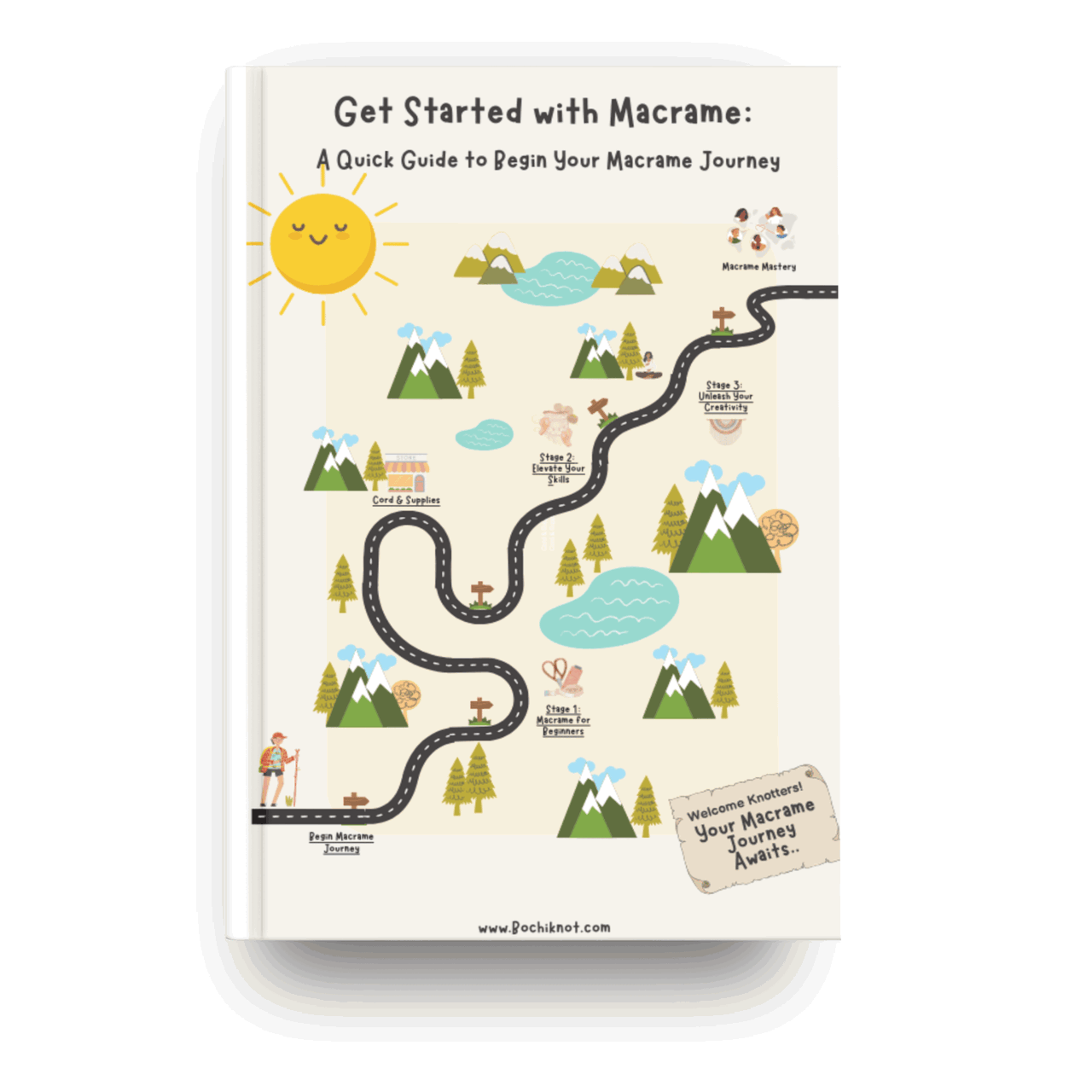
New to macramé? Grab the free beginner guide.
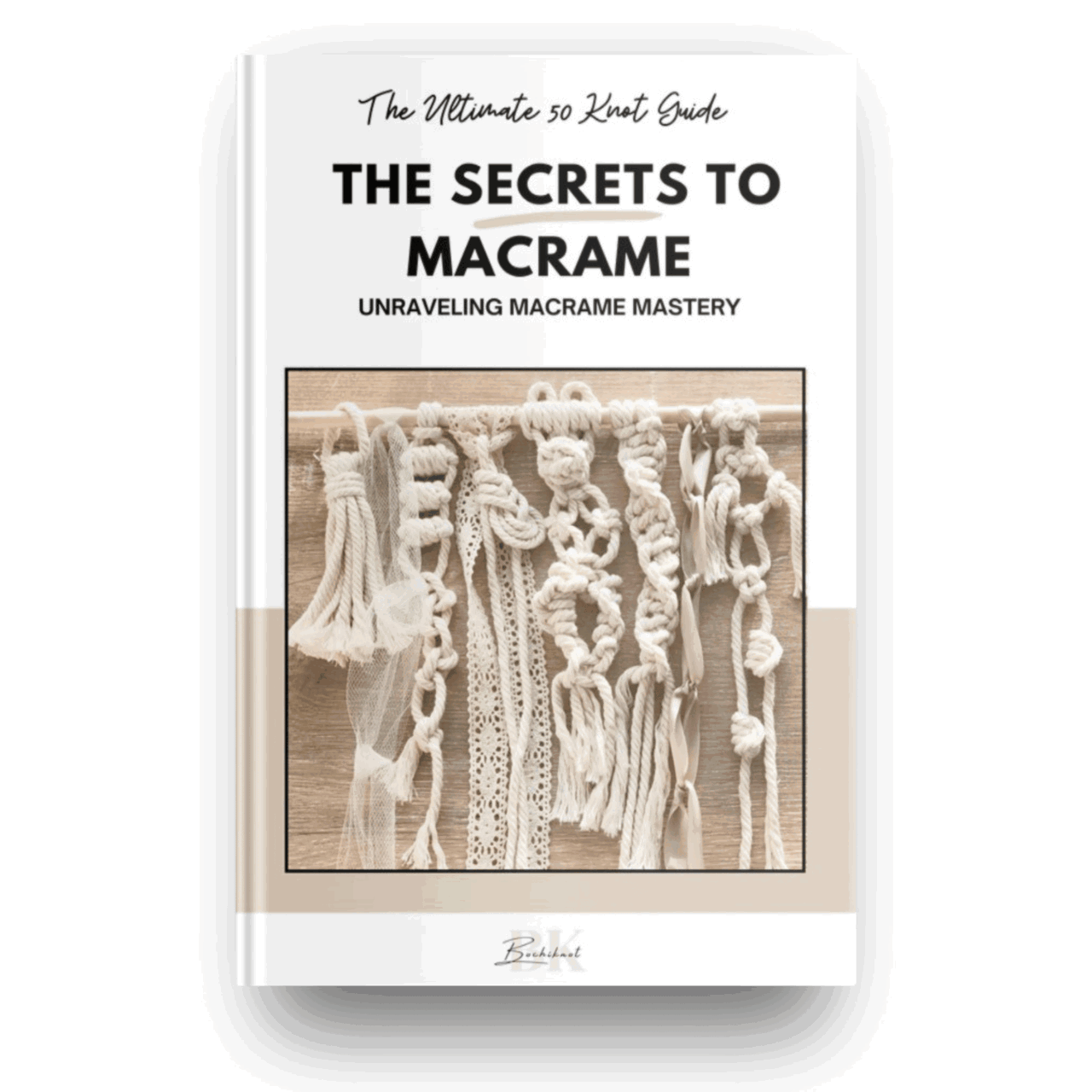
The complete knot library (reverse lark’s head, double half hitch, square, berry) with photos and video links — the reference I keep at my workbench.
Download the free guide →Step 8: Prepare the Cords for the Next Petal
A little cord organizing sets you up for a clean second petal. Worth the extra 30 seconds.
- Split the remaining cords into two groups of two. Flip the two back cords to the top so you have a neat pair for the next petal.
- Tape the top petal down and use the two right-side cords to begin the second petal.

Step 9: Start the second petal and add a new cord
The second petal repeats what you just learned, with one new cord added. Muscle memory kicks in fast.
- Make a DHH to the right with the far-right cord as anchor, then attach a 120 cm cord with a Reverse Lark's Head plus Half Hitch to continue the petal pattern.

Step 10: Mirror the Petal Pattern and Secure It in Place
Mirroring keeps the flower balanced. Match the second petal to the first as closely as you can.
- Repeat the petal pattern from the first petal but mirrored: three DHH to the right, one more row underneath, then three rows to the left.
- When attaching this petal, weave a cord through the space between petals from top down and finish with a double overhand knot at the back.

Step 11: Create the Third Petal Using Remaining Cords
The third petal uses your remaining long cords. Three petals = a full little flower.
- Use the two longer cords left from the first petal to make the third petal in the same direction as the first.
- Attach a 120 cm cord to the left anchor with RLH + half hitch and repeat the petal construction.

Step 12: Arrange Cords and Prepare for the Berry Knot
Arranging the cords now makes the berry-knot center much easier in the next step.
- Weave cords from the petals up through the nearest petals so that two petals have three cords passing through and one petal has two cords.
- With four selected cords (two from one petal and two from another), prepare to make the Berry knot.

Step 13: Create the Berry knot
The berry knot is the flower’s centerpiece. Tight square knots and a little space above the first knot give it that plump, rounded look.
- Start with a square knot, leaving 0.5–1 inch of space above it. Finish that square knot and tie two more consecutive square knots underneath.
- Take the middle two cords, weave them through the hole above the first square knot, pull the anchor cords to the back, and finish with one last square knot.
- Finish by making a series of Double Overhand knots around the berry center. Pair adjacent cords, tie double-overhand knots, and spread the knots evenly so the fringe surrounds the berry knot

Step 14: Trim and Finish
Comb, trim, shape, re-trim. A clean fringe is what separates a homemade look from a boutique one.
- Comb the fringe, trim excess cord to shape, then re-trim for a neat look.


Ways to Use These Headbands
A single flower headband is precious. A few in different colors become a photographer’s or gifter’s dream. Here’s where they shine.
Newborn Photo Prop
Neutral cotton tones photograph beautifully against wraps and blankets — a favorite of newborn photographers.
Baby-Shower Gift
Handmade and keepsake-worthy. Pair one with a soft blanket for a gift that stands out.
Cake Smash & First Birthday
A boho flower headband is a staple of first-birthday and cake-smash photo sessions.
Mommy-and-Me Matching
Scale the same flower up onto an adult band for a matching set — adorable for photos.
Christening & Special Days
Soft cream cotton suits christenings, blessings, and family gatherings.
Everyday Nursery Accessory
Light, soft, and glue-free — gentle enough for everyday wear (always supervised).
Customize Your Headband
The flower is a blank canvas. A few easy variations:
- Colors: Neutral cream and beige photograph best; soft pastels (blush, sage, dusty blue) suit nurseries beautifully.
- Petal count: Make a simple 1-petal bud for the tiniest newborns, or the full 3-petal flower shown here.
- Center swap: Instead of a berry knot, add a single soft wooden or fabric-covered bead (skip small beads for infants).
- Size: Use the same steps with a thicker cord and a solid band to make a matching adult or toddler headband.
- Band type: Soft nylon elastic for newborns; a solid band for toddlers and up.
What It Costs to Make
This is one of the most affordable handmade baby gifts you can make — it uses only about 6.5 meters of cord. Here’s a realistic breakdown; if you already have scissors and a comb, your cost is essentially just the cord and band.
| Item | Approx. cost | How far it goes |
|---|---|---|
| 3mm soft cotton cord (petite roll) | $18–$22 | Makes 12–15 headbands |
| Elastic headbands (pack) | $5–$8 | 10–20 bands |
| Scissors + comb (one-time) | $10–$18 | Every future project |
| Cost per headband | ~$2 | — |
Pro Tips for a Polished Finish
- Baby-safe cord first. Choose a soft, tightly-twisted cotton — it’s gentle on skin and gives the cleanest petals.
- Keep tension even. Matching your pull on every double half hitch is the #1 thing that makes petals look symmetrical.
- Tape the base. Taping the first cord to your work surface stops the band from sliding while you knot.
- Tight berry, small gap. For a plump center, keep the square knots tight and leave a small space above the first knot before weaving through.
- Comb before you cut. Fluff the fringe with a comb so you can see the true shape, then trim in small passes.
- Fit gently. Baby headbands should sit loose and comfortable — never tight.
Common Mistakes (and How to Fix Them)
| Mistake | Fix |
|---|---|
| Petals look uneven | Inconsistent double half hitch tension. Match your pull on every knot; undo and re-tie the loose row. |
| Flower feels loose on the band | The double overhand knots in Step 7 weren’t pulled firm. Re-tighten them — that’s what holds it, no glue needed. |
| Berry knot looks flat | Square knots too loose or no gap above the first knot. Re-tie tighter and leave a small space so it can plump up. |
| Fringe looks ragged | Comb it straight first, then trim in small passes. Cutting all at once causes choppy edges. |
| Cord feels stiff/scratchy | Switch to a softer single-strand cotton — comfort matters most for a baby item. |
What to know before you start
The first petal (Steps 1–7) is the whole learning curve. The double half hitch feels fussy the first time — threading, mirroring, closing the shape. That’s completely normal. Watch that part of the video twice, make one practice petal on scrap cord, and the real flower will feel smooth. By the second petal your hands will know the pattern. And remember: this is a baby item, so prioritize soft cord and a gentle fit over speed.
Want more projects like this? Once the flower headband clicks, my Patreon has downloadable PDF patterns and video walkthroughs for every project I’ve made — nursery decor, keychains, wall hangings, and more. It’s there whenever you’re ready for your next make.
💛 Made one?
Tag @bochiknot and use #BochiknotProjects on Instagram — I feature reader makes every week.
Frequently Asked Questions
Is glue required to keep the flower attached?
No — that’s the whole point of this design. The flower is held on by knots only. Double overhand knots lock each petal to the headband. If you want extra reinforcement for heavy everyday use, a small felt backing can be added, but it isn’t needed.
Is this headband safe for babies and newborns?
Yes, when made with soft baby-safe cotton and worn with supervision. Use a gentle, non-scratchy cotton cord and keep the fit loose and comfortable — never tight. As with any headband or accessory, always supervise an infant while they’re wearing it, and remove it for sleep.
What cord should I use for a baby macramé headband?
A soft, baby-safe cotton cord around 3mm thick. Cotton-core cords are gentle on skin and hold knots well. A recycled cotton with a tight twist gives the neatest finish. Avoid stiff or synthetic cords against a baby’s skin.
What size headband should I use, and what age does it fit?
A soft nylon elastic band is gentlest and stretches to fit newborns through toddlers. For older toddlers and adults, use a solid band. The flower itself is about 1–2” across, which suits all ages.
Can I make an adult-sized version?
Yes. Use the same steps with a slightly thicker cord and a solid headband for more structure. Just scale up the cord lengths and the band size — great for mommy-and-me matching sets.
How do I make the berry knot look full?
Start with tight square knots and leave a small space (about 0.5–1 inch) above the first knot. Then weave the middle cords up through that space and finish with a final square knot — that’s what gives the berry its plump, rounded shape.
How long does it take to make one?
About 1 hour for your first headband while you learn the petal. Once the pattern is in your hands, each one goes faster.
What’s the difference between a double half hitch and a square knot?
A double half hitch wraps one working cord around an anchor cord twice and is used to create rows, shapes, and the petals here. A square knot uses two working cords around a center pair and creates a flat, symmetrical knot — stacked square knots form the berry-knot center of this flower.
Want to master more knots?
Download the free beginner ebook — the complete visual knot library plus 3 mini beginner projects.
Get the free guide →Keep Learning with Bochiknot

3 Essential Knots
Lark’s head, square & double half hitch — every knot in this headband.
Learn knots


You Might Also Be Interested In


Follow & Shop Bochiknot
Bochiknot is a real, working macramé studio — here’s where to find the community, the supplies, and handmade pieces.
Join our community of 125,000+ makers sharing projects and inspiration.
Follow @bochiknot📦 Amazon Storefront
Grab the exact cord and tools for this project with Prime shipping.
Shop on AmazonAlso find us on: YouTube · Pinterest · TikTok · Facebook

Final Thoughts

A macramé baby headband is one of the sweetest handmade gifts you can make — soft, glue-free, under $2 in cord, and finished in about an hour. Once you’ve made one flower, you can make them in every color for photo sessions, gifts, and everyday nursery cuteness. And because it’s held together with knots rather than glue, it’s gentle and washable in a way store-bought headbands often aren’t.
Make one and tag @bochiknot — seeing your little ones in them is genuinely the best part of my week.

Leave a comment