




How to Make a Wave Knot Macramé Wall Hanging (Two Cord Sizes)


Updated 2026 · ~16 min read
This wave knot macramé wall hanging brings a modern, textured feel with a look that stands apart from the usual square-knot-heavy designs. What sets it apart is its clean, graphic layout built from a single repeated knot.
Instead of mixing many knot types, the design leans into repetition to create structure and visual rhythm, which makes it both stylish and surprisingly approachable. The pattern forms diagonal, flowing lines that give the piece real movement and depth.
The main technique, often called the wave knot (and sometimes known as a friendship bracelet knot), is simple and repetitive. By working it in two cord sizes — 5 mm and 9 mm — across 13 columns, you get a distinctive, cohesive finish with a stepped diagonal that looks far more advanced than the single knot behind it. Ready to try something a little different? Gather your materials and start knotting; this is a pattern that looks impressive but comes together one simple step at a time.
What Is a Wave Knot Macramé Wall Hanging?
Attach 5 mm anchor cords to a top dowel, then tie repeating wave knots in 5 mm and 9 mm cotton cord across 13 columns. Shift the knot count by one per column so the thick 9 mm bands form a diagonal stepped pattern. Finish on a second dowel with double half hitch knots, add gathering knots, and trim the fringe.
Tutorial Contents
- What you'll learn
- The tension trick that keeps your waves crisp
- Why make this modern wall hanging
- Materials & tools you'll need
- How much cord do you cut?
- Understanding the structure before you begin
- How to tie the wave knot
- Wave knot vs square knot
- Video walkthrough
- Step-by-step tutorial (10 steps)
- Pro tips & troubleshooting
- Common mistakes & fixes
- Where to hang your wall hanging
- Color combinations to try
- Make it vs buy it: the savings math
- A handmade gift for any occasion
- Frequently asked questions
- More macramé wall hanging projects
- Join the Bochiknot community
What You'll Learn
By the end of this tutorial you will be able to:
- Mount anchor cords to a dowel with a reverse larks head plus half hitch knot.
- Tie a clean, consistent wave knot in both 5 mm and 9 mm cord.
- Read the column structure so your stepped diagonal stays true across all 13 columns.
- Keep even tension on thick 9 mm single-strand cord without fraying it.
- Finish the piece professionally with double half hitch knots, gathering knots, and a trimmed fringe.
The Tension Trick That Keeps Your Wave Knots Crisp and the Diagonal Clean
Why some wave knot wall hangings look crisp and others look loose
Here is the single most important thing I can teach you about this project: because the whole design is one knot repeated hundreds of times, consistency is everything. When every wave knot is pulled with the same, even tension, the columns stack into smooth vertical ribs and the 9 mm bands form a razor-clean diagonal. When the tension drifts — tight here, loose there — the columns wander, the steps lose their crisp edge, and the piece reads as messy even though the knots themselves are correct.
The fix is a four-part tension habit:
- Pull every wave knot with even, consistent tension. Place your thumb on the knot and snug it until you feel the same resistance as the last one, then stop. Firm, not strangled. Sameness matters more than strength, and it is what keeps each column the same width all the way down.
- Handle 9 mm single-strand cord gently. Thick single-strand cotton frays and unravels faster than twisted cord. Keep your tension even rather than yanking, and as you finish each 9 mm band, weave the loose ends into the back rather than leaving them to fray on the front.
- Count the knots in every column. The stepped diagonal only stays true if each column has the right number of small and large knots. Count as you go — 8 large knots in the middle of every column, with the small knots shifting by exactly one — so a miscount never throws off the whole step.
- Lay the piece flat periodically. Every couple of columns, set the work on a flat surface and look at it straight on. The diagonal should climb evenly to the right. Catching a drift early means re-snugging one column instead of unpicking five.
Get tension and counting right, and the diagonal practically draws itself. For more ways to mount and finish a piece cleanly, see our guides to 8 macramé mounting knots and end knots and finishing techniques.
Why Make This Modern Wave Knot Wall Hanging
- A modern, graphic look from one repeated knot. The stepped diagonal and two cord weights give it a contemporary, gallery-worthy feel that stands apart from busy, multi-knot designs.
- Beginner-approachable. If you can tie one wave knot, you can make this. The whole piece is that same knot repeated, so you build confidence and rhythm instead of juggling a big knot vocabulary.
- Endlessly customizable. Change the cord colors, scale the width up or down, or adjust the fringe length to match your space — the structure stays the same.
Materials & Tools You'll Need

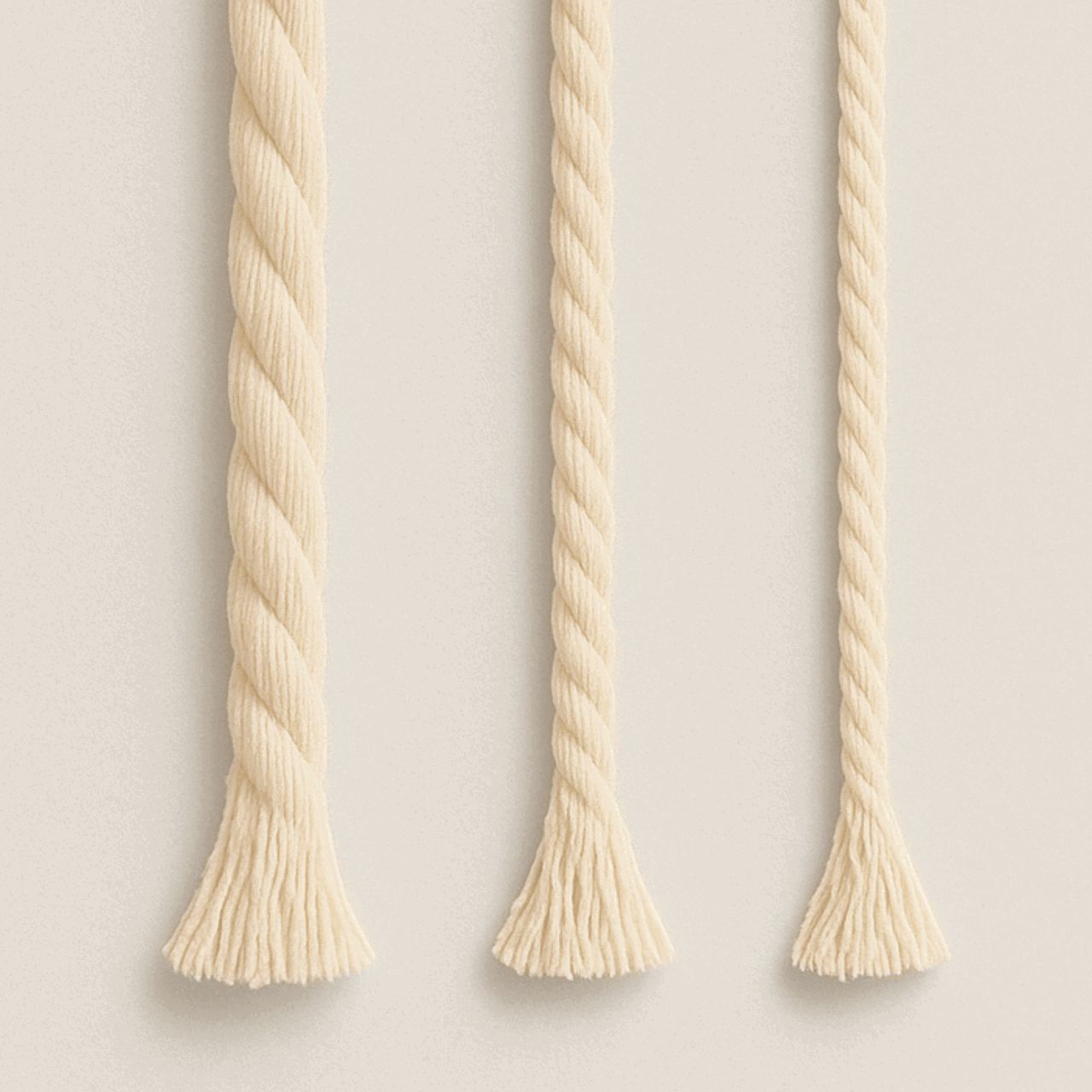
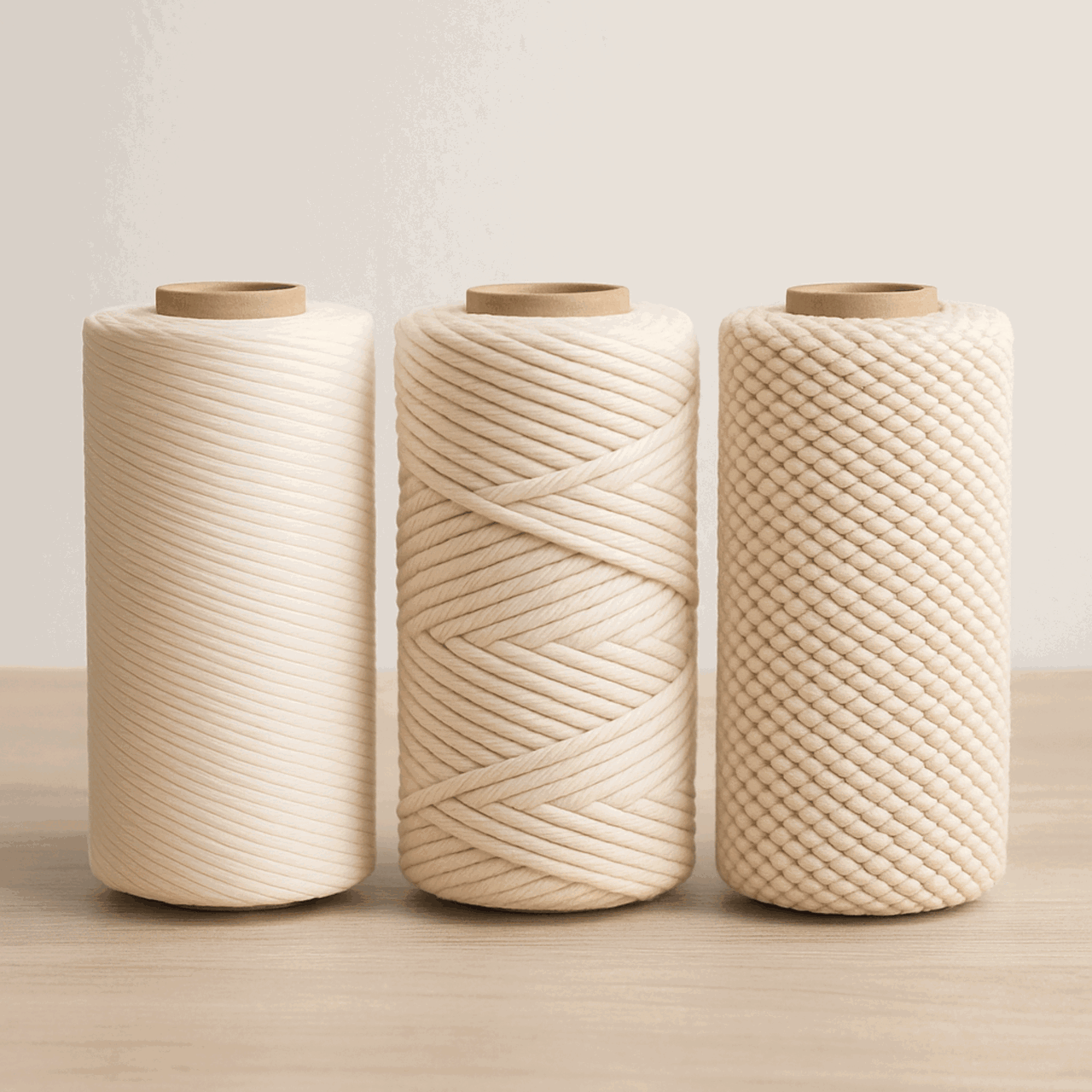
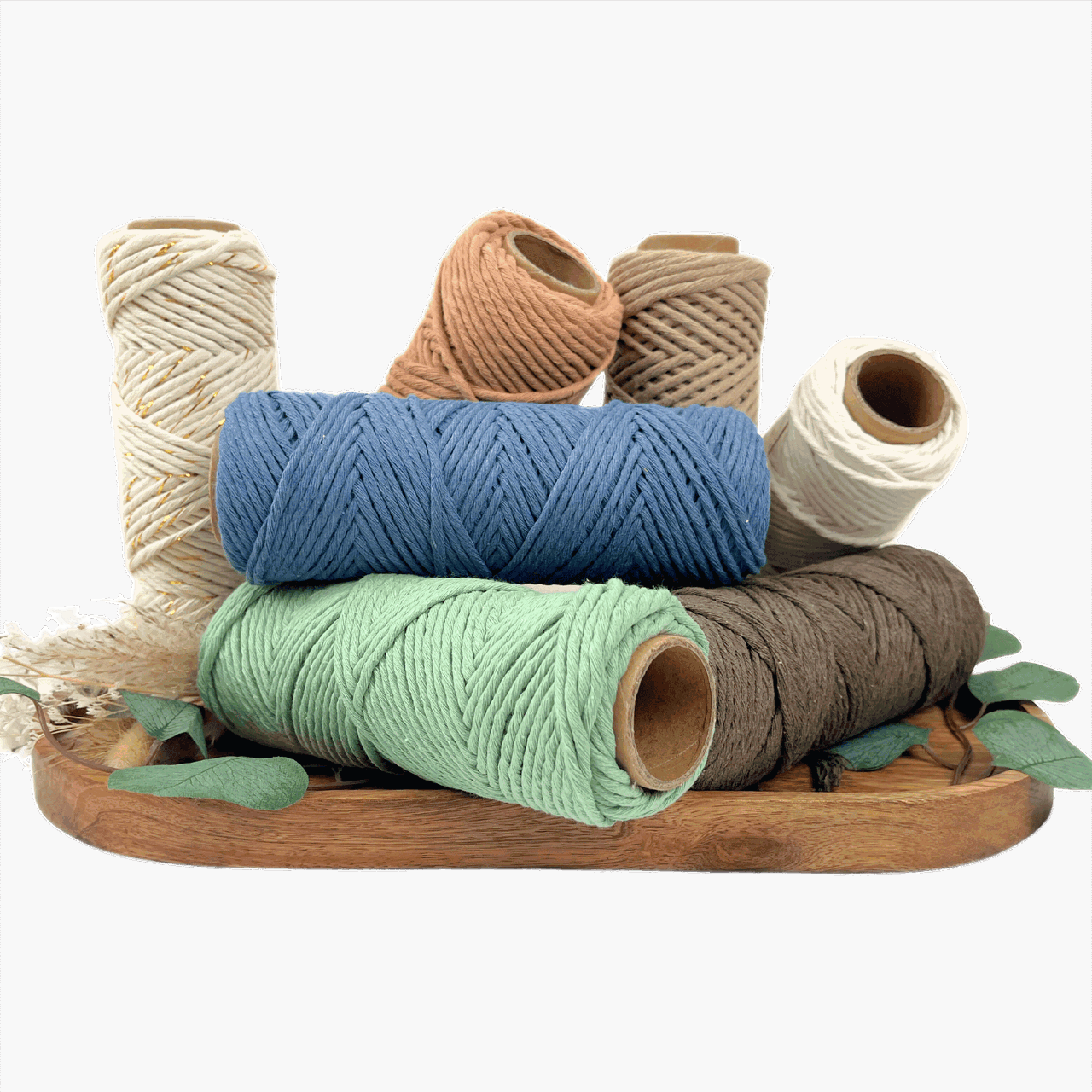
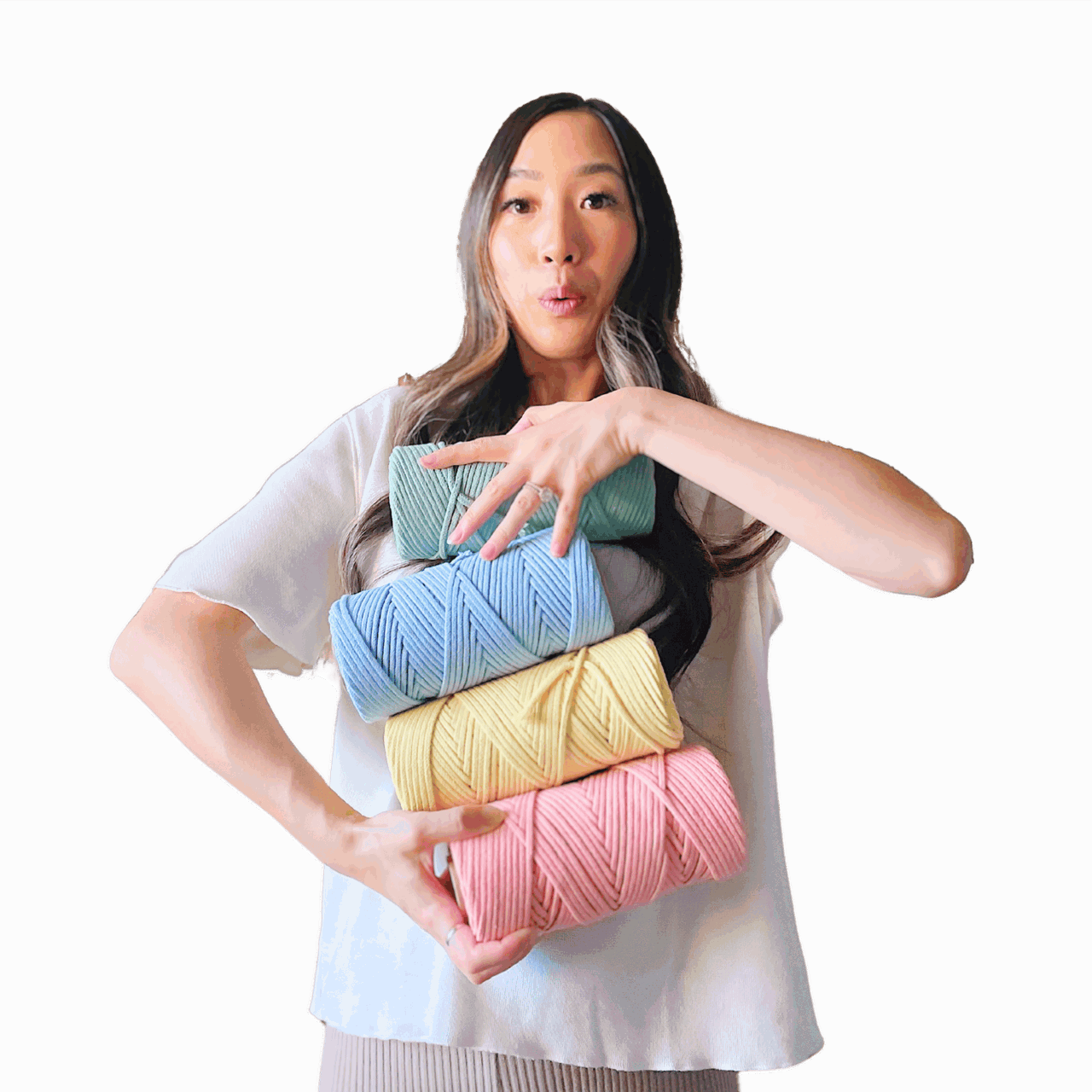
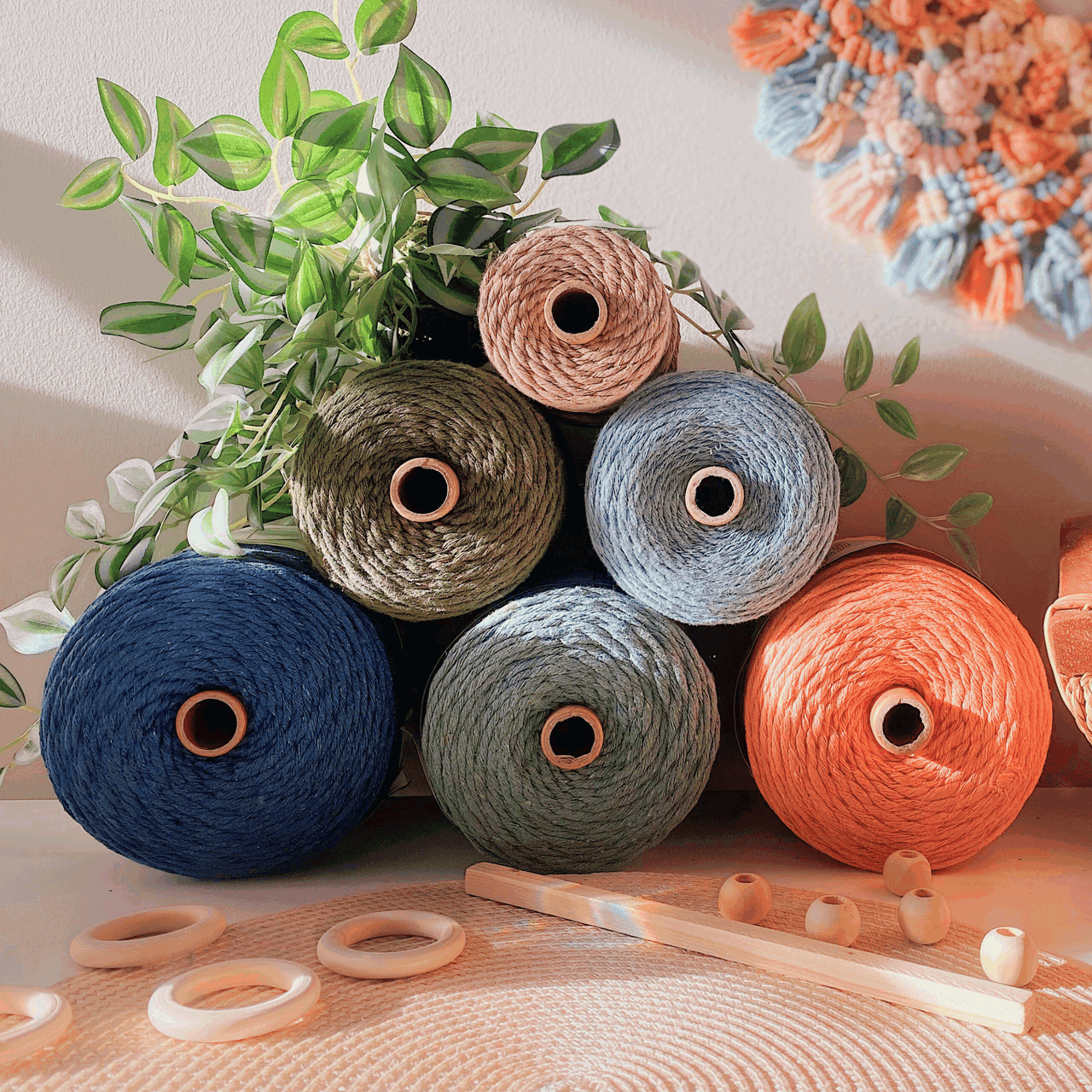
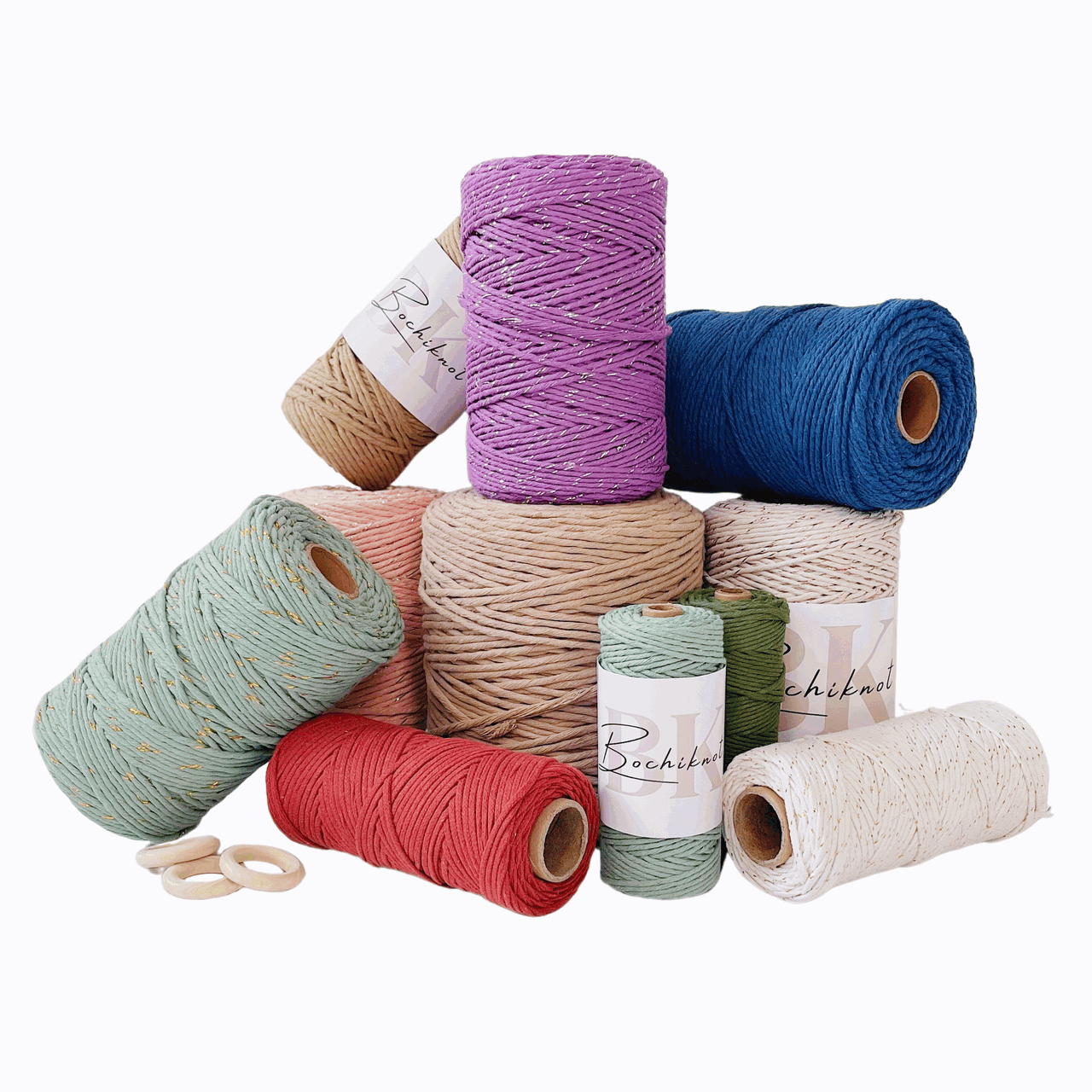
5 mm Single-Strand Cotton Cord
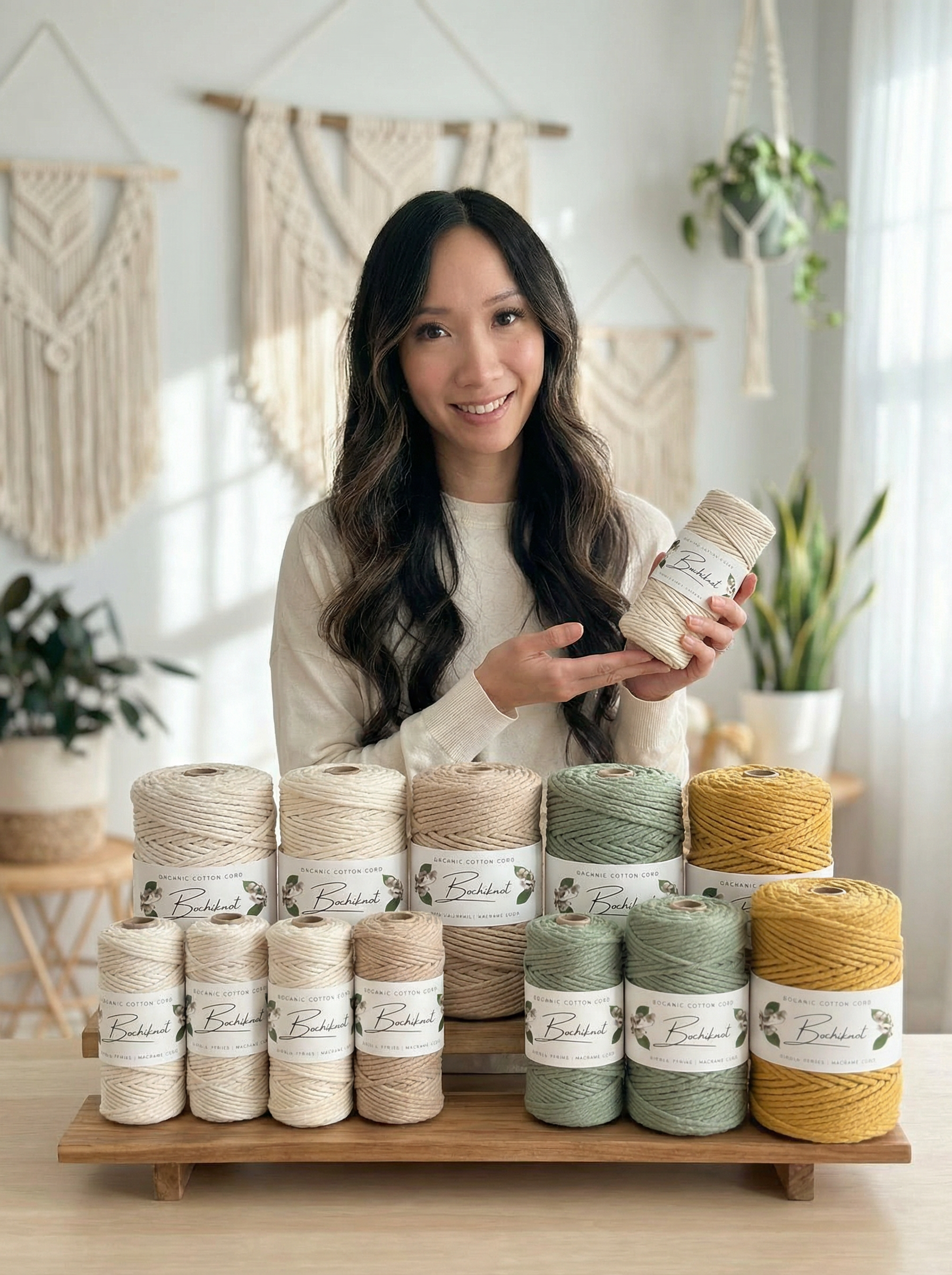
The workhorse of this piece. It forms the anchor cords and all of the small wave knots in the top and bottom sections. Pick two colors if you want the anchor cords to stand out.
Shop 5 mm cord
9 mm Single-Strand Cotton Cord
The thick cord that forms the bold middle bands and the stepped diagonal. One accent color here makes the design pop.
Shop thick cord
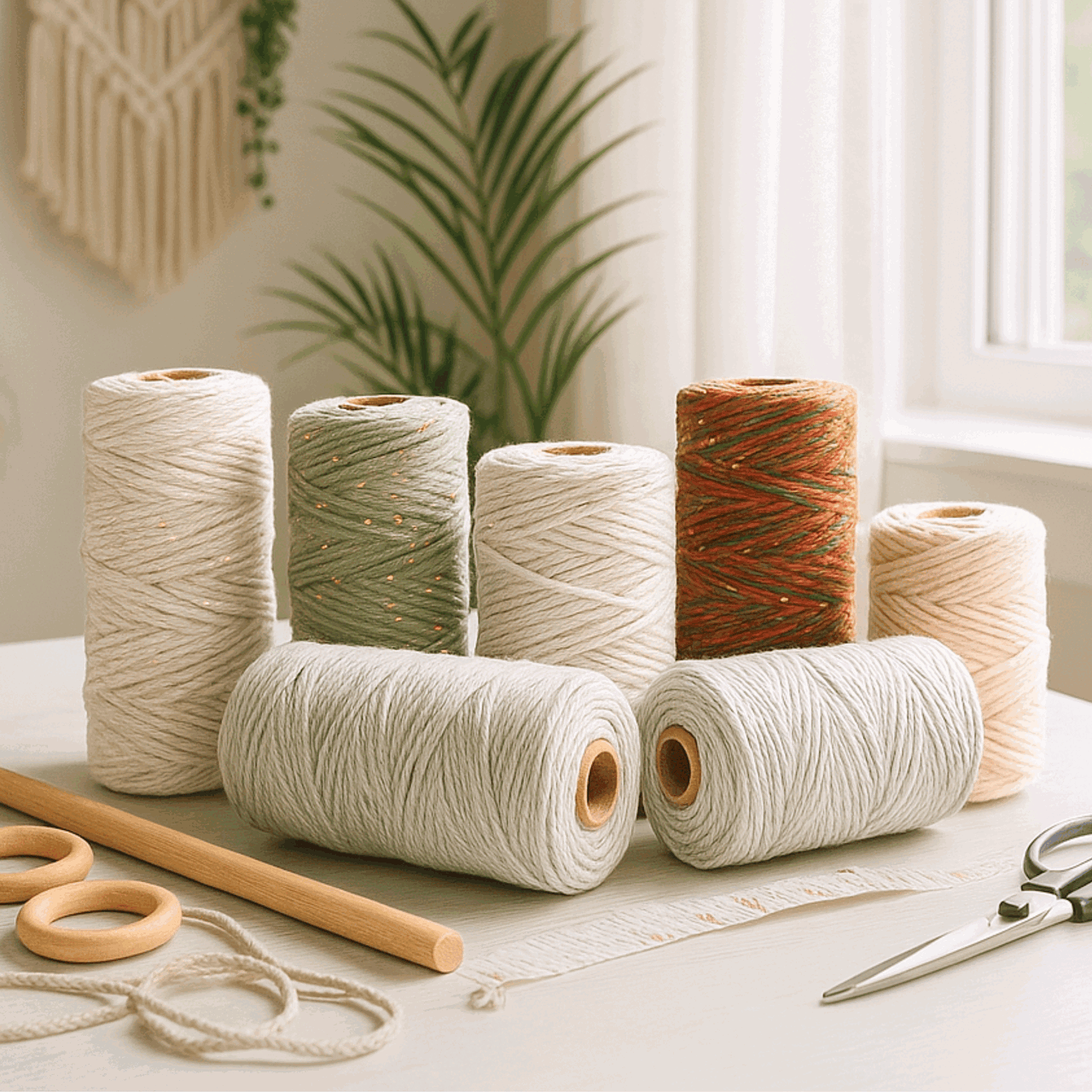
Dowels & Tools
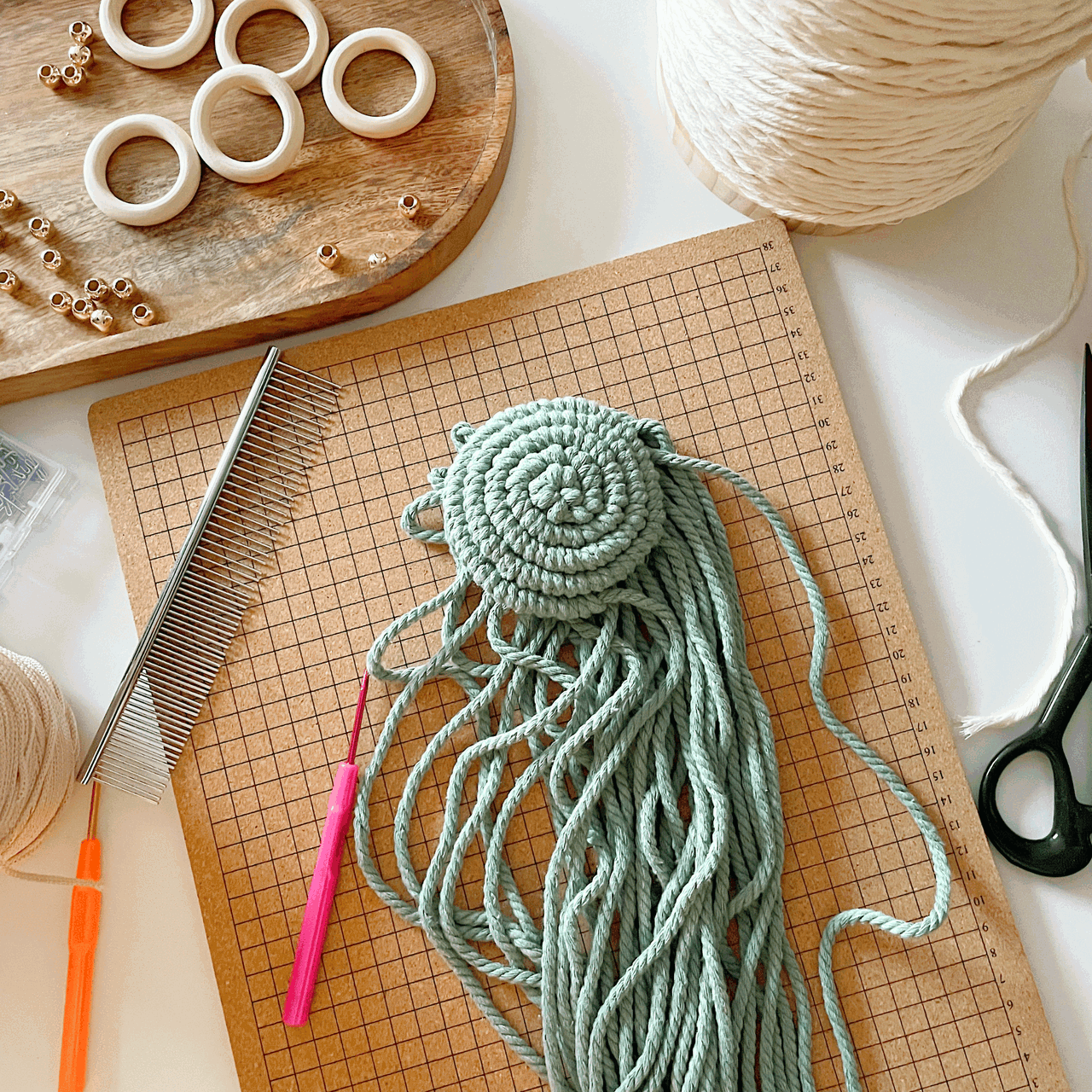
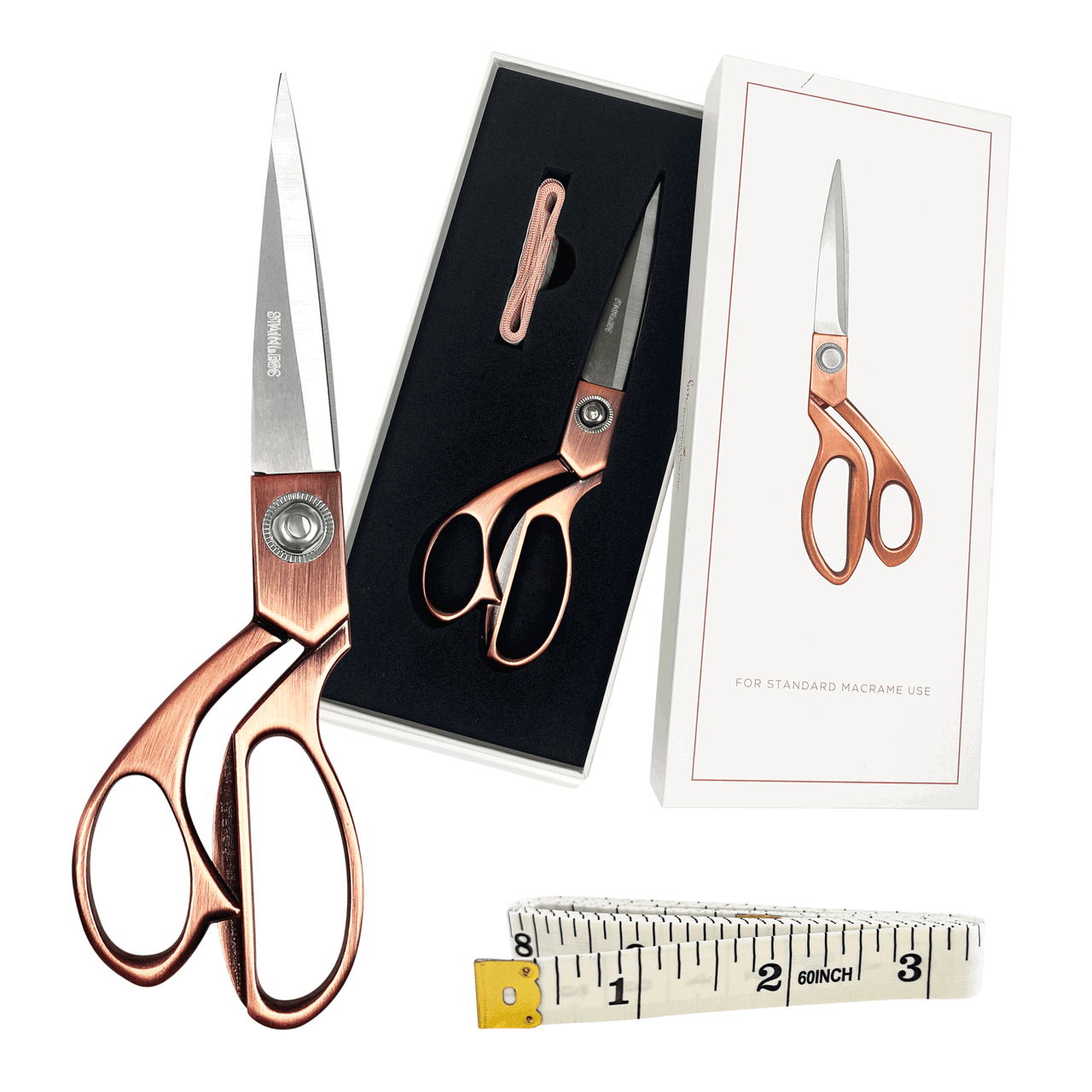
Two 24 in dowels, sharp precision scissors, a measuring tape, a metal comb for the fringe, and a crochet hook for weaving in ends.
Shop toolsShop 5 mm cord Shop thick cord
Free shipping on orders over $100 USD (US) or $75 CAD (Canada). Not sure which cord is right for your project? Take our quick cord quiz. This post contains affiliate links. We may earn a small commission at no extra cost to you. Prefer Amazon? Browse our Amazon storefront.
How Much Cord Do You Cut?
These are the exact, tested cord lengths I used to make the piece in the photos. Cut them before you start so you can knot without stopping.
| Cord (size) | Quantity | Length each | Used for |
|---|---|---|---|
| Color 1 (5 mm) | 13 strands | 170 cm (67 in) | Anchor cords for each column |
| Color 2 (5 mm) | 13 strands | 190 cm (75 in) | Small wave knots (top & bottom sections) |
| Color 2 (5 mm) | 13 strands | 35 cm (14 in) | Gathering knots at the bottom |
| Color 3 (9 mm) | 13 strands | 175 cm (69 in) | Large wave knots (middle bands) |
Scaling note: Making the piece wider or narrower changes the number of columns, which changes how many strands you cut. The lengths above are tested for this 13-column, ~24 in design; if you resize it, treat any new cord counts as an estimate and cut a little extra rather than running short.
Understanding the Structure Before You Begin
This pattern is built in vertical columns. Each column has three possible parts:

- A top section of small wave knots made with 5 mm cord.
- A middle section of large wave knots made with 9 mm cord.
- A bottom section of small wave knots made with 5 mm cord.
The far-left column starts with the longest top section and no bottom section. As you move right, the top section loses one wave knot per column, and the bottom section gains one wave knot per column. The middle section always stays at 8 large 9 mm wave knots.
By the time you reach the far-right side, the top section disappears completely and all of the small wave knots have moved to the bottom. That progression — small knots migrating from top to bottom across 13 columns — is the heart of the design and what creates the stepped diagonal.

How to Tie the Wave Knot (Step by Step)
The entire wall hanging is built from one knot: the wave knot, sometimes called the friendship bracelet knot. It is a repeated half-knot tied around a bundle of anchor cords, and stacking it makes the cords twist into a smooth, rope-like wave. Learn this one move and you can make the whole piece.
- Lay your two anchor cords down the center and bring your working cord behind them.
- Make a loop with the left end of the working cord, laying it over the anchor cords.
- Bring the right end across the front, pass it behind the anchors, then up through the loop on the left.
- Pull both ends evenly to tighten the half-knot snugly against the anchor cords.
- Repeat the exact same motion. After several knots the band naturally spirals into the signature wave.

Tie every wave knot with the same tension so the twist stays even from top to bottom. Want more ways to use this knot? See our guide to two unique wave braid knot patterns.
Wave Knot vs Square Knot: What Is the Difference?
Beginners often mix these two up. Both start from a half-knot, but the wave knot repeats the same half-knot so the cords spiral, while the square knot alternates left and right half-knots so it lies flat. That single difference is why this modern wall hanging looks so different from the usual square-knot designs.
| Wave knot | Square knot | |
|---|---|---|
| Motion | The same half-knot, repeated | Left then right half-knot, alternating |
| Result | Twists into a spiral or wave | Lies flat and symmetrical |
| Look | Textured, rope-like, modern | Classic, flat, boho |
| Best for | Columns and spirals, like this wall hanging | Bodies, fills, and most macrame patterns |
If you can already tie a square knot, you know most of the wave knot — just stop alternating and repeat the same side every time.
Video Walkthrough
Note: We recommend following the tutorial video for more detailed instructions and to achieve the best results.
Step-by-Step: How to Make the Wave Knot Wall Hanging
1Attach the First Anchor Cord
- Cut one strand of 5 mm anchor cord to 170 cm.
- Fold it in half and attach it to the top dowel using a reverse larks head plus half hitch knot. This creates the two center vertical cords that act as the anchor cords for the first section of wave knots.


2Make the First 12 Small Wave Knots
- Cut one strand of 5 mm cord to 190 cm, find the center, and place it behind the two vertical anchor cords.
- Tie the wave knot: loop the left end, bring the right end across, pass it behind, then up through the loop and tighten.
- Repeat the same motion until you have 12 consecutive wave knots, forming a clean, twisted section down the center.

3Add the Thick 9 mm Section
- Cut one strand of 9 mm cord to 175 cm, find the center, and place it behind the four vertical strands, using them as the anchor bundle.
- Tie the same wave knot pattern: loop the left end, bring the right end down to the left, pass it behind and up through the loop, then tighten gently.
- Repeat until you have 8 large wave knots, keeping tension even to avoid fraying. This completes the first column on the far left.


4Build the Second Column
- Attach a 170 cm strand of 5 mm cord to the dowel, then add a 190 cm strand and make 11 wave knots for the top section.
- Add a 175 cm strand of 9 mm cord and tie 8 large wave knots for the middle section.
- Finish with 1 small wave knot at the bottom to align the edge, forming a column of 11 small (top), 8 large (middle), and 1 small (bottom).

5Continue the Diagonal Progression Across the Piece
- For each new column to the right, reduce the top section by one small wave knot while keeping the middle at 8 large wave knots.
- Increase the bottom section by one small wave knot to maintain alignment across the piece.
- Continue this pattern as you go, creating a clean diagonal shift that gives the design its signature flow.

The columns progress like this:
- Column 1: 12 top, 8 middle, 0 bottom
- Column 2: 11 top, 8 middle, 1 bottom
- Column 3: 10 top, 8 middle, 2 bottom
- Column 4: 9 top, 8 middle, 3 bottom
- And so on…
Note: The top sections climb diagonally upward toward the right, and the bottom sections gradually fill in underneath. After the first six columns are done, continue making the remaining seven columns the same way until you have a total of 13 columns.
6Make the Final Column on the Far Right
- Start the final column with the 9 mm cord and make 8 large wave knots.
- Then switch to the 5 mm cord and tie 12 small wave knots underneath.
- Once complete, the full design reveals stepped 9 mm sections rising to the right, with the finer 5 mm knots filling the left and lower areas.

7Clean Up the Back of the 9 mm Sections
- Turn the piece over and use a crochet hook to weave each loose end into a loop from the knot above, then trim the excess.
- Repeat this on both sides of each 9 mm section to secure the larger knots neatly.
- Trim closely for a clean finish, taking your time — this step is a bit delicate but makes a big difference in the final look.


8Attach the Bottom to the Second Dowel
- Once the back of the 9 mm sections is cleaned up, turn the piece front-side up again and bring in the second wooden dowel.
- Take the hanging anchor cord ends and secure them to the bottom dowel using double half hitch knots.


9Add Gathering Knots at the Bottom
- Cut several cords to 35 cm each — one for every section at the bottom of the wall hanging.
- With each section acting as the filler bundle, use the 35 cm strand as the working cord to tie a gathering knot around it.
- Repeat this across all remaining sections from left to right.

10Trim the Fringe
- Last but not least, trim the bottom fringe to your desired length.
- This is the stage where you can subtly personalize the piece: keep the fringe fuller and longer for a softer look, or trim it shorter for a more structured finish.
- Once trimmed, your wave knot macramé wall hanging is complete.

Pro Tips & Troubleshooting
- Use a contrasting anchor cord while learning. A different color for the anchor cords makes it easy to see your center cords and keep your wave knots oriented the right way.
- Be gentle with 9 mm single-strand cord. It can unravel quickly, so keep tension even rather than yanking, and weave the ends into the back as you finish each band.
- Count knots carefully in each column. Eight large knots in every middle section, with the small knots shifting by one, keeps the diagonal even.
- Trim woven ends closely on the back. Close trimming keeps the front looking clean and stops stray fibers from peeking through.
- Lay the piece flat occasionally. Checking it straight on confirms the stepped layout is progressing correctly before you go too far.
- Comb the fringe before the final trim. A quick comb-through separates the cords so your last cut is even and crisp.
Common Mistakes & Fixes
| Mistake | What happens | The fix |
|---|---|---|
| Uneven knot tension | Columns wander and the diagonal looks wavy instead of stepped | Snug every wave knot to the same resistance with your thumb; re-snug a column before moving on |
| Yanking the 9 mm cord | The thick single-strand cord frays and looks fuzzy | Pull gently and evenly; weave loose ends into the back as you go |
| Miscounting a column | The step jumps or the bottom edge no longer lines up | Count out loud — 8 large always, small knots shifting by exactly one per column |
| Skipping the back clean-up | Loose ends poke through and the front looks messy | Use a crochet hook to weave every 9 mm end into the knot above, then trim close |
| Trimming the fringe too early | The bottom looks crooked once the piece relaxes | Hang or lay it flat, comb the fringe, then make one even cut last |
Where to Hang Your Wall Hanging
At roughly 24 in wide, this piece fills a wall nicely without overwhelming it. A few favorite spots:
- Above the bed or headboard — the horizontal stepped pattern echoes the width of the bed and adds soft texture.
- Above a sofa — an easy way to anchor a living-room wall with handmade fiber art.
- In an entryway — a warm, tactile welcome by the front door.
- As part of a gallery wall — the graphic diagonal pairs beautifully with framed prints.
- In a nursery or kids’ room — soft cotton and a calm, modern pattern suit the space.
- Behind a console or sideboard — layered with a lamp or plants for a styled vignette.

Color Combinations to Try
The same pattern reads completely differently depending on your palette. Six combinations to consider:
- All natural. A single undyed cotton across all sections for a timeless, minimalist look.
- Natural + one accent. Keep the 5 mm sections natural and run the 9 mm bands in one bold color so the diagonal pops.
- Tonal neutrals. Cream, oatmeal, and sand layered for a soft, sophisticated finish.
- Black + natural. High-contrast and graphic — perfect for a modern or Scandinavian space.
- Earthy terracotta or rust. Warm clay tones for a cozy, boho feel.
- Seasonal. Swap in sage for spring, mustard for fall, or a soft blue for summer.
Browse cord colors in our recycled cotton and natural organic cotton collections, and use the cord quiz if you are not sure which to pick.
Make It vs Buy It: The Savings Math
Handmade fiber wall hangings this size sell well on Etsy and in boutiques. The figures below are honest, clearly-labeled ranges — not invented exact prices.
| Buy it (handmade) | Make it (Bochiknot supplies) | |
|---|---|---|
| Typical price | ~$60-$150 each (estimate) | ~$25-$40 in cord and dowels (estimate) |
| Make more than one | Full price every time | Leftover cord stretches across multiple pieces, lowering the per-piece cost |
| Customization | Limited to listed colors and sizes | Any color combo and width you choose |
| Skill gained | None | Wave knot, mounting, double half hitch, gathering knot — reusable forever |
A Handmade Gift for Any Occasion
A handmade wall hanging is a thoughtful, personal gift. This one suits plenty of moments:
- Housewarming — instant warmth for a brand-new wall.
- Weddings — a keepsake the couple can hang for years.
- Anniversaries — a meaningful, made-by-hand gesture.
- A new home or first apartment — affordable art that feels custom.
- Holidays — choose a seasonal palette and you have a gift no one else will give.
Frequently Asked Questions
What knot is used for this wave knot macramé wall hanging?
The main knot used throughout the design is the wave knot. Some makers also call it a friendship bracelet knot. The same basic knot is repeated for both the 5 mm and 9 mm sections, which is what makes this project so approachable.
What is a wave knot?
A wave knot is a repeating half-knot worked around anchor cords. Because each knot is tied in the same direction, the cords gradually twist, creating a soft spiral or “wave.” It is essentially one half of a square knot repeated, and it is one of the easiest macramé knots to learn.
How much cord do I need in total?
For this 13-column design you cut 13 strands of 5 mm at 170 cm, 13 strands of 5 mm at 190 cm, 13 short 5 mm strands at 35 cm for the gathering knots, and 13 strands of 9 mm at 175 cm. Cutting a little extra is always safer than running short. See the cord table above for the full breakdown.
How many cord sizes are used in this project?
This wall hanging uses two main cord sizes: 5 mm single-strand cord and 9 mm single-strand cord. A second 5 mm cord in a different color can be helpful for the anchor cords.
Is this wall hanging beginner-friendly?
Yes — especially for someone who already knows a few basic macramé fundamentals. The pattern uses one main knot repeatedly, which keeps the process approachable, while still teaching structure and finishing techniques that build your skills.
How do I keep 9 mm cord from fraying?
Handle it gently. Single-strand cotton frays faster than twisted cord, so keep your tension even rather than yanking, work the knots in order, and weave the loose ends into the back of each band with a crochet hook before trimming closely.
Do I need a crochet hook?
A crochet hook is helpful for weaving the loose ends into the back of the larger knot sections. If you do not have one, the ends can also be glued to the back, though weaving usually gives a cleaner finish.
What dowel length should I use?
Two 24 in dowels work well for this ~24 in wide design — one to mount the top and one to finish the bottom. If you scale the width up or down, choose dowels a little wider than your finished piece.
How large is the finished wall hanging?
The finished piece is approximately 24 inches wide and 21 inches long, not counting the fringe, which you can trim to any length you like.
How many columns are in this pattern, and what is the knot count?
The pattern is made with 13 columns. Each column always includes 8 large wave knots in the center. The small wave knots shift by column: the top starts at 12 and decreases by one each time, while the bottom starts at 0 and increases by one each time.
How do I hang it?
Tie a length of cord to each end of the top dowel and hang it from a single hook or nail, or rest the dowel on two small wall hooks. Because it is lightweight cotton, a standard wall hook is plenty.
Can I change the size or colors?
Absolutely. Swap the cord colors freely, and add or remove columns to make the piece wider or narrower. Remember that changing the width changes how many strands you cut, so treat any new cord counts as an estimate and cut a little extra.
Get the Free 50 Macramé Knots Guide
Want to add more knots to your macramé designs? Grab my free resource, the 50 Macramé Knots & Sennit Guide. It is packed with easy, step-by-step instructions to help you improve your skills and try new creative projects.

More Macramé Wall Hanging Projects to Try
- 7 Ways to Start and End a Macramé Wall Hanging
- Macramé Mounting Knots: 8 Ways
- Macramé End Knots & Finishing Techniques
- The Secret to a Gorgeous Macramé Feather Wall Hanging
- How to Make a Small Macramé Wall Hanging
- How to Make a Zigzag Macramé Wall Hanging
- 2 Unique Macramé Knot Patterns (Including the Wave Braid Knot)

Pin this wave knot wall hanging tutorial
Save this two-cord macramé wave wall hanging to your macramé, wall art, or home-decor board so you can find the full 10-step tutorial again. Beginner-friendly, about 2 to 3 hours, and made with 5 mm and 9 mm cotton cord. (A pin graphic is coming soon — for now, save the post to come back to it.)
Save to PinterestJoin the Bochiknot Community
Knot along with thousands of makers, share your finished wall hangings, and get help when a knot does not cooperate.
About Nicole Woo
Hi, I'm Nicole Woo, founder of Bochiknot. I've been designing macramé patterns, kits, and beginner-friendly tutorials since 2021, and I test every project by hand so the steps, cord lengths, and knot counts actually work. The cord cuts and knot counts in this wave knot wall hanging tutorial are the exact numbers I used to make the piece you see in the photos.
Where to find Bochiknot: YouTube, Facebook page, our Facebook community, Instagram, Pinterest, TikTok, Etsy, and Patreon for exclusive patterns.
Last updated: June 11, 2026.

Leave a comment