

















How to Make a DIY Macramé Baby Play Gym (Step-by-Step Tutorial)


Updated 2026 · 10 min read
🔖 Save for later
How to Make a DIY Macramé Baby Play Gym (Step-by-Step Tutorial)
- Phase 1 — Prep the legs (Steps 1–3): Cut 4 wooden legs with a 20° angle, drill 2 holes in each, sand smooth, and paint the bottom 8.5" with non-toxic acrylic paint.
- Phase 2 — Build the A-frames (Step 4): Pair the legs with opposite-angle ends. Hinge each pair with a 2.5" screw + washer through the top hole to create two A-frames.
- Phase 3 — Hang the toys and dowel (Step 5): Slide your macramé teether toys onto the dowel, then screw the dowel into the two A-frame tops to suspend everything.
- Phase 4 — Stabilize and finish (Steps 6–7): Thread a 20" cotton cord through the bottom holes and tie double overhand knots to lock the frame's spread. Check stability and toy hanging length.
Total time: 2–3 hours · Finished size: 27" wide × 24" tall · Skill level: confident beginner · Cost: ~$20 frame, +$15–40 for macramé toys

📌 Pin this tutorial for later
Save this macramé baby play gym guide to your Pinterest nursery board.
Save to PinterestWhat You'll Learn
Tutorial Contents
- What is a macramé baby play gym?
- Why make a wooden baby play gym?
- Project details (skill, size, time)
- Materials & tools you'll need
- Wood cuts and measurements
- Step-by-step tutorial (7 steps)
- Baby-proofing & safety checklist
- About the macramé teether toys
- How long does it take?
- How much does it cost?
- Pro tips & troubleshooting
- Variations & styling ideas
- Baby play gym FAQ
- Your next macramé baby project
- Keep learning with Bochiknot
What Is a Macramé Baby Play Gym?
A macramé baby play gym is a handmade wooden A-frame structure that suspends hanging macramé teether toys at the perfect height for a baby lying on a play mat. Babies look up, reach for the toys, bat them, and eventually grasp them — supporting tummy time, gross motor development, visual tracking, and early sensory exploration.
What makes this DIY version so special:
- Macramé is the star. Soft cotton cord, natural wooden rings, and handmade textures give the gym a beautiful, warm feel that store-bought plastic gyms can't match.
- It's safe by design. All materials are baby-friendly — non-toxic paint, untreated wood, natural cotton cord, and no small detachable parts.
- It's beautiful in a nursery. The natural cream-and-wood aesthetic fits Montessori, boho, Scandi, and modern minimalist nurseries.
- The toys are removable. The macramé teether toys slide onto the dowel, so they can be swapped out as baby grows or used independently.
- It's an unforgettable shower gift. Handmade play gyms are one of the most-photographed baby shower gifts on Instagram.
Why Make a Wooden Baby Play Gym?
The baby gym market is dominated by colorful plastic activity centers. Building a wooden one yourself flips that script with three big advantages:
- Aesthetic. A wooden frame with cream macramé toys photographs beautifully and fits any neutral nursery design.
- Cost. Boutique wooden baby gyms sell for $80–$200; you can build one for about $20 in materials and $35 with the toys included.
- Customization. You choose every detail — paint color, leg height, toy spacing, even toy designs.
Project Details
Materials & Tools You'll Need
Wood & Hardware
- 4 wooden legs (planks) — cut to size; planks should be 0.75" on one face and 1.5" on the perpendicular face (i.e. a 1×2 board), each leg about 27" long
- 1 wooden dowel — length to match the gym width (~24" of working length plus a bit for screw insertion), typically 1" diameter
- 2 long screws (2.5" each) + 2 washers for the leg-hinge points
- 2 small screws for fastening the dowel into the dowel pilot holes (pre-drill recommended)
- Non-toxic acrylic paint for baby-safe finishes (any color)
- Sandpaper (medium 120-grit + fine 220-grit) or an electric sander
Macramé Toys + Cord
Essential Macramé Tools

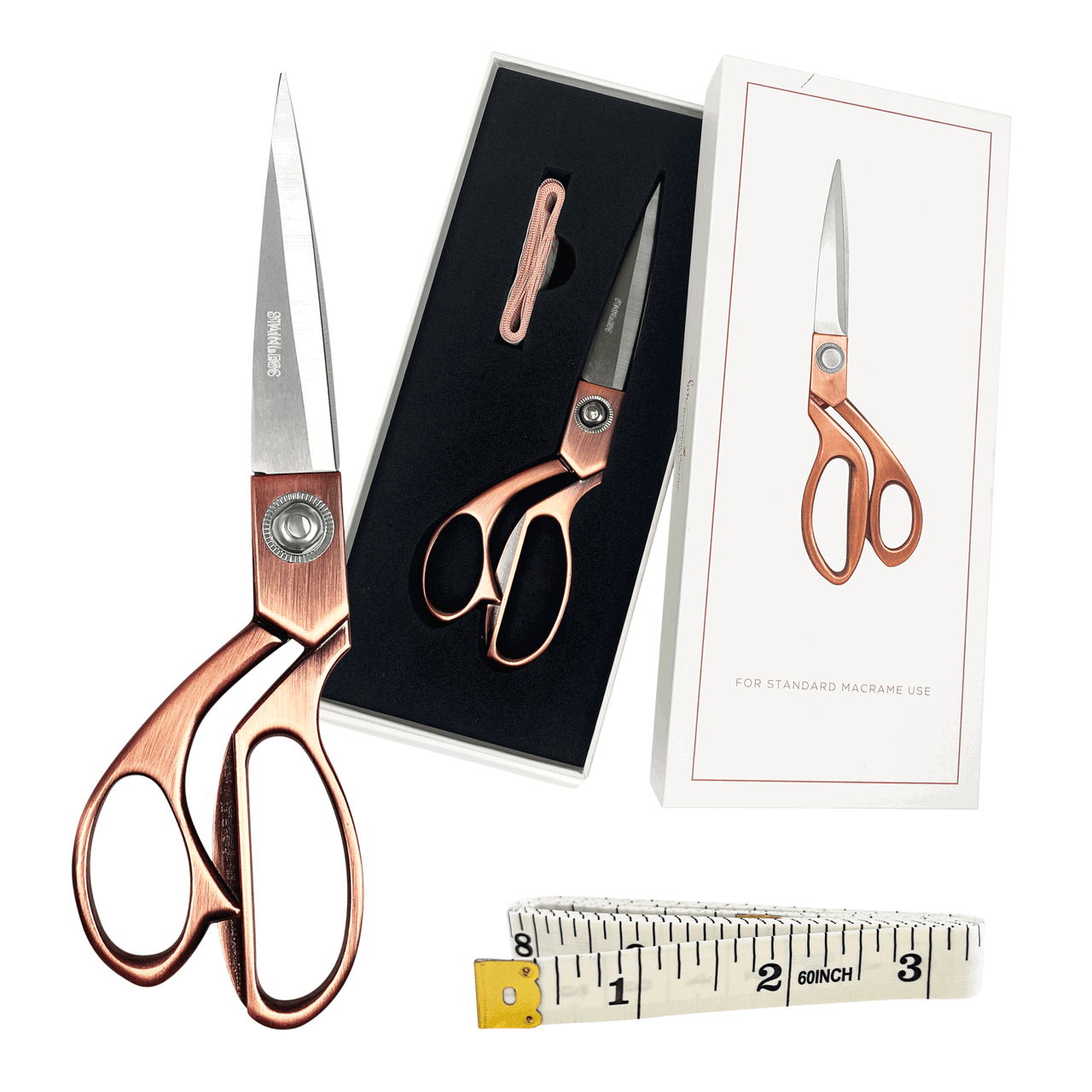
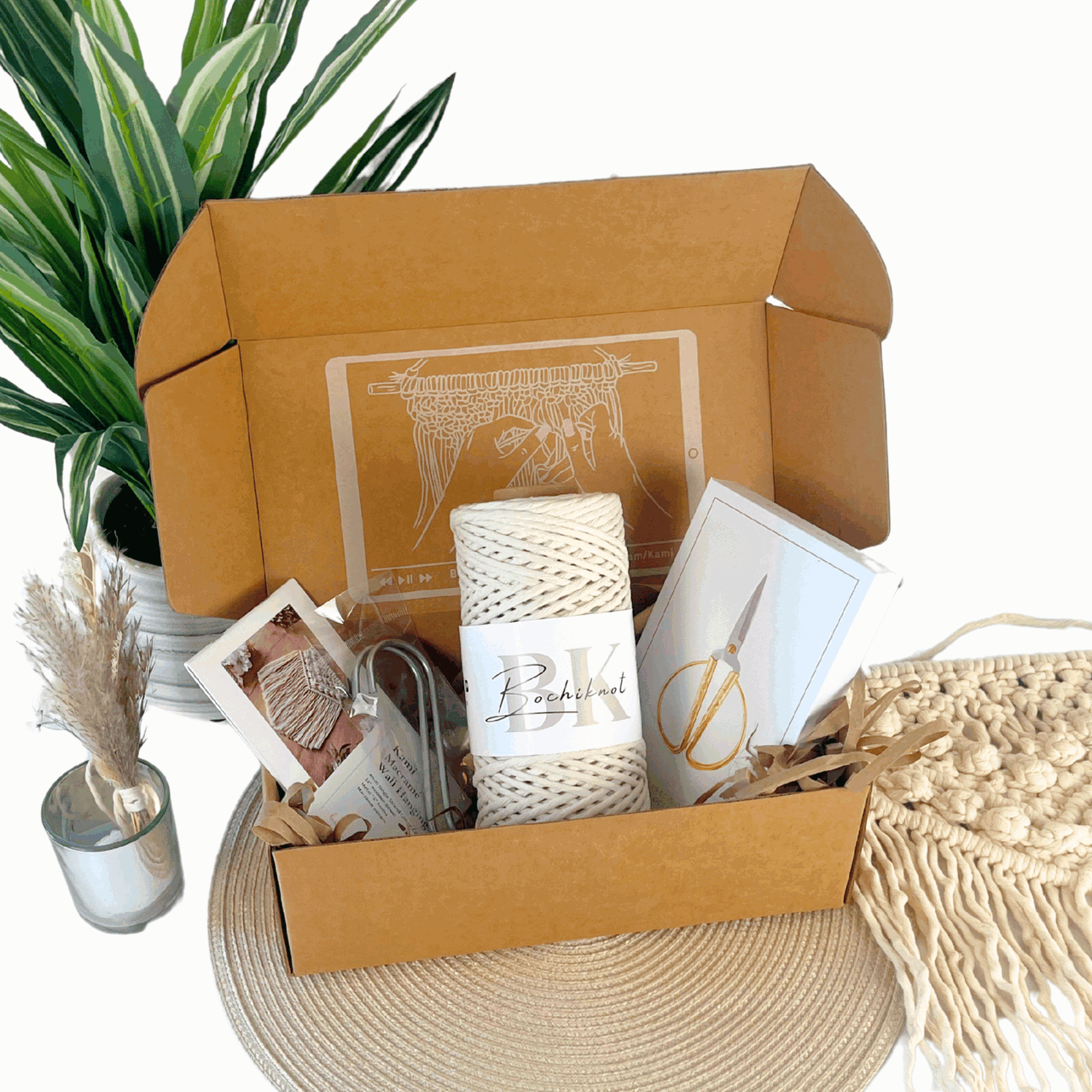
- Gold precision scissors — for clean cord cuts on the macramé toys
- Macramé measuring tape — for accurate cord lengths on the toys
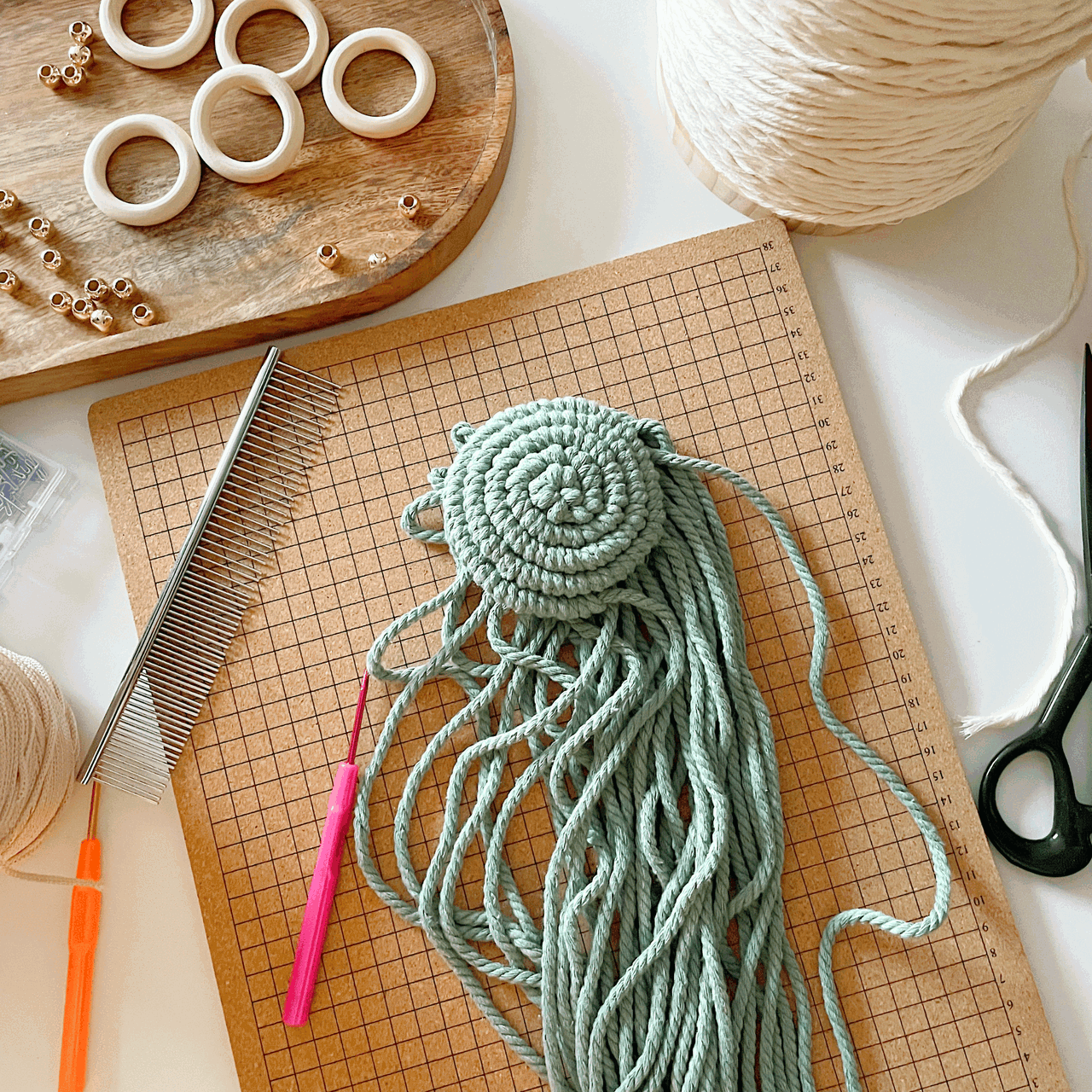
- Metal comb — for fluffing any fringe on the teether toys
Woodworking Tools
- Saw (handsaw or miter saw) — for cutting the 20° angle, OR have the hardware store cut it
- Drill with appropriate-sized bits (for pilot holes + 2.5" screws + small dowel screws)
- Painter's tape (for masking the painted lower portion)
- Paintbrush (medium-width, for the acrylic paint)
- Optional: clamps to hold legs while drilling
Wood Cuts and Measurements
| Component | Quantity | Dimension | Notes |
|---|---|---|---|
| Wooden legs (1×2 board) | 4 | 27" long, 0.75" × 1.5" cross-section | Each gets a 20° cut at one end |
| Wooden dowel | 1 | ~24" long, 1" diameter | Trim to match desired gym width (27") |
| Top hole position | 2 per leg | 4.5" from top of leg | For hinging the A-frame with 2.5" screw + washer |
| Bottom hole position | 1 per leg | 10" from bottom of leg | For stabilizer cord |
| Painted accent zone | Bottom 8.5" of each leg | Mask 8.5" up from bottom | Non-toxic acrylic paint only |
How to Make a DIY Macramé Baby Play Gym (Step-by-Step)
Follow the 7 steps below. Each has a photo and clear bullet instructions. If you get stuck on any step, the video at the top of the page walks through every step in real time.
Step 1: Prepare the Legs
- Have four wooden legs cut to length by the hardware store, or cut yourself.
- Mark a 20° angle on one end of each leg. A quick method: measure 0.6" along the longer side from the corner, draw the diagonal, then cut.

Step 2: Drill Holes
- Drill two holes in each leg: one approximately 4.5" from the top, and one about 10" from the bottom. These will be used to attach the dowel and the cord stabilizer.

Step 3: Sand and Round Edges, Then Paint the Leg Ends
- Sand all edges smooth, rounding the corners so there are no sharp surfaces — safety first for little hands.
- Mask off 8.5" from the bottom of each leg using tape, then paint the lower portion with non-toxic acrylic paint. The painted contrast looks modern and keeps things baby-friendly.

Step 4: Prep the Dowel and Assemble the Side Frames
- Drill small pilot holes centered at each end of the dowel to make screwing easier later.
- Pair legs with opposite-angled ends so that when opened, they sit flat on the floor.
- Align the top holes, place the inner legs facing the same way, then insert one 2.5" screw + washer through the top hole to hinge the pair. Repeat for the other pair.


Step 5: Add Macramé Toys and Attach the Dowel
- Slide your macramé teether toys onto the dowel before attaching it to the side frames.
- Line the dowel up with the top holes of each side frame, then secure it with the screws through the pre-drilled dowel ends. Use a handheld or electric drill for a snug fit.

Step 6: Stabilize the Base With a Cord
- Open the frame to your desired height. Take a 20" strand of cord and weave it through the bottom holes on the legs to hold that spread.
- Pro tip: loop fishing line around the cord and pull the fishing line through the hole first — it makes threading thicker cord or beads much easier.
- Tie double overhand knots on the outside faces of the legs to lock the height in place. Repeat for the other side.

Step 7: Final Checks
- Make sure the dowel is secure and that macramé toys hang vertically at baby-friendly lengths (8"–9").
- Test stability by gently pressing on the frame and checking knots and screws.

Baby-Proofing & Safety Checklist
Before letting your baby use the finished play gym, run through this checklist:
- All paint is non-toxic. Use paints labeled "baby-safe," "non-toxic," or AP-certified. Check the label.
- All surfaces are smooth. Run your hand along every edge and corner. No splinters, no rough spots.
- All screws are tight. Tighten the hinge screws and dowel screws fully. Re-check weekly during use — wooden joints can loosen over time.
- Cord lengths are appropriate. The macramé toys should hang at 8"–9" from the dowel — short enough that baby can reach them, but never long enough to wrap around the neck.
- No detachable small parts. Beads on the toys should be securely knotted in place. Test by gently pulling.
- Play surface is soft. Place the gym over a thick play mat or padded blanket, never over hardwood or tile without padding.
- Frame is stable. Press down on the dowel firmly. The legs should not splay outward or tip.
- Inspect periodically. Once a week, run through this checklist again. Wooden joints loosen, cords stretch, paint can chip.
About the Macramé Teether Toys
The macramé teether toys are the heart of this project. They should be made with baby-safe materials:
- Untreated wooden rings (no varnish, no synthetic coatings) — see our non-cord products collection
- Non-toxic finishes only (food-grade beeswax is great if you want any finish)
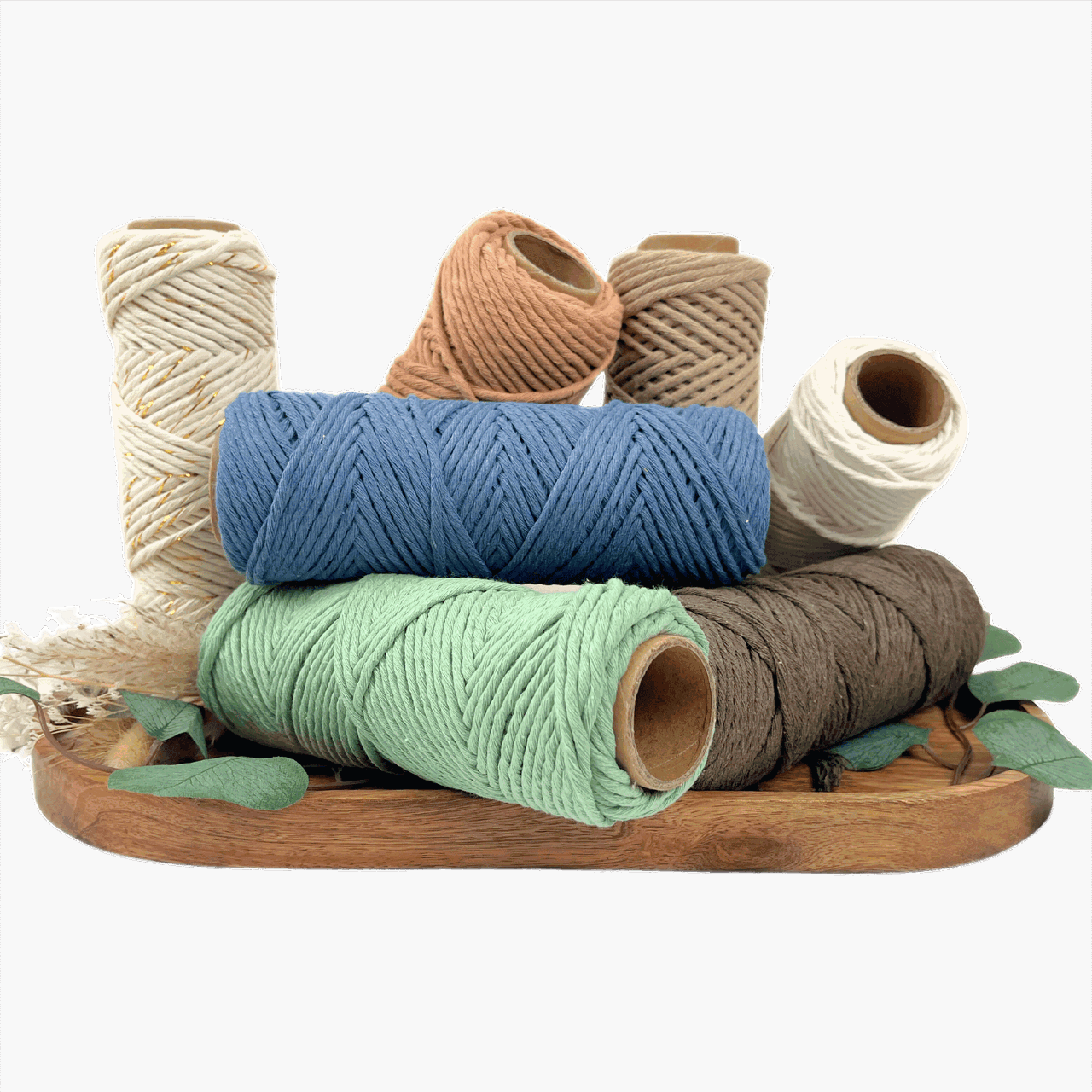
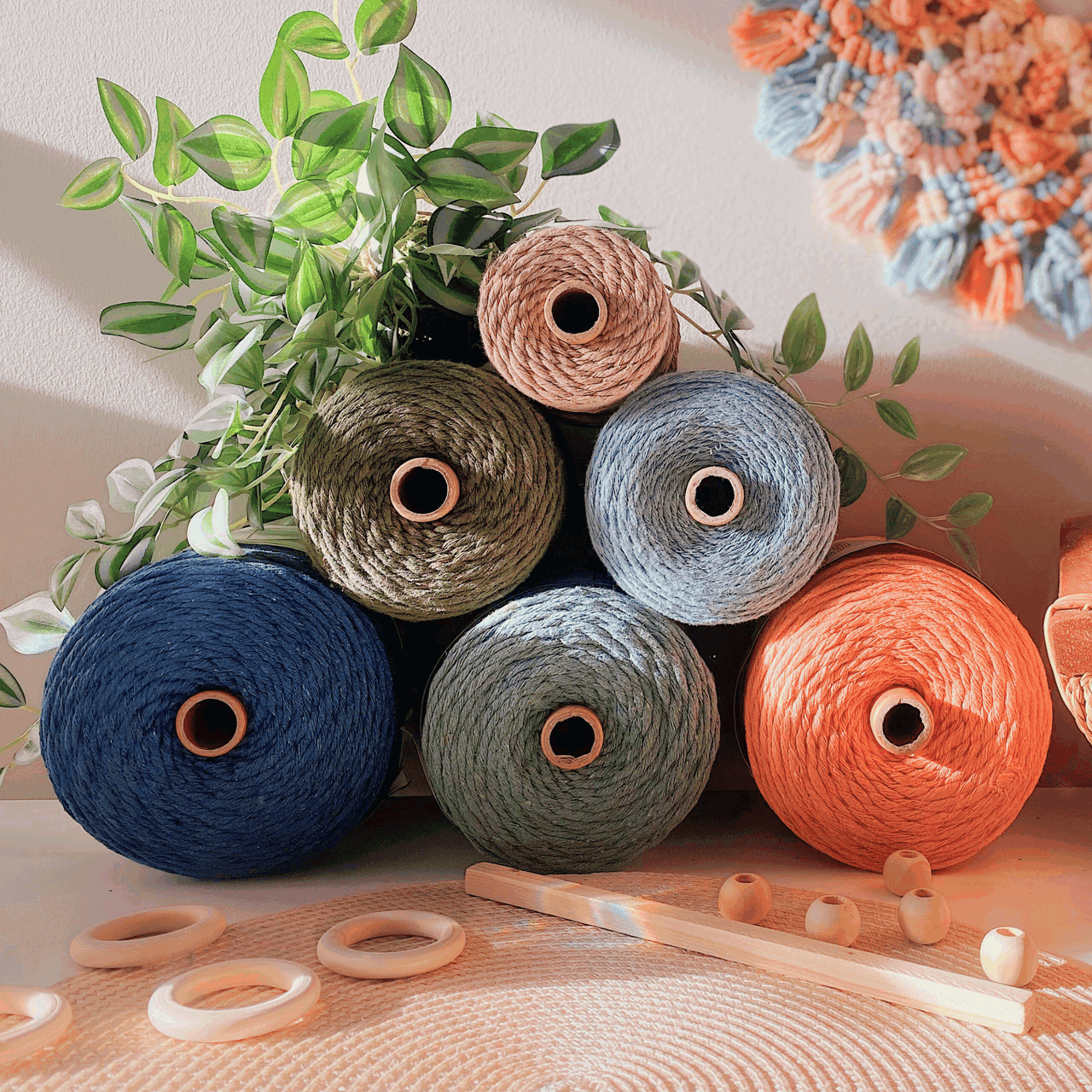
- 100% natural cotton cord in 3 mm or 4 mm — soft, washable, biodegradable
- No glue, no plastic on any part baby can mouth
If you want to make the toys yourself, follow a dedicated macramé teether tutorial. There's a separate pattern set with four teether designs in the Bochiknot pattern shop. Otherwise, pick premade pieces that meet safety standards (look for CPSC certification).
How Long Does It Take to Build a Macramé Baby Play Gym?
A macramé baby play gym takes 2 to 3 hours from start to finish for a first build. With experience and pre-cut wood, you can complete a second one in about 90 minutes. The slowest sections are the angle cuts (if cutting yourself) and the paint drying time between coats.
| Phase | Time (first try) | Time (with practice) |
|---|---|---|
| Phase 1 — Cut, drill, sand, paint (Steps 1–3) | ~80 min (incl. paint drying) | ~45 min |
| Phase 2 — Build the A-frames (Step 4) | ~25 min | ~15 min |
| Phase 3 — Hang dowel + toys (Step 5) | ~15 min | ~10 min |
| Phase 4 — Stabilize base + final checks (Steps 6–7) | ~20 min | ~15 min |
| Total build time | ~140 min (2 h 20 min) | ~85 min |
How Much Does a Macramé Baby Play Gym Cost to Make?
Total materials cost is approximately $20 for the frame, or $35 with handmade macramé toys included. By comparison, boutique wooden baby gyms sell for $80–$200 — you're saving 70–90% by making it yourself.
| Material | Quantity | Estimated cost |
|---|---|---|
| 1×2 pine board (for 4 legs) | ~6 ft total | ~$5–8 |
| 1" wooden dowel | 1 × 24" | ~$2–3 |
| 2.5" screws + washers | 2 each | ~$1 |
| Small dowel-end screws | 2 | ~$0.50 |
| Non-toxic acrylic paint | 1 small jar | ~$3–5 |
| Sandpaper | 2 grits | ~$2 |
| Stabilizer cord (4 mm cotton, 20") | ~50 cm | ~$0.50 |
| Frame total | ~$15–20 | |
| + 3 to 5 macramé teether toys (if making from scratch) | +$10–15 | |
| Total with toys | ~$25–35 |
Pro Tips & Troubleshooting
- Let the hardware store cut the angles. Most stores will make 4 cuts for free or for $1–2. Skip the saw entirely.
- Match leg angles before drilling. Place the 4 legs side by side and check that opposite-angled pairs are mirrored. Drilling holes on misaligned pairs is the hardest mistake to fix.
- Pre-drill every screw hole. The hardwood and dowel will crack if you screw without pre-drilling.
- Round the corners aggressively. Sharp 90° corners aren't baby-safe. Sand each top corner into a soft 1/4" radius.
- Use painter's tape for clean paint lines. Press the tape edge firmly with a fingernail before painting to prevent bleed.
- Two thin coats > one thick coat. Paint dries faster and looks cleaner with two thin coats than one thick one.
- Test stability before letting baby use it. Press down on the dowel and rock the frame side-to-side. If it wobbles, tighten the hinge screws or shorten the base cord to narrow the leg spread.
- Use fishing line for threading. If your cord is too thick for the bottom holes, use fishing line as a pull-through helper.
Variations & Styling Ideas

Classic Natural Wood
Unpainted, just sanded smooth — minimalist Scandi nursery vibe
White-Dipped Legs
Bottom 8.5" in white — the classic Bochiknot look in the tutorial
Sage Green Accent
Bottom 8.5" in sage green — pairs beautifully with botanical nurseries
Two-Toned Legs
Top half natural, bottom half a soft pastel for a gender-neutral nursery
Mini Travel Version
Cut legs to 18" instead of 27" for a portable play gym
Convertible Mobile Stand
Same frame; replace teether toys with a single hanging crib mobile
Macramé Baby Play Gym FAQ
Do I need advanced woodworking skills to build this baby play gym?
No. Basic cuts and drilled holes are all that's required. Have your local hardware store cut and pre-drill if you prefer to avoid saw work. If you do cut yourself, take your time and use proper safety gear (safety glasses, dust mask).
What kind of cord is best for the macramé baby toys and stabilizer?
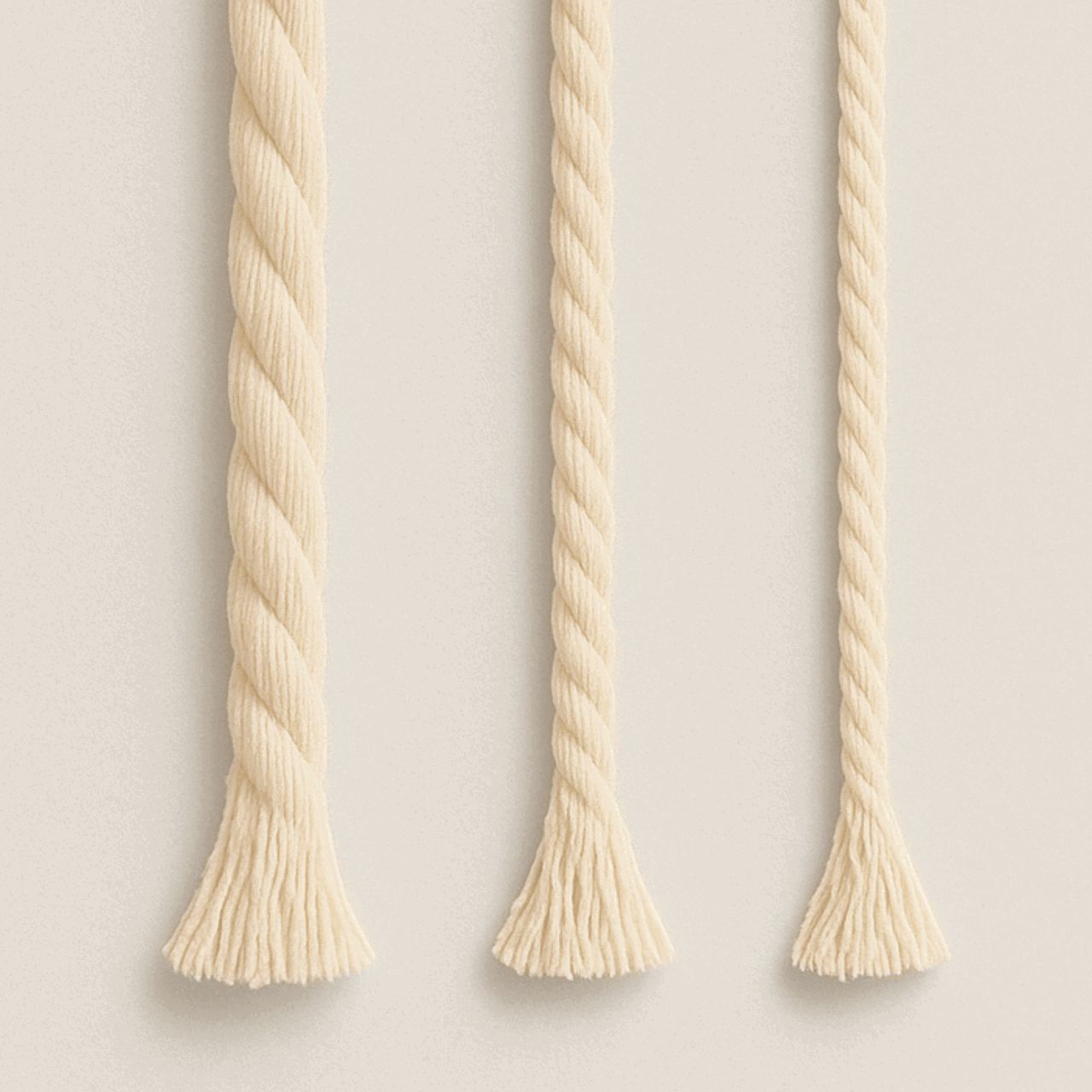
A three-ply single-strand cotton cord works well for macramé baby pieces; it's soft, natural, and easy to knot. For the bottom stabilizer, any sturdy cotton cord or drawcord will work. Use 100% natural cotton — no synthetic fibers, no acrylic.
Can the macramé toys be removed and used separately?
Yes — one of the advantages of this design is that the macramé toys slide on the dowel and can be used independently as baby teethers or sensory toys.
How long will the paint and finish last with regular use?
Non-toxic acrylic paint is durable, but regular play can cause wear. Check the painted areas periodically and touch up as needed. Always keep surfaces clean and dry.
What age is a macramé baby play gym appropriate for?
This style of play gym is best suited for babies from 0 to 6 months. Newborns benefit from visual tracking; 2–4 month olds reach and bat at the toys; 4–6 month olds practice grasping and pulling. Once baby starts sitting up reliably (around 6 months), they outgrow the lying-under format.
Is a macramé baby play gym Montessori-friendly?
Yes. The natural materials, simple visual contrast, lack of electronic noise or batteries, and one-toy-at-a-time setup align with Montessori principles for infant play. Some Montessori practitioners recommend rotating just one or two toys at a time rather than displaying all of them.
How much weight can the play gym hold?
The hanging macramé toys themselves should never exceed about 4 ounces each. The frame is not designed to hold the baby's weight — never let baby pull up on the dowel.
How big should the finished play gym be?
The standard dimensions used in this tutorial are 27 inches wide × 24 inches tall. This works for most babies up to 6 months. For a larger or longer-lasting gym, scale to 32 inches wide and 28 inches tall.
Can I make this play gym as a baby shower gift?
Absolutely — a handmade macramé baby play gym is one of the most-photographed handmade baby shower gifts on Instagram. Pair it with a folded muslin swaddle, a wooden teether, and a card explaining the materials. Total gift value: $80–$150 retail equivalent; total cost to you: about $35.
Is this play gym safe for babies who chew on everything?
Yes, as long as the macramé teether toys are made with baby-safe materials: untreated wooden rings, non-toxic finishes, 100% natural cotton cord, no glue, no detachable small parts. Always supervise during use and re-check the toys for wear weekly.
Can I sell macramé baby play gyms I make from this tutorial?
Yes. The finished play gyms you make are yours to sell. You may not copy or republish the tutorial itself, but products you make from your knowledge are completely yours. Handmade wooden baby gyms typically sell for $80–$150 on Etsy.
What's the easiest part of this project?
The hardware-store cuts and drilling. If you have the wood pre-cut by the store and use a basic drill at home, you can complete the whole project in a single afternoon.

Your Next Macramé Baby Project


DIY Macramé Baby Teether
Soft, safe daisy-knot teether — 4 cords + 2 wooden rings, beginner-friendly
Read tutorialKeep Learning with Bochiknot
Patreon Membership
Exclusive patterns, video tutorials, and a private macramé community
Join Patreon
About Nicole Woo
Nicole is the founder of Bochiknot Macramé and has been teaching macramé for over 5 years. She's helped thousands of beginners take their first knot through her tutorials, YouTube channel, Patreon community, and best-selling DIY patterns on Etsy. When she's not knotting, she's photographing every step so you don't have to guess.

Leave a comment