



Complete Guide to Macramé Cord, Tools & Materials

Updated June 2026 · 10 min read
Trusted by 100,000+ on YouTube · 100,000+ on Instagram · 40,000+ Facebook community · 20,000+ on Pinterest · 10,000+ email subscribers
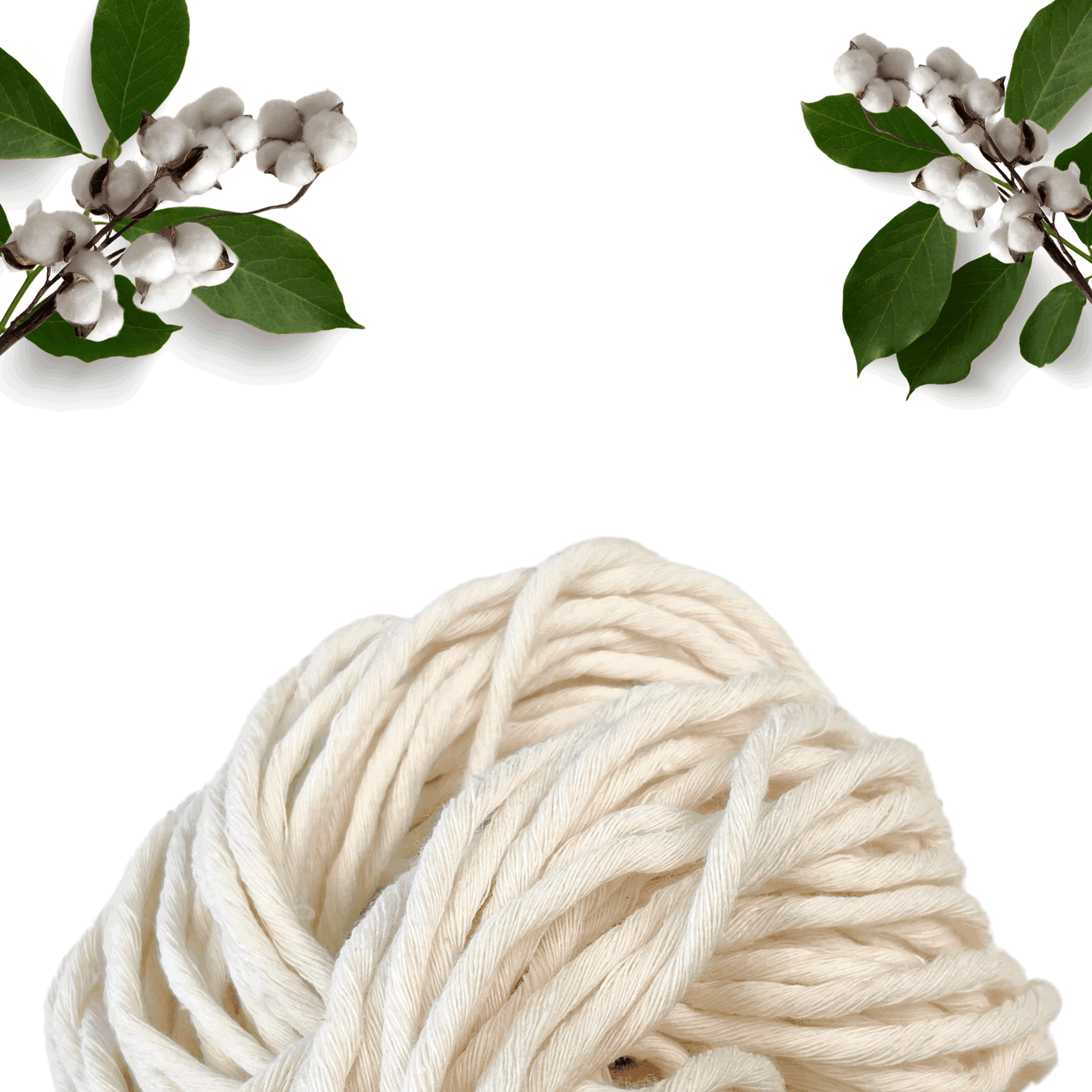
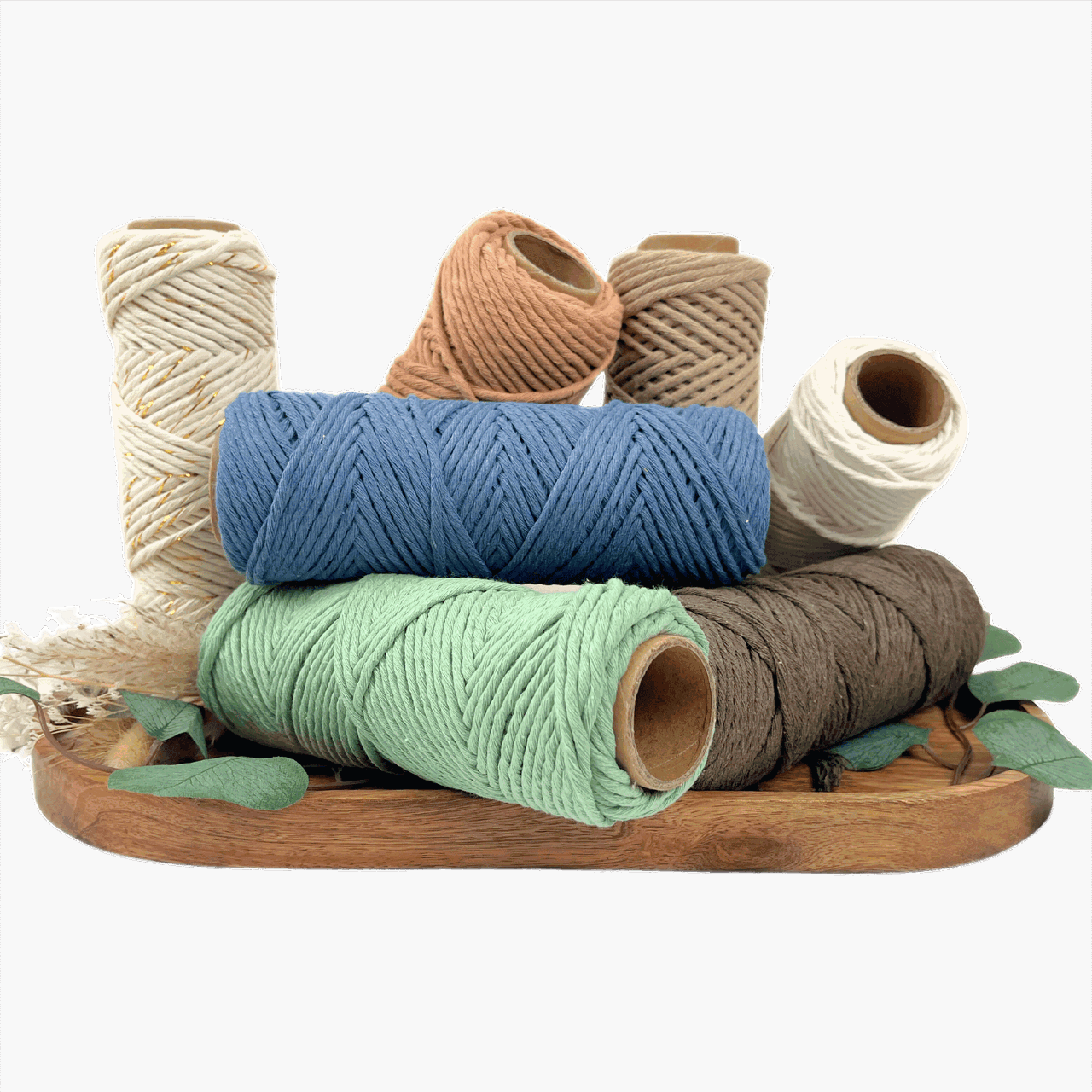
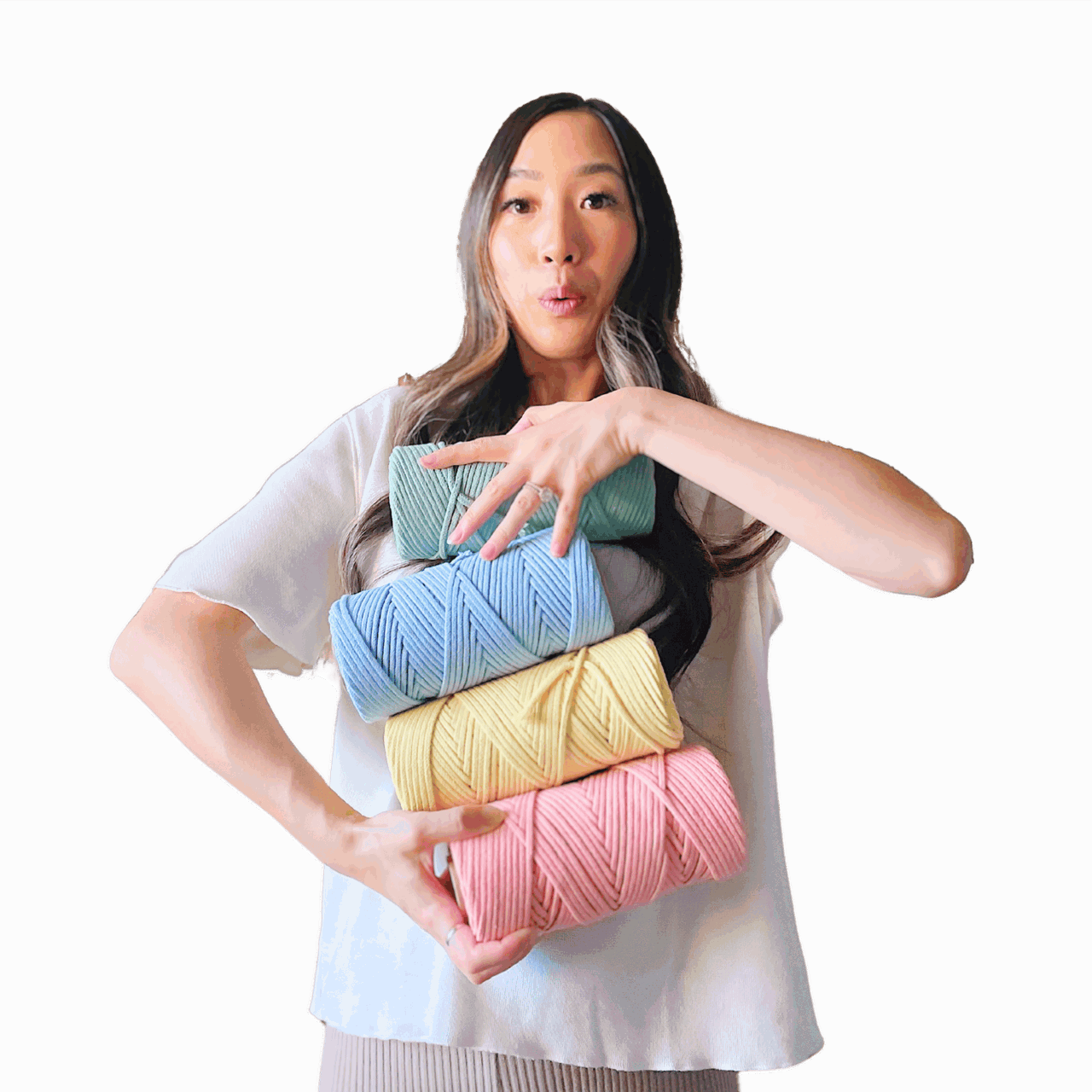
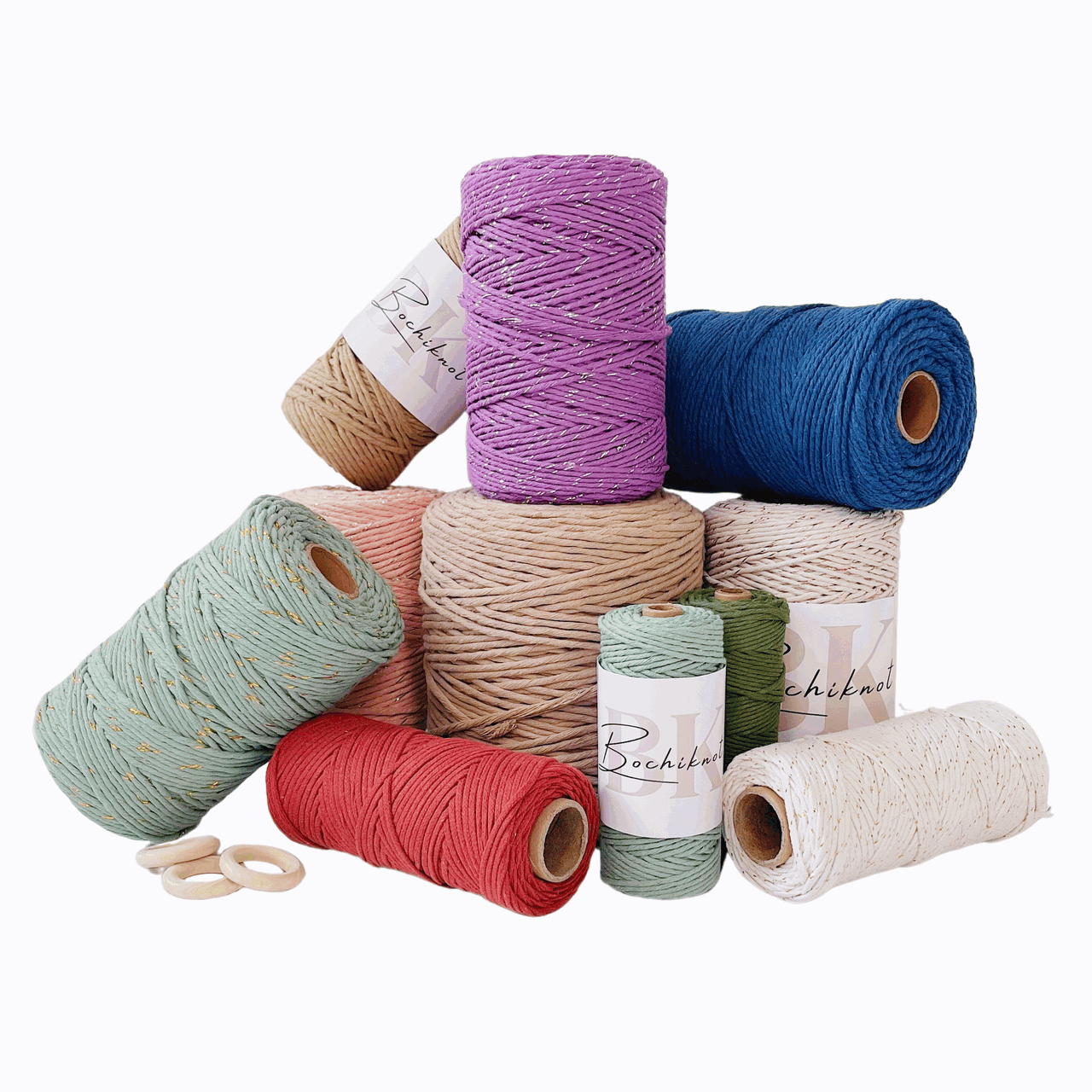
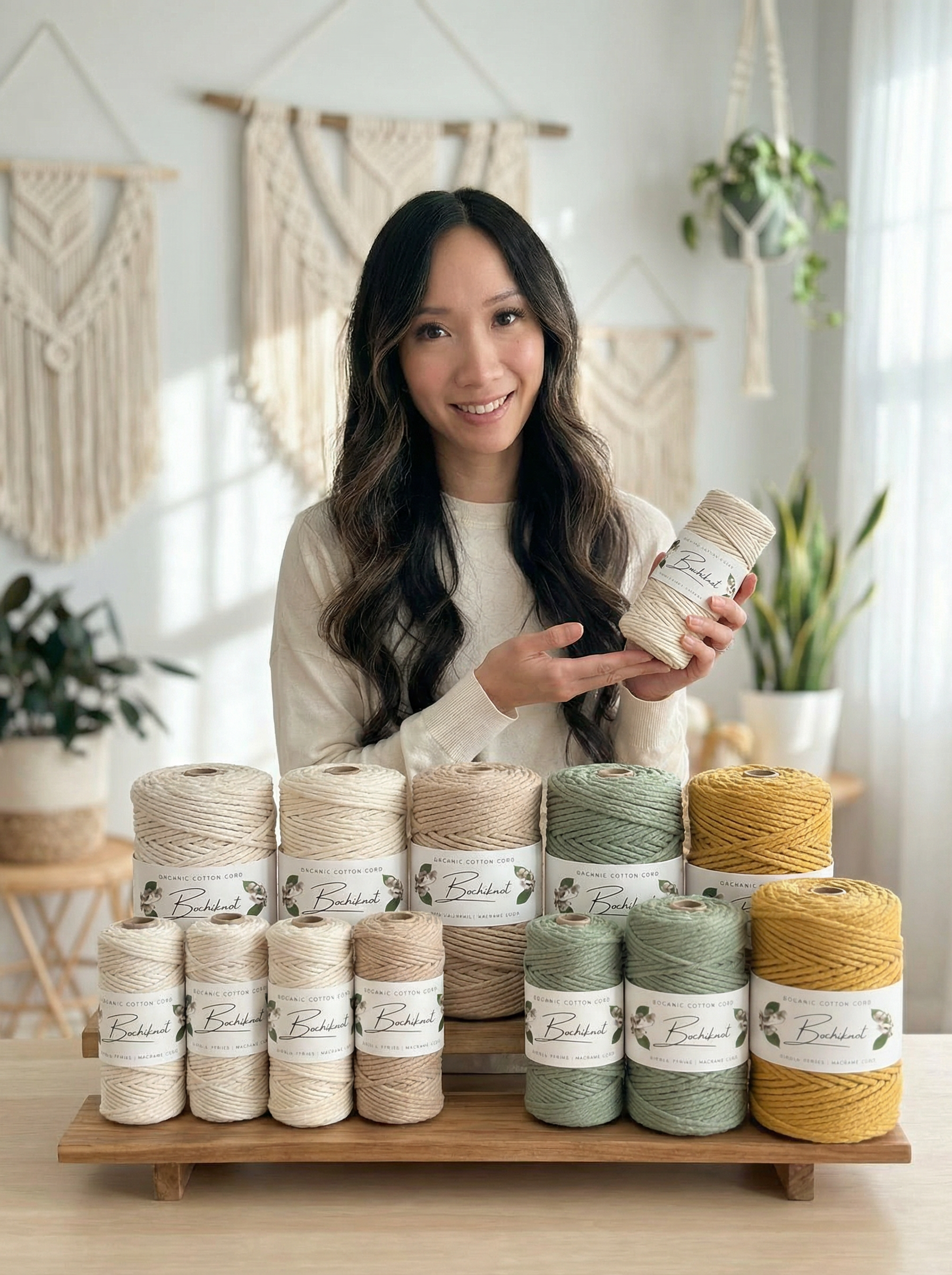
Macramé cord (also called macramé rope or macramé string) is the cotton or natural-fibre cord used to tie the knots in macramé projects like wall hangings, plant hangers, bags, and keychains. It comes in three constructions — single-strand, 3-ply, and braided — and in thicknesses from 1.5mm to 10mm, with 3mm single-strand cotton being the standard beginner choice.
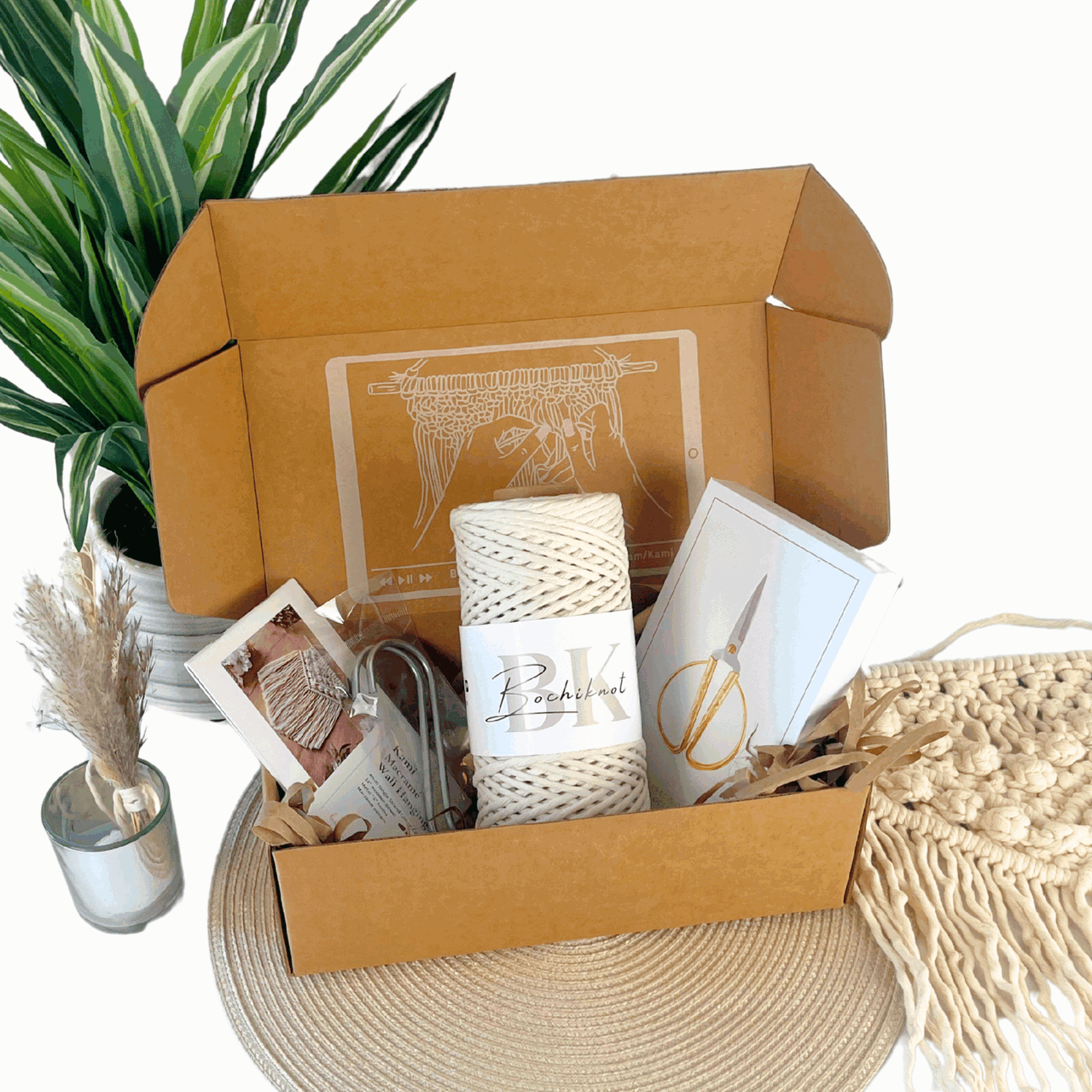
Short on time? The two most popular answers: beginners start with soft single-strand cotton, and the Welcome Kit bundles cord + tools + a first project in one box.
If you've ever stood in front of a macramé supply shelf — or scrolled through pages of cord listings online — and had absolutely no idea which cord to buy, you're not alone. The options are overwhelming: single-strand, 3-ply, braided, 3mm, 5mm, cotton, bamboo, recycled...
This guide breaks it all down. By the end, you'll know exactly which cord, tools, and materials you need for any macramé project — and you'll never waste money on the wrong supplies again.
✨ Beginner tip: If you just want to know what to buy for your first project — skip to the project guide table at the bottom. It'll tell you exactly what cord you need.
▶ Watch the Video Tutorial
Can't see the video? Watch on the Bochiknot YouTube channel — 100,000+ subscribers.
In This Guide

Macramé Cord Types: Single-Strand, 3-Ply & Braided
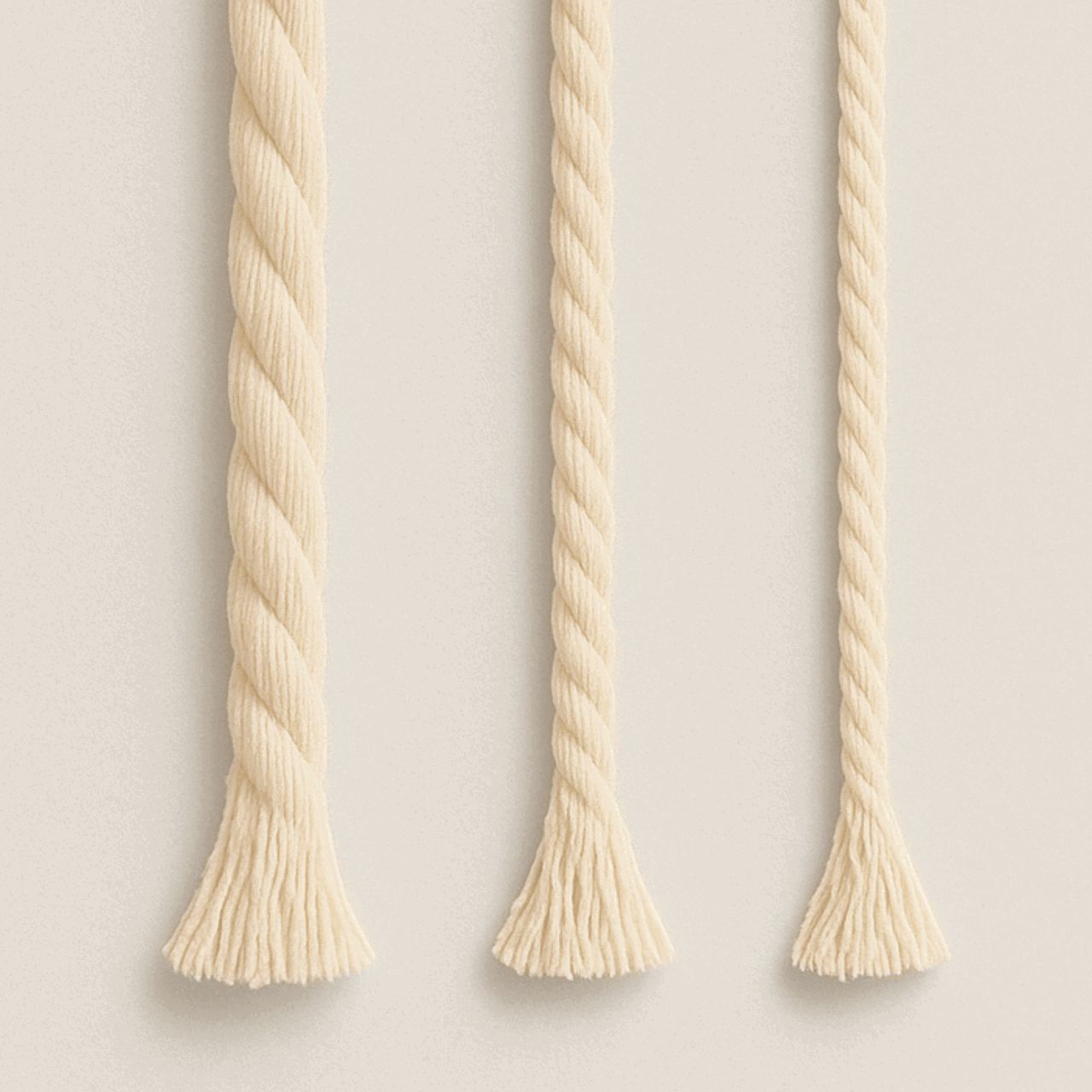
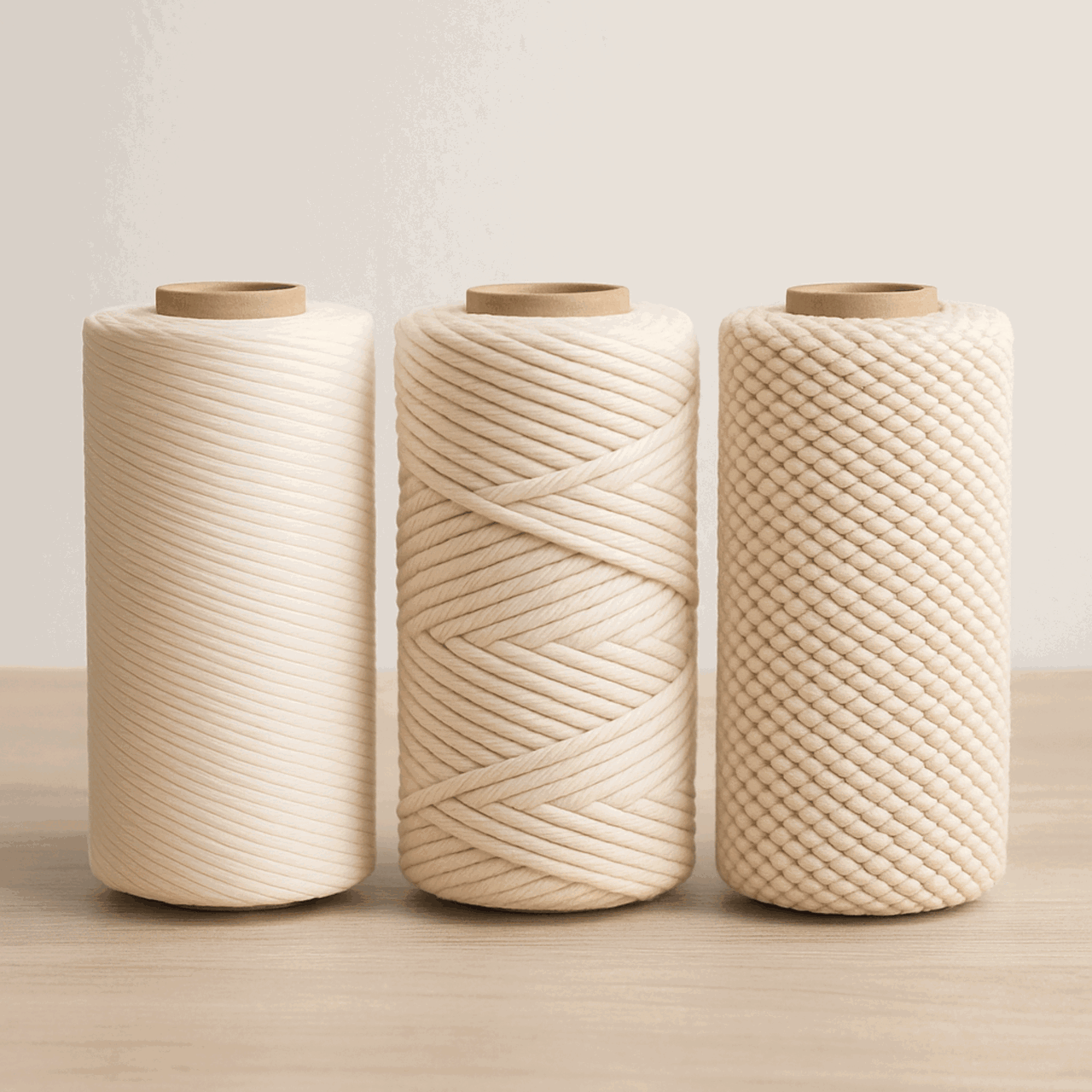
The construction of a cord — how the fibres are twisted or woven together — affects how it knots, how it looks, and how easy it is to work with. There are three main types:
Single-Strand Twisted Cord
Single-strand cord is made of multiple fibres loosely twisted together into one rope. It's the most popular cord type for macramé because:
- It knots easily and holds knot shapes well
- The twist unravels into beautiful, fluffy fringe
- It's soft and forgiving for beginners
- It creates that signature boho macramé texture
Best for: wall hangings, plant hangers, beginner projects, anything with fringe
💡 Pro tip: When you see a macramé piece with fluffy, cloud-like fringe — that's single-strand cord that's been unravelled and brushed with a stiff bristle brush. The cord type makes the fringe; the brush finishes it.
3-Ply / Rope Cord
3-ply cord is made from three individual strands twisted together. This gives it more structure, weight, and durability. It doesn't unravel into fringe as easily, which makes it better for functional pieces.
- Firmer and more structured than single-strand
- Holds its shape in finished pieces
- More resistant to wear and outdoor conditions
- Less fringe-friendly but more project-durable
Best for: plant hangers, bags, outdoor projects, baskets
Braided Cord
Braided cord has a tight, interlocked weave that creates a smooth, firm surface. It produces very clean, defined knots — but it doesn't fray into fringe and can be harder to work with for beginners.
- Creates very clean, sharp knot edges
- Smooth finish, almost rope-like appearance
- Less stretch than twisted cord
- Great for precise, structured projects
Best for: macramé bags, functional accessories, clean-finish décor pieces
Macramé Cord Thickness: Which Size to Choose
Cord thickness is measured in millimetres (mm) and is probably the most important variable in choosing the right cord. Here's a quick guide:
← Scroll to see full table on mobile
| Cord Size | Best For | Skill Level | Project Scale |
|---|---|---|---|
| 1–2mm | Jewelry, earrings, keychains, fine detail work | Any | Small / micro |
| 3mm | Wall hangings, plant hangers, most beginner projects | Beginner–Intermediate | Small–Medium |
| 4mm | Larger wall hangings, plant hangers, bags | Beginner–Intermediate | Medium |
| 5mm | Large statement pieces, outdoor hangers, headboards | Intermediate | Medium–Large |
| 6mm+ | Chunky wall art, room dividers, hammocks | Intermediate–Advanced | Large / oversized |

Not sure where to start? If you're a beginner, 3mm single-strand cotton is the safest first choice. It's versatile, forgiving, and works for almost every beginner project.
→ Shop 3mm macramé cord
→ Shop 4mm macramé cord
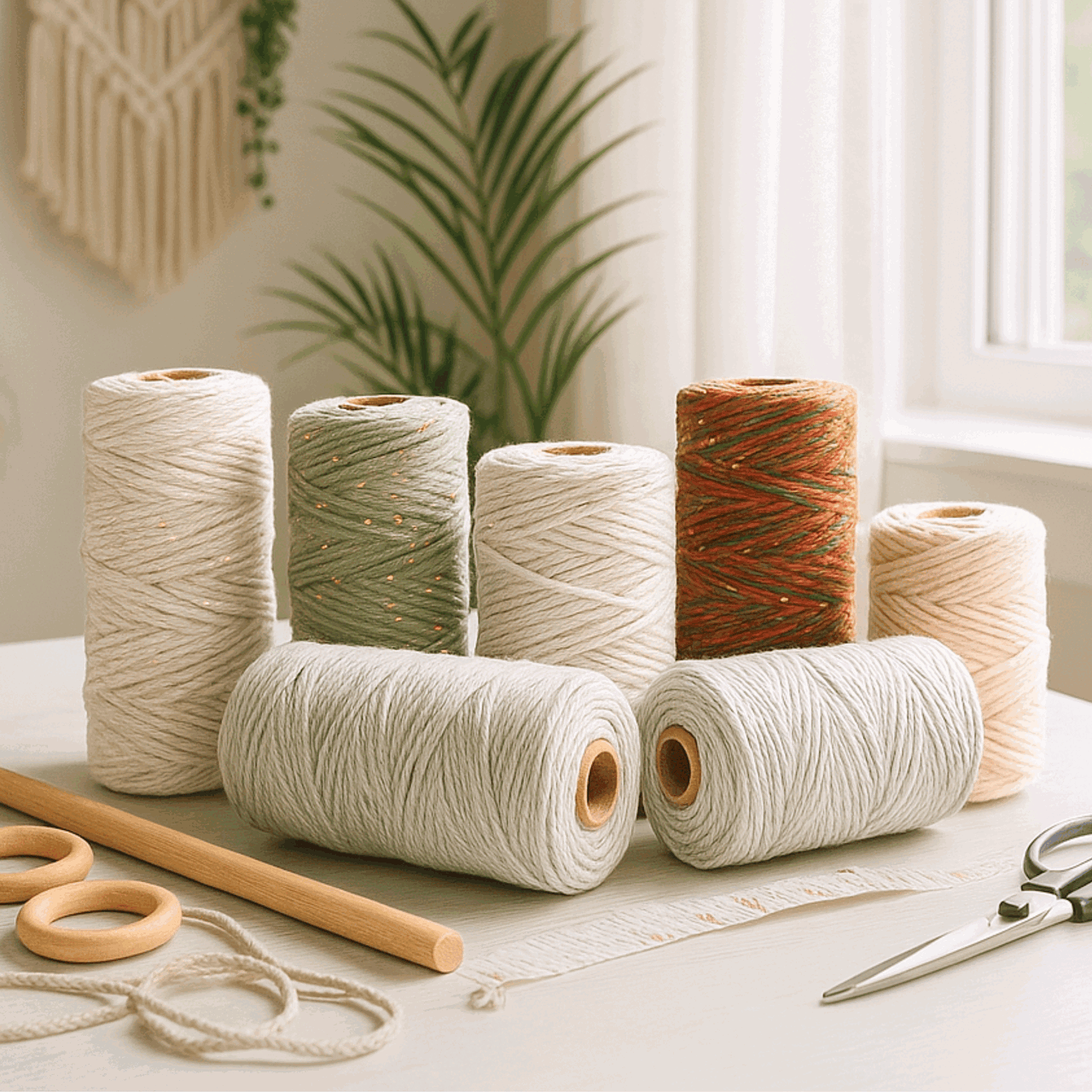
Cord Materials: Cotton, Bamboo, Recycled & More
Beyond construction and thickness, the fibre itself matters. Different materials feel different in your hands, look different in finished pieces, and suit different project types.
Organic Cotton
Identical in performance to standard cotton, but made without synthetic dyes, bleaches, or chemical processing. The natural cream-white colour pairs beautifully with wood, dried botanicals, and neutral home décor. It also takes natural/eco-dyes exceptionally well.
Best for: Eco-conscious crafters, natural-aesthetic home décor, projects with children
→ Shop organic cotton cord
Recycled Cotton
Made from reclaimed cotton fibres, recycled cord gives textile waste a second life. It has a slightly more textured feel that adds artisan character to finished pieces. Same knotting performance, lower environmental footprint.
Best for: Sustainable crafting, gifts with eco-story, studio use
→ Shop recycled cotton cord

Bamboo-Rayon (Lush Line)
Bamboo cord has a silky, lustrous finish unlike any cotton cord. It drapes beautifully and knots with a refined, almost liquid quality. The sheen adds a luxe feel to finished pieces that cotton can't replicate.
Best for: Premium home décor, fashion accessories, wearables, gift-worthy pieces
→ Shop bamboo-rayon cord

Egyptian Giza Cotton (Lush Line)
Egyptian Giza cotton is a long-staple cotton variety — the same fibre used in luxury bed linen. In cord form, it's exceptionally smooth, strong, and soft. You can feel the quality difference in your hands the moment you pick it up.
Best for: High-end finished pieces, detailed knotwork, premium gifts
→ Shop Giza cotton cord
Hemp, Jute & Linen
Natural plant fibres with a rougher texture and rustic aesthetic. Hemp and jute are stiffer than cotton, which makes them less ideal for intricate knotwork but good for chunky, rustic-style pieces. They can be harder on hands during long knotting sessions.
Best for: Rustic décor, outdoor projects, garden-style plant hangers
Metallic & Specialty Cord
Metallic cord blends cotton or synthetic fibres with metallic thread. It adds shimmer and sparkle to pieces — popular for holiday décor, jewelry, and statement pieces.
Best for: Seasonal décor, jewelry, fashion accessories, contemporary wall art
→ Shop metallic cord
👥 Join the community: Share your finished project with 40,000+ crafters in the Bochiknot Facebook Community. Tag us on Instagram @bochiknot — we repost our favourites.

Essential Macramé Tools & Accessories
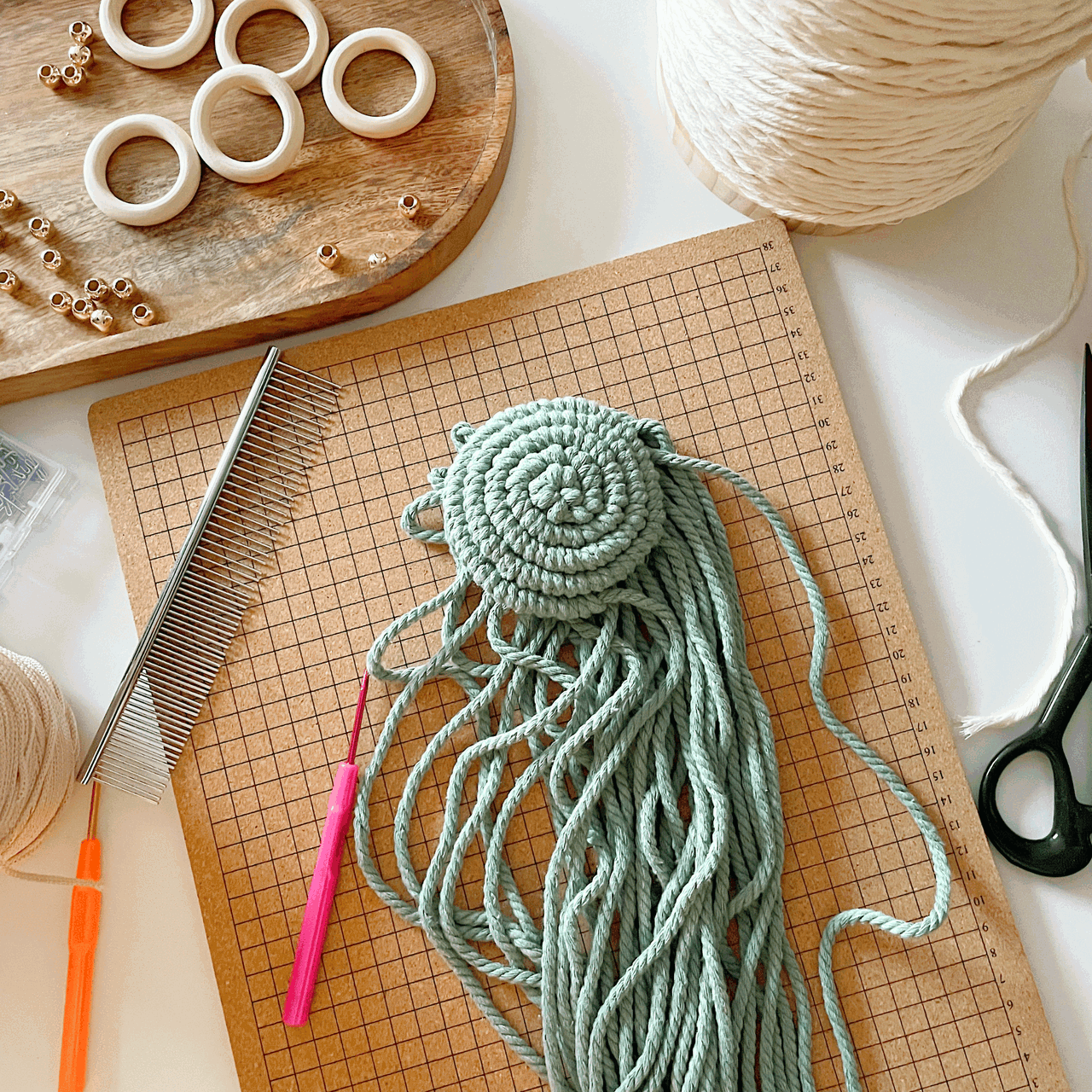
You don't need much to start macramé — the craft is remarkably tool-light. Here's what you actually need (and what's nice to add later):
Must-Have Tools (Start Here)
- Wooden dowel or metal ring — Your mounting point. Most wall hangings use a 12–18" wooden dowel. Plant hangers use a metal ring (2–3").
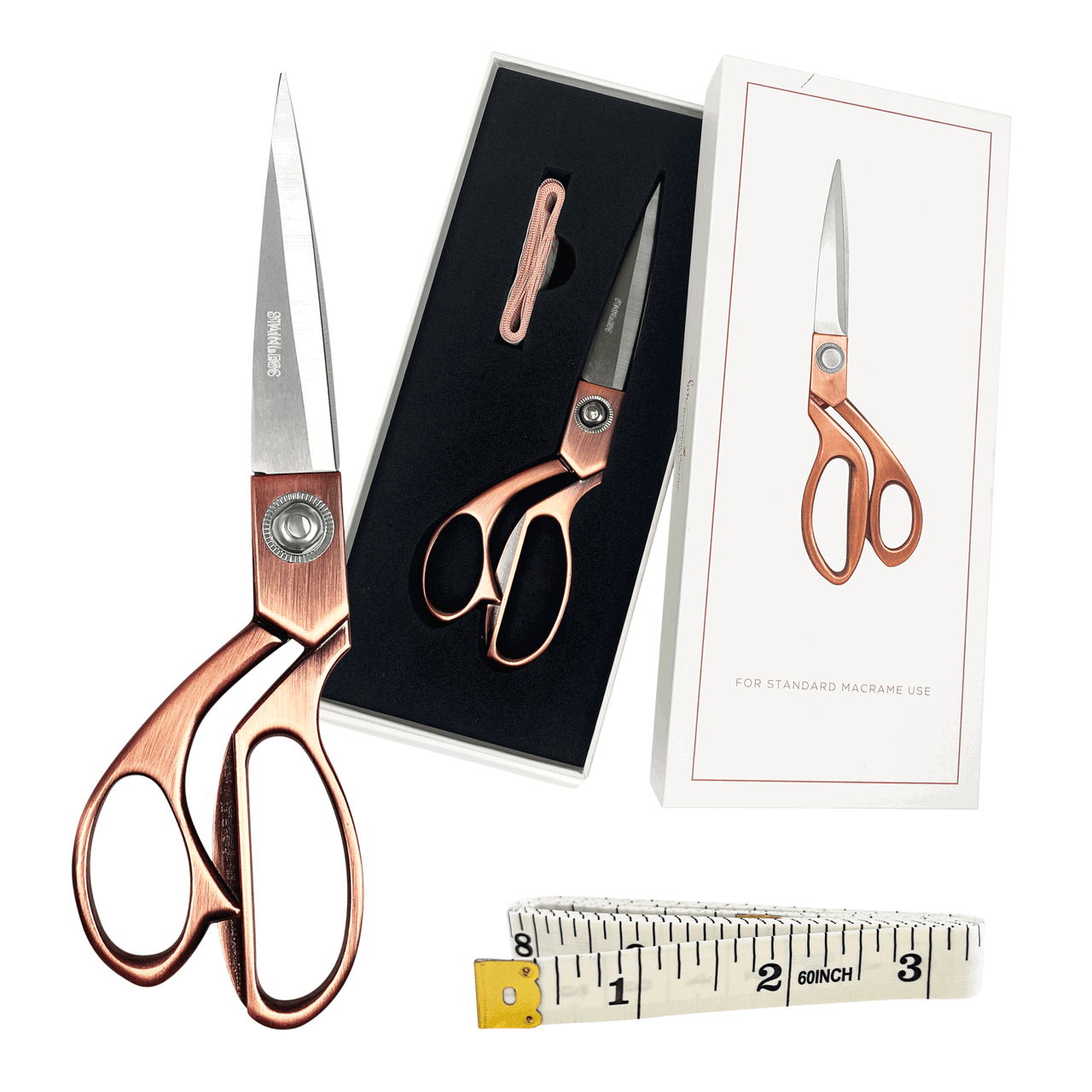
- Scissors — Sharp fabric scissors for clean cuts. Dull scissors crush cord rather than cutting it.
- Measuring tape — A macramé-specific tape that measures in multiples helpful for cord cutting.
- S-hook or hanging rod — Hang your work at eye level while knotting. Trying to work flat on a table is frustrating.
Useful Extras
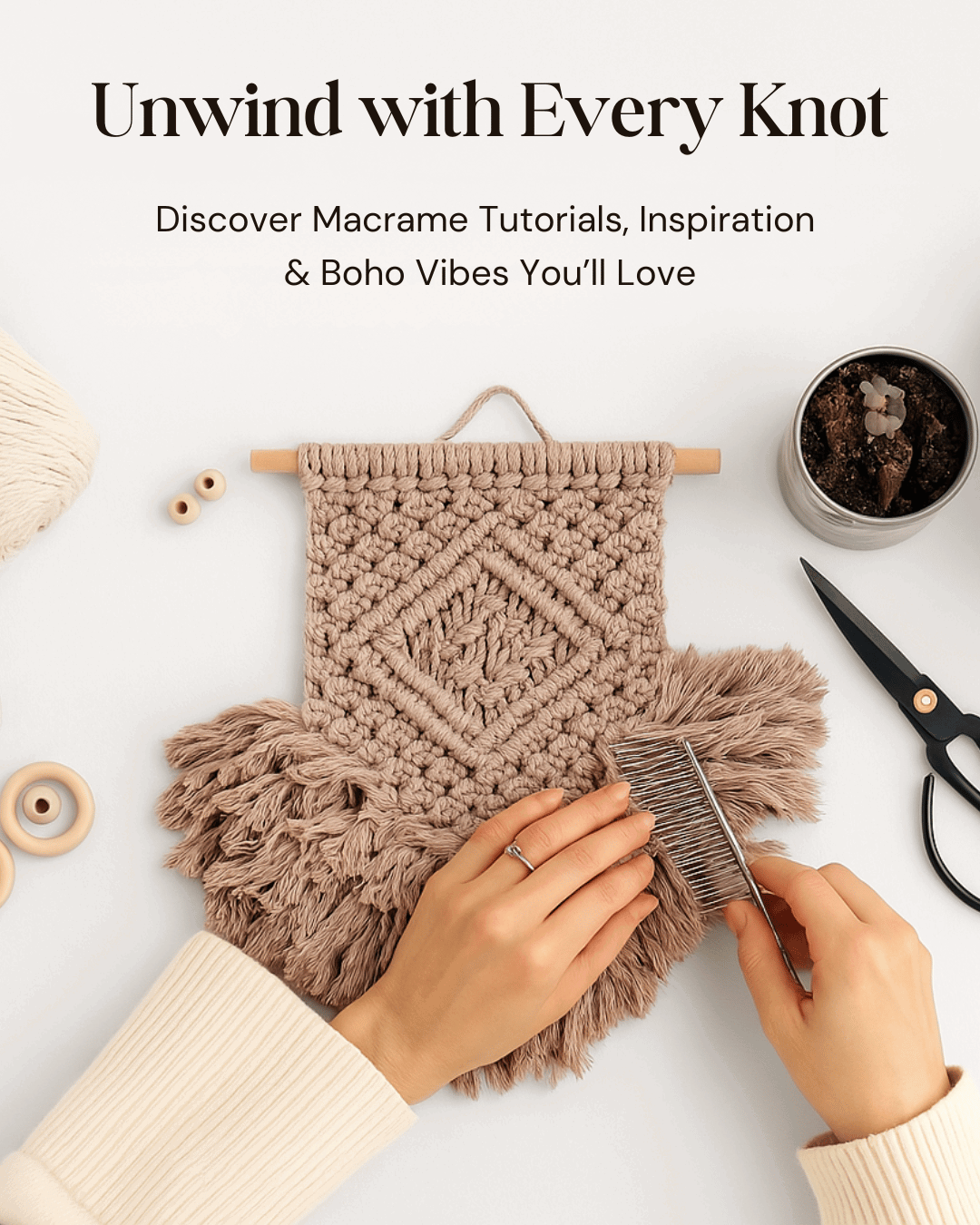
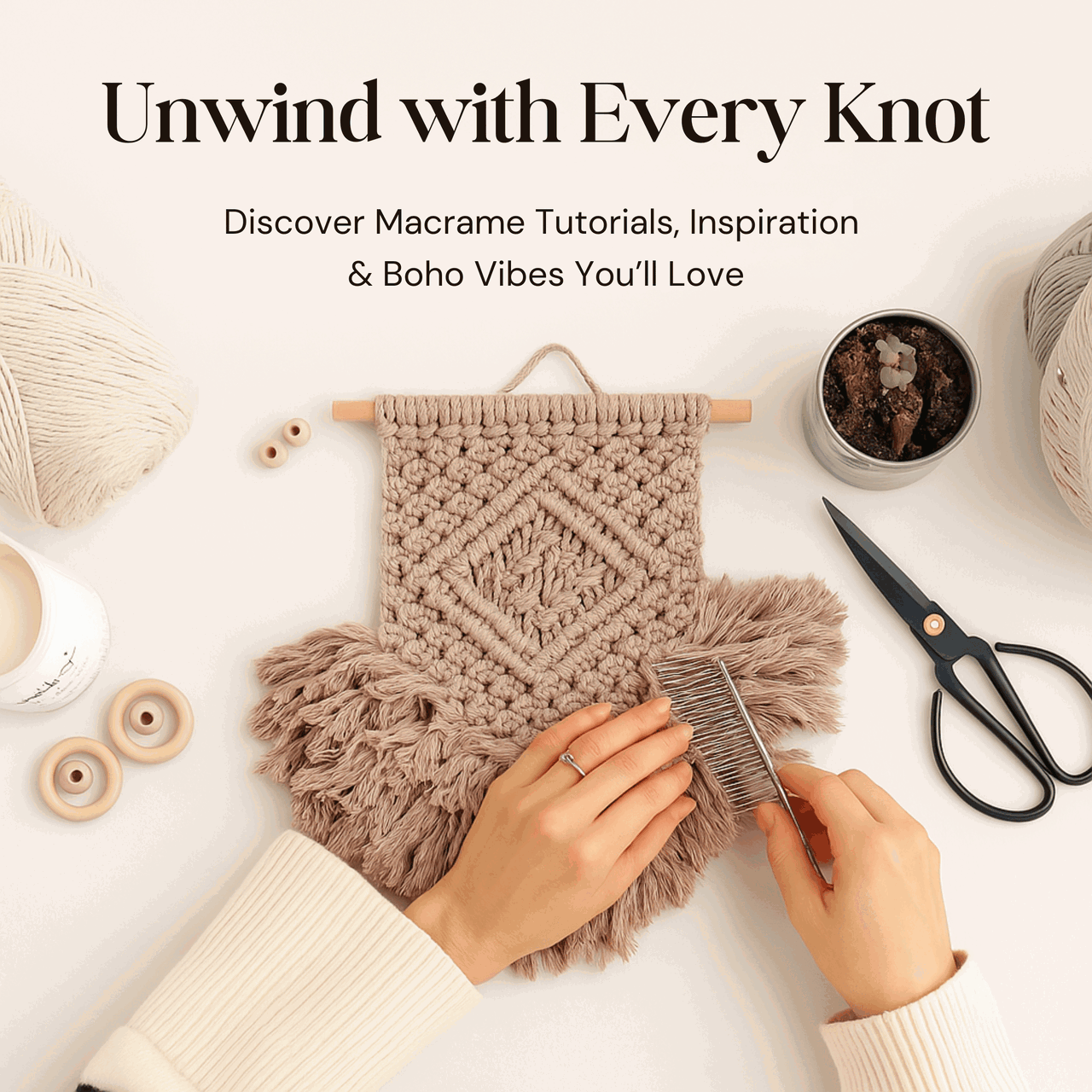
- Fringe comb/brush — The single biggest upgrade to your finished pieces. Brushes unravelled fringe into a fluffy, even finish. Hands just can't achieve the same result.
- Foam mat or knotting board — Pin your work in place while knotting. Useful for jewelry and small-scale pieces.
- Wooden bag handles — For macramé bag projects.
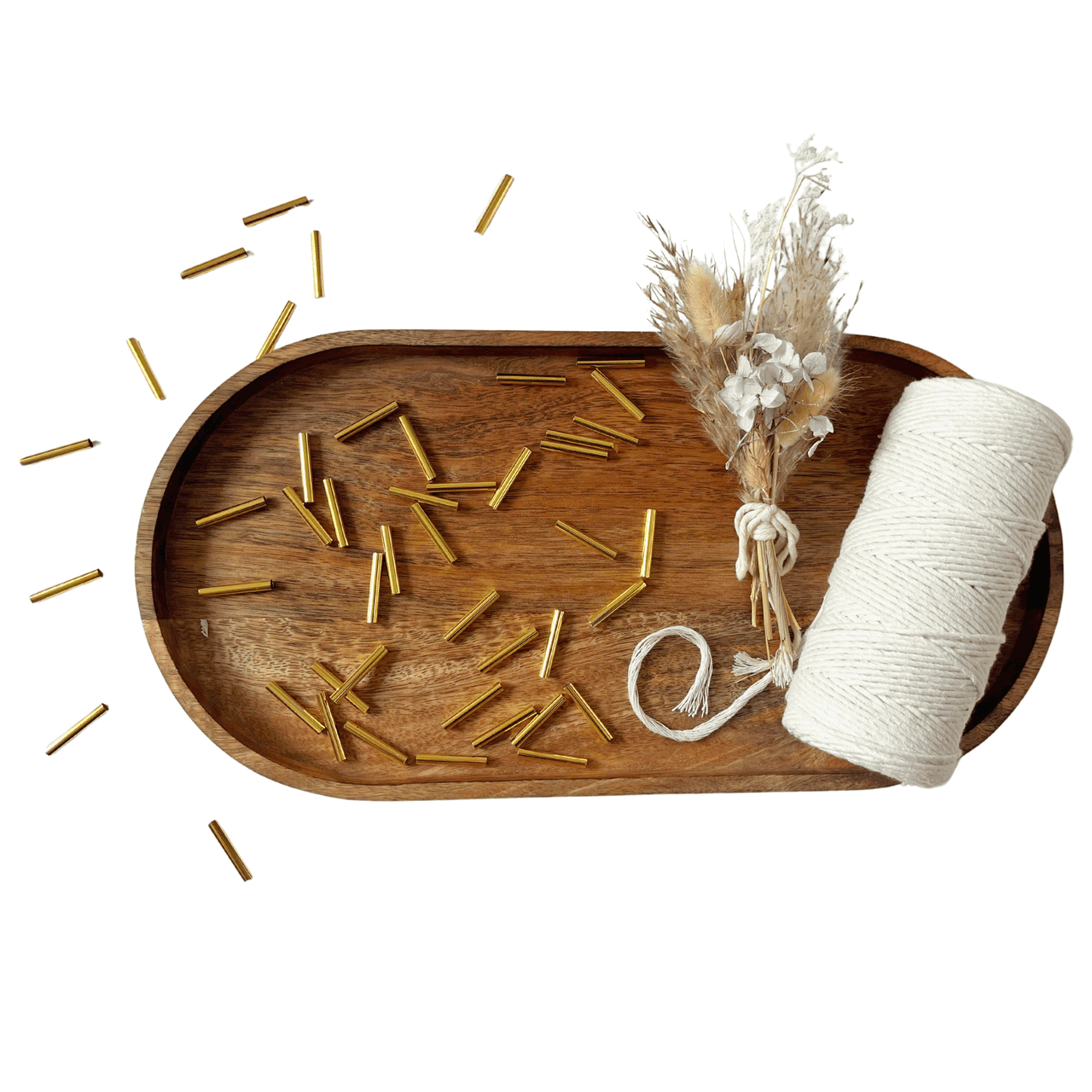
- Decorative wooden beads — Thread onto cords for design accents.
→ Shop all macramé tools & accessories
💡 Pro tip: A fringe brush (also called a pet slicker brush) is the single cheapest upgrade to finished macramé quality. The difference between unbrushed and brushed fringe is dramatic. Don't skip it.
Best Cord for Each Project Type
| Project | Recommended Cord | Why |
|---|---|---|
| Beginner wall hanging | 3mm or 4mm single-strand cotton | Easy to knot, great for fringe, very forgiving |
| Large wall hanging | 5mm single-strand cotton | Works up faster, creates bold visual impact |
| Plant hanger | 3mm or 4mm 3-ply cotton | Stronger structure to hold pot weight |
| Macramé bag | 3mm or 4mm braided or 3-ply | Firm, structured fabric that holds its shape |
| Jewelry / earrings | 1mm or 2mm cotton string | Fine enough for intricate detail work |
| Holiday décor | 3mm metallic blend | Adds shimmer for seasonal aesthetic |
| Premium / gift piece | Lush bamboo or Giza cotton | Noticeably higher quality look and feel |
| Eco-conscious project | Recycled or organic cotton | Sustainable materials, same performance |
Skip the guesswork — everything's included
Cord, dowel, pattern & video tutorial in one box. No experience needed.
Shop Starter Kits →Also available on Amazon.com and Amazon.ca with Prime shipping.
Get 10% Off Your First Order
Join 10,000+ crafters. Free tutorials, new patterns & exclusive offers — straight to your inbox. No spam, unsubscribe any time.
We respect your inbox. Unsubscribe any time.
Keep learning: go deeper on cord
Frequently Asked Questions
What is the best cord for macramé beginners?
3mm single-strand natural cotton is the best starting cord for beginners. It's soft enough to work with for hours, knots cleanly, frays beautifully for fringe, and is forgiving when you make mistakes. A 100m roll is enough for most beginner wall hangings or plant hangers.
What's the difference between macramé cord and macramé rope?
These terms are often used interchangeably, but technically: "cord" usually refers to single-strand or lightly twisted fibres, while "rope" refers to thicker, multi-ply twisted fibres. In practice, the construction (single-strand, 3-ply, braided) and thickness (mm) matter more than the label.
How much cord do I need for a wall hanging?
A general rule: cut each cord 4× the finished length of the piece, then double it (since you fold it in half to mount). For a 60cm wall hanging, cut cords to about 5 metres each. Most beginner patterns need 20–30 cords, so roughly 100–150m per project. Our 100m rolls are designed to complete most standard projects.
Can I use regular rope or twine instead of macramé cord?
You can, but it won't produce the same results. Craft store twine is usually too stiff or too rough for comfortable knotting. Macramé cord is specifically spun for softness, consistent tension, and how it knots and frays. Using the wrong cord is one of the most common reasons beginner projects don't turn out as expected.
Is cotton or jute better for macramé?
Cotton is better for most projects. It's softer, more flexible, easier on hands, and produces cleaner fringe. Jute has a rougher texture and rustic look that suits outdoor or garden-style projects — but it's harder to work with for beginners and can be harsh on hands during long sessions.
How do I stop macramé cord from unravelling?
Wrap the cut end with a small piece of masking tape before you start knotting. Remove the tape when you're done. For finished pieces, you can secure cord ends with a small dot of fabric glue or tie an overhand knot.
What tools do I need to start macramé?
Just three things: sharp scissors, something to mount your work on (a wooden dowel, ring, or hook), and tape or a clipboard to hold small projects steady. A fringe comb and measuring tape join the list quickly after that. The Macramé Welcome Kit bundles the essentials with cord in one box.
What is the difference between single-strand and 3-ply macramé cord?
Single-strand cord is one softly twisted strand — smooth knots, easy to work, and it brushes out into silky fringe. 3-ply cord is three strands twisted together — stronger, more textured, with crisp knot definition that holds its shape. Choose single-strand for fringe-heavy pieces and 3-ply for structured, durable work.
Is recycled cotton cord good for macramé?
Yes — recycled cotton knots almost identically to conventional cotton and is the easiest eco-friendly swap. It's made from reclaimed fibre, comes in rich colours, and works for wall hangings, plant hangers, and bags alike. Expect slightly more colour variation roll-to-roll, which most makers consider part of its charm.
What is braided macramé cord used for?
Braided cord has a woven construction that doesn't unravel, making it ideal for bags, plant hangers, and pieces that get handled a lot. It gives clean, uniform knots but won't brush out into fringe — choose single-strand when you want feathered, fluffy ends.
Ready to Start?
If you're a complete beginner, the fastest path to a finished project is one of our starter kits — everything is included and you follow along with a step-by-step video. If you're ready to choose your own supplies, start with our 3mm cord collection and a basic tools bundle.
And when you're ready to go beyond the basics — explore the Lush cord range for a premium finish that takes your work to the next level.
About Bochiknot
Bochiknot has helped over 100,000 people learn macramé through free YouTube tutorials and leads a community of 40,000+ crafters on Facebook. Our premium macramé cord, starter kits, and patterns are trusted by beginners and experienced makers across the US, Canada, and Australia — and are available on Amazon.com and Amazon.ca. Read our story →

Vivo en Ecuador. Voy a iniciarme en el arte del macrame para uso personal. Compre el curso, comprare el kit basico, Ahora estoy revisando en el blogs los consejos para principiantes, son excelentes, me ayudaran porque son muy concretos. Gracias Nicole.
Leave a comment