



Macramé Keychain Patterns for Beginners: 2 Designs, One Cord, Under an Hour
 Macramé Keychain Patterns for Beginners: 2 Designs, One Cord, Under an Hour

Last updated: August 9, 2026
A Note from Nicole
These are the two macrame keychain patterns I recommend most to beginners — not because they're the flashiest, but because they teach something valuable: a beautiful macramé piece doesn't always need more knots. Sometimes it just needs the right cord, clean spacing, and steady tension.
Both designs use the exact same supplies — one 60 cm strand of 4mm cord, one swivel clasp, one bead — but produce completely different results. The snake braid creates a textured, interlocking column. The barrel knot creates a smooth, wrapped, almost sculptural finish. Make both from one cord roll and you'll understand more about macramé structure than most tutorials teach in an hour.
Each one takes about 20-30 minutes. Together, under an hour. Perfect for a quiet afternoon, a gift you need by tomorrow, or your first craft fair inventory run.
A macrame keychain (also written macramé keychain, and sometimes called a DIY keychain charm or handmade macrame bag charm) is a small knotted accessory made from cotton macramé cord and attached to a swivel lobster clasp or key ring. This tutorial covers two beginner-friendly macramé keychain patterns — the snake braid, which creates an interlocking braided column, and the barrel knot, which creates a smooth wrapped section. Both use one 60 cm strand of 4mm single-strand cotton cord, one swivel lobster clasp, and one large-hole bead. If you're learning how to make a macrame keychain for the first time, each pattern takes 20-30 minutes and requires no prior macramé experience, and finishes at approximately 3 inches wide × 6 inches long.
Quick Answer
- What you'll make: Two beginner macramé keychain patterns from the same materials — a snake braid keychain and a barrel knot keychain.
- Skill level: Beginner. No prior macramé experience needed. Snake braid teaches one new movement; barrel knot teaches controlled wrapping.
- Time: 20–30 minutes each. Both in under an hour.
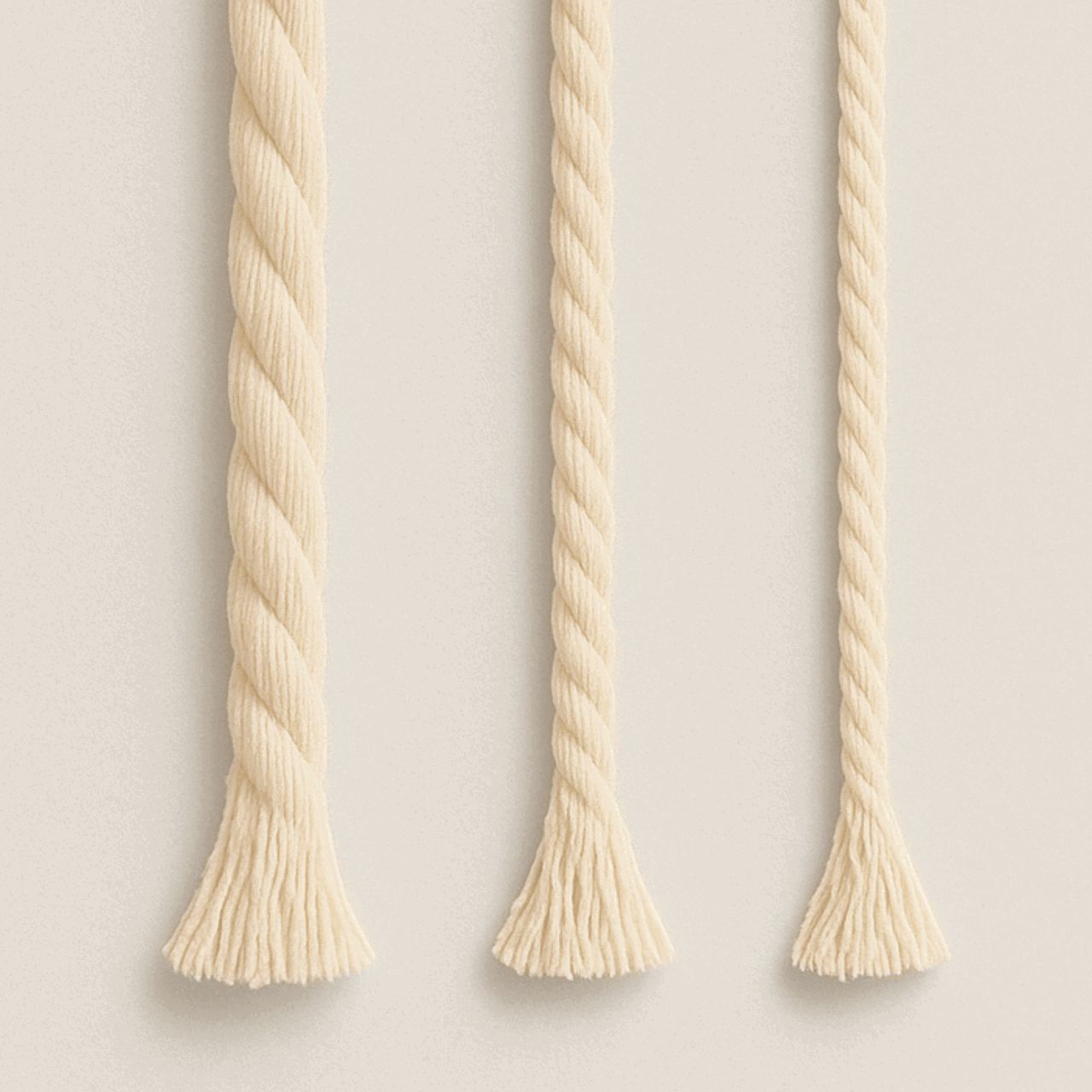
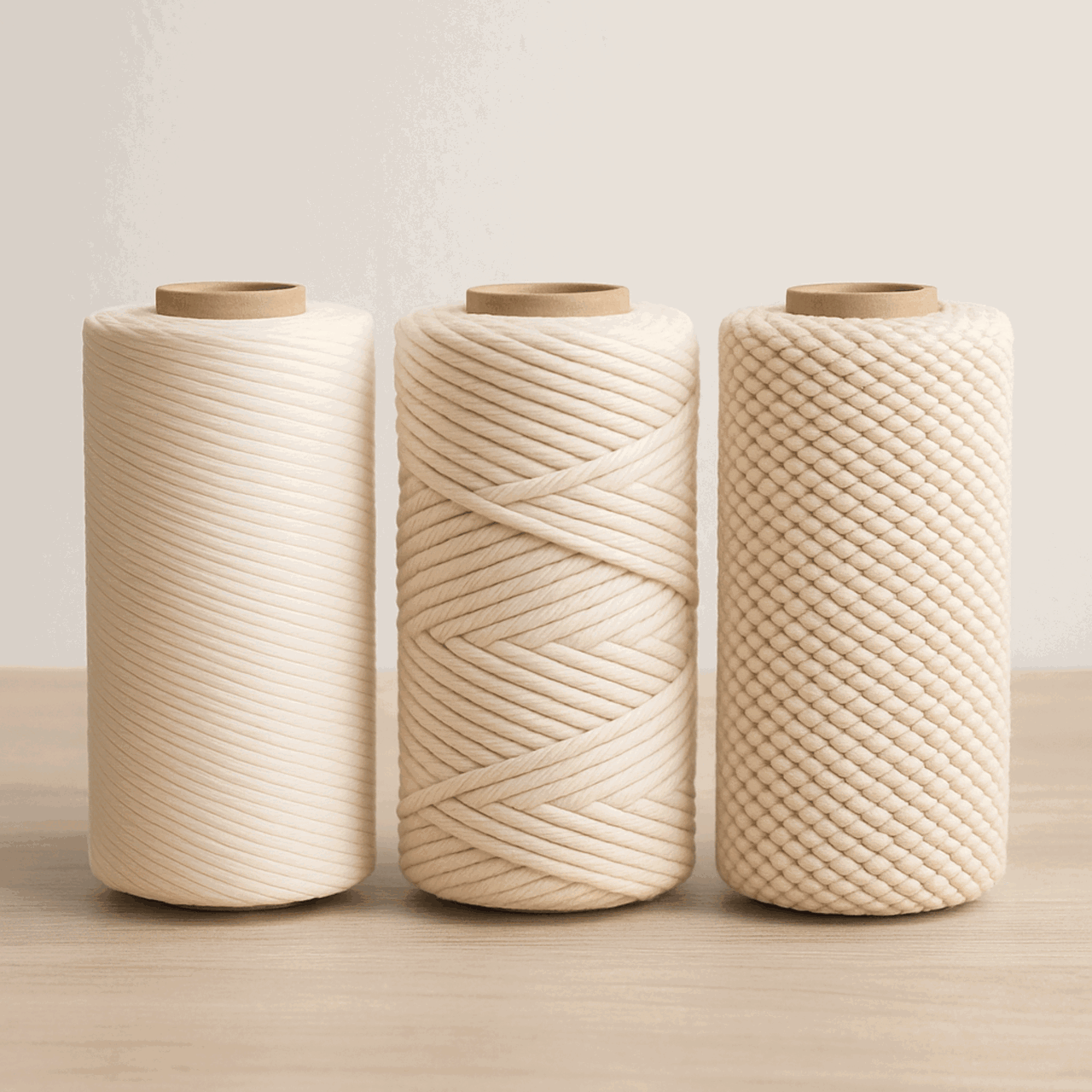
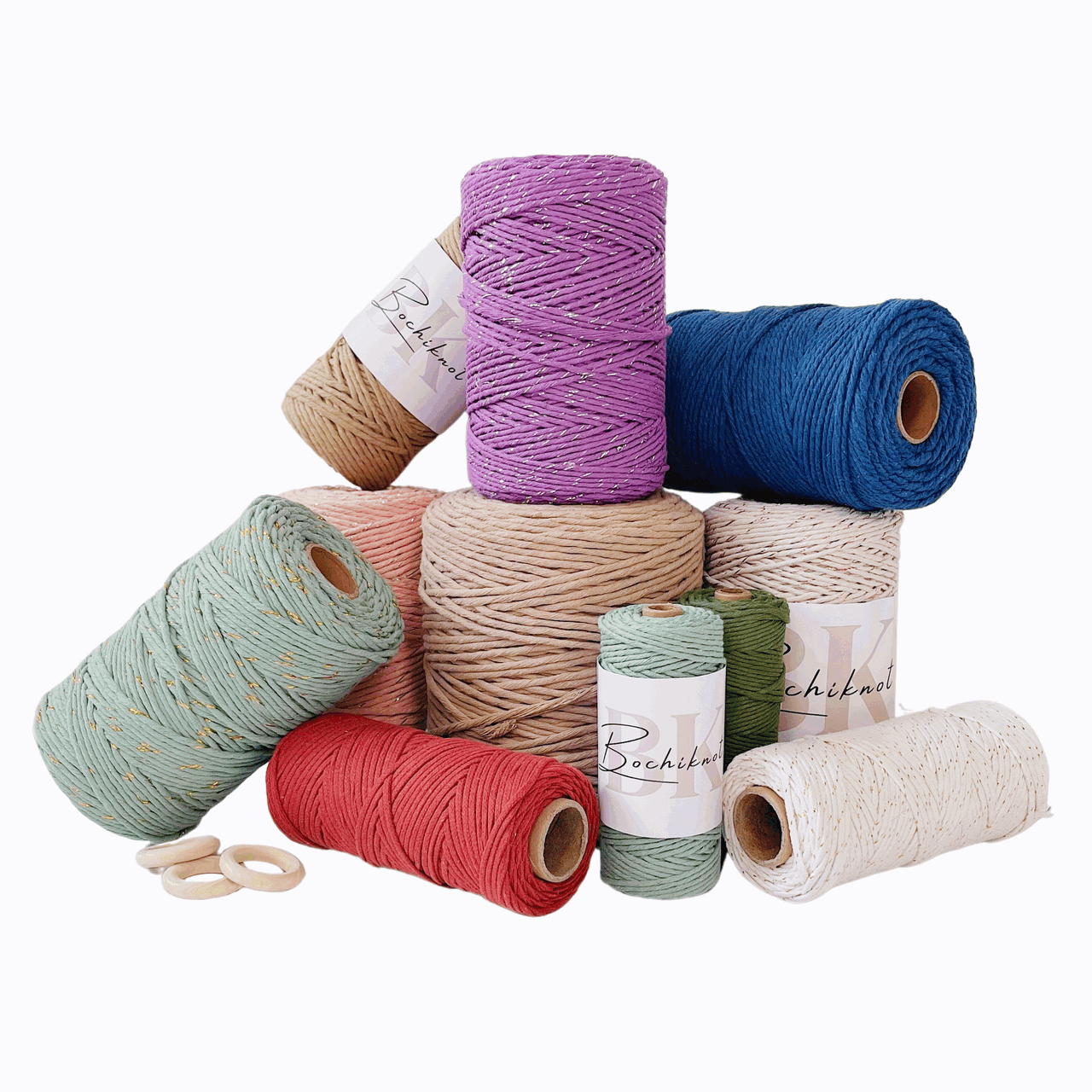
- Cord: One 60 cm (24") strand of 4mm single-strand cotton cord per keychain. A 100m roll makes 160+ keychains.
- Perfect for: Everyday keys, bag charms, last-minute handmade gifts, craft fair inventory, and using up short cord offcuts.
🎥 Watch the video first. The snake braid movement (Pattern 1, Step 2) and the tool-removal trick (Pattern 2, Step 5) are far easier to see demonstrated than to read.
What's in this tutorial
- Which Pattern Should You Make First?
- Materials You'll Need
- Cord Cut Lengths
- Project Details at a Glance
- Watch the Video Tutorial
- Pattern 1: The Snake Braid Keychain (4 Steps)
- Pattern 2: The Barrel Knot Keychain (6 Steps)
- Macramé Keychain Ideas: 8 Customizations
- Where to Use Your Macramé Keychains
- Best Cord Colors for Macramé Keychains
- Tips for a Neater Finish
- Selling Macramé Keychains: Pricing & Batching
- Common Mistakes (and How to Fix Them)
- Try These Next (More Keychain Tutorials)
- FAQ
Which Macrame Keychain Pattern Should You Make First?

Both macrame keychain patterns use identical materials and take about the same time. The difference is the look and the skill each one teaches. Here they are side by side:
💡 Nicole's honest take: If you want a braided look with visible texture, start with the snake braid. If you prefer a wrapped, minimal style with a solid center, start with the barrel knot. Neither is harder than the other — the snake braid asks you to learn a specific movement, the barrel knot asks for patience and controlled wrapping. Most makers end up making both.
Materials You'll Need

4mm Rhinestone Cord
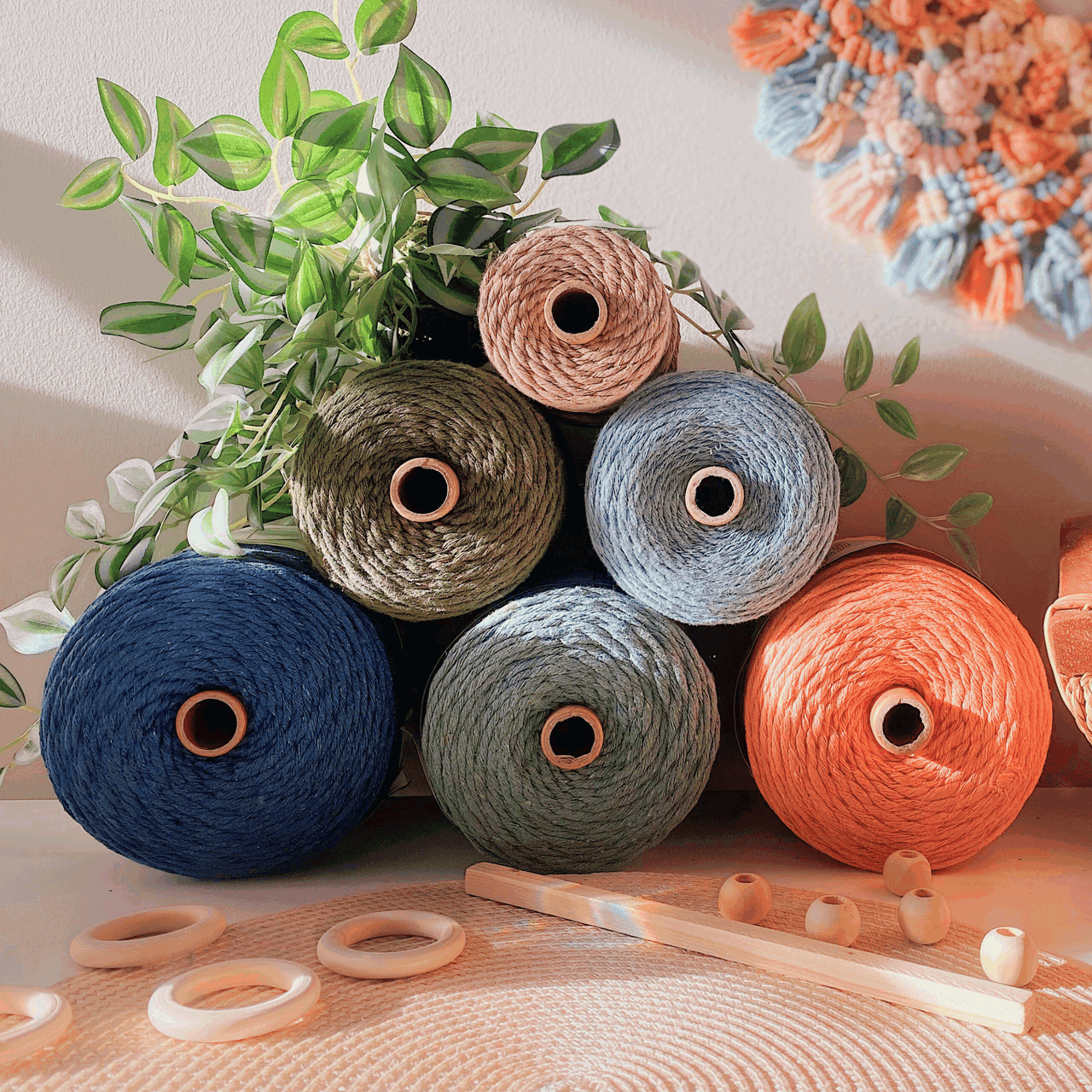
The cord used in both keychains. Limited edition, in Moonlit Pearl, Sparkling Champagne, and Onyx Shimmer.

Heart Swivel Lobster Clasps & Rings (8 pcs)
Limited edition heart-shaped swivel clasps — the swivel lets the keychain rotate freely without tangling, and the heart detail adds a small signature touch.

9mm Large Hole Pearl Beads
The 9mm hole fits two strands of 4mm cord — essential for both patterns.

💡 On the cord: Both keychains here use 4mm Rhinestone Cord — it catches the light in a way plain cotton doesn't, which is why these photograph so well. If you'd rather practise on something less precious first, standard 4mm cotton cord works identically for both patterns; only the finish changes.
💡 One extra tool for Pattern 2: the barrel knot needs a slim tool to hold the wraps open — a 3-4mm crochet hook, thin knitting needle, or bamboo skewer all work. No need to buy anything special. Not sure which cord to pick? Read our complete guide to selecting macramé cord. All supplies also ship fast from our Amazon US and Amazon Canada storefronts with Prime.
Cord Cut Lengths
| Pattern | Cord Length | Quantity | Setup |
|---|---|---|---|
| Snake Braid | 60 cm (24") | 1 strand | Both ends EVEN |
| Barrel Knot | 60 cm (24") | 1 strand | UNEVEN — one end ~5", other end long |
That's the entire cord requirement. One 60 cm strand per keychain. This is the most cord-efficient macramé project in the whole Bochiknot library — perfect for using up offcuts from wall hangings and plant hangers.
Project Details at a Glance
| Detail | Snake Braid | Barrel Knot |
|---|---|---|
| Skill level | Beginner ★★☆☆☆ | Beginner ★★☆☆☆ |
| Steps | 4 | 6 |
| Time | ~20 minutes | ~25 minutes |
| Cord | 1× 60cm (even ends) | 1× 60cm (uneven ends) |
| Extra tool | None | Crochet hook or skewer |
| Finished size | ~3" × 6" | ~3" × 6" |
Watch the Macramé Keychain Video Tutorial
This macrame keychain tutorial demonstrates both patterns start to finish — the snake braid movement and the barrel knot tool trick are much clearer on video:
▶ Watch full-screen on YouTube →
The Snake Braid Macramé Keychain
4 steps · ~20 minutes · Creates a textured, interlocking braided column beneath the bead.
Attach the Cord to the Clasp and Add the Bead
Cut one 60 cm strand of 4mm cord. Thread it through the bottom of the swivel lobster clasp so both ends hang even. Hold both cord ends together and thread the pearl bead onto them — slide it up beneath the clasp, or leave a small gap underneath if you prefer. Tape the top section to your work surface so the project stays still while you knot.

Make the First Snake Braid Knot
Pass the left cord under the right cord, curve it into a loop, then bring the right cord over the top and down through the lower loop. Pull both ends to tighten, forming the curved, interlocking snake braid knot. Before tightening completely, slide the knot upward so it sits neatly beneath the bead.

Repeat Until You Have Five Knots
Repeat the snake braid knot four more times for a total of five knots, keeping the spacing as tight as possible. Maintain consistent placement and even tension on both cords so the braid stays straight and balanced. When finished, the braided column should look compact, neat, and evenly textured.

Finish the Ends with Overhand Knots
Tie a simple Overhand knot at each cord end to secure the braid and stop it from unravelling. Trim any excess cord below each knot for a clean finish. Your snake braid macramé keychain is complete.

Snake braid keychain done!
One macramé keychain finished in about 20 minutes. You now know the snake braid movement — it also works beautifully for bracelets and bag charms.
Ready for the second design? The barrel knot uses the same materials but a completely different technique.
The Barrel Knot Macramé Keychain
6 steps · ~25 minutes · Creates a smooth, wrapped, slightly sculptural finish. Same materials, different silhouette.
Attach the Cord with Uneven Ends
Thread a 60 cm cord through the bottom of the swivel lobster clasp, leaving one end about 5 inches (13 cm) long and the other end significantly longer. The short end becomes the finished charm length; the long end becomes the working cord that creates all the wraps.

Add the Bead
Thread the pearl bead onto both cord ends. Start by passing one strand through, then feed the second strand through the same hole. Because these are large-hole beads (9mm), two strands of 4mm cord fit through comfortably.

Prepare for the Barrel Knot
Place a slim tool alongside the cords before you start wrapping — a 3-4 mm crochet hook, thin knitting needle, or even a bamboo skewer all work. This tool holds space inside the wraps so you can thread the cord back through later.

Wrap the Long Cord Around
Hold the shorter cord where you want the wrapped section to begin, place the tool alongside the core strands, and wrap the long working cord around both the strands and the tool. Continue making loose, even wraps until only a couple of inches of working cord remain. The wraps should look smooth and uniform — not pinched or overlapping.

Remove the Tool and Thread Back Through
Slide the tool out, leaving a channel through the center of the wraps. Feed the end of the working cord back down through that channel. If the cord is stiff, guide it through one loop at a time rather than forcing it all at once.

Tighten and Adjust
Once the cord end is all the way through, pull on both cord ends and gently work the knot to tighten it. You can shift the wraps slightly up or down as you settle the barrel into place. A little open space near the top is fine — this knot is forgiving. Trim any excess and your barrel knot macramé keychain is complete.

Two keychains, one cord roll!
Both macramé keychain patterns finished. Two completely different looks from identical supplies — that's the lesson worth keeping.
Snap a photo of your pair and tag #BochiknotKeychain on Instagram — Nicole loves seeing which one makers prefer.

Macramé Keychain Ideas: 8 Ways to Customize These Patterns
Once both patterns are in your hands, the fun part starts. These are the macrame keychain ideas Nicole comes back to most — each one uses the same two techniques you just learned, just arranged differently.
💡 Where to start: If you only try one of these macrame keychain ideas, make it #1 — combining both knots. It takes about 35 minutes, uses one 75 cm cord, and produces something that looks noticeably more advanced than either pattern alone.
Where to Use Your Macrame Keychains
Both macrame keychain designs are small enough to work anywhere a charm belongs. 8 uses Nicole recommends:
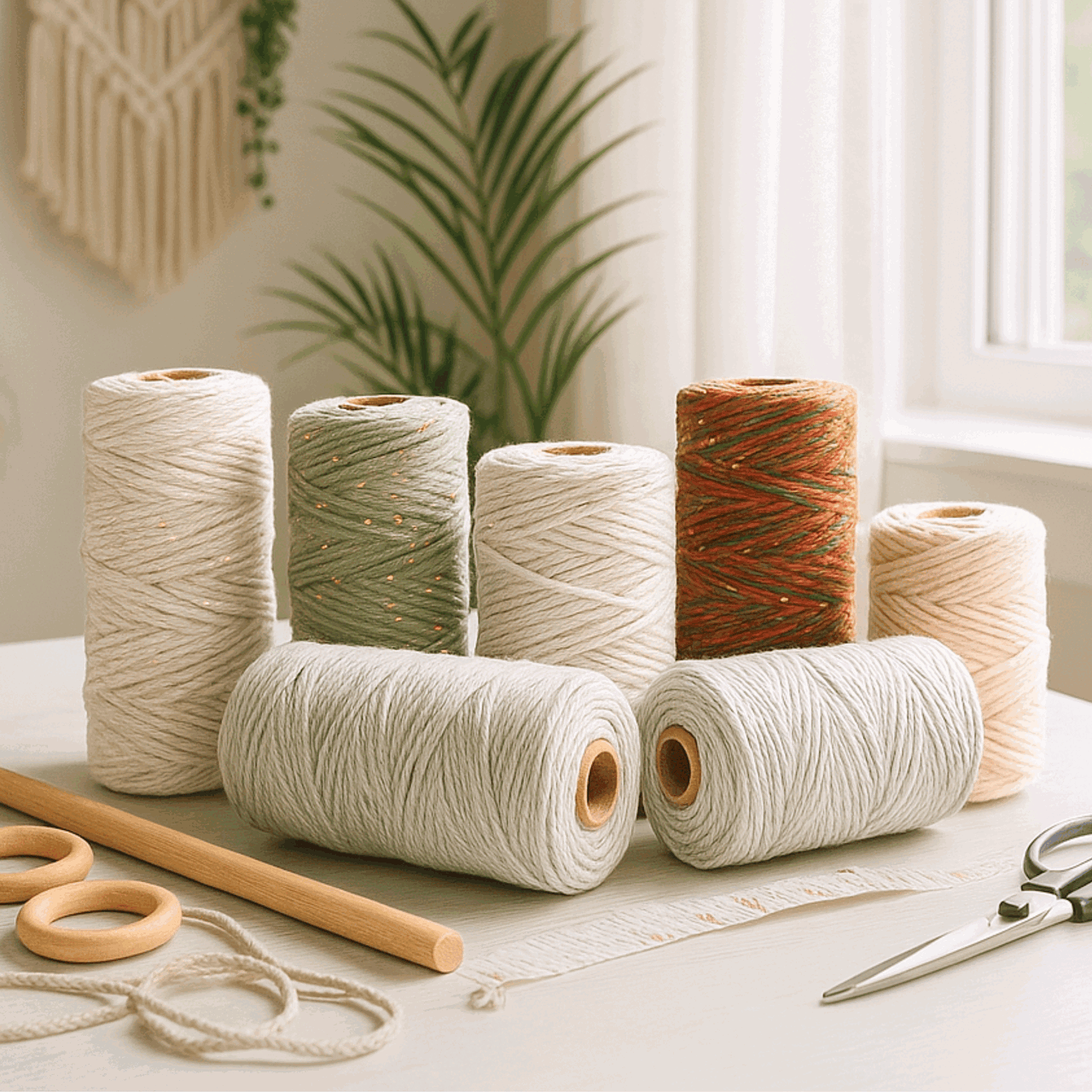
Best Cord Colors for Macramé Keychains
Because these keychains are small, colour does more work than it does in a large wall hanging — there simply isn't enough surface area for texture alone to carry the piece.
If you're using rhinestone cord
The 4mm Rhinestone Cord comes in three shades, and each pairs best with a different bead:
| Shade | Character | Pair With |
|---|---|---|
| Moonlit Pearl | Soft luminous silver, cool platinum undertones | White pearl bead — tonal, bridal-leaning |
| Sparkling Champagne | Warm golden glow | Wooden or brass bead — warm on warm |
| Onyx Shimmer | Bold, moody, high-shine | Matte black or silver — keeps sparkle as the focus |
Rhinestone cord suits the barrel knot particularly well — the smooth wrap gives an unbroken run of sparkle, where the snake braid breaks it up across the interlocking knots. Both look good; they read differently.
If you're using cotton cord
Five combinations that consistently look good:
| Look | Cord Colour | Bead | Why It Works |
|---|---|---|---|
| Classic Neutral | Natural / cream | White pearl | Goes with every bag. The safest choice for gifts when you don't know their taste. |
| Warm Boho | Terracotta or rust | Wooden | Wood against warm cord reads earthy and handmade. Nicole's most-requested combination. |
| Modern Minimal | Charcoal or black | Matte black or silver | Monochrome makes the knot structure the focus. Best showcase for the barrel knot. |
| Soft Pastel | Dusty pink or sage | Pearl | Pearl against pastel is the strongest gift-shop look. Sells well at spring markets. |
| Deep Jewel | Navy or forest green | Gold or brass | Metallic against a dark cord looks considerably more expensive than it costs to make. |
One thing worth knowing: lighter cords show the snake braid's texture more clearly, while darker cords flatter the barrel knot's smooth wrap. If you're making one of each, cream for the braid and charcoal for the barrel is a reliable pairing. Browse the full 4mm cord colour range to plan your combinations.
Tips for a Neater Macrame Keychain Finish
There are only a few moving parts in these macrame keychain patterns, which means the small details matter more:
- Use a sturdy cord. 4mm single-strand, three-ply, or braided cord all hold structure well. Anything softer and the keychain goes limp.
- Measure carefully. At 60 cm per keychain there's no spare cord — precision saves material.
- Watch your spacing. Tight, consistent knot placement is what separates a handmade look from a homemade one.
- Keep tension even. Uneven pulling distorts both patterns, especially the snake braid.
- Go slow on the first knot. Once the structure clicks, the rest genuinely does come easier.
- Leave the barrel wraps loose. Too tight and you can't thread the cord back through in Step 5.
Selling Macramé Keychains: Pricing, Batching & What Actually Moves
Macramé keychains are the highest-margin item most makers can sell, and these two patterns in particular are fast enough to batch. If you're doing a market, a school fair, or an Etsy shop, here's what Nicole has learned from years of selling handmade macramé.
What each keychain actually costs to make
| Component | Cost per keychain | Notes |
|---|---|---|
| 4mm cotton cord (60 cm) | ~$0.02 | A 100m roll yields 160+ keychains |
| Heart swivel clasp | ~$0.60 | Based on an 8-piece set |
| Large-hole bead | ~$0.25 | Based on a 30-piece pack |
| Total materials | ~$0.87 | Before packaging |
A note on rhinestone cord: the figures above are for standard cotton. Rhinestone cord costs meaningfully more per keychain, but supports a higher price point — sparkle photographs well and reads as premium on a market table. If you sell both, treat them as separate tiers rather than pricing them the same.
Realistic pricing
Handmade macramé keychains typically sell for $8–$15 depending on venue. Craft fairs and markets support the higher end; online marketplaces trend lower because of competition. Two things that reliably justify a higher price: a distinctive clasp (the heart swivel does real work here) and thoughtful packaging — a kraft tag with the pattern name costs pennies and noticeably changes how the piece is perceived.
Avoid pricing below $8. It undercuts your own market, and buyers frequently read very low prices on handmade goods as a quality signal rather than a bargain.
Batching workflow
Making 20 keychains one at a time takes far longer than making 20 in stages. The efficient sequence:
- Cut all cords first. Twenty 60 cm strands takes about five minutes with a marked cutting board.
- Attach every clasp. One repetitive motion, twenty times — much faster than switching tasks.
- Thread every bead. Same principle.
- Knot in batches by pattern. Do all the snake braids, then all the barrel knots. Switching between the two costs you rhythm.
- Trim and tag last. One pass at the end with scissors and tags.
Batched this way, twenty keychains takes roughly 3 hours instead of 7.
Which pattern sells better
In Nicole's experience the snake braid outsells the barrel knot roughly 2:1 at in-person markets — the visible texture photographs well and reads as more obviously handmade from a distance. The barrel knot performs better online, where buyers zoom in and the clean wrap looks more refined. Bring both, weight your stock toward the braid, and let the display do the work.
💡 A note on selling: You're welcome to sell finished keychains made from both patterns. These are traditional knots, not proprietary Bochiknot designs. Please don't redistribute the tutorial itself — but the keychains you make are yours to sell.
Common Mistakes (and How to Fix Them)
| Mistake | Pattern | Fix |
|---|---|---|
| Snake braid looks crooked or twisted | Snake Braid | Tension is uneven between the two cords. Pull both ends with equal force on every knot. Undo back to where it went crooked and redo. |
| Gaps between the snake braid knots | Snake Braid | Slide each knot upward before tightening fully. The braid should be compact with no visible cord between knots. |
| Can't thread the cord back through the wraps | Barrel Knot | The wraps were too tight. Undo and rewrap loosely around the tool — you tighten at the very end, not during wrapping. |
| Barrel knot pulls crooked when tightening | Barrel Knot | You're pulling one end harder than the other. Alternate small pulls between both ends until the barrel settles evenly. |
| Bead won't fit both cord strands | Both | You need a large-hole bead — 9mm hole minimum for two strands of 4mm cord. Twist each cord end tightly before threading to help it slide. |
| Keychain feels floppy | Both | Cord is too soft. Switch to a firmer 4mm single-strand, three-ply, or braided cord. Soft cotton looks lovely in wall hangings but won't hold keychain structure. |
| Ends fray after a few weeks | Both | Leave ~1 cm of tail below the finishing knot rather than trimming flush. Flush cuts fray back into the knot and work loose. |
Try These Next (More Keychain Tutorials)
🔗 Ready for your next macramé keychain? More tutorials in the Bochiknot Keychains collection:
- 6 DIY Macramé Keychain Patterns (Beginner Tutorials + Video) — the complete keychain roundup pillar
- Beginner Macramé Flower Keychain Pattern — 3 knots, 3 colors, no glue needed
- The Beginner Macramé Feather Keychain Every New Maker Should Start With — wristlet + feather charm combo
- How to Make a Macramé Daisy Keychain in 30 Minutes — quick floral keychain
- The Boho Wristlet That Turns Your Keys Into a Statement — wristlet-focused design
- How to Make a Beaded Macramé Keychain (12 Easy Steps) — more bead-forward pattern
🎨 Want pattern PDFs? Browse the complete macramé pattern library.
Prefer a ready-made keychain? Handmade Bochiknot keychains are on our Etsy shop.
Frequently Asked Questions
What cord is best for a macramé keychain?
A sturdier cord works best — 4mm single-strand, three-ply, braided, or rhinestone cord all hold their shape well. Softer cords look lovely in wall hangings but leave keychains limp. Both keychains in this tutorial use 4mm Rhinestone Cord, which adds shine plain cotton can't match. Standard 4mm cotton cord works identically if you'd prefer to practise on something less costly.
How long should the cord be for these macramé keychain patterns?
Each pattern uses one 60 cm (24 inch) strand of cord. For the snake braid, both ends are cut even. For the barrel knot, one end is left about 5 inches and the other significantly longer to act as the working cord for the wraps.
What size bead should I use?
A large-hole bead with at least a 9mm hole works best, because it needs to fit two strands of 4mm cord through the center. Bochiknot's 9mm large-hole faux pearl beads are sized specifically for this.
Is this macramé keychain tutorial beginner-friendly?
Yes. Both patterns are simple and quick. The snake braid may feel tricky on the first knot, and the barrel knot requires careful loose wrapping, but neither needs prior macramé experience. Most beginners finish both in under an hour.
Can I use these as bag charms too?
Absolutely. Each macramé keychain works equally well as a bag charm, backpack zipper pull, or luggage tag accent. The swivel lobster clasp clips onto almost any hardware.
Which macramé keychain pattern should I make first?
If you want visible braided texture, start with the snake braid. If you prefer a smooth, minimal, wrapped look, start with the barrel knot. Neither is harder — the snake braid teaches a specific movement, the barrel knot teaches controlled tension. Most makers end up making both.
How many keychains can I make from one roll of cord?
One 100m roll of 4mm cord makes approximately 160 keychains at 60 cm each. That works out to under 2 cents of cord per keychain — making these one of the highest-margin handmade items for craft fairs and markets.
Do I need a special tool for the barrel knot?
You need something slim to hold the wraps open — a 3-4mm crochet hook, a thin knitting needle, or even a bamboo skewer works. Nothing special to buy. The tool creates a channel so you can thread the working cord back through in Step 5.
Why won't the cord thread back through my barrel knot wraps?
Your wraps are too tight. The barrel knot only works if the wraps stay loose while you build them — you tighten everything at the very end. Undo the wraps and redo them more loosely around the tool.
Can I make the snake braid section longer?
Yes. Five knots is the standard for a balanced keychain, but you can add more. Add them in pairs to keep the braid visually symmetric, and start with a longer cord (75-80 cm instead of 60 cm) so you don't run short.
Can I sell macramé keychains made from these patterns?
Yes — you're welcome to sell finished handmade keychains from both patterns. They're excellent craft fair items: roughly 2 cents of cord plus a clasp and bead, typically retailing $8-15. Please don't share or resell the tutorial itself.
Are macramé keychains durable enough for daily use?
Yes. Cotton macramé keychains handle daily key use for years. The main wear point is the cord ends — leave about 1 cm of tail below your finishing knots rather than trimming flush, and they'll stay secure indefinitely.
What's the difference between the snake braid and a regular braid?
A regular three-strand braid weaves three cords over and under each other. The snake braid uses just two cords in an interlocking loop-through-loop motion, creating a rounder, more sculptural column that reads as more intentional than a plain braid.
Can I use scrap cord for these keychains?
These are the ideal scrap cord projects. At 60 cm per keychain, offcuts left over from wall hangings, plant hangers, and larger pieces are usually the perfect length. Nothing else in the Bochiknot library uses this little cord.
Where can I buy the exact cord, clasps, and beads Nicole uses?
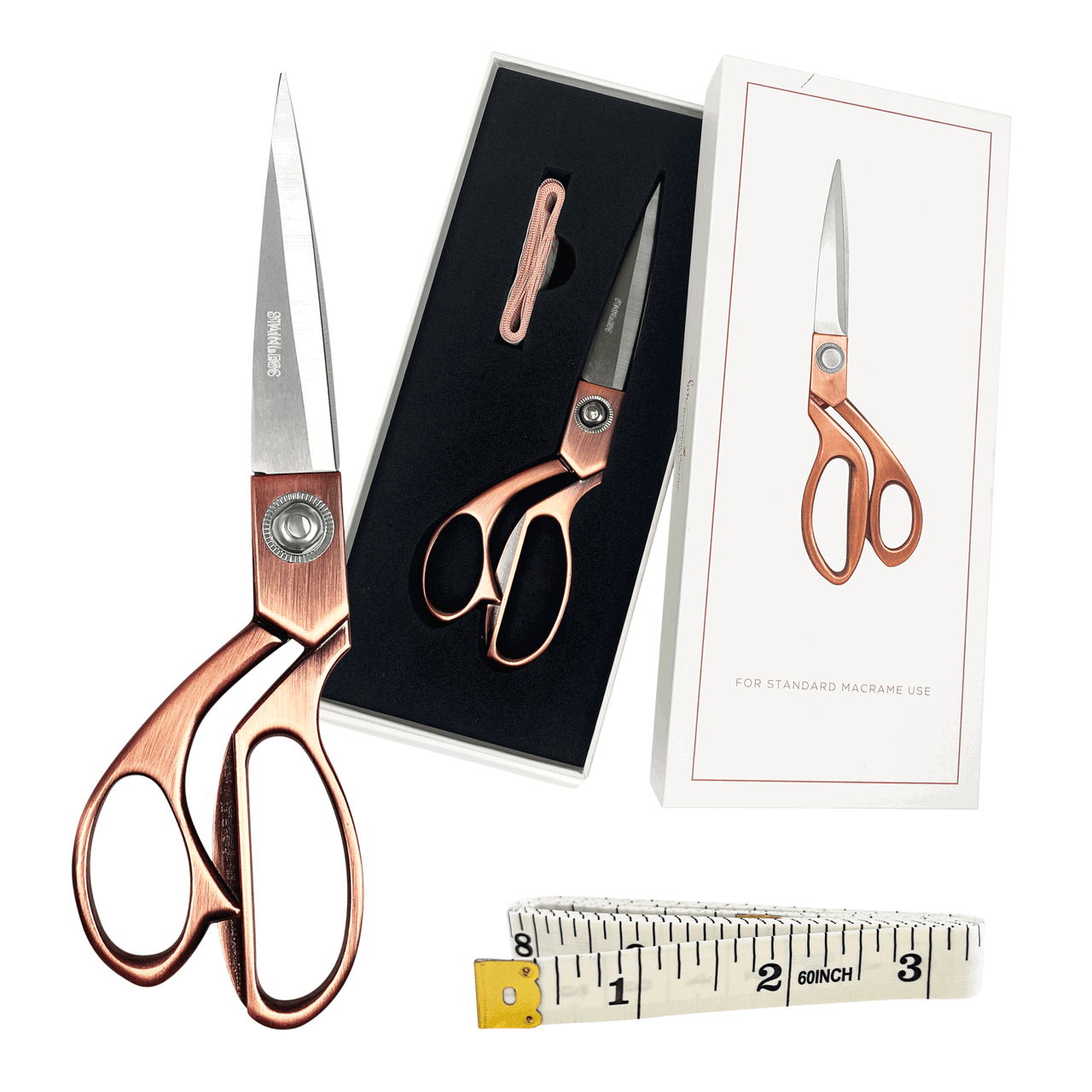
All materials are on Bochiknot.com — 4mm cord in every color, heart swivel lobster clasps & rings (8 pcs), 9mm large-hole pearl beads, and scissors. You can also find them on the Bochiknot Amazon US and Amazon Canada storefronts for Prime shipping. Prefer a finished keychain? Handmade Bochiknot keychains are on our Etsy shop.
Can I use a key ring instead of a swivel lobster clasp?
Yes. A plain key ring works for both patterns. The advantage of a swivel clasp is that it rotates, so the keychain doesn't twist and tangle when clipped to a bag. A key ring is more rigid but perfectly functional.
How long does each macramé keychain take to make?
Learning how to make a macrame keychain with the snake braid takes about 20 minutes; the barrel knot about 25 minutes. Together, under an hour. Once you've made a few, both drop to about 10-15 minutes each.
What are some macrame keychain ideas beyond these two patterns?
The easiest upgrade is combining both knots on one keychain — snake braid above the bead, barrel knot below. Other proven variations: stacking two or three beads, using two cord colours folded together, adding a combed tassel below the finishing knot, making a mini 35 cm version as a zipper pull, or swapping the swivel clasp for a plain O-ring. All eight ideas are covered in the customization section above.
How much should I charge for a handmade macrame keychain?
Materials cost roughly $0.87 per keychain (cord, clasp, and bead). Handmade macramé keychains typically sell for $8–$15 — craft fairs and in-person markets support the higher end, online marketplaces trend lower. Avoid pricing below $8; on handmade goods, very low prices often read as a quality signal rather than a bargain.
Which macrame keychain pattern sells better at craft fairs?
In Nicole's experience the snake braid outsells the barrel knot roughly 2:1 at in-person markets, because the visible texture photographs well and reads as obviously handmade from a distance. The barrel knot performs better online, where buyers zoom in and the clean wrap looks more refined. Bring both, weighted toward the braid.
What's the fastest way to make macrame keychains in bulk?
Batch by stage rather than making one keychain at a time. Cut all cords first, then attach every clasp, then thread every bead, then knot in batches by pattern, then trim and tag in one final pass. Twenty keychains takes roughly 3 hours batched, compared to about 7 hours made individually.
What cord colours work best for macramé keychains?
Natural cream with a white pearl bead is the safest choice for gifts. Terracotta with a wooden bead is the most-requested boho combination. Charcoal with matte black or silver showcases the barrel knot's structure best. Lighter cords show the snake braid's texture more clearly; darker cords flatter the barrel knot's smooth wrap.
Keep Learning: More Ways to Make a Macrame Keychain


You Might Also Be Interested In


Swivel Lobster Clasps
8-piece set of heart swivel clasps + rings — enough for a full keychain-making session.
Shop clasps
 📸 Which pattern did you pick?
Tag #BochiknotKeychain on Instagram — Nicole loves seeing whether makers go snake braid, barrel knot, or both.
About Nicole Woo
Nicole is the founder of Bochiknot and has been teaching macramé for 5+ years to a community of 100,000+ makers across YouTube, Instagram, and Patreon. She specializes in beginner-friendly cotton cord projects that feel approachable no matter your skill level.
Join her on Patreon for exclusive patterns, or explore individual ebook patterns.

Leave a comment