





9 Macramé Tips for Beginners: Pro Tricks Most Tutorials Skip

Updated 2026 · 8 min read
🔖 Save for later

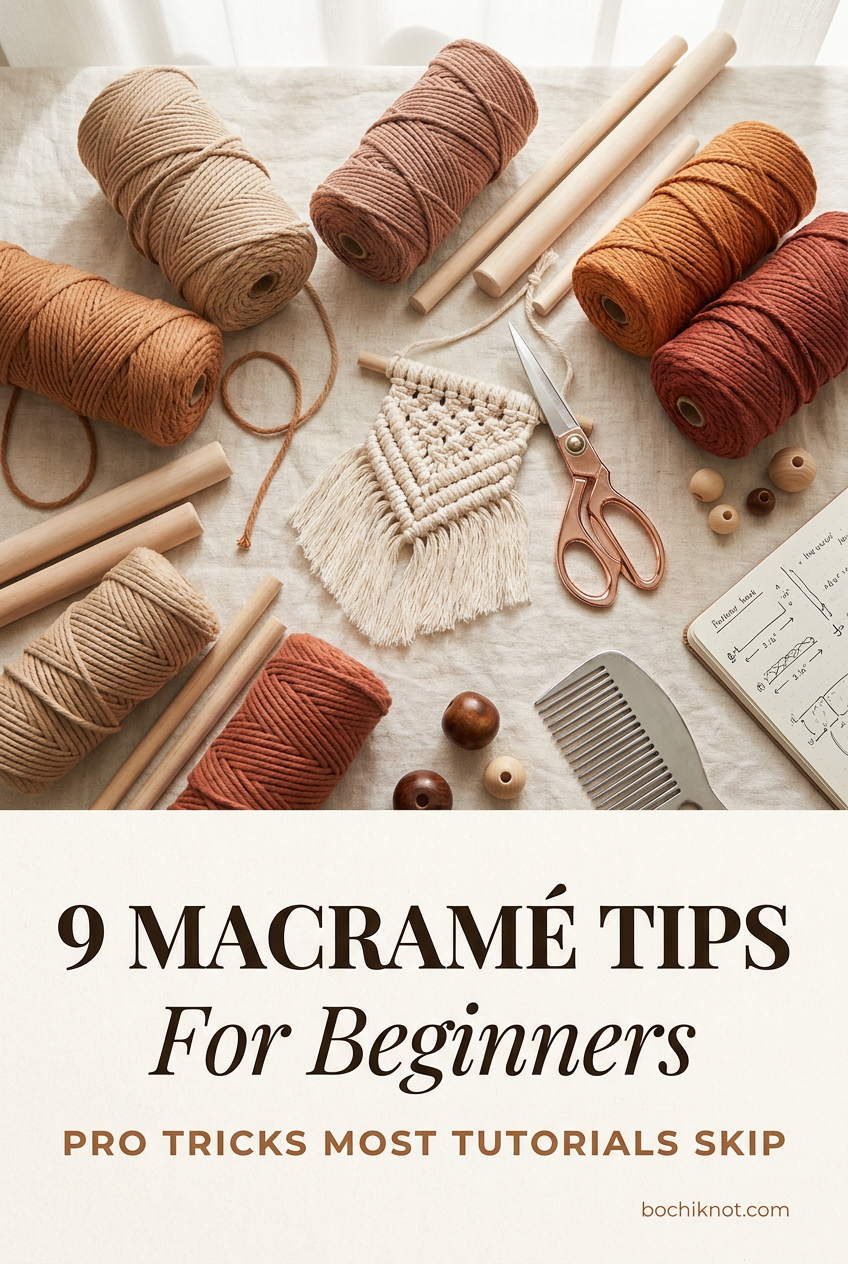
📌 Pin this guide for later
Save these 9 macramé tips to your Pinterest board so you can come back to them mid-project.
Save to PinterestWhat You'll Learn (Jump to Any Tip)
9 macramé tips for beginners
- How to measure & cut cord evenly
- How to tie a perfectly straight row of double half hitch knots
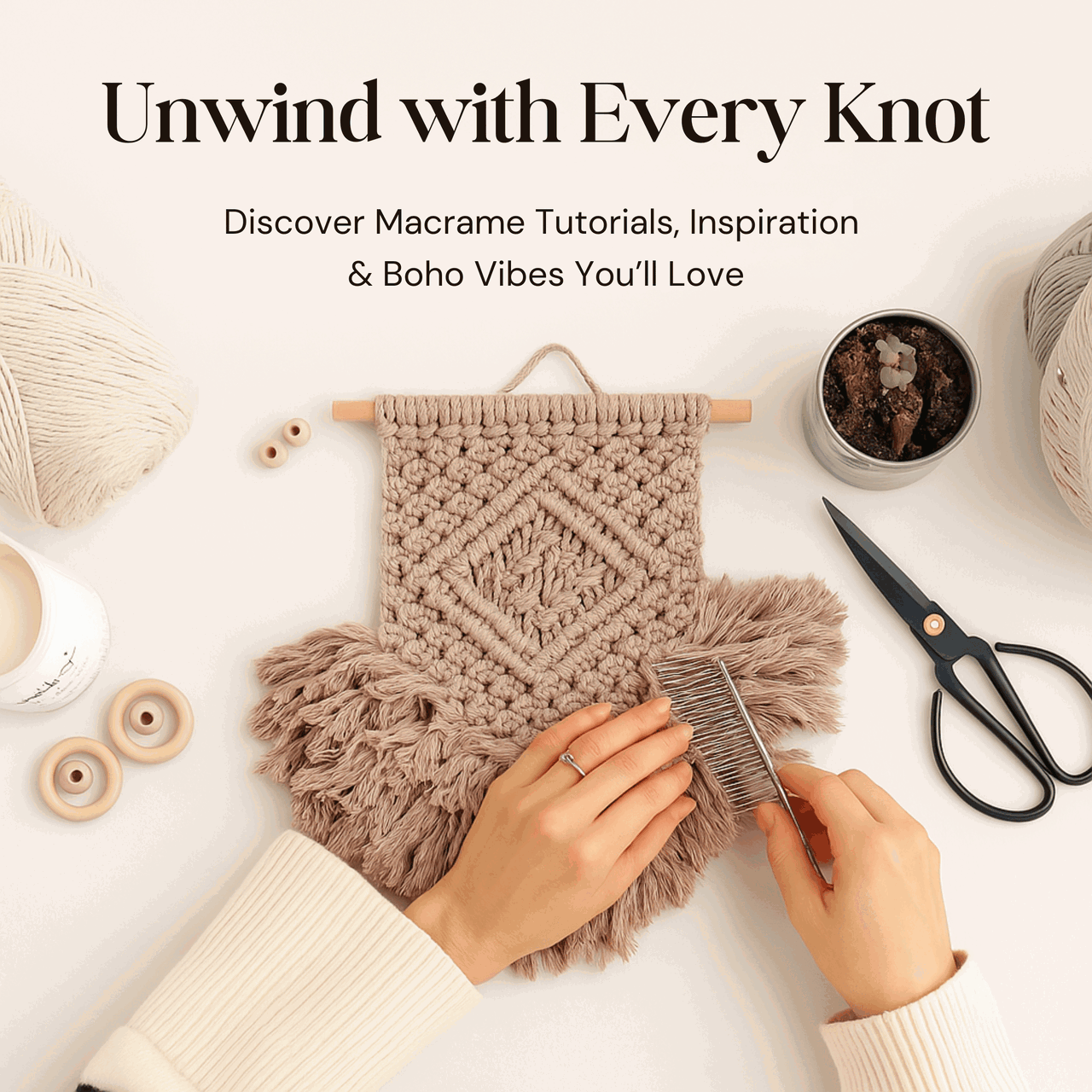
- How to cut macramé fringe perfectly straight
- How to untie macramé knots without damaging your cord
- How to calculate cord length (the rule + the Golden Ratio)
- How to stop macramé cord from unraveling
- How to manage long cords on big projects
- How to create evenly spaced knots
- How to get a straight, smooth fringe with a steamer + stiffener
+ Diagnose your project · Student wins · Common mistakes · Pro tools · FAQ
Why These 9 Tips Will Change How You Macramé
When I first picked up macramé, I knotted my entire first keychain with 1mm hemp string instead of cord. (Yes, really.) Five years and thousands of knots later, I've made every mistake a beginner can make — and I've figured out the simple tricks the YouTube tutorials skip over.
These nine tips are the ones I wish someone had told me on day one. They're not technique tutorials — those are in our Complete Beginner's Guide to Macramé. These are the practical workshop hacks that separate a frustrating beginner project from a finished piece you're proud to hang on your wall.
Each tip below has the problem, the fix, and a photo. No fluff.
Diagnose Your Macramé: What's Wrong & Which Tip Fixes It
Already mid-project and something looks off? Find your symptom in the table below and jump straight to the fix.
| If your macramé looks… | Most likely cause | Jump to |
|---|---|---|
| Uneven length across strands | Inconsistent cord measuring | Tip 1 — Even cutting |
| Wavy or sagging knot rows | No anchor guide; loose tension | Tip 2 — Straight DHH |
| Crooked or stepped fringe | Fringe shifted while cutting | Tip 3 — Tape & cut |
| Tightened knots that won't come loose | Yanking instead of working backwards | Tip 4 — Untie safely |
| Project ran out of cord mid-way | Cut cord too short | Tip 5 — Cord math |
| Frayed, fluffy cord ends | Unsealed ends unraveling | Tip 6 — Seal ends |
| Tangled cords mid-project | Loose long strands | Tip 7 — Roll & band |
| Gaps between knots all different sizes | No spacer; inconsistent tension | Tip 8 — Spacer method |
| Frizzy, static-y fringe | Skipped the steam & set step | Tip 9 — Steam finish |
Tip 1: How to Measure & Cut Macramé Cord Evenly
The problem: When you're cutting 8, 12, or 24 strands of cord for a project, even a 1-inch length difference between strands shows up in the finished piece. Eyeballing it doesn't work.
The fix: The two-dowel method.
- Tape two wooden dowels to your workbench, spaced apart at half the cord length you need. (Need 6-foot strands? Set dowels 3 feet apart.)
- Wrap your cord around the two dowels — one loop for every strand you need.
- Cut through all the loops at one end with sharp scissors.
You get perfectly even cords every time, and it's about 10× faster than measuring each strand individually with a tape measure.

Most YouTube creators measure cord on camera with a tape measure because it shows the math visually. But in a real workshop nobody does that — it's slow, error-prone, and impossible to keep cords even past 6 feet. The two-dowel method is the standard in production studios. It's just not as photogenic.
Tip 2: How to Tie a Perfectly Straight Row of Double Half Hitch Knots
The problem: Diagonal and horizontal double half hitch knot rows are supposed to form crisp, ruler-straight lines. For beginners, they usually come out crooked, wavy, or droopy.
The fix: Use a dowel as a temporary guide rail.
- Lay a thin dowel across your work where you want the knot row to sit.
- Tie the anchor cord ends loosely around the dowel so it stays in place.
- Tie your double half hitches over the dowel + anchor cord together.
- When the row is done, gently slide the dowel out.
The dowel forces the anchor cord into a perfect line and gives your knots something rigid to wrap against — no more sagging.

Tip 3: How to Cut Macramé Fringe Perfectly Straight
The problem: Fringe doesn't sit still. You start cutting at the left, the cord shifts, and by the time you reach the right side it's a crooked mess. Nothing ruins a wall hanging faster.
The fix: Scotch tape. Yes, really.
- Lay your project flat with the fringe hanging straight.
- Run a strip of clear tape horizontally across the fringe at the cut line you want.
- Cut just below the tape with sharp scissors.
- Peel the tape off. Done.
The tape locks every strand in place so they can't shift while you're cutting. Works for plant hangers, wall hangings, keychains — anything with fringe.


Tip 4: How to Untie Macramé Knots Without Damaging Your Cord
The problem: You're three hours into a project and realize you missed a knot 20 rows back. Yanking on the cord just tightens everything else into a worse mess.
The fix: Work backwards, slowly, with the right tool.
- Find the last knot tied (not the mistake — the last knot). Knots untie in reverse order.
- Use a small crochet hook or tweezers to gently loosen the working loop.
- Work knot by knot back to the mistake. Don't rush.

Bonus trick for double half hitches: A row of double half hitches will pop loose if you pull the anchor cord straight out from the end.


The whole row unravels in seconds. It's the only knot-undoing trick that genuinely feels satisfying. (If you're not sure how a double half hitch is structured, our DHH knot tutorial walks through the anatomy.)
Tip 5: How to Calculate Cord Length (The Rule + The Golden Ratio)
The problem: Cut your cord too short and the project is dead. You can't splice macramé cord invisibly — short cord is wasted cord.
The fix: Always over-measure. Here's the rule of thumb most beginners need:
| Project complexity | Cord length multiplier | Example for a 12" project |
|---|---|---|
| Simple (lots of fringe & space) | 3.5 × finished length | 42" of cord per strand |
| Standard beginner project | 4 × finished length | 48" of cord per strand |
| Intricate / dense knotting | 4.5 × finished length | 54" of cord per strand |
| + Lark's Head attachment | Double the calculated length | (folds in half on the dowel) |
Level up If you're already past Tip 5, you're not really a beginner anymore
If cord math, the Golden Ratio, and even-spacing tips already make sense to you, you've outgrown the basics. The next step is learning intricate knot patterns like the Berry knot, Endless Falls, and the Reverse Lark's Head + Half Hitch — they're what take a project from "nice" to "show-stopping."
Tip 6: How to Stop Macramé Cord From Unraveling
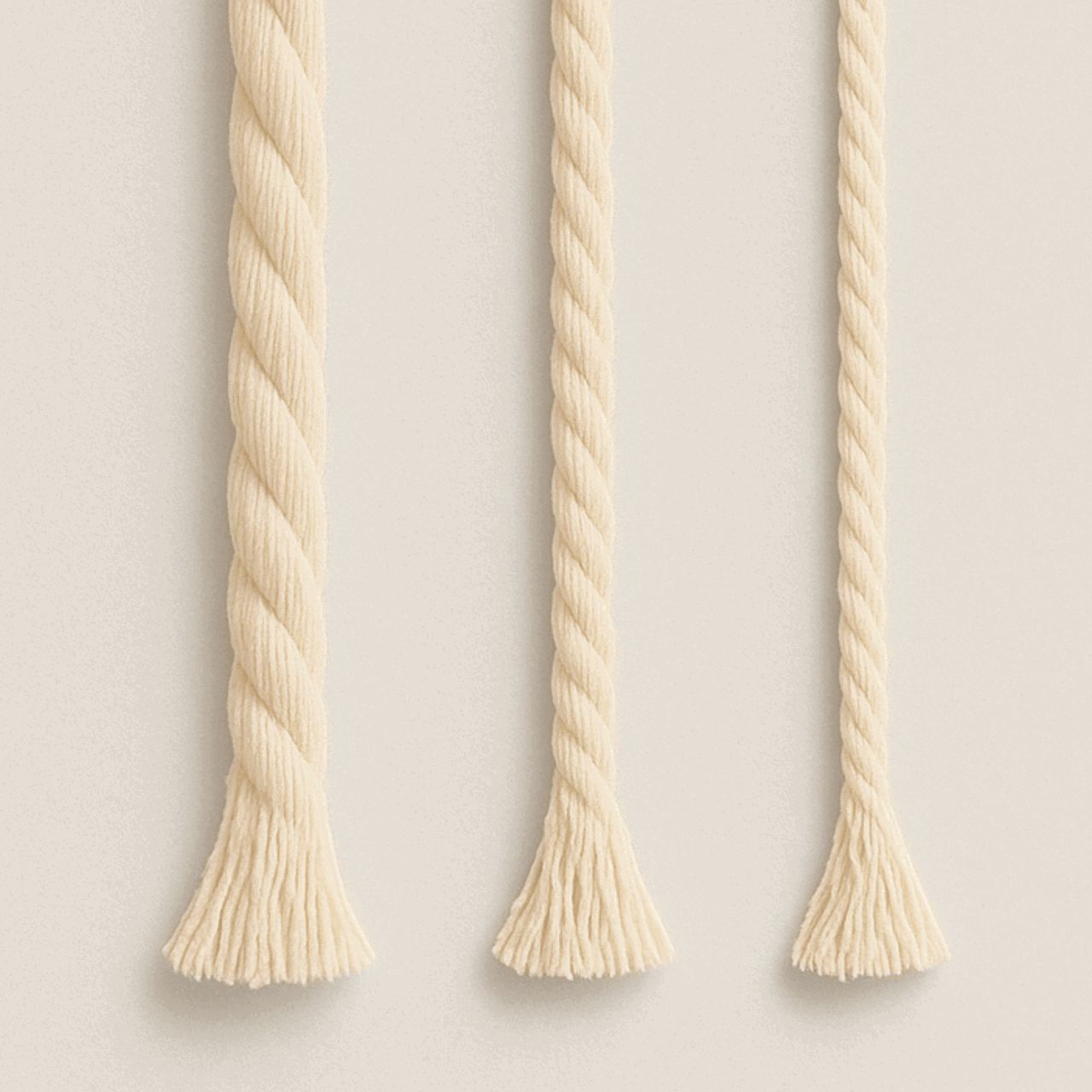
The problem: 3-ply cotton cord loves to unwind itself. One loose end and you've got fluffy chaos halfway up your project.
The fix: Seal every cord end before you start knotting.
- Tape it — wrap a small piece of masking tape around each end. Best for cords you'll trim later.
- Knot it — tie a small overhand knot at each end. Best for projects with fringe (you'll comb out the knot later).
- Glue or stiffen it — a drop of clear fabric glue or hairspray. Best for project ends that won't be fringe.


Check your ends periodically as you work — especially after you've untied and re-tied a knot. That's when fraying usually starts. For projects that end with a clean wrapped finish, the gathering knot doubles as a permanent end-seal.
Tip 7: How to Manage Long Cords on Big Projects
The problem: Working on a wall hanging or multi-tier plant hanger means dealing with 8+ feet of cord per strand. Within ten minutes your cords are a tangled spaghetti pile.
The fix: Roll each long cord into a small ball and secure it with a rubber band.
- From the cut end, roll each cord up toward your workpiece into a tight little ball.
- Wrap a rubber band loosely around the ball.
- Pull cord out from the center of the ball a few inches at a time as you knot.

Your workspace stays neat, cords feed cleanly when you need them, and you can grab any specific strand without dragging six others across the workpiece.
Tip 8: How to Create Evenly Spaced Macramé Knots
The problem: You tie a row of square knots, look at it, and the gaps between knots are all slightly different. The whole piece looks "off" but you can't say exactly why.
The fix: Use a spacer or a measuring tape pinned alongside your work.
- Pin a soft measuring tape vertically beside your knotting area.
- For each knot, glance at the tape and stop at the same measurement (e.g. every 1.5 inches).
- For thicker projects, use a small dowel or wooden block as a physical spacer that sits between knots while you tie.

Spacers feel "amateur" to teach on camera — they make the process look slower than it really is. But every commissioned macrame artist I know uses one. A small wooden spacing block or pinned measuring tape is the difference between "homemade" and "gallery-quality." It's the single biggest jump in finish quality you can make.
Tip 9: How to Get Straight, Smooth Fringe with a Steamer + Stiffener
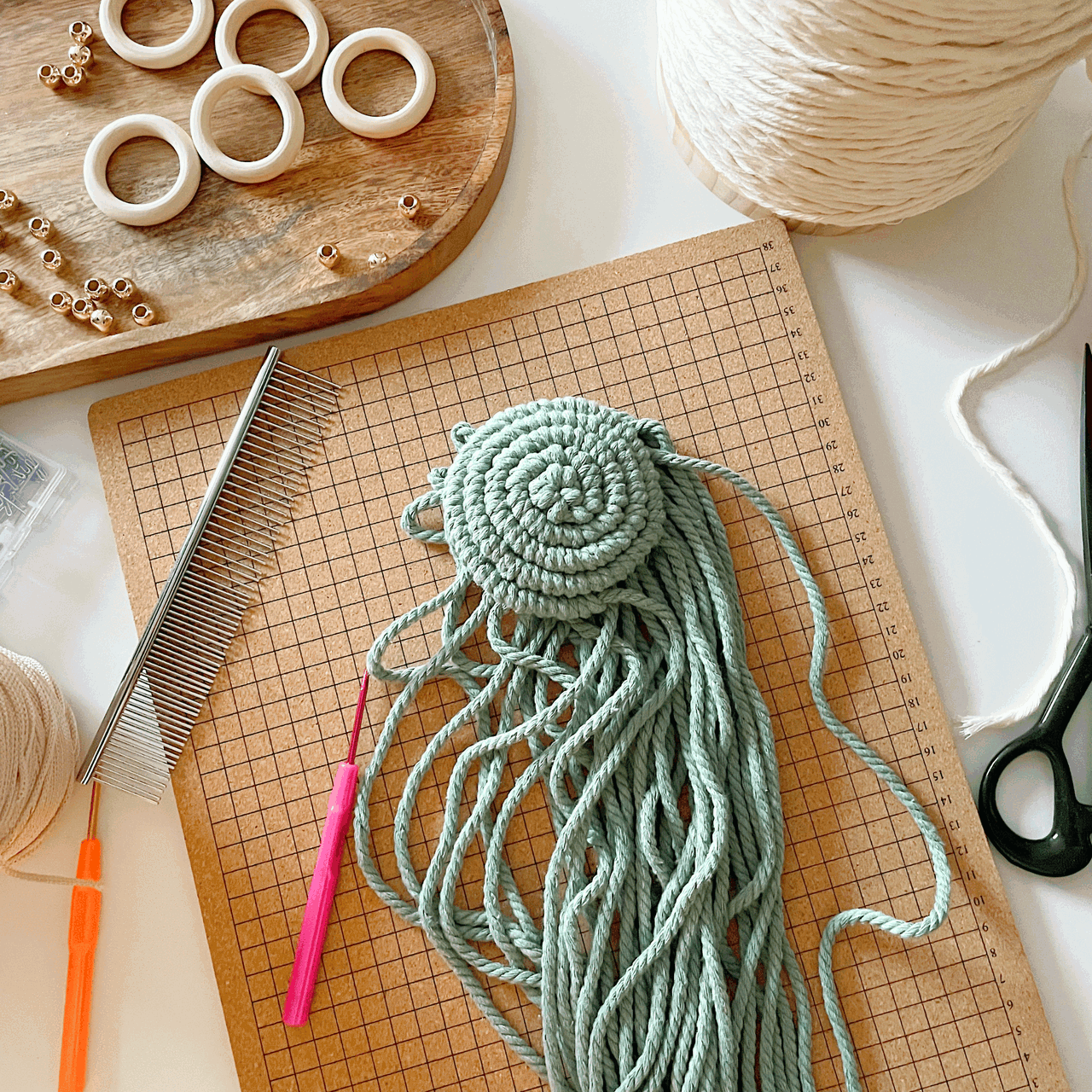
The problem: Brushed-out fringe is gorgeous — but right after brushing, it's frizzy, uneven, and full of static. It won't drape into that soft cascade you see in photos.
The fix: Steam it, brush it, set it.
- Steam — hold a clothing steamer 6 inches from the fringe and pass slowly. The fibers relax and straighten almost instantly.
- Brush — use a metal pet slicker brush from top to bottom to separate the strands.
- Set — mist lightly with fabric stiffener or unscented hairspray. This holds the shape and prevents future frizz.


This three-step finish is the difference between "homemade craft" and "looks like Pottery Barn." Don't skip it on display pieces.
Hairspray feels like a "hack" rather than a "technique," so most teachers leave it out to stay professional-sounding. But every macramé artist with a six-figure Etsy shop is steaming and stiffening every fringe piece. Skipping this is the #1 reason your finished project doesn't look like the photo in the pattern.
Student Wins from the Bochiknot Community
Real readers who applied these tips and came back to share:
"It must've been meant for me to find your videos. I've just subscribed and joined the community. I have difficulty with macramé but after reading through all your blog I'm gonna give it another go. Thanks once again."Delia ChittsReader comment · Feb 2025
"Thank you for all the advice and info. I'm just starting to get back into macramé again after 40 years away from it. I loved it then and can't wait to get back into it. I have learned so much more already."Lori MonroeReader comment · May 2026
"These are really good advices. I created some myself and I use all of yours but the last one. Thank you."AnaReader comment · Jul 2025
Common Macramé Mistakes Beginners Make (Beyond These 9 Tips)
While we're here — these are the other beginner mistakes I see most often in my Patreon community:
| Mistake | What goes wrong | Quick fix |
|---|---|---|
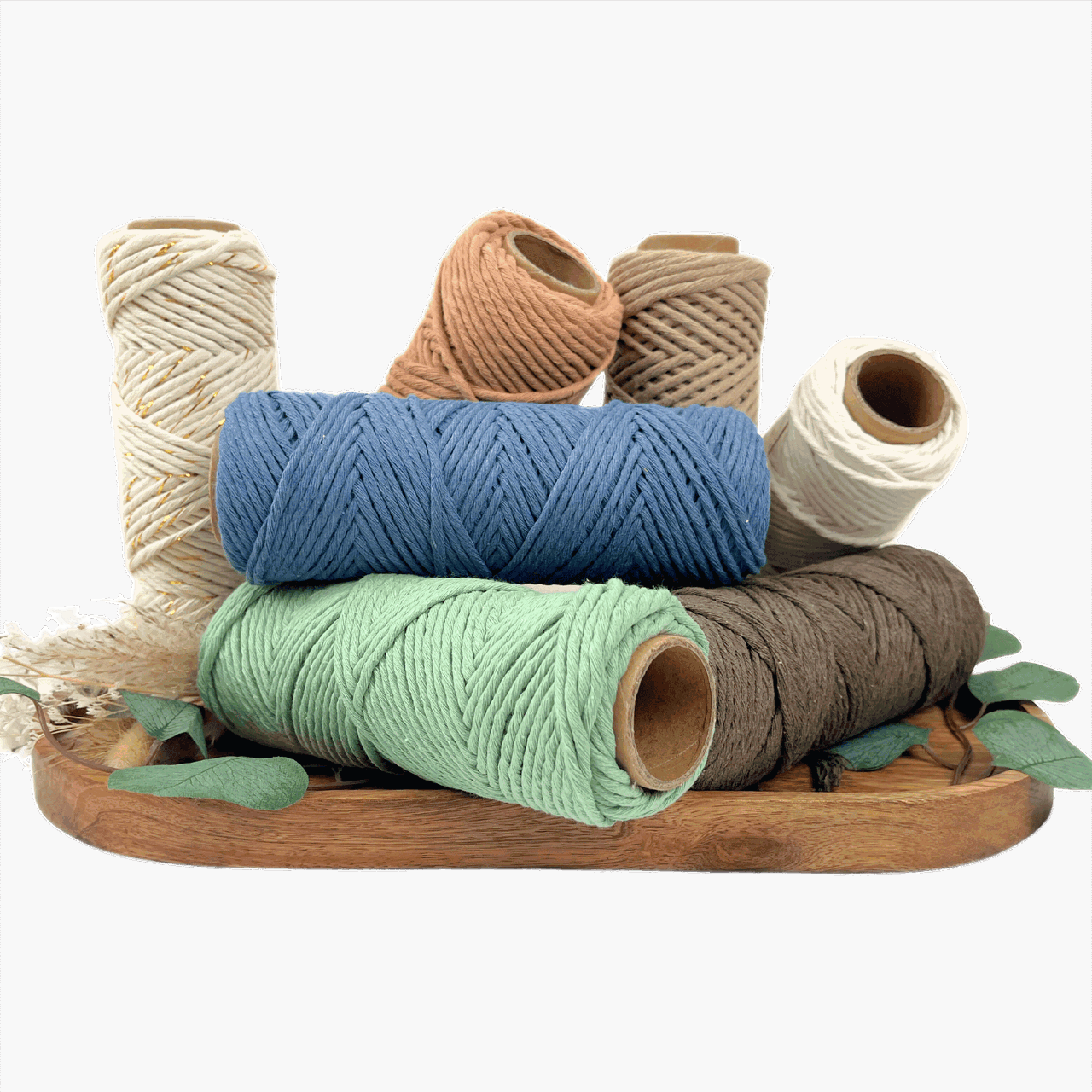
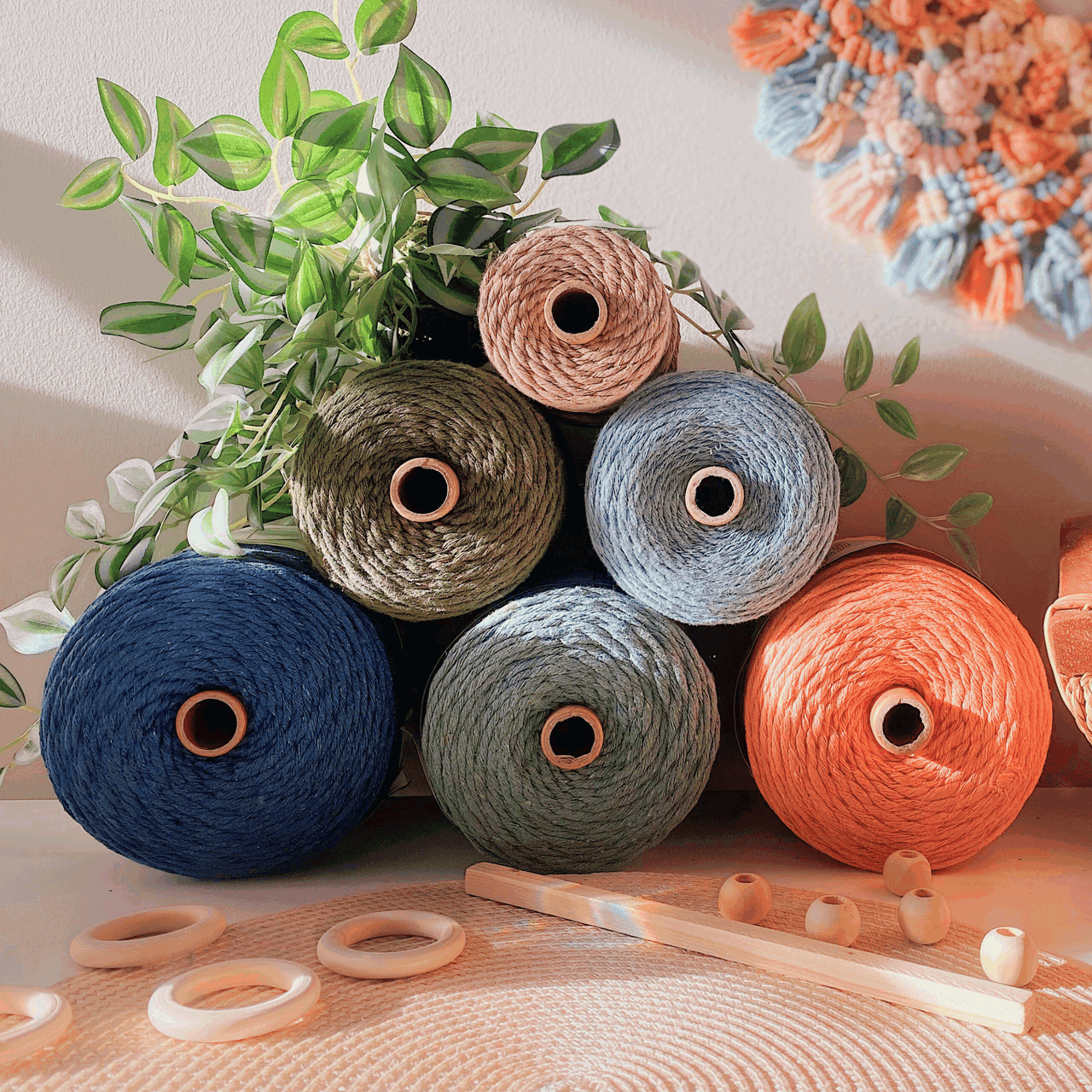
| Wrong cord thickness | 5mm cord on a tiny keychain = bulky mess | Match cord to project size — see our cord guide |
| Inconsistent tension | Knots look uneven even when they're not | Pull each knot to the same firmness — practice on scrap |
| Skipping the steam step | Fringe stays frizzy and won't drape | Always steam + set fringe on display pieces |
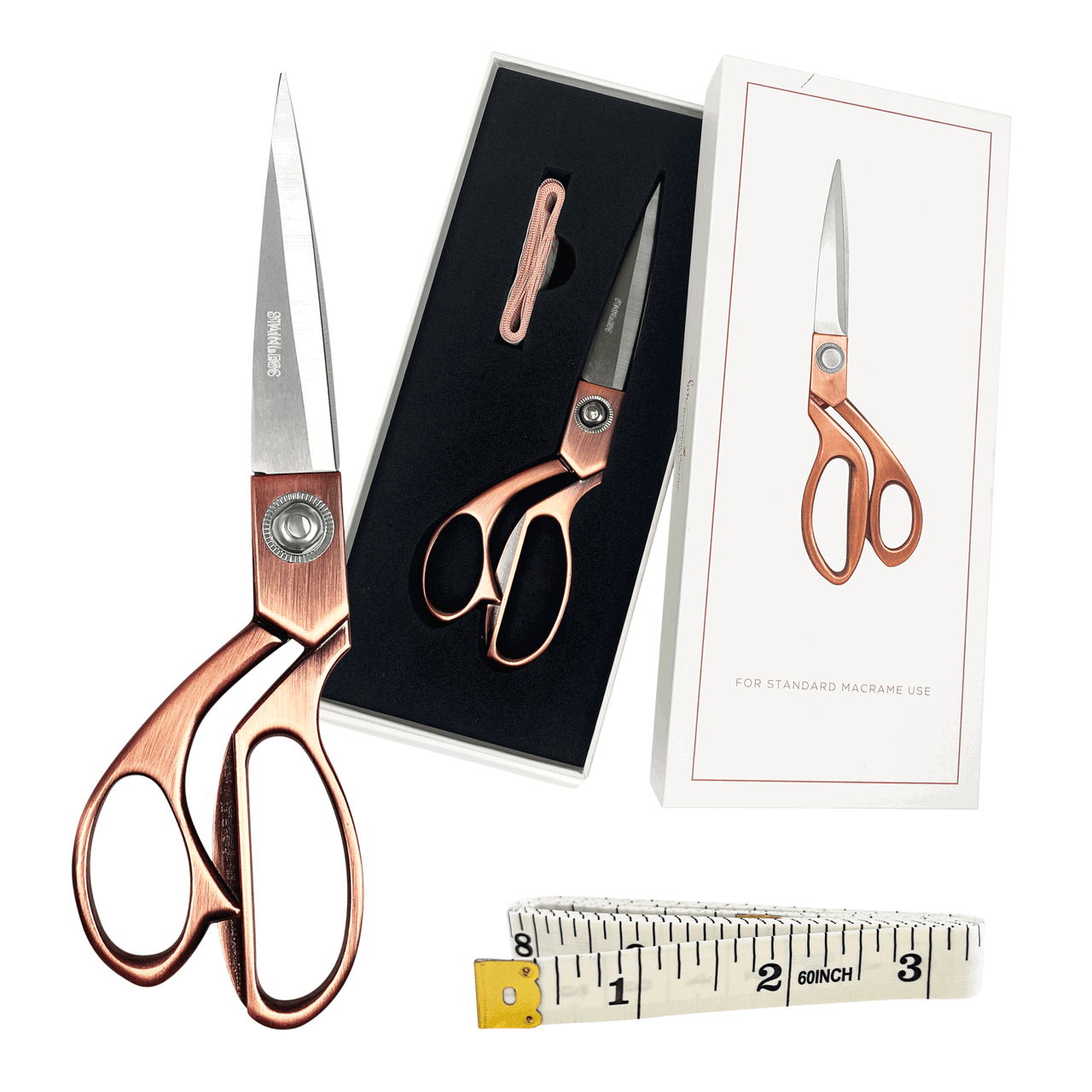
| Using craft scissors | Cord ends crush and fray instantly | Get dedicated macramé scissors |
| Cutting cord too short | Project dies halfway through | Always 4× project length, more for dense knots |
| Choosing the wrong first project | Overwhelm → quit | Start with a simple keychain or small wall hanging |
The Tools That Make These Tips Work
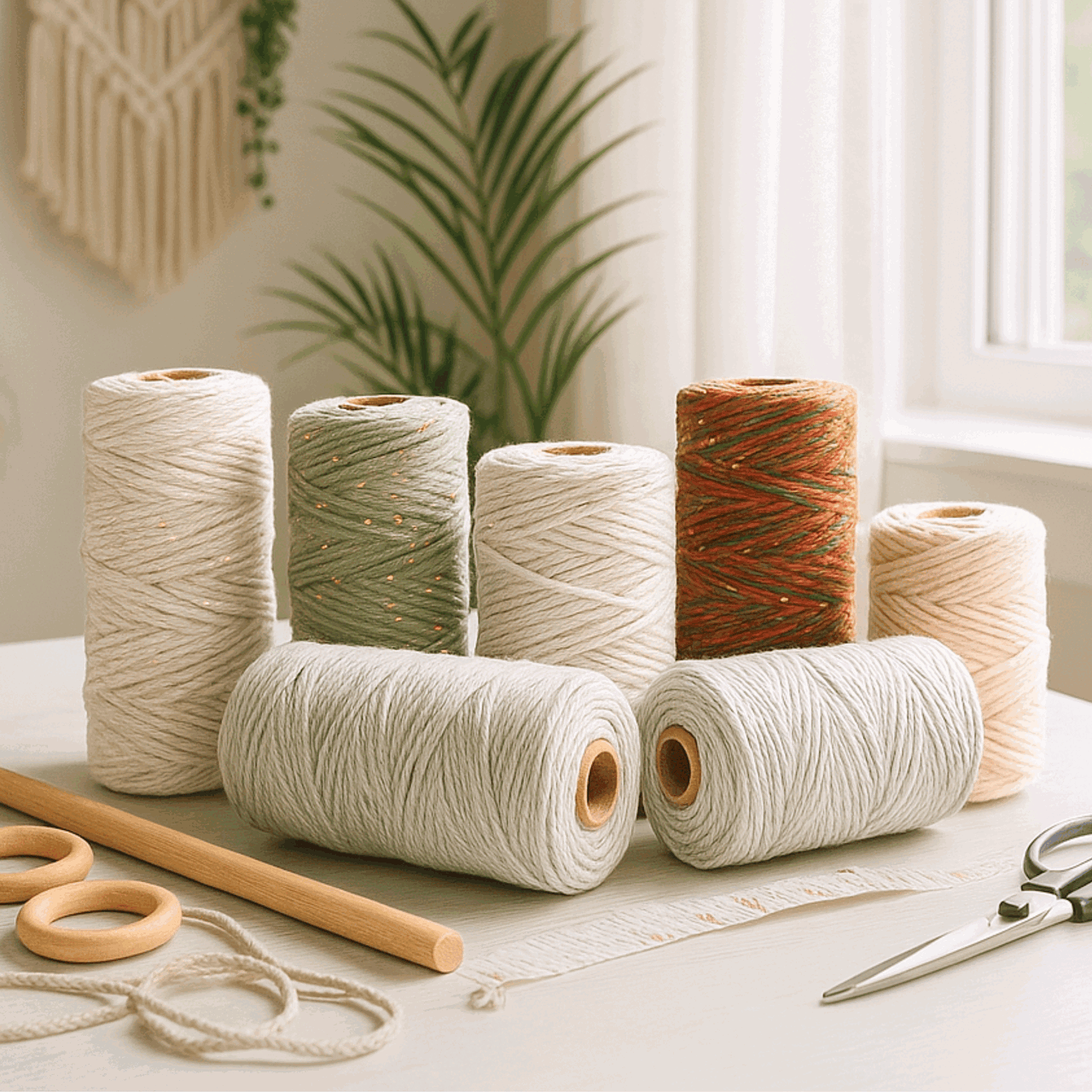
You don't need a workshop full of gear to apply these tips. Here are the four tools I actually use:


Projects to Practice These Tips On
The fastest way to lock these tips into muscle memory is to apply them on a small, finishable project. My picks for beginners:
- Macramé keychain — practice tip #1 (measuring) and tip #6 (sealing ends) on something you'll finish in an hour.
- Simple plant hanger — practice tips #5 (cord length), #7 (managing long cords), and the gathering knot finish.
- Small wall hanging — practice all 9 tips. This is where straight DHH rows (tip #2), straight fringe (tip #3), even spacing (tip #8), and steam-finishing (tip #9) all matter at once.
Frequently Asked Questions
What is the most important macramé tip for beginners?
Cord length. Cutting cord too short kills more beginner projects than any other mistake. Always cut at least 4× the finished project length per strand — more for dense or complex patterns. You can always trim excess; you can't add length.
How do I cut macramé fringe perfectly straight?
Run a strip of clear tape horizontally across the fringe at your cut line, then cut just below the tape with sharp scissors. The tape locks every strand in place so they can't shift mid-cut. Peel the tape off after.
How do I keep macramé cord from unraveling?
Seal every cord end before knotting. Use masking tape (best for cords you'll trim), a small overhand knot (best for fringe), or a drop of clear fabric glue/hairspray (best for permanent finishes). Re-check ends after untying knots — that's when fraying restarts.
How much cord do I need for a macramé project?
The rule of thumb: 4× the finished project length per strand for a standard beginner pattern. Use 3.5× for loose, fringe-heavy designs and 4.5× for dense, intricate knotting. Double the result if you're attaching cords with a Lark's Head knot (it folds in half on the dowel). For precise math, use the Macramé Golden Ratio.
How do I make a straight row of double half hitch knots?
Use a dowel as a temporary guide rail. Lay a thin dowel across your work along the line where the row should sit, tie your anchor cord around it, then tie your double half hitches over the dowel and anchor cord together. Slide the dowel out when you're done — your row will be ruler-straight.
How do I untie a macramé knot without damaging the cord?
Work backwards from the last knot tied, not the mistake. Use a small crochet hook or tweezers to loosen each knot gently — never yank, which tightens surrounding knots. For double half hitch rows specifically: pull the anchor cord out from the end and the whole row pops loose.
How do I make my macramé fringe soft and straight?
Three steps: steam, brush, set. Pass a clothing steamer 6 inches from the fringe to relax the fibers, brush from top to bottom with a metal pet slicker brush to separate strands, then mist lightly with fabric stiffener or unscented hairspray to hold the shape.
What tools do I need to apply these tips?
The essentials: sharp dedicated macramé scissors, a couple of wooden dowels (one thick for cord cutting, one thin as a knot guide), a measuring tape, clear tape, rubber bands, and a clothing steamer or hairspray for fringe finishing. A small crochet hook for untying is a nice bonus.
Why do my macramé knots look uneven even when I follow the pattern?
Almost always tension. If you pull harder on some knots than others, even perfectly spaced knots look wrong. Practice tying 20 knots in a row on scrap cord, pulling each one to the exact same firmness. Use a spacer or measuring tape alongside your work to lock spacing too.
Can I use a regular ruler instead of a measuring tape?
For short cord measurements yes, but for project work a flexible measuring tape is much better — it follows the curve of your project, pins easily alongside your work as a knot spacer, and handles long cord lengths without you having to reposition a ruler 10 times.
How long should beginner macramé projects take?
A keychain: 30–60 minutes. A small plant hanger: 1–2 hours. A small wall hanging: 3–5 hours. If you're spending way longer than this and getting frustrated, it's almost always one of these 9 tips you're skipping — usually cord measurement (tip #5) or knot consistency (tip #8).
What's the difference between this and your beginner's guide?
Our Complete Beginner's Guide to Macramé teaches you the knots and techniques from scratch. This post assumes you know the basics and gives you the workshop hacks that make those techniques actually work in practice. Read the beginner's guide first if you've never tied a square knot, then come back here.
What to Learn Next
You've got the workshop hacks. Now apply them to real techniques and projects:


About Nicole Woo
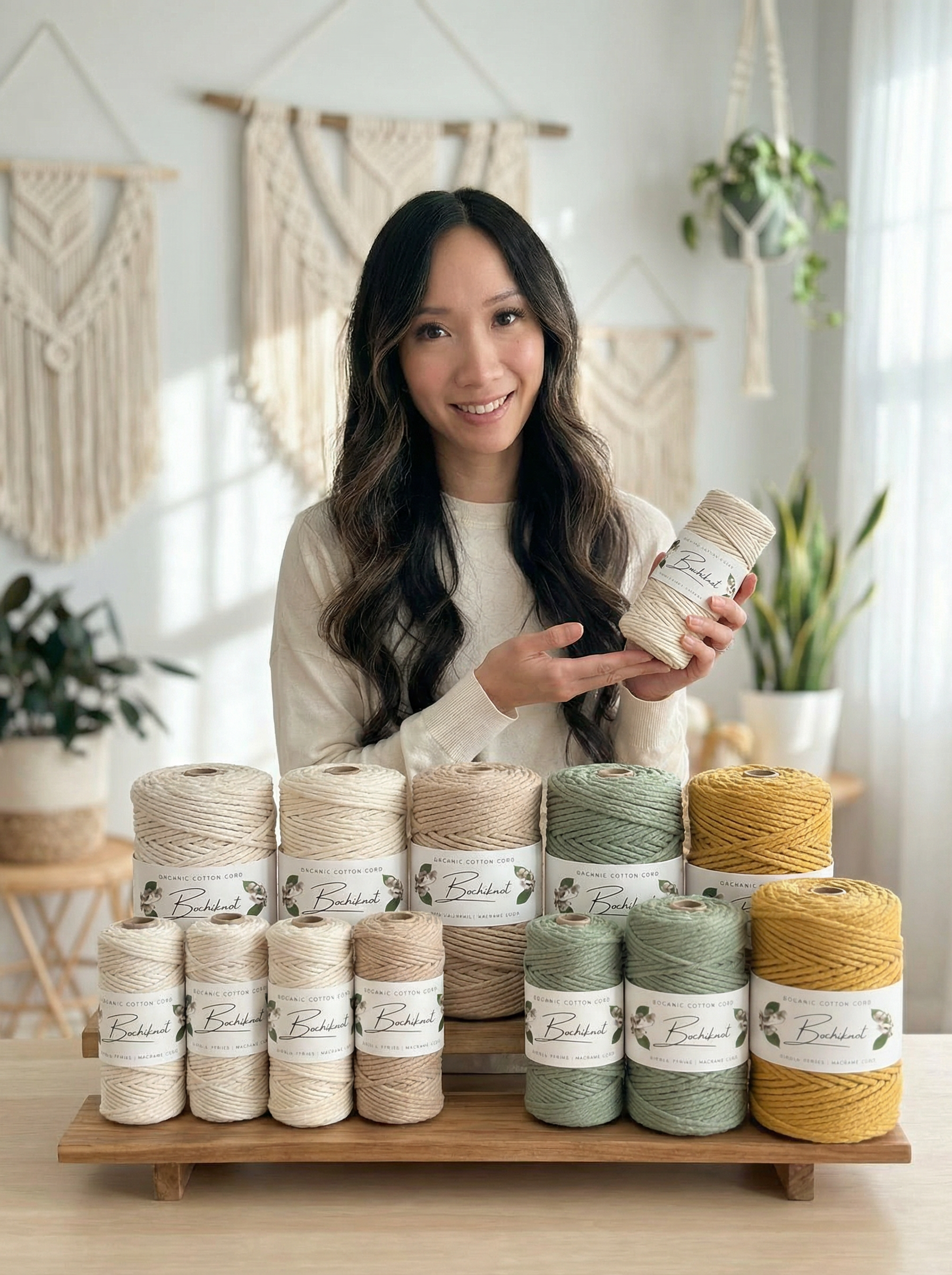
Nicole is the founder of Bochiknot Macramé and has been teaching macramé for over 5 years. She's helped thousands of beginners take their first knot through her tutorials, YouTube channel, and Patreon community. When she's not knotting, she's photographing every step so you don't have to guess.

Thank you for all the advice and info, I’m just starting to get back into Macrame again after 40 years away from it. I loved it then and can’t wait to get back into it. Thanks again I have learned so much more already.
This are really good advices. I created some myself and I use all off yours but the last one.
Thank you.
It must’ve been meant for me to find your videos. I’ve just subscribed and join the community. I have difficulty with macramé but after reading through all your blog I’m gonna give it another go thanks once again.
Hey! Congratulations for your blog! You have so much helpful information and amazing ideas! :)
Thank you so much for very useful tips. I love Macrame craft.
Leave a comment