












How to Make a DIY Macramé Bear Wall Hanging (Daisy Knot Pattern for Nursery Decor)


Updated 2026 · ~10 min read
🔖 Save for later
How to Make a DIY Macramé Bear Wall Hanging (Daisy Knot Pattern for Nursery Decor)
Updated June 6, 2026 · 11-step tutorial- Phase 1 — Wrap the main ring (Step 1): Anchor the first pink cord and the long beige cord on the round portion of the frame with reverse Larks Head knots.
- Phase 2 — Daisy pattern around the body (Steps 2–7): Build the first complete daisy, learn the key cord-wrap change on the second daisy, then repeat the daisy pattern continuously around the round portion of the frame.
- Phase 3 — Attach the ears (Steps 8–10): Secure the body cords at the back with double overhand knots, then build five daisies around the curve of the first ear with shorter cord lengths.
- Phase 4 — Mirror and finish (Step 11): Repeat the exact same five-daisy process on the second ear, secure the ends, and trim.
Total time: 1–2 hours · Finished size: ~13" tall · Skill level: beginner to intermediate · Cost: ~$20–$25 in materials

📌 Save this woodland nursery DIY ($25 vs $120 Etsy)
Handmade macramé bear wall hangings retail for $45 to $120 on Etsy. This Bochiknot DIY costs about $25 in premium Egyptian Giza cotton cord and a metal ring frame, takes one evening, and works for gender-neutral nurseries, baby showers, and Christmas gifts for new parents. Pin to your nursery, baby shower, or woodland nursery board.
Save to Pinterest
🎥 Prefer to watch?
The full step-by-step video walkthrough shows every daisy knot in real time. The cord-wrap change in step 5 (the key move that lets daisies repeat smoothly around the frame) is much easier to see in motion than from still photos.
Jump to videoWhat You'll Learn
Tutorial Contents
- What is a macramé bear wall hanging?
- Why DIY one for your nursery?
- Project details (skill, size, time, cost)
- Materials & tools you'll need
- Cord quantity calculator (3 ring sizes)
- Sizing variations
- Video walkthrough
- Step-by-step tutorial (11 steps)
- What to know before starting
- Pro tips & troubleshooting
- Common mistakes & fixes
- About Egyptian Giza cotton (and why it matters for baby)
- 6 color variations
- Where to display in a nursery
- Make it vs buy boutique (savings breakdown)
- Perfect gift for these 6 occasions
- Bear wall hanging FAQ
- Keep learning with Bochiknot
What Is a Macramé Bear Wall Hanging?
A macramé bear wall hanging is a hand-knotted wall piece built on a 12-inch bear-shaped metal ring frame using a repeating daisy knot pattern in three coordinating cord colors. The daisy knot is a small flower-shaped cluster made by combining a vertical Larks Head knot with a crossed center and two half-hitch closures in a contrasting color. The pattern wraps continuously around the round portion of the bear and curves five times around each ear, with cord ends secured at the back using double overhand knots (no glue, no sewing).
What makes this design a viral favorite for nurseries:
- Gender-neutral by default. The bear silhouette is the most-pinned nursery motif of 2026, used in boy nurseries, girl nurseries, and surprise-gender baby shower gifts.
- Woodland-modern boho aesthetic. Plays beautifully with Montessori, Scandinavian, and earth-tone nursery palettes. Reads as boutique, not craft.
- Premium baby-safe Egyptian Giza cotton. Longer-fiber cord, OEKO-TEX certified, softer than standard cotton.
- One repeating pattern. Once you know the daisy knot, you build the whole bear with the same motif — no surprises, no extra knots to memorize.
- Free pattern for commercial use. Sell handmade versions on Etsy. Bear wall hangings retail at $45 to $120 in the handmade nursery market.
Why DIY a Macramé Bear for Your Nursery?
Pottery Barn Kids and Anthropologie boutique nursery wall art runs $59 to $199, Etsy handmade bear macramé sits at $45 to $120, and Crate & Kids woodland decor sets reach $129 to $249. A handmade Bochiknot version using premium Giza cotton has four real advantages:
- Cost. About $20 to $25 in 5mm Egyptian Giza cord and a metal bear ring frame — plus one evening of your time.
- Baby-safe certification. OEKO-TEX certified Giza cord is independently tested against harmful substances, which most boutique pieces are not.
- Custom color. Pick cream, sage, blush, terracotta, beige, or any 5mm cord shade to match the nursery palette.
- Heirloom durability. Premium Giza cotton outlasts the synthetic-blend wall hangings in Pottery Barn and Anthropologie by years and gets softer with age.
Project Details
Materials & Tools You'll Need

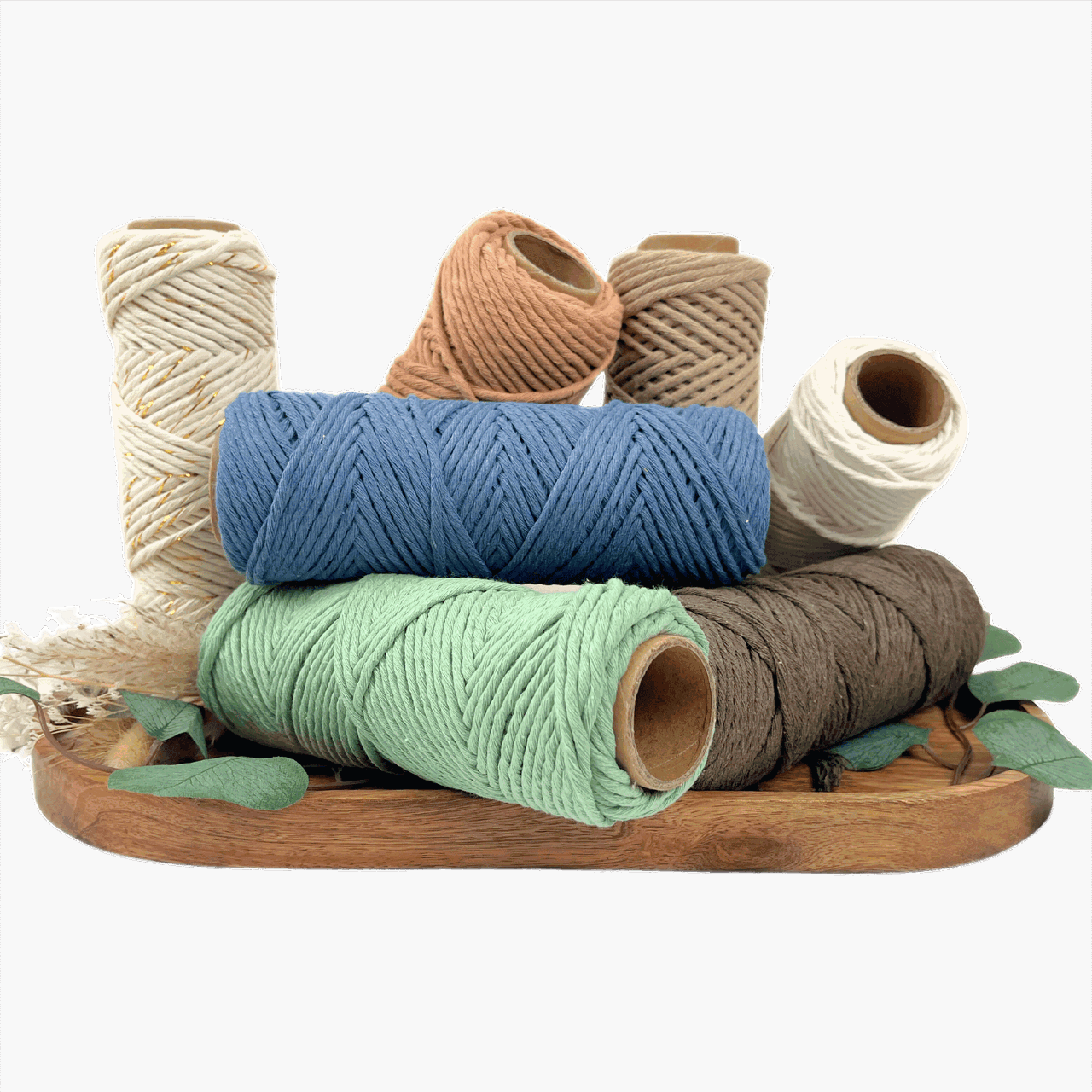
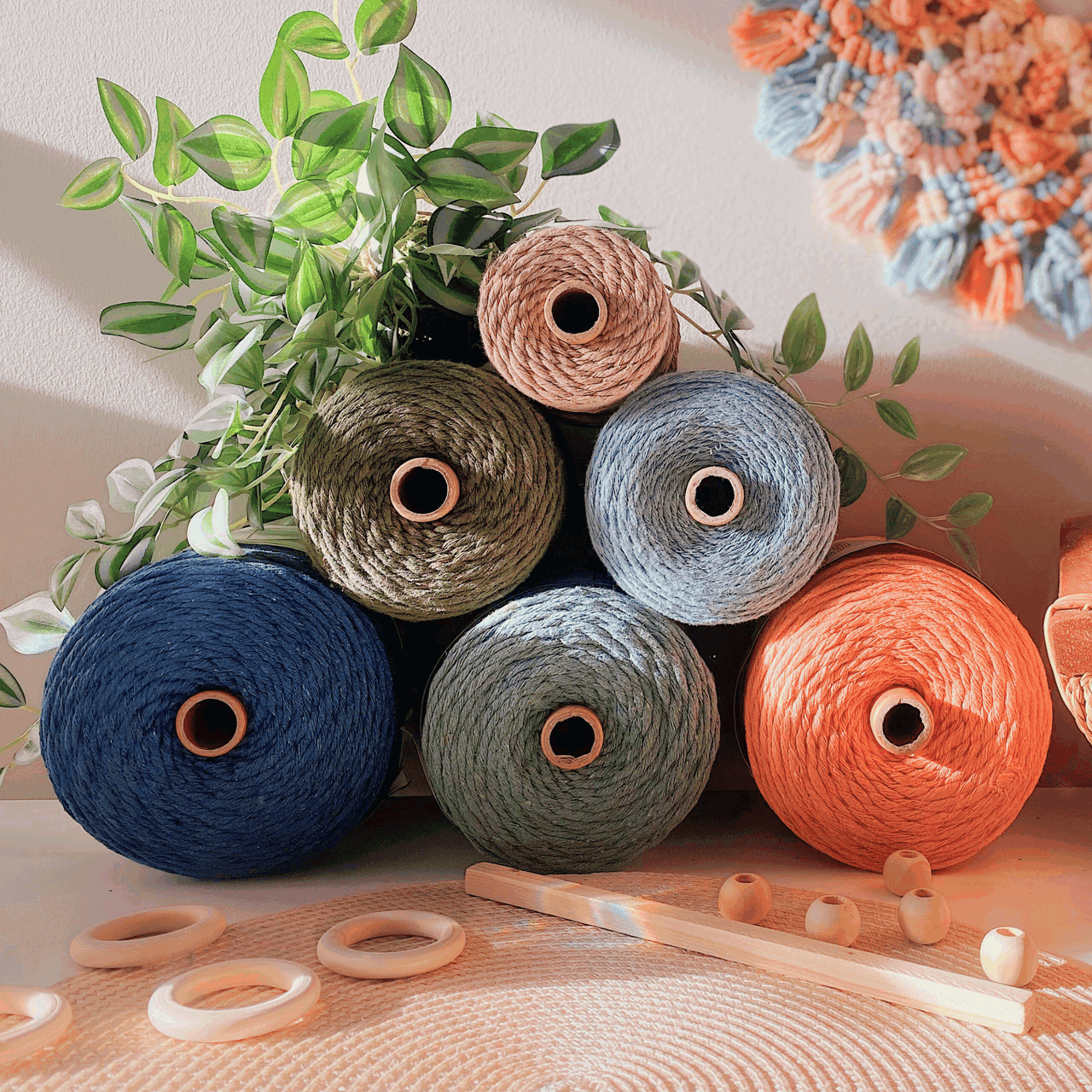
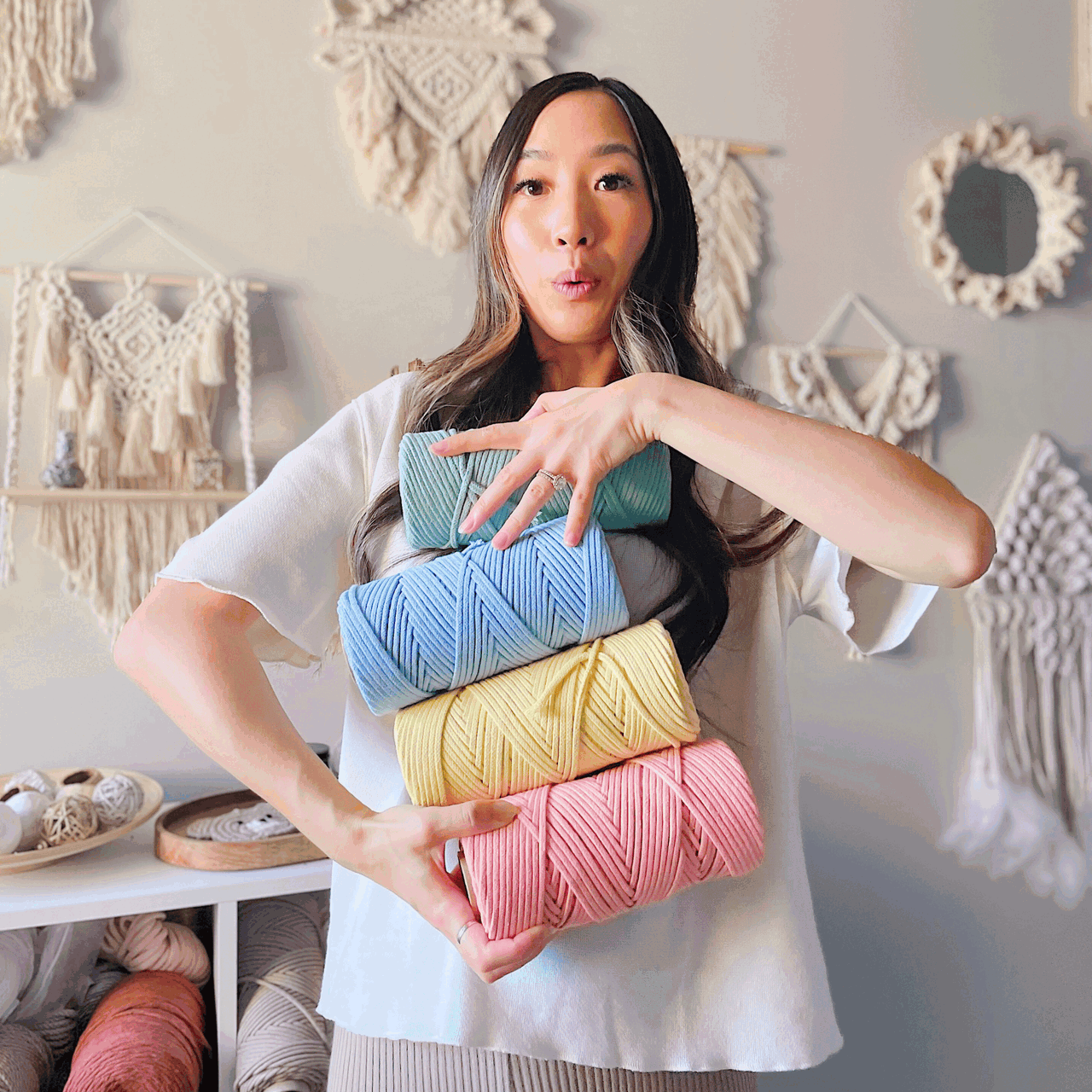
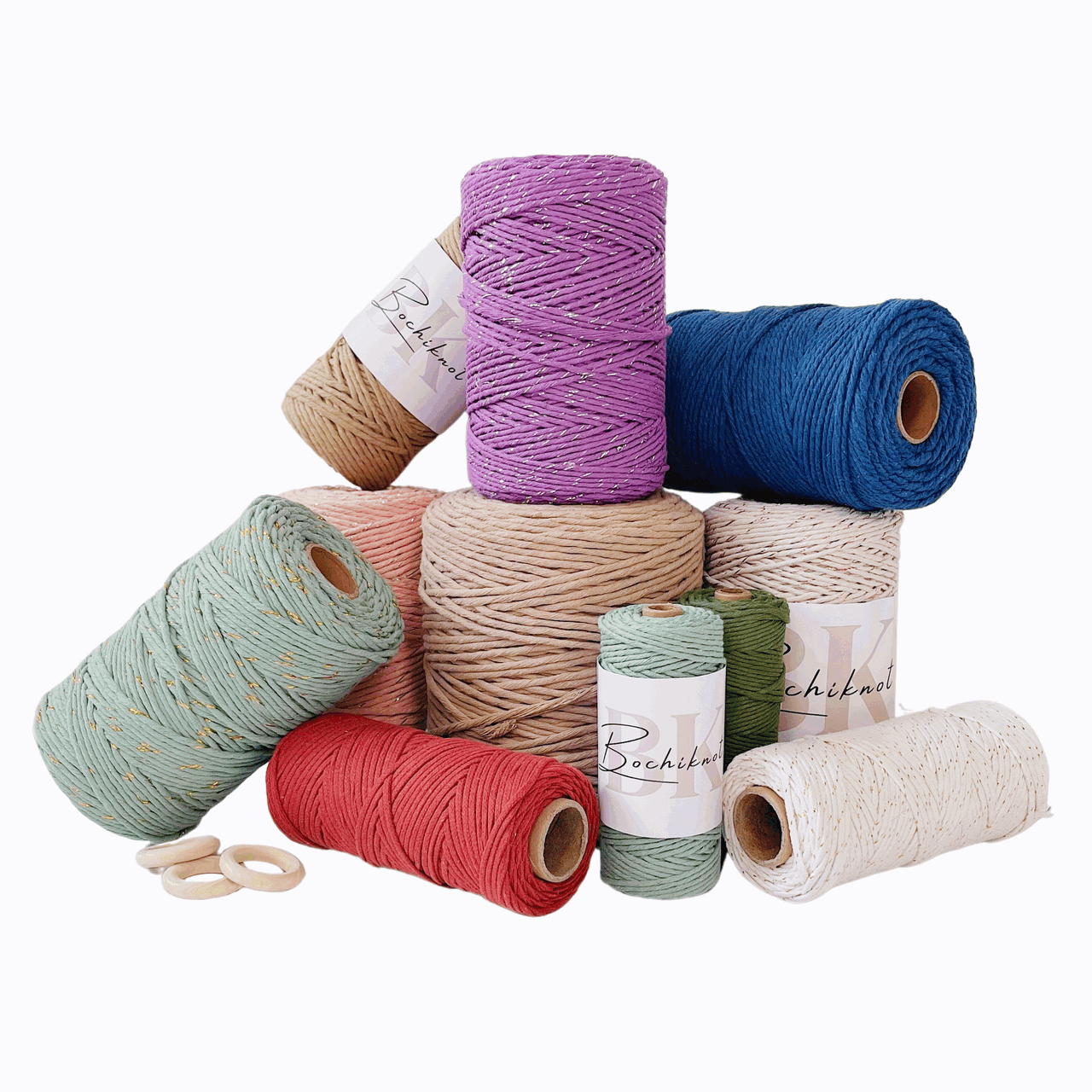
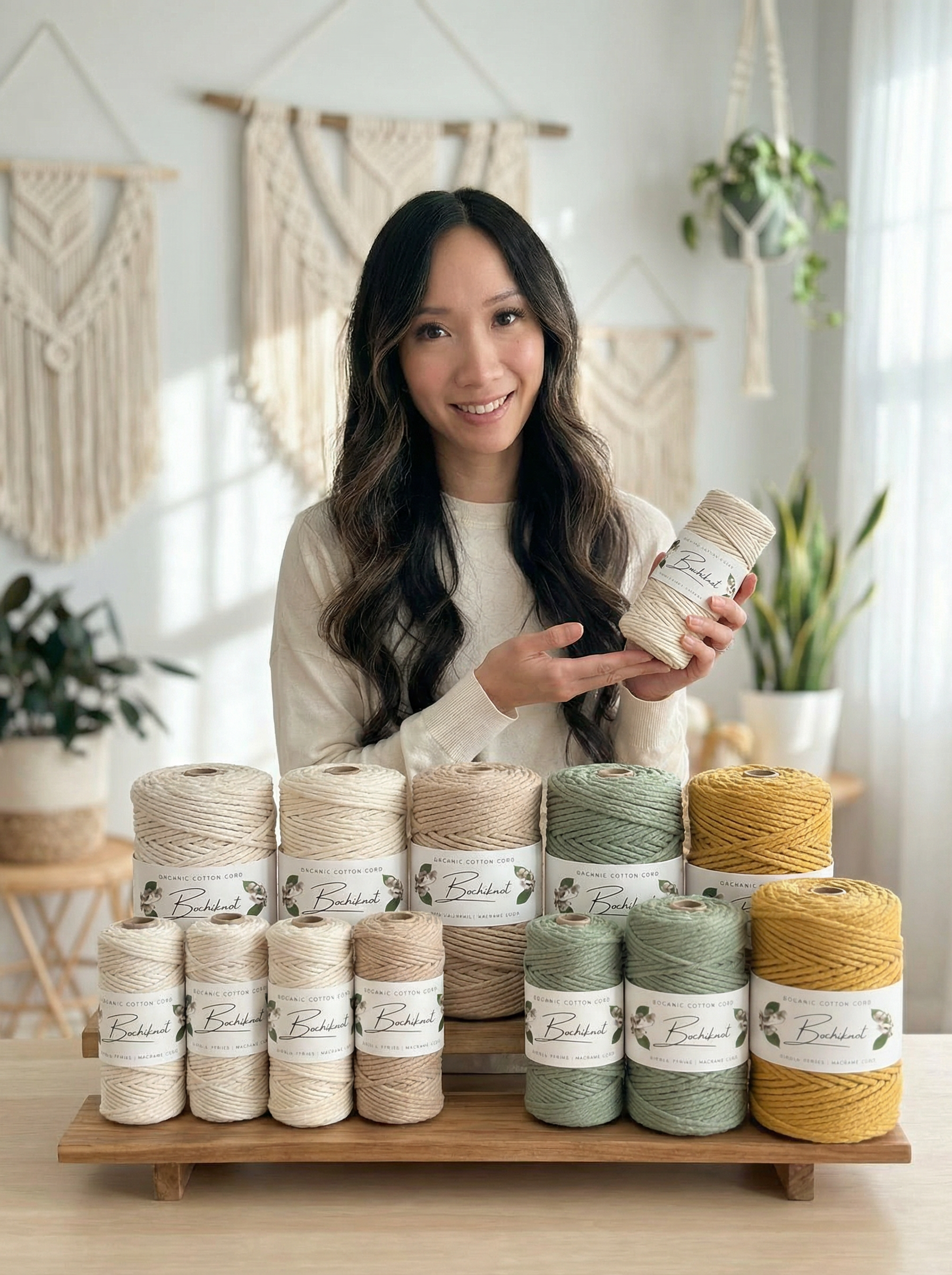
5mm Egyptian Giza Cotton Cord
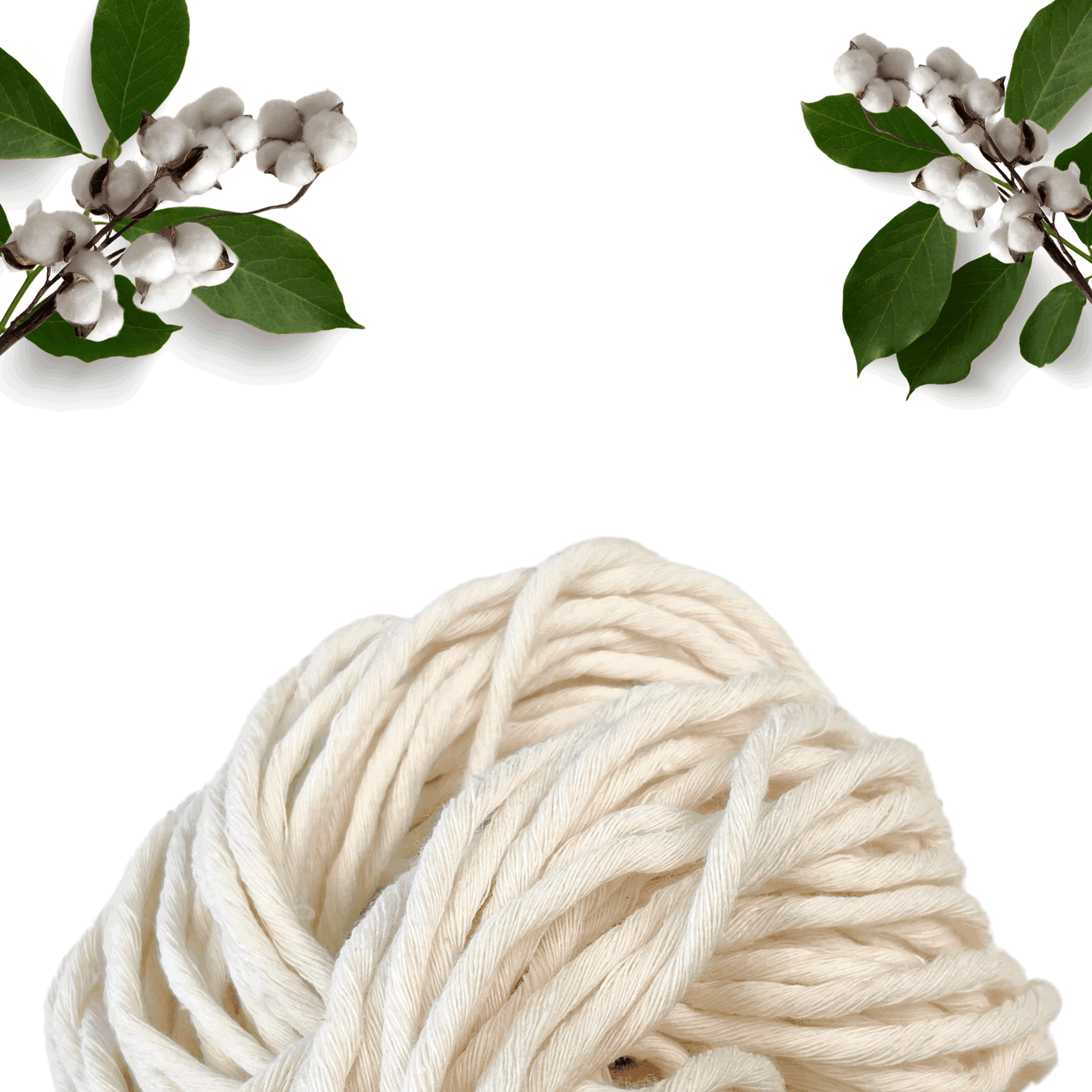
Premium baby-safe Egyptian cotton — longer fibers, OEKO-TEX certified, fluffier daisies than standard cord. The single best cord choice for a nursery piece.
Shop Giza cord
12" Bear Metal Ring Frame
The shaped frame that gives the bear its silhouette. Sturdy powder-coated metal, the exact ring used in this tutorial.
Shop bear ring
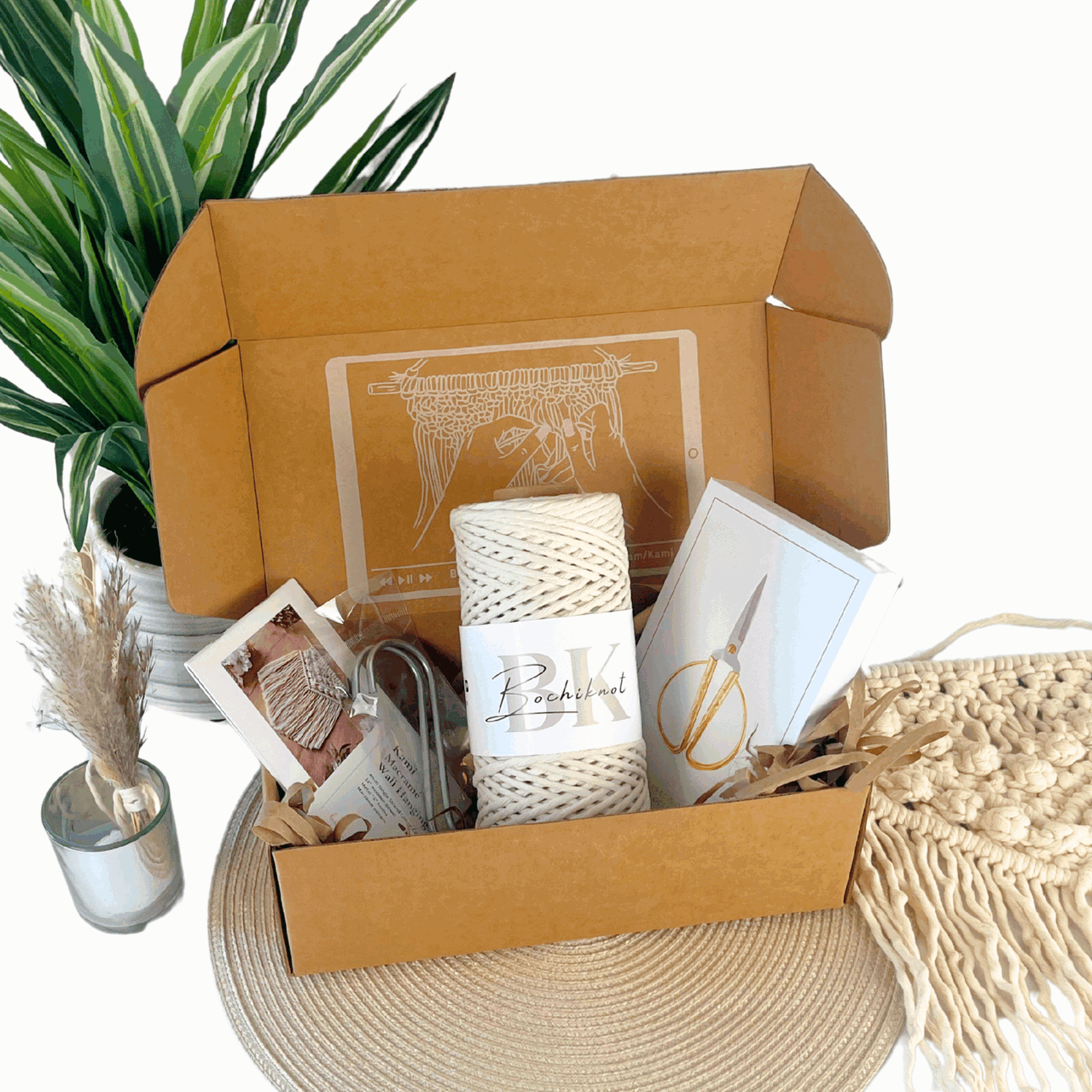
Bochiknot Welcome Kit
The beginner bundle — cord, scissors, comb, dowel, and pattern access in one box. Perfect first-time gift for an expecting mom.
Shop Welcome KitEssential Macramé Tools
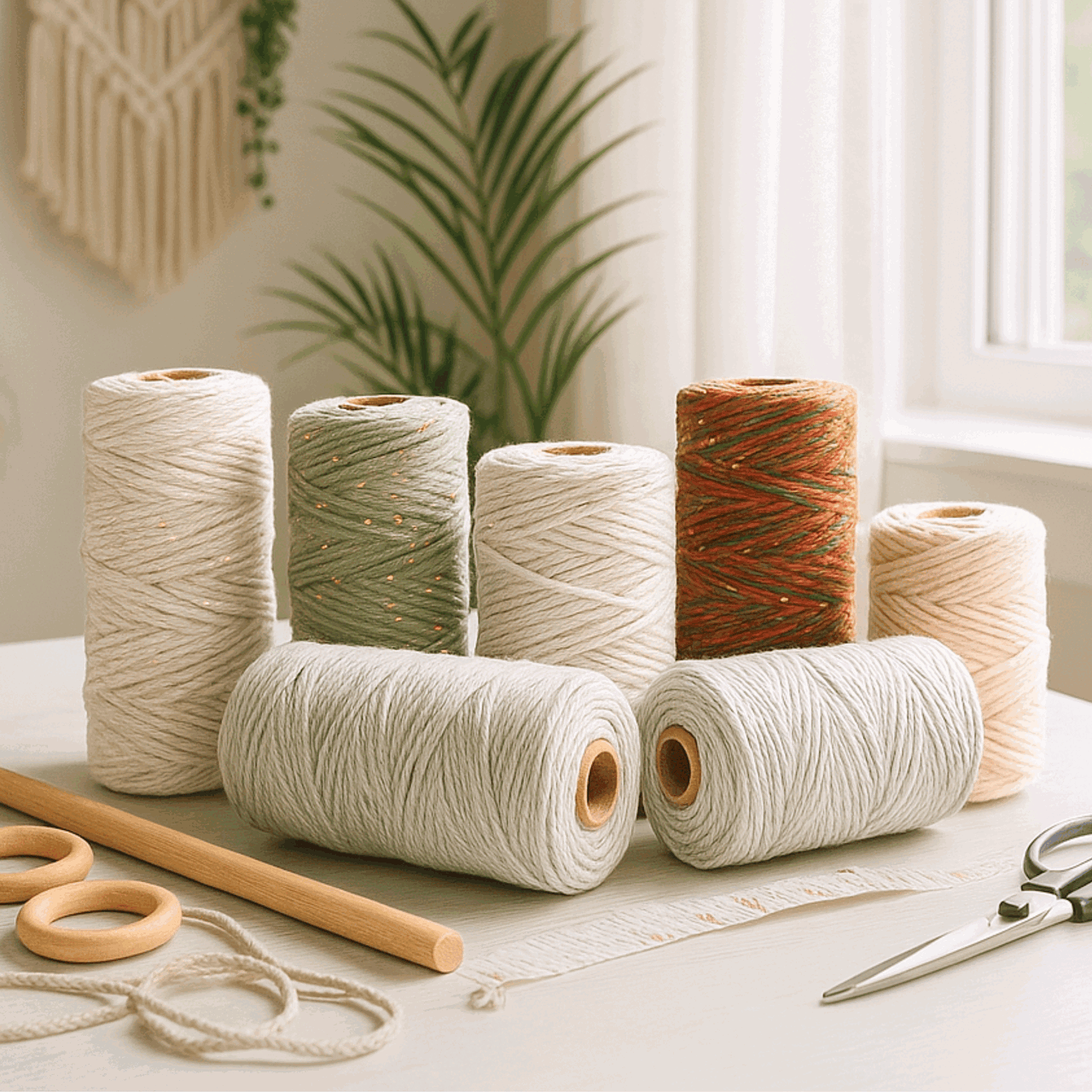
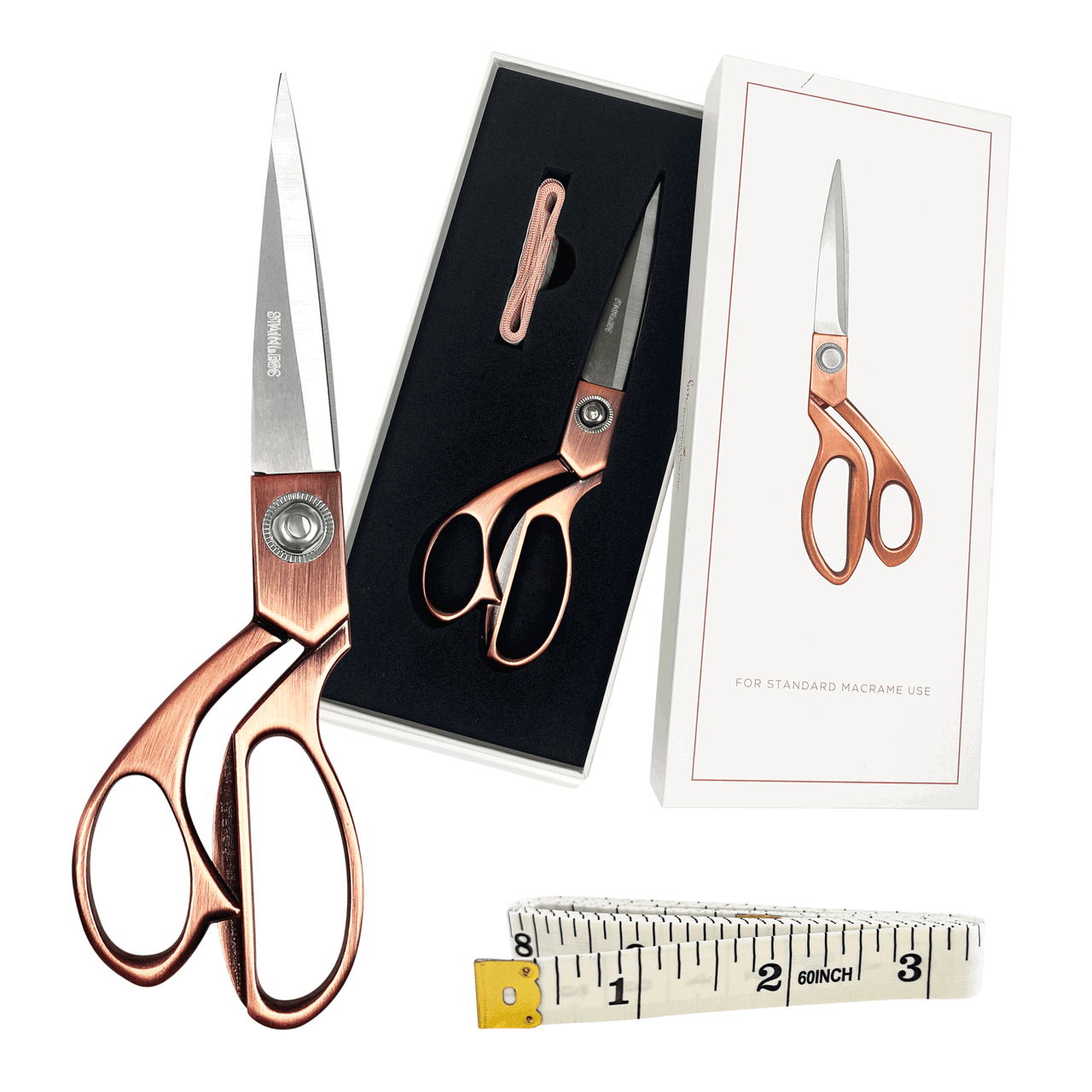
- Rose gold macramé scissors — sharp, clean cuts for cord ends and the final trim at the back
- Macramé measuring tape — accurate cuts for the long body cord (1250 cm) and shorter ear cords (80–100 cm)
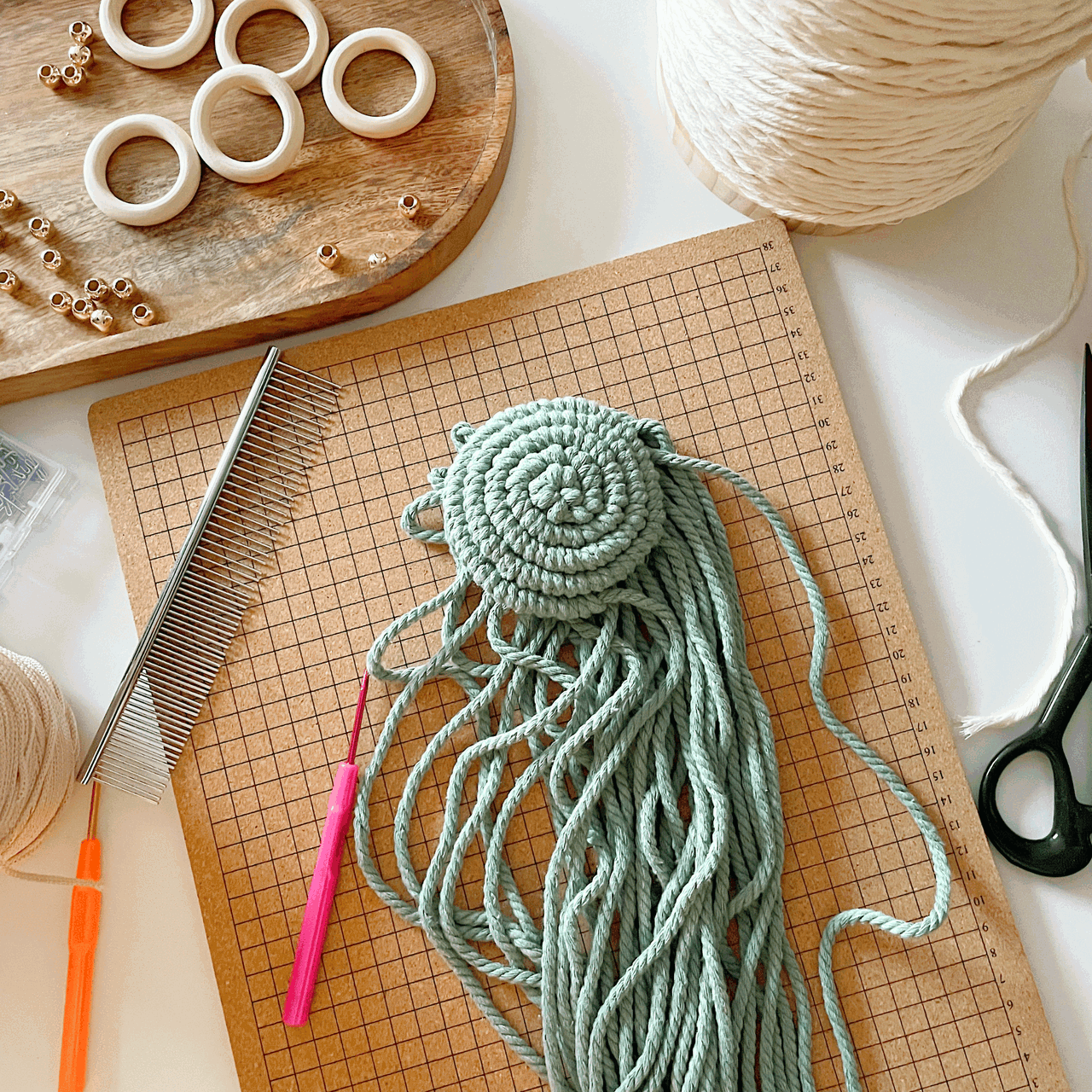
- Macramé fringe comb — brushes the Giza cord smooth before knotting so daisies sit cleaner
- Bochiknot Welcome Kit — full bundle of cord, scissors, comb, and a dowel for first-time makers
Cord Quantity Calculator (3 Ring Sizes)
The base tutorial uses a 12-inch bear ring (round portion ~10 inches). Scale your cord lengths based on the ring you have:
| Ring size | Color 1 (main pink) | Color 2 (beige body) | Color 3 (sage accent) | Estimated cost |
|---|---|---|---|---|
| Small (10 cm / 4" round) | 1 x 700 cm + 2 x 150 cm | 1 x 180 cm + 2 x 50 cm | 1 x 250 cm + 2 x 60 cm | ~$12–$15 |
| Standard (this tutorial, 12" bear) | 1 x 1250 cm + 2 x 250 cm | 1 x 300 cm + 2 x 80 cm | 1 x 420 cm + 2 x 100 cm | ~$20–$25 |
| Large (24 cm / 9" round) | 1 x 1900 cm + 2 x 380 cm | 1 x 450 cm + 2 x 120 cm | 1 x 640 cm + 2 x 150 cm | ~$30–$38 |
Cost estimate based on 5mm Egyptian Giza Cord (105 yds, $19.99). A single roll covers 2 to 3 standard 12-inch bear wall hangings, so you can make one for the nursery and a baby shower gift for under $25 each.
Sizing Variations
| Size | Ring frame | Finished height | Best for |
|---|---|---|---|
| Mini | ~6" round bear frame | ~7" | Ornaments, mobile accents, gift toppers |
| Standard (base pattern) | 12" bear-shaped metal ring | ~13" | Above the crib, gallery walls, baby shower centerpiece |
| Statement | ~18–24" oversized bear ring | ~22"+ | Big nursery wall focal point, woodland gallery hub |
| Bear family set | 3 rings (small + medium + large) | Cluster of 3 | Mama bear, papa bear, baby bear arrangement |
Video Walkthrough
How to Make a Macramé Bear Wall Hanging (Step-by-Step)
Follow the 11 steps below. Each step has photos and clear bullet instructions. If you get stuck on any step, the video above walks through every step in real time.
How the pattern works — a quick overview
This pattern builds in four phases: (1) anchor the first pink cord and the long beige body cord on the round portion of the bear ring with reverse Larks Head knots, (2) build complete daisies around the body using vertical Larks Head knots and half-hitch closures in alternating colors, (3) wrap five daisies around each ear with shorter cord lengths, and (4) secure all ends at the back with double overhand knots and trim.
Step 1: Start on the Round Portion of the Frame
- Start with the 300 cm pink cord. Fold it in half to find the center, then place that midpoint over the ring so it sits evenly on the frame.
- Bring the cord up on the right side and cross the ends over each other to form a loop on top of the ring.
- Take the 1250 cm beige cord, fold it in half, pass the loop end under the first loop, and secure it using a reverse Larks Head knot.


Step 2: Make the First Half of the First Daisy
- Take the middle left pink cord and form a vertical Larks Head knot on the left side by making a half hitch outward, then reversing direction and tying a half hitch back toward the center.
- Repeat the same process on the right side with the middle right pink cord, mirroring the movement to create the top petals of the daisy shape.


Step 3: Cross the Center Cords and Attach the Middle Anchor
- Cross the two middle pink cords over one another, then take the 400 cm beige cord, fold it in half, and attach it to the crossed loops using a reverse Larks Head knot.
- Pull on the pink cords to tighten and secure the connection so everything sits neatly in place.


Step 4: Finish the Bottom Half of the First Daisy
- Take the left pink cord and create a vertical Larks Head knot by making a half hitch outward, then reversing direction with a half hitch back toward the center. Repeat the same mirrored movement on the right side.
- Fold the two sage cords over the pink cords so they crisscross in front, then use the pink cords to tie a half hitch on each side around the sage cords, pulling each one down to secure.
- Pull both sage cord ends firmly to tighten everything and lock the shape in place. The first daisy knot is now complete.


Step 5: Begin the Second Daisy and Learn the Key Change
- Begin the next daisy the same way by forming vertical Larks Head knots with the pink cords on both sides, then cross the center pink cords.
- Before attaching the beige cords, wrap them behind the ring in opposite directions — the right cord goes to the left side, and the left cord goes to the right side. This is the key change that lets the daisy pattern repeat continuously around the ring.
- Bring the pink loop down and secure the beige cords by tying half hitch knots on both sides to hold everything in place.


Step 6: Close the Second Daisy the Same Way as the First
- Bring the green cords down on both sides and create vertical Larks Head knots by making a half hitch outward, then reversing with a half hitch back toward the center.
- Complete the daisy as before by crossing the green cords over the center, then using the pink cords to tie the closing half hitch knots on each side.
- Tighten all cords to secure the shape, then continue repeating this same adjusted daisy pattern for the rest of the design.

Step 7: Continue the Daisy Pattern Around the Round Frame
- Repeat the daisy pattern around the bottom and sides of the circular frame, tightening and adjusting each section as you go to keep the shape clean and even.
- Keep the cords organized, ensure each daisy is snug before moving on, maintain even petals on both sides, and check that the beige cords stay properly crossed at the back.
- When reaching the top ear section, continue the same daisy pattern — just adjust how the cords travel behind the frame, with the left cord crossing behind as usual and the right cord moving up through the ear before positioning.
- Once in place, attach both cords to the middle pink cords using half-hitch knots, then continue the daisy pattern across to the other side. In other words, do not overthink the ears while working the round section — the daisy logic stays the same, the path of the cords just follows the frame shape.


Step 8: Secure the Main Ring at the Back Without Glue or Sewing
- Once the daisy pattern is complete around the round portion, secure the loose ends at the back by tying a series of double overhand knots — no glue or weaving needed.
- To avoid a gap near the starting point, guide the cords slightly upward and thread them through the area where the pattern began before knotting.
- Continue tying the double overhand knots one by one until all ends are neatly secured.

Step 9: Create the Daisy Pattern on One Ear
- For one ear, prepare an 80 cm green cord, 250 cm pink cord, and 100 cm beige cord. Weave the green cord through the right side of the ear and overlap the ends on top.
- Attach the pink cord using a reverse Larks Head knot, then create vertical Larks Head knots on both sides with the pink cords.
- Fold the beige cord in half, attach it to the middle pink cords with a reverse Larks Head knot, then complete the daisy pattern as before.

Step 10: Build Five Daisies Around the Curve of the Ear
- Slide the first daisy up to the top of the ear, then create two more daisies below it, making sure to wrap the beige cords behind the ring as before.
- As you reach the curve, start bending the pattern early so it follows the shape of the ear smoothly, then continue with three more daisies over and down the other side (five total).
- Once finished, bring the cord ends to the back, secure them with double overhand knots, and trim any excess.


Step 11: Repeat on the Second Ear
- After the first ear is complete, repeat the exact same five-daisy process on the opposite ear so both ears mirror each other in cord color, daisy count, and spacing.
- Secure the ends at the back with double overhand knots and trim any excess cord.

That's a Wrap!
Step back and admire your finished macramé bear wall hanging. The whole piece is built from one repeating daisy knot in three coordinating Egyptian Giza cotton colors, and it is the kind of heirloom nursery decor that gets passed down or sold for $90+ on Etsy. Hang it over the crib, gift it at the next baby shower, or photograph it for your handmade shop.
Honest Take: What to Know Before Starting
A few honest disclaimers before you commit
- It is not pure beginner. If this is your very first macramé project, build a small vertical Larks Head practice piece first. The daisy is a combination knot and the half-hitch closure timing takes a few daisies to feel natural.
- The first daisy will look slightly wonky. Daisies 1 and 2 are practice. By daisy 4 your spacing will lock in. Do not unravel — keep going and the consistency will arrive.
- The key cord change in step 5 is non-negotiable. Wrapping the beige cords behind the ring in opposite directions is what lets the pattern repeat around the entire frame. If you skip this, daisy 3 will not sit correctly.
- Cord lengths matter. The 1250 cm main beige cord feels long, but you will use it. Cutting it shorter means splicing mid-project, which is much harder than starting with extra.
- Hang above the crib safely. Always hang at least 24 inches above the crib mattress (measured from the top of the highest rail position), use a wall anchor rated for at least 5 pounds, and never hang directly over where the baby's face will be.
- Decor, not toy. This is a wall hanging, not a baby toy. Do not let baby chew, pull, or sleep with it.
Pro Tips & Troubleshooting
- Cut all cords at once. Measure and cut all 9 cords (3 long + 6 short) before starting. Cutting mid-project leads to inconsistent lengths.
- Use a fringe comb on the long beige cord first. Run a fringe comb down the 1250 cm cord before knotting — it removes kinks and makes daisies sit cleaner.
- Mark the centers. Use a small piece of painter's tape to mark the center of each folded cord — it makes the reverse Larks Head knot placement instant.
- Count daisies, not inches. The ear pattern is "five daisies around the curve." Counting daisies keeps both ears symmetric even if your knot spacing varies slightly.
- Tighten every daisy before moving on. A loose daisy in row 3 will pull the rest of the ring crooked. Snug it now, not later.
- Hide the back, do not glue it. Double overhand knots at the back are the cleanest finish — no glue, no off-gassing, baby-safe.
- Photograph in golden hour. Style the finished bear against linen or oak shelving during morning light for the most boutique-quality nursery photos.
Common Mistakes & Fixes
| Problem | Likely cause | Fix |
|---|---|---|
| Daisies look loose or open | Half-hitch closure not pulled tight | After each daisy, pull both sage/green cord ends firmly downward to lock the petals — do this before starting the next daisy |
| Daisy 3 sits wrong | Skipped the key cord-wrap change in step 5 | Untie daisy 2's closure, rewrap the beige cords behind the ring in opposite directions, retie |
| Ears look asymmetric | Different daisy count or different cord tension on each ear | Count five daisies per ear, match the cord colors exactly, and pull each half-hitch with consistent firmness |
| Ring shows through between daisies | Spacing too wide | Slide daisies snug against each other — daisies should touch slightly, not space apart |
| Cord ends fray at the back | Trimmed too short with no double overhand knot | Re-tie the double overhand knot first, then trim leaving 1 cm tail past the knot |
| Cord kinks throughout the piece | Cord not combed or relaxed before starting | Brush cord with a fringe comb pre-knot, or hang straight overnight before cutting to relax the twist |
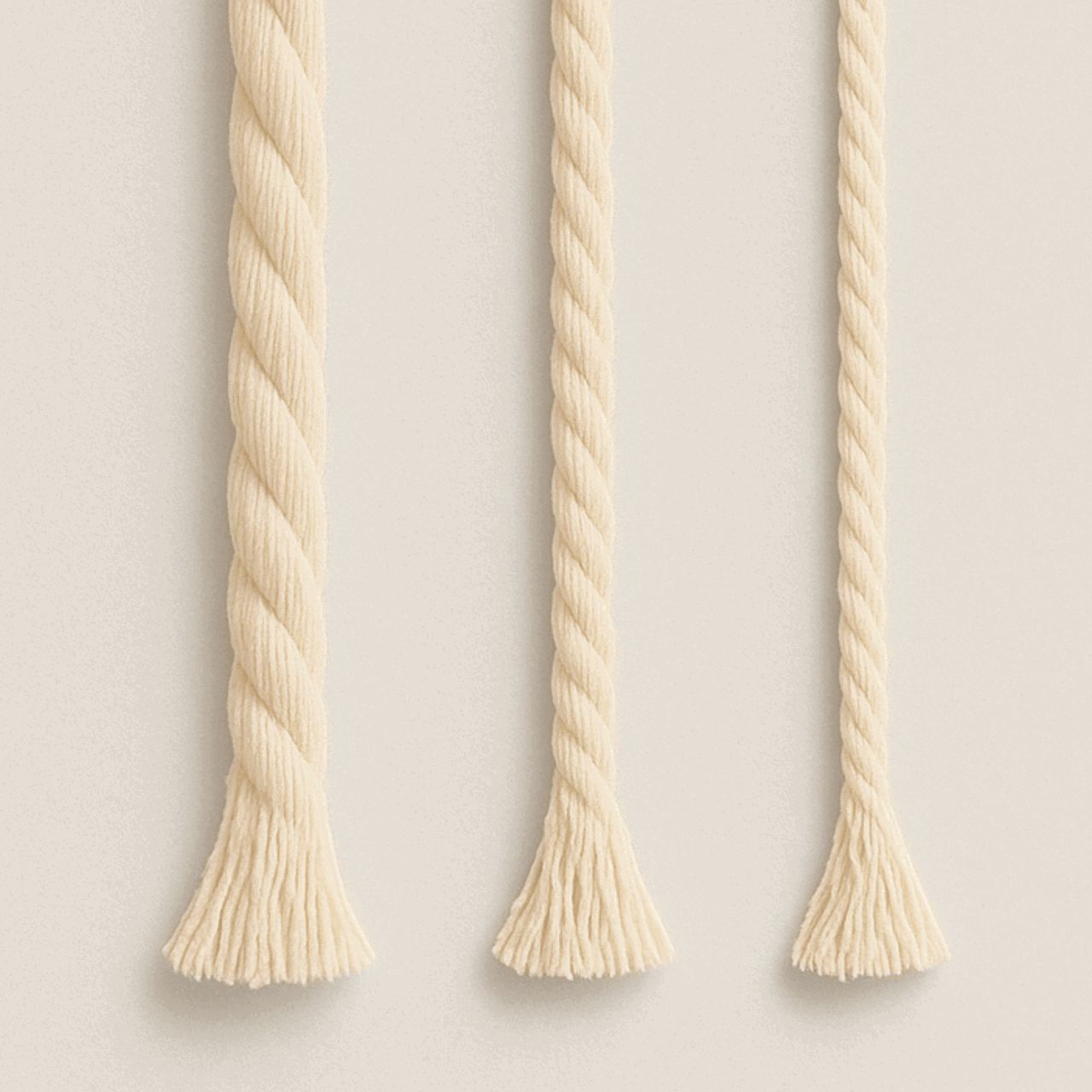
| Daisies look flat (not fluffy) | Using a 3-ply twisted cord instead of single-strand | Switch to 5mm single-strand Egyptian Giza — single-strand puffs into daisies, twisted cord stays flat |
About Egyptian Giza Cotton (And Why It Matters for Baby)
6 Color Variations for the Nursery
The daisy knot pattern works in any 5mm cord color combination. Six of the most-pinned nursery palettes in 2026:

| Palette | Color 1 (main) | Color 2 (body) | Color 3 (accent) | Best for |
|---|---|---|---|---|
| Woodland gender-neutral | Natural | Buttercream | Sage | Most-pinned, gender-neutral nurseries |
| Blush boho girl | Blush | Buttercream | Natural | Soft feminine pink nurseries |
| Earthy boy | Terracotta | Beige | Sage | Earth-tone modern boy nurseries |
| Scandi minimalist | Natural | Cream | Mocha | Black-and-cream Scandi nurseries |
| Montessori muted | Beige | Mocha | Dusty Pink | Montessori-inspired, low-stimulation rooms |
| Christmas / winter gift | Cream | Sage | Cinnamon | Holiday gifts for new parents |
Where to Display in a Nursery
Above the Crib
The hero placement. Hang 24"+ above the top crib rail so it stays out of reach as baby grows. Centered with the crib for symmetry.
Gallery Wall Over Dresser
Pair with a wooden name sign, a botanical print, and a small mirror for a curated 4-piece nursery gallery wall.
Nursing Nook
Hang above the glider so mama has something soothing to look at during 3 a.m. feeds. Boho cozy + functional.
Woodland Themed Corner
Cluster with a mini macramé tree, a wood bear bookend, and a forest print for a complete woodland nursery vignette.
Bookshelf Accent
Lean against the back of an open nursery bookshelf as a soft texture layer behind board books and wooden toys.
Baby Shower Display
Hang on the dessert backdrop or behind the gift table as the photogenic centerpiece. Gift it to mom afterward.
Make It vs Buy Boutique: The Savings Math
| Source | Typical price | Notes |
|---|---|---|
| Etsy similar bear macramé | $45–$120 | Cotton cord, varies in quality and cord origin |
| Pottery Barn Kids woodland decor | $59–$129 | Mass-produced, often synthetic blends, mass-market sizing |
| Anthropologie nursery wall art | $98–$199 | Boutique branding, smaller scale, limited materials |
| Bochiknot DIY (this tutorial) | ~$20–$25 | Premium Egyptian Giza cotton, OEKO-TEX certified, custom color, free pattern |
Save $70+ vs Etsy and $170+ vs Anthropologie — for a baby-safe, heirloom-quality piece.
📸 Show Off Your Bear Wall Hanging
Hundreds of Bochiknot makers have posted their finished bears in real nurseries on Instagram. Tag @bochiknot and use #BochiknotNursery #macramebear #bearnurserydecor #woodlandnursery #babynursery #handmadenursery #macramewallhanging #genderneutralnursery #babyshowergift on your finished piece — we feature reader makes every week in our story round-up.
Tag @bochiknotPerfect Gift for These 6 Occasions
Baby Shower
The most-requested handmade shower gift. Gender-neutral, photogenic on the gift table, and becomes nursery decor day one.
Gender Reveal
Make it in gender-neutral cream and sage — works whether the news is a boy, girl, or surprise. Safe to pre-make months in advance.
Expecting Mom
Pair with the Bochiknot Welcome Kit so she can make her own second piece during maternity leave. Thoughtful + activity.
Welcome Home from Hospital
Bring to the hospital visit or drop off in the first week. Immediate emotional connection — a handmade gift made before baby arrived.
First Birthday
"Baby's first" decor piece for the bedroom transition out of the nursery. Personalize with a wooden name tag.
Christmas (New Parents)
Cream and cinnamon palette doubles as both holiday decor and nursery art. The handmade gift that survives well past the season.
Bear Wall Hanging FAQ
Is this Macramé Bear Wall Hanging beginner-friendly?
It is best for confident beginners or early intermediate makers. The main skills used are the vertical Larks Head knot and the half hitch knot. If those two knots are familiar, the daisy pattern becomes much easier to follow. New to macramé entirely? Start with the Bochiknot Beginner's Guide first.
What size frame is used for this project?
The project uses a 12-inch bear-shaped metal ring. The round section is 10 inches in diameter, and the ears add about 2 inches to the total height. The finished piece is approximately 13 inches tall — the right scale for over a crib, on a gallery wall, or as a baby shower centerpiece.
What kind of cord works best for this Macramé Bear Wall Hanging?
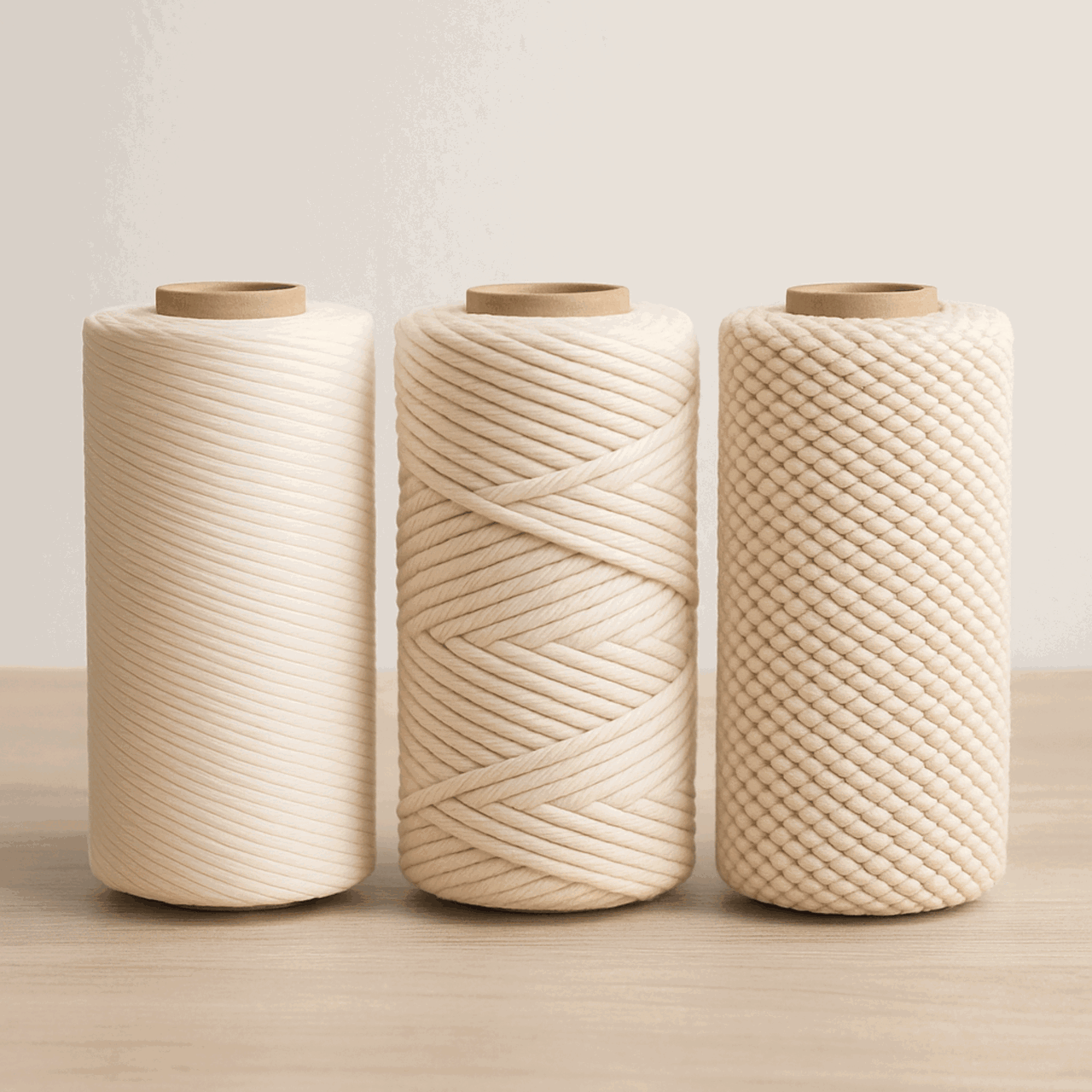
A 5mm single-strand cotton macramé cord works best. We use Egyptian Giza cotton because the longer fibers create softer, fluffier daisies and the cord is OEKO-TEX certified for baby spaces. A premium Giza cord also holds the daisy shape more cleanly than standard cotton because the twist is tighter and the cord does not flatten out under the half-hitch knots.
Do I need glue, sewing, or weaving to finish the pattern?
No. The design is secured at the back with double overhand knots and the excess is trimmed away. That gives the piece a clean finish without any glue or stitching, which is one reason the design is safe for nursery walls (no off-gassing adhesives near baby).
Can I use this daisy knot method on other frame shapes?
Yes. That is one of the most useful parts of this technique. Once you understand how the cords wrap and anchor around the frame, the same daisy knot pattern adapts to circular rings, heart-shaped frames, cloud-shaped frames, moon-shaped frames, and more. It is the same logic applied to any closed metal frame.
How many daisy patterns go on each ear?
Each ear is made with five consecutive daisy patterns that curve over the top and down the other side. Five is the count that keeps the ears balanced and proportional to the body.
Is Egyptian Giza cotton safe for a baby's room?
Yes. Bochiknot Egyptian Giza cotton cord is OEKO-TEX Standard 100 certified, meaning it has been independently tested and proven free from more than 100 harmful substances (the same certification used for infant clothing). The longer Giza fibers also produce less lint and dust than standard cotton — a real benefit in a nursery where air quality matters.
How high above the crib should I hang it?
Hang it at least 24 inches above the crib mattress (measured from the top of the highest crib rail position to the bottom of the wall hanging). This keeps it well out of reach as your baby grows and stands. Use a wall anchor and screw rated for at least 5 pounds — even though the bear weighs less, the safety margin matters for nursery hardware.
Will it fade in sunlight?
Natural and undyed Egyptian Giza cotton is colorfast and resists fading. Dyed colors (sage, pink, beige) may lighten slightly over years of direct, full-day sun exposure. For nursery walls that face direct south-facing windows, hang at an angle that gets indirect light, or rotate the piece every few months.
How do I clean it?
Spot clean only. Use a slightly damp cloth and mild soap on visible spots, then air dry flat away from sunlight. Never machine wash. For dust, use a soft brush attachment on a vacuum at low suction, holding the brush about half an inch away from the cord.
Can I sell handmade bear wall hangings?
Yes. This pattern is free for personal and commercial use. Handmade macramé bear wall hangings retail for $45 to $120 on Etsy, with woodland-nursery sets often selling as 2-piece or 3-piece bundles for $90 to $250. The free pattern is yours to make multiples and sell at baby fairs, gift shops, and on Etsy.
Is this gender-neutral?
Yes. The bear silhouette is the most popular gender-neutral nursery motif of 2026, used in both boy and girl nurseries and the most-requested for surprise-gender or gender-reveal baby showers. Pair natural beige cord with cream and sage to keep it fully gender-neutral, or swap in blush or denim accents if the gender is known.
What's the difference between this bear and a teddy bear macramé?
This bear is a flat wall hanging built on a 2D metal ring frame, used as wall decor. A teddy bear macramé is a 3D sculptural toy made entirely from knotted cord without a frame, used as a soft plush. This wall hanging is decor only and is not a toy or teether.
Can I personalize it with the baby's name?
Yes. Add a small wooden name tag, a wooden bead garland with letter beads, or a hand-stitched cord tag tied to the bottom of the bear ring. For commissioned baby-shower pieces, personalization is the most-requested upgrade and adds $15 to $25 to typical Etsy listings.
Keep Learning with Bochiknot

Zigzag Wall Hanging
The hub of the wall-hangings cluster — the foundational dowel-based pattern every macramé maker builds first
Read tutorial
Unicorn Dreamcatcher
Cross-cluster nursery cousin — a magical unicorn wall hanging perfect alongside the bear for whimsical kids' rooms
Read tutorial
Macramé Baby Teether
Complete the gift bundle — pair the bear wall hanging with a handmade teether for the ultimate baby shower set
Read tutorial
Beginner's Guide
The complete 2026 guide to the 4 foundational macramé knots — start here if this is your first project
Start here
Square Knot
The foundational decorative knot — pair with the bear daisy pattern to add square-knot tassels at the bottom
Learn the knot
Double Half Hitch
The diagonal locking knot — what secures the daisy closures and back-of-ring finish in this tutorial
Learn the knot
About Nicole Woo
Nicole Woo is the founder of Bochiknot Macramé and has been teaching macramé for over 5 years. She has helped thousands of DIY makers knot their first nursery wall hangings, baby gifts, and modern boho decor through her tutorials, YouTube channel, Patreon community, and best-selling DIY patterns on Etsy. When she's not knotting, she's photographing every step so you don't have to guess.

Leave a comment