










DIY Small Macramé Wall Hanging: Boho Wall Art for Tiny Spaces

Beginner • 2–3 hrs • ~10×12 in Published May 2025 By Nicole Woo 8 min read
Small spaces often get overlooked when it comes to décor, but they hold huge potential. With the right texture and a handmade touch, even the simplest wall can become a statement.
A few basic macramé knots and minimal materials are all it takes to turn an empty corner into something cozy, stylish, and full of personality. This guide shows you exactly how to make a small macramé wall hanging step by step — no advanced skills required.
This beginner-friendly project is ideal for apartments, small rooms, or anywhere you want to add warmth without clutter. It introduces texture, movement, and a handcrafted feel without overwhelming your space.
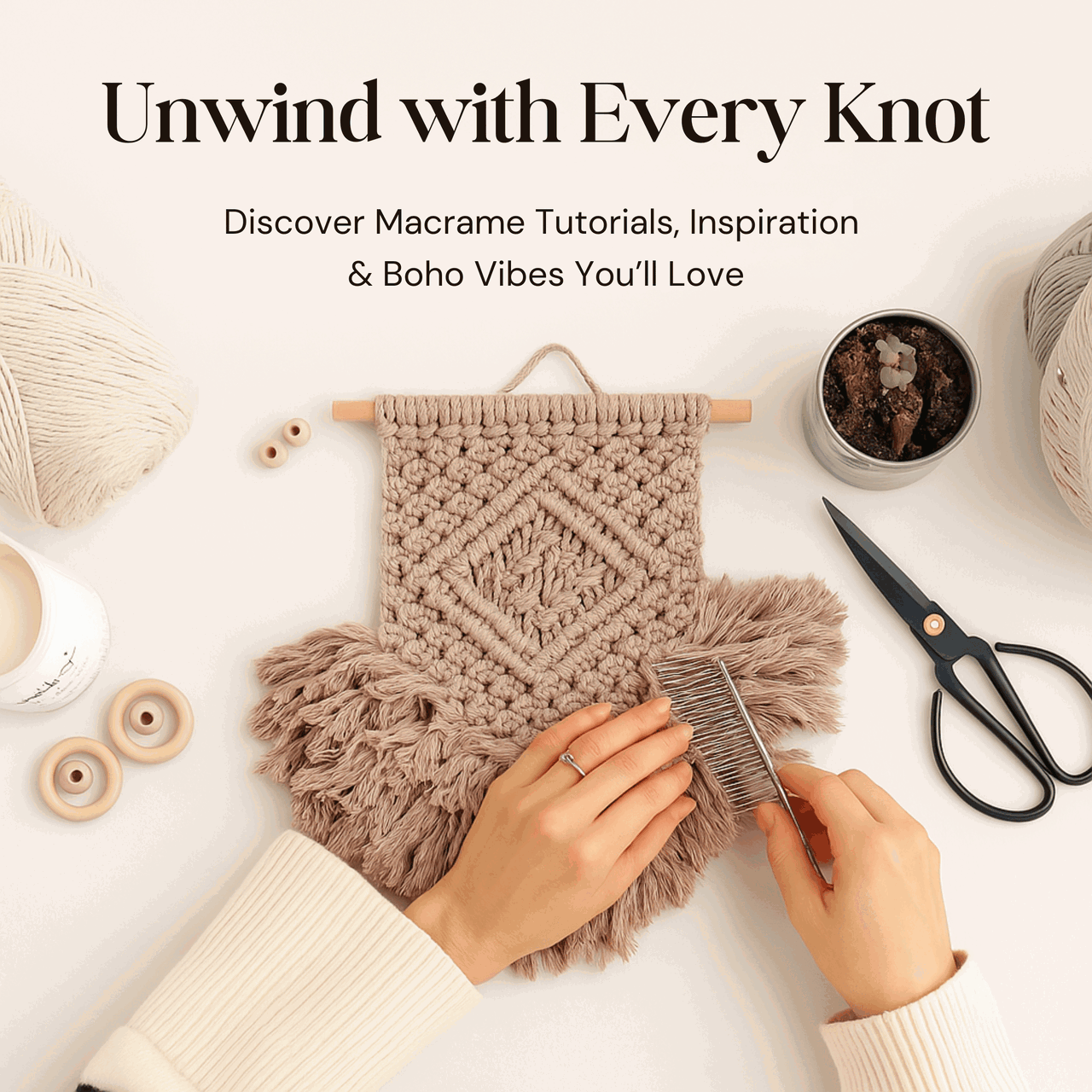
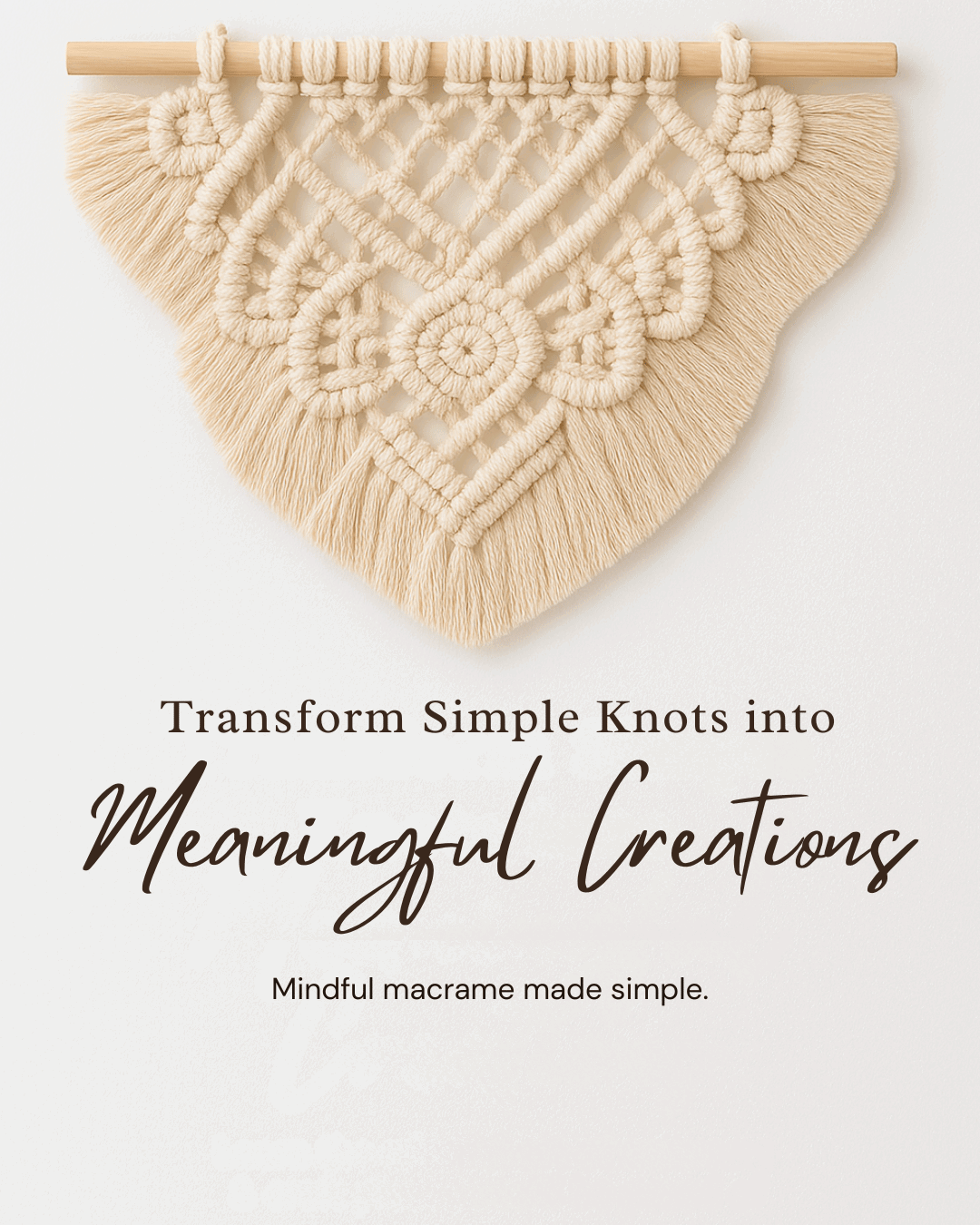
What is a small macramé wall hanging? A small macramé wall hanging is a fiber-art wall decoration made by knotting cord onto a wooden dowel or ring. At roughly 10×12 inches, it’s sized to fit narrow walls, entryways, shelves, or apartment spaces without overpowering the room.
At-a-Glance: Project Details
| Detail | Info |
|---|---|
| Skill level | Beginner to lower-intermediate |
| Finished size | ~10 in wide × 12 in tall (adjustable by fringe length) |
| Completion time | 2–3 hours |
| Primary knots used | Lark’s head, half hitch, double half hitch, Aztec Sunbar |
| Cord type | 4 mm single-strand cotton macramé cord |
| Dowel size | 9 inches |
Materials & Tools
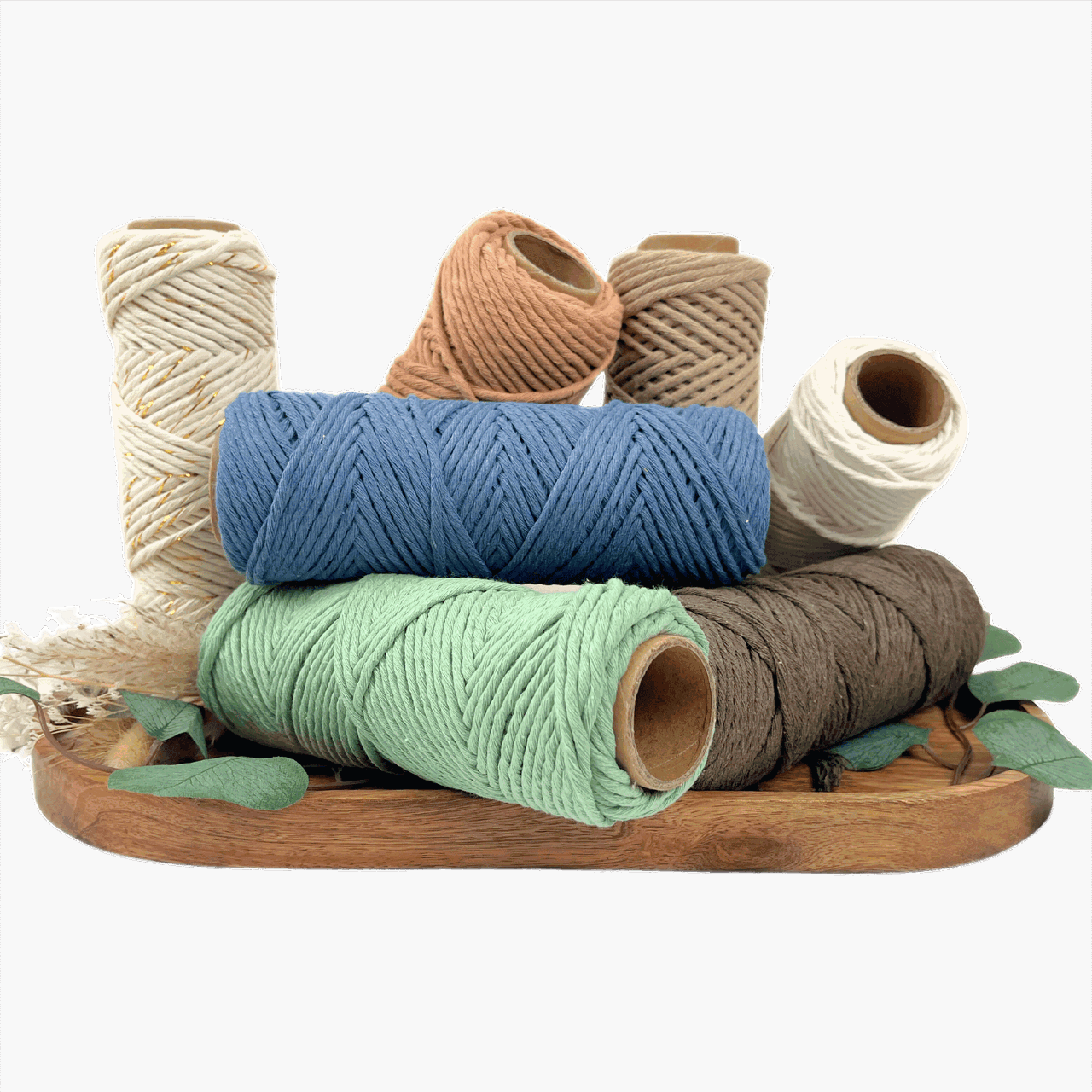
- 4 mm single-strand cotton macramé cord (natural color recommended)
- 9-inch wooden dowel
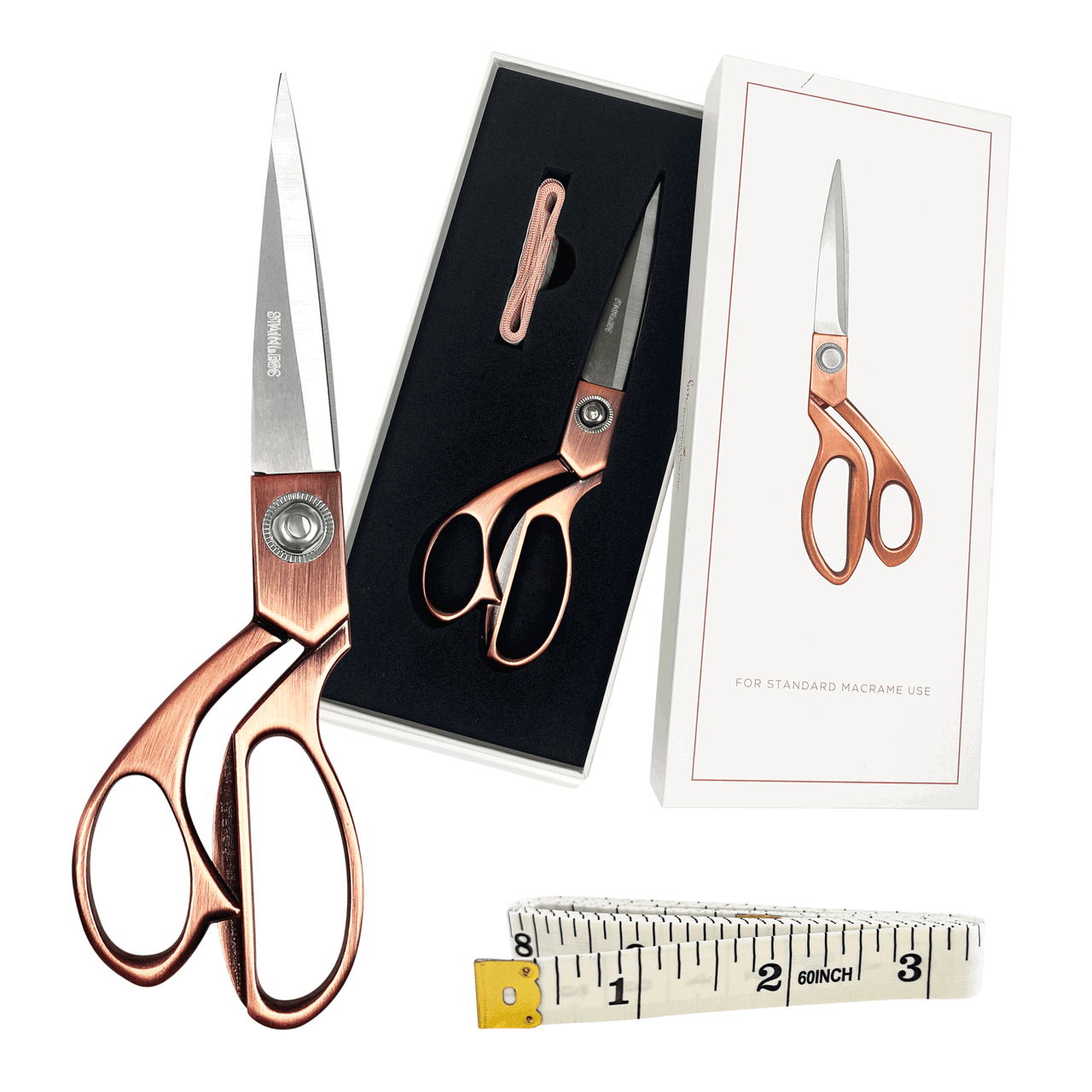
- Scissors
- Measuring tape
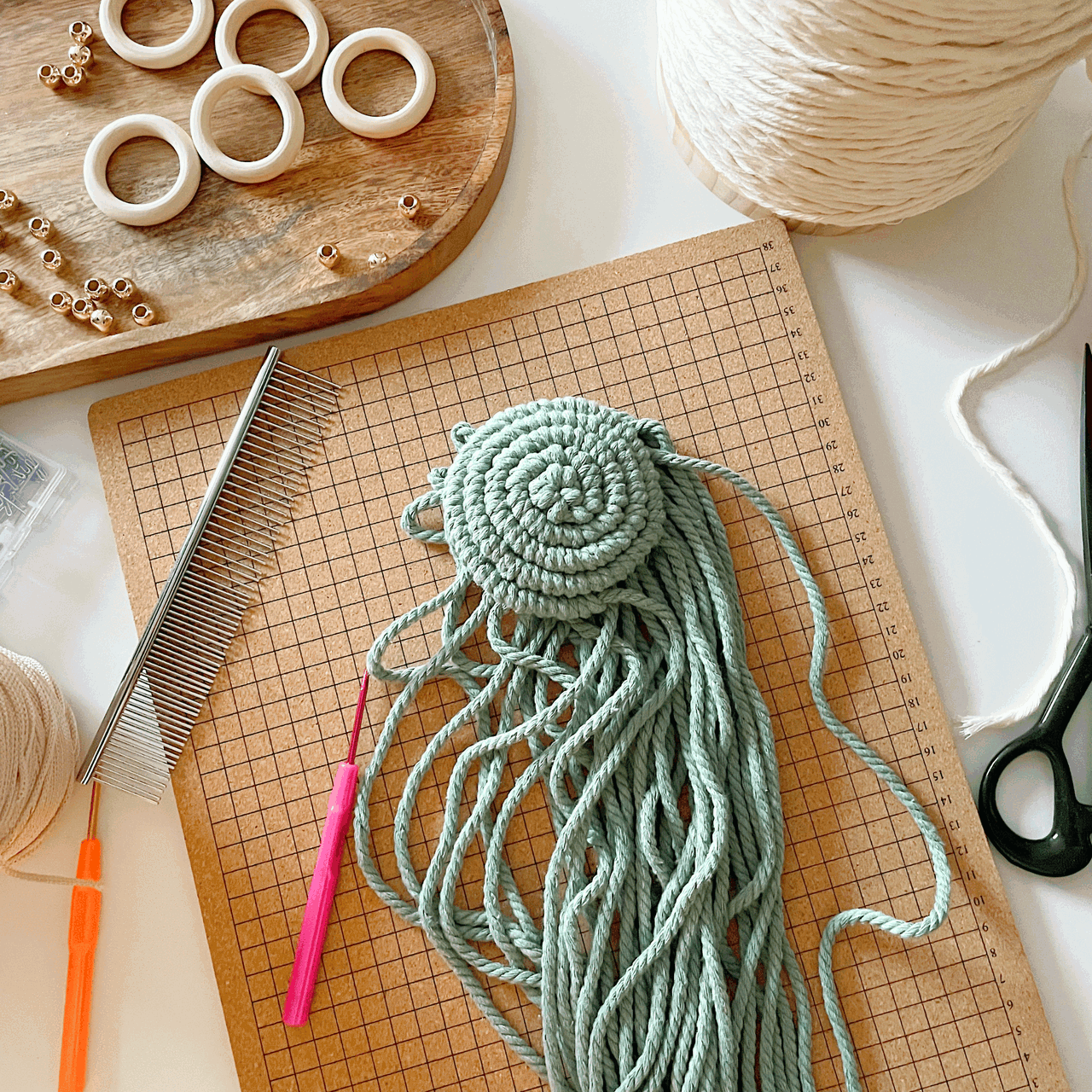
- Fringe comb
Cord Lengths You’ll Need
Cut all your cords before you start — this makes the knotting process much smoother. The table below lists every cut you need for a finished piece approximately 10×12 inches.
| Qty | Length (cm) | Length (inches) | Purpose |
|---|---|---|---|
| 1 | 40 cm | 16" | Hanging loop |
| 1 | 100 cm | 39" | Central loop base cord |
| 2 | 180 cm | 71" | Aztec Sunbar anchor cords (left + right) |
| 2 | 100 cm | 39" | Aztec Sunbar fill cords |
| 6 | 170 cm | 67" | Diamond DHH section (3 per side) |
| 8 | 70 cm | 28" | Central loop side cords |
| 8 | 35 cm | 14" | Side fringe fill pieces |
| 10 | 20 cm | 8" | Tassel scraps for diamond motifs |
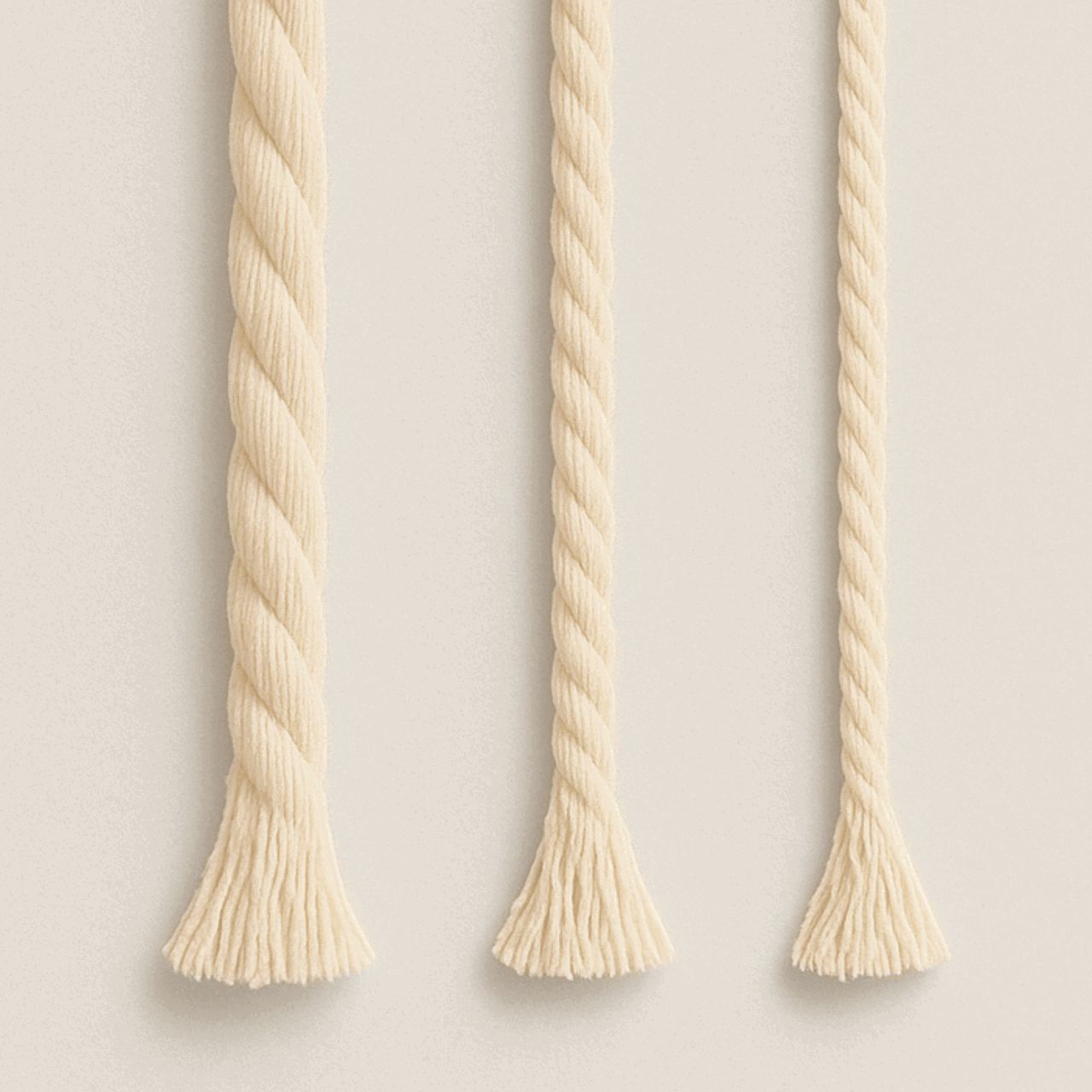
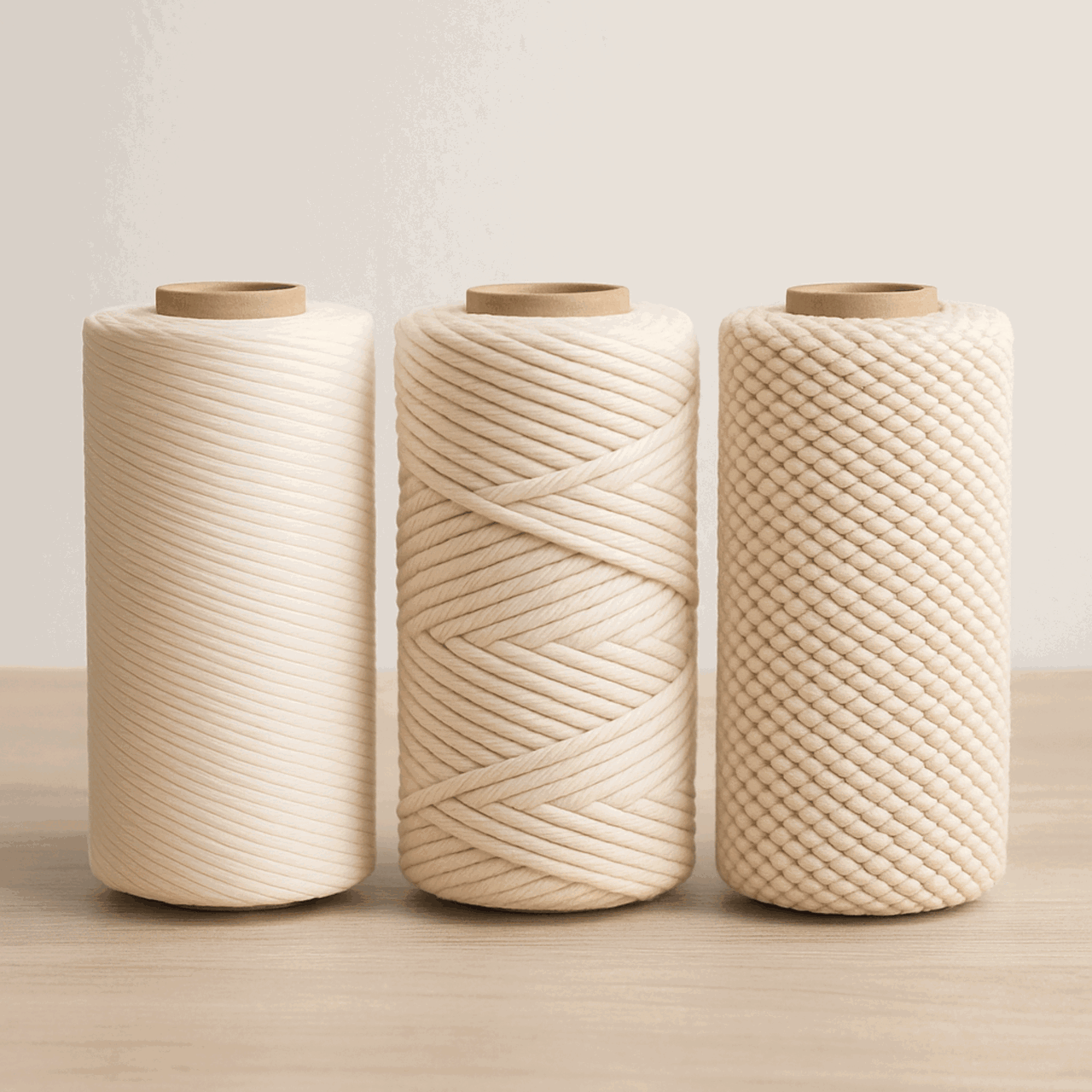
Which Cord Works Best?
| Cord Type | Best For | Knot Clarity | Fringe Look |
|---|---|---|---|
| 4 mm single-strand twist | Beginners; clean knot definition | Excellent | Soft, fluffy |
| 3 mm single-strand twist | Finer, denser patterns | Very good | Fine & silky |
| 4 mm 3-ply braided | Sturdier, heavier look | Good | Thicker, less fluffy |
| 5 mm single-strand twist | Oversized statement pieces | Good | Very full & chunky |

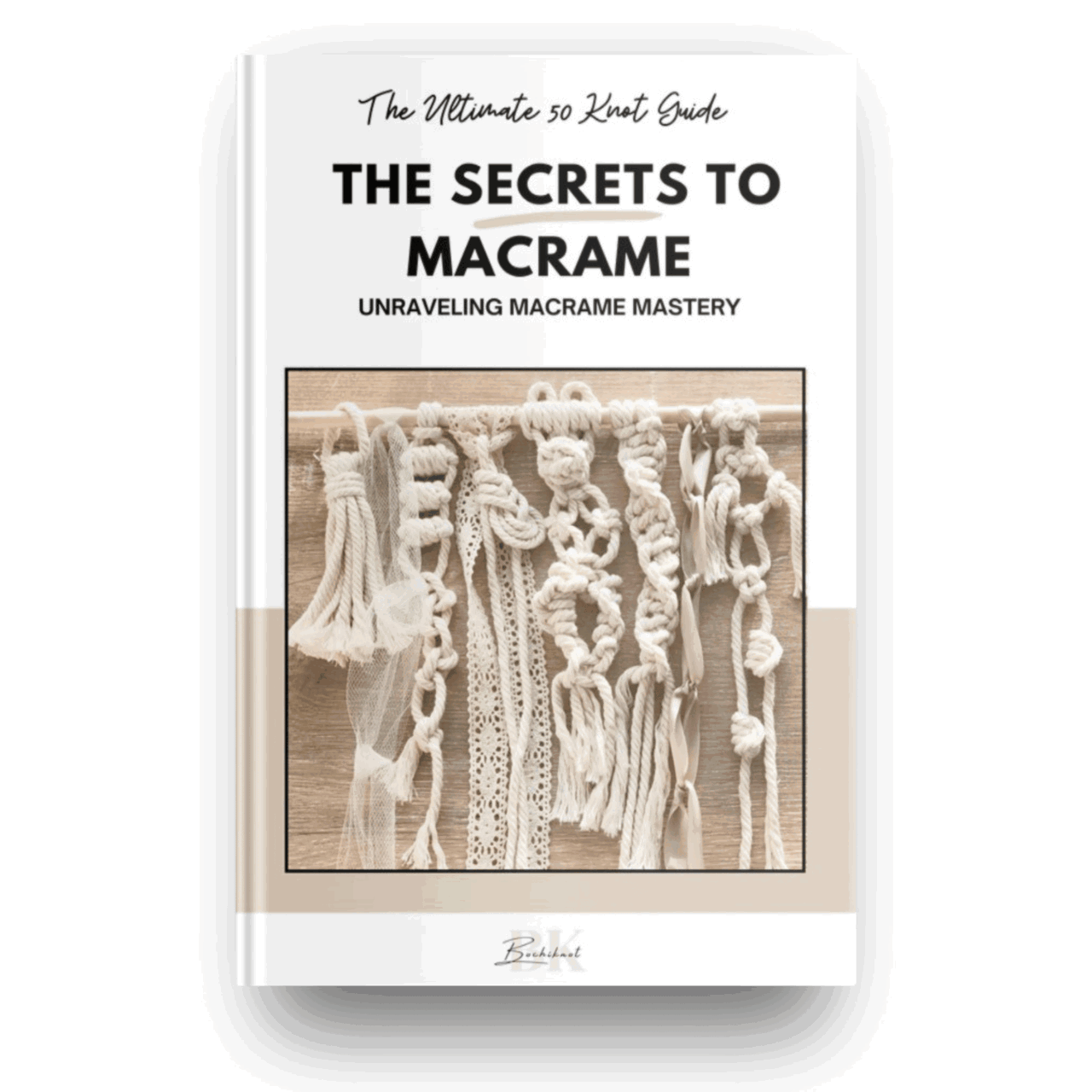
Free Resource: 50 Macramé Knots & Sennit Guide
Master every knot used in this project and hundreds more. Download your free copy today.
Get the Free Ebook →Watch the Full Tutorial Video
Note: We recommend following the tutorial video for additional guidance and clarity as you work through each step.
Prepare the Cord and Set the Central Loop
- Fold a 100 cm cord in half and create two vertical Lark’s head knots on the dowel to form a central U-shaped loop. Aim for a loop roughly 12 cm tall (about 4.5 in).
- Adjust cord ends until they sit even. This central loop becomes the anchor for the next rows.
Nicole’s pro tip: Mark the center of your dowel with a small piece of tape before you start — it makes it easy to place the central loop exactly in the middle without measuring twice.


Attach Eight 70 cm Cords Around the Center Loop
- Fold each 70 cm cord in half and attach with Lark’s head knots onto the central loop — two knots at a time on either side until you have eight cords total (four per side).
- Push the knots together so they sit snug, and even any uneven ends by tightening at the top.
Nicole’s pro tip: Before tightening each lark’s head, make sure both halves of the cord are the same length below the knot. Even a small difference here will throw off the alignment of the weave braid in the next step.


Make the Weave Braid and Tuck the Working Ends
- Split the vertical cords in half. On each side, make a small woven braid using repeated half-hitch knots: hold two cords, use the third as the working cord, bring it over and through the loop, then repeat by dropping one cord and using the next.
- Work left and right so the two braids meet in the middle. When you reach the center, tuck the last working cords through the opposite side’s Lark’s head gaps so their ends sit at the back.
Nicole’s pro tip: Retighten the half-hitch knots from the top down after completing each braid side. Pulling from the root tightens the whole column evenly, eliminating gaps that look untidy from the front.


Start the Aztec Sunbar Section (Right Side Setup)
- Fold an 180 cm cord in half and Lark’s head it onto the dowel at the right side. Pull it down, but do not fully tighten.
- Thread a 100 cm cord through that Lark’s head so the ends are matched and retighten the vertical cords. These paired shorter cords will act as anchor cords while the adjacent cords are the working cords for the Aztec Sunbar repeat.
Nicole’s pro tip: Label your anchor cords with a small clip or rubber band so you don’t accidentally use them as working cords — it’s an easy mistake that causes the pattern to unravel mid-section.


Build Consecutive Aztec Sunbar Units and Mirror to the Left
- The Aztec Sunbar unit is a small repeated module: overlap the anchor cords, weave the working cord through the overlap on each side, tighten, then make a vertical Lark’s head from the behind cords and finish with a half hitch on both sides.
- Repeat until you create four sections on the right that reach toward the center.
- Mirror the same setup on the left side and then connect both sides with a central Aztec Sunbar using the top two cords from each side, following the same pattern.
Nicole’s pro tip: Keep the tension consistent across all four units on each side — pull each working cord the same amount. The pattern gets its geometric look from evenly-spaced repeats, not just the knot structure.


Attach Three 170 cm Cords and Make Diamond DHH Patterns (Right Side)
- Attach three 170 cm cords to the right side of the dowel using Lark’s head knots.
- With the middle two cords as the working pair, make diagonal rows of double half hitch knots to form a diamond motif: tight spacing on the left side of this area, looser spacing on the right to create a gentle curve toward the center.
- Build three consecutive diamond shapes marching toward the middle.
Nicole’s pro tip: For sharp diamond points, bring the two diagonal rows together at exactly the same angle. If one side is steeper than the other, the diamond looks lopsided. Step back every couple of rows and compare both sides before continuing.


Mirror the Diamond Pattern on the Left and Secure Diamonds to Center
- Repeat the three-diamond sequence on the left side as a mirror of the right.
- Once both sides are in place, secure the diamonds to the center by taking the top cord of each diamond and attaching it to the previous layer cords with double half hitch knots.
- Finish the center with one last diagonal DHH so the entire pattern reads as one continuous, connected design.
Nicole’s pro tip: When connecting the two sides at the center, match the angle of your final DHH row to the angle of the last diamond row on each side — this keeps the join invisible and makes the whole piece look like one seamless design.


Trim Fringe and Add Side Fringe Pieces
- Trim the main fringe into a soft V-shaped bottom or a gentle curve. Save the longer scrap cords (approx 35 cm) for additional side fringe.
- Attach pairs of 35 cm scraps to the bottom loops using reverse Lark’s head knots — two per loop — to fill and balance the hanging visually.
Nicole’s pro tip: Use masking tape to mark your trim line before cutting — run tape across the fringe at your intended cut height, trim along the edge, then peel away. You’ll get a perfectly straight or curved line every time without a ruler.


Make Tassels Inside the Diamond Motifs and Finish
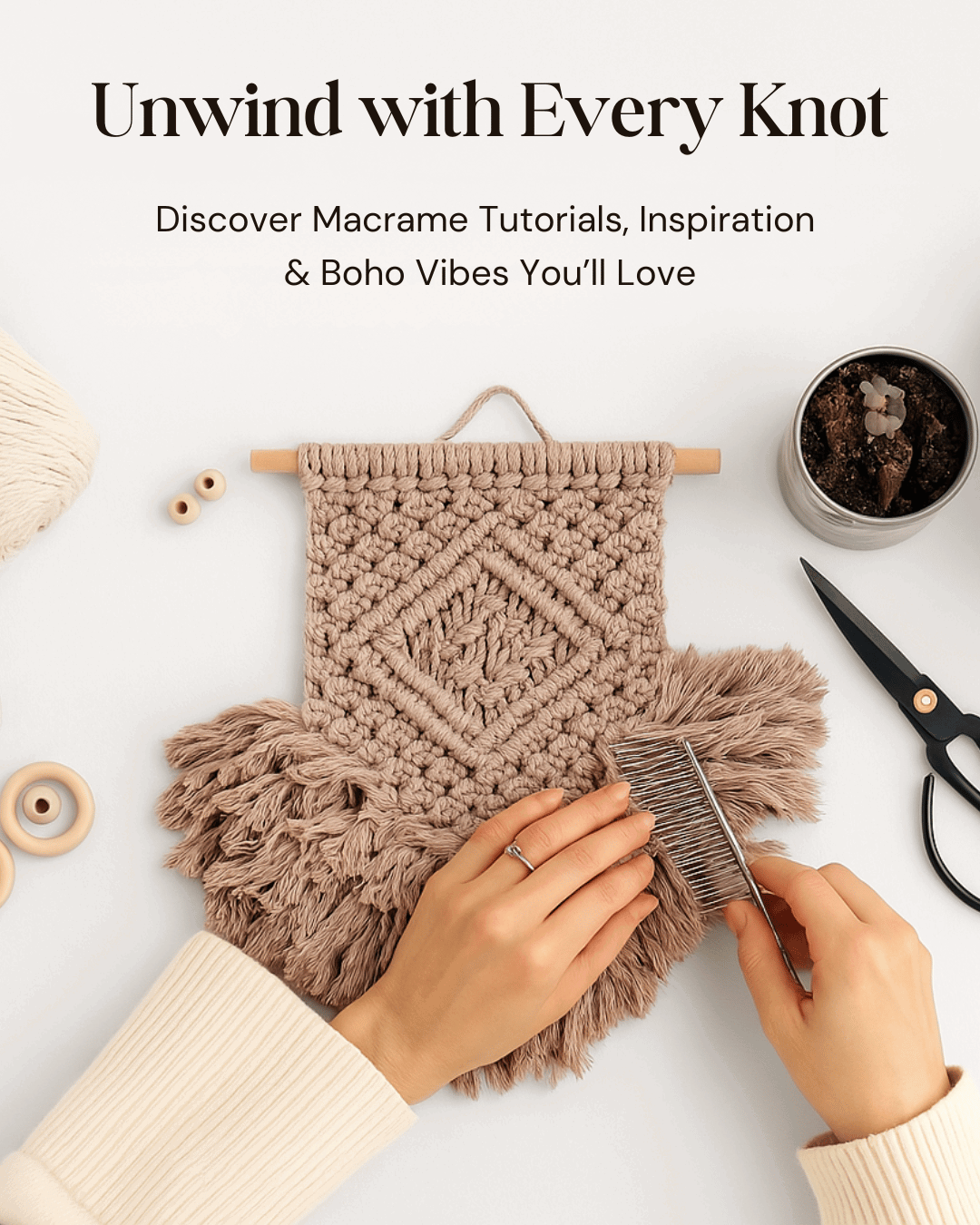
- Comb four shorter scraps (about 20 cm) with a fringe comb until fluffy.
- For each diamond, weave the combed cord ends through so one end exits the left side and the other exits the right, then draw both ends down and squish them through the bottom of the diamond to sit as a tassel. Recomb and trim all tassels evenly.
- Finally add a short handle by folding a 40 cm cord and attaching it between the first and second layer gaps, securing with double half hitch knots on each side.
Nicole’s pro tip: Trim all diamond tassels together — hold them all at once against a ruler and make one clean cut. This creates the visual symmetry that makes the finished piece look intentional and professional.


Troubleshooting Common Problems
Uneven ends after attaching cords
Before continuing past each layer, flatten and retighten the Lark’s head knots at the top so the working cords align. A few extra seconds of adjustment here saves a lot of frustration later.
Braid gaps in the weave section
Retighten half hitch knots or pull vertical anchor cords to reduce gaps in the weave braid. Gaps are almost always caused by loose first knots — revisit the root of the braid and pull snug before proceeding.
Fringe isn’t fluffy enough
Use a metal fringe comb and comb from root to tip in firm, short strokes. Trim once all tassels are in place so any uneven ends get cleaned up at once. See our full guide: Macramé Fringe: The Ultimate Guide.
Aztec Sunbar units look uneven
Ensure the anchor cords are truly parallel and under equal tension before starting each unit. Use a foam board or pillow to pin the cords in place while you work — this keeps everything aligned as you build the repeat.
Diamond DHH shapes don’t line up symmetrically
Mark the center of your dowel with a light pencil mark before starting. When you mirror the diamonds on the left side, count each half-hitch as you go to match the number of knots on the right side.
Variations and Creative Substitutions
- Scale up: Use longer cords and a wider dowel to turn this into a medium or large wall hanging — the same knot sequence scales up cleanly.
- Add beads: Thread wooden or ceramic beads into the Aztec Sunbar units or tassels for a boho-chic accent.
- Color blocking: Use two different cord colors — one for the weave braid section and one for the diamonds — to create a striking two-tone effect.
- Ring instead of dowel: Mount the piece on a 12-inch metal ring or 10-inch beechwood hoop instead of a dowel for a circular wall hanging variation.
- Natural dye: After finishing, lightly tea-stain the cord for a vintage, aged look that fits rustic or farmhouse interiors.
Final Thoughts
With the right cord lengths, a bit of patience, and a willingness to experiment, this small macramé wall hanging comes together into a piece that feels both personal and impactful. It’s a reminder that small, intentional details can completely change the mood of a space.
Once finished, hang your piece where it can be appreciated — a narrow hallway, above a desk, or beside a window — or use the technique as a starting point to customize future designs with different sizes, patterns, or textures. Handmade décor isn’t about perfection; it’s about creating something that feels like home.
If you try this project, tag your photo on Instagram so others in the community can see your work — it’s one of the best ways to learn and get feedback from fellow makers.
Frequently Asked Questions
What is the minimum skill required to make this wall hanging?
Basic knot familiarity is helpful but not required. The pattern uses beginner-friendly knots (Lark’s head, half hitch, and double half hitch). The step-by-step arrangement and troubleshooting tips make it accessible to newcomers willing to practice.
What cord thickness is recommended, and can I substitute?
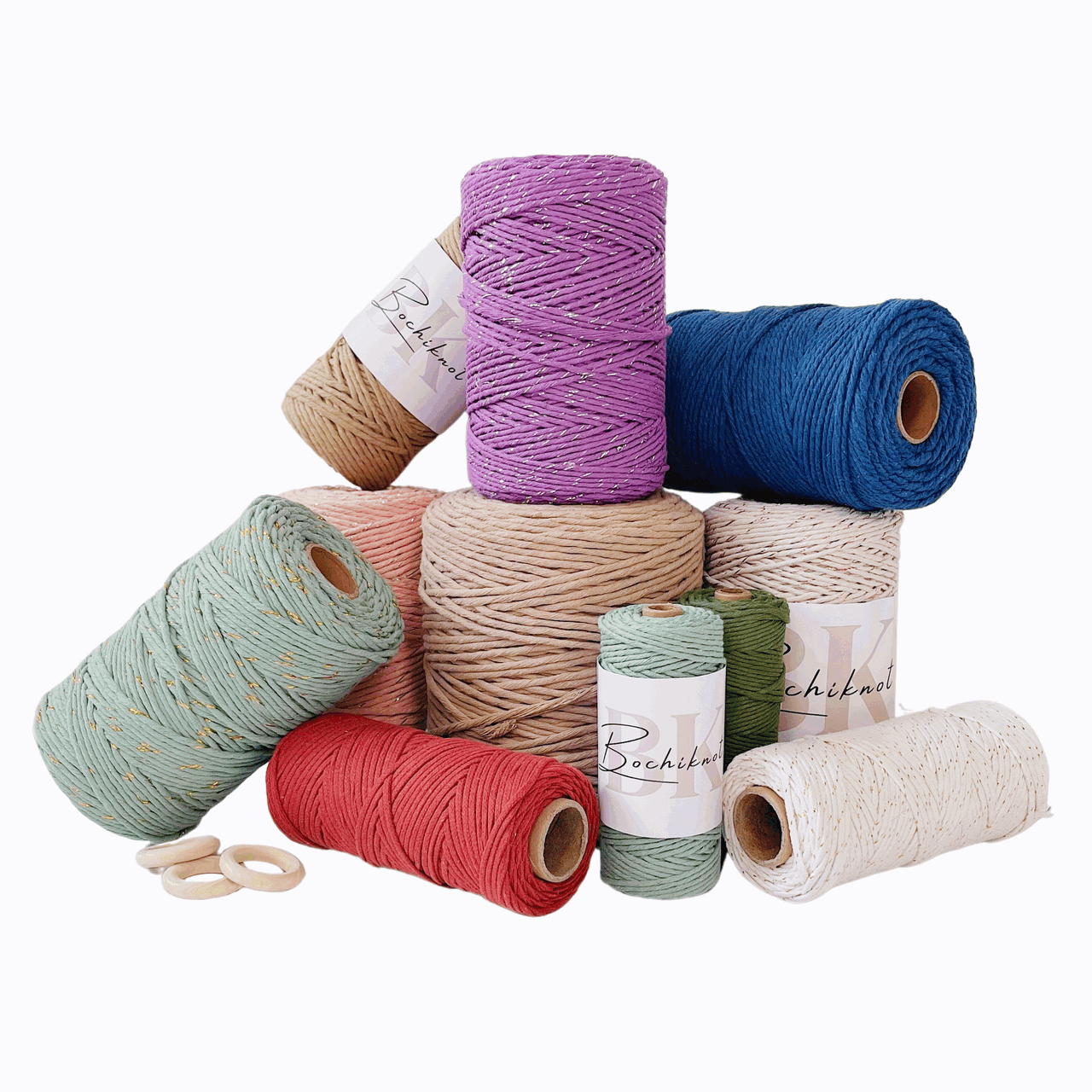
A 4 mm single-strand cotton cord works best for clean knots and manageable bulk. For a heavier look, use 3-ply or braided cord. Keep in mind that thicker cord will increase the finished size. For more guidance, read our complete cord selection guide.
How long does this take to complete?
Expect 2–3 hours from start to finish, depending on knot speed and trimming. Beginners may take a bit longer on the Aztec Sunbar section — give yourself extra time the first time through that module.
How do I measure my cord accurately?
Use a measuring tape rather than estimating, especially for the longer cords (170 cm and 180 cm). Cut all cords before you start and group them by length. See our full tutorial: How to Measure Cord for Macramé.
Can I sell pieces made from this pattern?
The pattern is copyrighted and belongs to the original creator. You are free to make and gift pieces for personal use, but the pattern may not be sold or redistributed for commercial purposes without permission.
How do I care for and clean my macramé wall hanging?
Spot clean with a damp cloth for small stains. For deeper cleaning, gently hand wash in cool water and reshape while damp. Air dry flat or hang to retain shape. Avoid harsh detergents or wringing.
What size dowel should I use?
A 9-inch wooden dowel produces a piece approximately 10 inches wide. If you want a wider hanging, use a longer dowel and scale the cord lengths up proportionally.
What knots do I need to know before starting?
You need to be comfortable with the Lark’s head knot, the double half hitch, and a basic half hitch. The Aztec Sunbar is a slightly more advanced module — follow the video closely for that section.
Can I use colored cord?
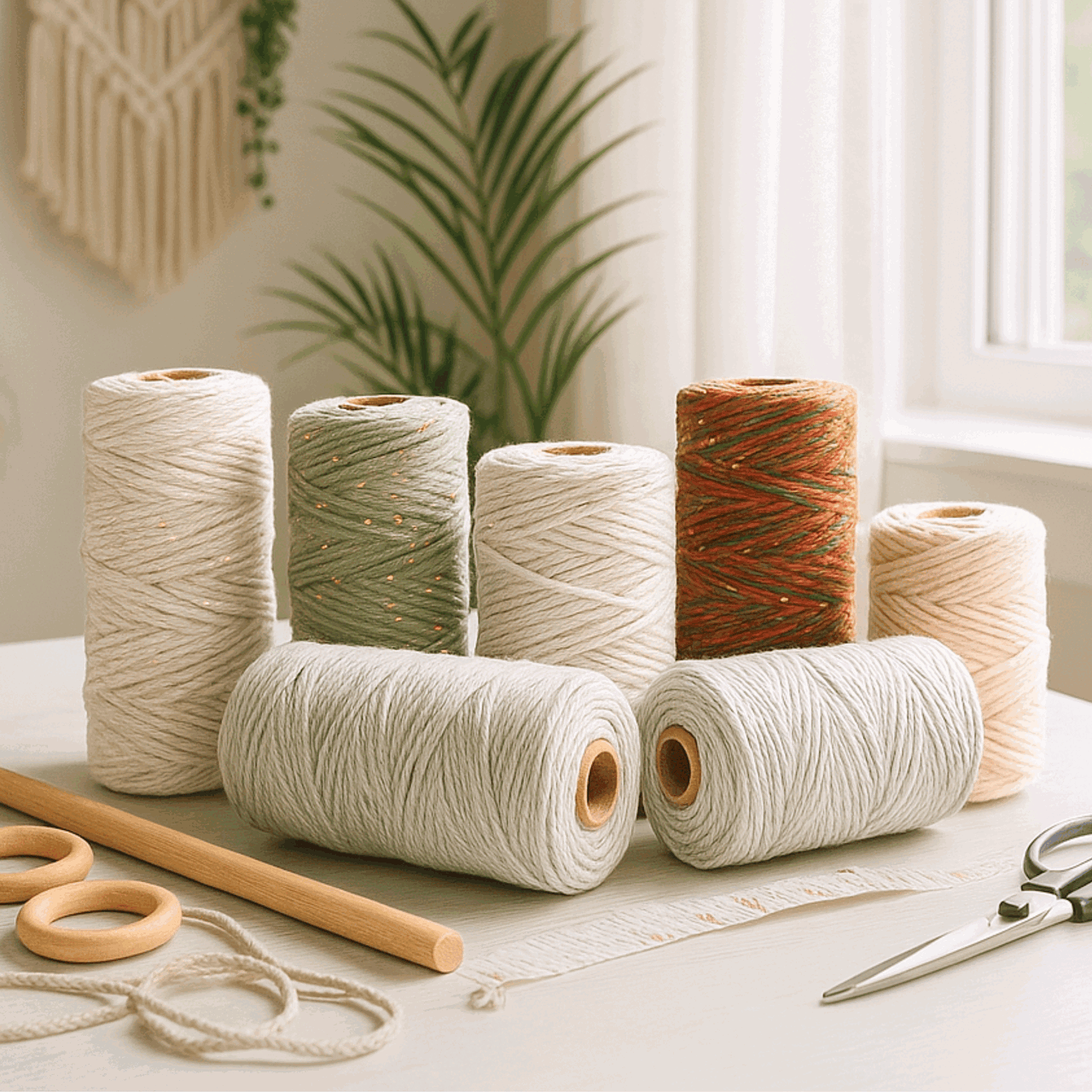
Absolutely. Natural cotton takes natural dye well, and many macramé suppliers offer pre-dyed cord in a wide range of colors. For a boho look, consider earthy terracotta, sage green, or off-white cord.
Where can I find more beginner macramé tips?
Check our guide: 18 Pro Tips to Improve Your Macramé Skills — it covers cord tension, knot consistency, and fringe finishing techniques in depth.
More Macramé Wall Hanging Tutorials


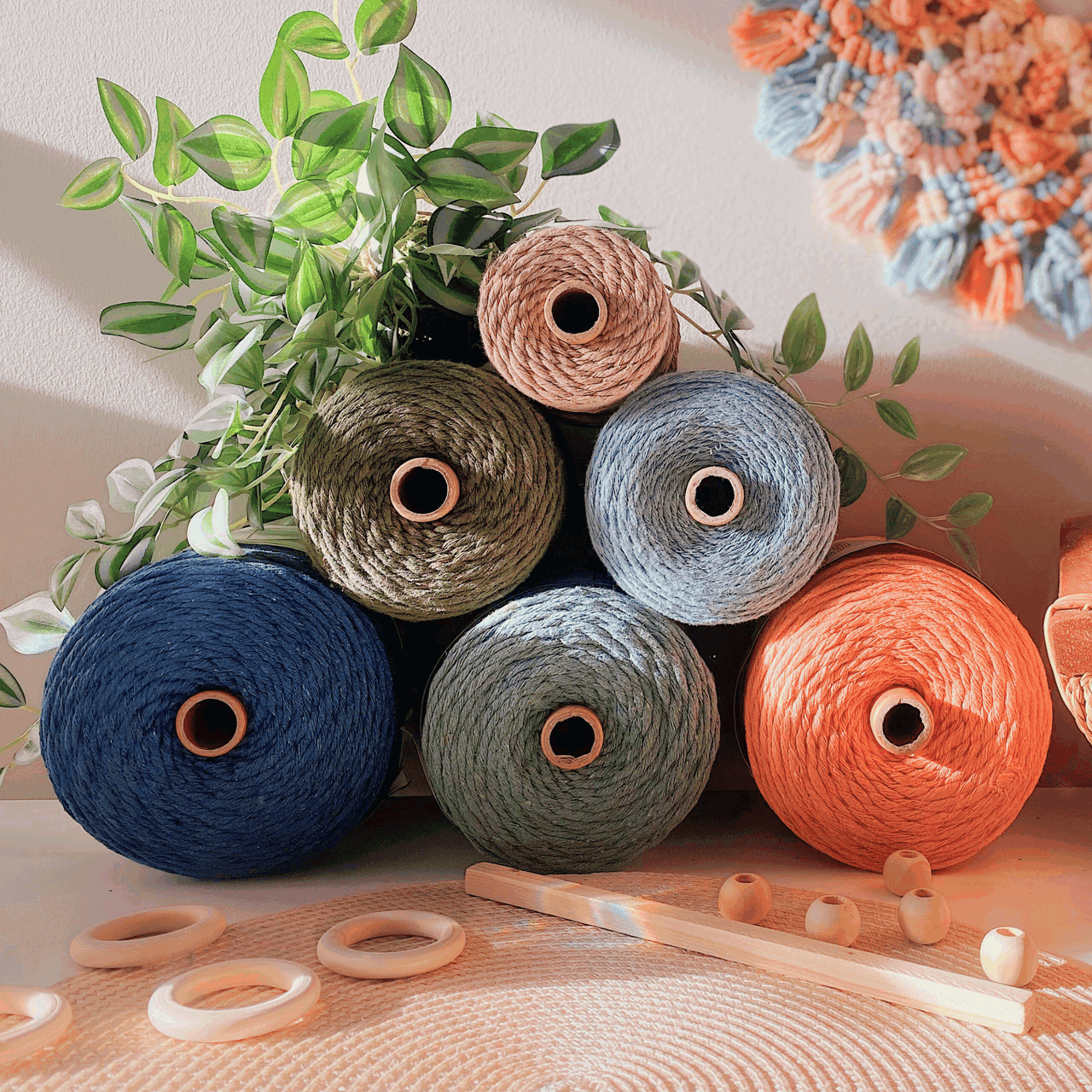
Complete Guide to Selecting Macramé Cord
How to choose the right cord type, thickness, and material for any project.
Starting Out?
Get the Macramé Welcome Kit
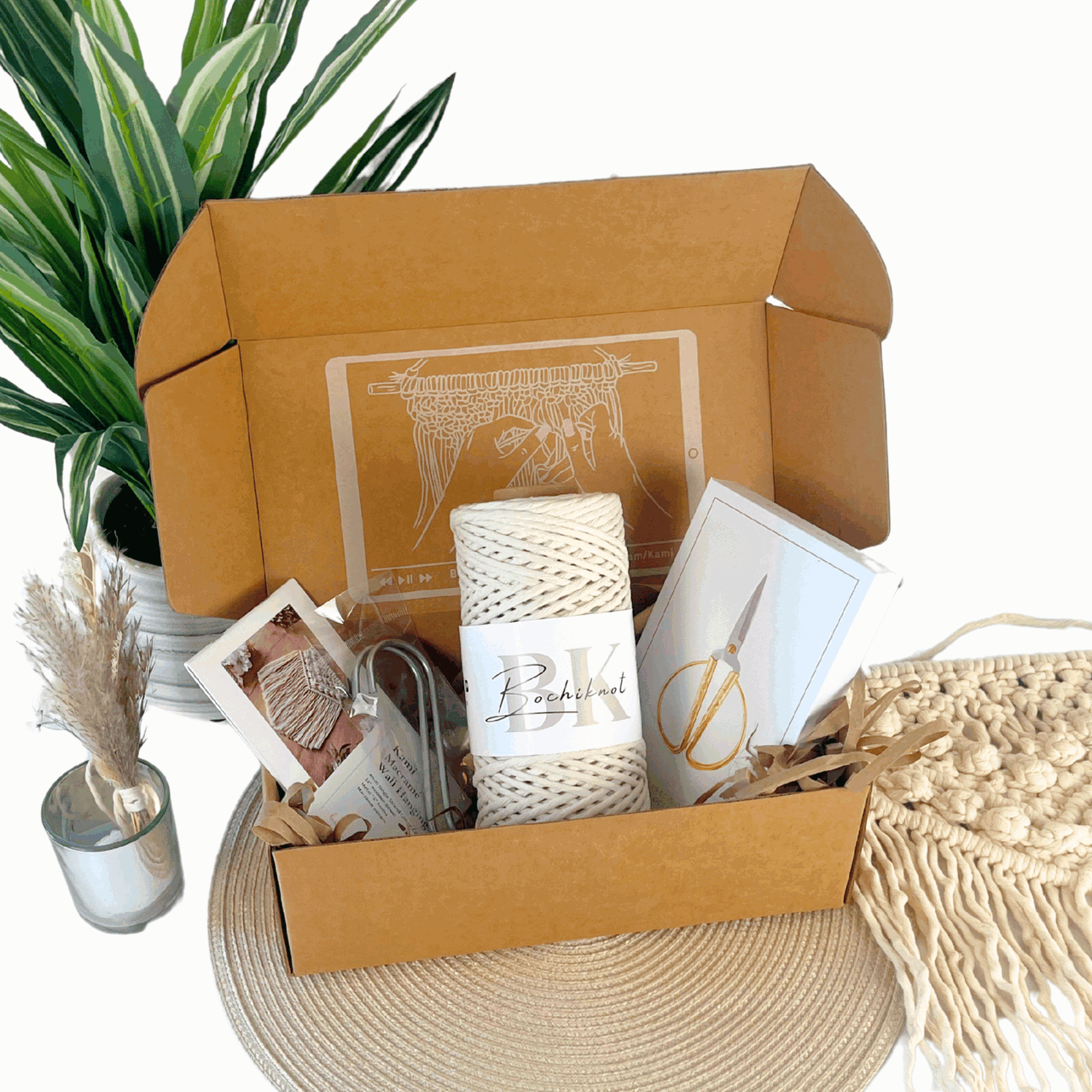
Everything you need to make your first macramé wall hanging — cord, tools, and a beginner tutorial — in one kit. No guesswork, no separate orders.
Explore the Welcome Kit →
Nicole Woo
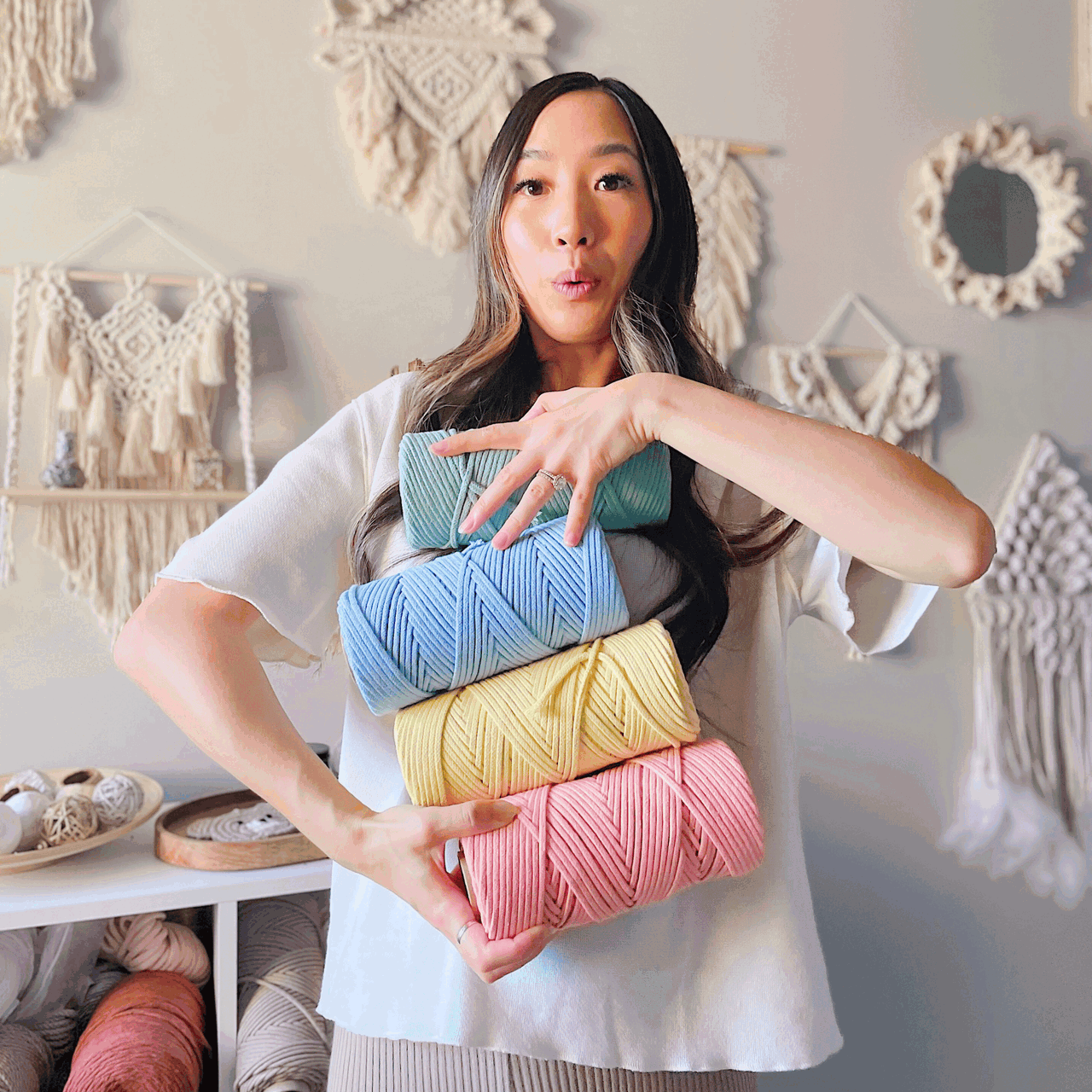
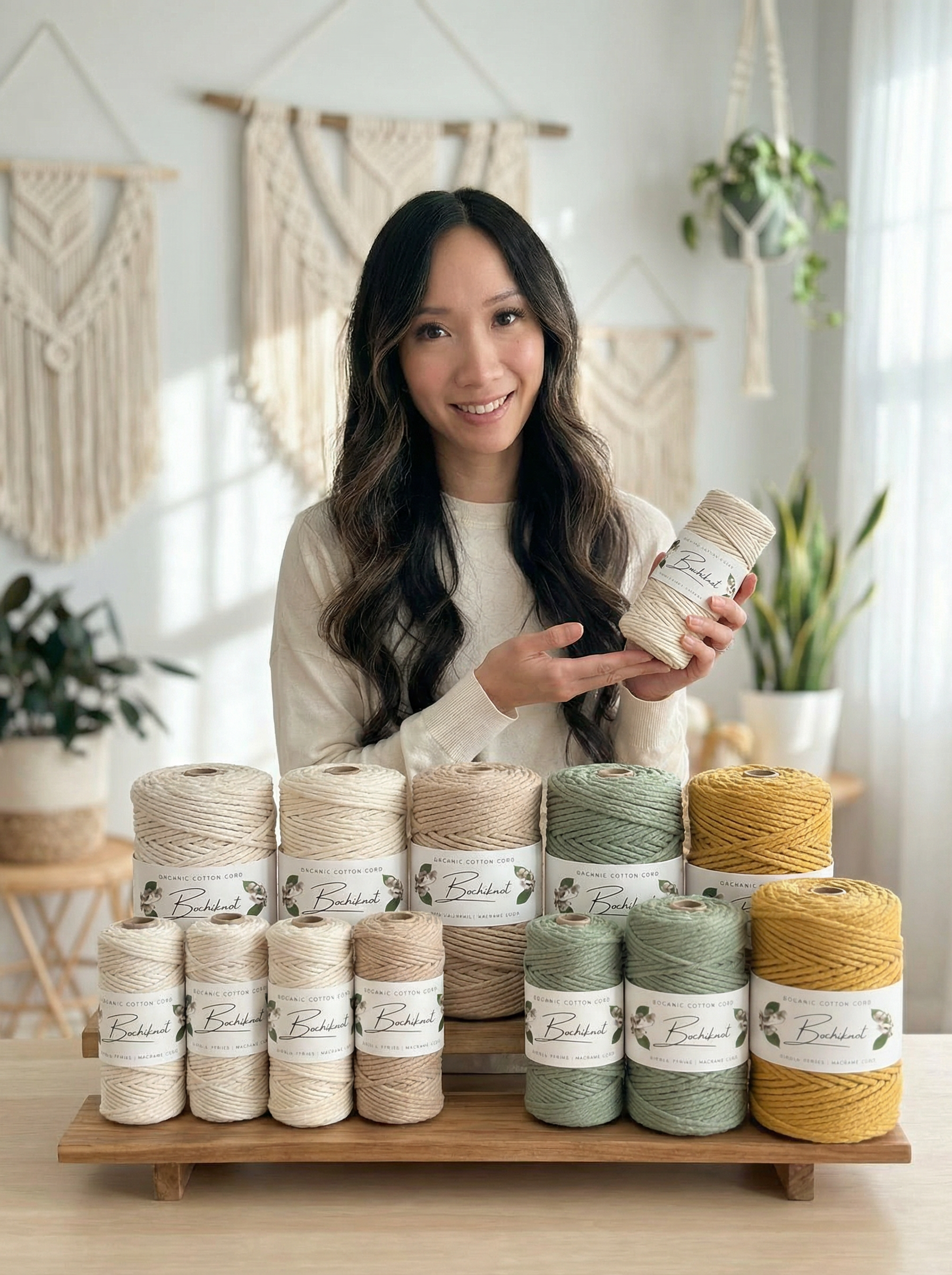
Self-taught macramé educator since 2018. 100,000+ students taught worldwide. Nicole created Bochiknot to make macramé approachable for makers at every level — from complete beginners making their very first small wall hanging to experienced artists exploring advanced techniques.

Leave a comment